
If you’re keen on a little country-hopping adventure around Europe this year, you’re absolutely spoiled for options.
Whether it’s the new European Sleeper from Paris to Berlin, or the colossal, 715-mile journey from Basel, in Switzerland, to Copenhagen, in Denmark, new inventive train routes linking all of the most unlikely destinations are springing up everywhere.
For those who would like to keep it ‘local’, though—as in, restricted to a single geographical region—you might want to hold off on booking those overnight sleepers until you’ve read this.
To those heading to Central Europe in the coming months, a new direct train is launching from Germany to Belgium, passing through six stunning, yet still relatively under-the-radar cities along the way, and trust us when we say they absolutely deserve a spot on your next Eurotrip:
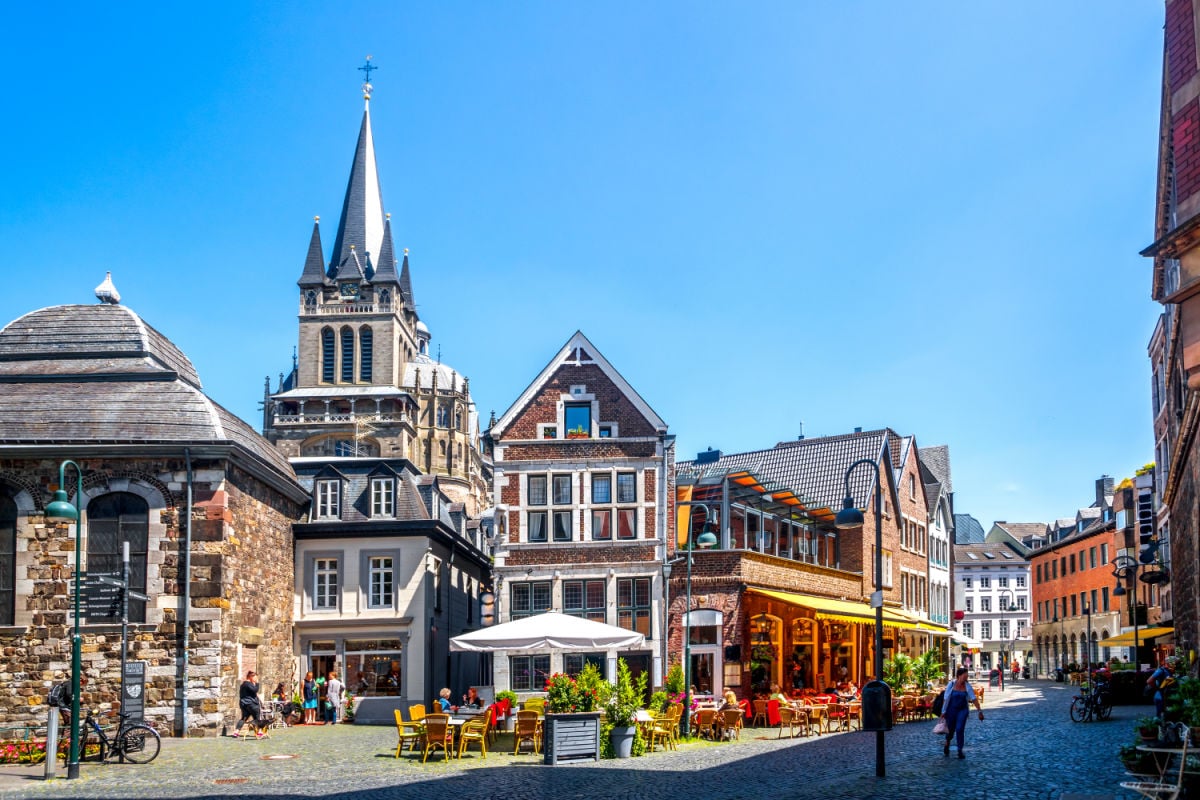
So What’s New?
Starting September 7, 2026, Deutsche Bahn (Germany’s national rail operator) and SCNB (Belgium’s) will formally launch the first-ever direct ICE connection between Cologne, a city in western Germany, and Antwerp, the largest Dutch-speaking hub in Belgium.
Now, before any Americans out there start getting anxious about a supposed ICE train, that’s just an acronym for inter-city high-speed trains.
That said, you might just want to check the travel rules that apply at your destination using the Entry Requirement Checker, as passport control within the Schengen Zone has been tightened as of late. Yep, even if you’re traveling from one Schengen country to another.
Back to the train itself, this is huge news in the scope of Germany–Belgium rail travel, as up until now, most ICE services terminated in Brussels.
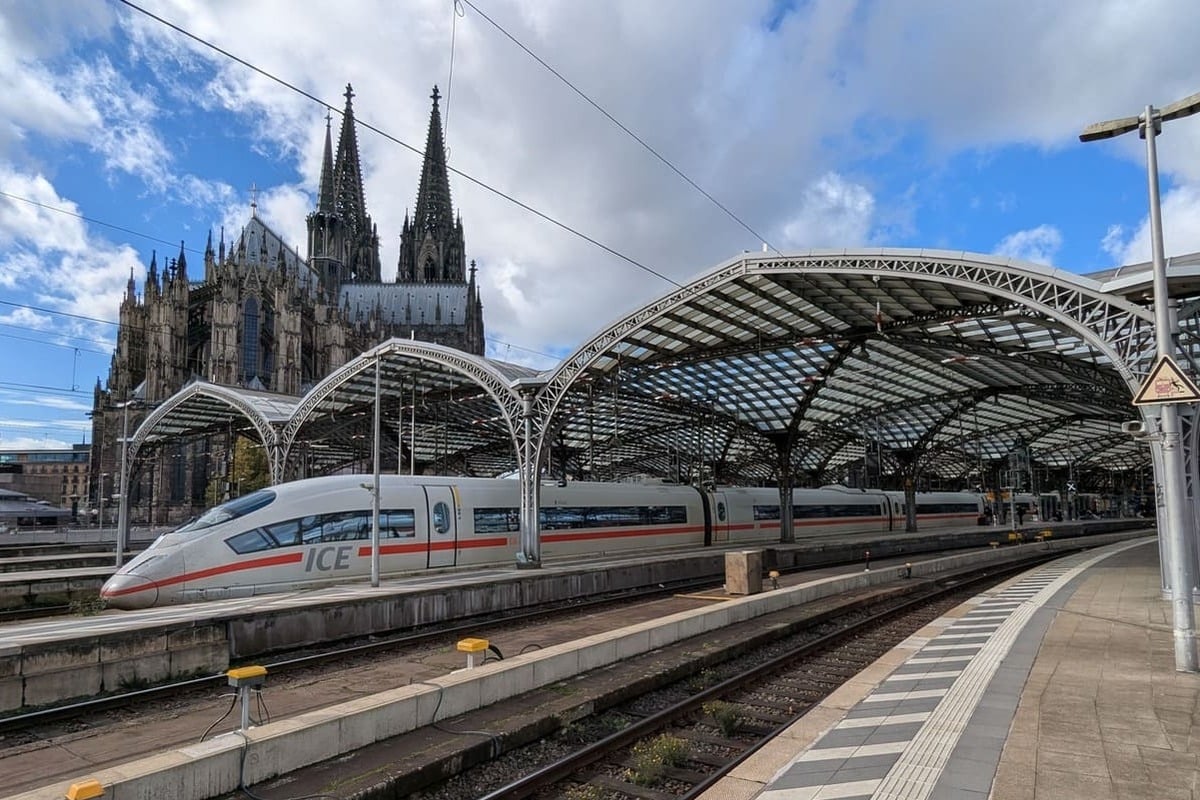
There will be 2 trains daily in each direction, in addition to the existing 7–8 daily ICE services between Brussels and Cologne, and the total travel time is only 2h25. That is, if you’re traveling from one end of the line to the other.
The first departure from Cologne is scheduled for 6:30 a.m., arriving in Antwerp at 9:00 a.m. The second departure is set for 5:30 p.m., reaching Antwerp at 7:45 p.m.
Departing from Antwerp, the first train leaves the station at 11 a.m., pulling up to Cologne at 1:24 p.m. The second and final daily service sets out at 7:00 p.m., arriving in Cologne at 9:23 p.m.
Based on the existing Cologne ↔ Brussels route, this is how much you should expect one-way fares to cost:
- Super Saver (early booking): $35–$55
- Standard Flexible Fare: $75–$140
- 1st Class: $110–$220
You already know where this route starts, and where it ends, but what about all the incredible intermediate stops you can hop off at?
(PLUS: We’ve also created a quiz for you at the end of this article to find which stop is calling your name!)
The Full Route
Cologne, Germany
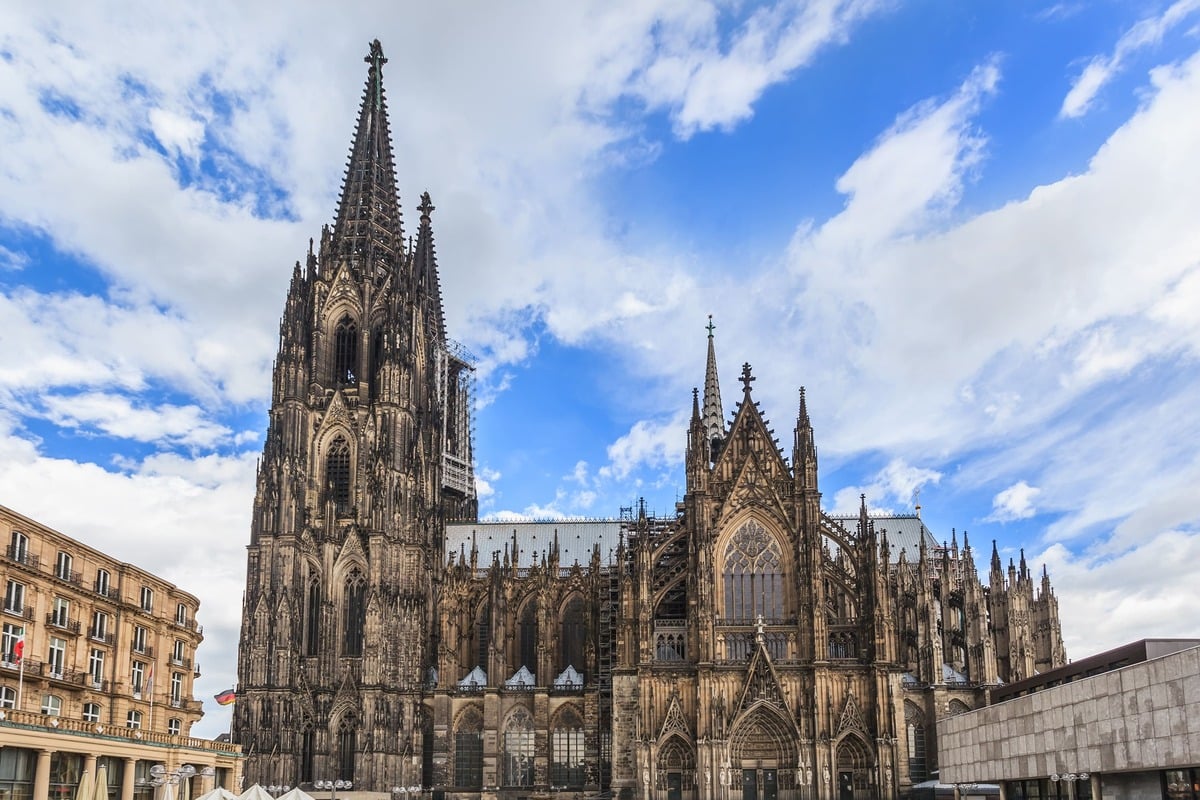
The departure point for the new ICE train, Cologne is a vibrant riverside city in West Germany primarily known for its imposing Gothic cathedral.
The Cologne Cathedral is a soaring, somber-looking church that took centuries to build, with towers so sturdy they survived a whole shower of Allied bombings during WWII.
The surrounding Altstadt did not get as lucky, with many of the historic half-timbered buildings and charming cobbled streets reduced to rubble, but lucky for the history buffs among us, parts of it have been reconstructed, and every year, more of the ugly-looking modernist blocks disappear, while ornate niches and Romanesque domes make a comeback.
Coolest thing about Cologne, though? It has a beergarten scene like no other in Germany, and if you’re looking for some rowdy Kölsch-fueled fun on a Thursday night, you should definitely pop by Biergarten am Aachener Weiher
Aachen, Germany
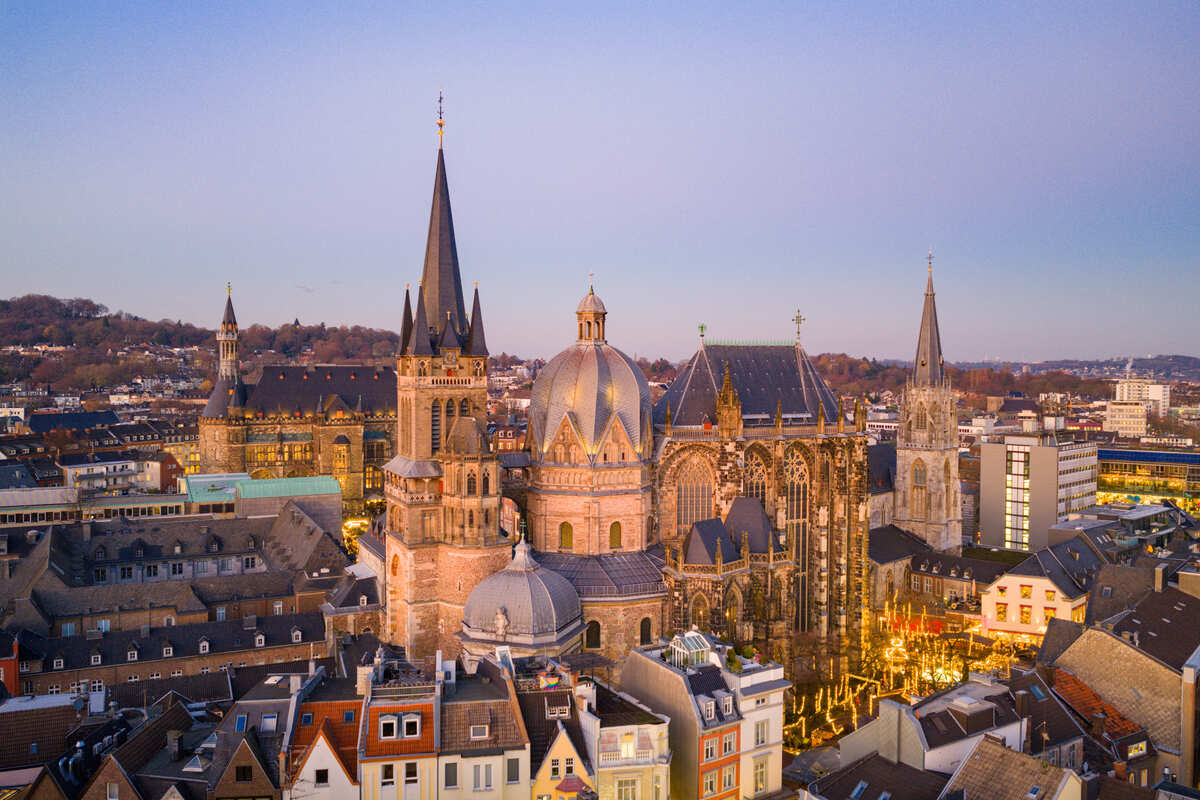
One of the oldest cities in Germany, and a criminally underrated cultural powerhouse, Aachen used to be the favorite residence of Charlemagne. As in, the guy who basically shaped medieval Europe, and whose descendants would go on to found France and Germany as we know them.
Aachen Cathedral, with its imposing Romanesque dome and glittering mosaics, is among the first cathedrals ever built in Europe, standing as a testament to Charlemagne’s legacy… and he just so happens to be buried there.
Germany’s first UNESCO World Heritage Site, it has an octagonal core that is over 1,200 years old, and it feels strikingly different from your standard Gothic German cathedral.
Aachen is also a border city, with Belgium and the Netherlands right next door, so culturally it feels delightfully mixed. Think biking lanes running along leafy boulevards, kerbside snack stands serving Belgian-style frites, and a young, international vibe.
Liège, Belgium
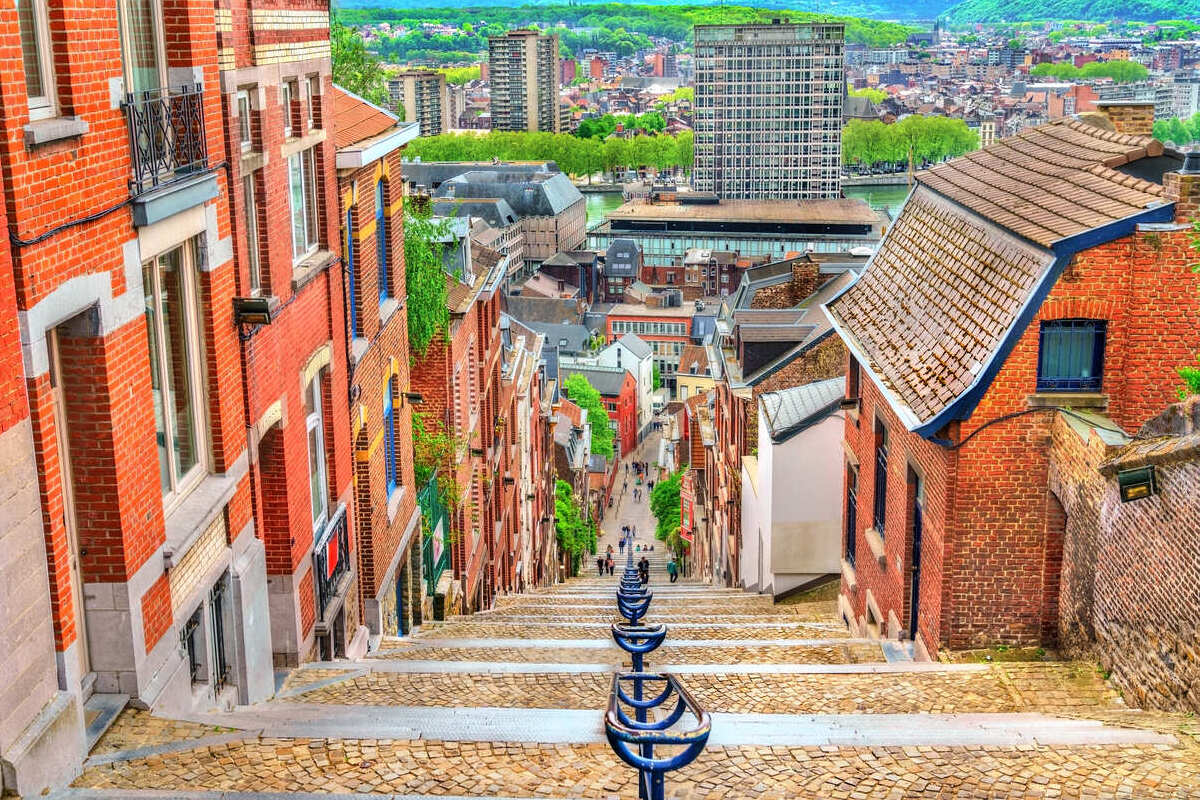
Your first stop in Belgium, Liège, was one of the key cities of the old Prince-Bishopric of Liège. In other words, it wasn’t just another medieval town. It was essentially a small ecclesiastical state in its own right, which has always given it that slightly rebellious, almost irreverent edge.
It straddles the winding Meuse River, a serpentine waterway that shaped its industrial past. At one point, it was Belgium’s main hub for steel and coal, so it feels arguably more industrial, gritty, and raw than, say, Aachen.
That said, architecturally it’s still a bit of a mix, with impressive churches and old buildings like Liège Cathedral, a Gothic landmark dating back to the 13th century, squeezed in between modern redevelopments and industrial-era housing.
It’s not your typical European fairytale town, but it’s got character in spades.
Plus, you won’t find tastier waffles anywhere else in Belgium. Liège is the home of Liège waffles—the denser, caramelized-sugar-in-the-batter version of the lighter, arguably overrated Brussels waffle—so it’s a good thing you’ll be burning some calories on the way up the landmark 374-step Montagne de Bueren.
Leuven, Belgium
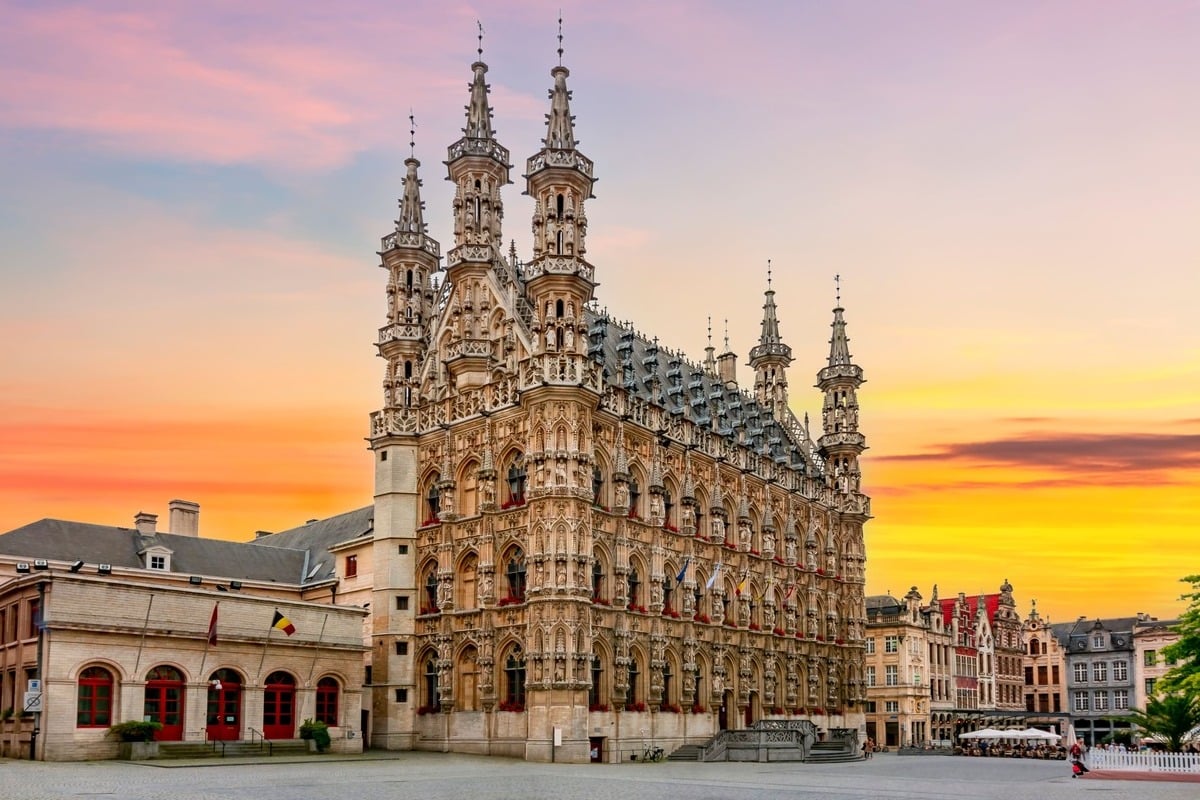
Everyone keeps telling you to go to Bruges or Ghent, but if you’re truly looking to beat the crowds in Belgium this year, you should try your luck at Leuven, right on the doorstep of Brussels, and an arguably even prettier town.
The city center here is one of the best-preserved medieval cores in the entire country. There are cobbled lanes everywhere, winding streets, and a super-ornate Town Hall that looks almost castle-like, and who would have thought?
Stella Artois, your favorite European import beer, actually hails from here.
The brewery history shows up everywhere, and beer culture is a huge part of local identity. Whether it’s a dreary weekday or Friday night, you can find KU Leuven students (at one of Europe’s oldest universities) gathering around Oude Markt and gulping down their golden lagers.
This square is nicknamed the “Longest Bar in Europe” due to the sheer number of cafés and bars lining it (I think I counted some 35 or maybe it was the beer?), and despite the obvious bohemian feel, it still feels comparatively quieter, and much more orderly and tidy than neighboring Brussels.
Brussels, Belgium
Listen, I’m not the greatest Brussels enthusiast out there, but I do get why some people fall madly in love with it.
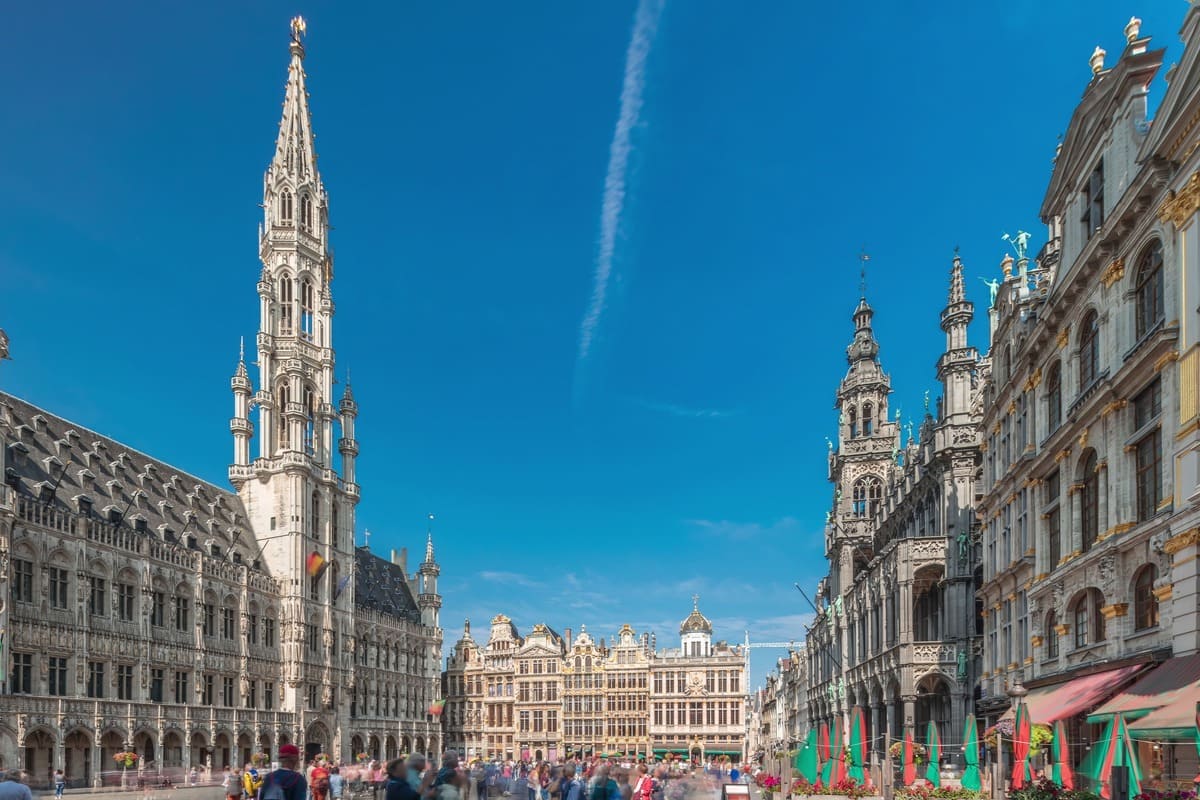
Yes, it’s a bit dodgy in parts, the entire city center looks like it’s a permanent construction site, and the Atomium might just win the award for Most Underwhelming European Landmark, but the Grand-Place is indeed a sight to behold, and maybe that alone warrants a detour in Brussels.
Surrounded by gold-leaf guildhalls and elegant baroque facades, this central square is the heart and soul of the Belgian capital, and the go-to spot for photos and people-watching. I guess seeing you’re in the area, you could always swing by Notre-Dame Cathedral, the Cathedral of St. Michael and St. Gudula, a quiet white lady in the vicinity.
Not the most jaw-droppingly beautiful cathedral, but a solid one nonetheless.
Now, you wanna know a Brussels secret? It truly looks its best, and most memorable, when seen from above, and atop the Musical Instruments Museum, you’ll find a tucked-away little coffeeshop boasting an epic panorama of the city center and of Grand-Place’s spires.
Antwerp, Belgium
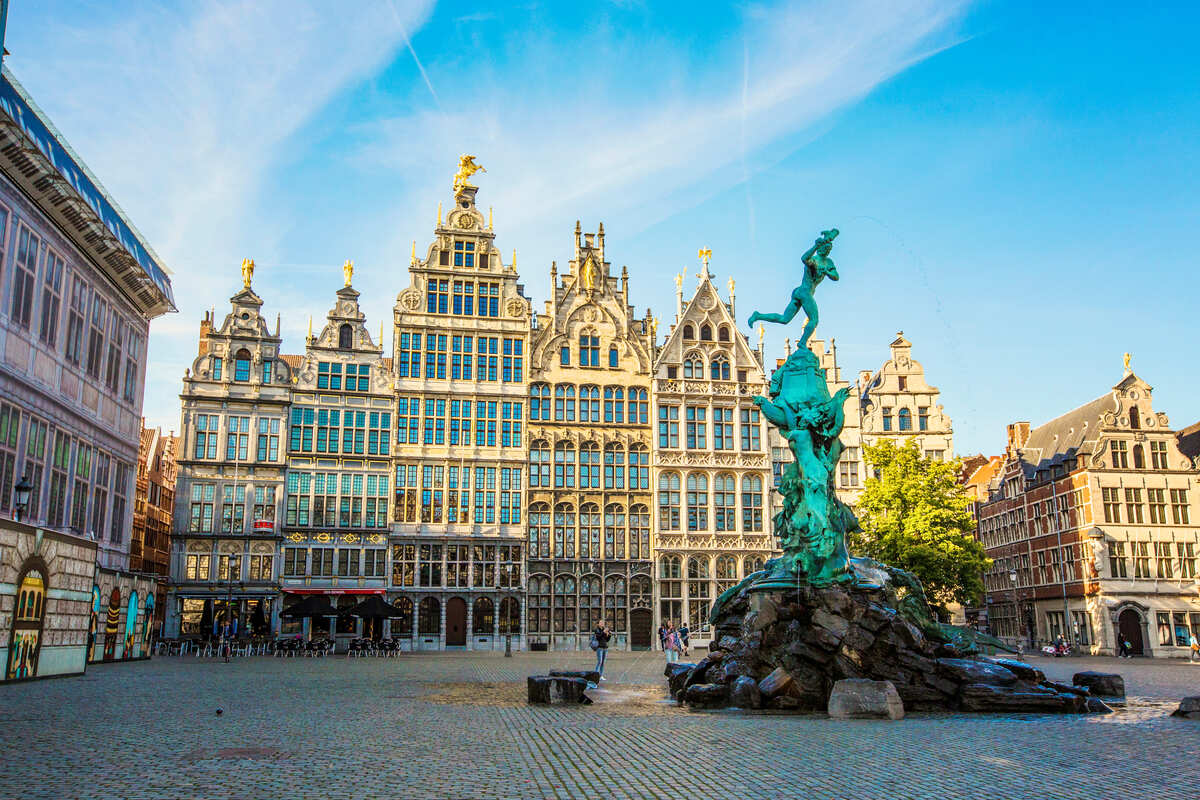
That’s it, folks. The end of the line. And what a cherry on top, I must say.
If Brussels has that French-speaking, Walloon-flavored, cosmopolitan-but-helplessly bureaucratic attitude, while for the most part it looks like a patchwork of mismatched modernism and EU glass boxes, Antwerp is the authentic Belgian metropolis the capital wishes it could be.
This is a city that doesn’t really try to be “cute” in the postcard sense of the word.
Yes, it’s stunning, but in a grand, slightly gritty-around-the-edges way. The Old Town carries a lot of that medieval trading-city weight, with narrow streets, guild houses around Grote Markt, and a cathedral so tall it practically anchors the skyline, but it’s all stitched together with an avant-garde, modern port-city attitude.
If it makes any sense at all to you, Antwerp is the “Milan of Belgium” to me. This is one of Europe’s most creative cities, and you’ll notice it in the boutiques, art galleries, and even the way people dress walking through the buzzing Zuid or the old harbor docks.
We know, that’s a lot of words and flourish just to say: “Antwerp is cool.”
Now take this quiz to find the stop that is perfect for you!
Euro-Rail Matcher
What kind of city vibe draws you in?
What is your ultimate European indulgence?
Which historical landmark do you prefer?
Describe your ideal travel atmosphere:
Cologne, Germany
The Vibrant Riverside Hub
Pro Tip: Make sure to enjoy the rowdy Kölsch-fueled beergarten scene at Biergarten am Aachener Weiher[cite: 1]!
Aachen, Germany
The Cultural Powerhouse
Pro Tip: You’ll love Aachen Cathedral, the 1,200-year-old resting place of Charlemagne featuring a Romanesque dome and glittering mosaics[cite: 1].
Liège, Belgium
The Rebellious River Town
Pro Tip: Climb the 374-step Montagne de Bueren[cite: 1], then reward yourself with a denser, caramelized-sugar Liège waffle[cite: 1].
Leuven, Belgium
The Medieval Student City
Pro Tip: Have a golden lager at Oude Markt, nicknamed the ‘Longest Bar in Europe'[cite: 1], and explore this orderly university town where Stella Artois hails from[cite: 1].
Brussels, Belgium
The Heart of the Capital
Pro Tip: For an epic panorama of the city’s spires, head to the tucked-away coffeeshop atop the Musical Instruments Museum[cite: 1].
Antwerp, Belgium
The Authentic Metropolis
Pro Tip: Known as the ‘Milan of Belgium,’ it features cool boutiques, art galleries, and a towering cathedral anchoring the skyline[cite: 1].
