
Whether it’s crumbling under the weight of mass tourism or not, people will keep flocking from all over the world to Venice and its historic, canal-traversed center. They just can’t resist its maritime charm, and honestly, I get the appeal.
Having visited La Serenissima three times myself, I can attest there’s truly nothing quite like it.
But perhaps the biggest mistake tourists make is not skipping Venice altogether, but ignoring the wider Veneto region that surrounds it, and all the beautiful, lesser-known treasures hiding in plain sight.
Think Treviso, a historic inland city cut through by winding waterways, Chioggia, an up-and-coming Venice alternative with canals of its own, and my personal favorite, Vicenza.
Here, you’ll find a Veneto that still feels largely untouched by the masses, with tiny piazzette lined by cafés, elegant Venetian architecture, and plenty of that old-world charm… without Venice’s eye-watering prices.
A Renaissance Gem To Rival Florence In Beauty
Vicenza is the kind of Italian city that makes a lot of sense if you’ve already checked off the big-ticket Italy circuit… or if you don’t mind kicking it off with the less-obvious alternatives.
It has the stunning architecture, the delicious food, the romantic piazzas, and the fascinating history that keeps drawing you back to The Boot… without the feeling you’re wading through an indiscernible mass of bodies.
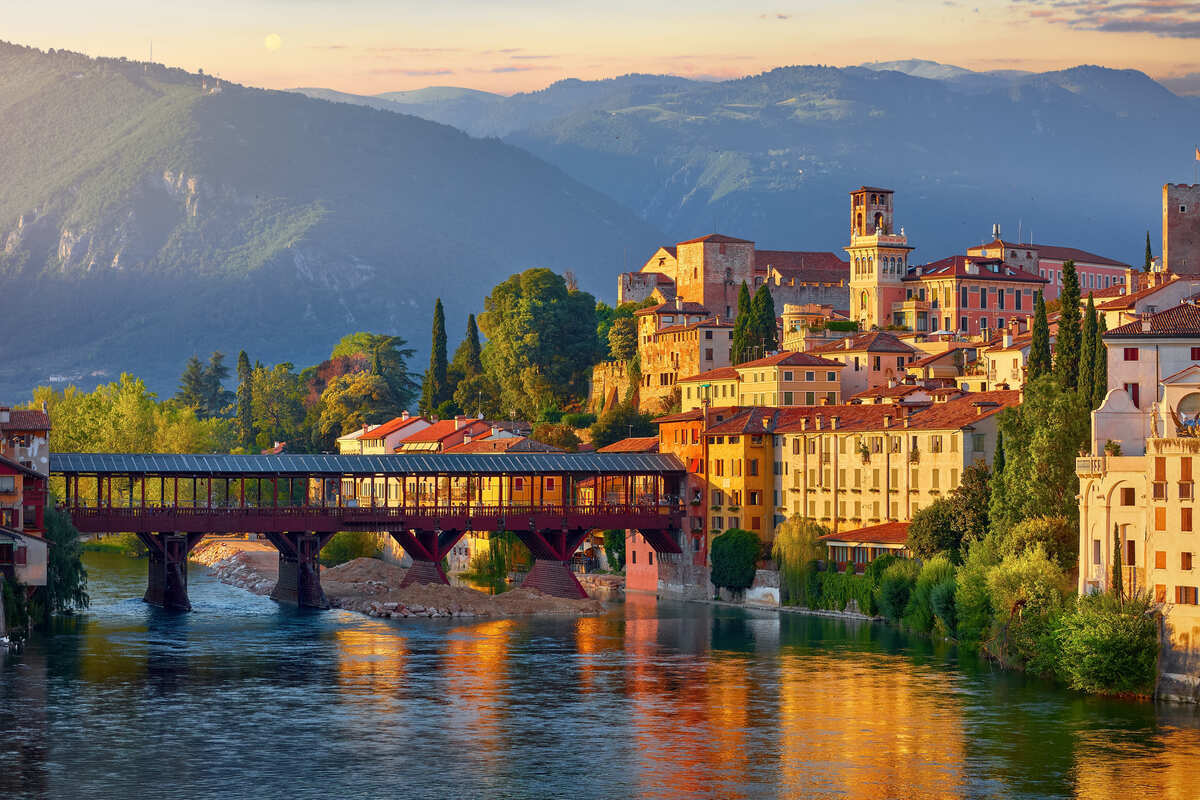
The biggest draw here is the Palladio-designed Historic Center:
If Haussmann was responsible for Paris’ 19th-century makeover, Andrea Palladio is the renowned architect who transformed Vicenza a few centuries earlier, in the 1700s, completely reimagining a mess of a medieval cluster of weathered houses into an open-air catalog of the Renaissance.
Florence may get all the fame, but if you’re asking me to pick between the two, Vicenza takes the cake for one unexpected reason.
Unlike your usual gorgeous Italian city that’s been overtaken by the selfie-taking hordes, this one remains pretty much… unsullied.
Italians still actually live in its very core—locals have effectively been chased out by a fast-spreading B&B industry—and the vibe here is very much ‘ordinary slice of Northern Italy‘, rather than ‘theme park for tour groups’.
Check Entry Requirements Before Flying To Europe
As of this year, Americans are required to undergo mandatory fingerprinting when entering the European Union, including Italy.
From 2027, they may also be required to apply for a new online travel permit called ETIAS. Without a pre-approved ETIAS, you won’t be allowed to board your Europe-bound flight.
If you’re unsure what entry requirements are in place at the time of your departure, use the Entry Requirement Checker to stay up to date with the latest changes.
How Safe Is The Veneto Region Right Now?
Needless to say, the absence of crowds and mass tourism makes Vicenza way more chill and safer than your average tourist-dominated Italian city.
Very few scammers out and about, fewer aggressive touts, and no tourist traps around every corner. Overall, the region of Veneto is way safer than other parts of Italy, particularly the south, where organized crime and property crime are more prevalent.
The city of Venice, which acts as a barometer for the wider Veneto, scores 91 out of 100 on the Traveler Safety Index, based on reports from recent visitors alone.
Your main concern here is pickpocketing, and petty theft, rather than violent assault:
Italy Without The Tourist Hordes
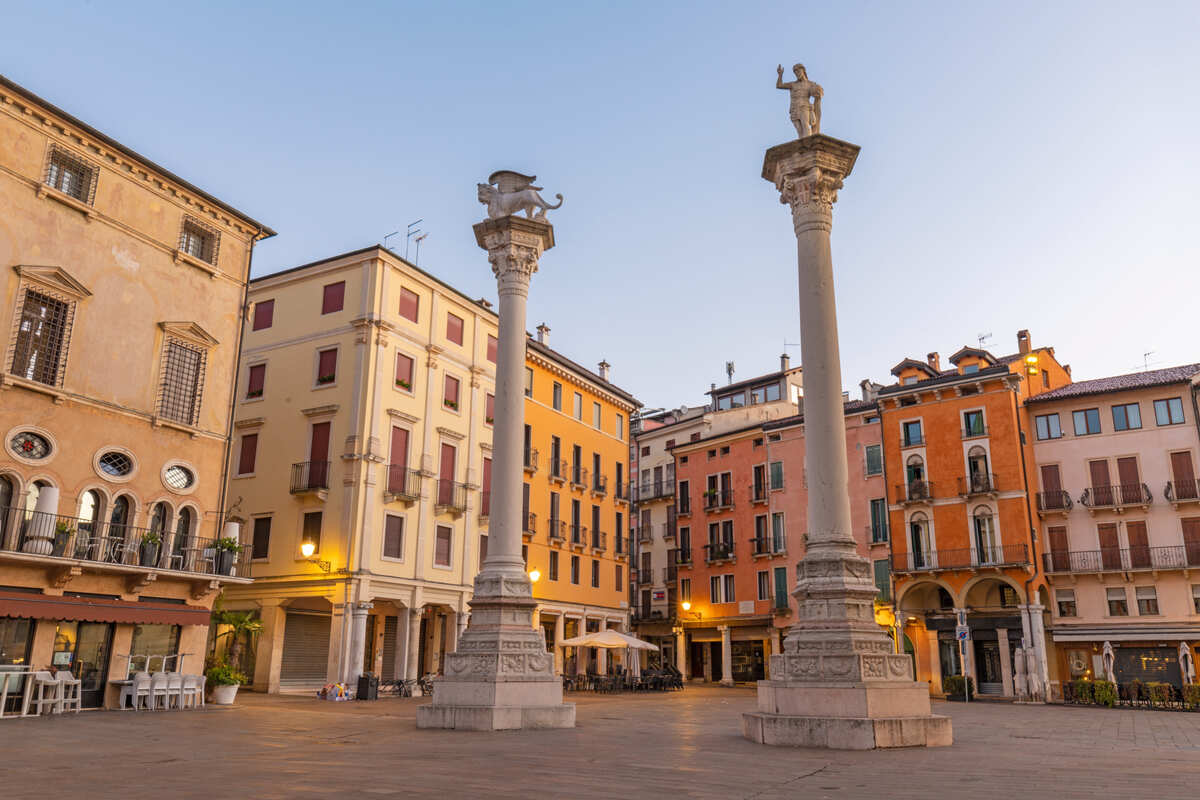
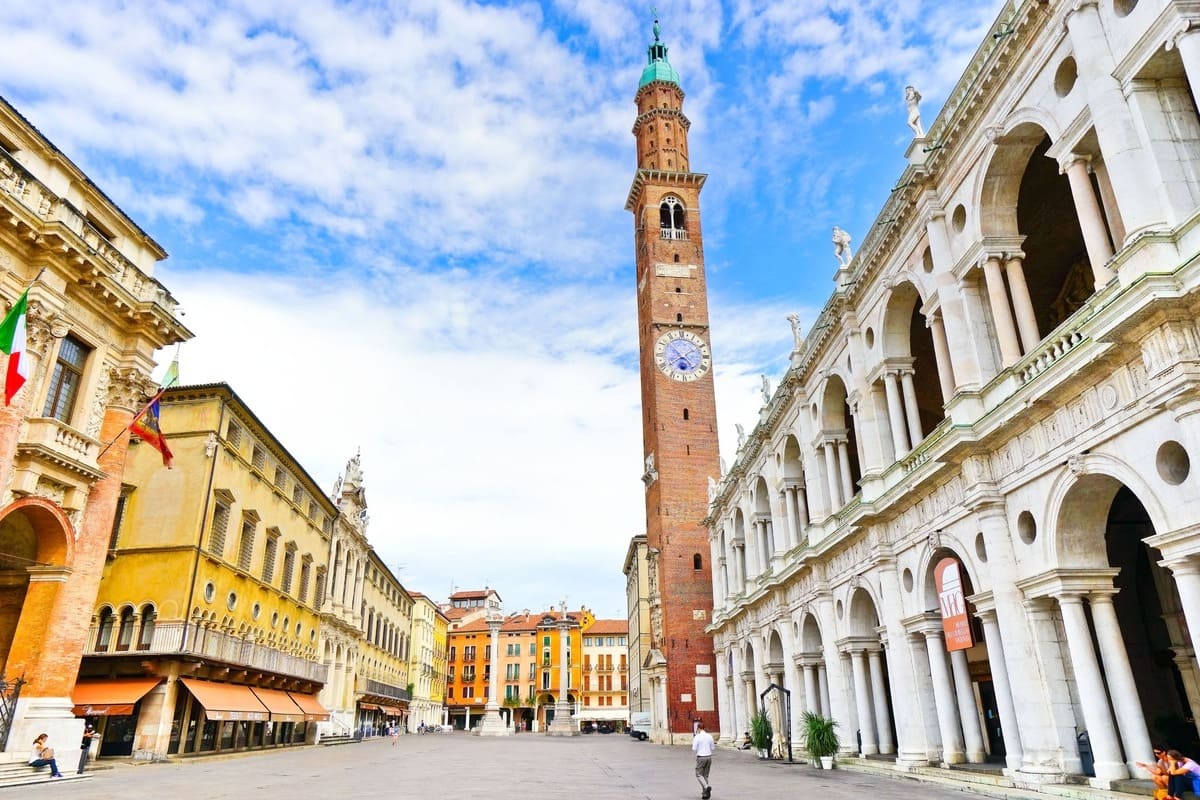
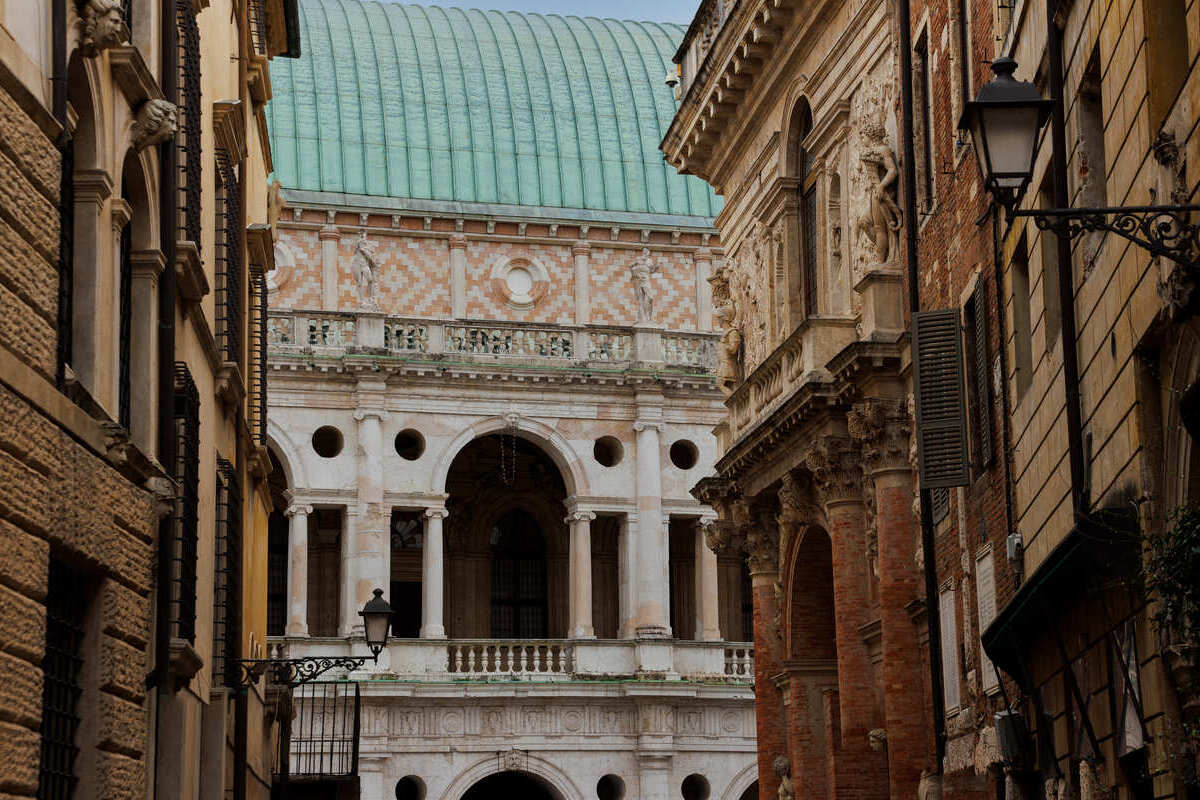
Every visit to Vicenza starts at Piazza dei Signori, and rightly so. It is the obvious landmark, home to an enormous Basilica Palladiana, distinguished by its double-story loggia, that was, again, designed by Palladio.
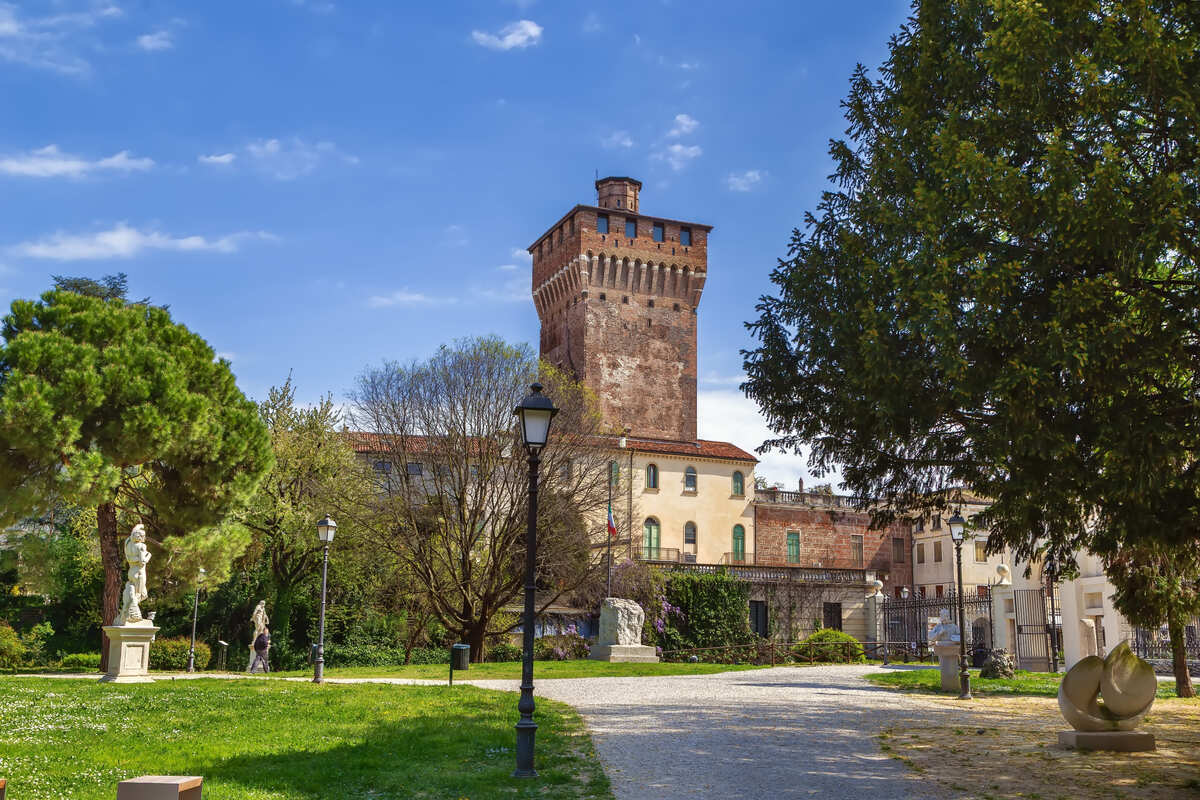
Venice may have St. Mark’s Campanile, but Vicenza lays claim to an arguably more impressive, if only slightly tilted, Torre Bissara:
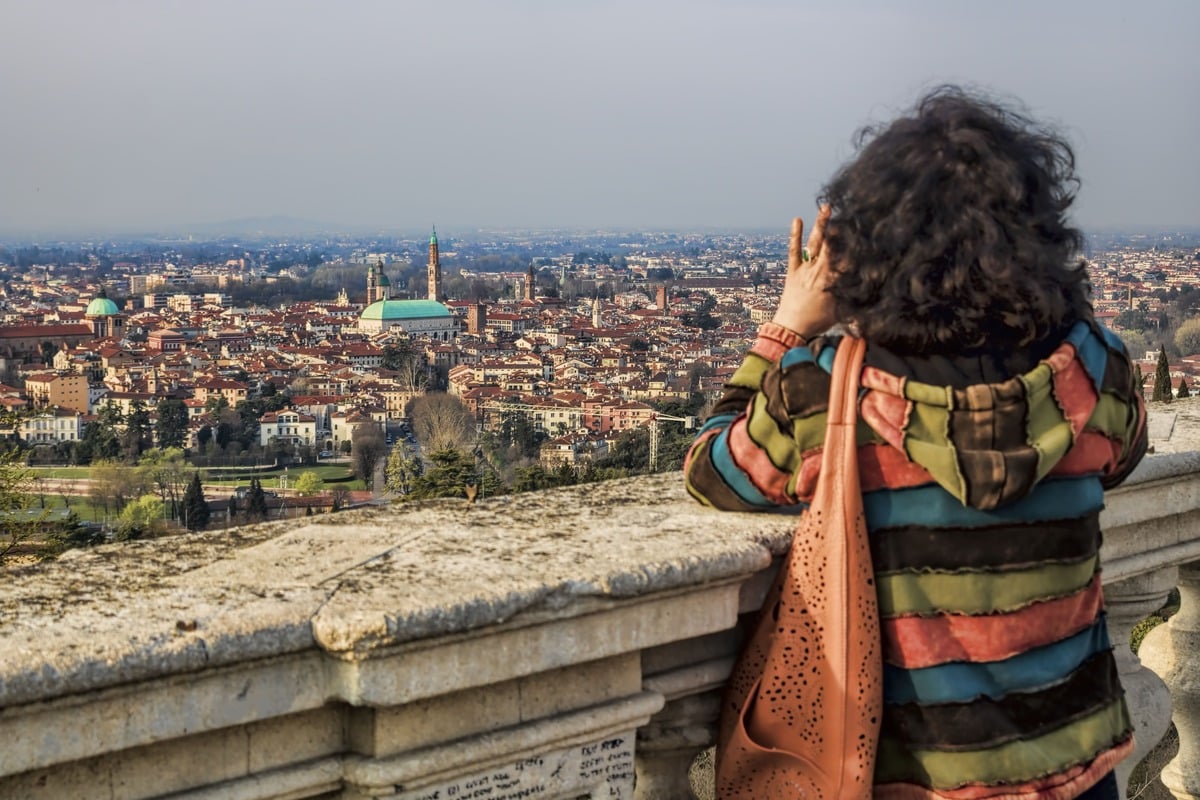
Towering above the main piazza, this 12th-century wonder will be your guiding beacon in Vicenza: whichever alleyway you take, no matter the direction, you can look up, and chances are it will be looming somewhere in the skyline.
Or you can’t miss the distinctive musical chime, the ‘ora nonna’, played shortly before noon and 6 p.m.
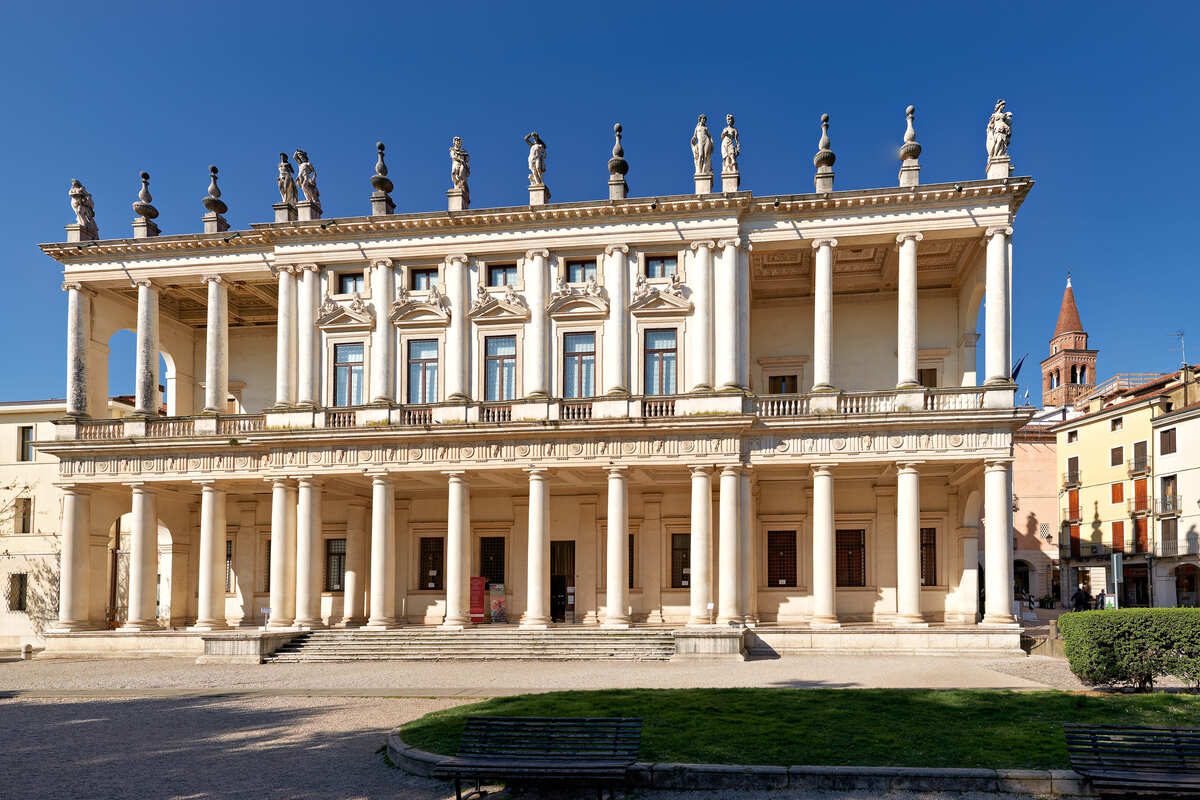
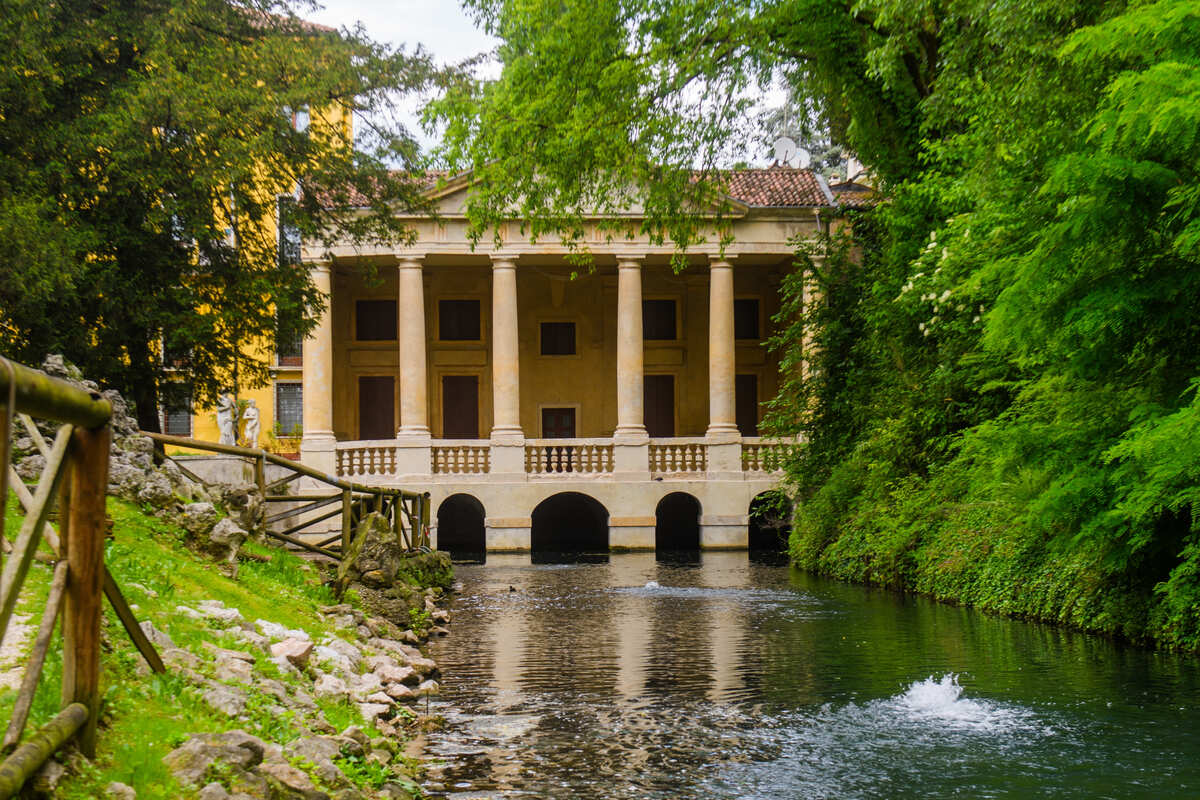
Vicenza prides itself on being a daughter of Veneto, the affluent region of Italy spearheaded by Venice. Unlike its more famous sibling, however, it doesn’t have canals, bar the odd few streams running around the Historic Center.
Then again, it’s not like it needs them to be gorgeous:
The Most Beautiful Theater In Italy
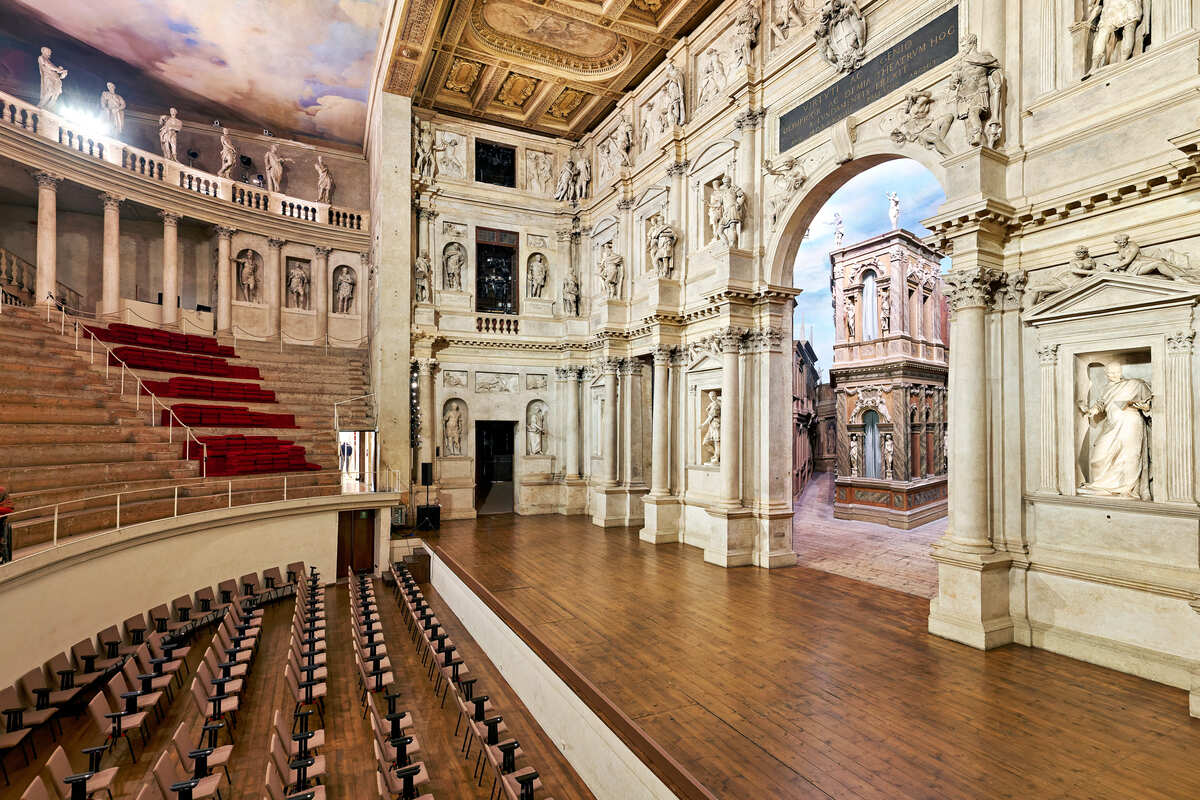
Only a five-minute walk from the square, Teatro Olimpico is the single most jaw-dropping building you’ll find in town.
Forget Teatro alla Scala, or the opera houses in Palermo: Palladio designed this opera house to feel like a literal Roman theater, with a breathtaking trompe-l’œil walkway that seems to stretch into the distance behind the ornate stage, creating the illusion of a vast city street disappearing into the horizon.
Photographs truly don’t prepare you for how ridiculously impressive it is.
Right beside the theater, Villa La Rotonda is that Renaissance palace you just have to tick off in every self-respecting Italian city. It’s a symmetrical villa perched on a hill above Vicenza, with four identical classical porticos and terraces overlooking the lush Veneto countryside.
If you’re wondering what’s the blueprint for the countless neoclassical homes scattered all over America, you’ve found it.
Roman Ruins Right Beneath Your Feet
Head over to Contrà Porti, the quieter end of the Historic Center, and descend into the Roman Cryptoporticus:
It’s not as glamorous as the Palladian monuments, and certainly not as imposing as a Roman-era arena or a triumphal arch, but it whispers haunting tales of a Roman past the Renaissance era would have all but forgotten.
It’s an underground covered passageway, built as part of the ancient city’s Roman-era infrastructure, and once used to connect buildings and provide access beneath the streets.
Think of it as the Catacombs of Vicenza, just far more ancient than the Paris ones, and without the eerie collection of skulls.
Maybe it’s a good time to mention the ticket price: to visit the Cryptoporticus costs only $4. In fact, visiting all of the paid attractions in this walkable historic circuit will only set you back around $20 in total.
How Affordable Is Vicenza, Italy?
Other than being virtually crowd-free, by Italy standards anyway, Vicenza is one of the most affordable cities in the country.
It’s (largely) affordable to visit, but it’s that classic case of an Italian city that’s way more valuable to locals than it is to international visitors.
It lies in the shadow of both Venice and Verona, halfway between two of Italy’s top tourism hotspots, and despite being right on that railway corridor, casual visitors rarely ever hop off here.
That means less tourist-driven inflation, with prices shaped more by residents—and we all know how low purchasing power in Italy is compared to the Stateside average—than by wealthy visitors.
That keeps Airbnb and hotel prices down, even compared to smaller, mid-tier Italian cities that are also overshadowed by Venice.
Vicenza is around 14% cheaper to visit than Padua, with a basic lunch costing about $14 against Padua’s $20. Compared to Venice, the gap is even more gaping, with downtown hotels in Vicenza costing roughly 40% less to book than in the floating lagoon.
Here’s how much you should expect to spend on a day in Vicenza:
Average Prices In Vicenza, Italy
- Coffee + pastry: $3–5
- Aperitivo: $6–10
- Casual lunch: $12–18
- Pizza: $8–13
- Nice 3-course dinner: $30–50
- Gelato: $3–5
- Mid-range hotel: $70–130/night
- Local bus ticket: $2
My Own Personal Favorite Eatery In Vicenza
Speaking of Italian food, if you’re looking for that authentic address in Vicenza, Osteria Veneto‘s is probably my favorite spot in town for Vicentine food.
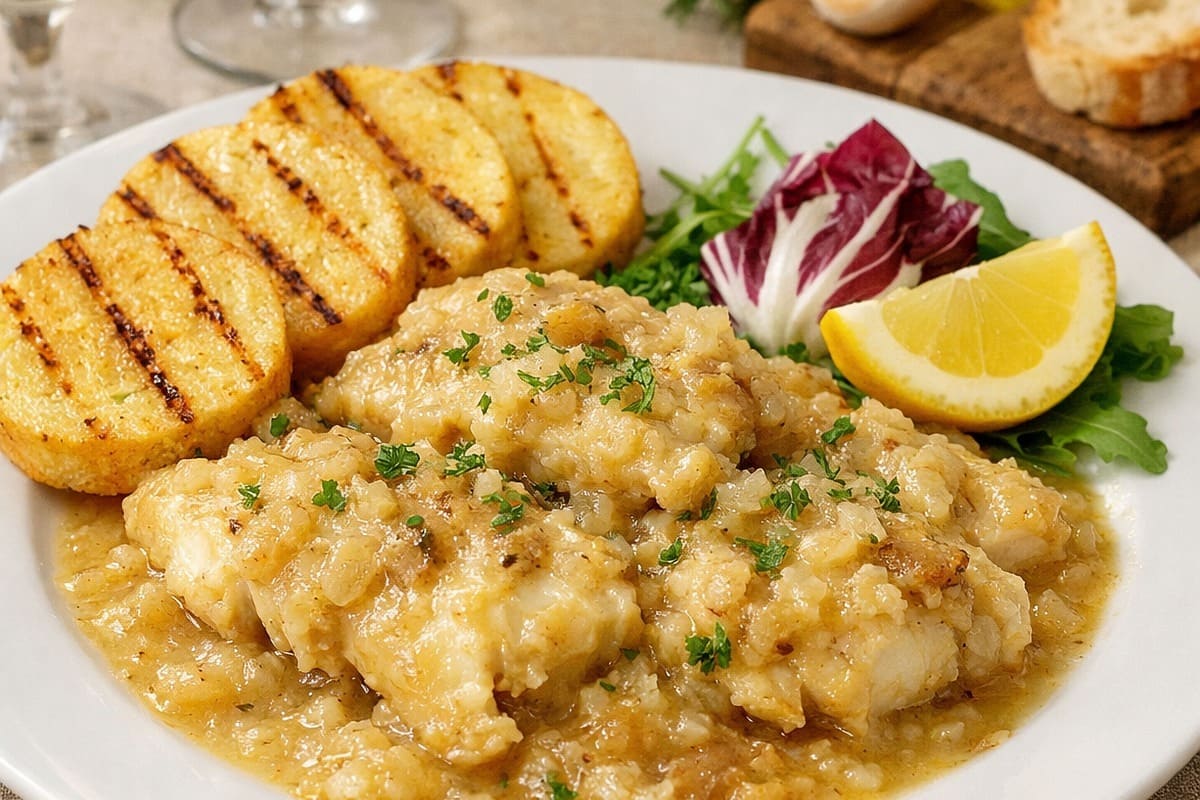
Think of the city’s traditional baccalà alla vicentina and gnocchi al tastasale, paired with some silky red Veneto wine. A proper, sit-down dinner here will set you back around $30–35 per person, drink included.
It’s right on Corso Palladio, too, the city’s main commercial vein, yet it leans very much into traditional, local-frequented Venetian fare, rather than touristified, American-friendly Italian food.
The restaurant specifically emphasizes products and producers from Veneto, and its setting in a historic Palladian building adds to that old-school local feel.
Enter your email address to subscribe to Travel Off Path’s latest travel news, straight to your inbox
