
I hate getting excited to go to a new Caribbean beach only to find that the water looks murkier than some of our dammed-up rivers in Kentucky.
When my wife Liz and I chase perfectly transparent water, we entirely avoid the heavy surf zones and decaying Sargassum blooms that ruin so many coastal vacations.
After logging hundreds of scuba dives and attending countless regional Caribbean tourism conferences, I am bypassing the murky tourist traps and breaking down the exact geographic and biological reasons these 10 specific Caribbean beaches offer some of the most pristine waters on the planet.
1. Grace Bay Beach, Turks and Caicos
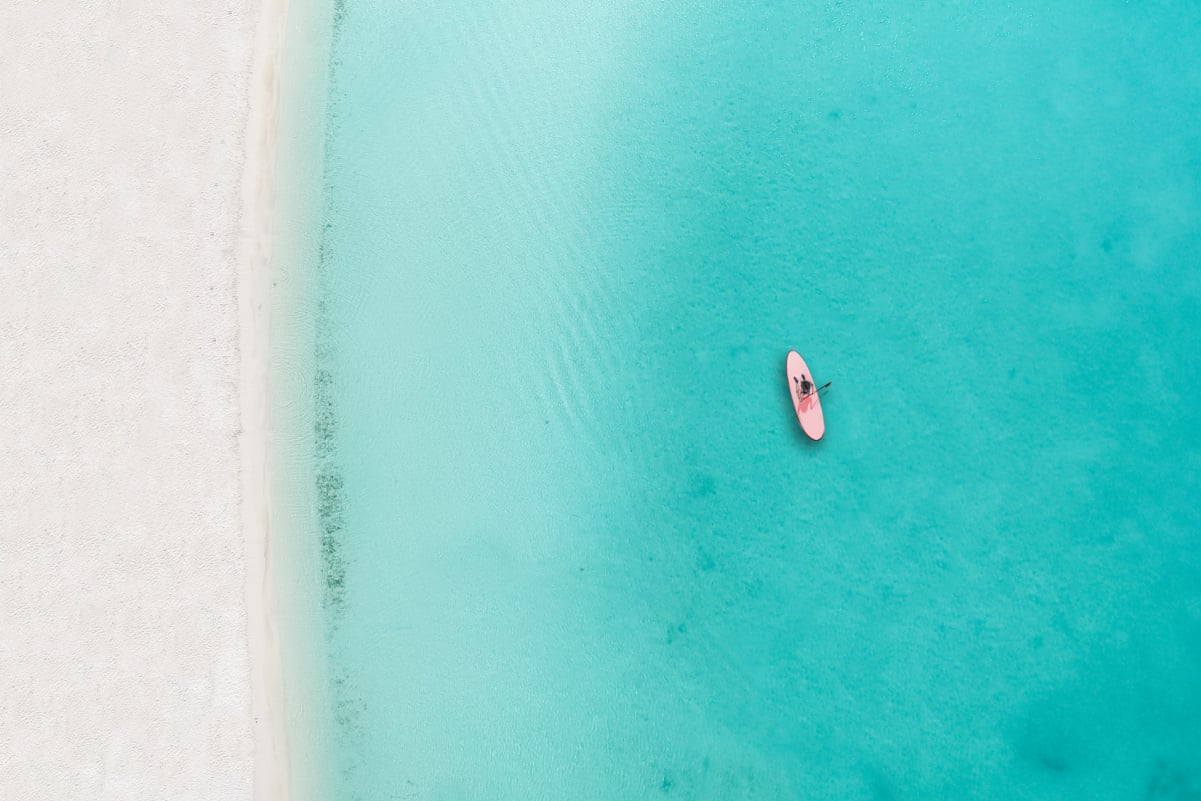
- The Clarity Engine: The water stays perfectly clear because the huge Turks and Caicos Barrier Reef sits about 1.5 miles offshore. This reef acts as a natural breakwater that buffers heavy Atlantic wave action and prevents the ocean floor from churning.
- Zero Mud: The island of Providenciales has basically zero sediment, clay, or major river systems. This eliminates the risk of muddy sediment washing into the bay during heavy rain.
- Strict Protections: The beach sits inside Princess Alexandra National Park, managed by the Department of Environment and Coastal Resources. They strictly enforce a complete ban on motorized boat traffic within the buoyed swimming zones to prevent watercraft from churning up the seabed.
Tip From The Editor (me): You can expect 60 to 100 feet of underwater visibility here year-round. I always tell friends to bring their own snorkel gear rather than renting, as the biogenic sand makes the shallows incredibly vibrant.
2. Seven Mile Beach, Cayman Islands
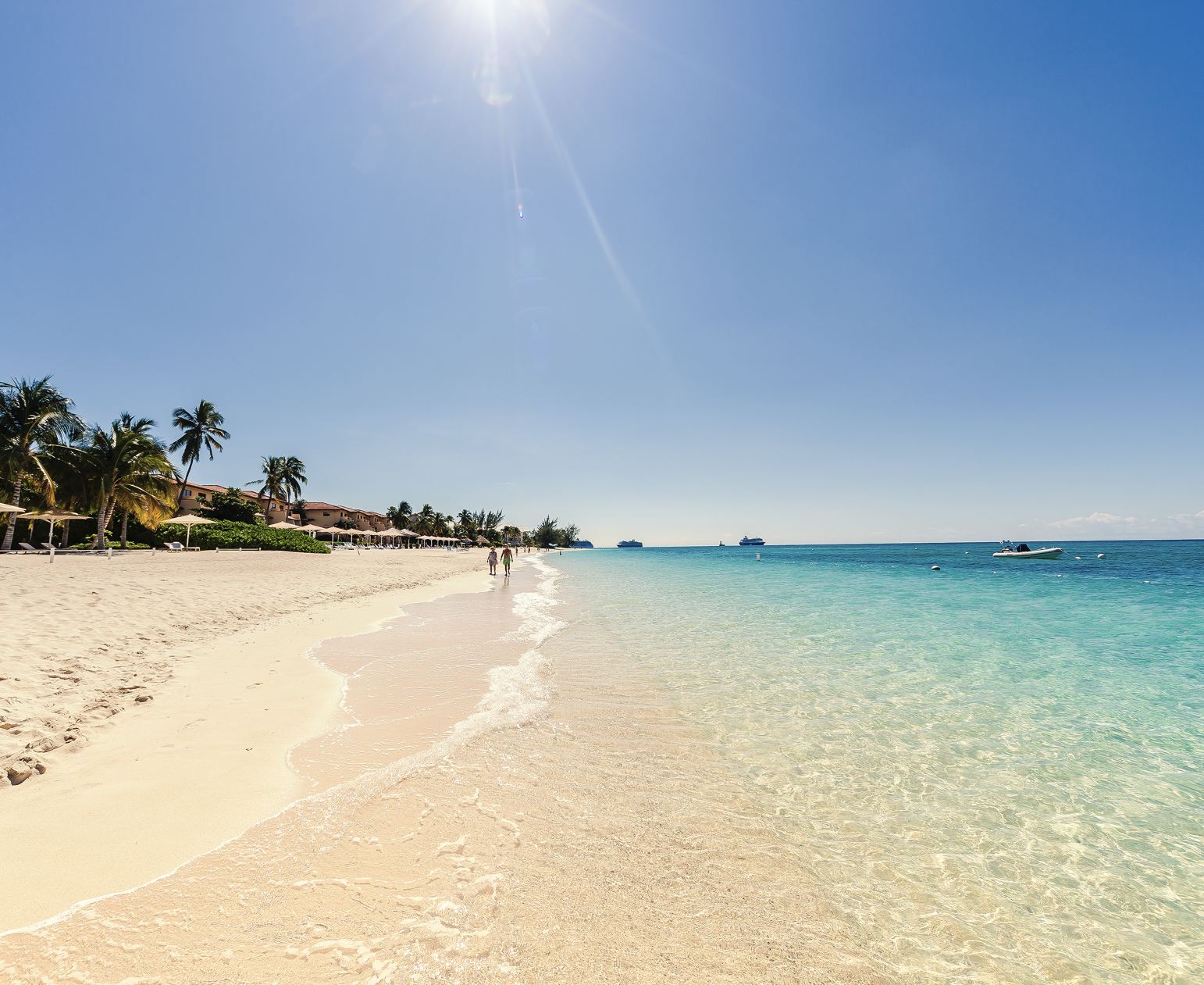
- The Geography: This beach faces west on the island’s leeward side, perfectly sheltering it from the eastern trade winds. This orientation keeps the water remarkably tranquil and optically clear.
- Marine Life: The shallow and clear conditions make it an ideal habitat for seeing bright orange starfish and southern stingrays resting just offshore.
- The Erosion Crisis: At the southern end near the Grand Cayman Marriott Resort, concrete seawalls built too close to the active beach zone have violently reflected wave energy and scoured the sand into deeper water.
Tip From The Editor: Enjoy this stretch of sand while it lasts, as environmental scientists are actively discussing “managed retreat” strategies to legally relocate hard infrastructure inland and allow the shoreline to naturally recover.
3. Arashi Beach, Aruba
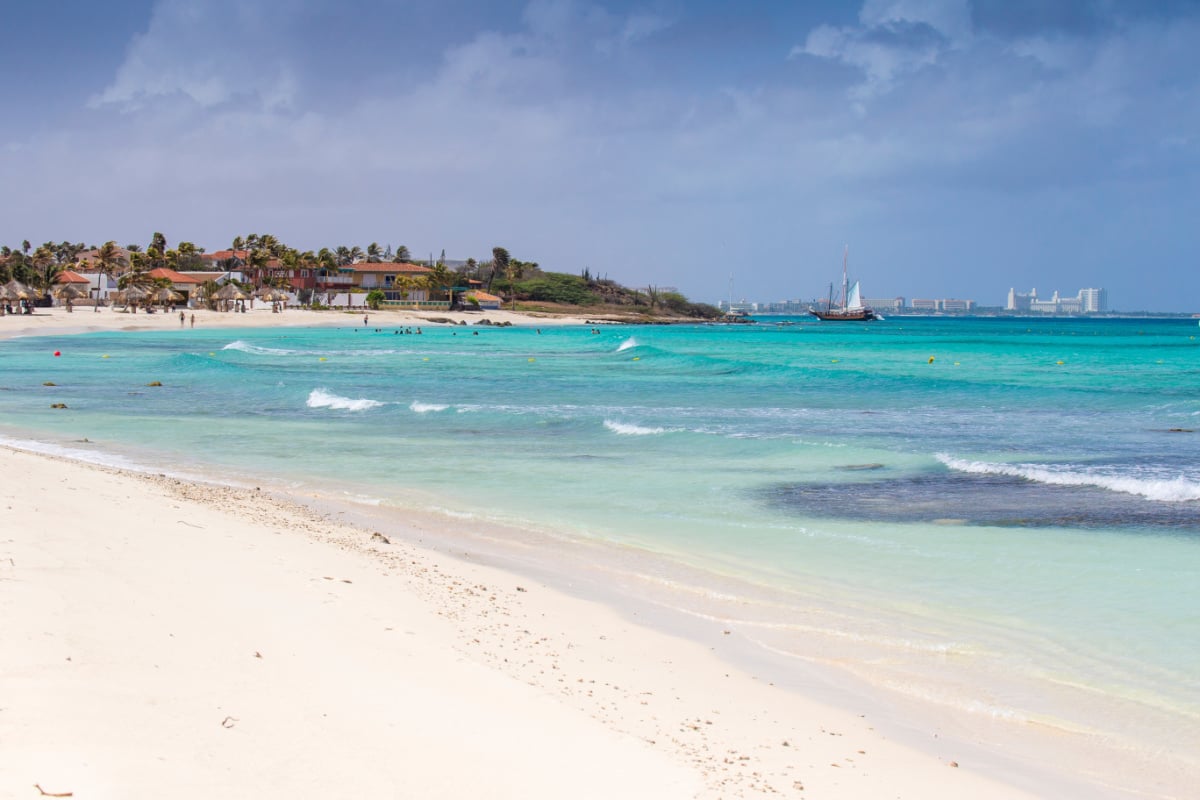
- Current Protections: Aruba sits below the primary Atlantic hurricane belt, sparing its reefs from cyclonic wave destruction. It also benefits from specific oceanographic currents that push light-blocking Sargassum seaweed blooms completely away from its shores.
- Underwater Conditions: Calm conditions allow any disturbed suspended particulate matter to settle quickly. This creates flawless visibility for snorkelers observing sergeant majors, parrotfish, blue tangs, and yellowtail grunts right off the fringing reef.
Tip From The Editor: Because decomposing Sargassum releases organic matter that heavily attenuates light and causes hypoxic “brown tides,” Arashi remains a bulletproof option for year-round optical perfection.
4. Sorobon Beach, Bonaire
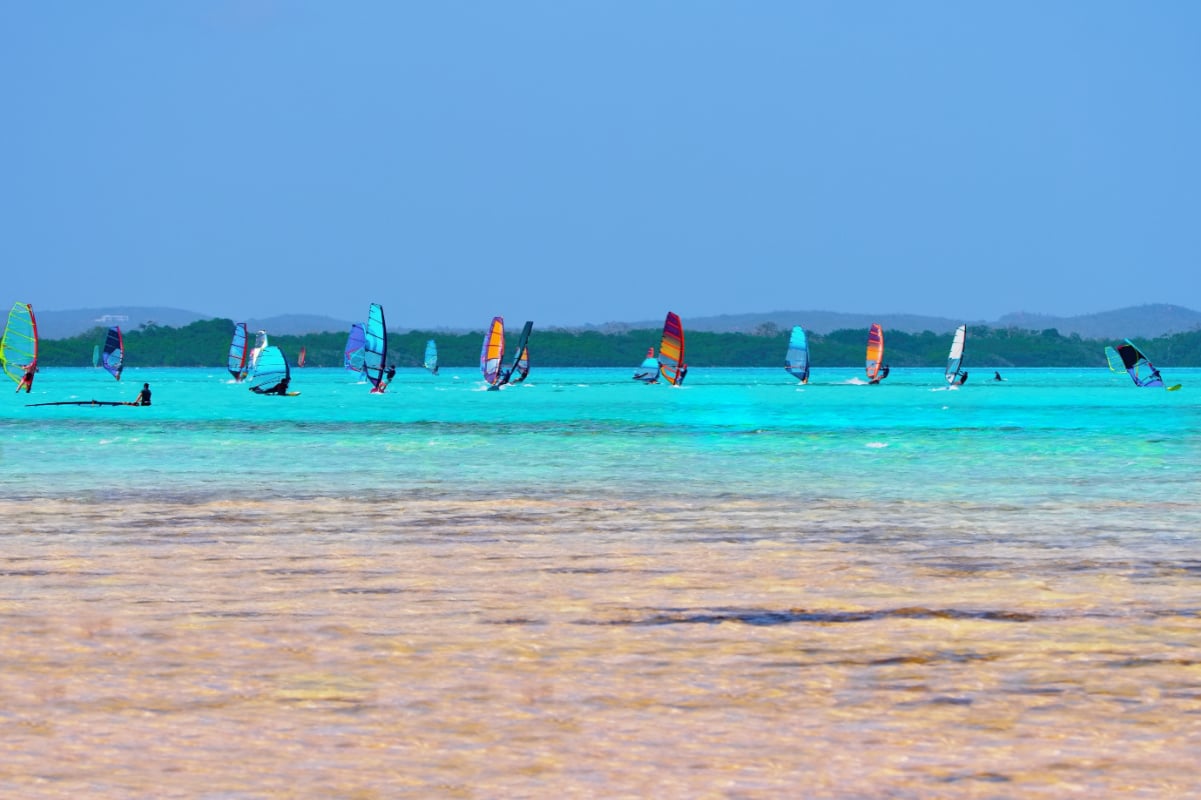
- The Lagoon: Situated within Lac Bay, this 700-hectare lagoon rarely exceeds one meter in depth. A dense border of mangrove forests and sprawling seagrass beds naturally filters it, acting as a biological filtration matrix.
- Elite Conservation: Managed by STINAPA, this protected Ramsar wetland site enforces a mandatory $40 Nature Fee to fund constant ecological monitoring and water quality testing.
- Strict Zoning: To protect the fragile filtration ecosystem from suspended sediments, motorized boats, anchoring, and kitesurfing are completely banned in the shallow zones.
Tip From The Editor: This vast, flat aquatic environment is highly sought after by global windsurfing enthusiasts. Even if you don’t surf, wading out into the transparent water to look for globally endangered Green Turtles is completely surreal.
5. Meads Bay Beach, Anguilla
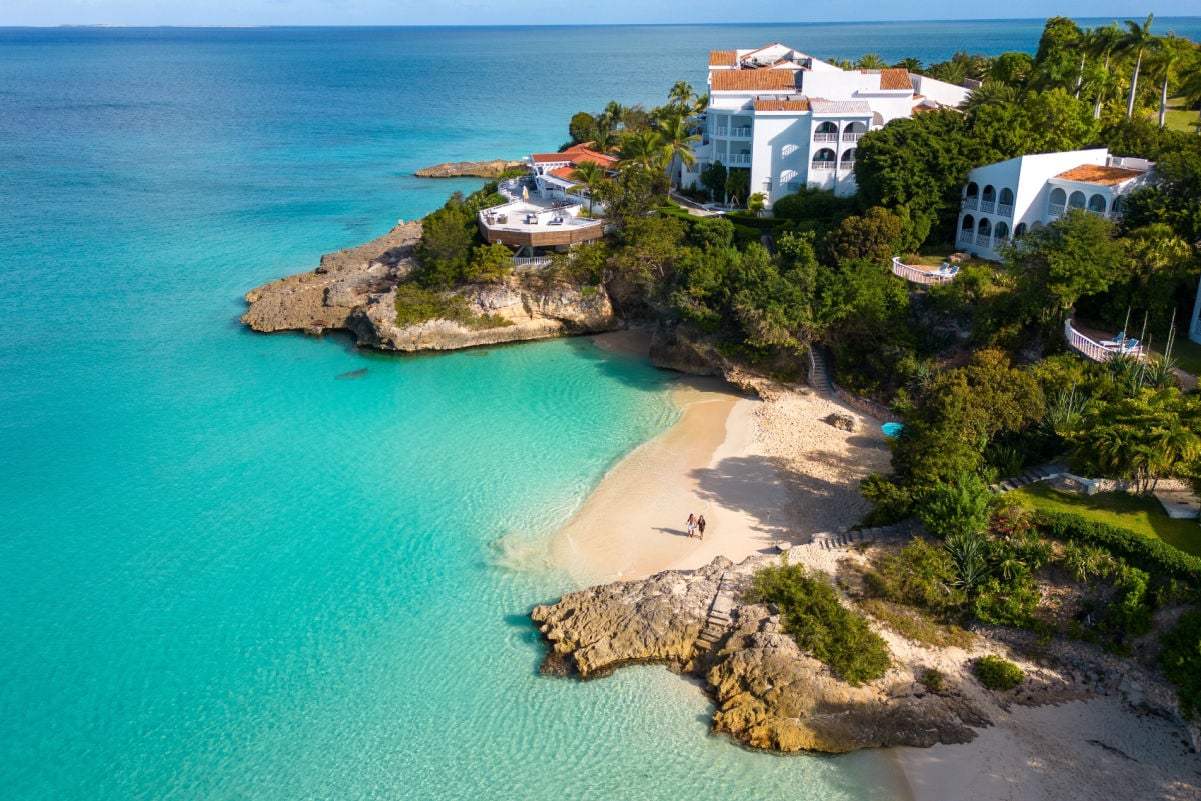
- The Limestone Secret: Anguilla is a low-lying coral and limestone island with no surface rivers or streams. The island’s vegetation relies entirely on rainfall absorption into subterranean freshwater lenses and cavern systems.
- Zero Runoff: Because no rivers dump terrestrial sediment or agricultural runoff into the ocean, the nearshore waters remain entirely oceanic and unfiltered.
Tip From The Editor (me): The lack of input from rivers means the water at Meads Bay holds a striking, luminescent blue clarity that stretches for miles.
6. Grote Knip Beach, Curaçao
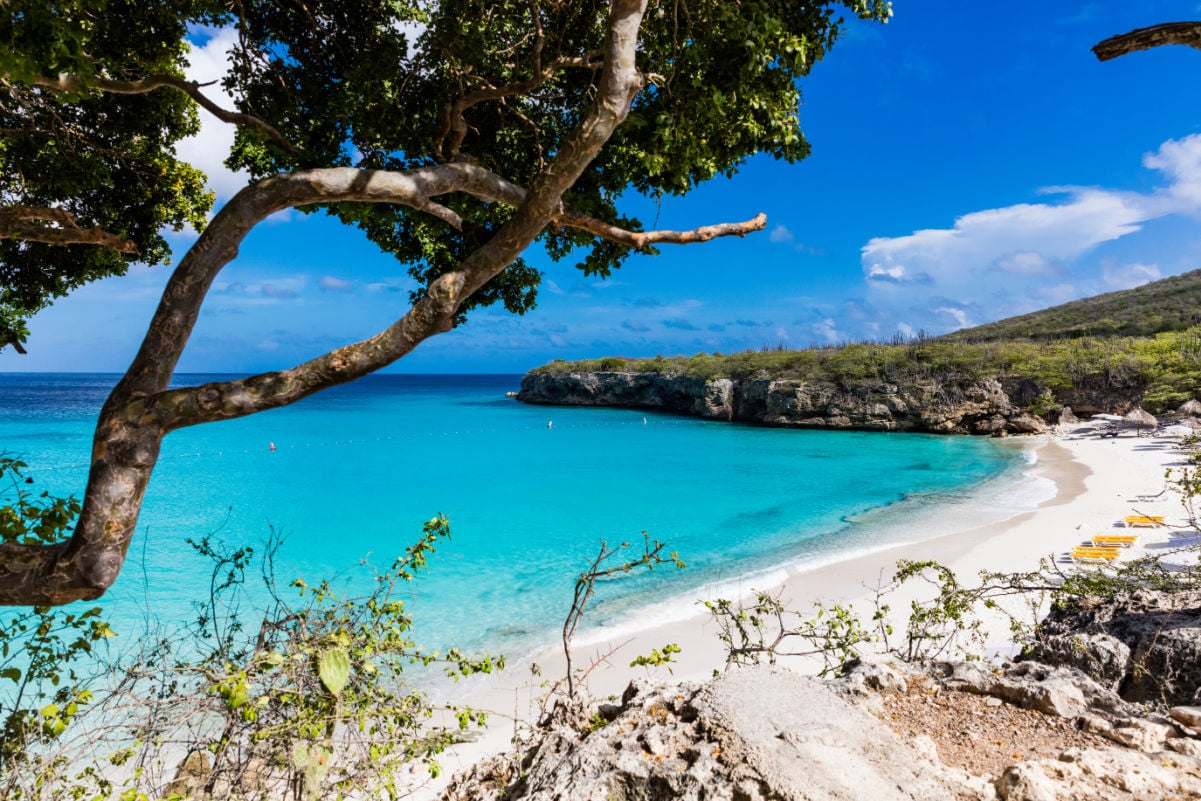
- Natural Sheltering: Tucked into the remote western end of Curaçao, this pristine cove beach is flanked by prominent limestone cliffs. These cliffs act as a natural physical barrier that dampens longshore currents and blocks heavy wind-driven wave action from the open sea.
- Undeveloped Coastline: The complete lack of large-scale resort infrastructure prevents nutrient-rich wastewater from entering the nearshore environment. This preserves the oligotrophic state required for maximum light penetration.
Tip From The Editor (me): While this beach is incredible, don’t forget to get underwater in Curacao! It is one of the best diving places in the world, and a great place to learn if you are new to diving.
7. Canto de la Playa, Dominican Republic
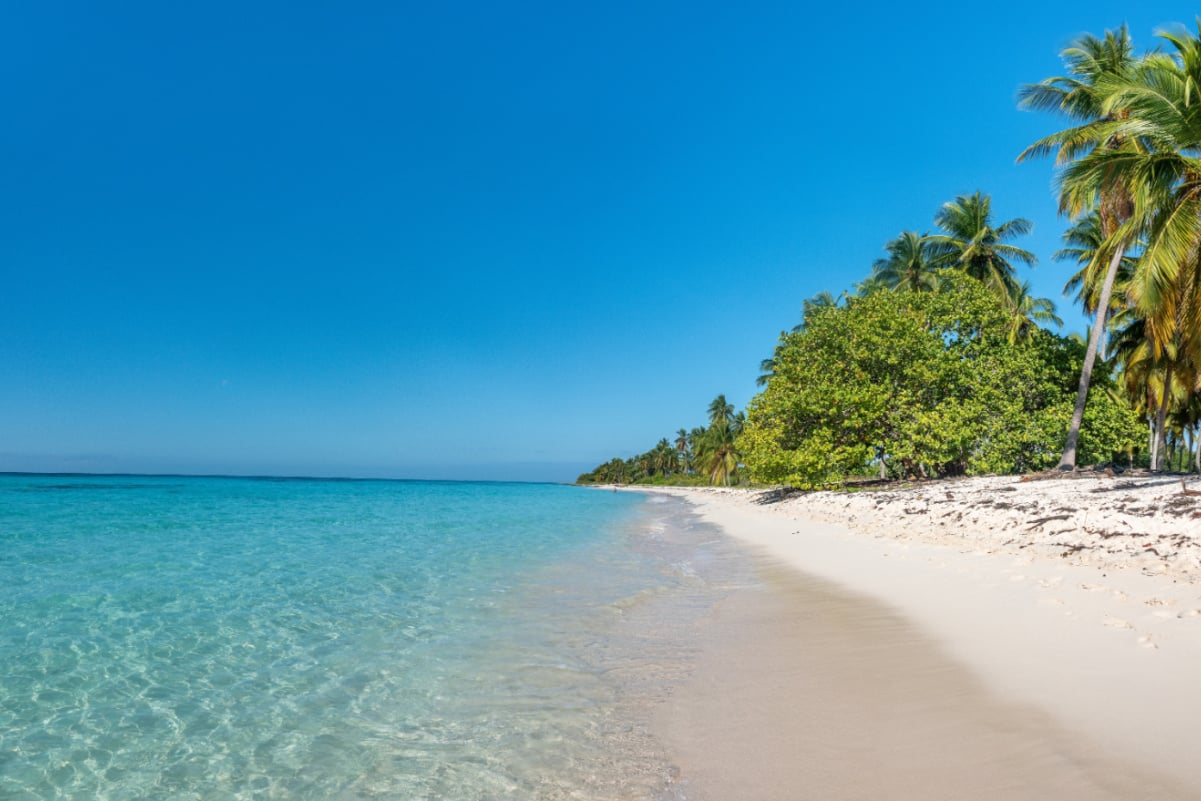
- Ultimate Isolation: Located on Saona Island, this remote beach is entirely enveloped by the protected boundaries of the Cotubanamá National Park and is accessible only by boat excursions departing from Bayahibe.
- Biological Filtration: The clarity here comes from highly functional coral reef systems packed with filter-feeding invertebrates. These organisms act as a biological filter, continuously extracting particulate organic matter from the water column before it can cloud the shallows.
Tip From The Editor: Because this beach is isolated from the mass-tourism hubs of Punta Cana, it avoids anthropogenic nutrient loading (AKA too many humans), making it an incredible spot to support local sea turtle conservation projects in Mano Juan.
8. Jalousie Beach, St. Lucia
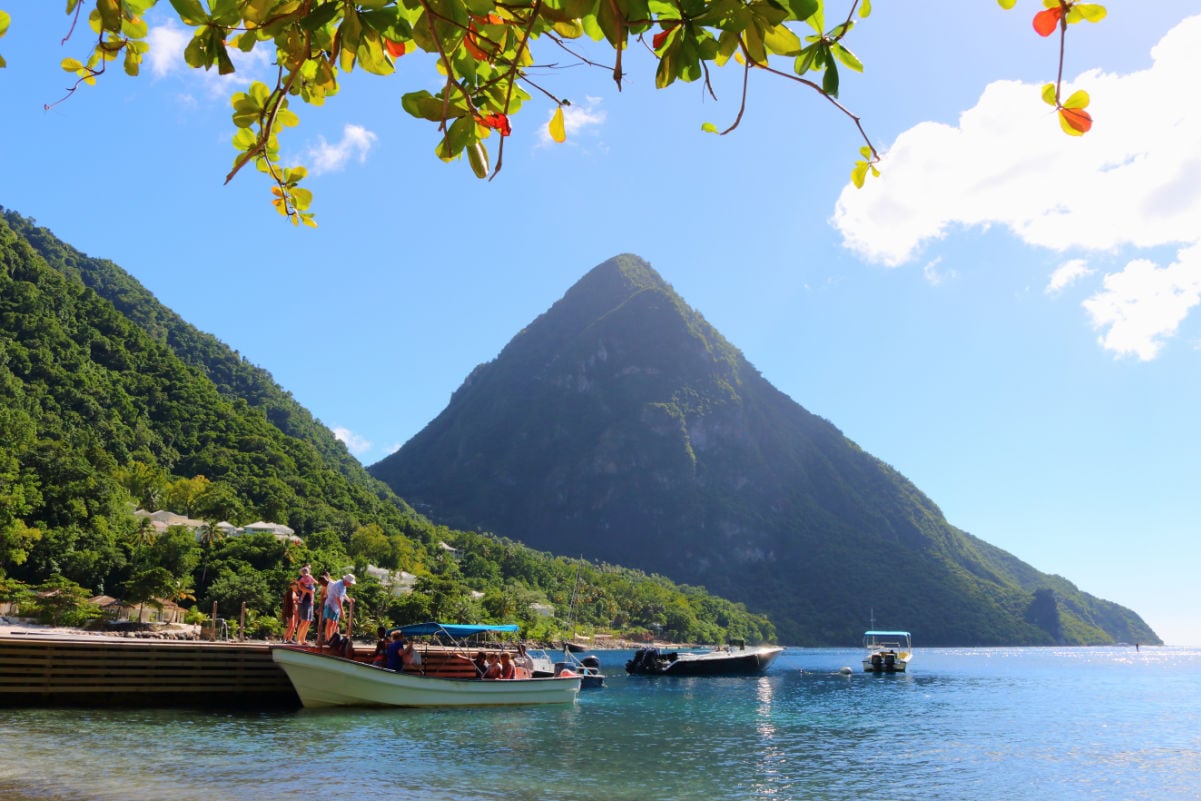
- Volcanic Topography: Frequently referred to as Sugar Beach, this dramatic stretch of sand sits directly between the towering Gros and Petit Pitons within a UNESCO World Heritage site.
- Oceanic Flushing: Unlike most volcanic islands plagued by dark sand and muddy terrestrial runoff, Jalousie features a steep offshore drop-off. This topography ensures that deep, cool, and perfectly clear pelagic water continually flushes the bay and prevents coastal runoff stagnation.
Tip From The Editor: The strict environmental protections of the Anse Chastanet Marine Reserve protect the unique volcanic underwater topography, making this one of my absolute favorite spots for clear-water scuba diving.
9. Coco Plum Beach, The Bahamas
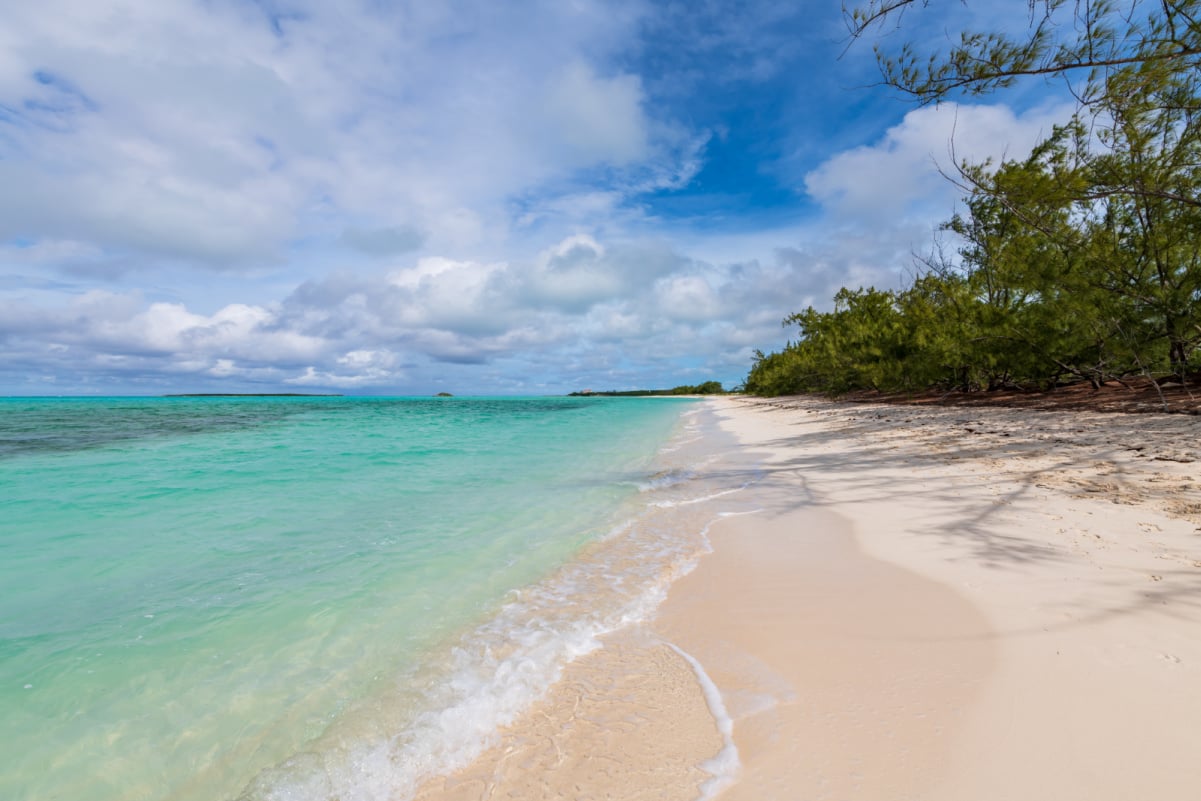
- The Oolitic Platform: The Bahamian archipelago sits on top of vast oceanic platforms of oolitic limestone. The blindingly white oolitic sand creates an optical effect where sunlight reflects intensely off the seabed, rendering the water incredibly transparent.
- Waist-Deep Sandbars: The waters of Exuma are exceptionally shallow, often remaining only waist-deep for hundreds of yards offshore and revealing expansive sandbars during low tide.
Tip From The Editor: Because the Exumas possess an exceedingly low population density and lack significant agriculture, you get glass-like water that is wholly free from polluting terrestrial runoff.
10. Trunk Bay, U.S. Virgin Islands
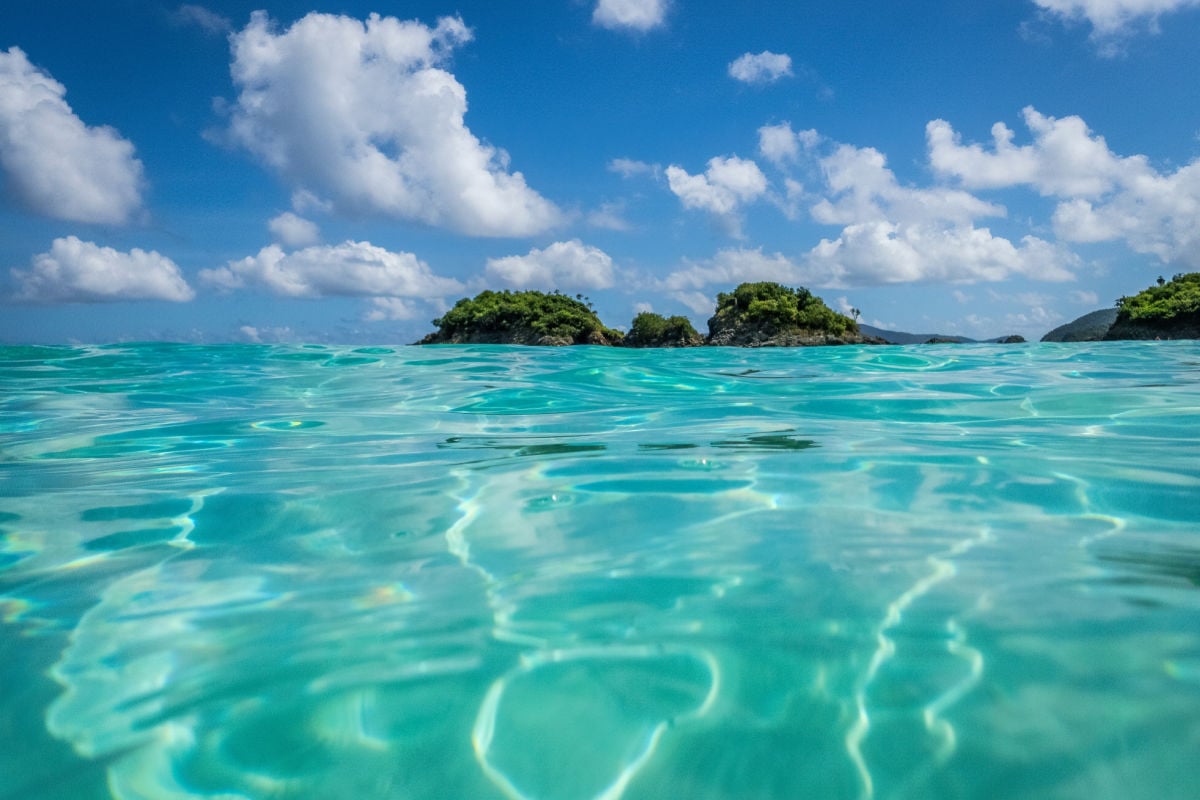
- Federal Protection: Over 60% of St. John’s landmass is protected by the Virgin Islands National Park, keeping the watershed around Trunk Bay lush and forested.
- Erosion Control: Dense vegetation stabilizes the topsoil, drastically limiting the sediment that washes into the bay during tropical downpours.
- Enforced Reef Rules: Marine park regulations strictly protect the extensive fringing reefs from anchor damage and overfishing.
Tip From The Editor: You absolutely must swim the famous Trunk Bay Underwater Snorkel Trail, where you can read submerged interpretive plaques through the award-winning, crystal-clear water.
The Caribbean’s visual brilliance is not just a scenic backdrop; it depends on a fragile biological equilibrium maintained by filter-feeding marine sponges, biogenic sand production, and strict enforcement of Marine Protected Areas.
Whether you are diving the deep volcanic drop-offs of St. Lucia or wading through the shallow oolitic sandbars of The Bahamas, maintaining this world-class water clarity requires aggressive climate resilience and an absolute refusal to compromise these highly vulnerable coastal ecosystems.
Enter your email address to subscribe to Travel Off Path’s latest travel news, straight to your inbox
