
If you’re thinking of taking a little break in sun-drenched Spain this season, but you’re a bit wary of getting water-gunned down by angry locals—yep, that’s a thing—or, plain and simple, you don’t really fancy coming across a rude ‘Go Home’ sign every few hundred meters, maybe give Barcelona a miss this time.
Spain’s coastal metropolis is a stunner, but until Catalans change their antics, we won’t be spending our own hard-earned tourist dollars there anytime soon.
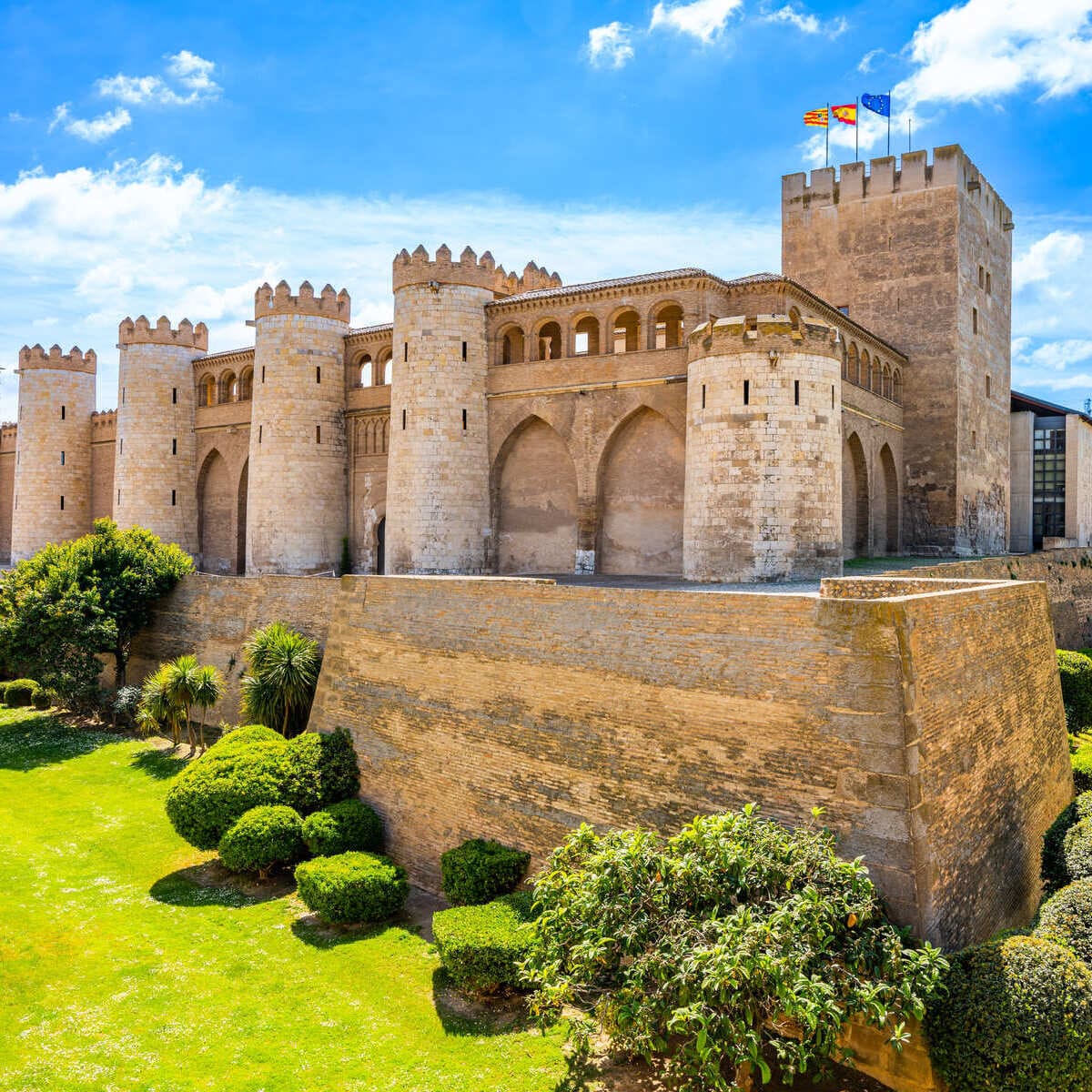
Instead, we’ve got this lesser-known spot on our radar, and you should too: the capital of Aragon, one of Spain’s most culturally significant regions, with 11th-century palaces straight out of a fairytale, a huge riverside basilica, and €3 tapas, Zaragoza is at the top of our list.
Fortunately, they want more tourists to come too:
Spain’s Most Underrated Cultural Capital Yet To Be Discovered By The Masses
Arguably Spain’s most underrated city break, the quaint little Zaragoza is quickly gaining ground as of late.
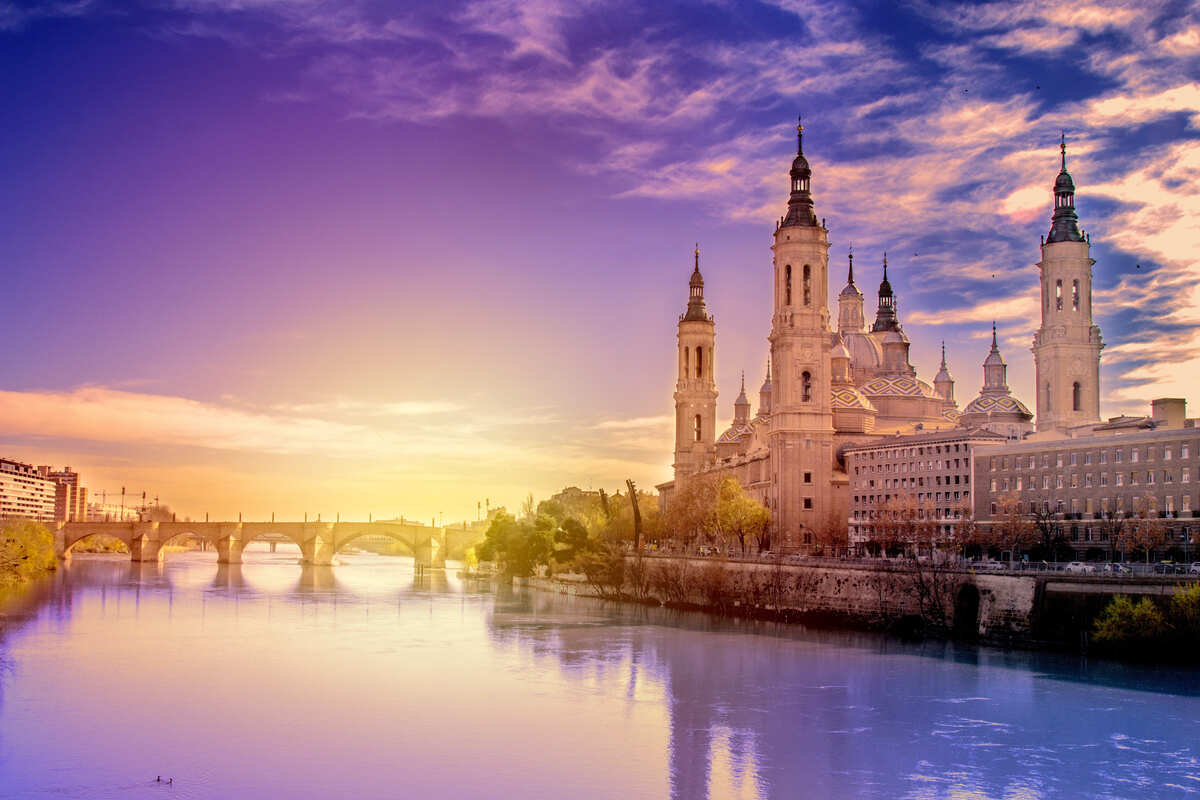
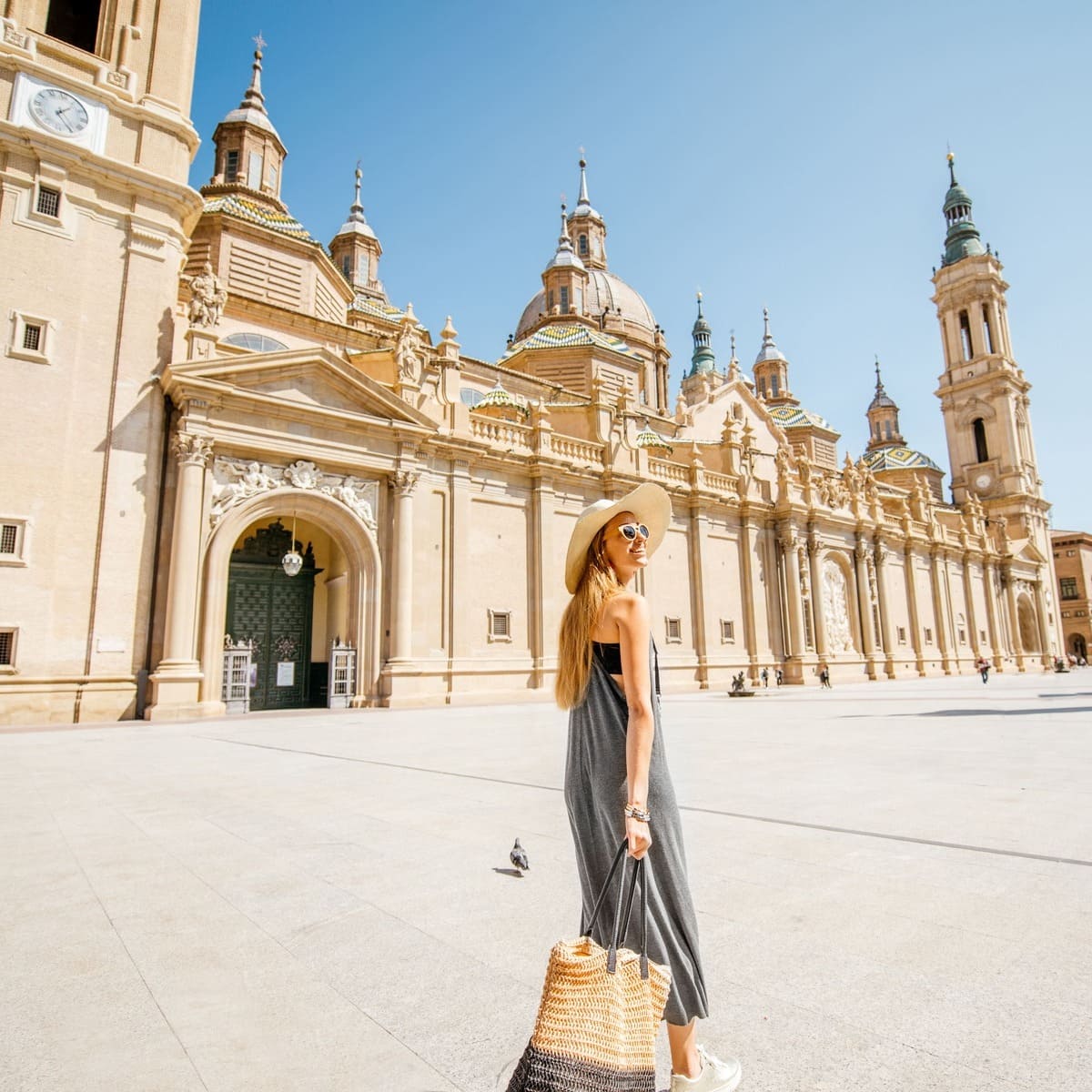
It’s best known for its iconic multi-towered basilica, that sits on a picturesque riverside and completely dominates the skyline, a compact Historic Center, strewn with family-owned tabernas and tree-shaded plazas, and rich Moorish heritage.
Unlike Barcelona, Malaga, or Mallorca, however, it lies a whole 153 miles from the nearest Mediterranean shoreline, so it’s not like the day-drinking Brit beach bums are making a beeline here.
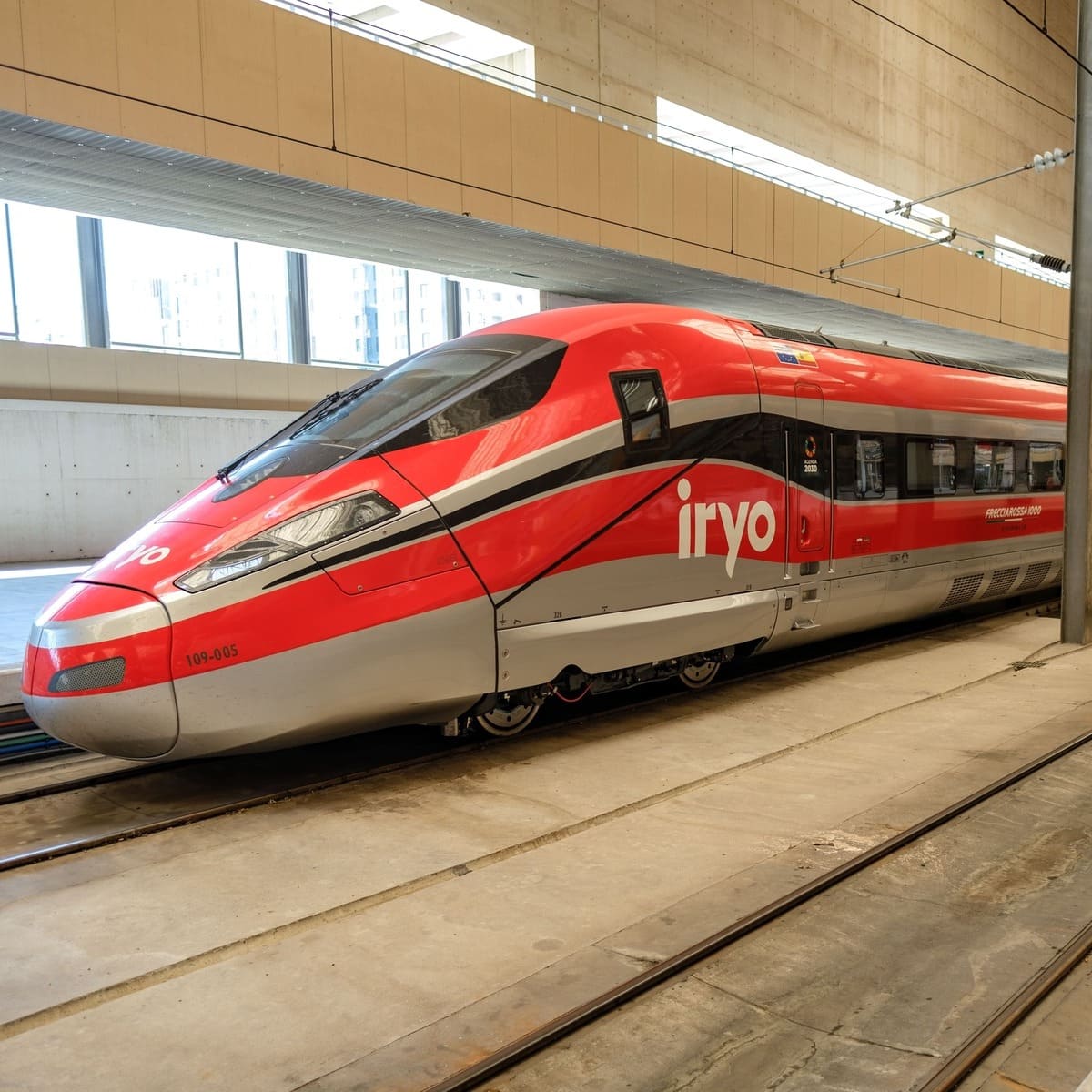
As for the culture seekers, most of the inland Spain traffic flows into Madrid, anyway, and seeing that Zaragoza is still a whole 1.5 hours by train, a majority doesn’t bother fitting it into their itinerary.
That has historically left Zaragoza fighting for scraps, leaving the city’s less-than-impressive tourism figures to be filled by visiting Spaniards, oftentimes those with familial ties here, occasional passersby, and devoted Hispanophiles with a niche interest in mudéjar landmarks.
In 2025, a grand total of around 0.7 million visitors stayed overnight in the city, against other regional capitals like Valencia’s average of 2.5 million or Barcelona’s average of 9 million a year.
That is about to change real soon.
How Zaragoza Is Pushing For More Tourists
The Government of Aragon is actively pushing for Zaragoza to be positioned as a short-break destination:
Starting 2027, Zaragoza International will cease being a minor, regional hub in inland Spain, to become a mid-sized airport hosting flights from 31 new destinations, across 15 European countries.
Among the new planned links are Manchester, Porto, Prague, Budapest, Warsaw and Krakow in Poland, a number of Italian cities including Naples and Palermo, Paris, and one pending hub to be confirmed in Switzerland.
That’s a non-exhaustive list, and if that’s not positive evidence for ‘they definitely want to grow as a destination‘, we don’t know what is.
Unfortunately, no Transatlantic flights are in the cards for the time being, but you never know. Who’d have thought that, last year, United would have launched direct flights to up-and-coming Bilbao, and shortly thereafter, Santiago de Compostela?
Either way, Americans can easily reach Zaragoza via short domestic flights within Spain, which typically cost under $40, or by train from Madrid or Barcelona, so logistics aren’t really an issue.
On the other hand…
Check The Local Travel Rules Before Flying To Europe This Fall
If you’re heading to Europe this season, make sure you check the entry requirements and travel rules that apply to you as a U.S. passport holder.
From mandatory fingerprinting to reinforced border checks, there’s a lot you need to catch up with if you haven’t been across the pond in a while.
Head over to the Entry Requirement Checker, type in your destination’s name, and pull up the complete checklist of documents and border formalities.
Top 7 Reasons To Visit Zaragoza, Spain

- Basílica del Pilar: a domed, 11-towered basilica perched on the banks of the Ebro. It’s one of Spain’s most important churches and pilgrimage sites, housing relics and frescoes by Goya.
- La Seo: the city’s lesser-known UNESCO-listed cathedral, often overshadowed by the basilica. It houses some of the best examples of Muslim-era mudéjar art out of all former mosques-turned-churches in the country.
- Aljafería Palace: a huge 11th-century palace built during the Islamic rule of the city. With its ornate arches, intricate stucco, and tile work, this one gives Seville’s Moorish gems a run for their money.
- Torreón de la Zuda: yet another Muslim-era marvel. Built from red brick, this tower rises above the skyline of the Old City like a square Moroccan minaret.
- Plaza del Pilar: a beautiful grand plaza flanked by beautiful facades and historic buildings. The social and cultural heart of Zaragoza.
- Caesaraugusta: the underground ruins of the earlier Roman colony that preceded Zaragoza. Walk along streets, Roman baths, and temple remains.
- Migas a la aragonesa: possibly one of the tastiest bar favorites, and yes, it’s a culinary attraction in its own right. Breadcrumbs with garlic, chorizo, and raisin grapes.
Speaking of which…
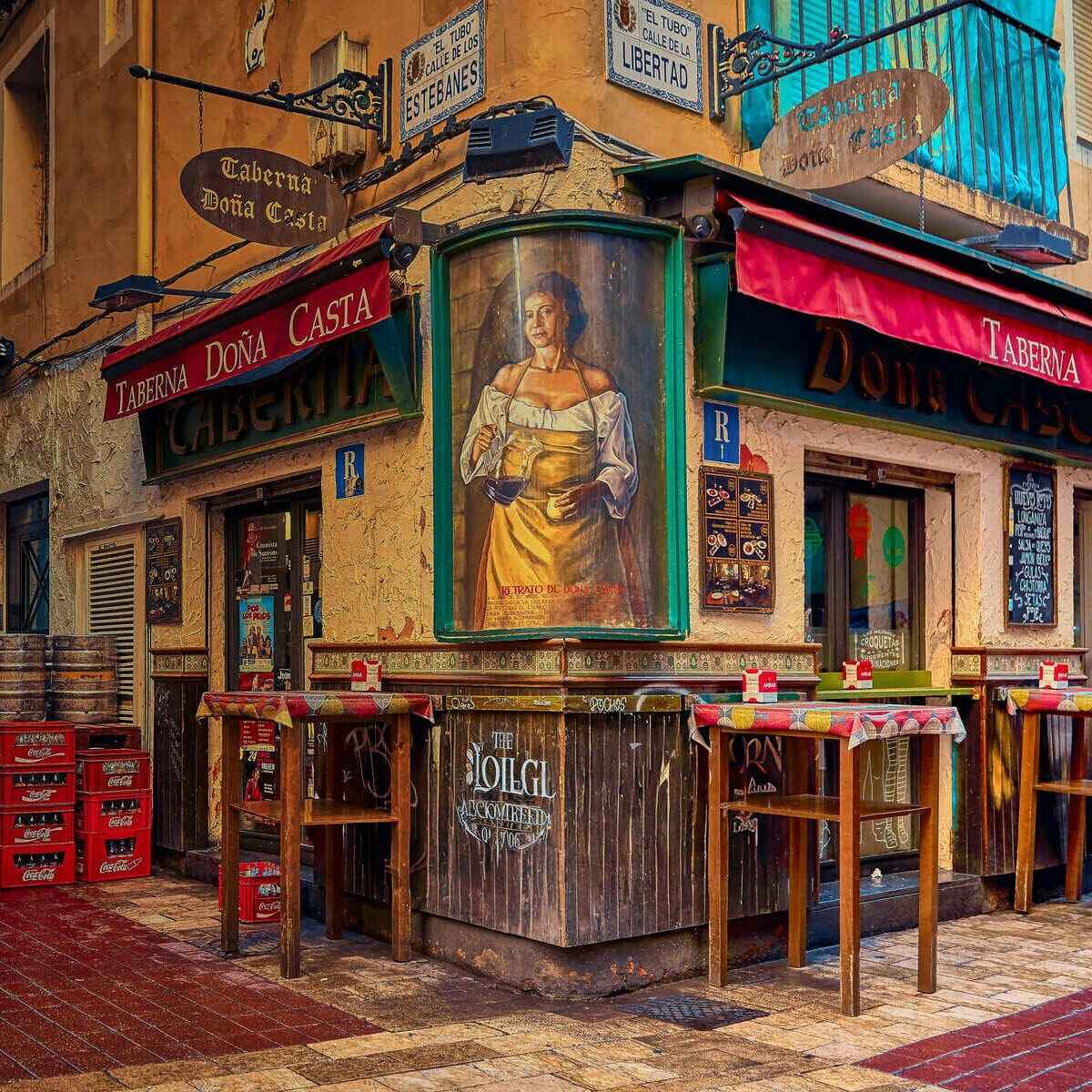
It’s Giving Spanish Tapas Capital
There’s a case to be made about Zaragoza being Spain’s actual tapas capital, not Madrid or Seville.
The sheer number of tapas bars and cozy tabernas in the Historic Center is unprecedented: you could literally hop over three in a single street, and guess what.
Everything’s to die for.
Aragonese cuisine leans on hearty and flavorful, from cured ham, to salt cod, and Zaragoza’s signature roast lamb, and if you’re wondering how much a seat at a curbside bar table will cost you here, how does $3 to $5 sound for a generous, cheeky tapa, and an additional $3 for beer?
Note From The Editor
Just one sec! If you enjoy reading great human-written articles, the best way to see a few more is to follow us on Google so we become one of your preferred websites. Thank you so much for reading. Now back to the story!
A Big City With A Small Town Heart
Zaragoza’s big, alright, but we can’t help but feel it’s really a small town at heart.
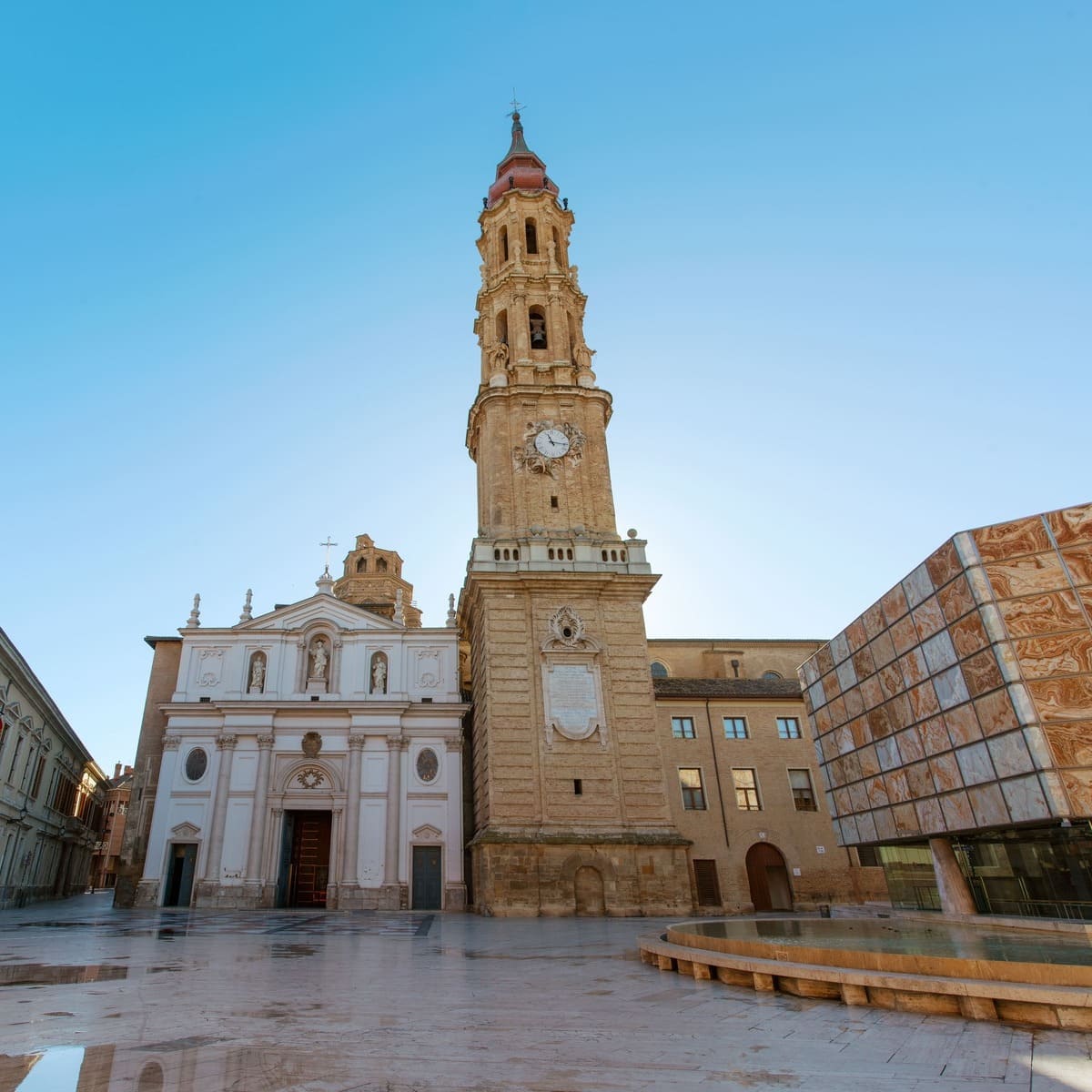
Granted, the Historic Center is rather compact, and you can see the whole thing on foot, but there’s just something about the warm, unhurried pace of the locals, their receptiveness to foreigners—yes, even Americans—and the absence of those huge crowds that make it that much more enjoyable.
Rest assured you’ll never stand in line longer than 15 minutes getting into a museum here, spend over $40 on dinner outings, or for that matter, get turned away at 5 different restaurants before you find one that takes walk-in guests.
Zaragoza Is Incredibly Safe For A Major City
Zaragoza also happens to be one of Spain’s safer major cities.
While Barcelona’s crime index stands at 52 on Numbeo, Zaragoza scores just 26 on the same platform, placing it among the lower-crime major Spanish cities tracked by the site.
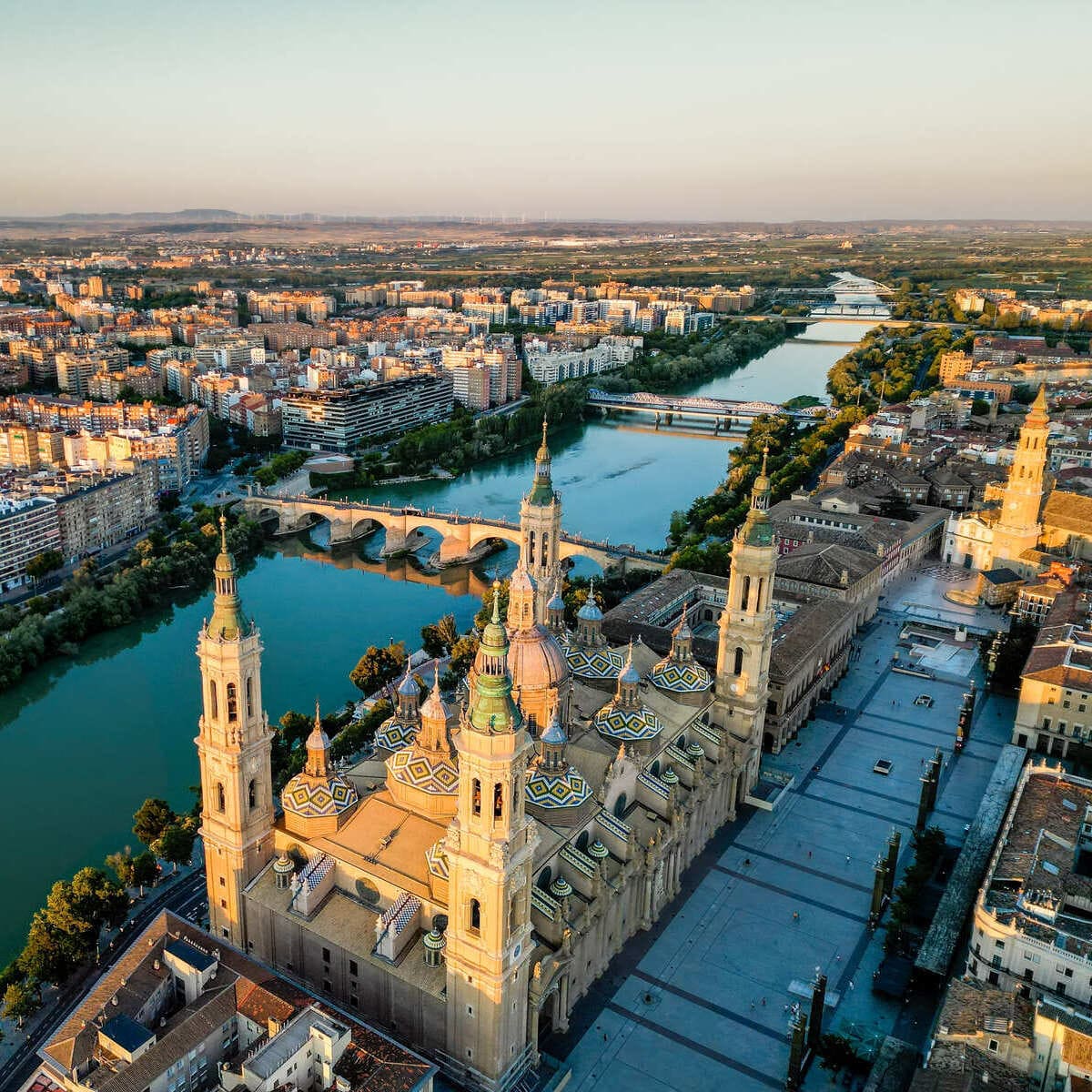
If you ever anxiously glance over your shoulder walking down Barcelona’s jam-packed La Rambla, worried someone might zoom past and snatch your bag, that’s considerably less characteristic of everyday life in the Aragonese heartland.
Zaragoza still has petty crime, of course, but its much lower crime rate makes it a noticeably more relaxed place to explore.
Wondering what travelers are reporting about safety levels in Spain currently? Check the latest data on the Travel Off Path Traveler Safety Index.
Despite some recent concerns surrounding border controls and unrest in Southern Spain this summer, the country still scores an impressive 90 out of 100, indicating a very high level of perceived safety.
Seriously Affordable By Western European Standards
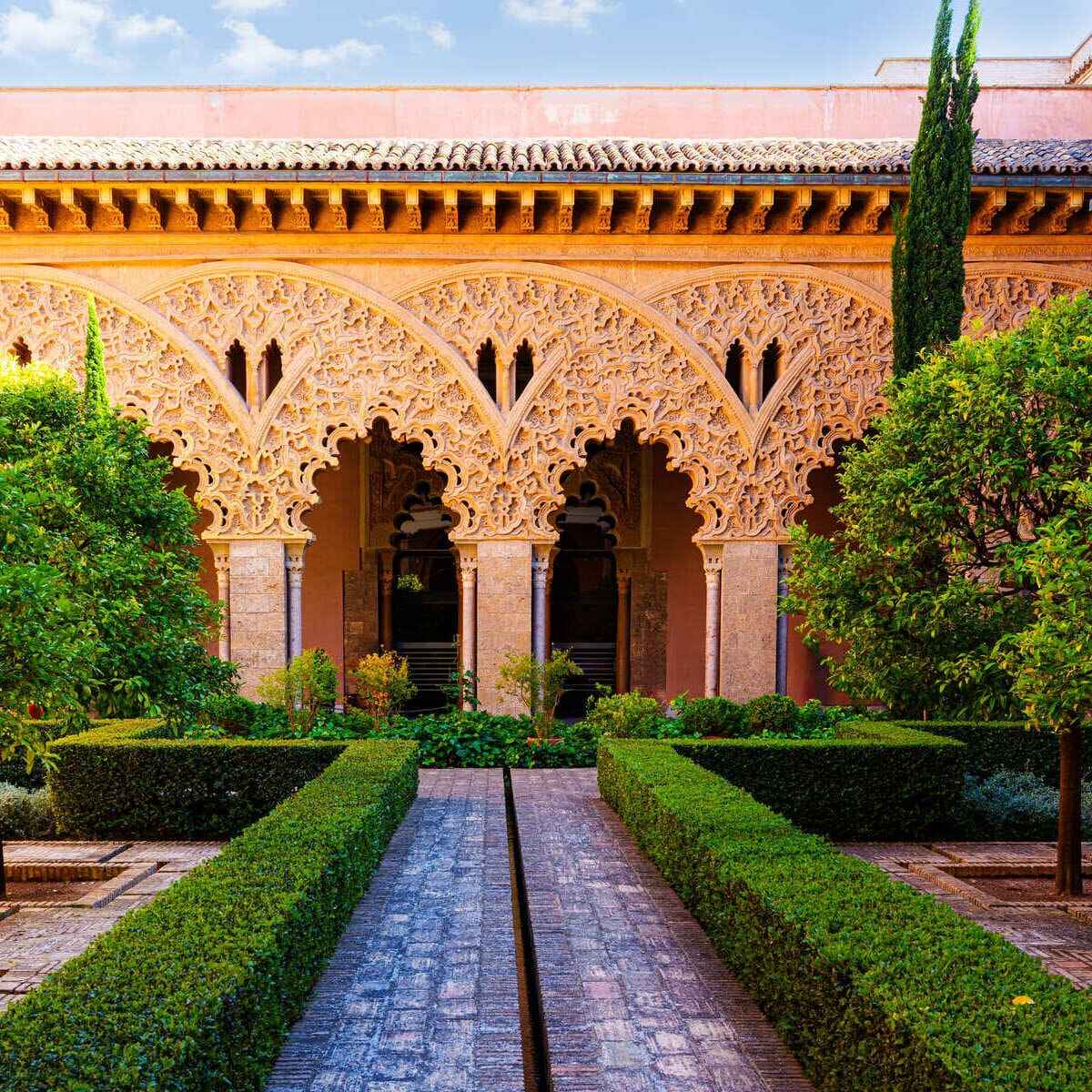
We know at this point Spain’s tourism hotspots are all steep on the price front. From $15 glasses of sangria in Barcelona, to $25 cocktails in Mallorca, the glassy turquoise seas and the beach clubs definitely come with a hefty tag. Not here.
Zaragoza is much more relaxed and laid-back, as you might have guessed, and until word gets out on its amazingness, downtown restaurants and family-run guesthouses are still operating on local, not ‘Americano’ prices:
Average Prices In Zaragoza, Spain In 2026
- Takeaway snack, like a bocadillo de jamón: $4–$6
- Tapa in a local bar: $3–$5
- Main dish at a restaurant (like ternasco de Aragón or migas): $12–$18
- Three-course meal at a mid to upper-end restaurant, drink included: $30–$45
- Guesthouse or B&B (per night): $50–$80
- 4-star hotel (per night): $80–$130
- Public transport (one-way ticket): $1.50
- Day pass: $5
- Average museum entry fee: $6–$10
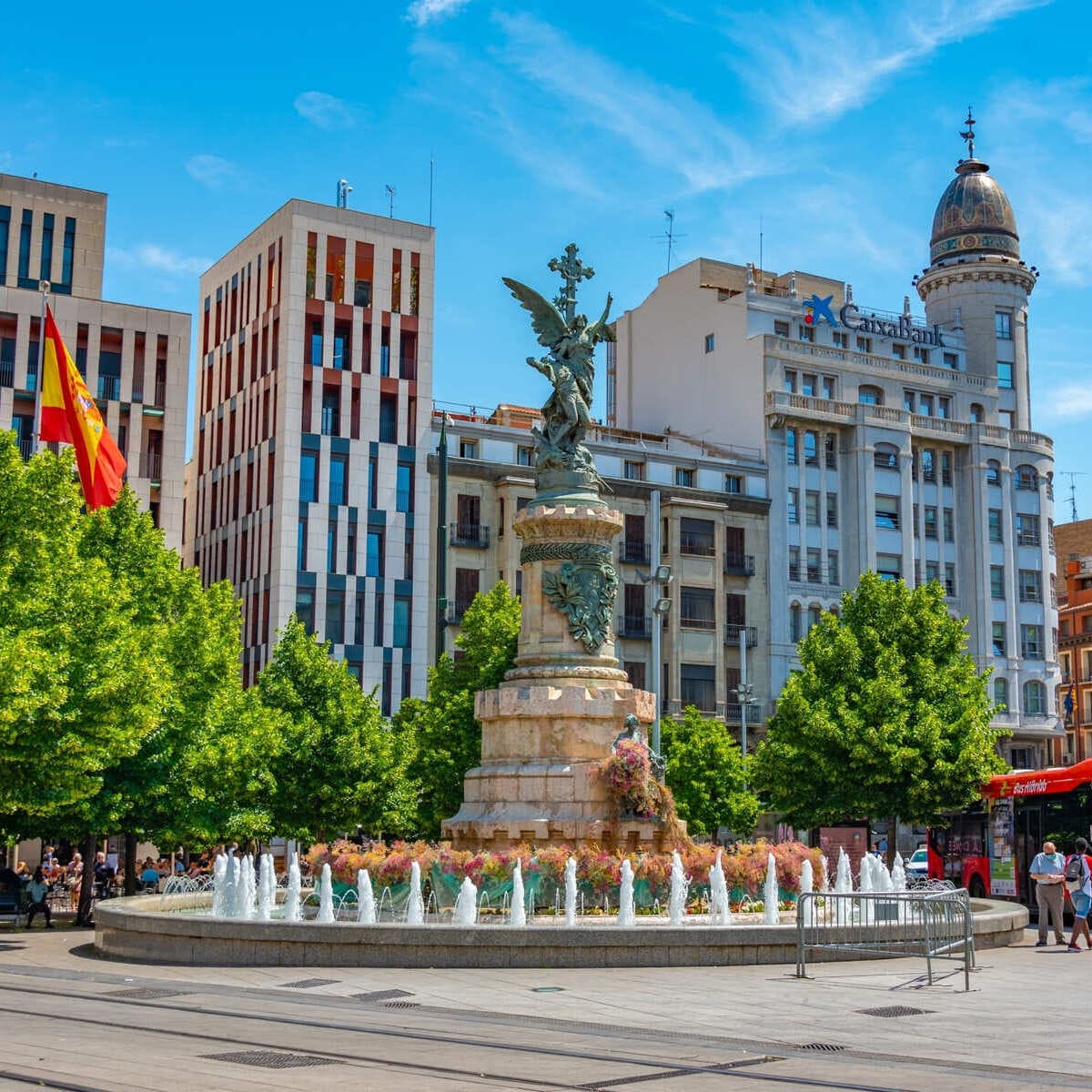
The city’s most iconic attraction, the riverside basilica is actually free to visit.
History You Can Feel, Not Just Read
Perhaps the biggest draw of all, is the enticing Old World allure of it all.
Let’s face it: even if menus are horribly overpriced, chances are we’ll pay it anyway ’cause we’re going to Europe for the fairytale castles, the cobbled streets, and the simple food without preservatives that will trigger colon cancer in your mid 50s.
Sure, it’s a nice little treat when the cost of an Iberian ham sandwich, and the price of booze doesn’t burn a hole through the wallet, but we wouldn’t exactly fly all the way from across the pond ourselves simply for cheap eats.
If you’re drawn to the culture, like we are, Zaragoza is a deeply layered, historical powerhouse.
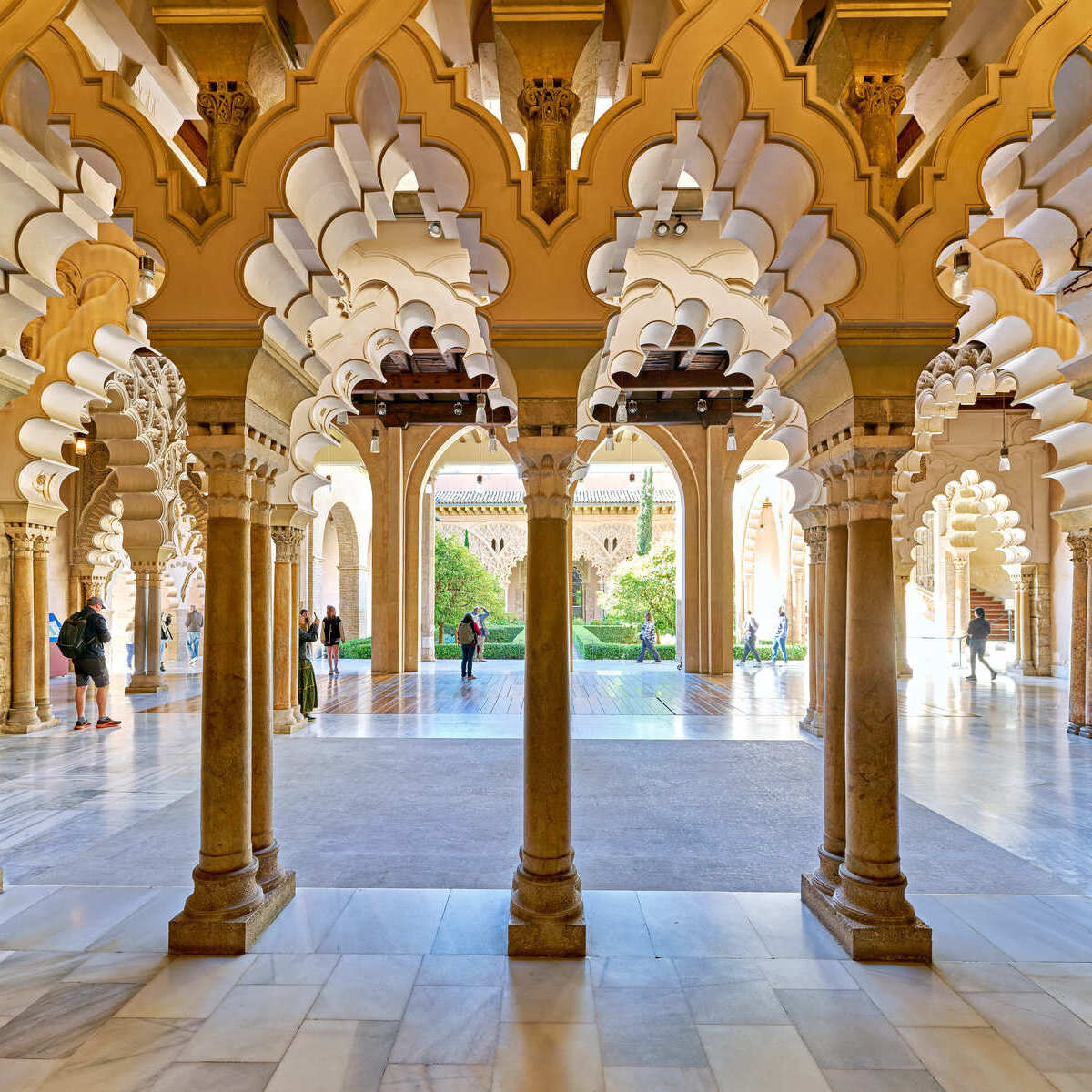
It started Roman, so there’s forum remains, theater ruins, and museums built over archaeological sites. Layer on the Muslim-era Mudéjar buildings, and former Islamic palaces, and the Christian Reconquista churches, and you basically get a compact timeline of Spain in one small, walkable city.
Other Important Details To Consider
- Transport: you can reach Zaragoza either by flying into Zaragoza International Airport (ZAZ), from select EU hubs for now, or by train from Madrid or Barcelona (roughly 1.5 hours each).
- Time needed here: Zaragoza can either be treated as a seriously focused full-day trip from Madrid (or Barcelona), or a chill overnight if you really want to take it slow and linger on that tapas bar crawl.
- Cost: hotels and meals tend to be a lot cheaper than in Spain’s top-tier cities, so you can budget roughly 30–40% less than you would for a place like Barcelona.
- Safety: Zaragoza enjoys a lower level of street-level crime than Spain’s largest metropolises, according to Numbeo, so it can feel noticeably safer.
That said, you shouldn’t assume risks are zero.
Spain remains a Level 2 destination, according to the U.S. Department of State, which means Americans must exercise increased caution when visiting due to extremis threats and civil unrest.
Enter your email address to subscribe to Travel Off Path’s latest travel news, straight to your inbox
