
Most people treat the drive from Munich to Vienna as a chore. They lock onto the GPS, they blast down the autobahn at top speed, and they completely ignore the actual country passing outside their windows.
It’s a terrible waste. You need to exit the highway!
Halfway between those two major cities sits the Salzkammergut, a historic Austrian lake district. It’s where the imperial family used to escape the summer heat of Vienna, and it’s still ridiculously stunning.
Lake Traunsee and the neighboring town of Bad Ischl offer exactly what you want from an alpine trip. You get deep glacial water, you get huge limestone peaks, and you get historic thermal baths without the chaotic crowds of Salzburg.
The Deepest Lake In Austria
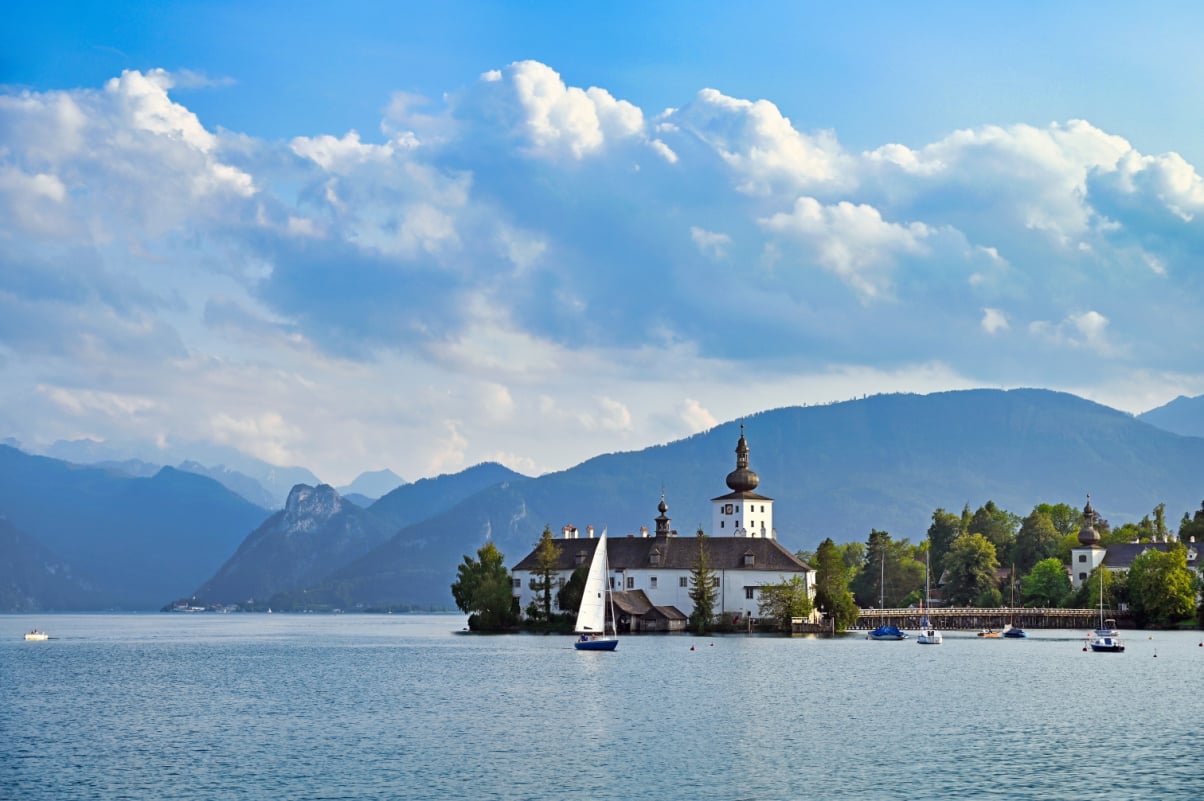
My wife Liz and I always pull off the main road to drive to the eastern edge of Lake Traunsee. It’s the deepest lake in Austria, holding a dark and glassy blue color that looks incredibly cold even in the middle of July. The geography here shifts dramatically without any warning.
Rolling green hills in the north suddenly crash into sheer limestone rock walls, making it feel like a Norwegian fjord was picked up and dropped right into the middle of Central Europe.
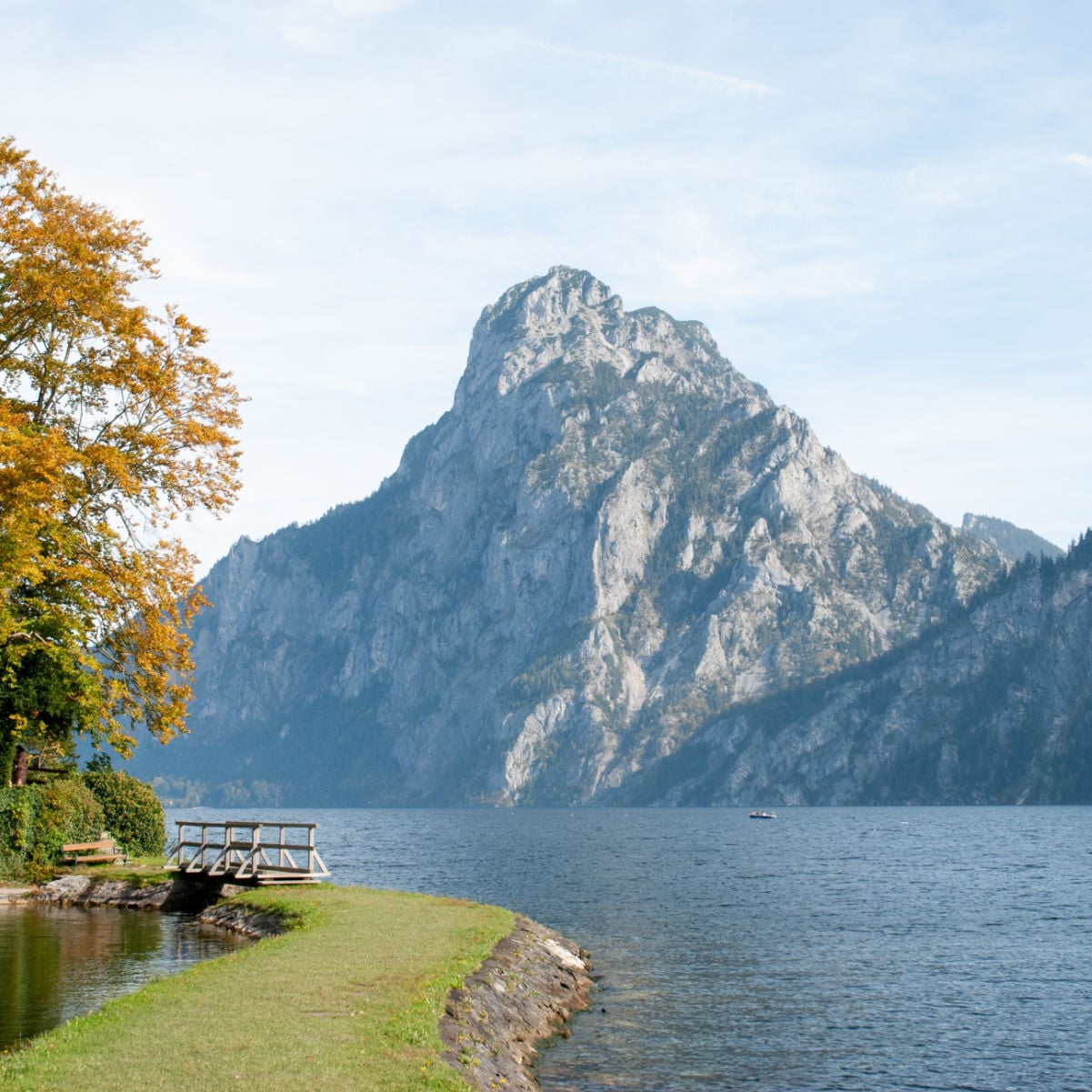
The Traunstein mountain rises straight out of the water on the eastern shore. It looks like a jagged stone wall guarding the valley, and the sheer scale of the rock face is genuinely hard to process until you are standing right underneath it. It dominates the entire skyline. You don’t need to be a serious mountaineer with climbing gear to enjoy the terrain.
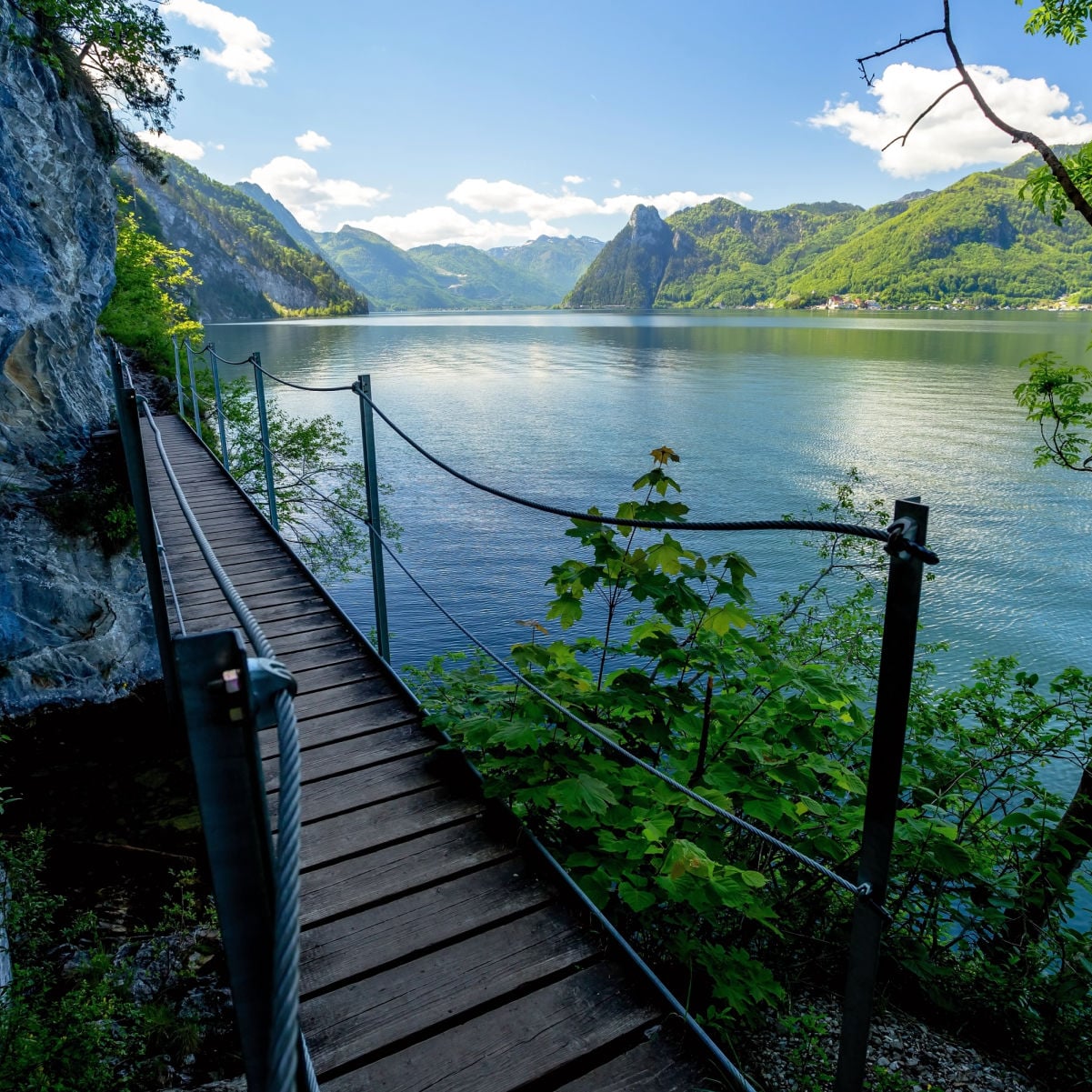
There is a flat and easy walking path called the Miesweg that skirts right along the base of the mountain over the water. You walk on wooden planks bolted directly into the cliffside.
The water below you is pristine and unpolluted. We usually spend an hour just watching the local sailboats catch the afternoon wind.
The Castle On The Water
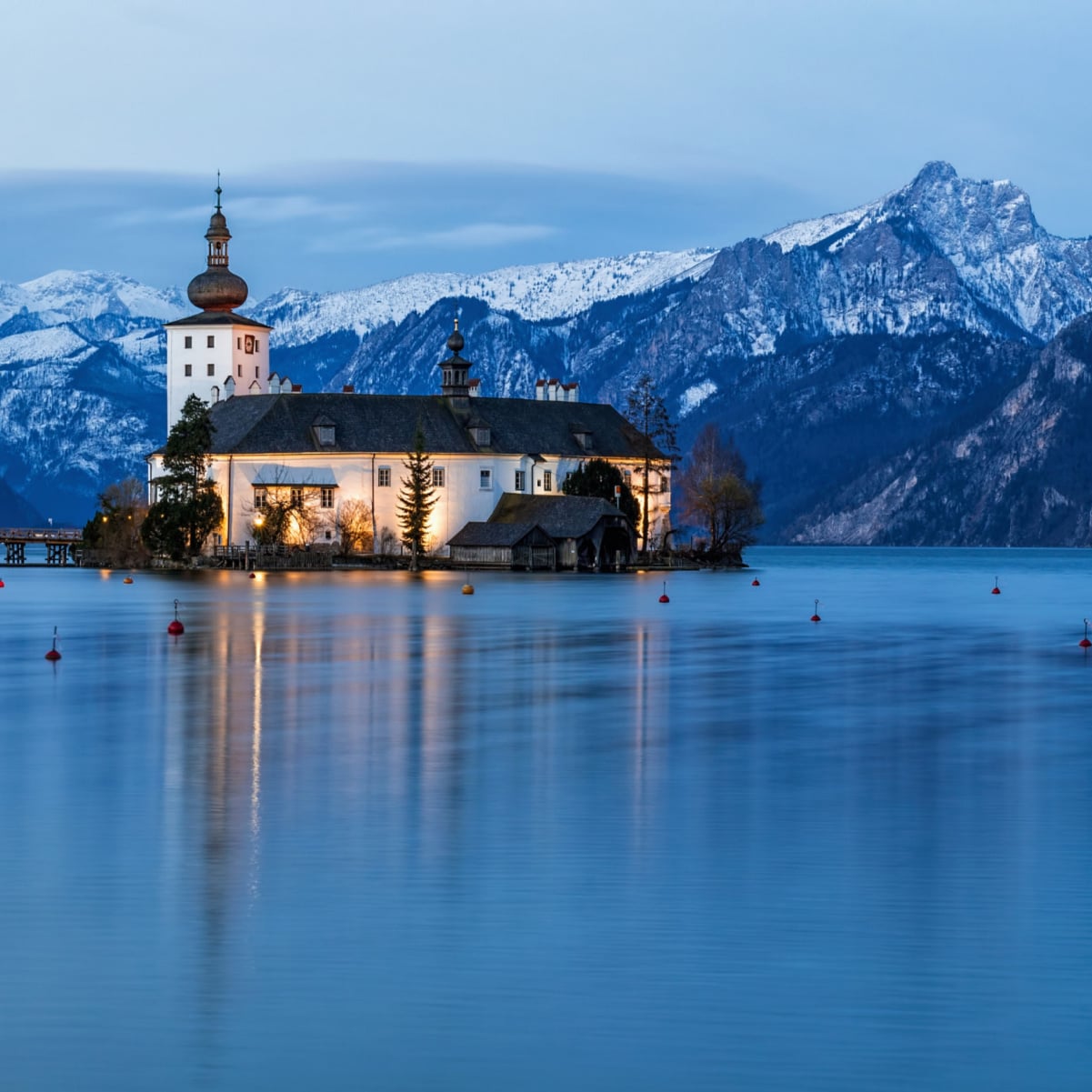
The town of Gmunden sits at the northern tip of the lake. It made its fortune on the historic salt trade, but today it’s famous for a specific landmark. Schloss Ort is a 17th-century castle built on a tiny island just off the shoreline. You access it by walking across a long wooden footbridge. It looks like it was made for a movie set.
It’s real. The courtyard inside features beautiful Renaissance arcades and a small stone chapel. We always grab black coffees from a local bakery and walk out onto the bridge before the ticket office even opens. We just sit on the wooden planks, watching the morning mist burn off the lake.
It’s silent at that hour. You just hear the water lapping against the stone walls of the castle. Once the sun is fully up, the town square comes alive and you can sit outside and watch the small electric ferries carve through the water.
The Imperial Spa Town
Drive twenty minutes south from the lake and you hit Bad Ischl. This is not a sleepy ski village. It’s a proper imperial spa town.
Emperor Franz Joseph spent decades of summers here, and the entire town reflects that royal history. The buildings are painted in a very specific shade of Habsburg yellow. The Traun river cuts directly through the center of town, flowing fast and clear over smooth river stones.
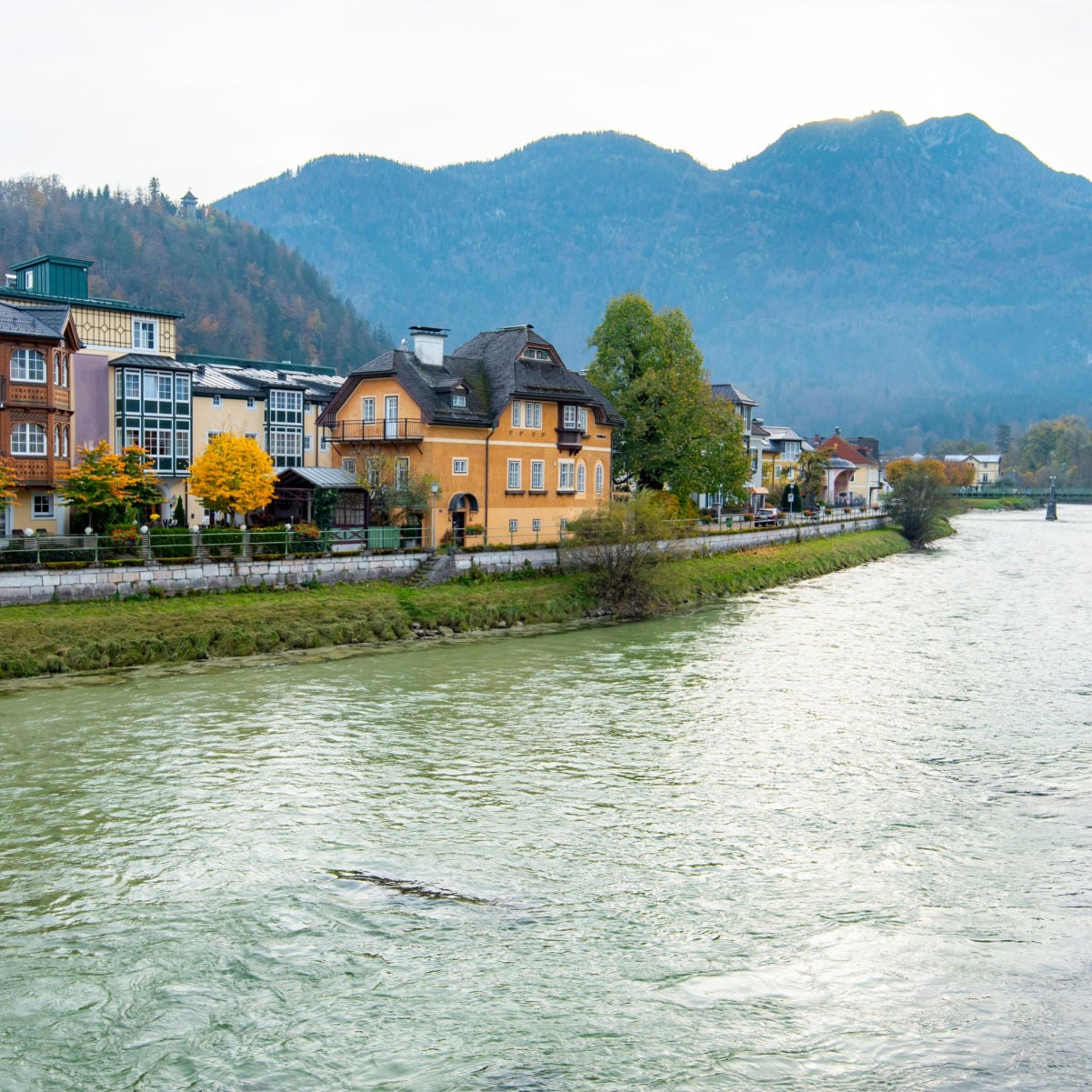
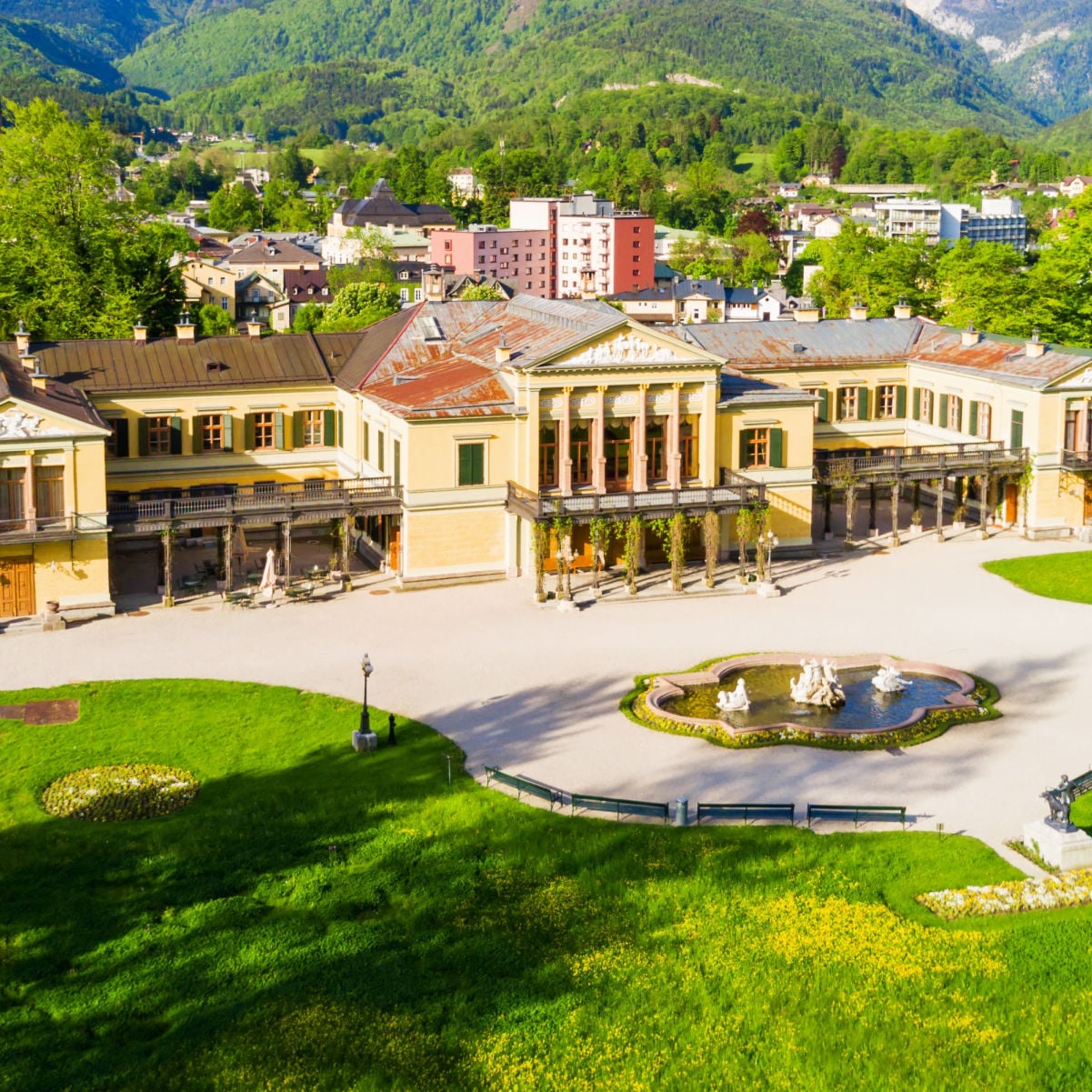
You get a sophisticated and dignified atmosphere that still feels deeply relaxing. You share the sidewalks with older Austrians walking their dogs and hikers coming down from the trails in muddy boots. You can actually tour the Kaiservilla, which was the summer palace of the Emperor.
It’s surrounded by sprawling and meticulously manicured English gardens. It is also the exact desk where he signed the declaration of war against Serbia in 1914. History is literally baked into the floorboards of this town.
I have a background in mechanical engineering, and spent an embarrassing amount of time just staring at the 19th-century water pumps and heavy brass fittings they used to pipe the hot brine into the town. The craftsmanship is staggering. They built this infrastructure by hand. They dragged cast iron up the side of a mountain, and it still functions beautifully today.
Thermal Baths And Coffee Houses
I am usually strict about intermittent fasting back home. I drink my black coffee and skip breakfast entirely. I abandon that rule the second we cross the Austrian border.
You can’t visit Bad Ischl without eating at Café Zauner. It is a local institution. It opened in 1832 and served the imperial court for decades. The interior is packed with dark wood cabinets and heavy crystal chandeliers. Order a slice of the Zaunerstollen. It is a rich and dense cake made from nougat, hazelnut, and chocolate. Pair it with a strong black coffee.
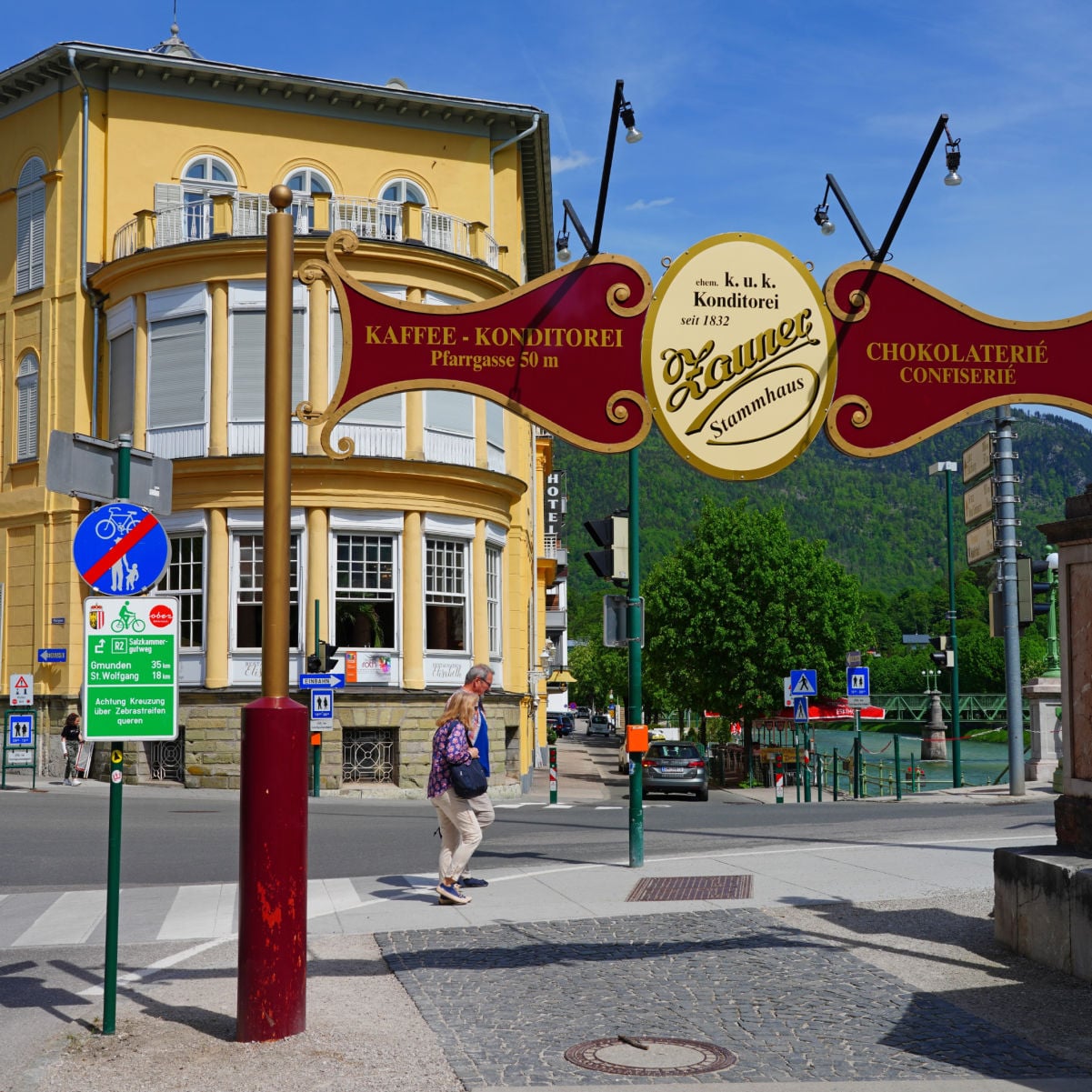
It is the perfect heavy fuel you need after walking the mountain trails all morning. Do not feel guilty about the calories. You will burn them all off walking the steep hills around the palace.
The town originally became famous for its brine baths. The local salt mines produced water with intense mineral concentrations. Doctors in the 1800s believed floating in the warm saltwater cured almost everything. You can still do it today. The EurothermenResort sits right in the middle of town. You pay for a day pass. You walk out into the heated outdoor saltwater pools.
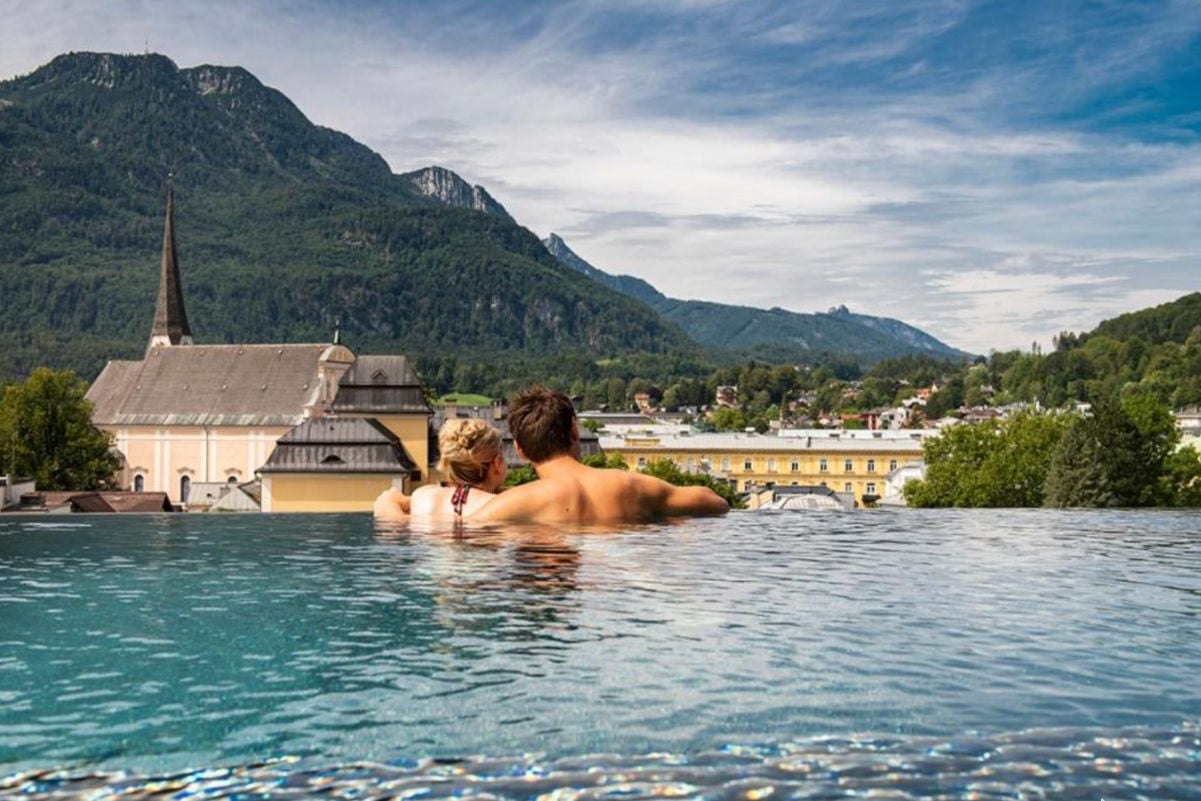
You float in hot water while staring up at the snow-capped peaks surrounding the valley. The physical contrast between the freezing alpine air on your face and the hot mineral water is incredible. Your muscles completely relax after a long day of hiking.
They also have a sprawling sauna complex built right into the facility. Austrians take their sauna culture very seriously, so be prepared for a strictly clothing-free environment in that specific section of the spa.
Stop treating the space between cities as a flyover zone. Book the rental car. Pack a swimsuit. Just make sure you arrive at the EurothermenResort right when they open at nine in the morning on a weekday. You will get the outdoor saltwater pool almost entirely to yourself before the afternoon crowds arrive.
Enter your email address to subscribe to Travel Off Path’s latest travel news, straight to your inbox