
Berlin is usually the first stop for most travelers landing in Germany for the first time. After all, it’s the country’s capital, home to world-renowned landmarks like Brandenburg Gate and the Berlin Wall, lively beer gardens, and an unrivaled clubbing scene.
Incredible as Berlin may be, maybe it’s time for it to take a back seat:
This other German city is now proving to be just as trendy, with its vibrant atmosphere, scenic riverwalk, and imposing cathedral, the country’s most beautiful one, at that. No, we’re not talking about Munich, much less Frankfurt:
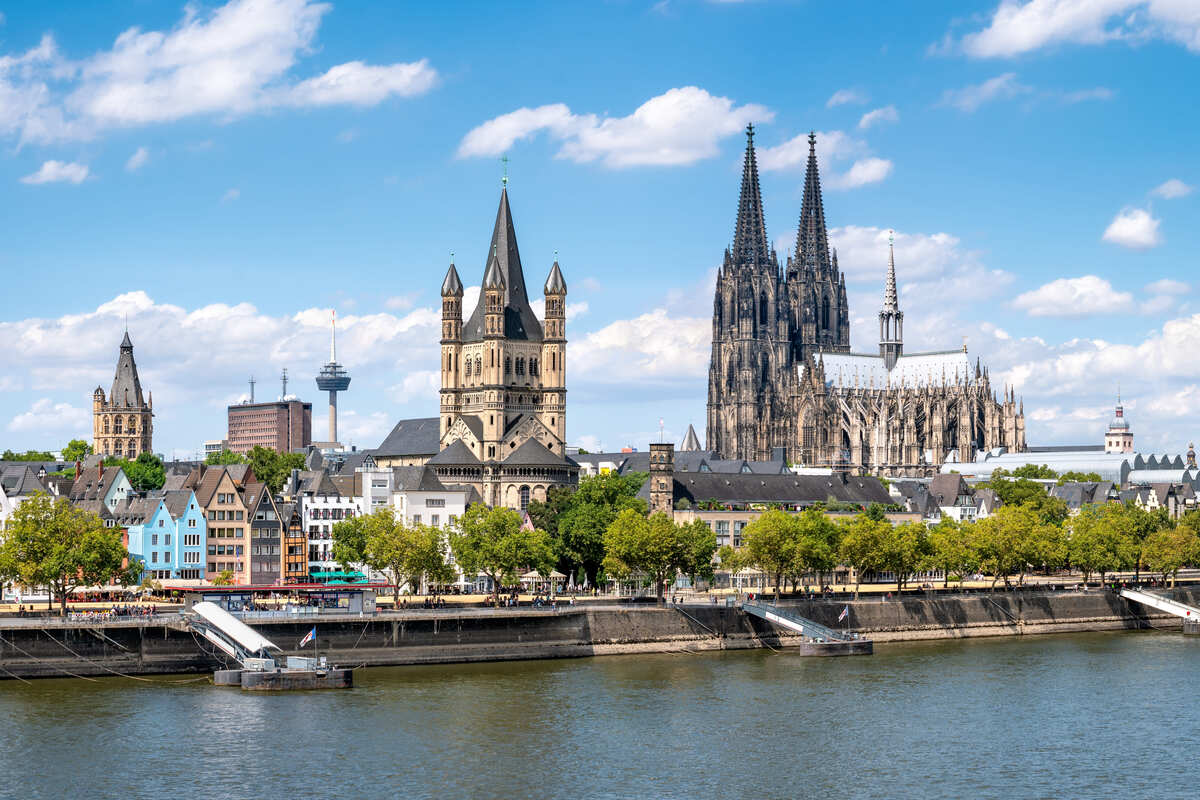
Discover Cologne, The Berlin Of The West
Though not often covered by mainstream travel publications, the seriously-underrated Cologne was sure to find its home here at Travel Off Path at some point.
A whole 356 miles west of the German capital, closer to the Belgian and Dutch borders than it is to Berlin, Cologne is an important hub on the banks of the River Rhine, and a sprawling metropolis with over a million residents.
It has a fascinating history, and a vast collection of landmarks that rarely get celebrated on the European stage, despite their cultural significance, but it seems like that’s about to change, as more and more people become aware of its tourist offer.
Last year, Cologne was visited by over 4.2 million tourists, while recording an all-time high 7 million overnight stays. Compared to the pre-pandemic era, that’s an 8% increase in tourism, and it’s not slowing down anytime soon.
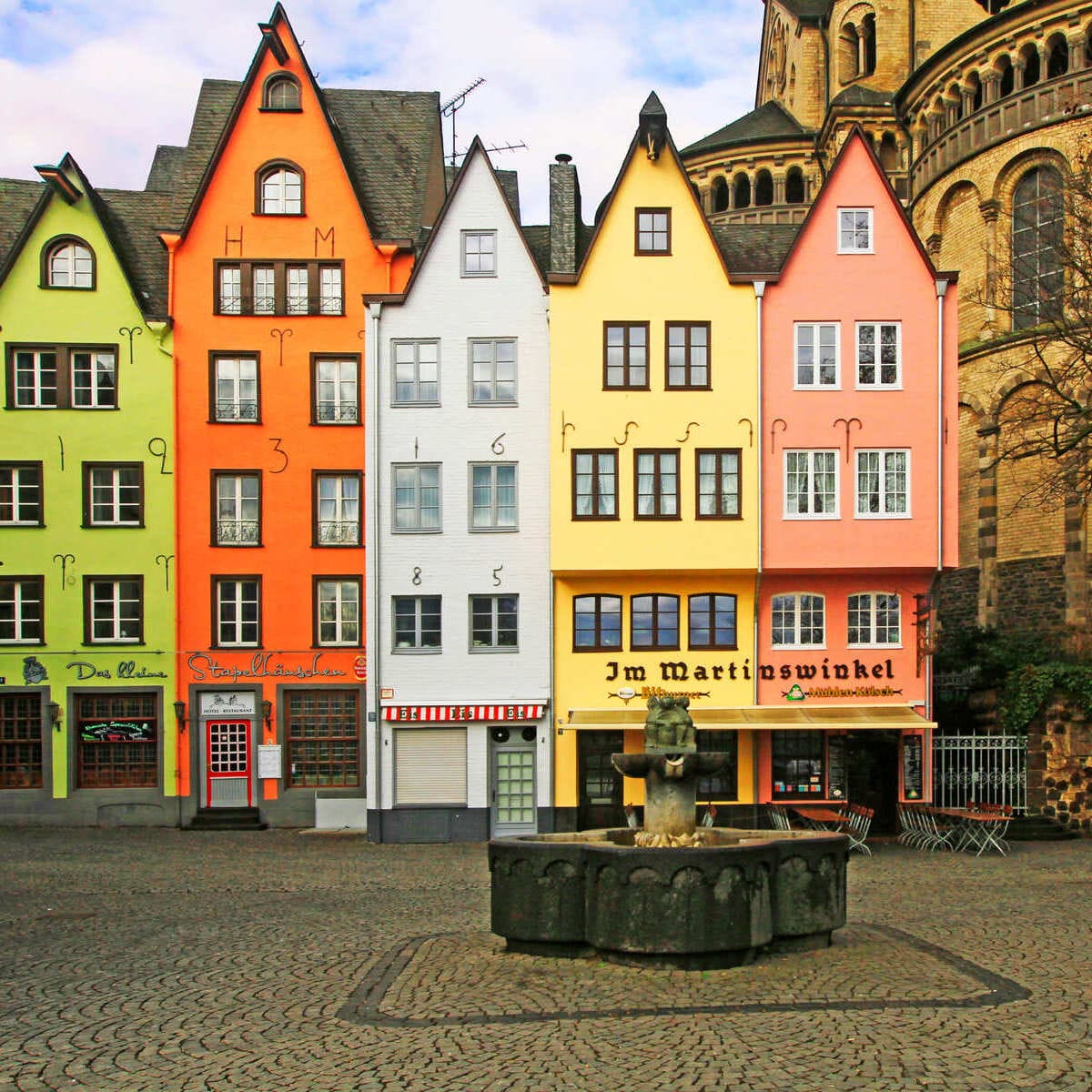
A Beautiful Historic Old Town
If you’re wondering what the buzz is all about, a good place to start is Cologne’s revitalized Altstadt, or Old Town.
It may look fairly old, with a handful of half-timbered houses scattered hither and thither, picturesque squares flanked by quirky cafes, and narrow alleys lined with colorful dwellings, but it dates back only 55–60 years. How come, you may be wondering?
Cologne may be one of the oldest cities in Germany, spanning over 2,000 years of history, but it turns out a majority of its historical buildings was completely razed during the Allied Bombing of World War II.
Although its compact, picture-perfect historic center exudes Old World charm, it was all but rubble less than a century ago, and the fact that reconstruction efforts managed to restore some of Colgone’s past glory is nothing short of mindblowing.
Then again, in the heart of the Altstadt, there stands a miracle:

The Most Beautiful Cathedral In Germany
A whopping 90% of historical Cologne was destroyed during WWII, with only a few exceptions. The most noteworthy one is its soaring Gothic cathedral, Kölner Dom, famous for having survived 14 bombs and never collapsing.
Built with dark, aged stone, and rising 515 feet high—at some point, it was the tallest building in the world!—it is among Germany’s best-known medieval buildings, and the view from atop the South Tower (accessible via a gruelling 533 steps) will take your breath away.
We mean, literally, as well as figuratively.
Cologne was also historically known for its 12 Romanesque churches, and regrettably, these ones did not survive the levelling of the city. Luckily for culture buffs, they’ve been rebuilt alongside the Altstadt, closely resembling the original medieval structures.
3 of the most important ones include Groß St. Martin, with its distinctive, cross-shaped tower, and riverfront location, St. Maria im Kapitol, an early Christian basilica raised atop a ruined Roman temple, and St. Gereon, distinguished by its original medieval dome that survived the bombing.

Great German Food & Unique Activities
If you’re looking for unique activities in Cologne, don’t miss out on the Hohenzollern Bridge. A railway and pedestrian crossing the Rhine, it is famous for the local tradition of attaching love locks to its railings, and views looking over the Altstadt and the cathedral.
Across the water, on the other side of the bridge, Rheinboulevard is a riverside promenade offering great spots for pictures, and nearby, there’s a wide range of restaurants serving German pub fare at inexpensive prices.
FRÜH am Dom is one of our favorites: from pork knuckle, to blood sausages with sauerkraut, to mashed potatoes with applesauce, you’ll find all your favorite German grub here, and the average price is $15–25 per person.
For the beer lovers out there, you should know Cologne has a unique beer culture: its traditional Kölsch is served in teeny-tiny glasses, no larger than 0.2L, and waiters will keep refilling yours until you tell them to stop (for a fun night out with overflowing malt, we’d recommend you head to Päffgen).
Finally, if you love museums, explore Museum Ludwig, host to lesser-known paintings by Warhol and Picasso—it’s right next to the cathedral, and their cafe has great pastries—or the Roman-Germanic Museum, which chronicles Cologne’s past as a Roman colony.

Cologne Is Better Connected Than Berlin
Despite being the capital, Berlin is notoriously isolated from other major German cities, sitting on the northeastern part of the country, and away from any major European transit corridors.
It’s 4.5 hours to get from Berlin to Cologne, a similar 4.5 hours to travel to Munich, and around 2 hours to reach Hamburg.
Cologne, on the other hand, is at the heart of the Ruhr, a metropolitan area encompassing 1,700 square miles, and a population of 5 million people, and more often than not, neighboring cities are a short train ride, or even an intercity metro line away!
That’s the case with Bonn, a separate city 19 miles away that’s connected to Cologne via a unified metro system. Traveling back and forth between them takes only 25 minutes.
As for Bonn, it is the birthplace of none other than Beethoven, and the former capital of West Germany prior to the country’s reunification.

If you’re looking for more day trip ideas, there’s the beautiful Dortmund, 50 minutes by train from Cologne: it’s known for its green spaces, riverside pathways, and Dortmunder Export, a pale lager brewed originally there.
Our personal favorite, however, has to be Wuppertal. We’re sure you’ve probably seen viral videos of its suspended tramway, which hangs from elevated rails instead of running above them, doing the rounds on social media.
Yep, it’s about 30 to 40 minutes away from Cologne by train.
How To Get To Cologne This Fall
Cologne does not host nonstop Transatlantic flights, but due to its strategic location in Central Europe, it can be easily reached by train from other European capitals.
From Paris, the direct train to Cologne takes about 3h20 (shorter than traveling from Berlin), and tickets average $75 when booked in advance.
From Brussels, it’s an even shorter 1h50, with tickets ranging from $27 to $54, and you can even get there from Amsterdam (3h20), for around $65.
Cologne is also served by the Cologne Bonn Airport (CGN), the 5th busiest in Germany, with major airlines like Lufthansa, Eurowings, and Ryanair flying here from across Germany and Europe.

The Travel Off Path Advantage: Your Travel Toolkit
The 1-Minute Trip Check
Our flagship tool. Solves your entire pre-flight travel planning in a few easy steps. From entry rules to hidden fees and safety.
U.S. Travel Advisory Checker
An easy tool to check all the latest travel advisories from the U.S. State Department.
Entry Requirements Checker
An easy tool to check all the entry requirements for your destination.
The Upgrade Newsletter
Unlock travel tips, hot destination insights, and exclusive flight deals.
Join Our Community
With over 25,000 members on Facebook!
Subscribe To Our Latest Posts
Enter your email address to subscribe to Travel Off Path’s latest breaking travel news, straight to your inbox.
Steve
Friday 15th of August 2025
My son just spent July and August in the Ruhr Gebiet, Köln, Dortmund. He said overrun by Arabs, Eastern Europeans and Afghans, Indians, Pakistanis. Hardly any Germans out and about.
Susan Alderman
Tuesday 12th of August 2025
Puzzled that someone seems to think that Cologne is lesser-known. Maybe they've never heard of Eau de Cologne or The Kölner Dom. Wow!
Kenny Mann
Tuesday 12th of August 2025
Interesting material, especially about Cologne. But you focus too much on historic sites and food. As a world traveler, I want to know about street life, art, music, theater, places to go out at night. There comes a time when you have seen enough churches and castles and museums and you want people connection.
Mike
Tuesday 12th of August 2025
The Ruhr has 15million people, not 5million and glamorous Düsseldorf, not mentioned here, is essentially the Centre of the region
Holger
Tuesday 12th of August 2025
Great article, visited Köln many times, and absolutely love it. The people there are super friendly and have a great humour. Their carnival celebrations are the absolutely best, and worth a visit. One small correction, Köln is situated in the “Rheinland”, it’s not part of the “Ruhrgebiet”, which is to the North/ North-East.