
It happened, you guys. Le jour J est arrivé.
France is finally dipping its toes in the Digital Nomad Visa pond, with a little caveat we’ll get into in a bit, but hey, we’ve made it!
With pretty much all of Europe, west to east and left to center having launched digital nomad visas at this point, including the usually uber-strict Spain and Italy, you’d have thought France would have hopped on that bandwagon much sooner.

The French are infamous for their constant back-and-forth, and love for bureaucracy, however—trust me, I’m an adopted Parisian, so I’d know. Of course it would take them a good few years to catch up with their European counterparts, yet here we are.
If you’ve always dreamed of having your little Paris nook, waking up early to grab that baguette, and swinging by that opulent Richelieu National Library to half-admire the end-of-century grandeur, half-work, this is the time for you.
You probably have a few questions dancing at the back of you, though:
- Who is eligible?
- What is the financial threshold?
- How long is the visa valid for?
- Is it renewable?
We’re here to answer all of those questions, and then some—stick to the end ’cause we’re about to tell my own top 5 fave digital nomad destinations in France as a local.
Did France Just Drop A Digital Nomad Visa?

The short answer is: NO.
The first thing you need to know is that this is not a full-fledged Digital Nomad Visa. It does not carry that name, and it is not specifically targeted at our community.
For many years now, France has had a Long-Term Visitor Visa in place, commonly shortened to VLS-TS, aimed at travelers who wish to break free of the Schengen shackles and stay in the country longer than the usual 3 months.
Just a quick recap, Americans can only be present in France, as well across the entirety of the Schengen space, which comprises 27 countries at the moment, for 90 days out of any 180-day period.
The VLS-TS allowed them to remain in the country between 3 months and 1 year, at the discretion of the Consulate that issued the visa, without being bound by the regular Schengen tourist constraints.

On the other hand, they were not able to work for a French employer in the meantime, nor carry out any professional activity while in France, but here’s the gray area:
Remote workers applying for this visa could not, at least in theory, pursue their professional activities during their stay in France. Then again, it’s not like French officials were knocking on doors or tailing people around cafés to make sure they weren’t answering emails between croissants.
Not that we endorse breaking rules in any way, shape or form, but it’d be naive of anyone to believe people didn’t just blatantly ignore that limitation.
And then something changed, this very week:
Lo And Behold, VLS-TS Enhanced

The French Ministry of the Interior published a formal response to the years-long question of whether remote work constituted a violation of the VLS-TS rules, and… drum roll… it doesn’t!
At least not anymore.
The article L. 426-20 governing the VLS-TS imposed on VLS-TS holders the restriction of not carrying out a paid professional activity during their stay in France.
In theory, this included remote work, even though some Consulates turned a blind eye to applicants presenting regular income from a location-independent job as their means of income.
Now, the Ministry’s position is crystal-clear for the first time: remote work carried out by a foreigner residing in France does not constitute a professional activity in the context of a VLS-TS, with some very important distinctions:
- The employer is foreign-based
- Any contractual agreement is subject only to foreign law, not French law
- The applicant in question does not carry out work for French-based clients or employees
In effect, the VLS-TS now (in)formally doubles as a Digital Nomad Visa, as very few elements distinguish it from other DNVs available in the market.
Onto the more important questions:
Who Is Eligible?
Generally, you may apply for a VLS-TS if you:
- Intend to stay in France for more than 3 months
- You have enough money to support yourself without needing a job in France
- You have accommodation arranged in France covering the entire period of your stay
- You’ve taken out health insurance/medical coverage for a minimum amount of €30,000
If you’re only traveling to Europe as a short-term tourist and you hold a U.S. passport, check you have all your documentation in order on the Entry Requirement Checker.

What Is The Financial Requirement?
That’s generally tied to the French minimum wage, or what we call here a SMIC.
Contact the French Consulate closest to you to find out more in detail.
What Kind Of Financial Records Do You Have To Provide?
In general, funds can come from:
- Savings
- Pension income
- Investment income
- Rental income
- Financial support from a guarantor/family member who can prove sufficient resources based on any of the points above
In practice, Consulates often want to see that you have access to at least roughly one year’s worth of funds at the point of application, either as a lump sum in savings or investments, or in the case of digital nomads now, a reliable recurring income.
How Long Does The Visa Last?
The visa is typically granted for a period between 3 months and 1 year.
You basically request the length you need, and French authorities then analyze the request and decide to grant it, or not.
Can You Stay Longer Than One Year?
Yes, under certain circumstances.
If you wish to remain in France after the expiration of your VLS-TS, you may generally apply for a residence permit, called a carte de séjour, via the ANEF (the official website for Foreigners in France) before the expiry of your visa.
You will need to provide further documentation depending on the reason for the visa renewal, and whether you’re switching visa categories.
In any case, if you plan on staying in France beyond the one-year mark, we recommend you get in touch with an immigration lawyer to properly examine your options.

How Much Does The Visa Application Cost?
The amount to be paid is €99, or approximately US$116.
The visa fee is not refundable, even in the case of a visa refusal, so make sure you’ve got your documentation in order to avoid having to reapply.
Top 5 France Destinations For Digital Nomads
Paris
Classic old cliché or not, Paris is undoubtedly the best digital nomad destination in France.
If not for the culture and endless amount of things to do, then for the huge coworking scene and international community.

There are very few cities in France where you can get by without having to brush up on your barely-existing French, and the closer you get to downtown Paris, particularly arrondissements 1 through 8 and Le Marais, the better.
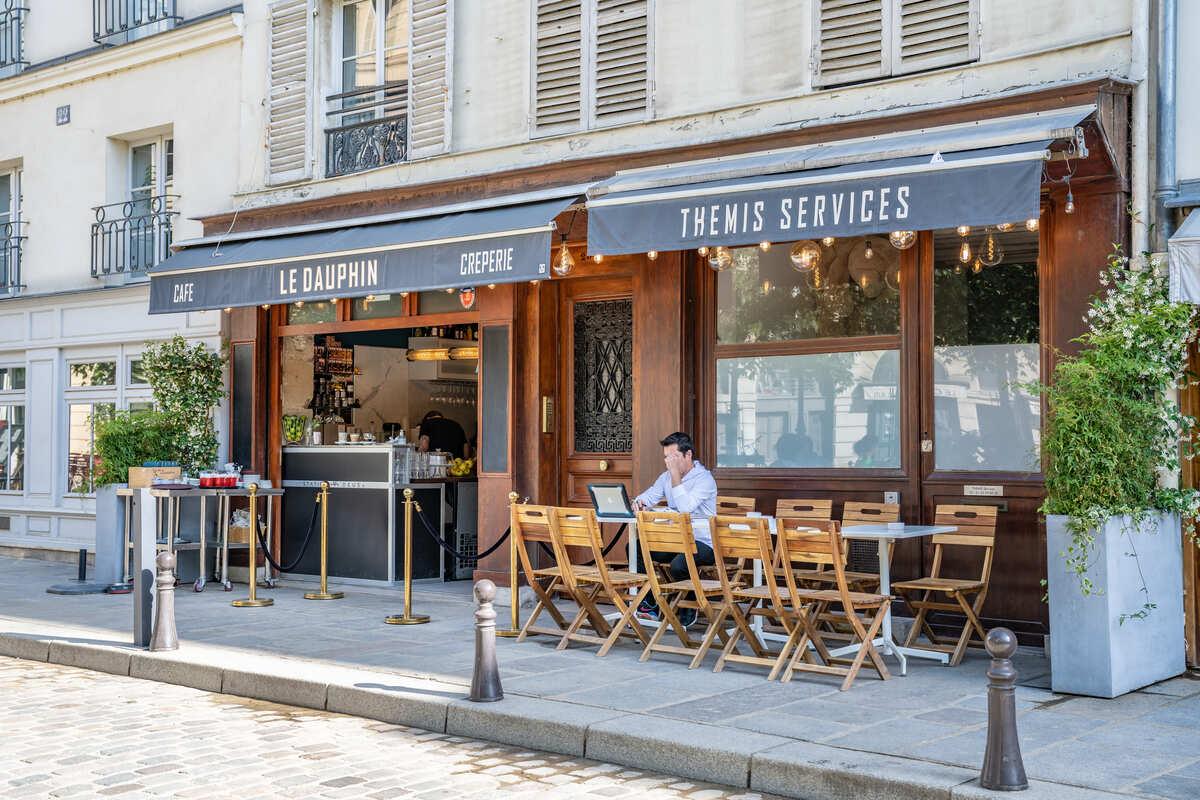
There are also some beautiful libraries and coworking spaces to check out here, like the aforementioned BnF library, which feels a bit like studying in a Hogwarts great hall, and, quite honestly, every flower-draped street-corner bistro is laptop-friendly and a great spot for people-watching and getting some work done ahead of the evening apéro.
In regard to safety, Paris is less of a post-apocalyptic nightmare than what the media usually portrays. Yes, there is organized crime in the suburbs, and you’d be wise to stay alert while using public transport, but in general, downtown zones remain pretty low-risk.

In fact, the city scores a decent 83 out of 100 on the Traveler Safety Index, which measures the security situation across different European metropolises and countries based on reports from travelers on the ground:
Pros
- Huge coworking scene
- Excellent public transport: you can get anywhere with that metro!
- Endless cafés, museums, and events
- Well-established international community
Cons
- It’s the most expensive city in France
- Apartments can be… ahem… small
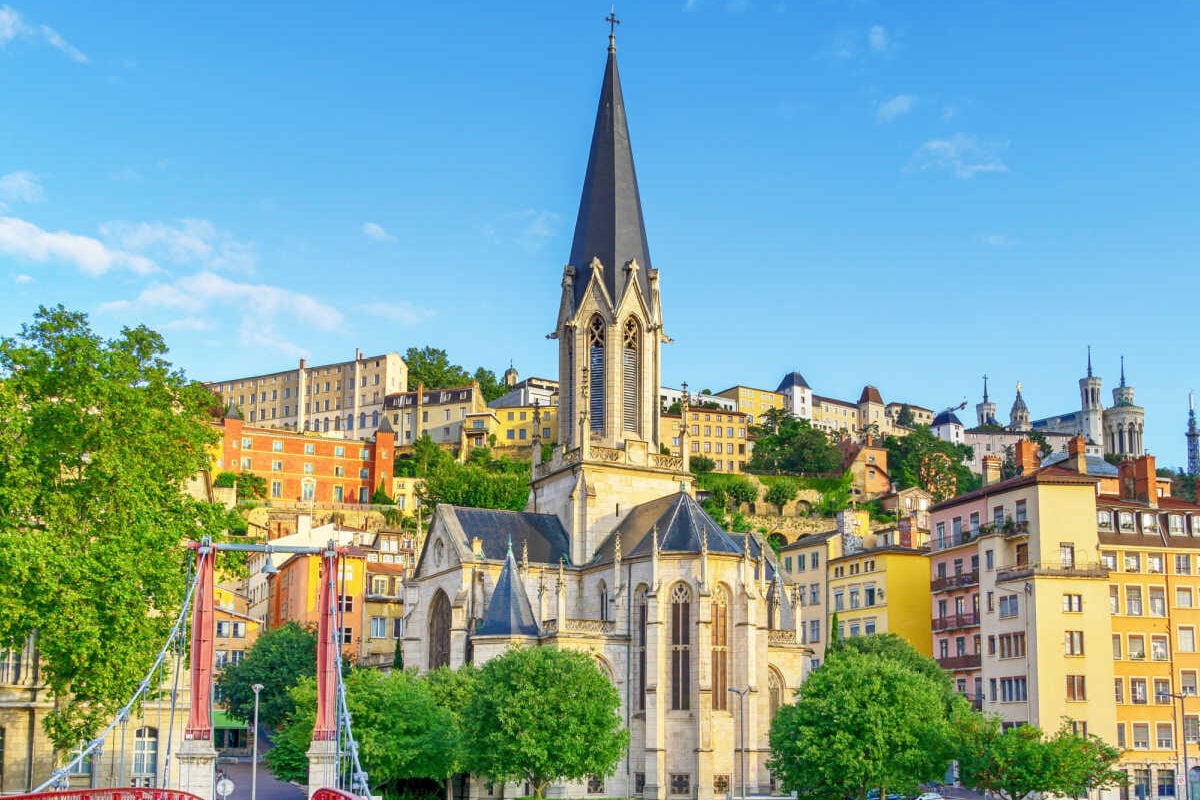
Lyon

France’s second-best offer after Paris IMO, Lyon is still a big city that draws quite the international crowds, but it somehow never feels quite as sprawling or… as “capital” intense.
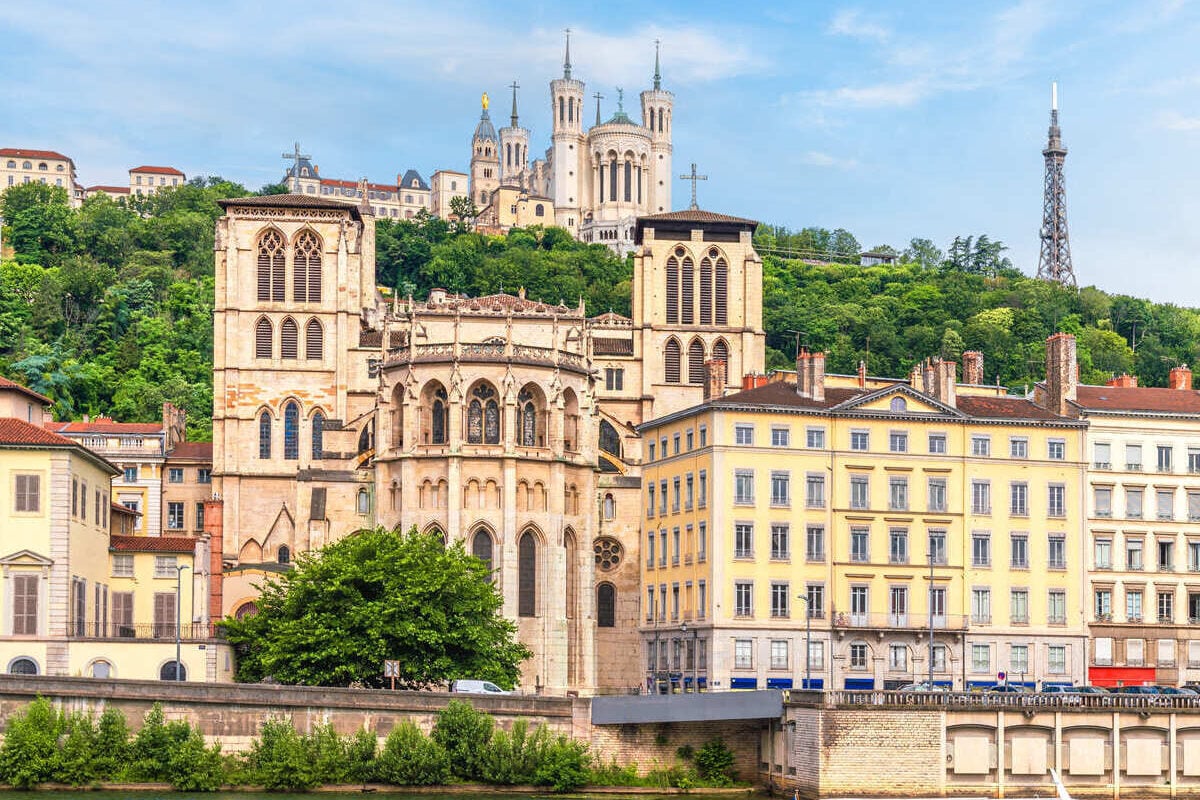
It has one of the most beautiful historic centers in France, Vieux Lyon, a Renaissance district peppered with cobblestone streets, hidden courtyards, and traboules passageways.
There’s no Eiffel Tower, suuuure, but the Tour métallique de Fourvière, perched on a hill overlooking the Rhône and Saône rivers, is just as striking, and can we talk honestly about how Lyon’s Basilica of Notre-Dame de Fourvière is maybe more impressive than the world-famous Notre-Dame?
Now, you might want to hold hands with the Lisbon digital nomads in their plight of endless sets of stairs, and Lyon is hilly, I’ll tell you that much. Lots of uphill walking, no escaping it, but on the upside, it can be more affordable than Paris at times, especially in regard to rent.
Like, often around 30% cheaper, give or take.
Pros
- More affordable than Paris
- Outstanding food scene
- Fast train connections to either the North or South of France (it’s halfway between)
Cons
- It’s Lisbon-level of hilly
- Weaker ‘instant community’ vibes: you often need more effort to meet people compared to nomad-heavy cities
Aix-en-Provence
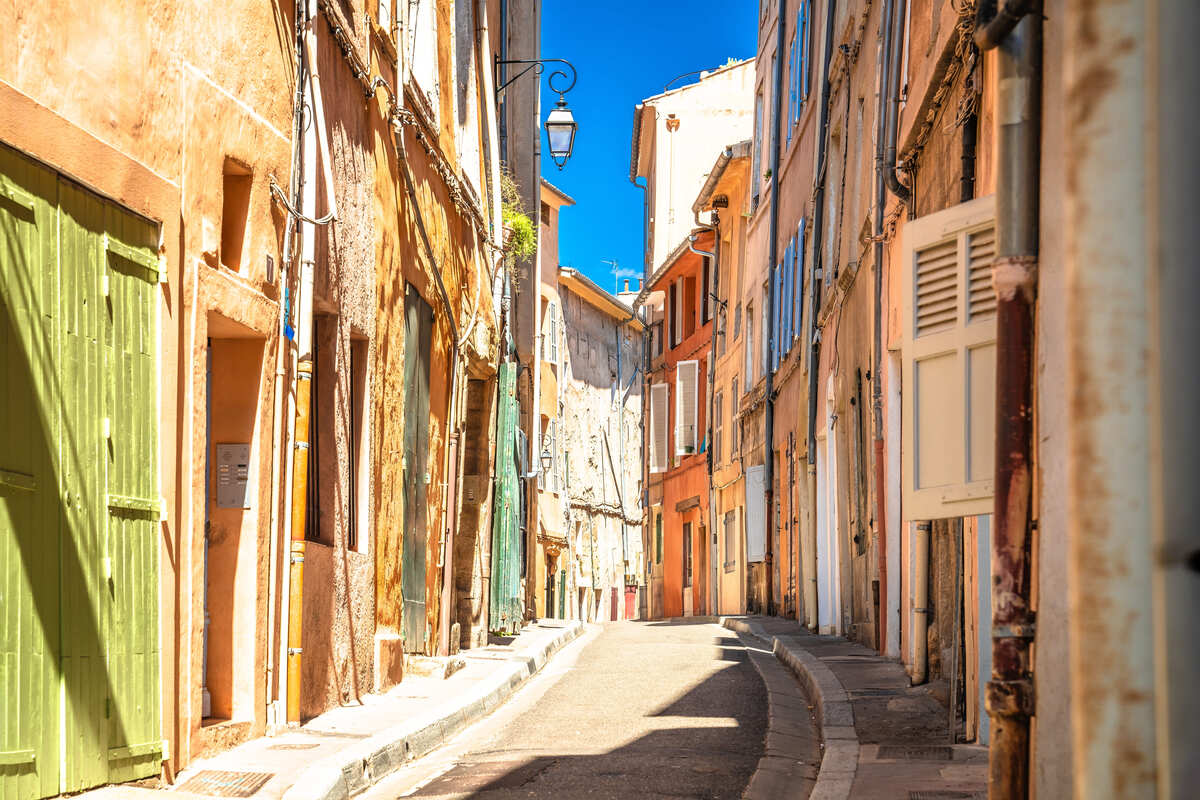
Perhaps the most relaxed city proper in France, Aix-en-Provence has that effortlessly high-quality lifestyle you can’t really have in Paris or Lyon, and a sort of slower-paced rhythm that you end up getting used to way too fast.
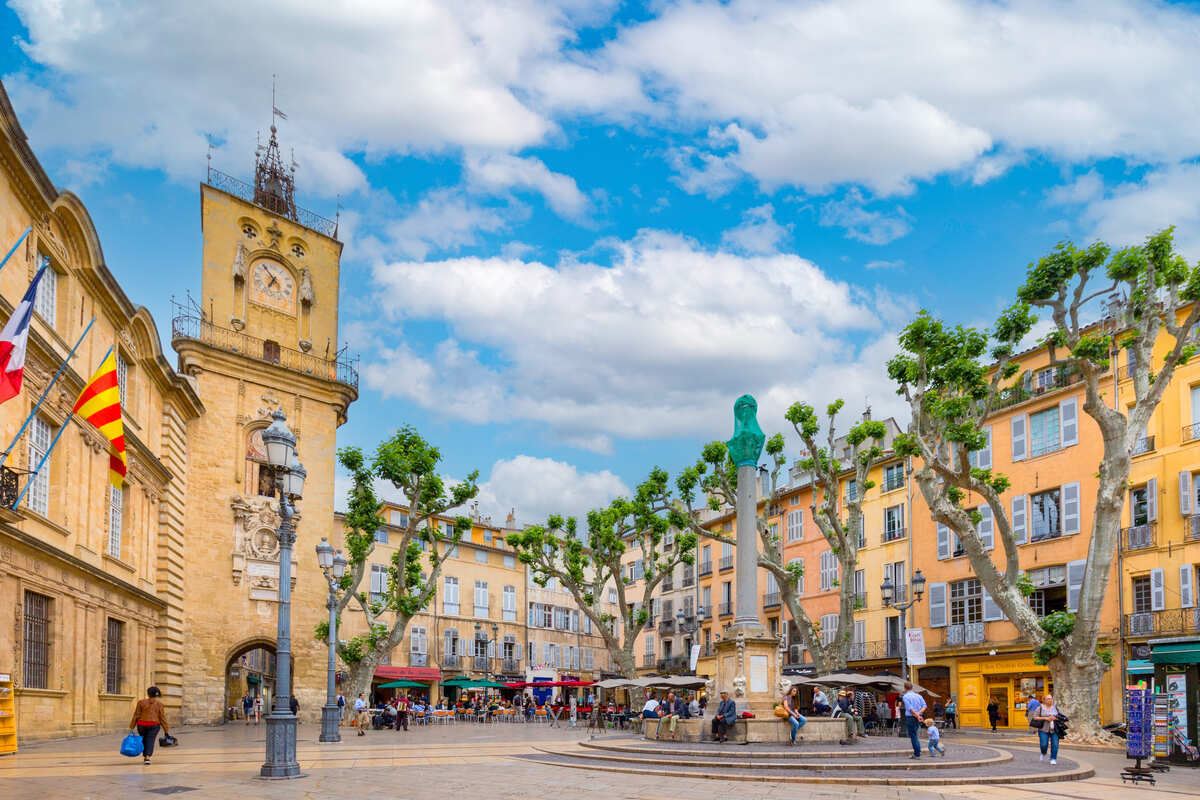
The historic center is a stunner, so if your main draw for relocating to France is the architecture, the honey-colored stone architecture, and those unrivaled Old World aesthetics, there’s nowhere better to be.
It’s also very walkable, and even if you’re living a little outside town, in the primarily residential Les Milles or Puyricard (great areas to live in, by the way), you can just bike anywhere.
Aix is also close to nature and Provence’s famous lavender fields, with beautiful towns like Lourmarin, Roussillon, and Les-Baux-de-Provence all being within easy reach, as well as the Mediterranean coast:
I mean, sun-drenched Marseille and its turquoise calanques are a short train ride away.
Pros
- It’s the quintessential mid-size European city
- Strong ‘lifestyle’ feel: slow-paced, sunny weather most of the year
- Access to both the countryside and the sea
- Safer and quieter than most larger French cities
Cons
- It’s not exactly that much cheaper than Paris or Lyon and you get a more limited social scene
- The coworking and digital community scene is not as strong
- It can feel a tad too quiet or sleepy for people who crave constant, round-the-clock activity
- It’s best to have a car to get around if you plan on exploring the wider Provence
Lille
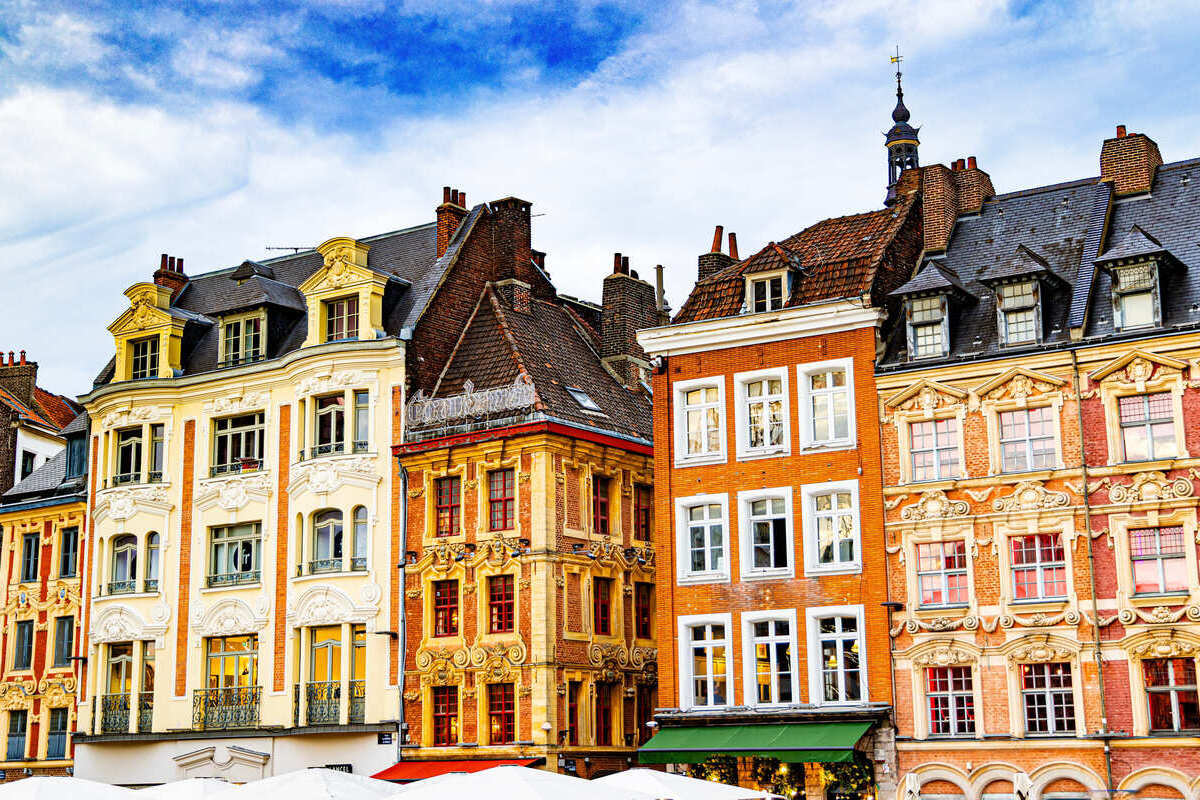
Lille is honestly sooooo underrated for digital nomads in France.
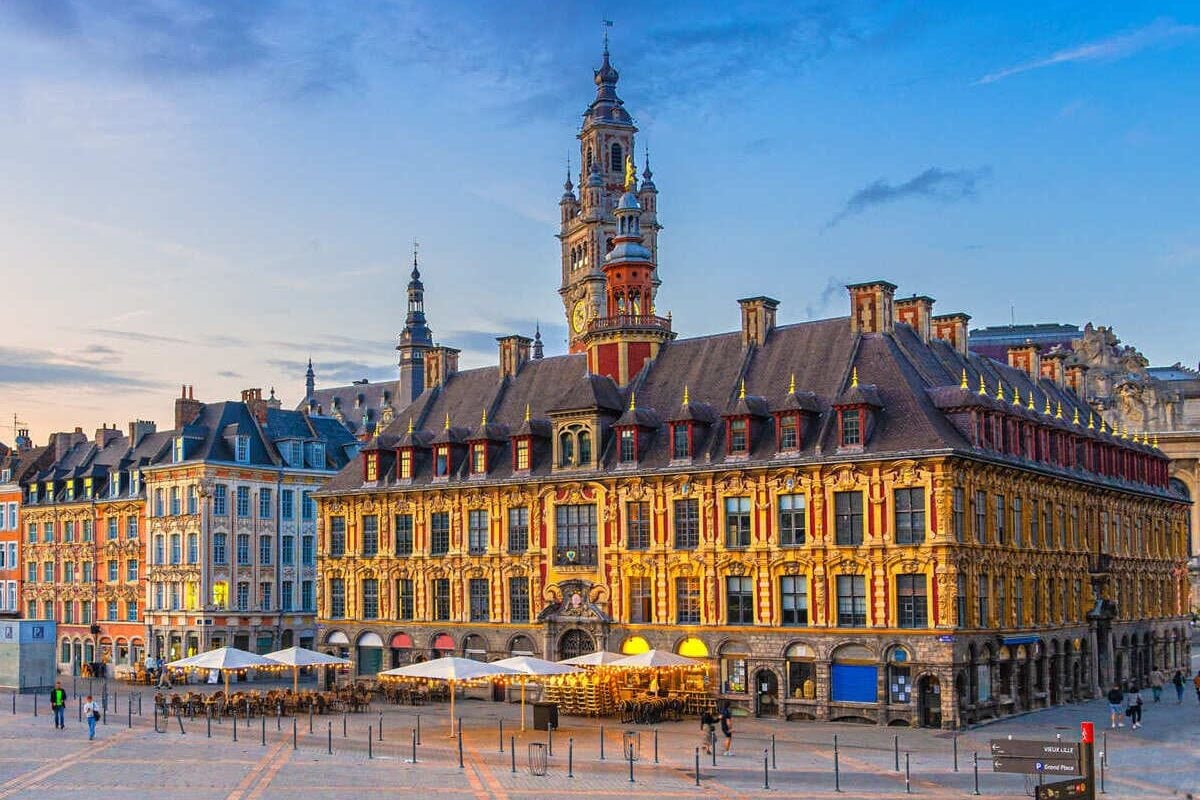
It’s got a very different vibe from the South, and Paris even: it’s distinctly more Northern European, faster-paced, and it feels like it’s at some kind of cultural crossroads.
It literally straddles the border with Belgium—Belgian town Kortrijk is a short 25-min train hop away—and London is about a 1h20 Eurostar ride.
It’s also, believe it or not, home to the second-largest metro system in France after Paris, though it’s way more compact, so even if you live a little further out, you can easily hop on the underground and reach downtown in under 30 minutes.
The fact it’s a university city, with a strong student scene, and a walkable core, help it feel even livelier and more dynamic.
Pros
- It’s cheap-ish compared to Paris (rent and daily costs are noticeably lower)
- Super well-connected: 25 minutes to the Belgian border, 1 hour to Brussels, 1h20 to Paris, 1h20 to London
- Big student population, which contributes to a thriving coworking scene
- Big but feels confined and walkable
Cons
- Weather is the big one here: this is Northern France, so it constantly rains
- The expat community isn’t as present compared to Paris or the South Coast
Nantes
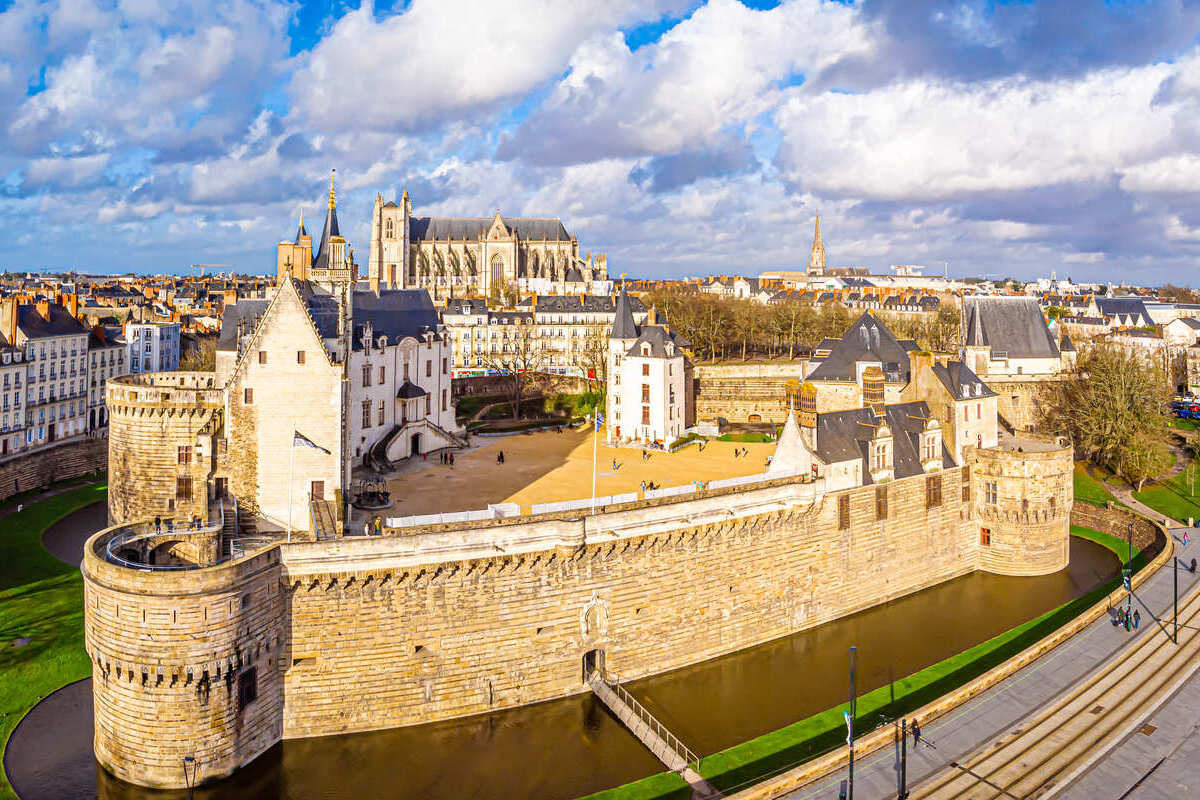
Nantes is a bit of a punching bag among the French themselves due to the weather and the fact it’s often overlooked, but I can’t help but feel it’s probably one of the most balanced mid-to-large cities in the country.
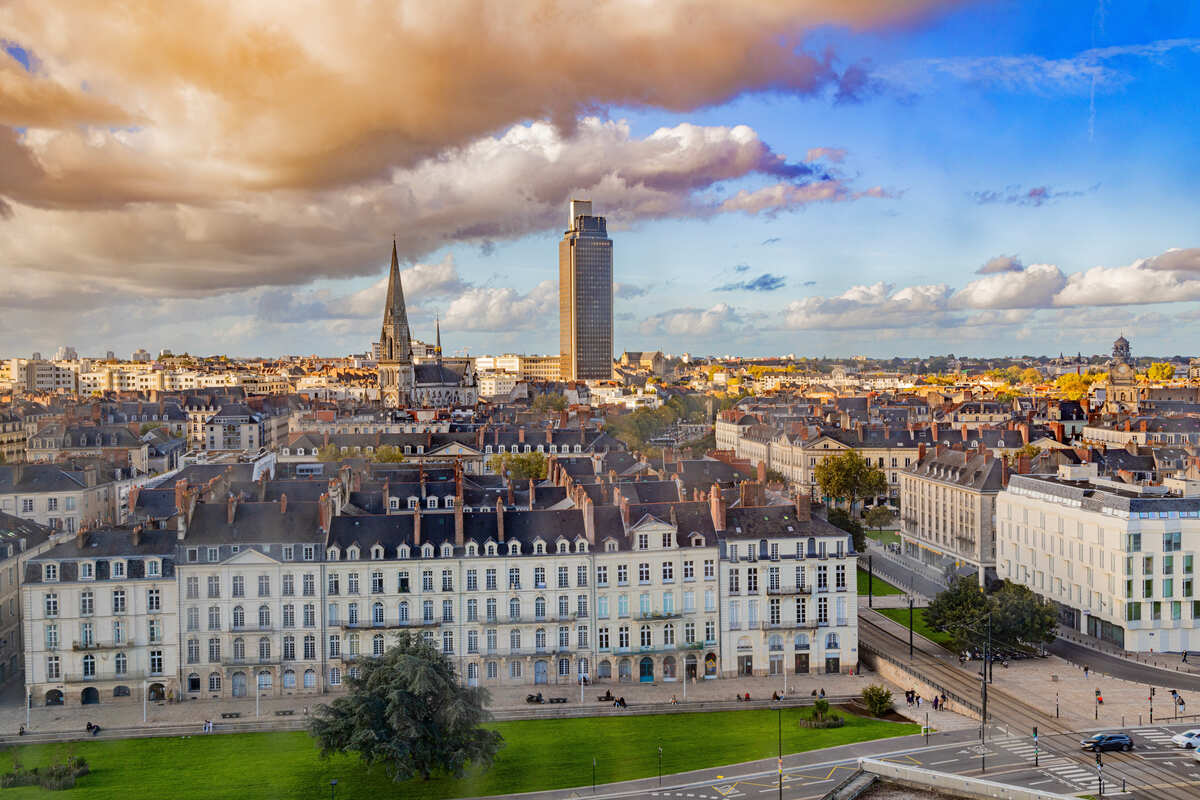
It’s lively, creative, close to the Atlantic, and it has enough cultural appeal to warrant a longer stay.
The iconic Château des Ducs de Bretagne is a well-preserved medieval castle right in the heart of town, and I’m sure the average person has had worse commutes than having to walk by a properly imposing French château on their way to work.
Or in our case, our favorite coffeeshop.
Other highlights include Cathédrale Saint-Pierre-et-Saint-Paul, a massive Gothic cathedral with an airy stone interior, and Passage Pomeraye, the cutest little 19th-century shopping arcade filled with boutiques and ornate ironwork.
I also love Nantes for the sheer abundance of urban parks it has—you’re never really far from a green lung here—and the young, energetic atmosphere.
Pros
- It has a growing tech and startup ecosystem
- Vibrant cultural scene with festivals, concerts, and creative arts projects
- It’s green, clean, and very liveable without feeling too small
- Close to the ocean (about a 30-minute drive inland)
Cons
- Apart from summer, it can be rather gray and rainy (this is the Atlantic Coast, after all)
- It’s not exactly postcard-pretty like Lyon or Aix
- Not the best place for France-based trips as geographically is slightly off-axis and connections to major hubs are slower
