
Not ready to say goodbye to summer just yet?
It may be a little too late for that idyllic Eurosummer in Saint-Tropez or Amalfi, now that temperatures are starting to dip and beach clubs are winding down for the season, but what if we told you there’s a lesser-known beach city at the eastern end of the Mediterranean where it’s sunny and warm through October?
Better yet: you won’t need to dip into your hard-earned savings to secure a sea-view room, nor take out a small loan to afford that life-changing three-course dinner.
Not only do daytime highs still hover around 80 degrees well into October, but food and accommodation often cost a fraction of what you’d pay in Western Europe’s flashiest coastal hotspots:
Is Larnaca The Most Underrated European Fall Escape?
Sitting on the southeast coast of Cyprus, Larnaca is truly your best bet for a sun-drenched Mediterranean getaway in the off-season.
If you’re unfamiliar with Cyprus’ whole setup, all you need to know is that this is the European Union’s easternmost member state, located roughly 240 miles east of Rhodes, compared with just 47 miles south of Turkey and around 65 miles west of Syria.
Still, before you start panicking about regional conflict and stray drones, Cyprus is super safe. Hold your horses, though; we’ll get to that.
Back to Larnaca, this is a mid-sized city home to around 52,000 residents—a number that feels considerably larger once waves of sun-seeking British and German holidaymakers arrive in the warmer months—that ticks every imaginable box on your Mediterranean getaway wish list:
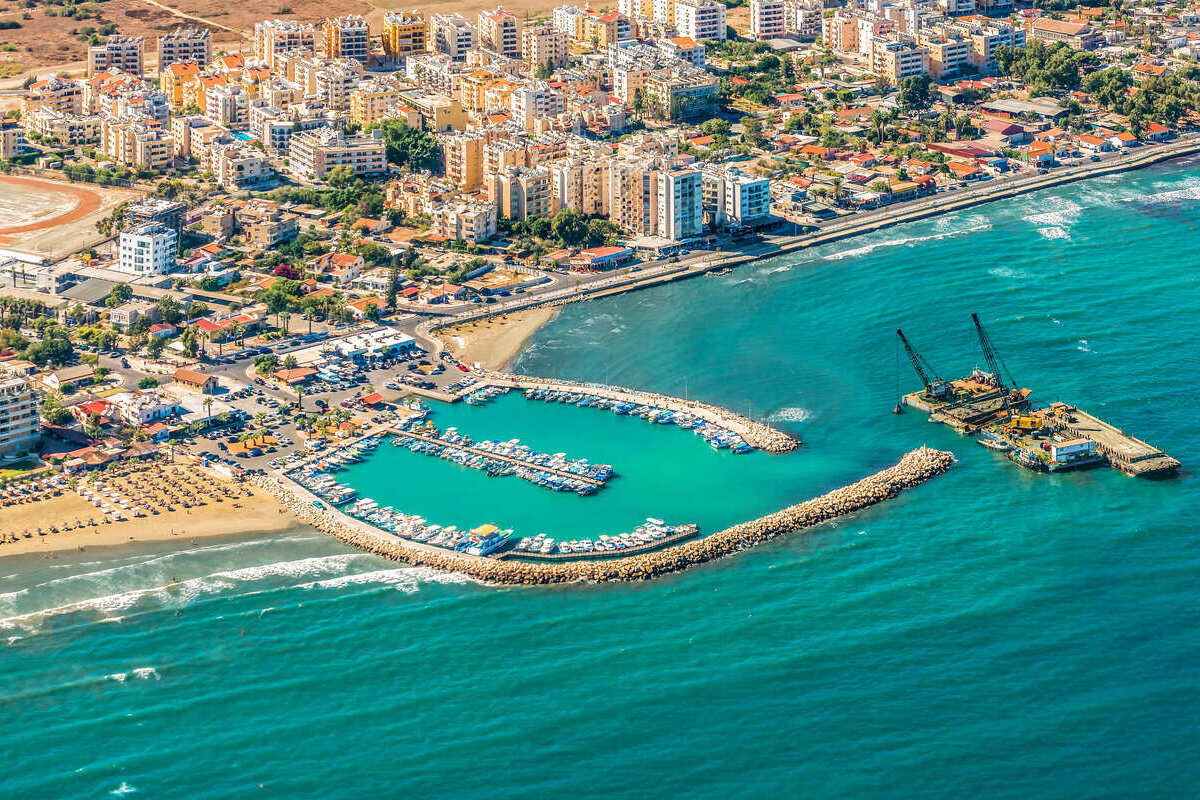
- You can fly there direct from numerous major hubs across Europe
- It’s set right on a beautiful golden-sand beach
- It has a proper resort strip packed with everything you might need for a fuss-free, stress-free vacay
- On top of that, there’s a lovely Old Town area peppered with family-run tavernas and ancient monuments
Check Travel Rules Before Flying To Europe
They’ve Changed Drastically This Year
Before we delve deeper into Larnaca’s charms, make sure you check the entry rules that apply to Americans flying to Europe this fall.
Don’t just wing it and assume it’s a one-size-fits-all deal regardless of which country you’re visiting:
Depending on your destination, you may be required to show proof of onward travel before your permitted stay is up, evidence of sufficient funds or accommodation, or even undergo fingerprinting upon arrival.
Americans can stay visa-free for up to 90 days within any 180-day period, counted separately from time spent in the Schengen Area, though border officers may still request an onward ticket and proof that you can fund your stay.
Use the Entry Requirement Checker to find out more.
A Forgotten Cultural Hub In The Eastern End Of The Mediterranean
Wondering why even bother with Larnaca in the first place?
What if we told you this low-key, unassuming beach city in Cyprus is home to a stunning ensemble of religious and historical landmarks, from Orthodox churches and Islamic shrines to Armenian churches and memorials?
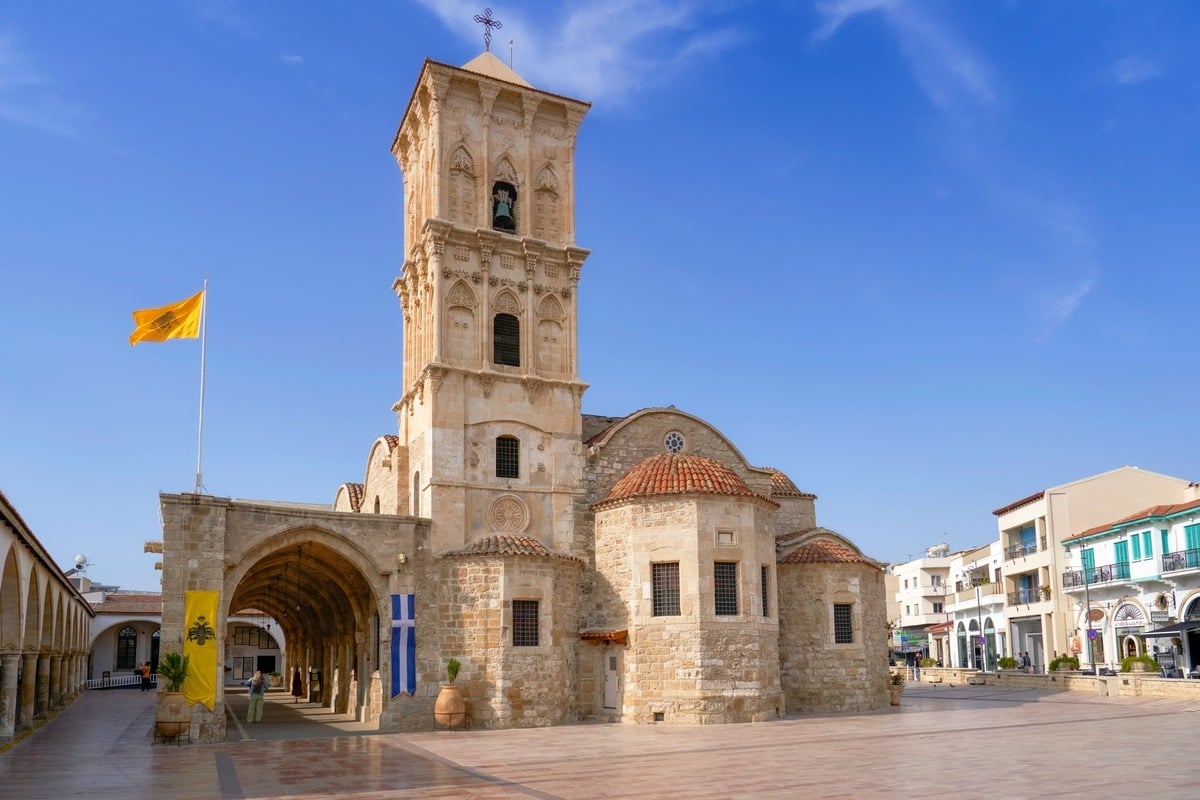
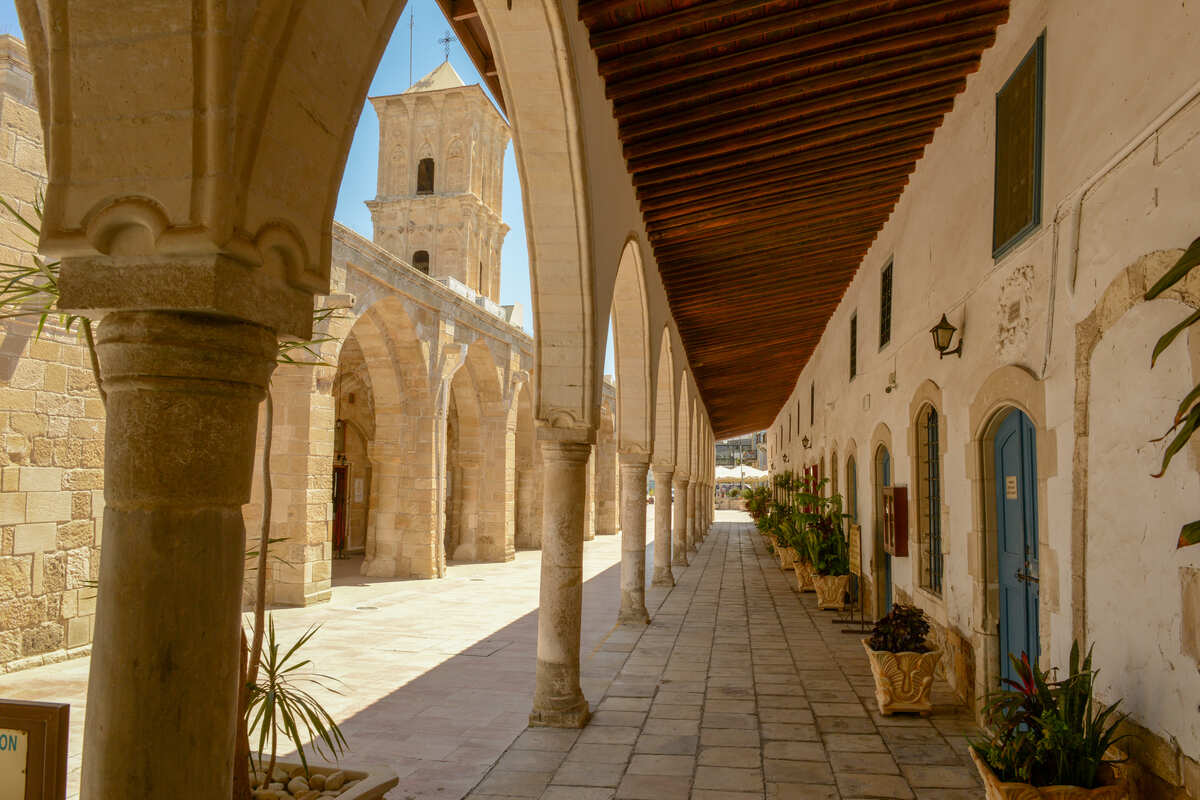
The centerpiece here is the Church of Saint Lazarus, a 9th-century Byzantine masterpiece traditionally believed to stand over the tomb of Lazarus.
Yep, as in the same Lazarus whom Jesus brought back from the dead in the New Testament.
Now, as with nearly every claim involving ancient Christian relics, you need to take this one with a hefty pinch of salt, but similarly to the tomb of Saint James over in Santiago de Compostela, it’s the faith, the legend, and the centuries of devotion that count.
Either way, the moody, candlelit interior of the church is worth the detour alone.
Traditional Tavernas, Medieval Wonders & Sandy Beaches
Larnaca Old Town itself is a sun-bleached maze of narrow lanes, some framed by stone arches and others lined with colorful shutters and family-owned tavernas.
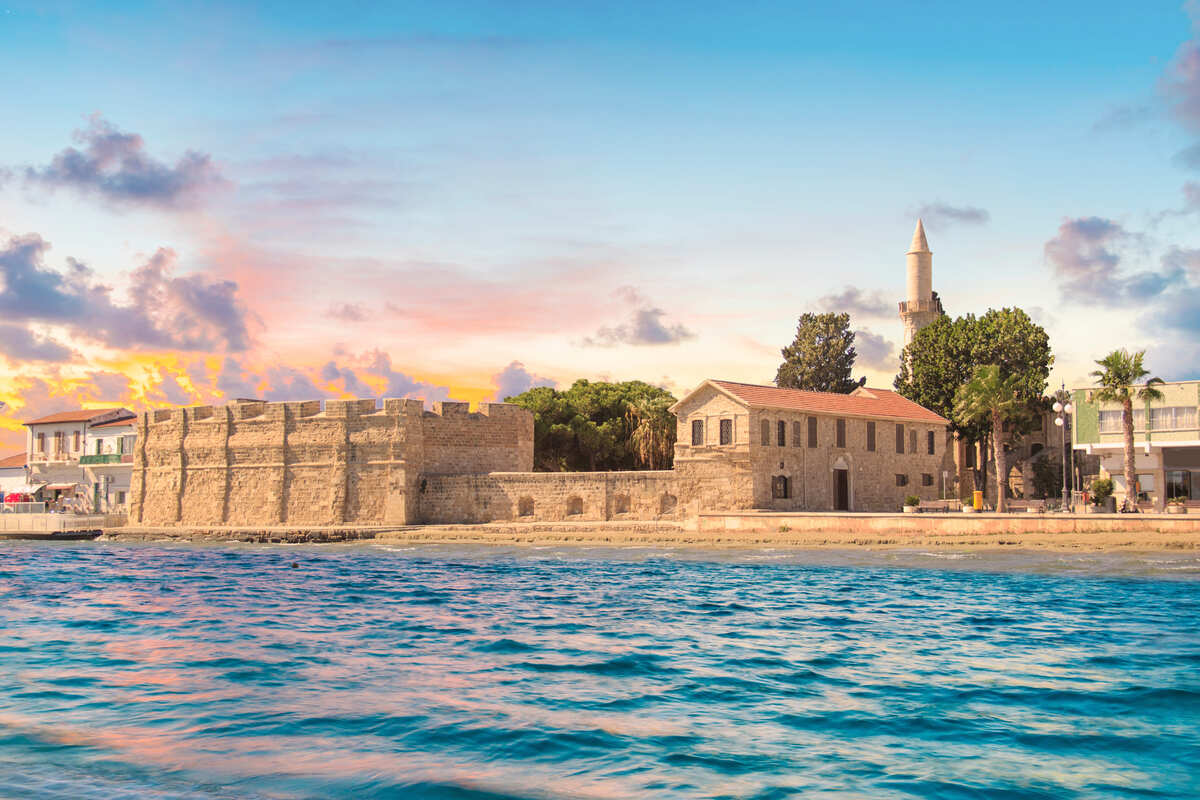
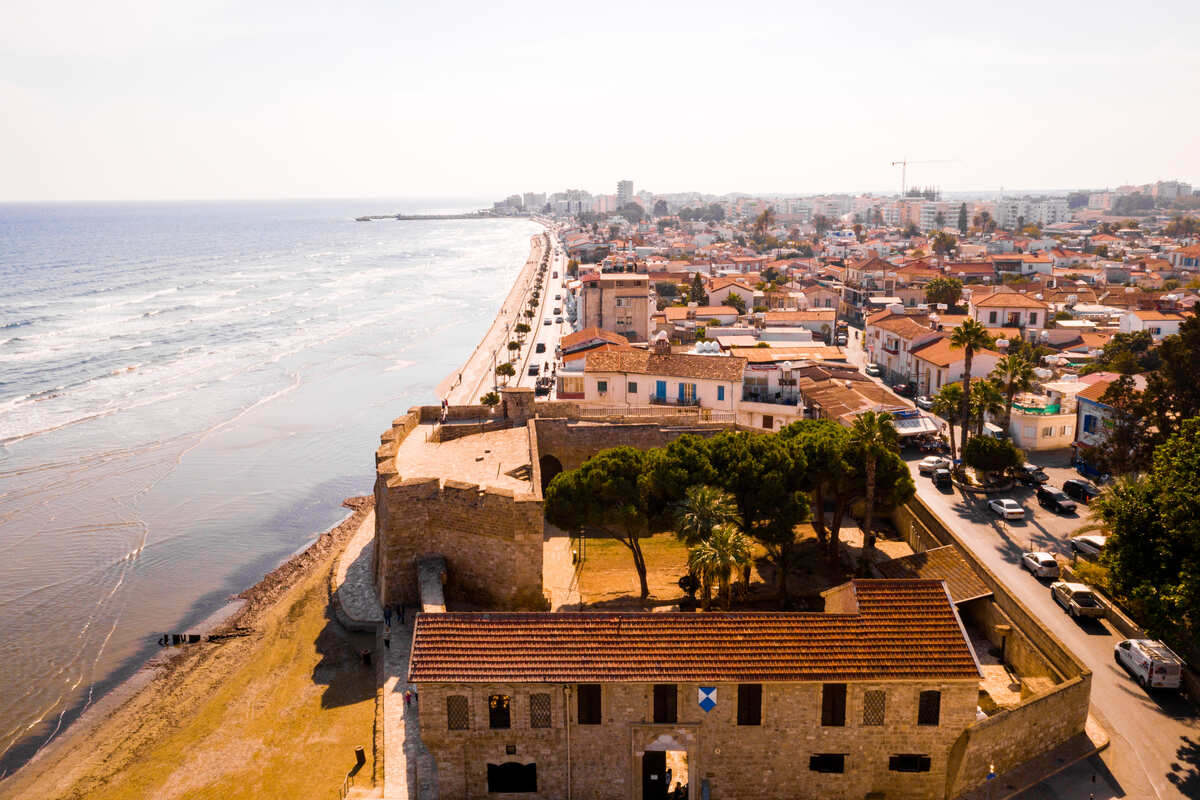
Somehow, every turn seems to lead down towards the ocean and the stout medieval castle anchoring the city’s waterfront.
Larnaca Medieval Castle is a compact yet imposing seaside fortress housing a small museum and open-air courtyard, and if you climb up to the ramparts, you’ll get a beautiful panoramic view of the city’s church belfries, Ottoman-era minarets, and the azure sea stretching into the distance.
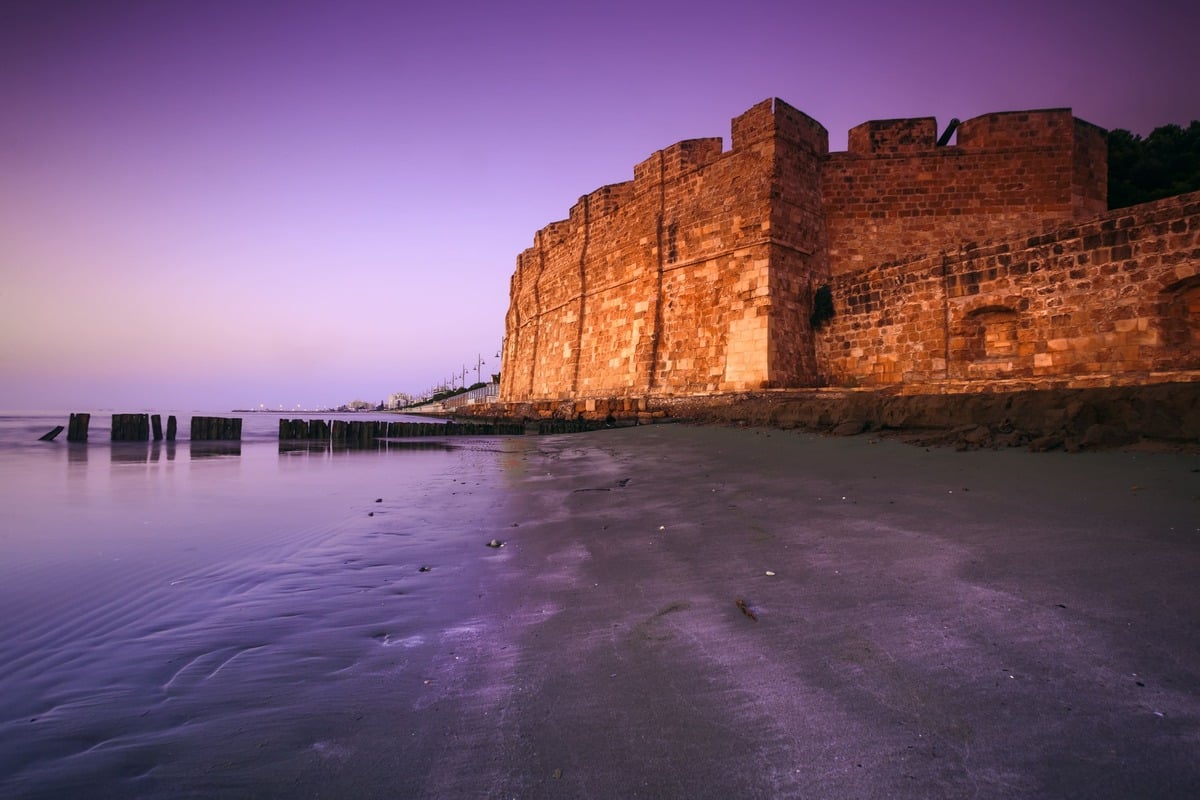
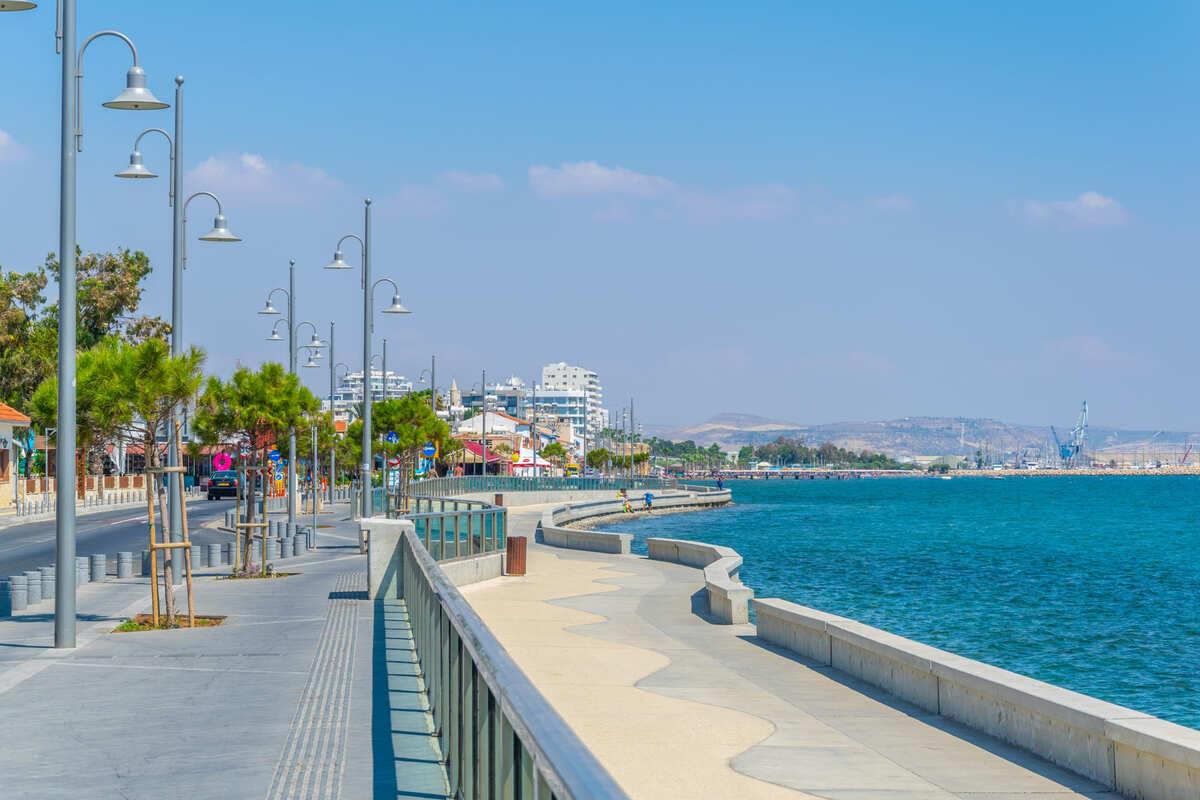
Of course, at the foot of the castle, there’s Larnaca’s main beach, Finikoudes: a 0.4-mile ribbon of fine, brown-and-gold sand, lined with palm trees and fronted by restaurants and café terraces.
It’s the city’s central beach, only a few steps from the main shopping streets.
If you’re looking for something a little more polished, with the kind of proper beach-club atmosphere Cyprus is known for, take a short drive out to Mackenzie Beach, a longer strip of stylish bars and seafood restaurants hugging calm, clear shallows.
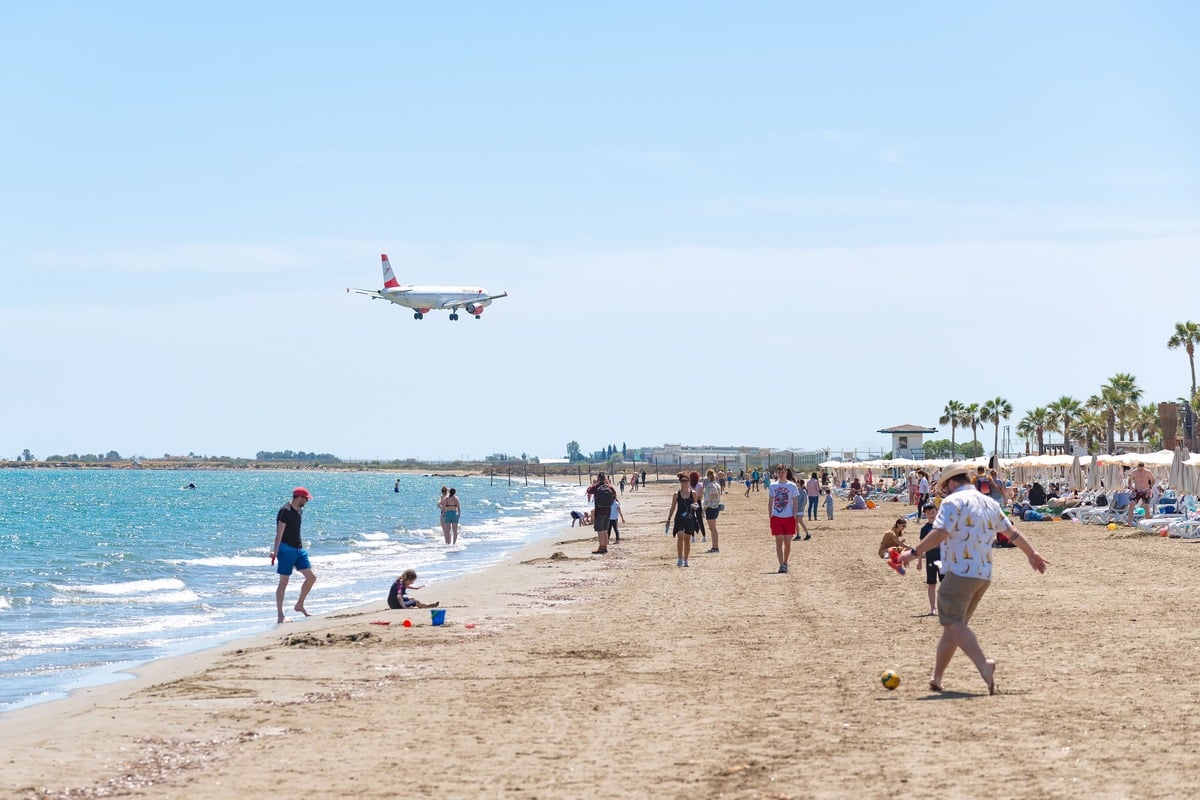
You also get planes skimming overhead as they descend into nearby Larnaca Airport, which is either thrilling or mildly terrifying, depending on how you feel about aviation.
The One Hidden Gem Tourists Generally Miss
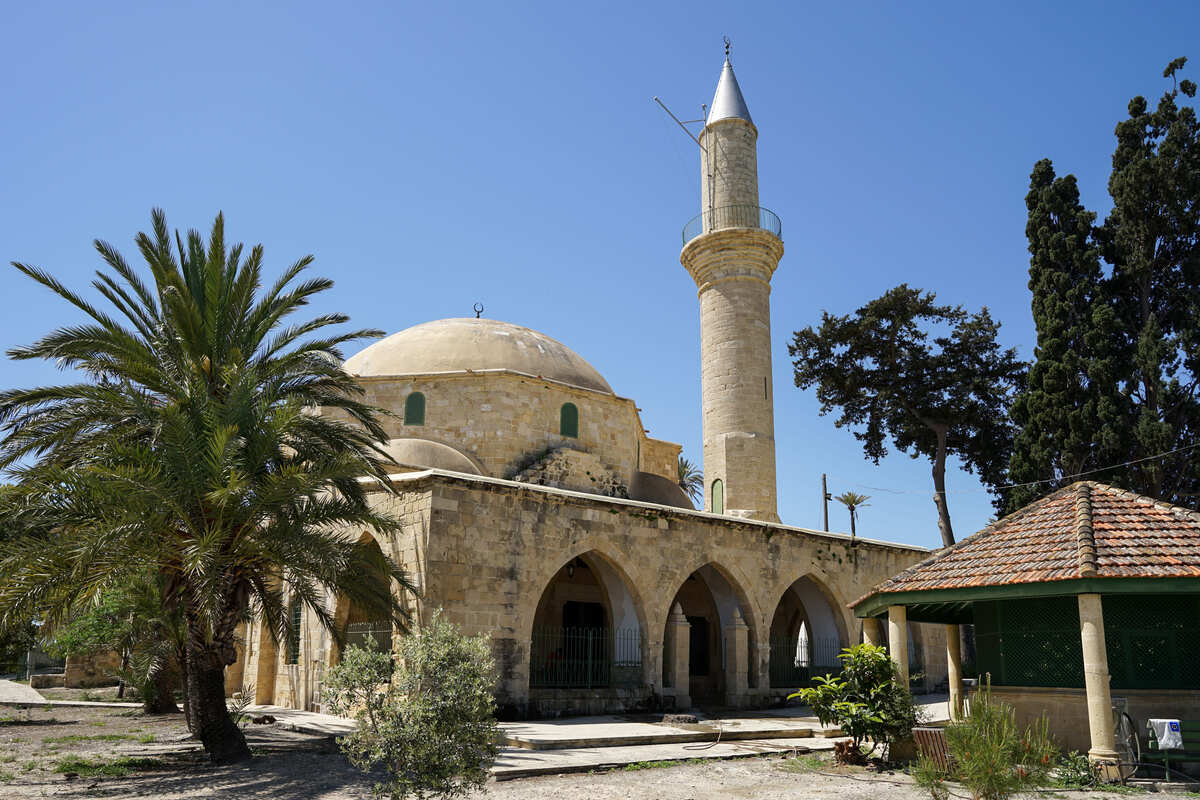
Looking for an under-the-radar showstopper that most beach-bound tourists miss?
A 15-minute, $18–24 taxi ride out of the city center will take you to Hala Sultan Tekke, a mosque complex constructed in stages between 1760 and 1817 and believed to contain the tomb of Umm Haram.
A companion of the Prophet Muhammad, traditionally believed to have been connected to him through his foster family, she died around 647 or 649 CE after falling from a mule while accompanying an early Muslim naval expedition to Cyprus.
I know, the lore of it all.
Note From The Editor
Just one sec! If you enjoy reading great human-written articles, the best way to see a few more is to follow us on Google so we become one of your preferred websites. Thank you so much for reading. Now back to the story!
Despite standing in the heart of an EU country, this is one of the most important Muslim pilgrimage sites in the Eastern Mediterranean, to the point you’ll sometimes see it billed locally as Islam’s fourth-holiest site.
That’s precisely what sets Cyprus apart from other Mediterranean islands and makes it so special:
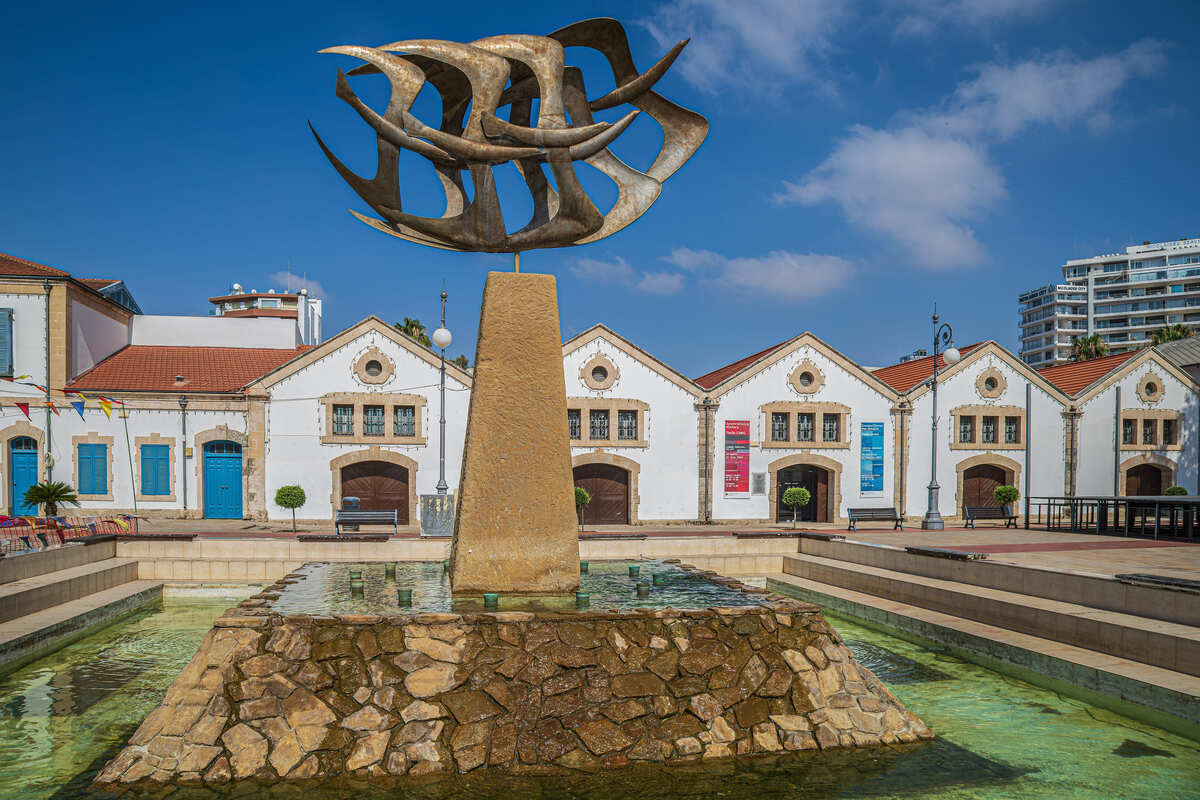
It’s a melting pot of cultures and faiths, and in case you didn’t know, the island remains divided between the Greek Cypriot-controlled Republic in the south and the Turkish Cypriot-administered north.
You can read all about the self-declared Turkish Republic of Northern Cyprus, and why it should definitely be on your radar, in this guide.
Is Cyprus Safe In 2026?
I guess this is as good a segue as any for touching on the security situation in Cyprus.
Yes, the island is geographically much closer to the Middle East than it is to mainland Europe, despite being a full member of the European Union, having a predominantly Greek-speaking population, and using the euro.
For comparison, flying from Tel Aviv, Israel, to Larnaca—a route I’ve taken myself—typically takes about an hour, whereas flying from London to Cyprus takes roughly 4.5 to 5 hours.
Officially, maps even place Cyprus in the Middle East, or Western Asia in general, rather than Europe, but hey, don’t bring that up with the average jingoistic Greek Cypriot patriot.
Be that as it may, the everyday visitor experience in Cyprus couldn’t feel further removed from the upheaval and instability affecting other parts of the Middle East.
There was a brief period this year when the U.S. Department of State raised the country’s travel advisory to Level 3 due to the threat of armed conflict, following a suspected Iranian-made drone strike on RAF Akrotiri, a British Sovereign Base Area on the island.
The incident caused limited damage and no casualties, and Larnaca itself was not affected.
Serious and unnerving as it seemed at the time, it was limited in scope, and Cyprus returned to Level 1 on June 1, meaning Americans are once again advised merely to exercise normal precautions.
Different guidance applies if you’re headed for the Turkish Cypriot-administered northern area of Cyprus, due to the potential for unrest and the U.S. Embassy’s limited ability to provide assistance there.
However, Republic-controlled cities such as southern Nicosia, Limassol, Paphos, and Larnaca itself all fall under the country’s overall Level 1 advisory.
Additionally, Cyprus scores an impressive 85 out of 100 on Travel Off Path’s Traveler Safety Index, proving that travelers—the people behind the numbers—feel safe when touring the island:
How Affordable Is Larnaca?
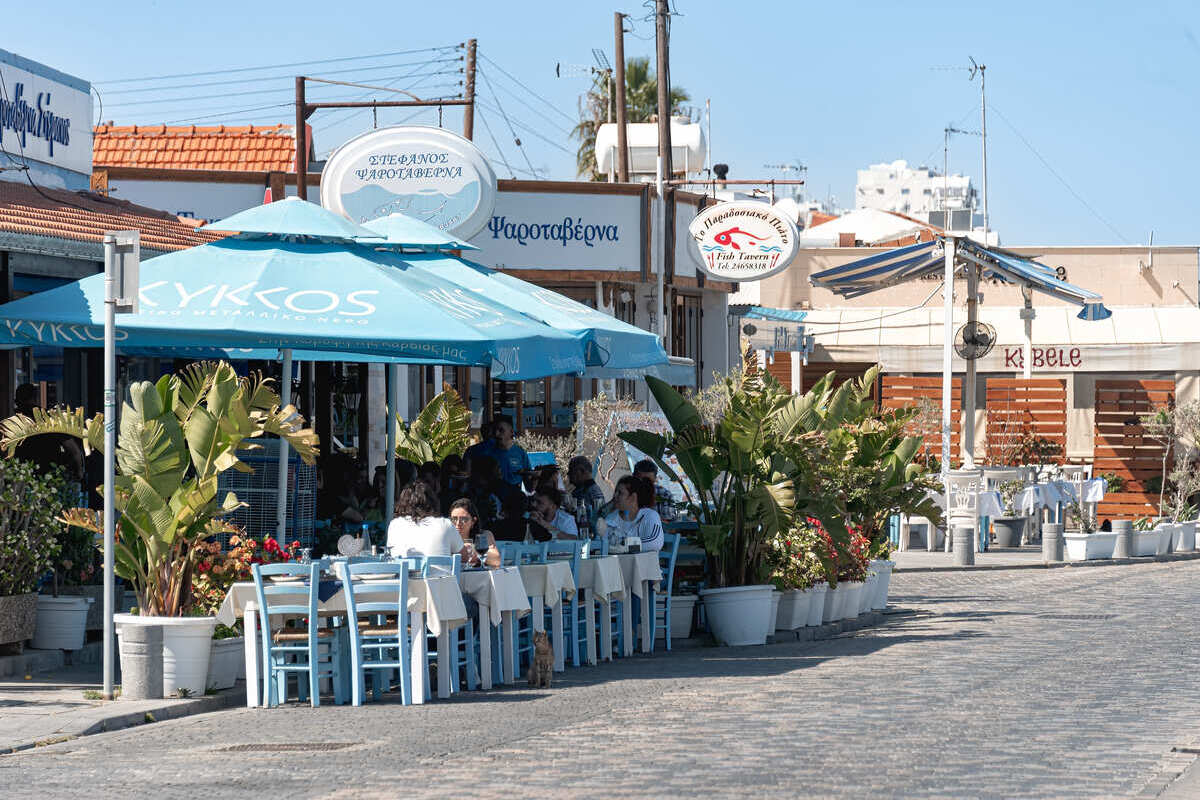
Geopolitics aside, you’ve probably come to Larnaca for the beaches, the relaxed vibe, and the great food.
In that case, make a beeline for To Kazani, in the traditional village of Aradippou, roughly 4 miles from central Larnaca.
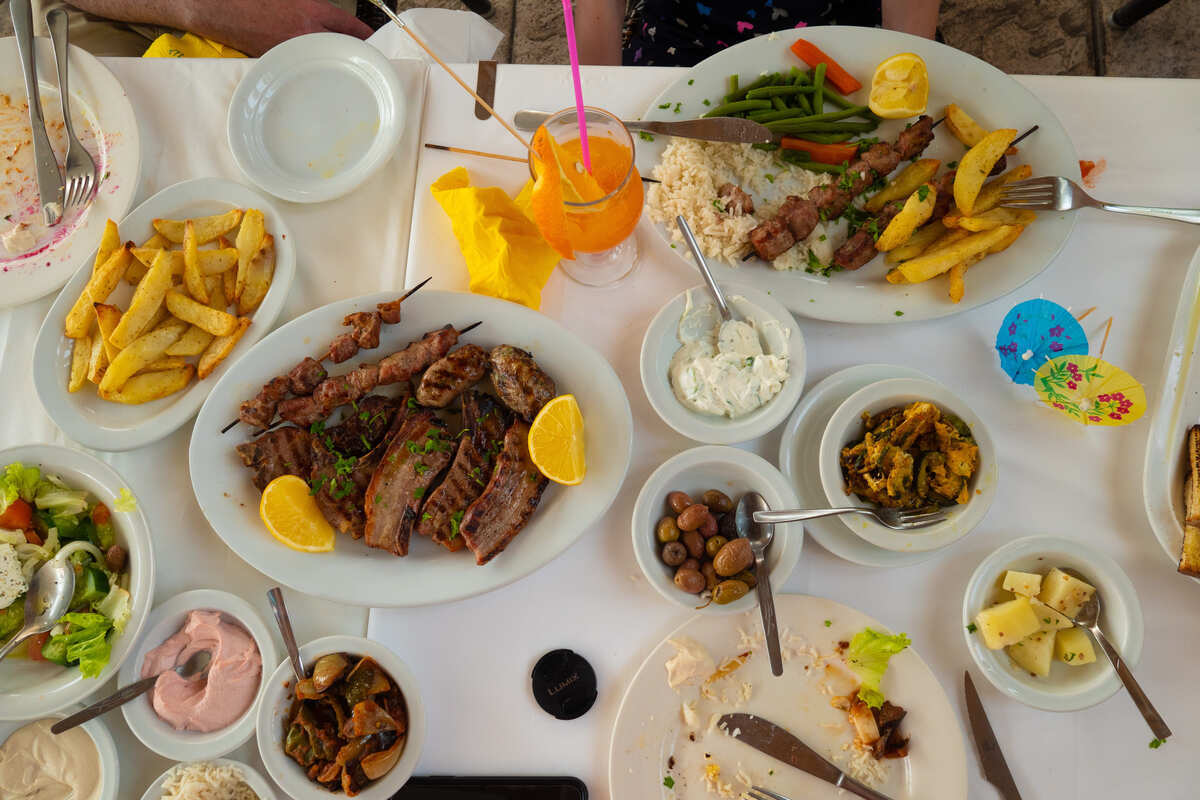
This is one of the best family-run options in the area, and it specializes in traditional Cypriot meze.
If you’re not sure what exactly that entails, think halloumi, village salad, homemade dips, koupepia, smoky loukaniko, sheftalia, and platter after platter of souvlaki.
Portions are exceedingly generous, and if you’re worried about blowing the budget, a full meze here will set you back around $32 per person, with a minimum order of two.
Speaking of affordability, Larnaca is one of the cheapest Mediterranean city breaks this fall, even more so than the flashier, resort-oriented Cypriot powerhouses of Ayia Napa and Paphos.
Average Fall Prices In Larnaca, Cyprus For 2026
Converted into USD and rounded. Hotel prices vary considerably by date and how far ahead you book.
- Three-course meal: $30–45 per person
- Traditional Cypriot meze: $30–35 per person
- Takeaway gyro: $8–10
- Casual taverna meal: $14–22
- 3-star hotel: $90–150 per night
- 5-star hotel: $180–350 per night
- Coffee: $3–5
- Local beer: $3.50–5
- Cocktail: $9–14
- Airport taxi to central Larnaca: $18–30
- Public bus journey: around $3 cash
- Two municipal sunbeds and an umbrella: around $9
Why Is Larnaca Still So Overlooked?
To most visitors, Larnaca is simply the gateway city where you land before heading elsewhere on the island.
That’s because it’s primarily known for hosting Larnaca International Airport (LCA), Cyprus’ busiest hub, serving roughly 90 nonstop destinations across 38 countries.
With all this culture and incredible ancient heritage, that’s all most visitors know it for. Crazy, right?
Needless to say, Larnaca is a proper city often bypassed by tourists, who typically flock to the resort zones of Ayia Napa and the nearby resort belt of Protaras.
It’s still a fully functioning, lived-in city where Cypriot locals actually live, work, and get on with business, rather than a mere holiday strip for hordes of Brits keen on day-drinking and roasting themselves to a crisp.
Let them have Ayia Napa. We’re off to Larnaca instead.
Enter your email address to subscribe to Travel Off Path’s latest travel news, straight to your inbox
