
Planning your first U.S. National Park trip shouldn’t feel like you’re studying for a law-school entrance exam.
First-time visitors often get overwhelmed by backcountry logistics, crowds, and trails that require mountaineering experience just to see a waterfall.
But there are parks and trails for every level of adventurer (we all start somewhere!).
Over the years, my wife Liz and I have learned that not every park is built for an easy, stress-free arrival. Some require intense hikes just to catch a glimpse of the main attraction, while others let you step right off a free shuttle into a world-class view.
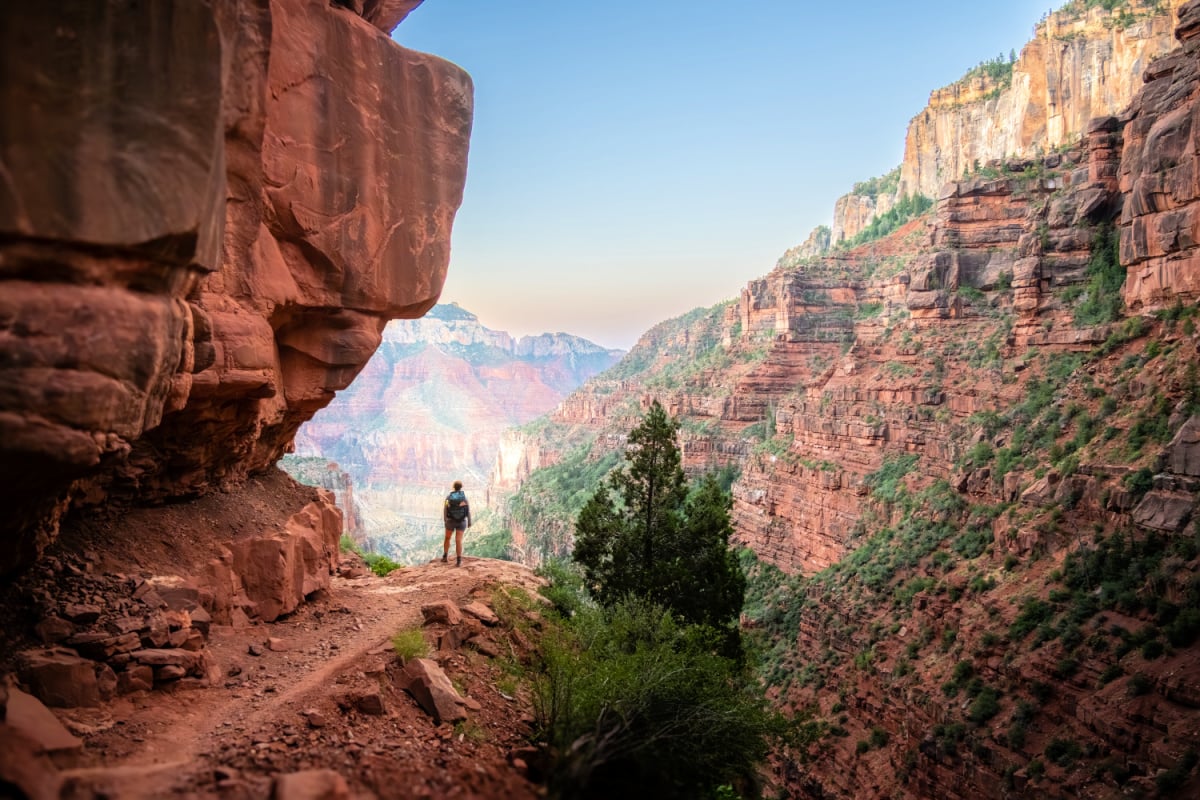
If you’re lacing up your hiking boots for the first time, you want the highest reward for the lowest barrier to entry. We’re talking shuttle systems, scenic drives, and mostly flat pathways that don’t absolutely wreck your knees.
Just remember: several of these parks, including Zion and Rocky Mountain, now require timed-entry reservations or shuttle tickets during the peak summer months to manage the crowds, so always lock in your dates early.
Here are the 9 best national parks for beginners that deliver maximum visual payoff with minimal stress.
1. Grand Canyon (AZ)
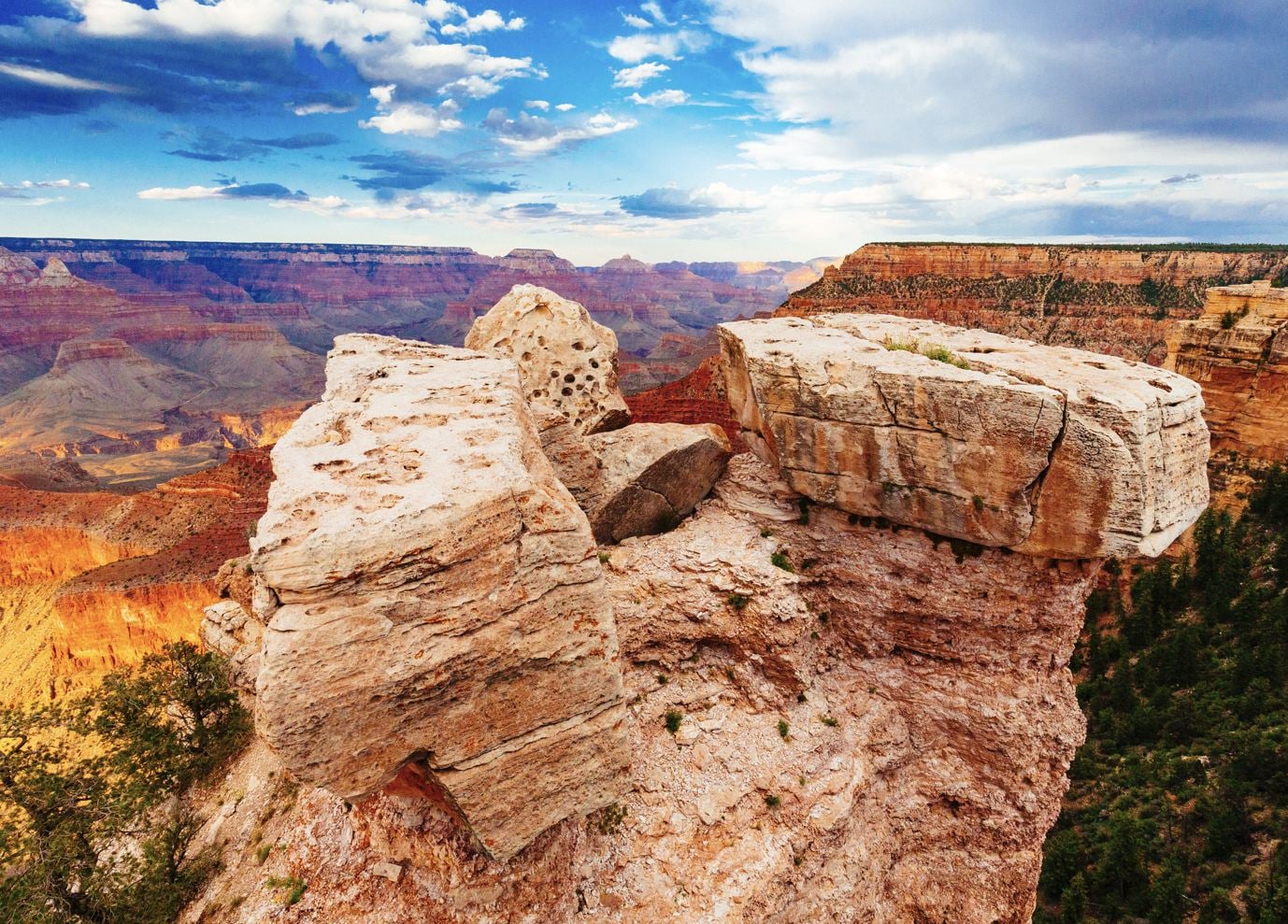
The scale of the Grand Canyon is impossible to comprehend until you’re standing right on the edge of it. Fortunately, the National Park Service has made the South Rim incredibly accessible for anyone who wants world-class views without having to hike down into the grueling depths of the canyon itself. You can easily spend an entire weekend here just bouncing between the paved overlooks.
- Easy Navigation: You can rely on the excellent shuttle system running along the South Rim, which pairs perfectly with the extensive paved pathways.
- Best Beginner Trail: Hit the Rim Trail. It’s completely flat, paved, and stretches for miles, giving you continuous, unobstructed canyon views.
- Must-See Landmark: Don’t leave without checking out Mather Point and Mary Colter’s Lookout Studio.
Tip From The Editor (me): Mather Point is the most famous spot for sunrise, which means it gets incredibly crowded. Grab a coffee and walk just ten minutes further down the Rim Trail—you’ll get the exact same stunning morning light with a fraction of the crowds.
2. Yellowstone (WY/MT/ID)

Yellowstone is massive, stretching across three states, but it’s remarkably easy to digest if you’re exploring from the front seat of your car. It’s basically an active supervolcano disguised as a scenic drive. The infrastructure here is completely built around giving you up-close access to the planet’s craziest geothermal features without requiring a backcountry permit.
- Easy Navigation: The Grand Loop Road effortlessly connects all the major geothermal basins and iconic viewpoints.
- Best Beginner Trail: The Mammoth Hot Springs Boardwalk is an easy, highly accessible wooden boardwalk looping directly through the steaming terraced springs.
- Must-See Landmark: You absolutely have to see Old Faithful erupt, and the vibrant colors of the Grand Prismatic Spring are unreal.
Tip From The Editor: The parking lot at Grand Prismatic Spring is a madhouse by noon. Go early in the morning, but remember that cool morning air creates thick steam over the hot spring. For the clearest view of the colors, late morning right as the air warms up is the perfect sweet spot.
Note From The Editor
Just one sec! If you enjoy reading great human-written articles, the best way to see a few more is to follow us on Google so we become one of your preferred websites. Thank you so much for reading. Now back to the story!
3. Yosemite (CA)
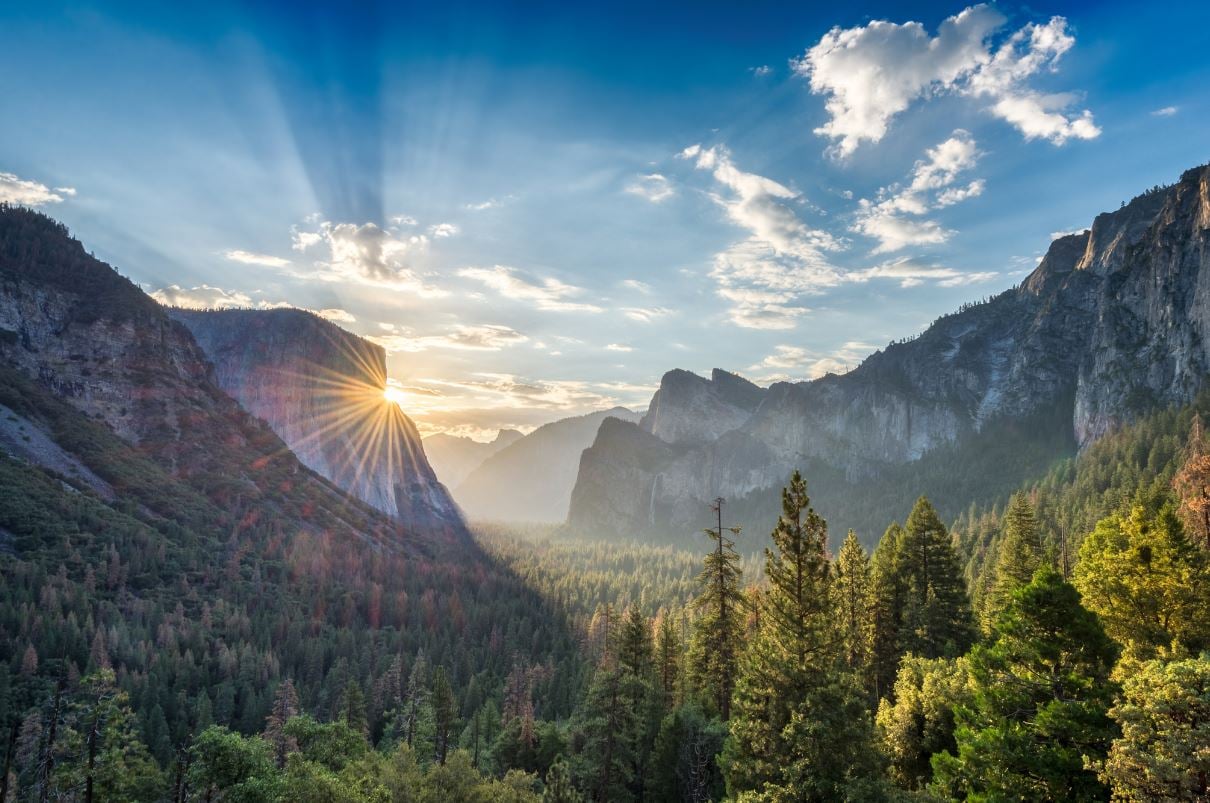
Driving into Yosemite Valley for the first time and seeing the massive granite walls rise up around you is an experience you’ll never forget. The valley floor is essentially flat, which makes it an absolute playground for casual walkers and families. You don’t need to be a big-wall climber to feel the sheer magnitude of this place.
- Easy Navigation: Ditch the car and use the free, comprehensive shuttle system that loops continuously throughout Yosemite Valley.
- Best Beginner Trail: The Lower Yosemite Fall Trail is a breezy 1-mile flat loop leading directly to the misting base of the falls.
- Must-See Landmark: Standing on the valley floor, you get staggering views of both El Capitan and Half Dome.
Tip From The Editor (me): Ditch the car at your campsite or hotel and rent a cruiser bike for the day. Yosemite Valley has an incredible network of paved, car-free bike paths that let you cruise right past the shuttle lines and stop wherever you want.
4. Acadia (ME)
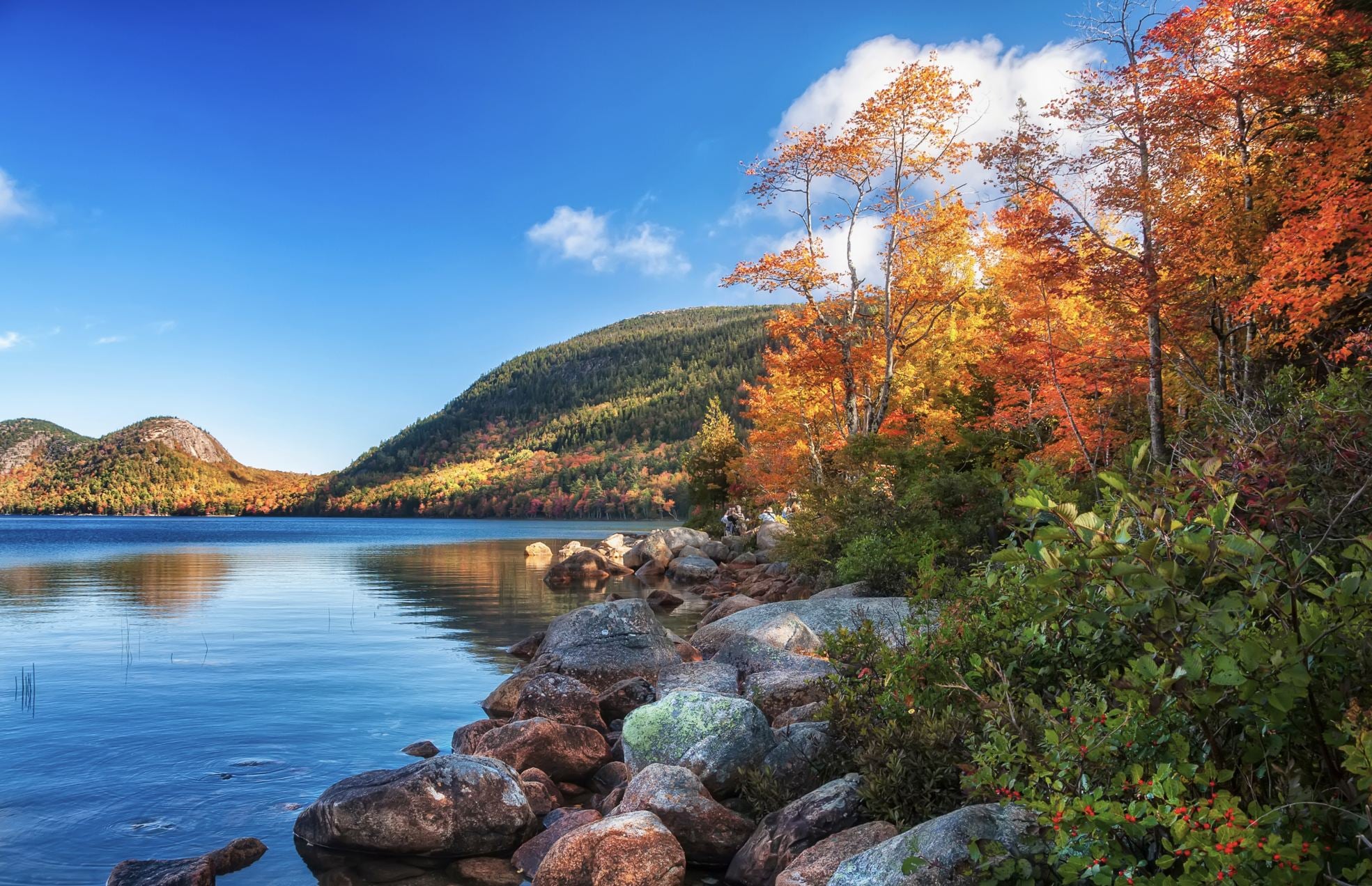
If you prefer ocean breezes over desert heat, Acadia is the ultimate coastal escape. Located on the rugged coast of Maine, this park perfectly blends thick pine forests with rocky shorelines. The entire park is designed to be explored via a wildly scenic, easy-to-navigate loop that does all the heavy lifting for you.
- Easy Navigation: The Park Loop Road and the free Island Explorer bus make getting around simple and completely stress-free.
- Best Beginner Trail: The Jordan Pond Path is a mostly flat trail that hugs the pristine water, offering incredible views of the Bubbles mountains in the distance.
- Must-See Landmark: You absolutely have to take in the sweeping coastal views from Cadillac Mountain.
Tip From The Editor (me): After walking the Jordan Pond Path, you’ve got to stop at the Jordan Pond House. Treat yourself to their famous fresh popovers and blueberry jam on the lawn—it’s a classic Acadia tradition that completely lives up to the hype.
5. Zion (UT)

Zion flips the traditional park experience upside down—instead of standing on the rim looking down, you’re standing on the canyon floor looking up at massive, towering sandstone cliffs. While it’s famous for extreme hikes like Angels Landing, the valley floor itself is incredibly tame and built for easy, relaxing exploration right alongside the river.
- Easy Navigation: The mandatory scenic canyon shuttle completely eliminates traffic jams and parking stress inside the main canyon.
- Best Beginner Trail: The Riverside Walk is a lush, 2.2-mile paved out-and-back trail that follows the Virgin River straight into the canyon.
- Must-See Landmark: The trail literally ends where the towering walls of The Narrows begin (you get the paved start before having to wade into the water).
Tip From The Editor (me): Because you have to ride the shuttle during peak season, try to catch the very first bus of the morning. You’ll get to experience the canyon in total silence and watch the morning light creep down the red rock walls.
6. Bryce Canyon (UT)

Bryce isn’t a traditional canyon; it’s a massive series of natural amphitheaters filled with thousands of bright orange, spire-shaped rock formations called hoodoos. Because the main road runs right along the rim, you don’t even have to break a sweat to get the best views in the entire park.
- Easy Navigation: There’s one main road with a voluntary shuttle connecting all the major amphitheater viewpoints.
- Best Beginner Trail: The Rim Trail (specifically the section from Sunrise to Sunset Point) is a 1-mile paved walkway overlooking the densest collection of hoodoos.
- Must-See Landmark: The Bryce Amphitheater is the sprawling heart of the park and absolutely demands your attention.
Tip From The Editor (me): At 8,000 feet of elevation, Bryce Canyon gets significantly colder than Zion. Even if you’re visiting in the middle of summer, pack a warm layer for the mornings—the wind whipping off the rim can be surprisingly freezing.
7. Mount Rainier (WA)
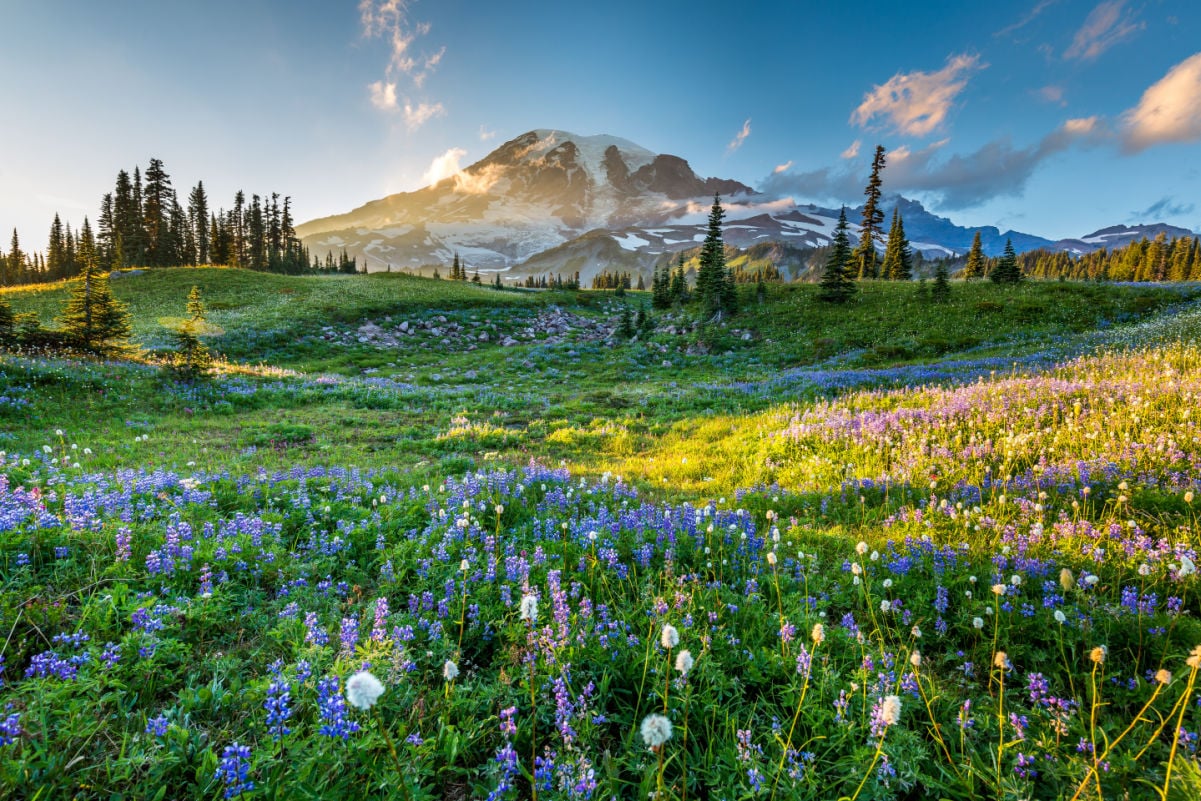
Mount Rainier is the most heavily glaciated peak in the contiguous U.S., but you don’t need ice axes or crampons to enjoy it. The lower alpine meadows are bursting with wildflowers in the summer and offer incredibly accessible trails that put you face-to-face with the massive, snow-capped volcano.
- Easy Navigation: You’ll find easily navigable scenic drives leading straight up to the Paradise and Sunrise visitor areas.
- Best Beginner Trail: Take the Myrtle Falls path via the Skyline Trail. It’s a short, paved half-mile walk leading straight to a cascading waterfall framing the mountain.
- Must-See Landmark: The Reflection Lakes offer a flawless, mirror-like view of the mountain when the wind is calm.
Tip From The Editor (me): The mountain famously creates its own weather system, so clouds can roll in rapidly and obscure the peak. If you wake up and the mountain is completely clear, drop your other plans and head straight up to Paradise immediately!
8. Rocky Mountain (CO)
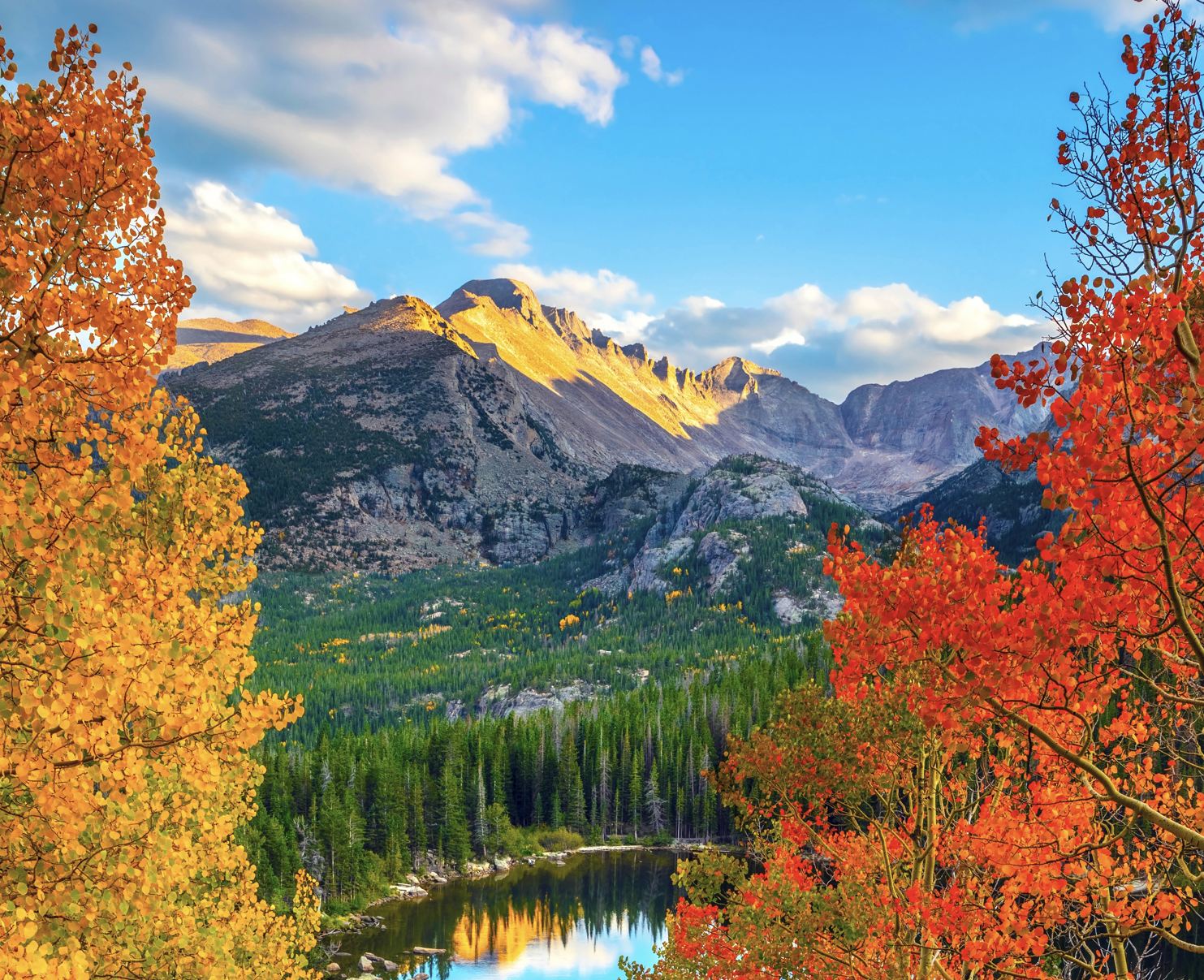
Rocky Mountain National Park is all about towering elevation and alpine lakes. While a lot of the park serves as a playground for hardcore mountaineers, it’s remarkably easy for a beginner to drive straight up past the tree line into the alpine tundra. You get all the visual rewards of high-altitude climbing right from the comfort of the driver’s seat.
- Easy Navigation: The famous Trail Ridge Road offers staggering high-alpine views right from the car.
- Best Beginner Trail: The Bear Lake Trail is a wonderfully flat, 0.6-mile loop completely wrapping around a stunning subalpine lake.
- Must-See Landmark: Don’t skip the Alpine Visitor Center, which sits at an incredible 11,796 feet above sea level.
Tip From The Editor (me): When you drive Trail Ridge Road, make sure you drink a ton of water. Altitude sickness is no joke for first-timers coming from sea level, and staying aggressively hydrated is the best way to keep the headaches away.
9. Great Smoky Mountains (TN/NC)
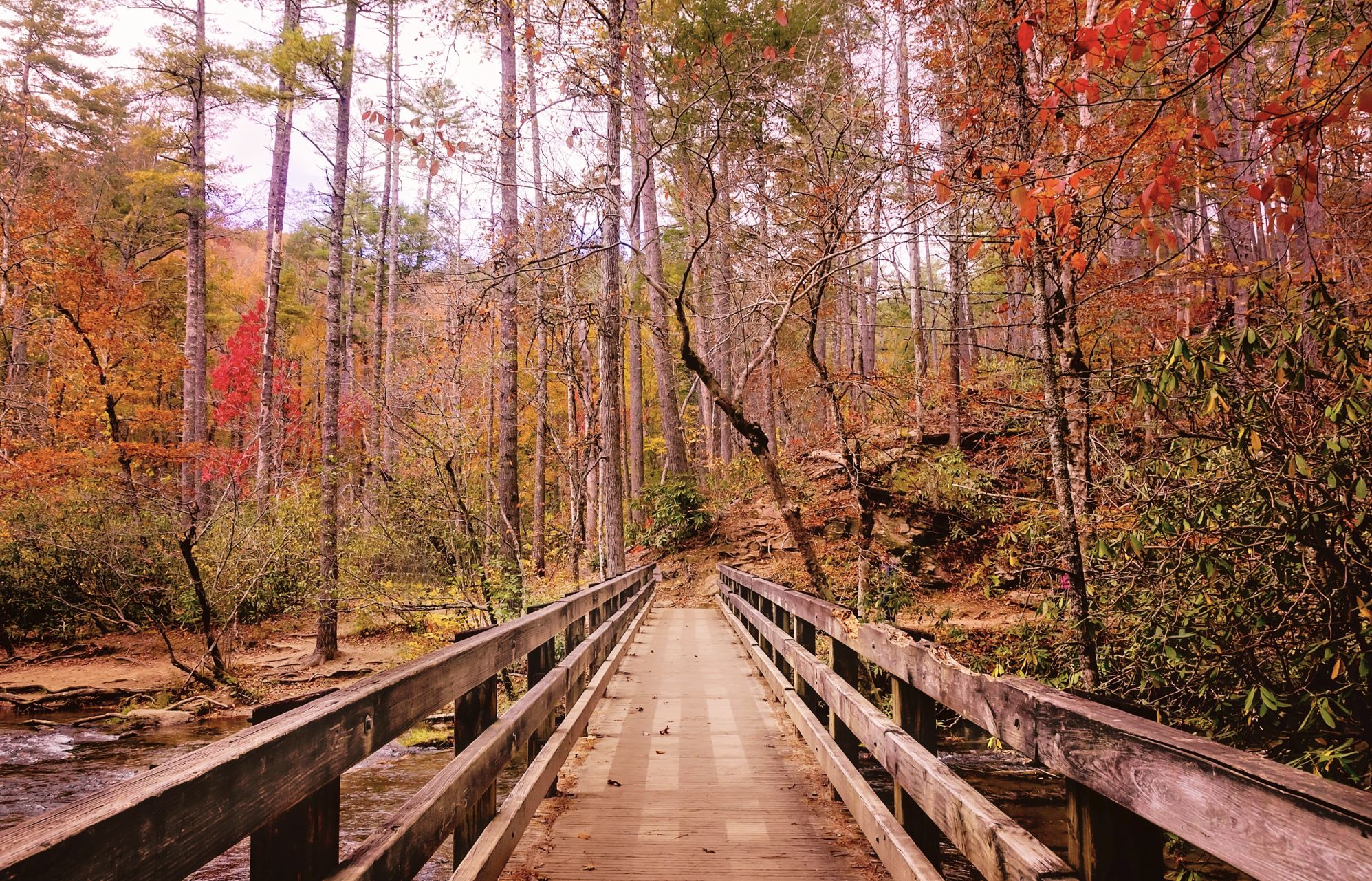
As the most visited national park in the country, the Smokies are beloved for their rolling, misty green mountains and rich pioneer history. The park straddles the border of Tennessee and North Carolina, offering a lush, heavily forested escape that feels wonderfully serene and accessible from the second you drive in.
- Easy Navigation: Newfound Gap Road provides easy, incredibly scenic driving access straight across the center of the park.
- Best Beginner Trail: The Laurel Falls Trail is a 2.6-mile round trip hike on a mostly paved surface that rewards you with an 80-foot cascading waterfall.
- Must-See Landmark: You’ve got to walk up to the Clingmans Dome Observation Tower for 360-degree views above the clouds.
Tip From The Editor (me): Black bears are incredibly common and active throughout the Smokies. Even on popular, paved beginner trails like Laurel Falls, make sure you make a little noise while walking and always keep a respectful distance if you spot wildlife.
Diving into your first national park shouldn’t require a master’s degree in wilderness survival. By sticking to these accessible, highly navigable parks, you get to skip the headaches and focus entirely on the staggering natural beauty right in front of you.
Enter your email address to subscribe to Travel Off Path’s latest travel news, straight to your inbox
