
At least 20 visits to Portugal in, it’s not often I come across places that still catch me completely off guard, but my most recent road trip across the northern half of the country led me to a tiny, quaint beach town that looks like a postcard scene come to life.
And to my surprise, yes, it still feels unmistakably Portuguese, and it’s still surprisingly affordable.
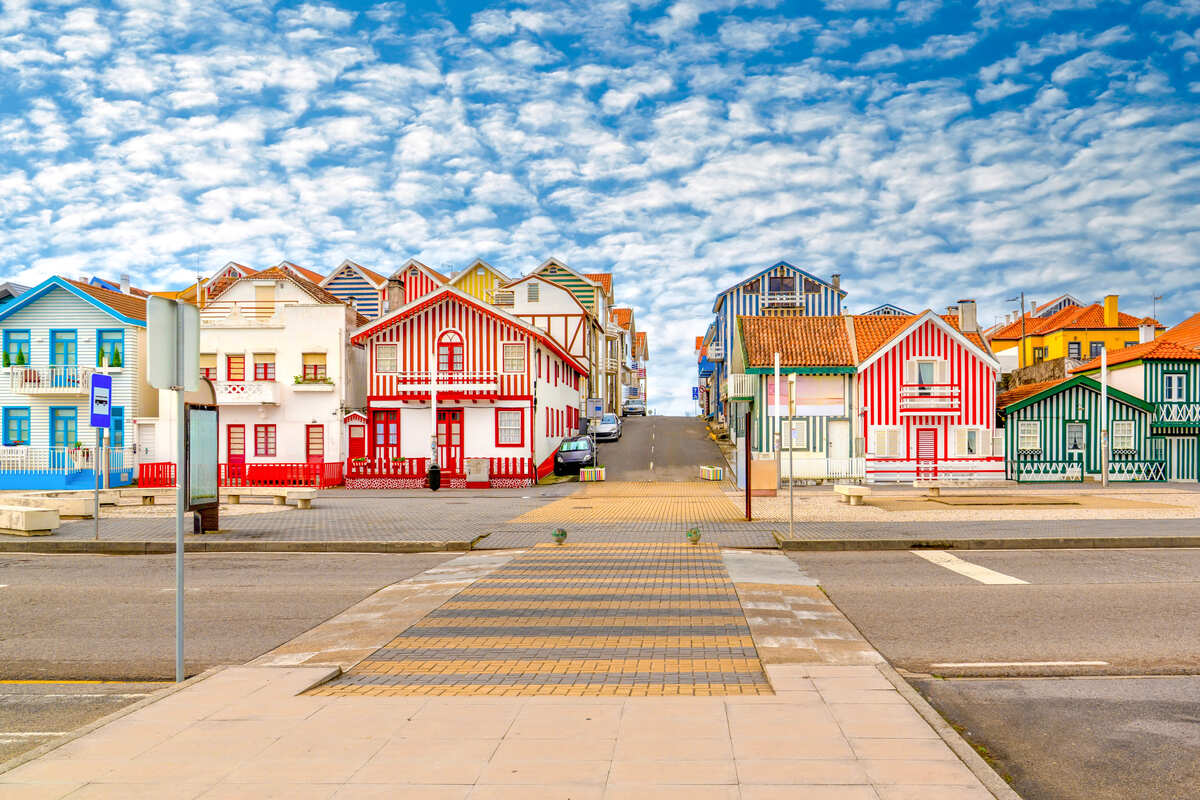
Costa Nova is a roughly 1,200-person-strong beach community, with a picture-perfect waterfront and a real fishing spirit that hasn’t been completely polished out of existence despite Portugal’s newfound popularity.
Lying roughly 50 miles south of Porto, the drive here takes around 55 minutes to 1 hour 10 minutes, depending on traffic; it’s where you should go if the hustle and bustle of the city crowds and those increasingly pricey glasses of Port start wearing thin.
And if I’m being honest, a chilled glass of Bairrada espumante is better anyway:
The Most Colorful Beach Town In Portugal
I’m not sure about you, but I don’t believe I’ve ever laid eyes on anything quite like this before:
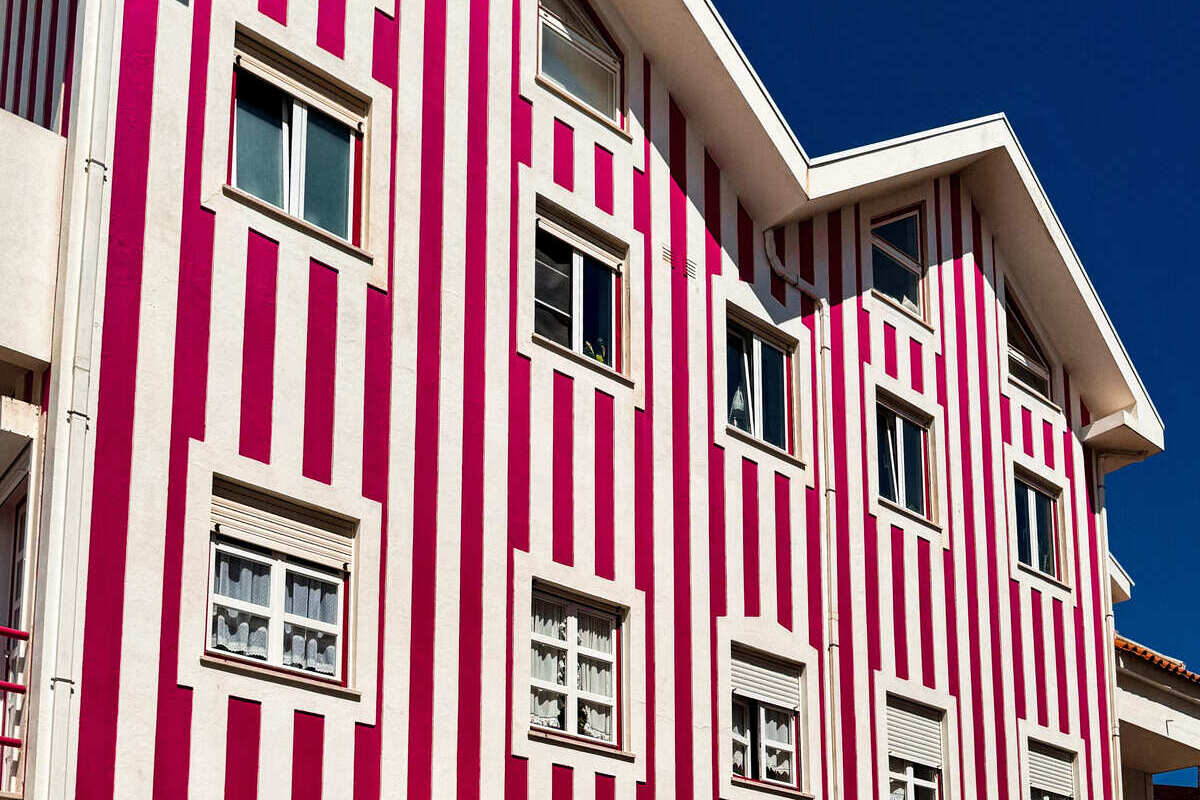
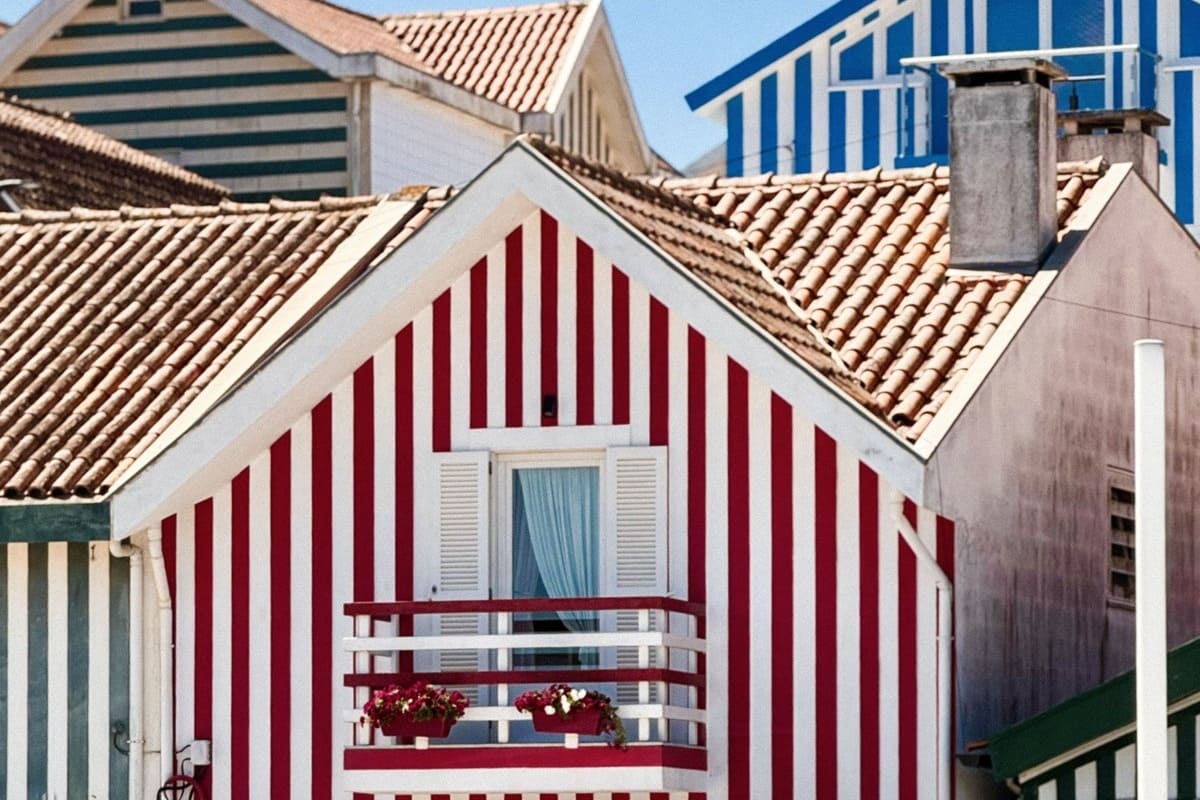
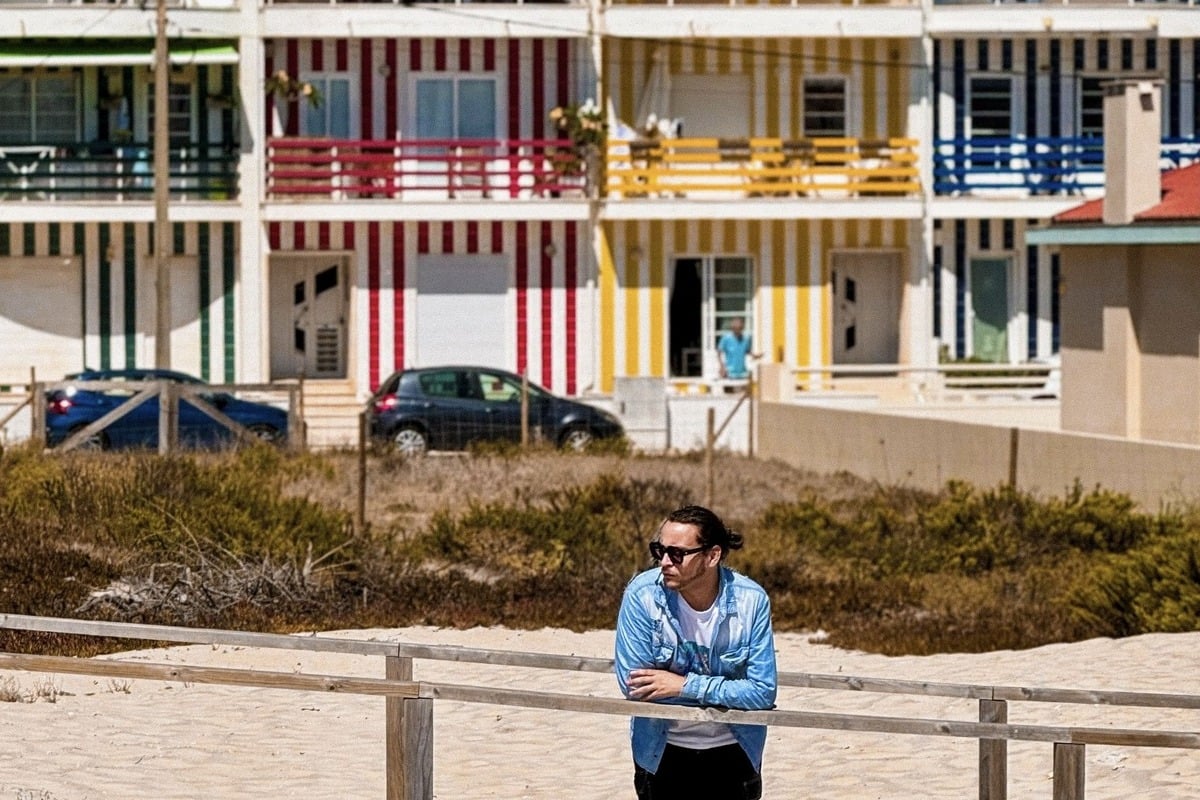
An almost perfectly aligned row of brightly painted fishermen’s cottages, traditionally built from wood and covered in mostly vertical stripes in sunny shades of blue, red, green, and pastel yellow, lining a sleepy lagoonfront.
If anything in increasingly jam-packed Portugal still looks remotely storybook-like, Costa Nova is that one.
The striped houses, known locally as palheiros, sit on a narrow sandy strip wedged between the Ria de Aveiro lagoon, where fishing boats and pleasure craft still come and go, and the vast Atlantic Ocean.
It’s already September, and summer in Europe is slowly winding down, but daytime temperatures here still average around a rather balmy 74–78°F. Even in October, highs hover around 68–70°F, with nights dipping to a still-manageable 55–58°F.

That’s the thing about Portugal: it may already be grey and nippy in other parts of the continent, but this mild Atlantic corner on the westernmost edge of Iberia can still serve up plenty of bright, sunny days.
Just bring a light raincoat, because October is when the weather can start playing silly buggers.
Beware: This Is Not The Mediterranean
Is it beach weather, you ask?
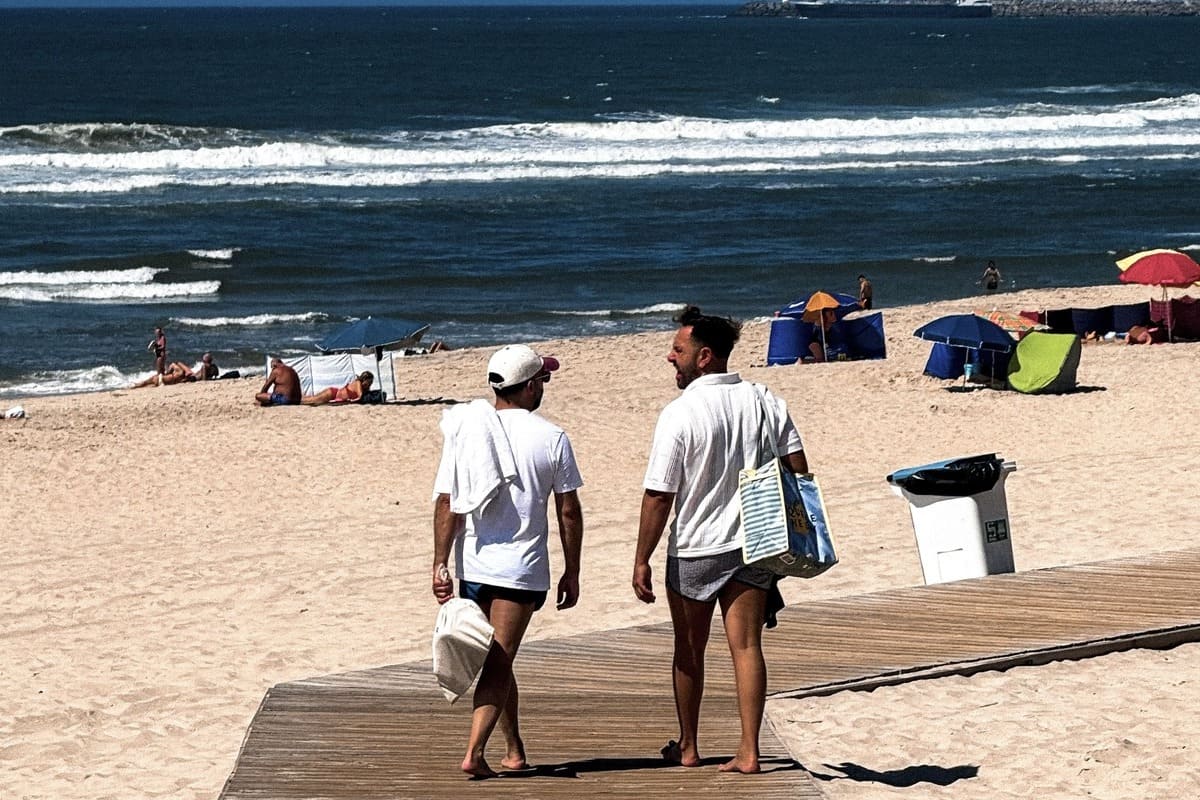
With the mercury nudging the mid-to-upper 70s in September, you can definitely stretch out on the broad, white-sand dunes fringing Costa Nova’s ocean side, and the rustic, wood-fronted Cristal Prado beach bar is the perfect spot for an early-evening sundowner.
I’d advise against plunging straight into the Atlantic without testing the waters first, though.
As much as your Instagram feed would have you believe, Portugal is not in the Mediterranean. It sits right on the North Atlantic, and the water here is bracing, hovering around 61–65°F in summer and early fall.
Then again, when it’s a scorching fall day out, it hits the spot.
Portugal Without The Surging Crowds
My favorite thing about being in Costa Nova so far?
Just how quiet, easy-going, and relaxed it feels: no anxiously looking over my shoulder to make sure I’m not being followed, even after night falls, or instinctively clutching my bag at the faintest rustle behind me on the sand.
Portugal is a pretty safe country overall, sitting at Level 1 on the U.S. Department of State’s official travel advisory, while Spain and Italy currently sit at the more cautionary Level 2.
Those higher ratings are tied chiefly to terrorism and unrest concerns, mind, and don’t necessarily mean everyday street crime is dramatically worse.
Outside major urban centers like Lisbon and Porto, pickpocketing and opportunistic theft are far less of an everyday concern, though never entirely nonexistent.
Of course, you can never fully switch off your common sense, so I’d encourage you to keep your wits about you and never leave belongings unattended while going for that refreshing swim, no matter how safe it feels.
But let’s face it: the biggest threat in Costa Nova is underestimating the Atlantic surf, and maaaybe putting on a few extra pounds.
Even casual travelers agree. Portugal scores 86/100 on Travel Off Path’s crowd-sourced Traveler Safety Index:
How Affordable Is Costa Nova, Portugal?
Speaking of extra pounds, the town has a handful of family-owned, no-frills tascas to try.
Scattered along the lagoonfront promenade, they’re cracking spots for slowing down, unwinding, and sampling honest Portuguese food without paying through the nose as you might in now-pricey, tourist-packed Porto.
Sitting down for a three-course meal here, I don’t think I’ve ever spent over $35, and that’s for a creamy, piping-hot bowl of creme de camarão, a hulking francesinha for my main—my favorite Northern Portuguese dish—and tripa de Aveiro for dessert.
If you’ve never had a francesinha, picture an absolute doorstop of a sandwich layered with steak, ham, and sausage, smothered in melted cheese, and drowned in a rich, slightly spicy beer-and-tomato sauce.
It’s neither elegant nor remotely healthy, but blimey, does it do the job.
As for tripa de Aveiro, that’s a warm, soft, almost-underdone crepe-like sweet invented right here in Costa Nova, traditionally served plain or filled with chocolate or ovos moles—the silky, gloriously rich egg-yolk-and-sugar custard originating from neighboring Aveiro.
Average Prices In Costa Nova, Portugal In Fall 2026
- Espresso: $1–$2.50
- Tripa doce or ovos moles: $2.50–$5
- Takeaway bifana or prego sandwich: $5–$9
- Casual restaurant meal: $12–$18
- 3-course mid-range dinner: $24–$41 per person, excluding drinks
- Seafood dinner: $30–$55 per person
- Domestic beer: $2.50–$5
- Glass of Bairrada wine or espumante: $4–$7
- 3-star hotel or local B&B: $80–$140 per double room
- Bus between Aveiro and Costa Nova: $2.50–$3.50 each way
- Standard moliceiro tour in Aveiro: $12–$18 per adult
Sounds affordable enough, but before you jet off to Europe this fall, make sure you double-check the entry requirements and permitted-stay rules applying to U.S. passport holders.
The European Union has recently introduced its new Entry/Exit System, which sees most Americans and other non-EU short-stay visitors fingerprinted and photographed at their first external Schengen border crossing.
Some airports across Europe have experienced teething problems and longer queues while staff and systems settle in.
Head over to the Entry Requirement Checker and make sure you have all your documentation in order before flying to avoid unnecessary delays.
Don’t Miss Out On The Portuguese Venice
By the way, Costa Nova is only a short, 7-mile drive from Aveiro, the so-called Portuguese Venice, which we’ve covered previously here.

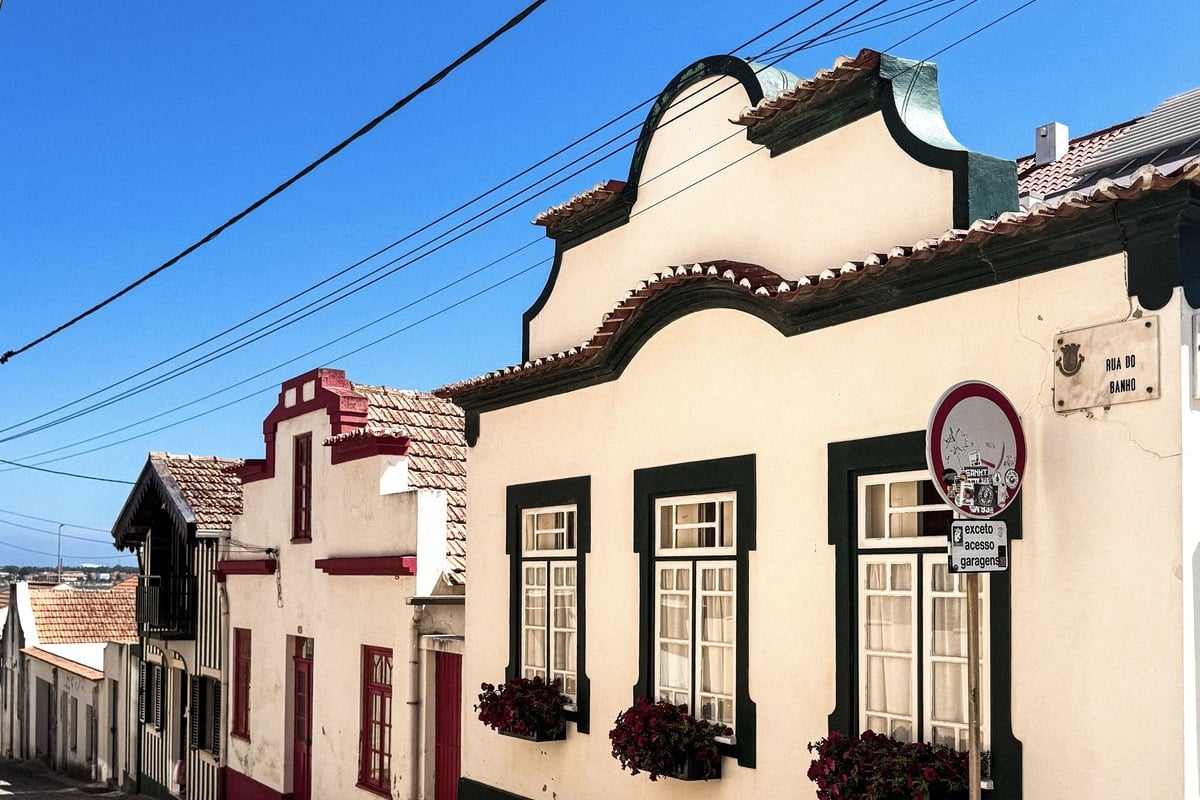
A compact, canal-cut city, it’s dotted with florid Art Nouveau townhouses, their façades decked out in colorful azulejos, sculpted stonework, curving botanical ornaments, and elaborate wrought-iron balconies.
There are cafés serving ovos moles, an absolute must-try if you’re in town, and, of course, you can’t come here and not take a spin on a moliceiro boat.
Aveiro’s colorful answer to Venice’s gondolas, these slender, high-prowed boats once transported moliço, a type of lagoon seaweed, but now carry sightseers along the city’s four main urban canals.
The standard tours last roughly 45 minutes and cost around $12–18 per adult, but here’s the catch: they stay within Aveiro’s urban waterways and do not sail the seven miles out to Costa Nova.
If you want to see the palheiros from the water, look specifically for a separate lagoon excursion departing closer to the coast, and confirm its route before booking.
A tucked-away gem few tourists even know exists?
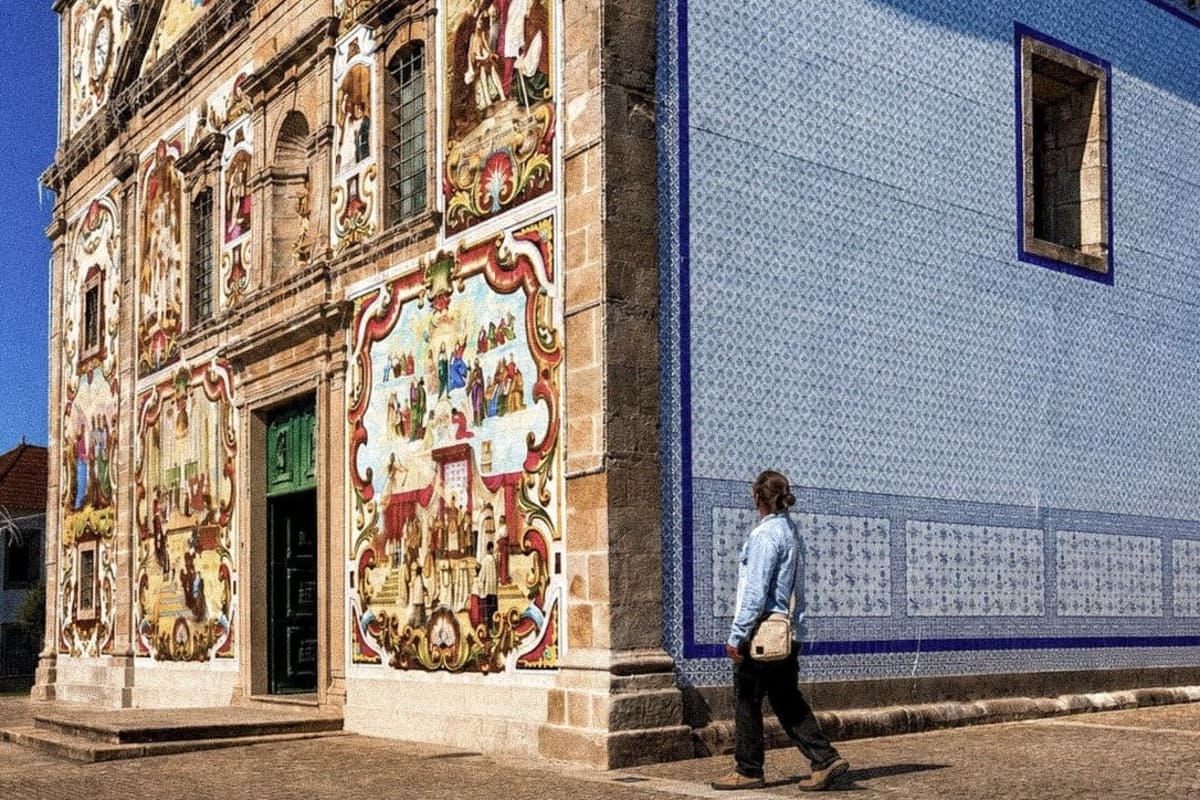
I’ll round out this article with a little nod to Igreja Matriz de Válega, a riotously colorful, azulejo-covered church around 18 miles north of Aveiro that just screams Portugal.
Its façade is completely wrapped in vibrant polychrome tiles depicting biblical scenes, and it’s easily the most photogenic church I’ve seen anywhere in Europe.
A tiny bit out of the way, but well worth the detour.
Enter your email address to subscribe to Travel Off Path’s latest travel news, straight to your inbox
