
As much as I love the historically rich Portuguese capital, it’s no longer my go-to spot for experiencing Portuguese culture in 2026.
It seems everywhere in Lisbon is brimming with selfie-takers and busloads of tourists these days, whether it’s the winding uphill alleys of Alfama, or even the formerly quiet, arguably not-so-authentic-anymore Belém, and the hefty price tags don’t help its case.
Luckily, there’s plenty more undiscovered Portugal to go ’round, from ancient Roman-era Évora to the colorful beachside retreat that is Costa Nova.

I could write a full essay on how Portugal remains actually criminally underrated, despite the fact its number-one city has become one of Europe’s top overtourism nightmare stories, but one lesser-known castle city probably deserves the spotlight right now.
The Former Capital Of Portugal Takes Center Stage
Tucked away in Northern Portugal, roughly 35 miles northeast of Porto, Guimarães is a mid-size city in a municipality home to over 165,000 people, and a UNESCO-protected Historic Center that exudes medieval charm.
In fact, it might just be one of Portugal’s prettiest Old Towns, and it’s still largely undiscovered.
Perhaps more surprisingly even, before Lisbon took up that mantle, Guimarães was traditionally regarded as the first capital of the young Portuguese Kingdom, so much so the Portuguese say this is where their country was born.
But we’ll get there.
What you should know for now is that small, usually bypassed Guimarães saw overnight stays rise 9.4% year-on-year during the first half of 2026, with June alone recording an increase of almost 16%.
That’s a much faster growth pace than the rest of Portugal, which expanded at a rate roughly seven times slower.
In the first half of 2026, Guimarães ranked 29th in Portugal for overnight stays among 308 municipalities, and it’s climbing fast.
Then there’s the fact it’s a literal open-air museum.
Check The New Travel Rules Before Flying To Europe This Season
Quick intermission: if you’re headed to Europe this fall, and this includes Portugal, make sure you double-check the entry requirements in place before flying.
Simply showing up at the boarding gate with your U.S. passport no longer cuts it: depending on their country of arrival, Americans could be required to undergo mandatory fingerprinting, take facial scans, or even obtain a mandatory online travel permit before flying.
Check the documents and entry rules that apply to you on the Entry Requirement Checker.
An Open-Air Museum Awaiting Discovery
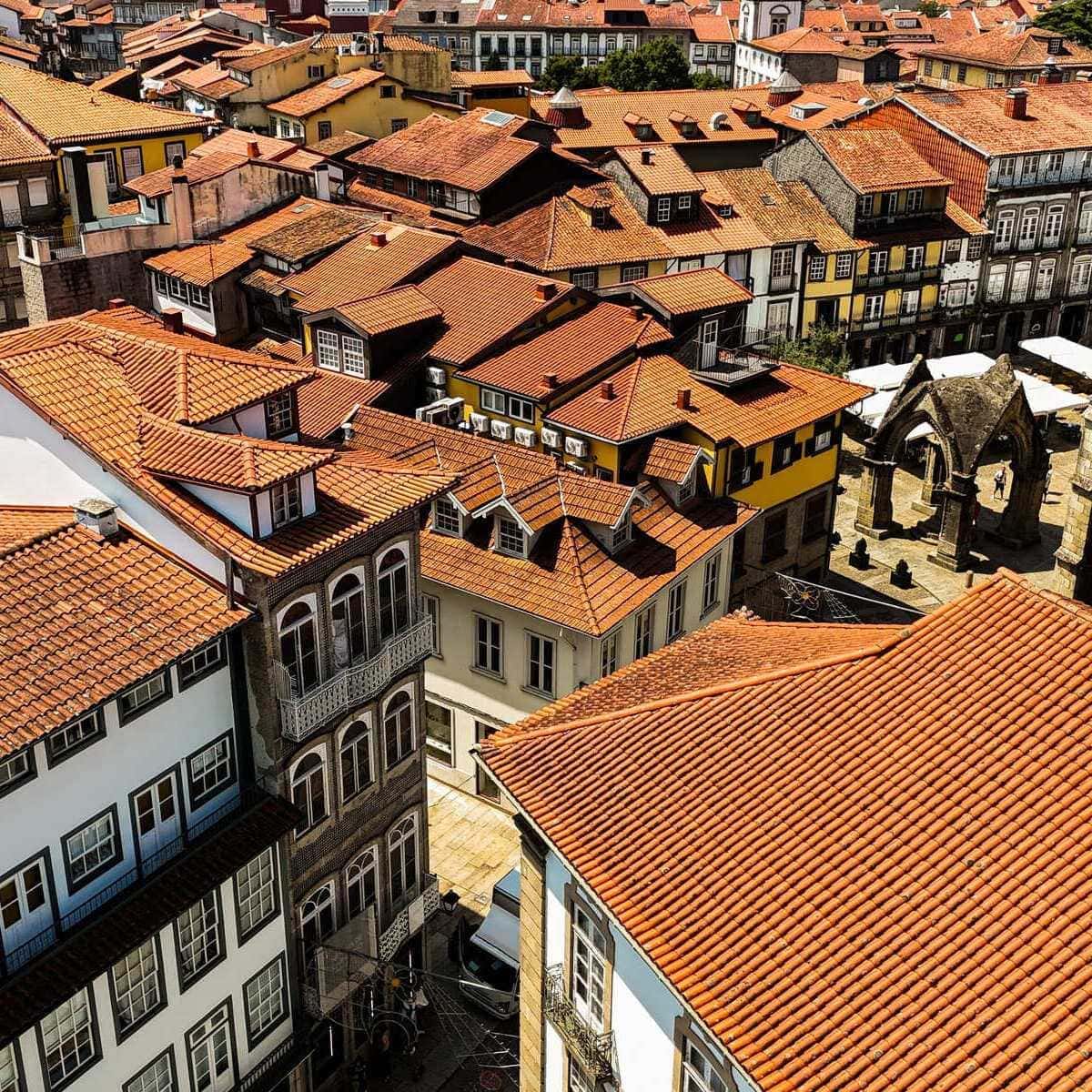
Though it rarely ever gets the same recognition as Lisbon or Porto, Guimarães just happens to be one of Portugal’s most ancient and best-preserved historic cities.

Inscribed on UNESCO’s World Heritage List since 2001—you know, back when the accolade wasn’t conferred upon any old town that simply applied for it—it features a timeless medieval street plan, dotted with granite-fronted townhouses, topped with timber-framed upper floors, and punctuated by surviving stretches of defensive wall.
Why do the Portuguese consider it the birthplace of Portugal? It was the country’s first capital when the kingdom emerged in the 12th century, following Afonso Henriques’ break with the Kingdom of León.
The main draw here is Guimarães Castle, a 10th-century stronghold topped with crenellated battlements and sturdy towers, and closely associated with Portugal’s first-ever king, Afonso Henriques.
Everyone sets out to visit São Jorge Castle, perched above Lisbon at the top of Alfama, or Sintra’s colourful Pena Palace, but there’s an argument to be made about how Guimarães Castle is actually the country’s most historically significant fortress.
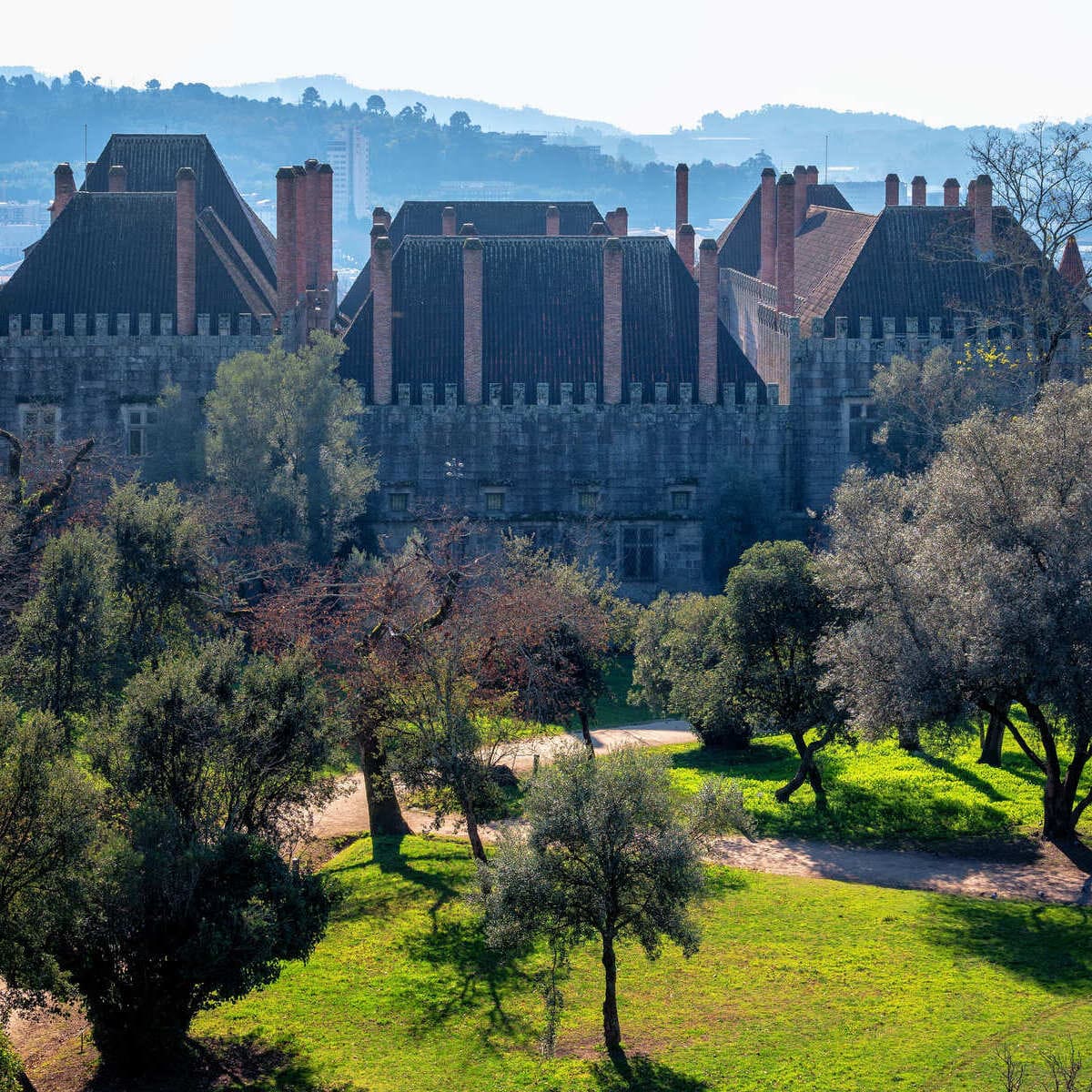
Then there’s the later Palace of the Dukes of Bragança: a stunner of a 15th-century aristocratic residence, best known for its soaring brick chimneys, French-influenced architecture—it truly feels like you’ve stepped into the Portuguese answer to Versailles—and grand courtyard.
By the way, at the time of writing, while parts of the Palace are closed for rehabilitation, it costs only around $6 to visit, while the old hilltop castle is another $6.
Alternatively, you can purchase a combined ticket for around $9. Guimarães still finds itself among Portugal’s best budget breaks.
One Of Portugal’s Cheapest City Breaks
On average, sitting down for a traditional Minho meal in downtown Guimarães, in a stone-walled taberna such as Trovador, will set you back around $14–28 for a main dish.
I’m talking rojões à minhota—a plate of pork chunks marinated in white wine, garlic, and bay leaf—papas de sarrabulho, a rich pork-and-blood porridge made with bread, shredded meats, and cumin, and of course, the ever-present salted Portuguese codfish.
Wash it down with a glass of vinho verde, a speciality of the region, and a torta de Guimarães for dessert, and you’re looking at a final check of around $28–38.
My favorite restaurant in Guimarães, though? That has to be Cantinho dos Sabores, an unassuming, unfussy neighborhood taberna serving all your usual hearty Portuguese classics.
It’s a genuinely affordable choice, with weekday meals starting from only around $10.
Average Prices In Guimarães, Portugal In 2026

- Takeaway snack, such as a pastel de nata or filled pastry: $1.50–4
- Bifana or prego no pão: $4–7
- Prato do dia lunch special: $10–17
- Traditional Portuguese main dish: $14–28
- Three-course meal in a mid-range restaurant: $28–45 per person, excluding drinks
- Cappuccino: $1.50–3.50
- Half-liter draught beer: $2.25–4.50
- Glass of vinho verde: $2.50–5
- Local bus journey within central Guimarães: around $2
- Combined Palace and Castle ticket: around $9
- Simple guesthouse or hotel: $55–95 per night for two
- 3-star hotel: $75–120 per night
- 4-star hotel: $115–180 per night
Note From The Editor
Just one sec! If you enjoy reading great human-written articles, the best way to see a few more is to follow us on Google so we become one of your preferred websites. Thank you so much for reading. Now back to the story!
Far Lower Crime Levels Than Lisbon
Castles and affordability aside, Guimarães is one of the safer Portuguese municipalities at over 165,000 residents.
In 2025, police recorded 2,951 offences across the municipality, already down 4.25% from the previous year. That works out at 17.8 recorded crimes per 1,000 residents, compared with Portugal’s national rate of 29.7.
Property crime was also almost half the national rate, while only 43 street and snatch robberies were recorded throughout the year. That doesn’t mean crime is inexistent, but that should give you a pretty good idea of how Guimarães compares with Portugal as a whole.
In general, Portugal is a pretty safe destination, earning a Level 1 classification according to the U.S. Department of State, which means Americans are free to visit while exercising normal precautions, such as keeping an eye on their belongings and avoiding poorly-lit streets late at night.
Unlike France or Germany, the elevated threat of religious extremism and political violence isn’t nearly as prevalent.
The high level of public order and community trust is particularly felt in the largely rural Portuguese hinterland, and smaller cities like Guimarães.
On the Travel Off Path Traveler Safety Index, a crowdsourced tool used by travellers to measure their safety perception across different destinations, Portugal scores 84 out of 100, a certified ‘green’ safe among its European peers.
More Than Just Castles
Not yet had your fill of Portugal’s Old World wonders?

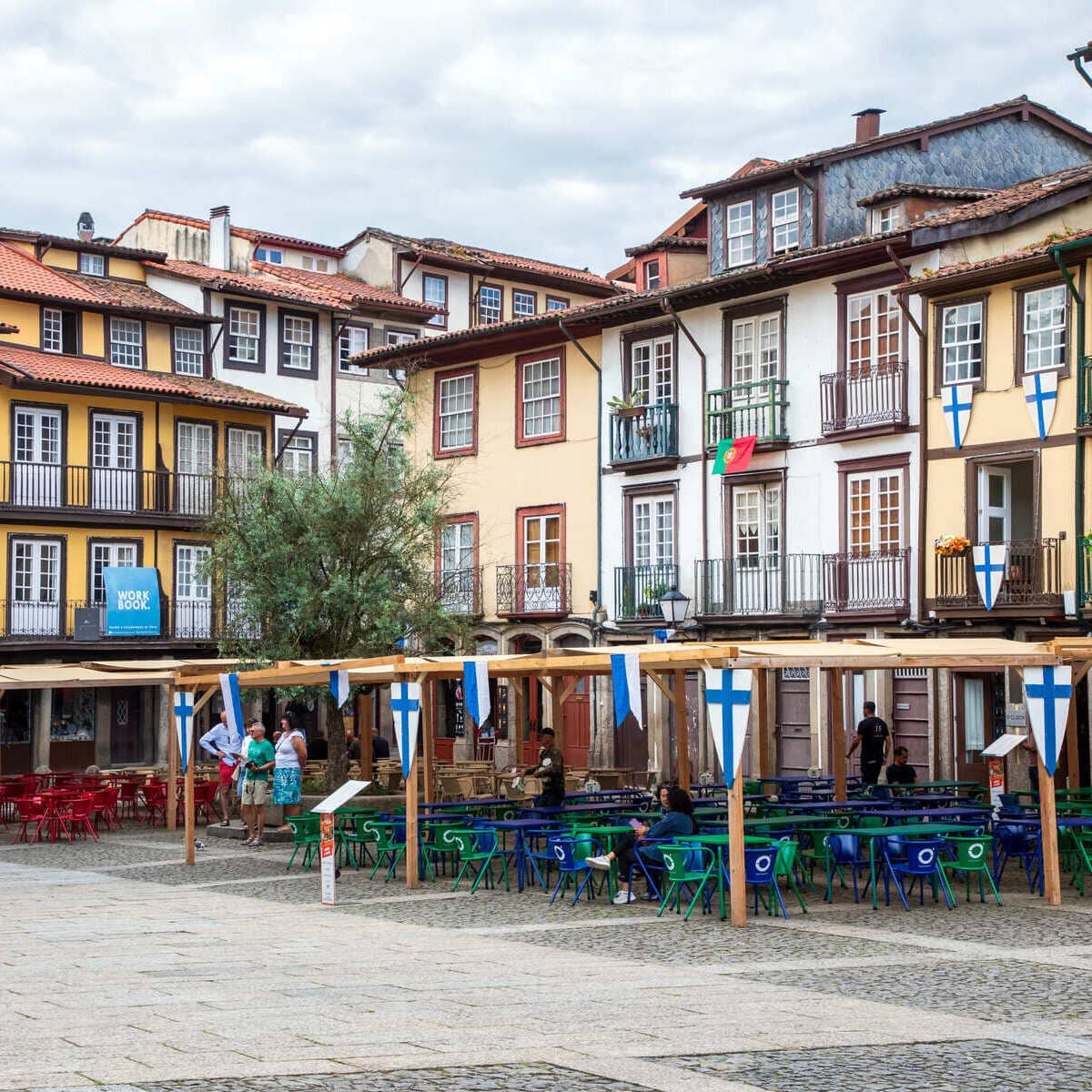
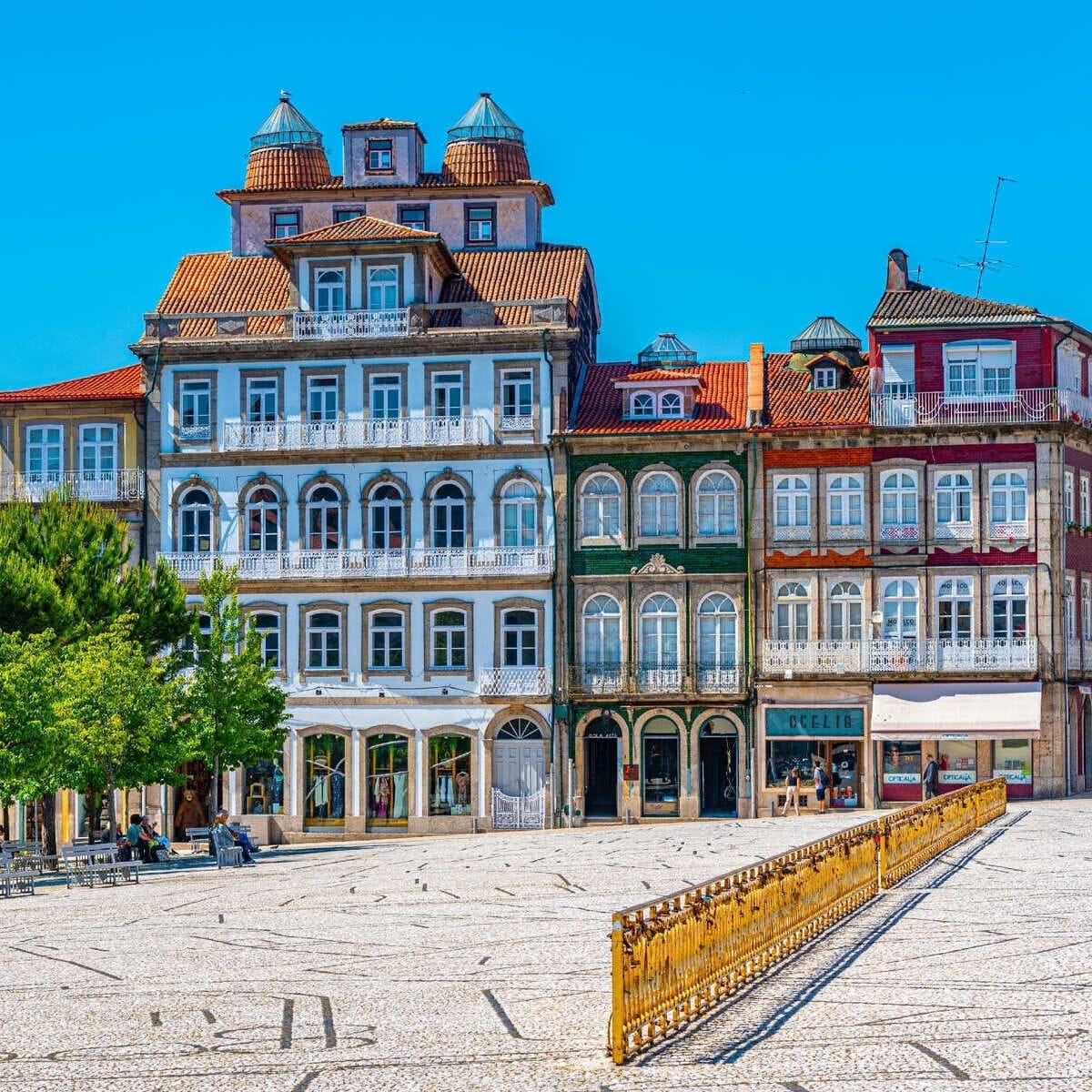
A short 8-minute walk downhill from the Palace of the Dukes will take you to Largo da Oliveira.
This has to be my all-time favourite Portuguese medieval town square, for the traditional granite-and-timber façades that ring it alone.
Oh, and it’s dominated by thissoaring Padrão do Salado monument, a 14th-century stone canopy, and flaked by the landmark Nossa Senhora da Oliveira, a beautiful Gothic church.
Equally-pretty, Praça de São Tiago is an extraordinarily atmospheric town square enclosed by stone-and-timber buildings, and you’ll occasionally spot pilgrims passing through on their way to Santiago de Compostela in Spain.
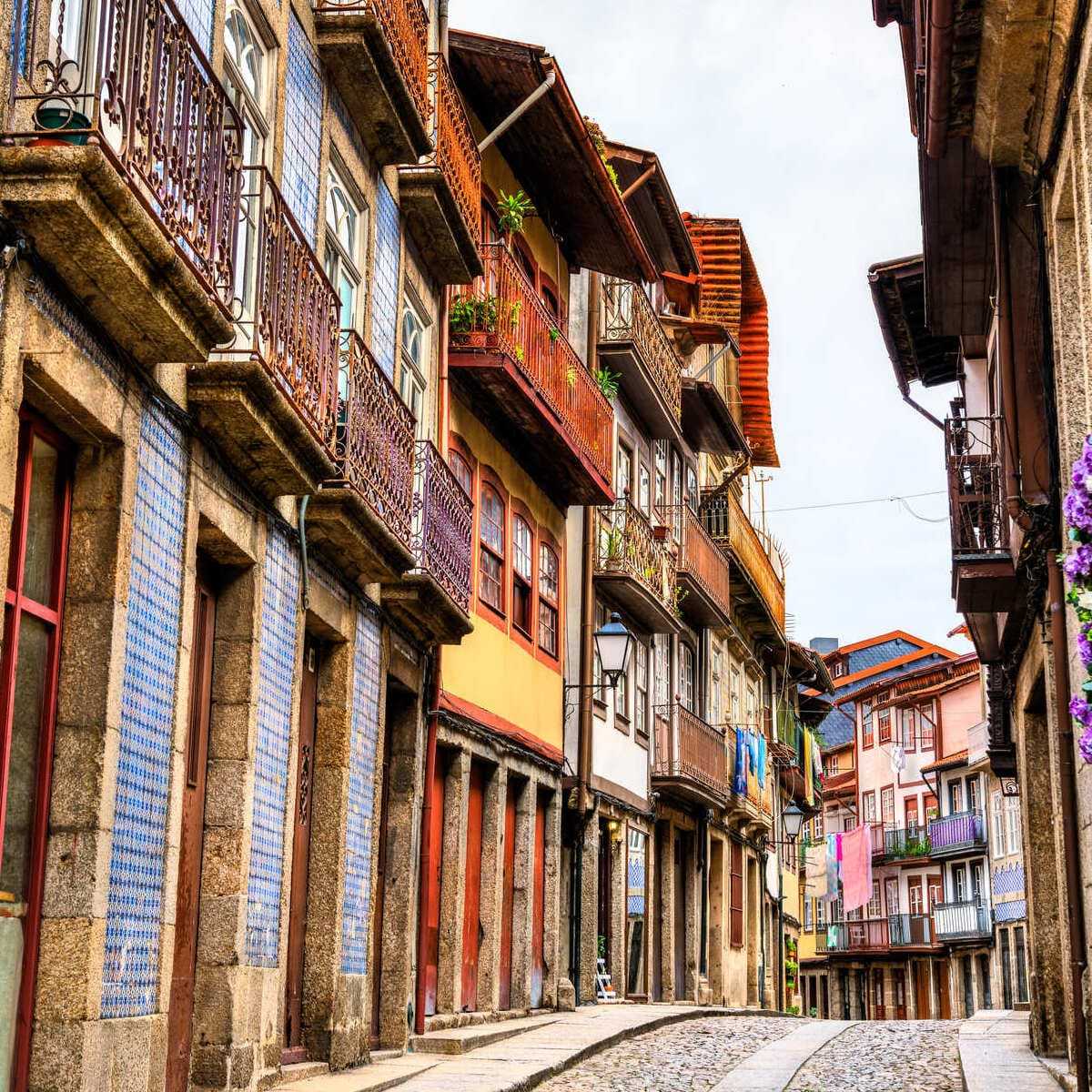
Don’t forget to stroll down Rua de Santa Maria, one of the oldest streets in the city, linking the castle quarter to the Lower Town.

It’s lined with centuries-old residences, some adorned with wrought-iron or carved wooden balconies, and basically a colourful, postcard-ready doorway every few steps.
Of course, no visit to Guimarães is complete without a wander through its UNESCO-protected Zona de Couros: home to former workshops, historic granite tanning basins whose use dates back to the Middle Ages, old workers’ houses, and water channels, it’s the living record of the city’s leather-tanning heritage.
Feeling peckish yet?
Tasquinha do Tio Júlio, a tiny, no-frills spot right on Rua de Couros, is known for its juicy bifanas and buttery pregos no pão, and a sandwich with a drink will usually cost around $4–6.
In sum, this is Portugal before tourism swallowed it whole.
Enter your email address to subscribe to Travel Off Path’s latest travel news, straight to your inbox
