
Europe has a bad habit of turning its best mountains into crowded theme parks. But if you want to actually touch the high alpine dirt and earn your views, you need to look right where the French and Italian borders collide.
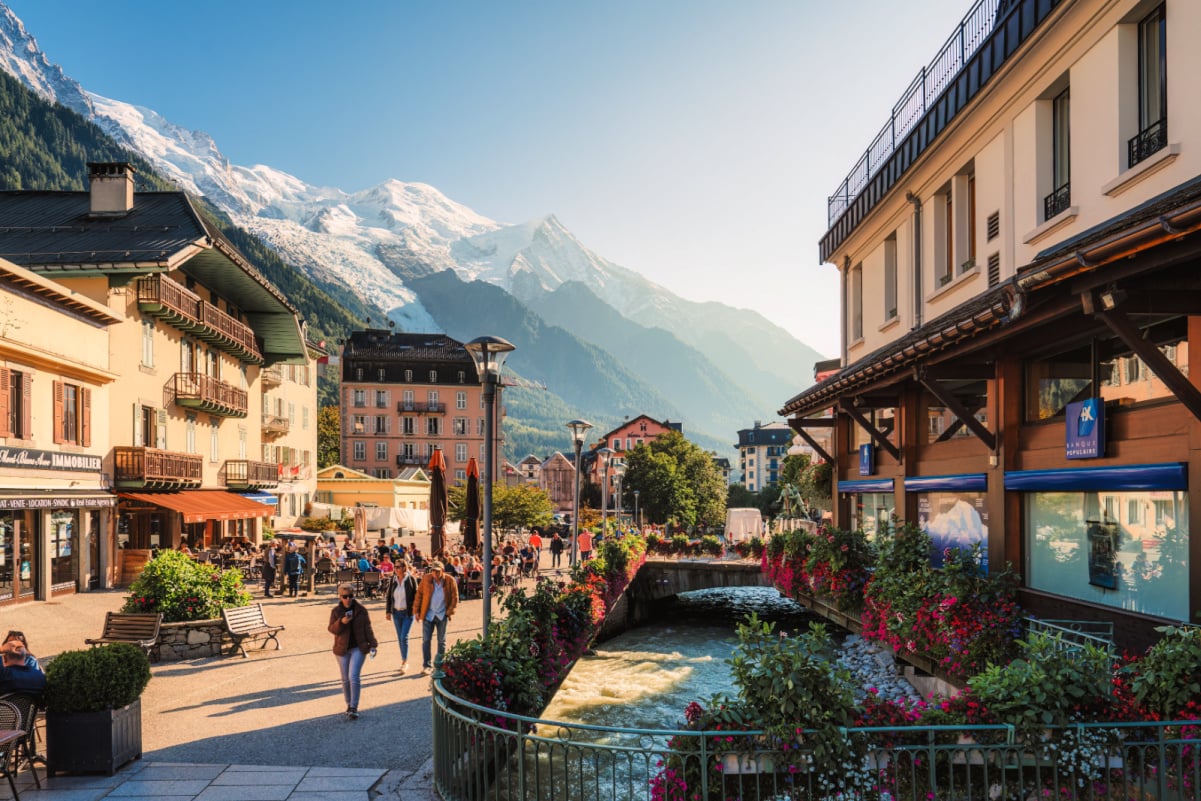
The Chamonix Valley sits in the shadow of the highest peak in Western Europe. Most tourists just ride the main cable car up Aiguille du Midi, take their photos, and go back to their hotels. They miss the actual magic of the region.
The best way to experience the Mont Blanc massif is to turn your back on it. You need to hike up the opposite side of the valley into the Aiguilles Rouges Nature Reserve.
That’s where you’ll find Lac Blanc. It’s a freezing, crystal-clear alpine paradise perched high above the valley floor. My wife Liz and I hike this trail every time we’re near the area. But let me warn you, it ruins you for other mountain destinations.
The Vibe of the High Plateau
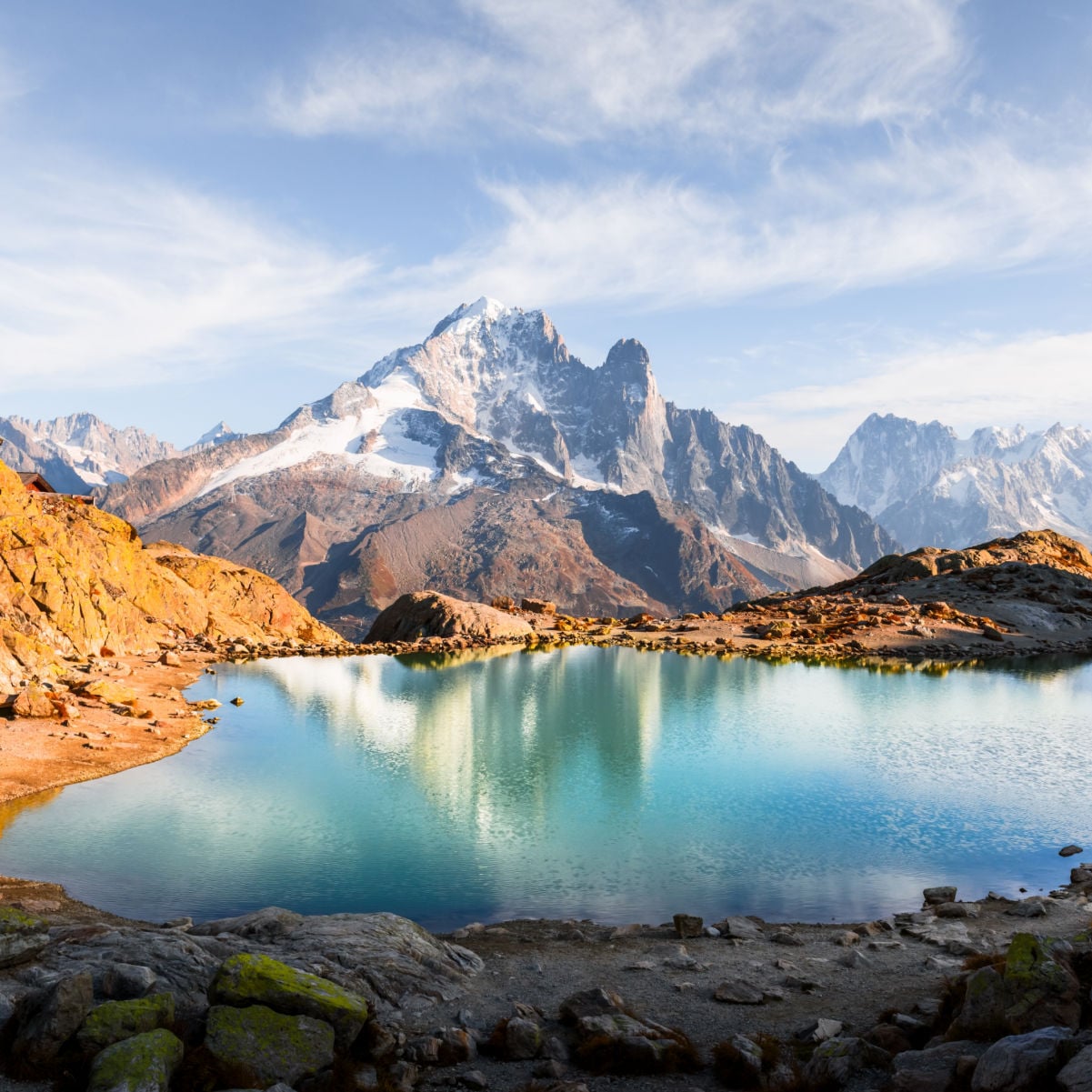
You don’t come to Lac Blanc to swim. The water is deep blue and fed directly by melting snowpack. Chunks of ice float on the surface well into July.
You come here for the mirror (see the pic below for what I mean).
The lake sits on a high plateau directly across the valley from Mont Blanc. The dark water reflects the entire snow-capped mountain range, and it’s one of the most staggering visual contrasts on earth. You have the stark and rugged granite of the Aiguilles Rouges right under your boots. Across the dramatic plunge of the valley, you see perfectly white, rolling glaciers spilling down the rock faces.
The silence up here is heavy. The entire jagged skyline reflects perfectly in the water. It’s surreal.
You feel totally detached from the busy resort town sitting thousands of feet below you. And in a way, you are.
The reserve is fiercely protected. You will not find loud music or aggressive commercial development. You just find raw rock and freezing glacial water.
The Strategic Chamonix Basecamp
You need a smart place to launch this trip. Chamonix is the obvious choice, but you have to navigate it correctly.
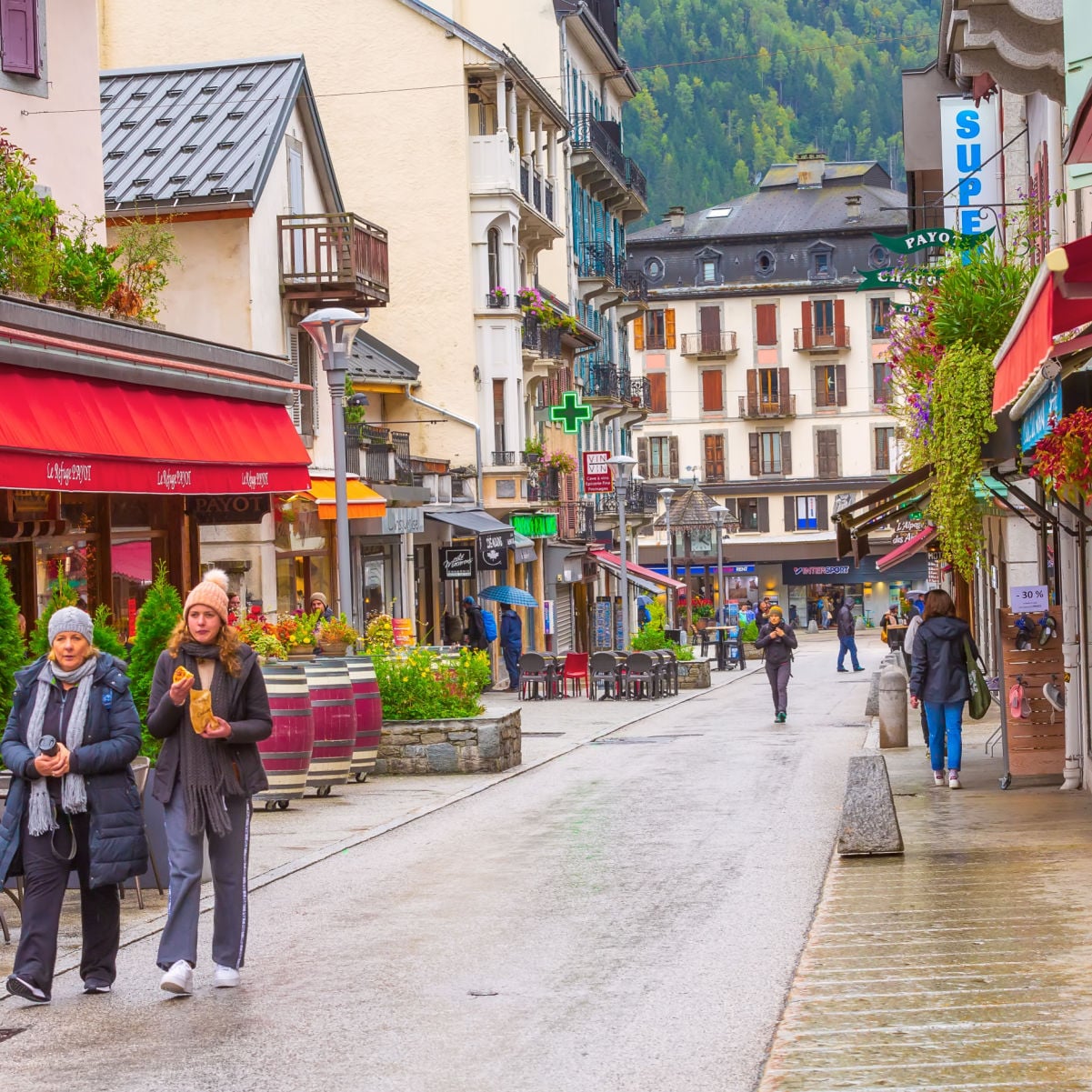
The town has a severe split personality. It’s the global capital for hardcore alpinism and extreme sports. It is also a magnet for wealthy tourists looking for luxury shopping. You can easily fall into an overpriced tourist trap if you’re not careful.
Skip the fancy fondue places on the main pedestrian street. Book a simple room slightly outside the center in the village of Les Praz. It’s much quieter. You wake up early and walk to a local boulangerie. Grab a simple espresso and a warm pain au chocolat. The air is always sharp and cold in the morning, even in the middle of summer. You eat your pastry while watching the local trail runners head up into the timberline.
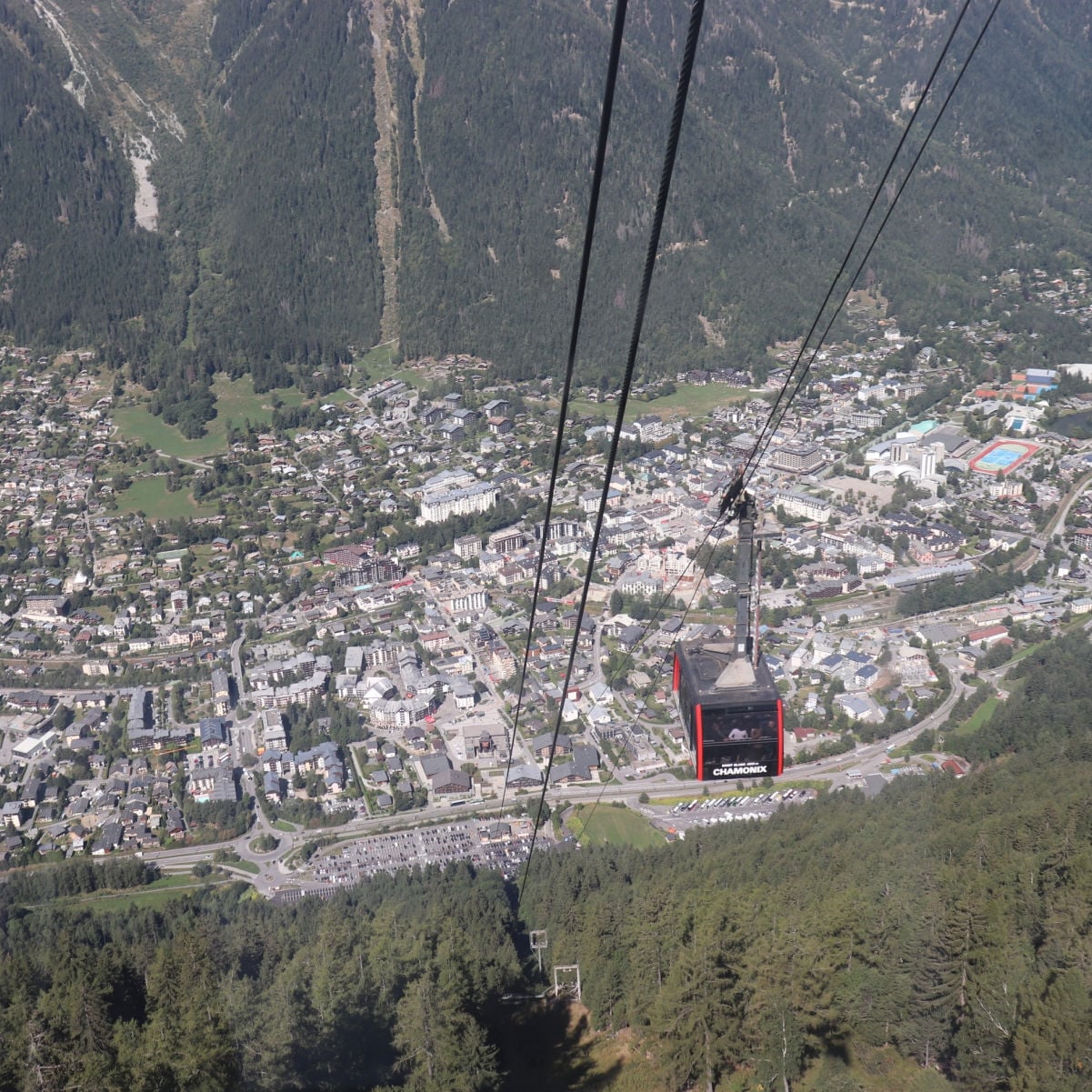
Staying in Les Praz also gives you a major tactical advantage. You are sitting directly at the base of the Flegere gondola. This is your primary access point for the Lac Blanc trail.
The Classic Ascent From La Flégère
You can technically hike all the way from the valley floor. Don’t do that. It’s a brutal slog through thick forests with very few views. You just burn out your legs before you reach the actual scenic sections.
Spend the twenty euros and take the Flegere gondola. It cuts out the boring part of the ascent and drops you right at the tree line.
From the cable car station, the classic trail cuts straight across the mountainside. The terrain is rugged, and you’ll navigate across loose scree fields and step up giant granite blocks. The path is demanding but manageable if you pace yourself.
Oh and don’t forget; you are exposed to the sun the entire time. There’s no tree cover up here. You just get wide open, sweeping panoramic views of the high Alps for the entire two-hour trek. Wear a hat!
You frequently share the trail with local wildlife, so be on the lookout and give them their space.
The Iron Ladder Route From Tré-le-Champ
If you want a heavier dose of adrenaline, there is a second way up to the lake. You can start further down the valley near Argentière at a trailhead called Tré-le-Champ.
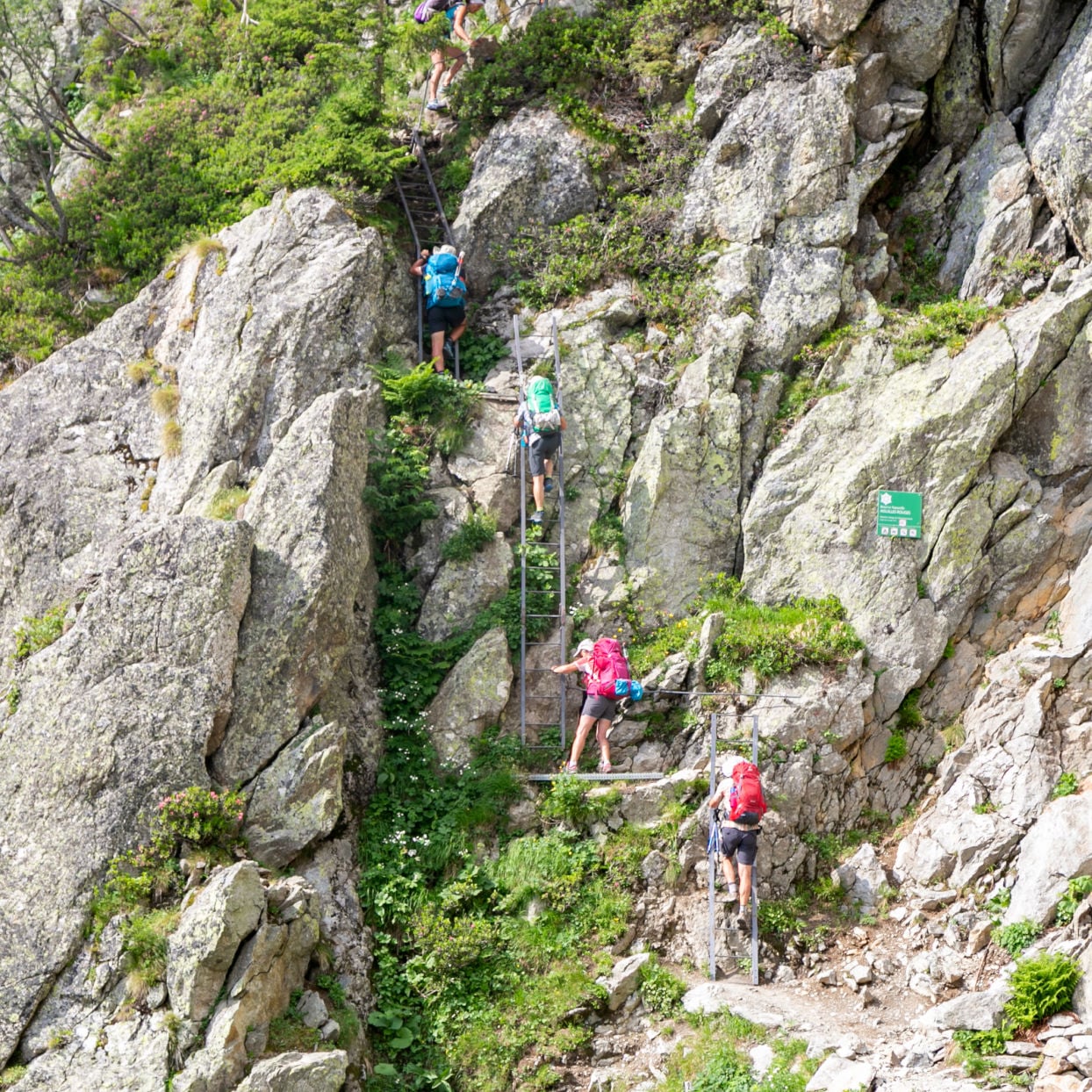
This route is not a casual walk. It requires climbing a series of vertical iron ladders bolted directly into the cliff face.
Liz and I took this route on our last trip. It forces you to be entirely present. You are gripping cold iron rungs while wearing a heavy backpack. You look down between your boots and see the ground dropping away into the valley. It gets your heart rate spiking immediately. There are handrails and wooden pegs driven into the stone to help you navigate the tricky ledges.
When you finally pull yourself over the last rock ledge, the terrain flattens out into the nature reserve. The blue water of Lac Blanc suddenly appears out of nowhere. Earning the view through a bit of physical stress makes the arrival feel more significant. It feels like an actual adventure rather than a curated nature walk.
The Mountain Hut Reward
You never have to suffer through a bad lunch in the French Alps. That is the best part of their mountain culture.
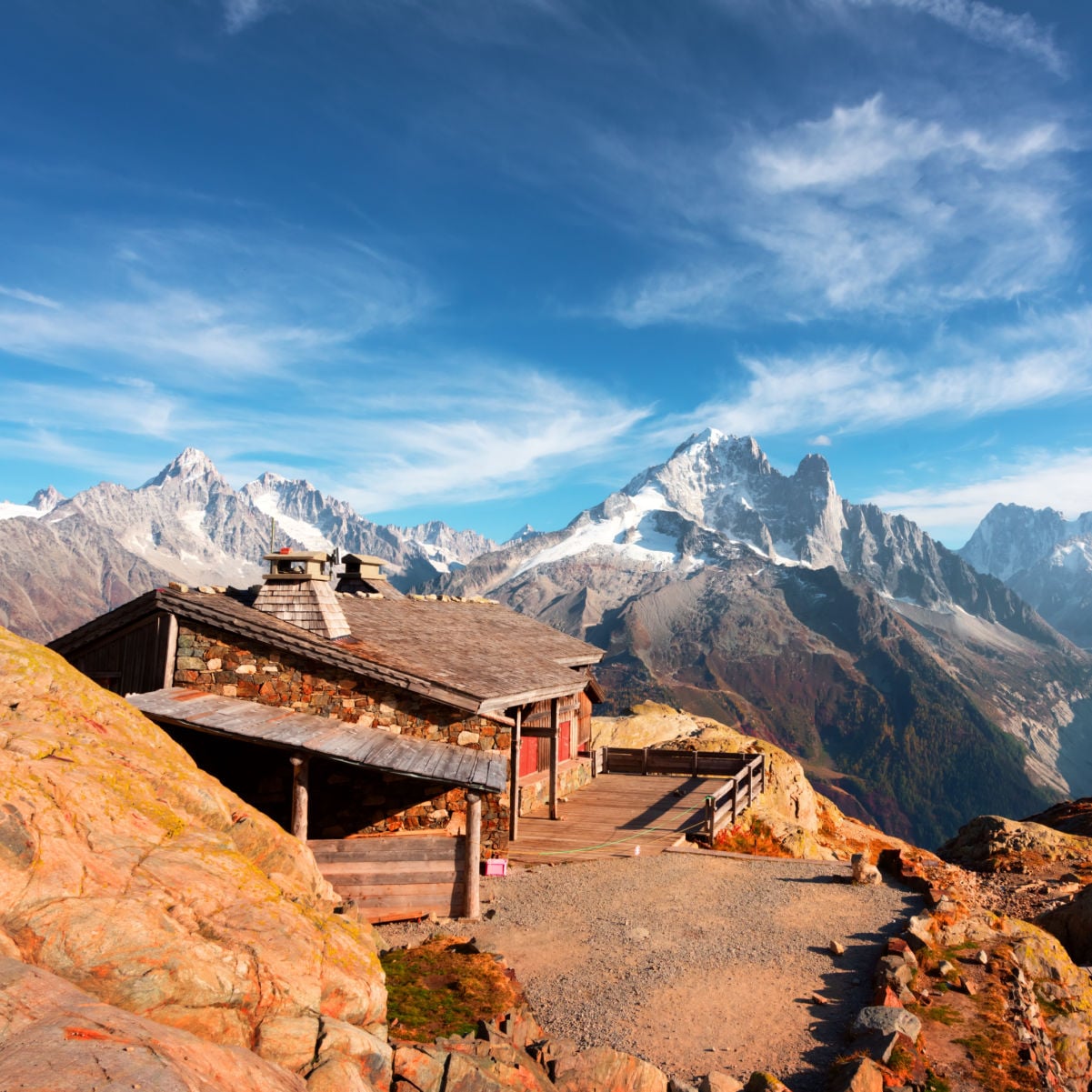
Sitting right on the edge of the water is the Refuge du Lac Blanc. It’s a small wooden mountain hut with bright red shutters. They operate entirely off the grid. All of their supplies are flown in by helicopter at the beginning of the season. The staff lives up here through the summer, cooking hot meals for exhausted hikers.
You don’t bring freeze-dried camping food up here. You walk onto their wooden deck and order a slice of blueberry tart and pair it with hot coffee. Once you’re refueled from the sugar and caffeine hit, order a beer (or 2!).
You sit at a rough wooden picnic table. You drink your cold beer. You stare directly across the valley at the summit of Mont Blanc. The glaciers look close enough to touch. You watch pieces of ice break off the high peaks and tumble silently down the rock faces, and the sound of the ice cracking usually reaches your ears a few seconds later. It’s hypnotic.
Beating The Afternoon Rush
The only problem with this paradise is that it’s not a secret. By noon in late July, the edges of the lake get crowded.
You have to outsmart the normal tourist rhythm. The first cable car goes up at eight in the morning. You need to be standing in line at seven forty-five. If you catch that first lift, you hike in the cool morning shade, and you reach the lake before the harsh midday glare washes out your photos.
More importantly, you get the water entirely to yourself.
The wind is calmest in the early morning. That is when you get the flawless mirrored reflection of the peaks. By the time the large hiking groups show up sweating and loud, you are already sitting on the refuge deck eating your blueberry tart.
Check the local weather forecast specifically for wind speed before you leave the valley floor. High winds destroy the reflection on the lake and turn the exposed trails into a miserable freezing tunnel. If the wind is blowing above twenty miles per hour, skip the hike and spend your morning exploring the cafes in Chamonix instead.
Enter your email address to subscribe to Travel Off Path’s latest travel news, straight to your inbox
