
Even if you’ve never been there yourself, you’re probably familiar with Milan‘s game at this point.
Italy’s most cosmopolitan city, it centers around a stunning Gothic cathedral with the kind of ornate facade that’s been centuries in the making, a luxury shopping scene rivaled perhaps only by Paris, and a haute cuisine scene in a league of its own.
Then there’s an overshadowed city very few tourists even have on their radar:
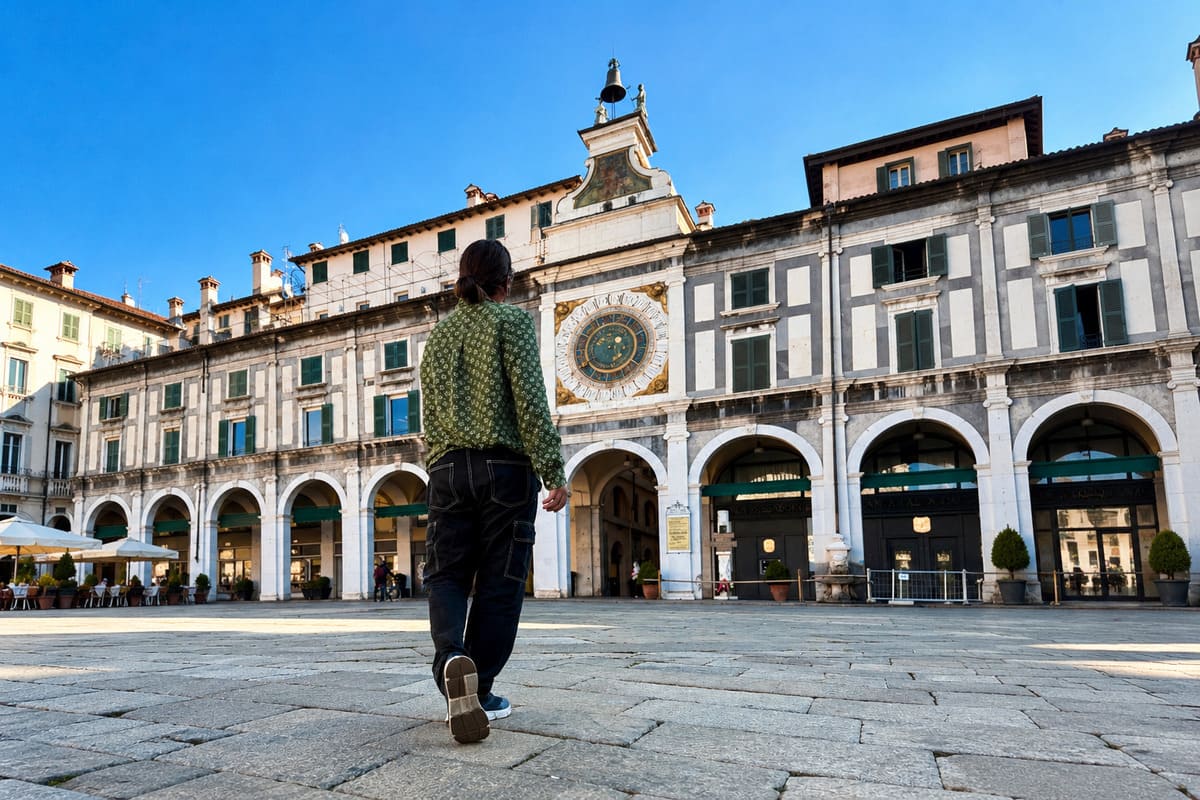
A short 36-minute high-speed train ride away, with advance fares starting from as little as $9, you can discover Lombardy’s second-largest city, a 200,000-strong hub with the kind of UNESCO-listed Roman ruins, cozy family-run trattorias serving $15 pasta, and uncrowded town squares you simply can’t find in Milan.
My only regret as a seasoned visitor to Italy who’s been to the country more times than I can count, with over 30 Italian cities under my belt? Not having discovered Brescia sooner:
Italy’s Forgotten Northerly Metropolis
In years of traveling to Lombardy, a region spearheaded by the economic powerhouse that is Milan, I’ve never bothered venturing out into Brescia to see what the second-largest hub had to offer.
Knowing Italy’s knack for sneaking up on you with unexpected gems, I should have known better than to immediately discard Brescia as a mere in-between transit hub.
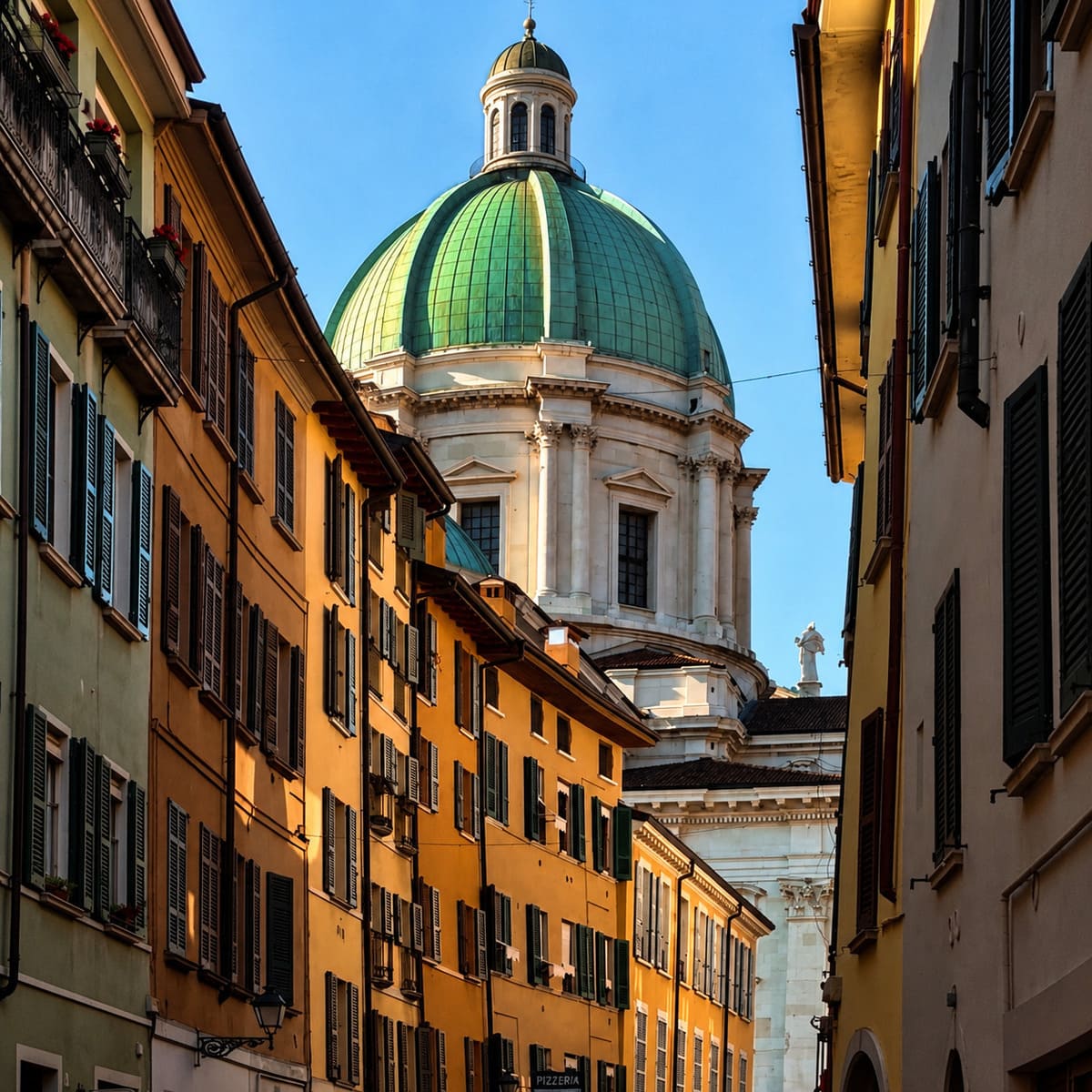
But cue my surprise pulling up to the local train station, on my way from Venice to the airport in Bergamo, and finding one of the largest, most beautifully preserved Historic Centers in Lombardy
Brescia is a fairly large city, mind, just so you know:
- Not only does it have its own metro, it’s one of only a handful of Italian cities with a fully-fledged underground system, comprising 17 stations along a fully-automated line.
- Though the municipality itself is relatively compact, at around 201,000 residents, the wider province is home to over 1.2 million people.
- It’s the second-largest city in Lombardy after Milan, and one of the region’s most important economic and cultural hubs.
- It was even named Italian Capital of Culture in 2023, alongside neighboring Bergamo, and its Roman archaeological park and medieval monastic complex form part of a UNESCO World Heritage Site.
In short, this is no backwater Italian city I just happened to stumble upon, found one or two pretty landmarks worth writing home about, and decided to milk into a quick, article-written-on-autopilot kind of story.
The main draw here is, without question, the Historic Center:
Quick Intermission: Check Local Travel Rules Before Flying
Planning on visiting Italy in 2027?
U.S. passport holders can generally stay in the Schengen Area visa-free for up to 90 days within any 180-day period, but Europe’s new biometric Entry/Exit System and upcoming ETIAS travel authorization mean there are additional formalities worth keeping track of.
Use our Entry Requirement Checker to find out which documents and authorizations you may need before your trip, based on your nationality and destination.
Ancient Ruins Galore
From Venetian-era Renaissance squares, flanked by elegant arcades and marble-fronted palaces, to Roman monuments scattered across a maze-like Old Town, and a sprawling medieval castle on a hilltop to top it off, Brescia is effectively all of Italy’s architectural greatest hits in a nutshell.
I’ve been to a fair few archaeological sites in Italy at this point to not feel particularly fazed by just any old crumbling ruin—and I’m not talking checklist attractions like Pompeii or the Colosseum.
Well, those too, but I was thinking more along the lines of the Valley of the Temples in Sicily and the Greek temples of Paestum in Campania.
Anyways, I digress, you’ve been to enough of Italy to know your stuff, we get it.
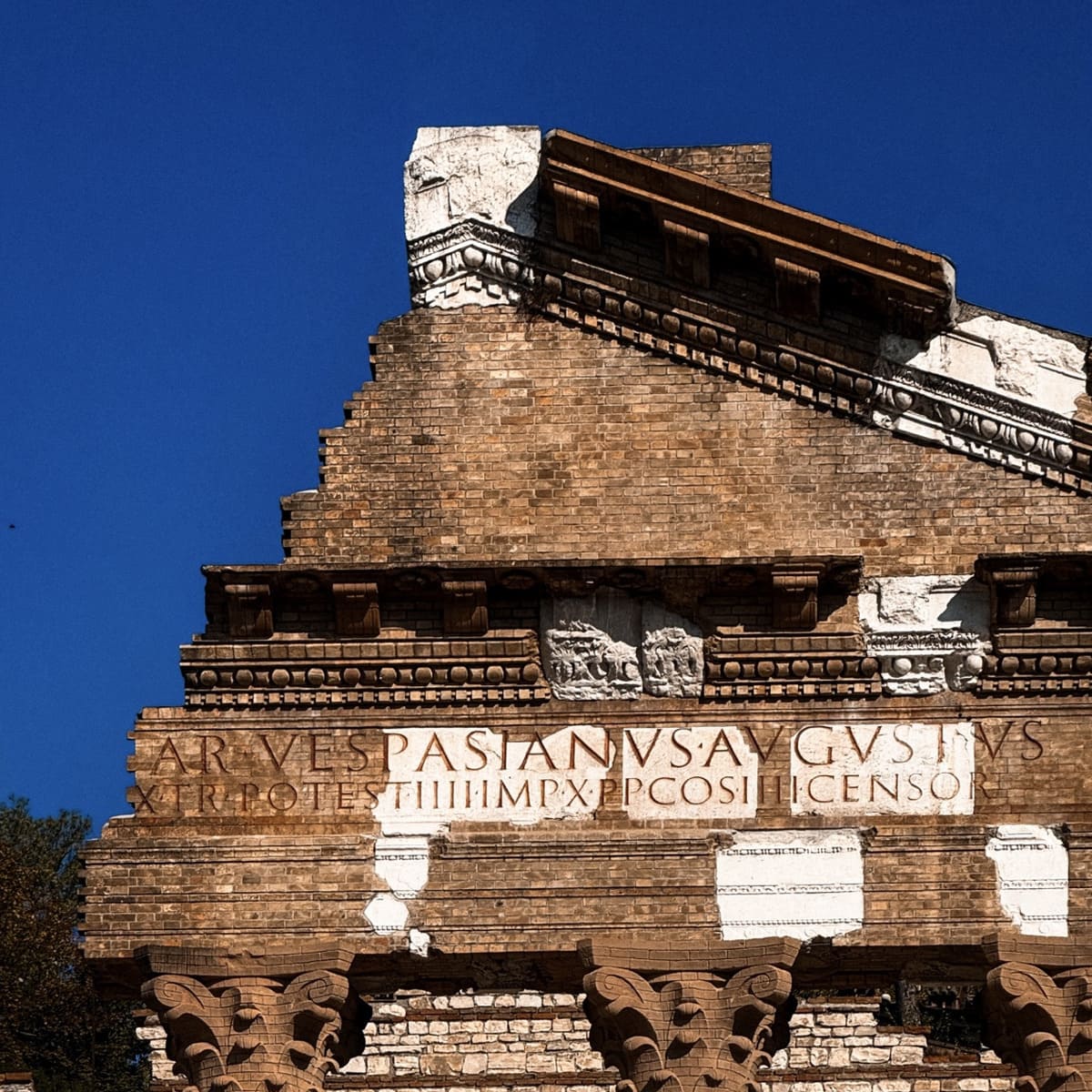
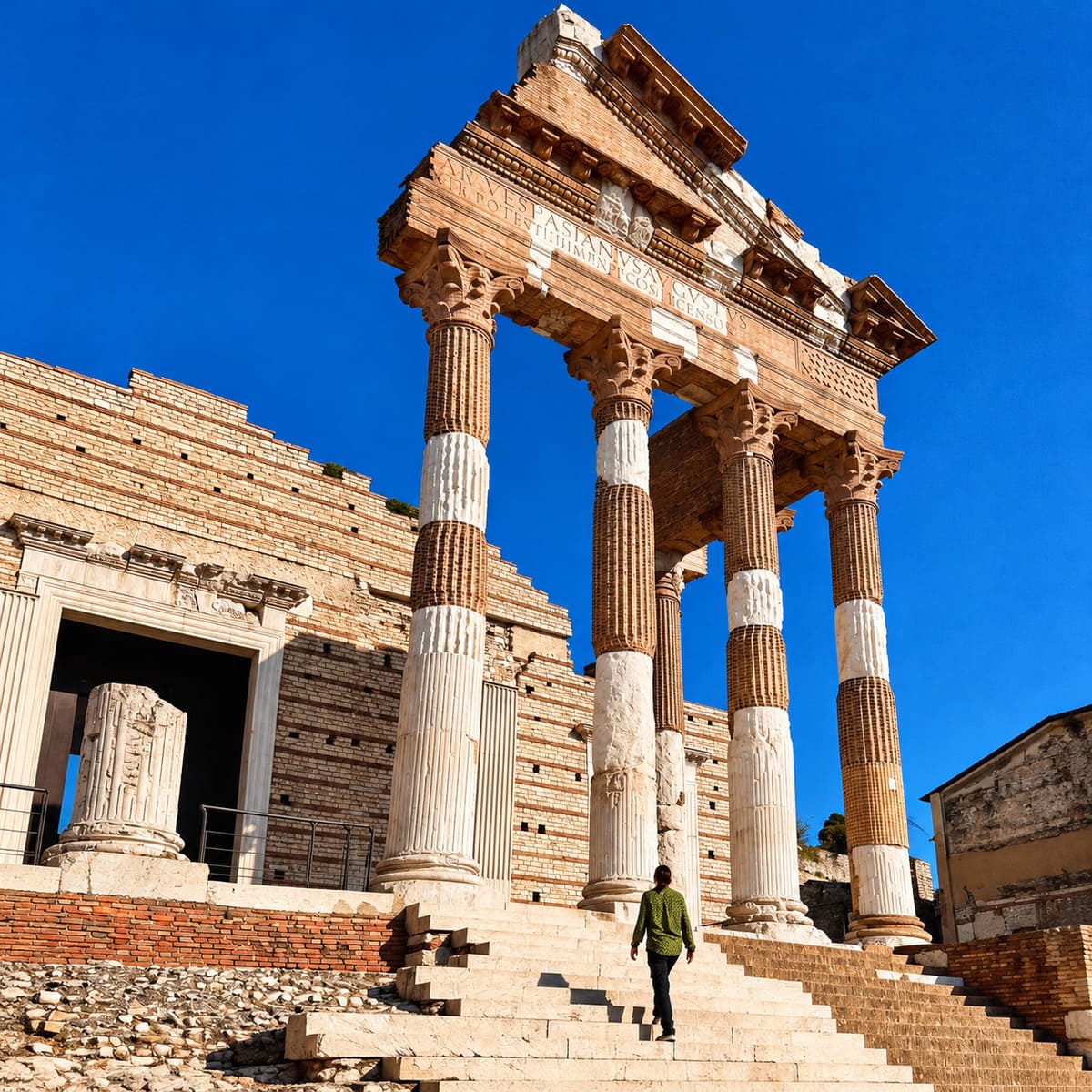
I was just meaning to say Brescia’s Capitoline Temple, a monumental Roman sanctuary built from local stone and marble.
It’s one of the best-preserved ancient flooring and Republican-era frescoes to be found anywhere in Northern Italy, was one of a handful of archaeological discoveries I’ve made in recent years that actually took my breath away.
No wonder it’s a UNESCO World Heritage Site: other than the sheer grandeur of the temple when seen from outside, with its surviving columns and ruined forum at its feet, the interior is absolutely worth spending $21 on.
That gets you a combined museum ticket, which includes the archaeological park and several other major museums across Brescia.
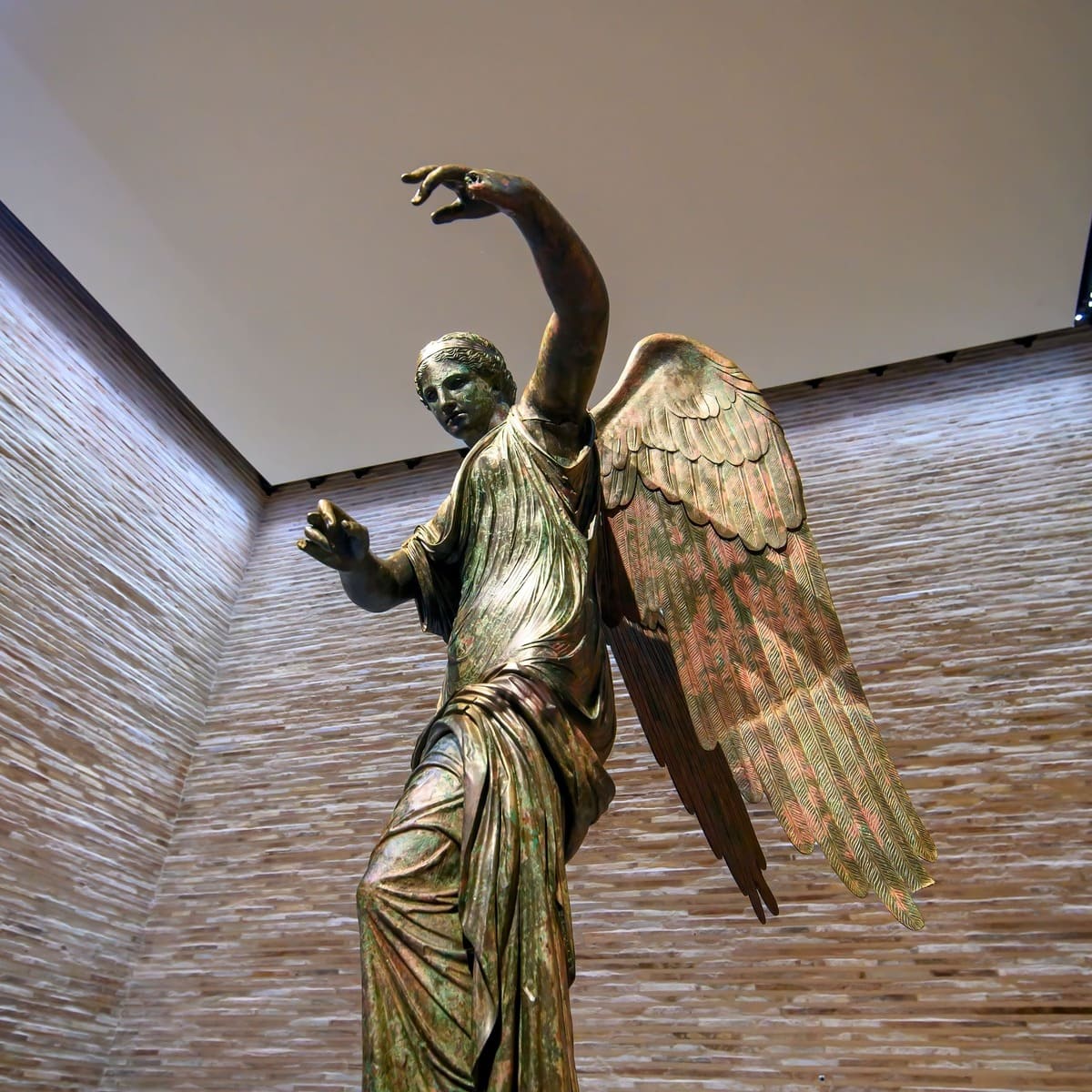
But the real showstopper here is the Winged Victory of Brescia, an extraordinary bronze statue dating back nearly 2,000 years, displayed inside one of the temple’s chambers. Think the Louvre’s own Winged Victory, just without the throngs of Chinese tourists pooling at her feet for selfies.
The adjoining Republican Sanctuary is equally impressive, preserving colorful wall frescoes that have somehow survived since before the Roman Empire itself.
The whole area surrounding the temple, which occupies the former civic heart of Brixia, the Roman city that preceded Brescia, is packed with ancient remains:
There’s also a partially-preserved Roman theater nearby, though I couldn’t visit myself as it was temporarily closed, traces of the ancient forum, and a Roman-era basilica tucked away in a quiet square surrounded by those typically-Italian pastel buildings.
Not One, But Two Cathedrals
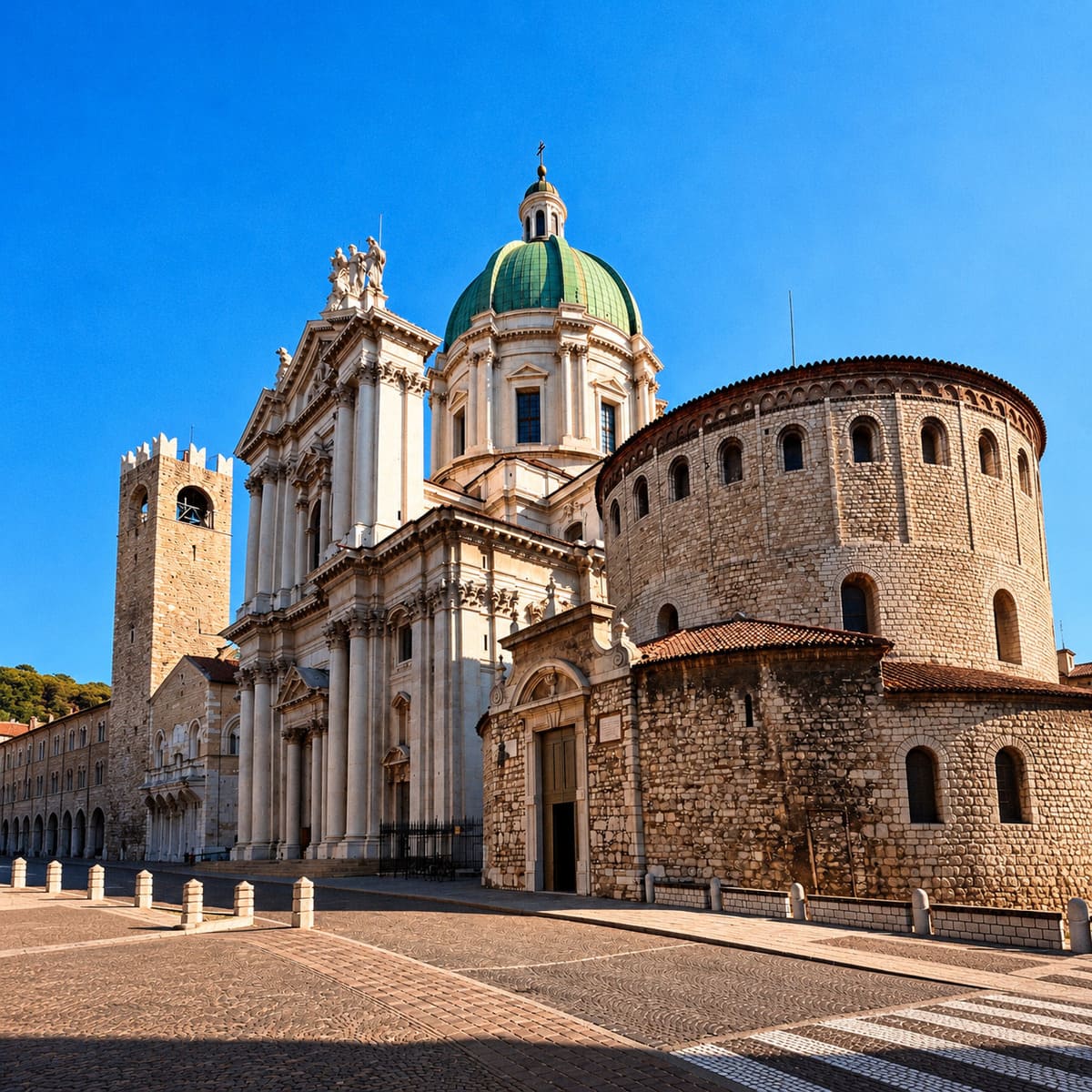
Roman history is not the only thing that makes Brescia a worthwhile stopover:
Piazza Paolo VI is a beautiful square home to not one, but two cathedrals sitting side by side. One of them is an 11th-century rotunda called Duomo Vecchio:
Built in the Romanesque style, with a unique circular interior, massive stone pillars supporting a central dome, and later Renaissance and Baroque additions—the richly-decorated altars toward the back are particularly impressive—it’s the kind of understated, medieval beauty that just sneaks up on you.
Then there’s the second cathedral, or how they call it, Duomo Nuovo: an Italian Baroque capolavoro, with an unmistakable white-marble facade, and a simple, white, yet strikingly-grand interior, crowned by an enormous dome and relatively devoid of the usual over-the-top ornamentation.
The very definition of less is more.
A cathedral square would normally be the main event in any Italian town, but not Brescia.
A short 3-minute walk from the cathedrals, Piazza della Loggia is the flagship square of the city:
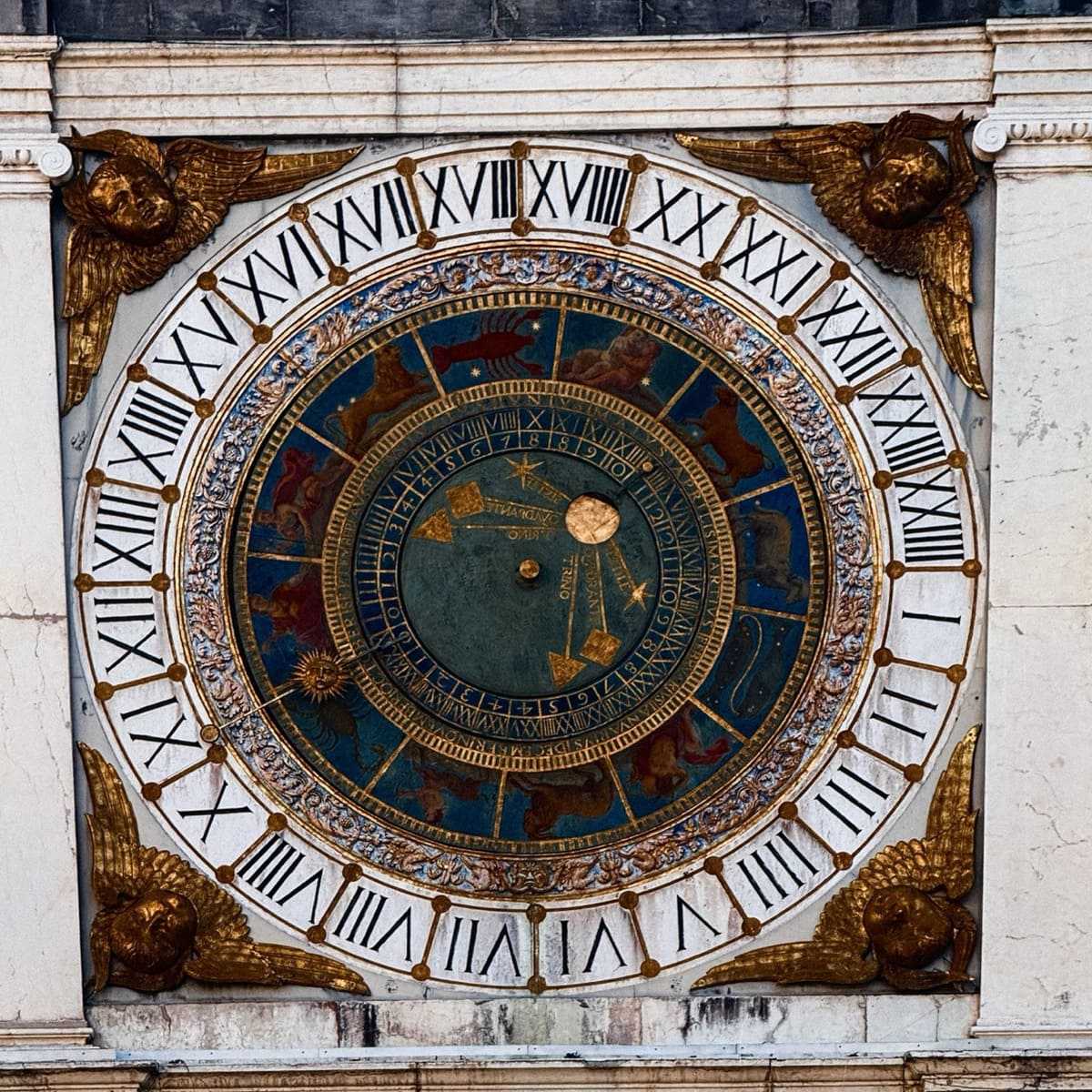
Surrounded by elegant, 16th-century civic buildings that could easily belong by a canalfront in Venice, and dominated by a magnificent Renaissance astronomical clock, it’s the kind of place you could spend an entire afternoon just admiring.
Then there’s Palazzo della Loggia, a grand Renaissance palace with an ornate marble facade, and the beautifully-preserved arcades lining the opposite side of the square.
Honestly, if you didn’t know better, you’d swear you were standing in some quieter corner of Venice.
Note From The Editor
Just one sec! If you enjoy reading great human-written articles, the best way to see a few more is to follow us on Google so we become one of your preferred websites. Thank you so much for reading. Now back to the story!
Is Brescia Safe?
Brescia is generally a safe destination for tourists, particularly around its historic center, where violent crime against visitors is uncommon and most attractions are easily explored on foot.
Italy remains under a Level 2 U.S. State Department travel advisory due to terrorism, but this is a nationwide classification rather than a warning specific to Brescia.
Petty theft can occur around train stations, crowded squares, and public transportation, so the usual precautions apply.
For additional context, check Italy’s latest visitor-reported score on the Travel Off Path Traveler Safety Index:
As I made my way up to the castle district, which is some 15–20 minutes uphill from Piazza della Loggia, I asked Claude what lesser-visited landmark I could add to the itinerary without veering too far off the main path.
I’m not one to rely heavily on AI to plan my trips—I prefer following local tips and doing old-school brochure research—but hey, I was short on time, and for once, it actually came through.
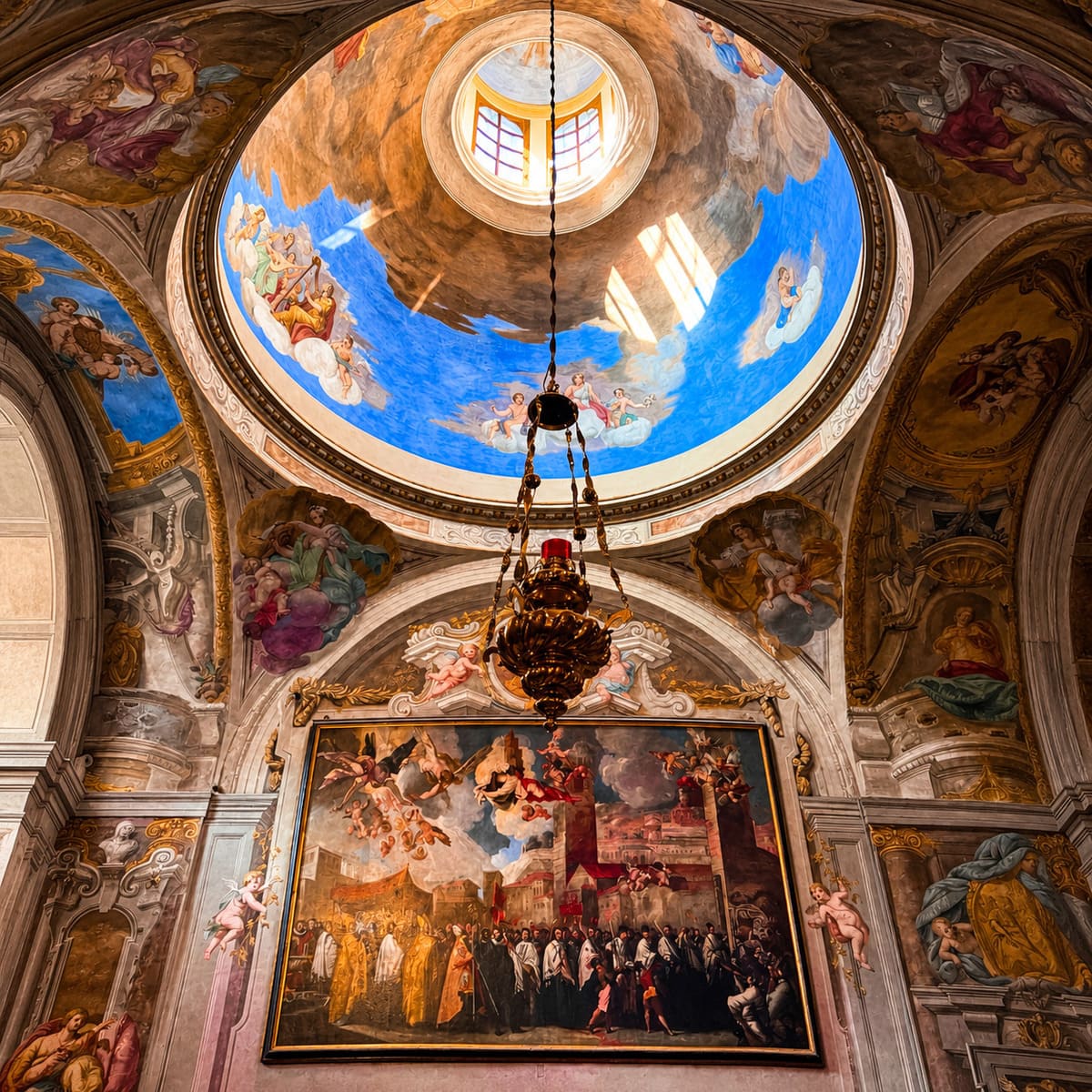
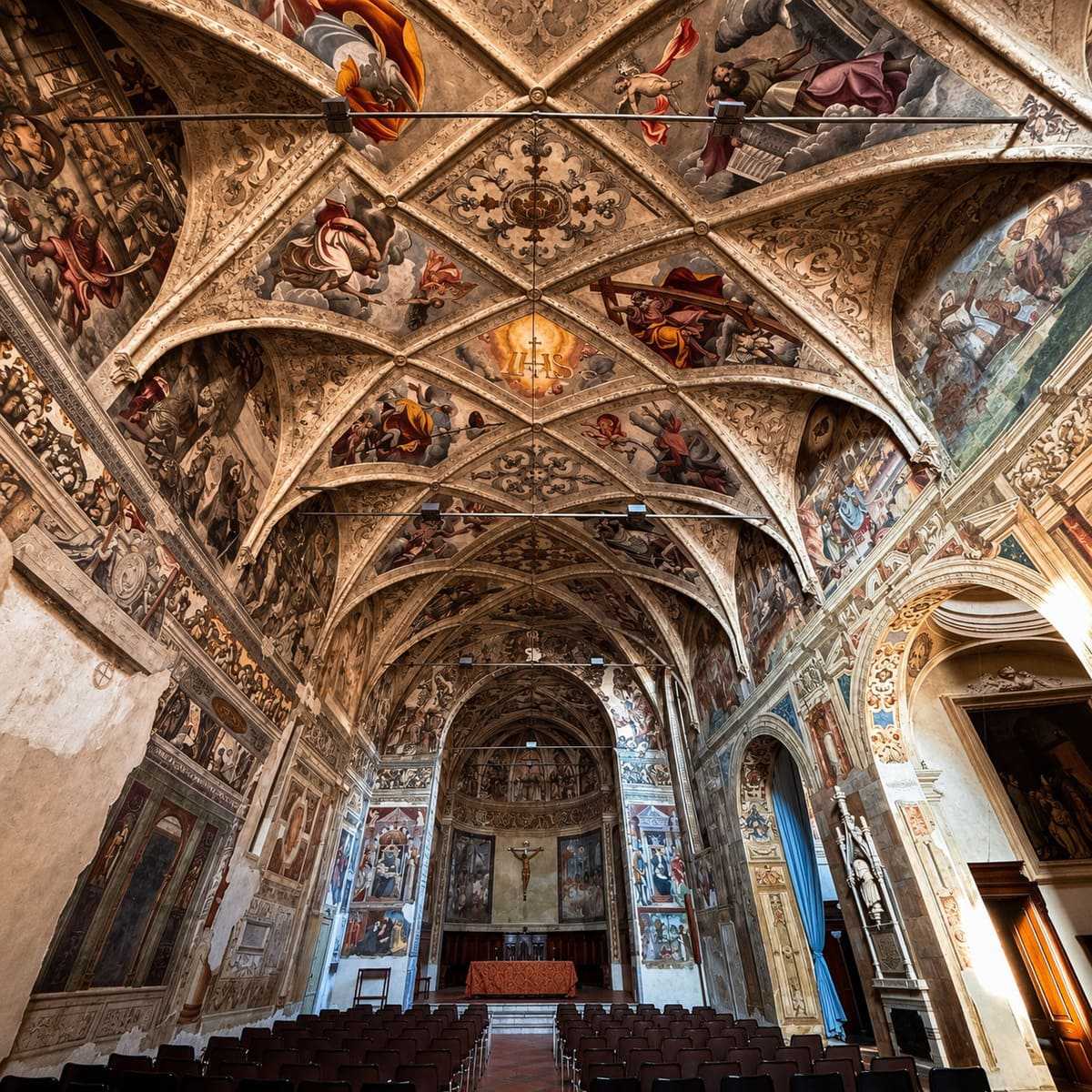
Often called the Sistine Chapel of Brescia, Chiesa di San Cristo is this 15th-century religious complex with three atmospheric cloisters, and a stunning church completely clad in Renaissance frescoes, with lavishly painted walls and ceilings depicting biblical scenes.
Step inside, and it’s an explosion of color, with centuries-old frescoes covering practically every inch of the interior, from the soaring vaulted ceiling to the side chapels.
Consider me genuinely impressed, and for once, I approve of this message.
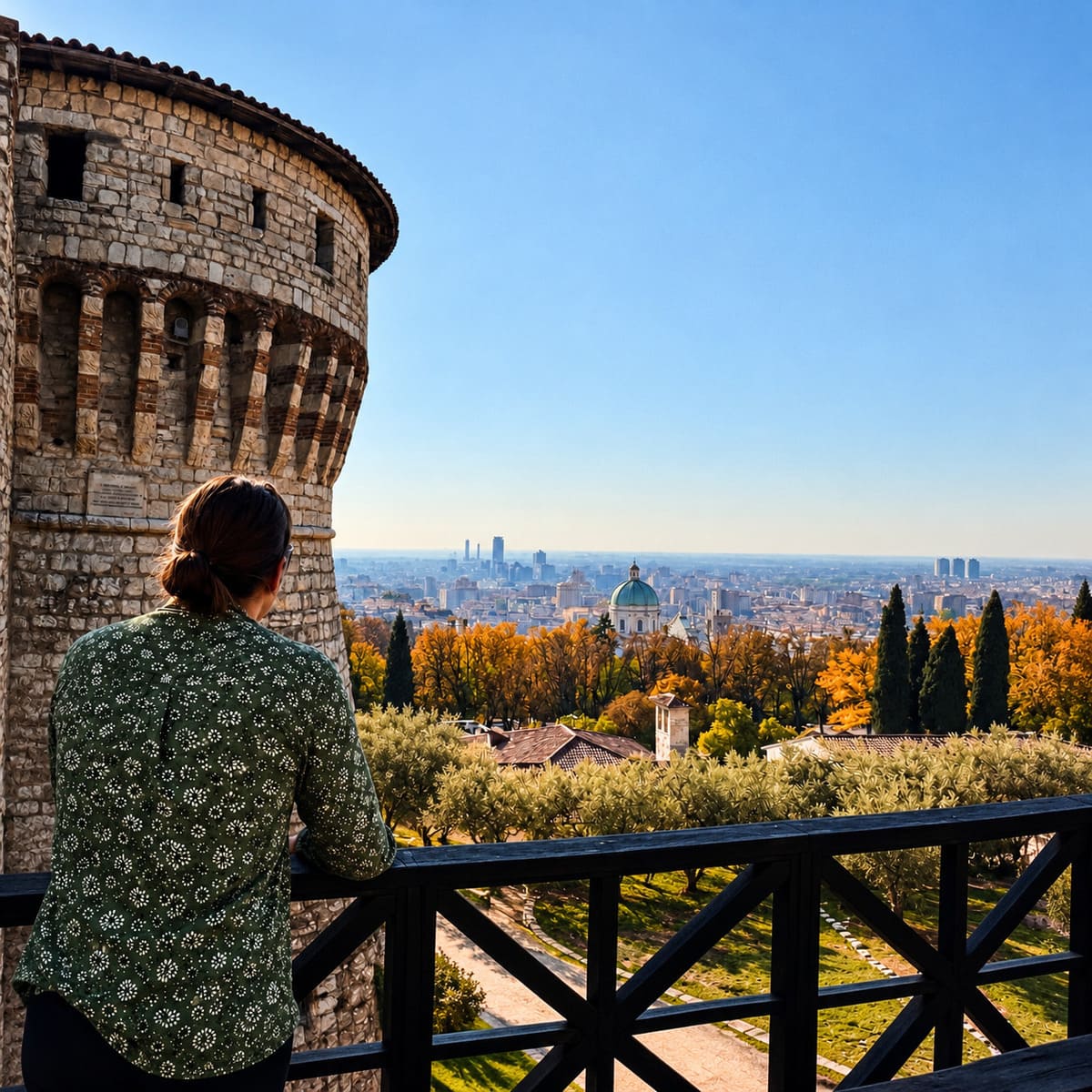
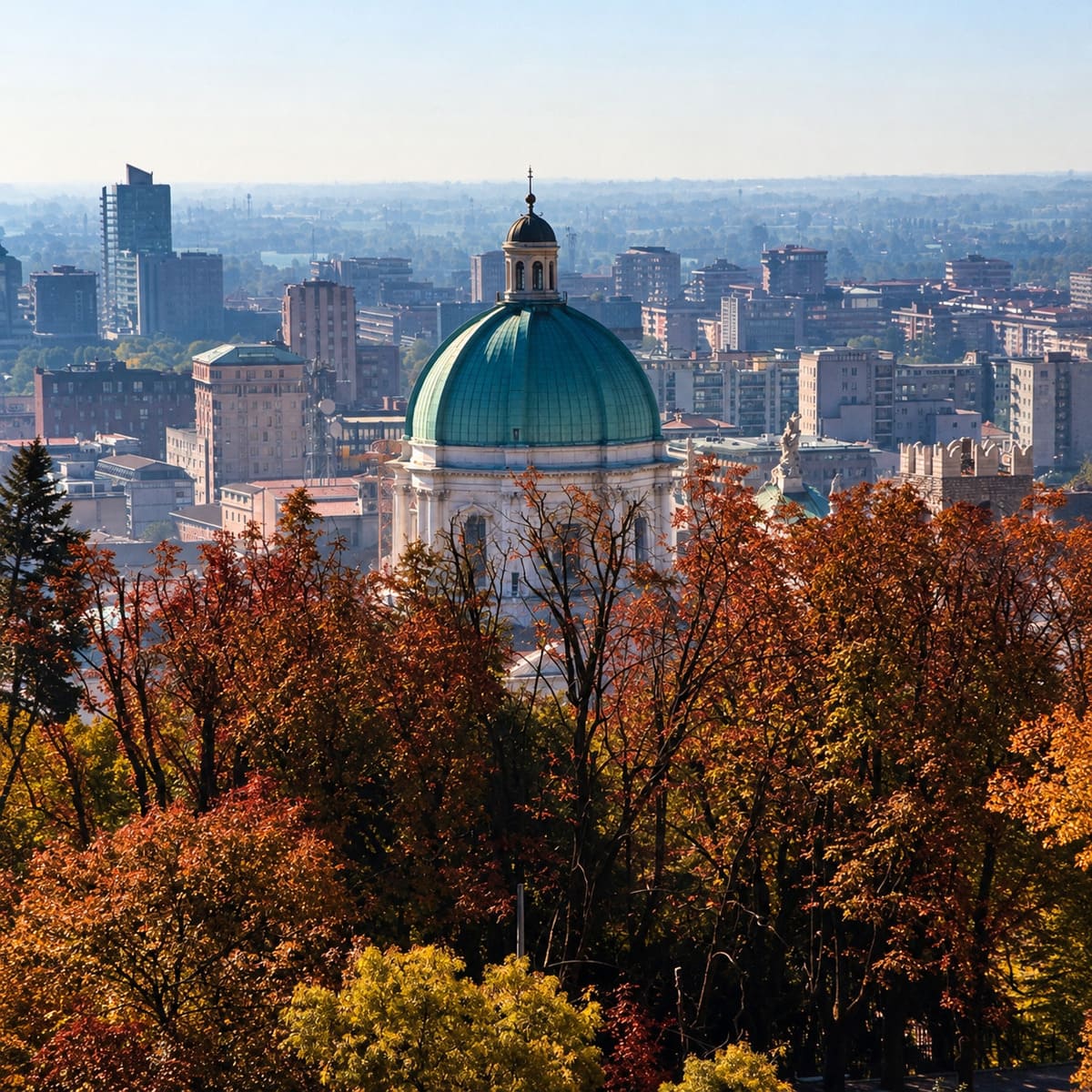
Uphill I continued, and a few dozen steps and endless panting later, I reached the urban park just beneath Castello: a lush, tree-lined area with terrace-like viewpoints offering views of both the Old Town and modern, skyscraper-dotted Brescia in the distance backdropped by pre-alpine peaks.
It’s maybe the best free viewpoint in all of Lombardy.
And to think that, in order to get a similar bird’s-eye perspective of Milan, you typically need to splurge on a $20 cocktail in one of those fancy rooftop bars, or at least $18 on a Duomo terrazze ticket. Pff.
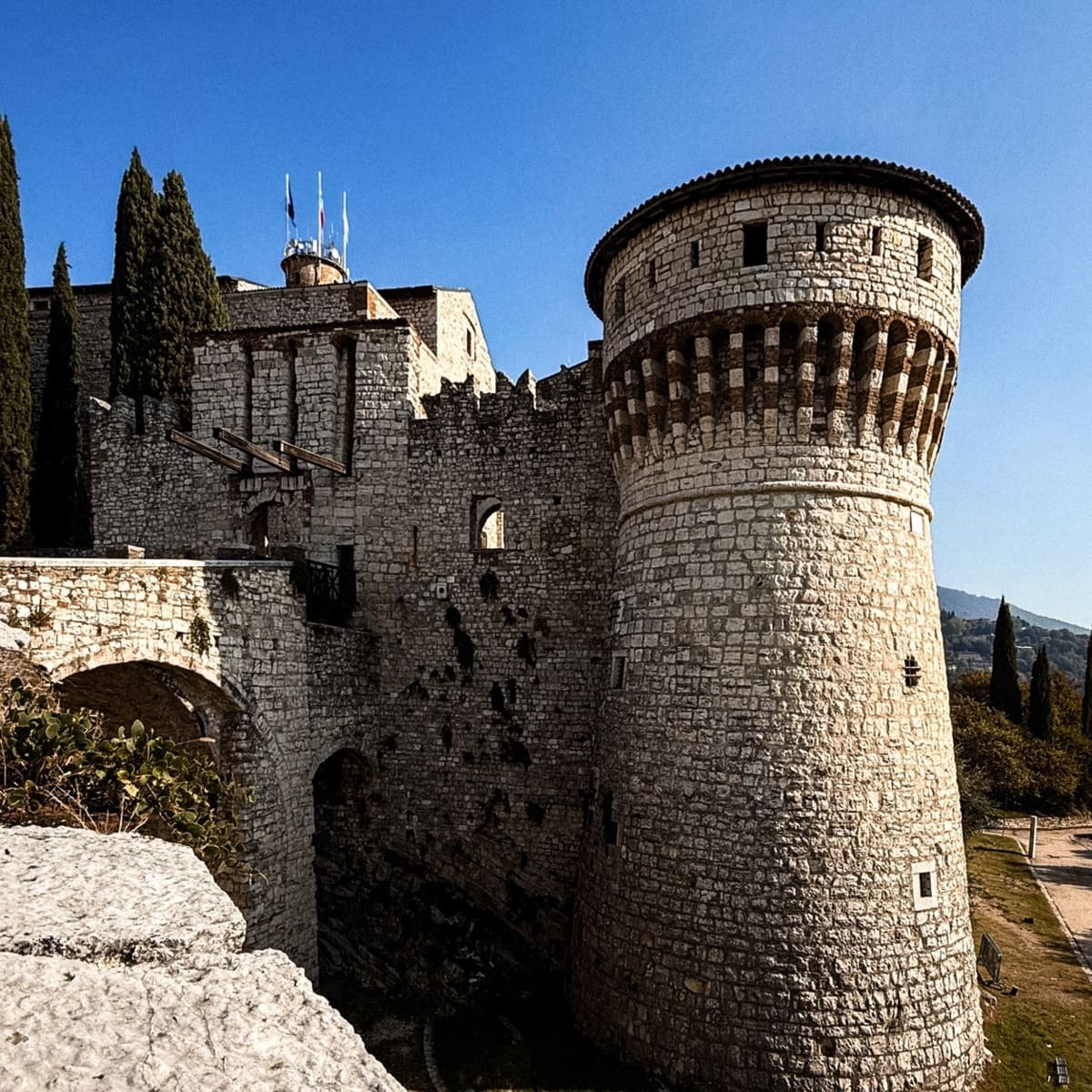
The castle itself is beautiful, complete with imposing watchtowers offering different perspectives of the same 360° panorama, drawbridges, and deep moats, and surprisingly enough, you can still wander the grounds and inner courtyards for free.
You will hit a paywall at some point, if you venture inside the museums housed within the fortress, and that’s for the Museo delle Armi Luigi Marzoli, home to a remarkable collection of medieval and Renaissance weapons and armor.
If you only have time, or money, for one paid attraction, I’d prioritize the Capitoline Temple down in the Roman forum, especially as the combined $21 ticket also covers the castle museums and other major cultural sites.
As a matter of fact, for a relatively sizable Italian hub, Brescia is actually pretty affordable, particularly compared to nearby Milan when it comes to accommodation:
Average Prices In Brescia, Italy
- Bakery snack, such as a cornetto or chocolate-filled pastry: $2.25
- Traditional piadina with ham and cheese: $6.50
- Serving of casoncelli alla bresciana in a casual trattoria: $15
- Three-course meal in a mid-range restaurant: $42 per person
- Cappuccino: $2.55
- Public transport: $1.90 per single-zone bus or metro ticket
- Public transport day pass: $4.25
- Taxi: around $10–15 for a short local ride
- Simple guesthouse or private room: $75–90 per night
- 4-star hotel: $170+ per night
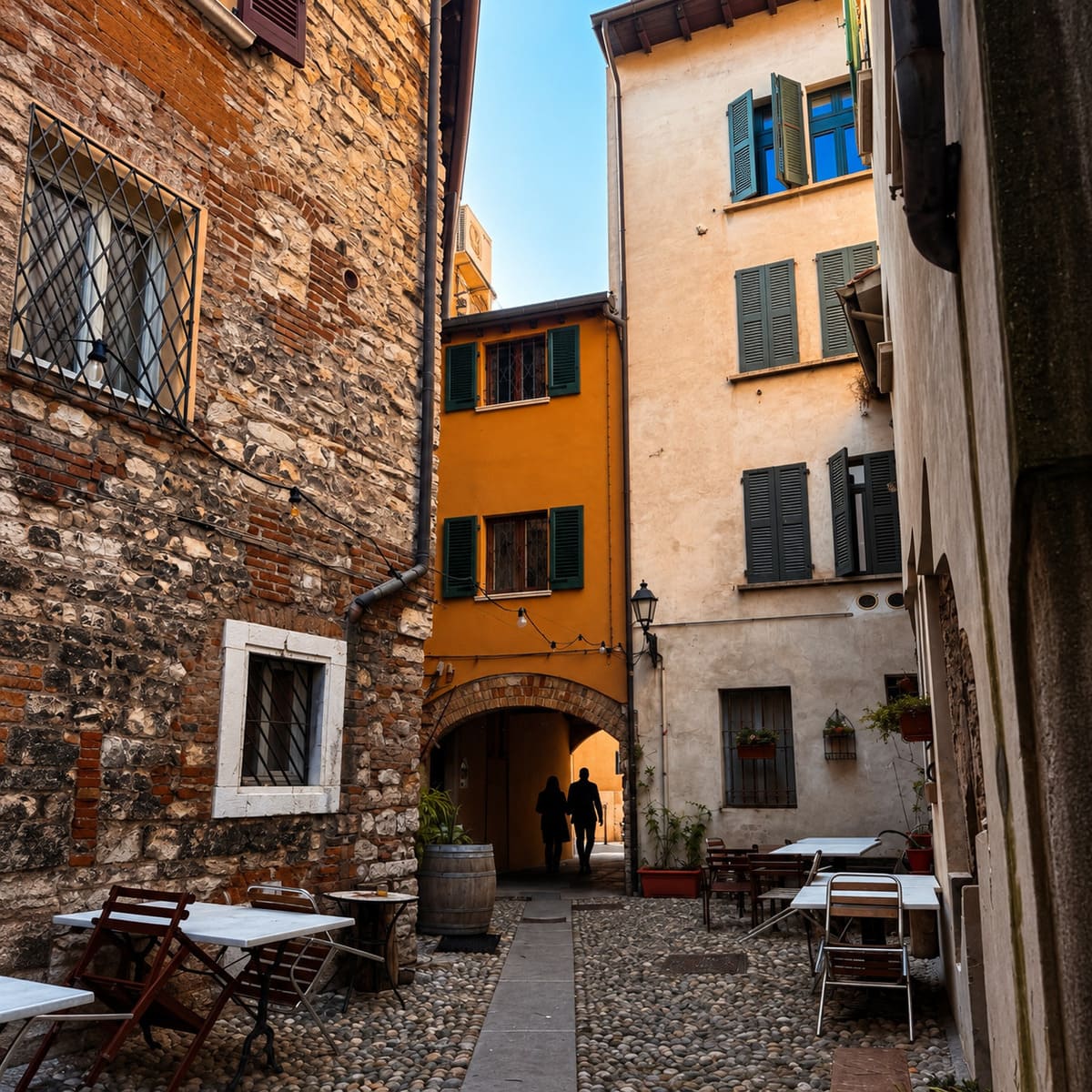
The Historic Center is where a majority of the attractions are located, including the Capitoline Temple, the cathedrals, the castle, and Piazza della Loggia, but Brescia will only truly reveal itself to you once you leave the tourist-frequented cobblestone lanes, and venture deeper into its residential neighborhoods.
Lucky for tourists short on time like us, who are maybe just merely passing through, it has a 17-station metro serving a good chunk of the city, and day tickets cost only $4.25:
Top 6 Spots To Explore In Brescia With The Metro
- Bresciadue (Bresciadue station): Brescia’s modern business district, with glass-fronted office towers, contemporary architecture, and the nearby Parco Tarello.
- Parco Castelli (Mompiano station): a large, leafy neighborhood park tucked beneath the hills, perfect for escaping the city center’s hustle and bustle.
- Sanpolino (Sanpolino station): a modern residential neighborhood known for its vibrant street art, large-scale murals, and green public spaces.
- Museo del Ferro (Prealpino station): a small industrial heritage museum housed in a historic ironworking site, roughly 10 minutes from the metro.
- Parco delle Cave (Sant’Eufemia-Buffalora station): a vast nature reserve with former quarry lakes, peaceful walking paths, and birdwatching spots.
- Parco Cimabue (San Polo Parco station): a quiet residential green space offering a glimpse of everyday life in modern Brescia, far removed from the tourist circuit.
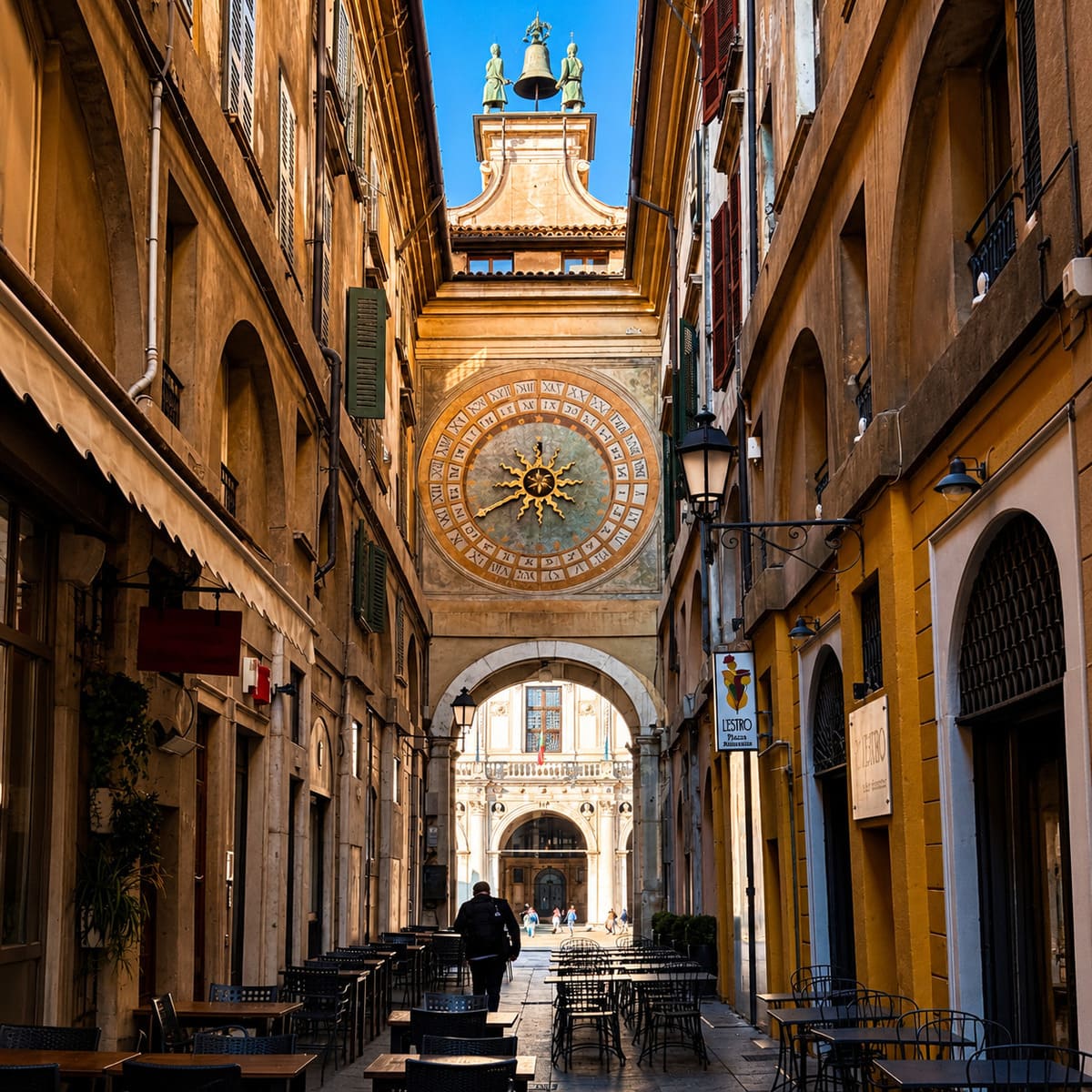
It’s not an Italian city break until you’ve eaten half your body weight in pizza and pasta, but I’ll be honest with you, knowing the region and its gastronomy by heart at this point, I wasn’t keen on having the usual ossobuco and risotto alla Milanese.
I fancied something a little different that one afternoon before leaving Italy.
For my visit to Brescia, I mostly gravitated toward quick bites, like piadine and pastries, and my one sit-down meal was a steaming bowl of ramen at Verde Ramen, a small, locally-operated Japanese noodle spot dishing out some genuinely delicious soups in the Historic Center.
So if you’re ever in Brescia, and you happen to be craving rich, truffle-infused ramen, Verde Ramen is your $17 fix.
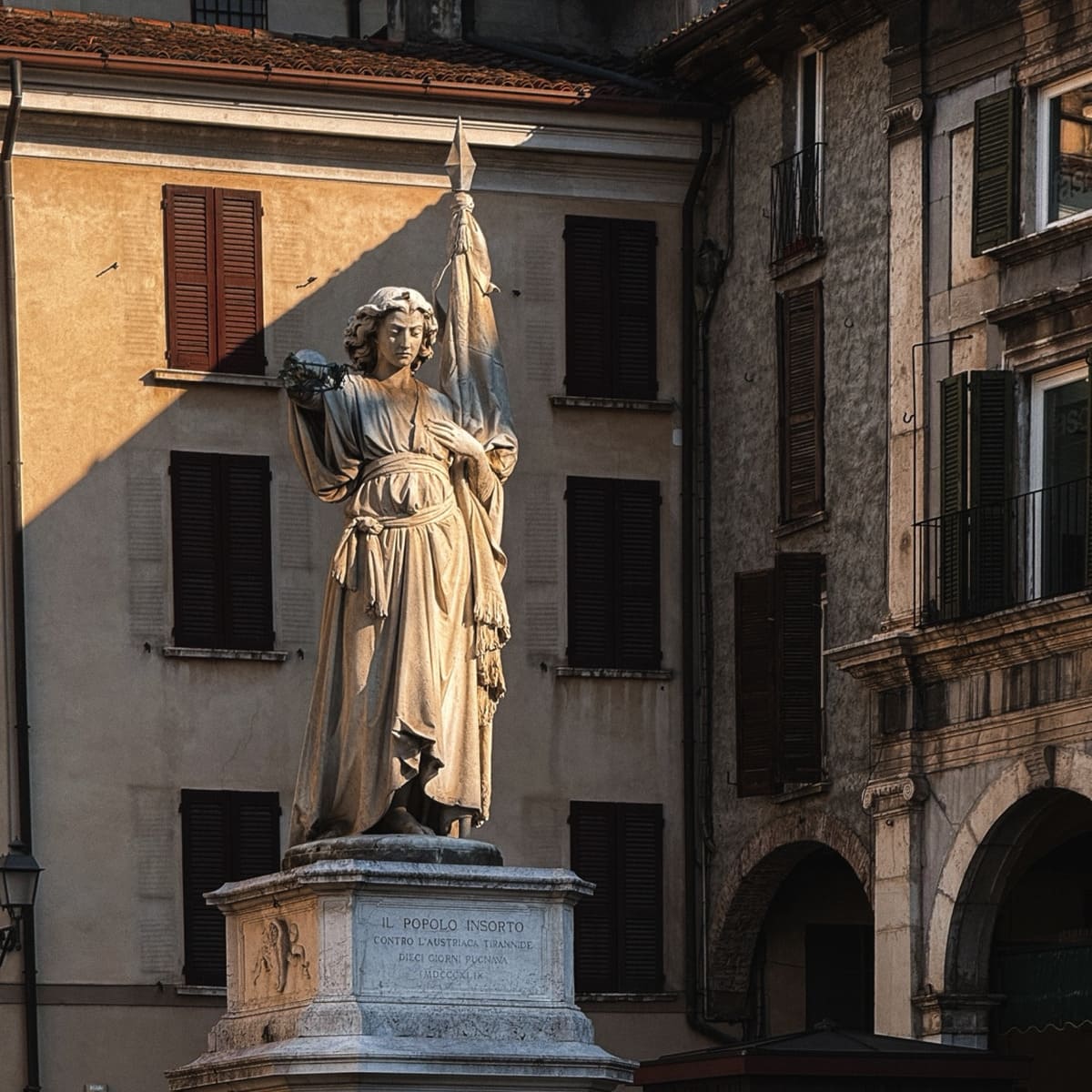
They even have a Brescia-inspired version featuring local beef, alongside more traditional miso and sesame-based broths, all served with homemade noodles.
I do have a more local recommendation that doesn’t come from me directly, but a Milanese friend who’s been to Brescia himself a few times.
Thanks, Valter.
If you’re looking to try typical Brescian cuisine, with homemade casoncelli swimming in butter and sage, slow-cooked manzo all’olio, and a generous glass of Franciacorta wine to wash it all down, then Osteria Al Bianchi is the place to go.
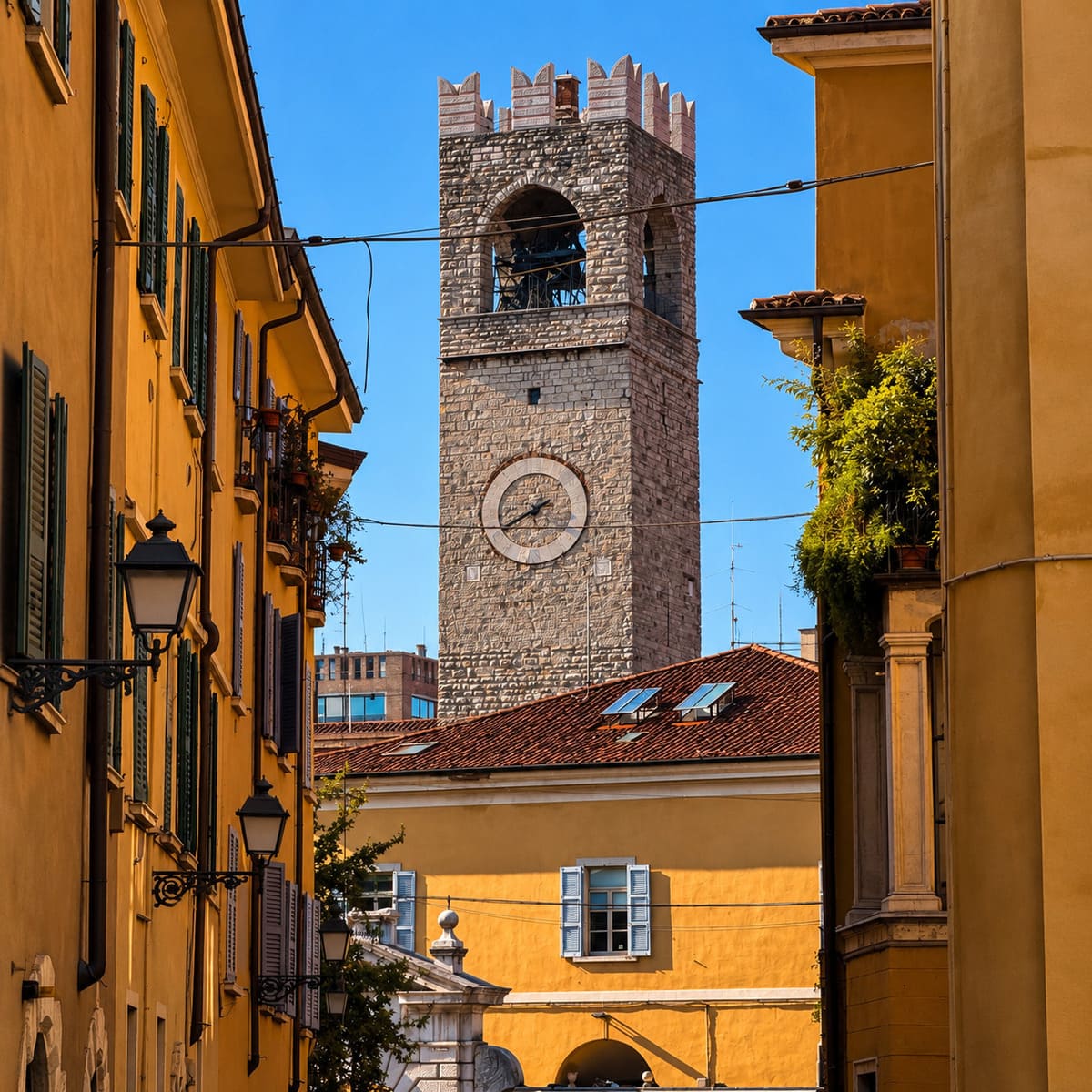
Tucked away on Via Gasparo da Salò, only a stone’s throw from Piazza della Loggia, this is a historic, old-school osteria that’s been around since the 19th-century, and still draws a loyal local crowd.
A typical meal here, with a main dish, wine, and dessert, should set you back around $35 per person, depending on what you order.
It’s also famous for its aperitivo tradition, when locals gather over a glass of pirlo, Brescia’s own take on the world-famous spritz, and that’s usually accompanied by bertagnì, a traditional fried cod snack.
Sorry for the globalist slip, but I’ll do better next time. And trust trust me, there will be a next time, as Brescia might have just become one of my favorite underrated discoveries in all of Italy.
36 Minutes from Milan
Easily accessible via a short high-speed train ride from Milan, offering an uncrowded historic center and affordable Italian culture.
Capitoline Temple
Explore UNESCO-listed Roman ruins, well-preserved frescoes, and the extraordinary 2,000-year-old bronze Winged Victory statue without tourist throngs.
Two Cathedrals
Visit Piazza Paolo VI to discover two stunning cathedrals sitting side by side, featuring an 11th-century circular rotunda and a grand marble Baroque duomo.
Castello di Brescia
Wander through medieval watchtowers, drawbridges, and lush park terraces offering some of the best free panoramic views across Lombardy.
Authentic Casoncelli
Dine on handmade casoncelli swimming in butter and sage at 19th-century spots like Osteria Al Bianchi for a fraction of Milan prices.
Enter your email address to subscribe to Travel Off Path’s latest travel news, straight to your inbox
