
Europe’s border-free Schengen Area could grow once again in 2027, and this would have a major impact on U.S. travelers exploring the continent.
Hot on the heels of Croatia, which joined in 2023, Bulgaria and Romania, which joined in stages between 2024 and 2025, and Andorra, which is currently preparing to align its border rules more closely with Schengen, the bloc is gearing up to welcome Cyprus, an Eastern Mediterranean island country.
So far, Americans have been able to visit Cyprus for 90 full days, independently of how long they’ve spent in other European countries.
From next year, should the island successfully join Schengen as planned, that generous arrangement will change, as Cyprus officially adopts the bloc’s short-stay rules:

A Sun-Drenched Mediterranean Island That Keeps On Rising
Cyprus is a rapidly-growing destination in the Eastern Mediterranean known for its Caribbean-like white-sand beaches, hugged by teal waters, rich Greco-Turkish heritage, and plethora of archaeological sites dating back millennia.
With picturesque coastal cities like Paphos and Limassol, bustling ports backed by luxurious resorts and palm-lined promenades, and a fascinating inland capital in Nicosia, often described as the last divided capital in Europe, Cyprus is that sunny getaway Americans have been sleeping on for far too long.
🇨🇾 Cyprus 2027 Schengen Guide
The sun-drenched Mediterranean island is gearing up to join the border-free zone. Here is how it impacts your 90-day limit and travel plans.
Status Quo: Cyprus currently grants U.S. visitors a separate 90-day visa-free stay, allowing long-term travelers to “pause” their Schengen countdown.
The Change: Once Cyprus joins, any time spent on the island will count toward your strict 90-day limit within the shared 29-country Schengen Area.
The Progress: Technical preparations are officially complete, and objections raised by EU member states have largely been overcome.
The Date: Officials are targeting July 1, 2027, for Cyprus to formally join Schengen, coinciding with Greece taking over the EU Council presidency.
Frictionless Flights: Flying between Cyprus and other Schengen nations (like Italy or Greece) will no longer require routine passport checks.
The Green Line: The island’s political division remains. Special crossing arrangements will persist at the UN Buffer Zone separating the Republic-controlled south and the Turkish-administered north.
The Climate: Located closer to the Middle East than mainland Europe, Cyprus offers incredible winter escapes with January coastal highs of 64°F.
The Culture: Expect a wilder, more rugged Mediterranean experience blending a rich Hellenic heartland culture with centuries of Levantine influence.

 Powered by Travel Off Path
In a way, that’s understandable: though it’s European, at least geopolitically, Cyprus actually sits in Western Asia, a whole 500 miles from mainland Greece, and the quickest transatlantic connections there will often involve a stopover in a major European hub, and an additional 4-hour-plus flight.
Think New York–London–Cyprus, for example.

Some of the main draws here, you ask?
For one, it feels like a wilder, more rugged Greece: most of the island’s population identifies as ethnically Greek Cypriot, and they’re culturally tied to the Hellenic heartland.
At the same, they share centuries of history with their Turkish Cypriot neighbors, and the island is strongly influenced by the Levant, which, by the way, is only about 65 miles from Cypriot shores.
Due to its geographical location, closer to the Middle East than it is to mainland Europe, Cyprus enjoys a warmer climate year-round:
Even in January, usually the worst month across the pond for bitter cold, it sees daytime highs of around 62–64°F along the coast, and trust me when I say you actually don’t want to be there in summer when it’s a scorching 100°F inland.

I’d know myself, having once fainted from heatstroke walking from a bus stop to my Airbnb in Nicosia.
Lucky for you, the heat is your primary concern when visiting Cyprus, as the Republic is back to being a Level 1 destination according to the U.S. Department of State, following a brief period of heightened regional security concerns earlier in the year.
On the Travel Off Path Traveler Safety Index, it also scores 84 out of 100, based on feedback from travelers who have recently visited, though the live score may change as new reports come in.
Most importantly if you’re a long-term traveler, or a digital nomad like me: Cyprus currently sits outside the Schengen Area.
Why Is Cyprus Outside Of Schengen?
Though it has been a full member of the European Union since 2004, it’s remained outside Schengen partly due to the complex geopolitics involved here.

You see, the northern third of the island is currently under Turkish military control, and administered by the self-declared Turkish Republic of Northern Cyprus, recognized only by Turkey.
Between the internationally recognized, predominantly Greek-speaking south of the island, and the Turkish-majority north, there’s a UN Buffer Zone complete with barbed-wire fences, checkpoints cutting through the very center of Nicosia, and decades-long tensions that have yet to be fully resolved.
Fortunately, no full-blown war since the seventies.
When Cyprus became an EU member in 2004, EU law was suspended in the Turkish-administered north, which continued operating its own entry procedures, immigration system, and parallel institutions.
Even down to currencies, the euro is used in the Republic-controlled south, and the Turkish lira north of the buffer zone.

The situation remained largely unchanged for over two decades, but Cypriot authorities have been working toward full European integration for years, and this year, that push finally gained significant momentum.
Seeing that Cyprus was already in the EU, and a member of the eurozone since 2008, the last major European integration milestone was… Schengen membership.
Why Is Schengen Such A Big Deal?
Schengen is a word you’re certain to stumble upon sooner or later if you’re traveling around Europe.
To keep things simple, it’s a passport-free travel area comprising 29 countries, including four non-EU associates, where the customary passport checks that usually apply when traveling between different countries are generally abolished.
If you were ever confused as to why you never passed a single immigration booth flying from France into Italy, or driving from Spain into Portugal, that’s Schengen at its most glorious:

While you are required to carry valid travel documentation, you generally only undergo formal passport checks when entering or leaving the entire Schengen Area.
In other words, when flying from the U.S. to France, you’ll undergo the usual immigration and passport checks. Traveling onward within Schengen, of which France is a part, however, those checks are normally not required.
Check The Latest Entry Requirements Before Traveling To Europe
Before we get into Cyprus’ upcoming Schengen accession, it’s worth remembering that Europe has already introduced major changes to its border procedures.
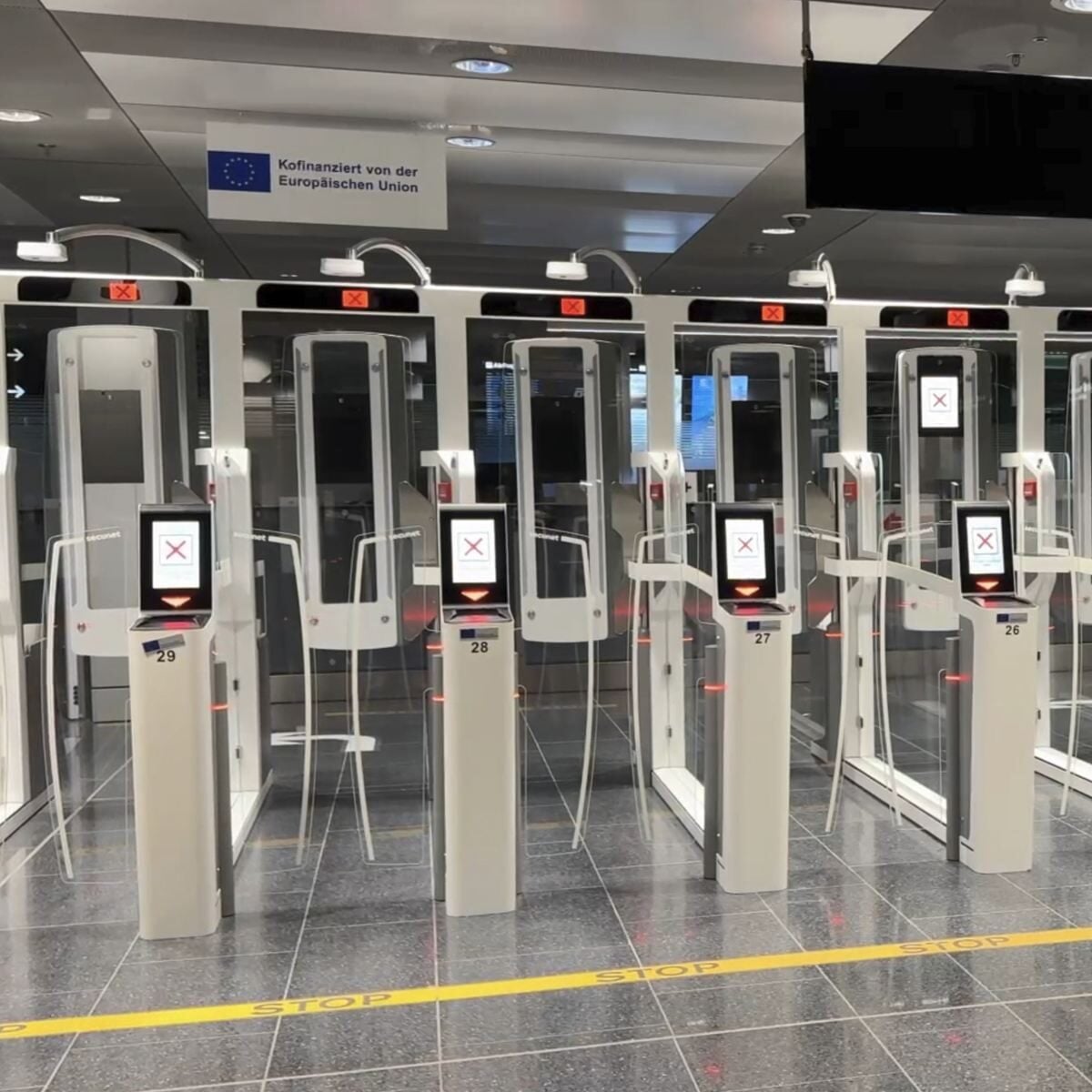
The Entry/Exit System, or EES, is now fully operational across the 29 Schengen countries, replacing traditional passport stamping with digital records and biometric registration for eligible non-EU travelers.
Use our Entry Requirement Checker to find out exactly what documentation you’ll need before your next European trip.
Note From The Editor
Just one sec! If you enjoy reading great human-written articles, the best way to see a few more is to follow us on Google so we become one of your preferred websites. Thank you so much for reading. Now back to the story!
Is Cyprus’ Schengen Membership Confirmed?

No, not quite. But we’re getting real close.
We’ve documented Cyprus’ long and complicated path to Schengen membership in depth here, so we’re not gonna go over the whole thing twice, but in sum, here are some of the relevant updates:
- July 14: The European Commission adopted a positive assessment of Cyprus’ technical preparedness to join Schengen, following evaluations carried out in December 2025.
- October 10: Deputy Migration Minister Nicholas Ioannides formally confirmed 2027 as the expected year of accession, with a small number of outstanding technical actions still being finalized.
- October 15: President Nikos Christodoulides himself said technical preparations were complete, and that he hoped a political decision could be reached in December.
- November 4: A legal analysis published by Philippou Law Firm on Legal 500 confirmed Cyprus remains on track with its 2027 accession target.
- November 12: President Christodoulides revealed that Greece is targeting July 1, 2027, for Cyprus to join Schengen, coinciding with Greece taking over the rotating presidency of the Council of the European Union.
Could accession be formally delayed? In theory, yes. Whether that’s likely at this stage? Well, the prospects have certainly improved, but there are still a couple of hurdles to overcome.
The biggest unresolved questions here are the border arrangements between the Republic of Cyprus and the Turkish-administered north, as well as the presence of two British Sovereign Base Areas located on the island.
This is a well-known, decades-long political and legal headache, and it remains relevant to Cyprus’ bid because Schengen requires participating countries to account for movement across the area’s external borders.
Cypriot authorities already control movement through the Republic’s principal international airports and ports:
- Larnaca Airport (LCA), located just outside the coastal city of Larnaca, roughly 30 miles southeast of Nicosia, and the country’s busiest airport.
- Paphos Airport (PFO), serving the resort town of Paphos, on the southwestern coast of the island.
- Limassol Port, the south’s largest commercial port and main cruise terminal, hosting cargo vessels, passenger ships, and cruise liners.

Earlier this year, there were concerns that Cyprus’ unusual circumstances could stall its accession indefinitely, but according to President Christodoulides’ latest statements, objections raised by EU member states have largely been overcome.
What Changes After Cyprus Joins Schengen?
Right now, Cyprus grants U.S. visitors a visa-free stay of up to 90 days within any 180-day period, independently of how long they’ve already spent traveling around the Schengen Area.
That’s not the case in France, Italy, Croatia, or other Schengen countries: if you’ve spent 15 days in France, the time you’re allowed to stay across the other 28 countries is automatically reduced, as a whole, to only 75 days, assuming you had no previous stays within the same rolling 180-day period.
For many years now, long-term travelers have used Cyprus as a ‘Schengen reset’.
In non-nomad lingo, that just means staying in a non-Schengen European country for 90 days, or however many days are necessary, until enough of your previous Schengen days fall outside the rolling 180-day window and you’re allowed to return.
Technically, being in Cyprus doesn’t immediately reset your allowance, but it lets the clock keep ticking without accumulating any more Schengen days.

From 2027, should Cyprus succeed in its Schengen bid, and it’s looking more promising now that significant technical hurdles have been cleared, this will no longer be possible.
Any time spent in Cyprus will count toward your Schengen limit.
The good news is you’ll no longer be required to undergo routine passport control every time you land in or leave Cyprus, provided your point of origin and destination are fellow Schengen countries, and the relevant internal border checks have been lifted.
For example, if you’re flying from Athens to Larnaca, or from Paphos to Milan, it should eventually feel just like taking any other flight within the border-free zone.
What Doesn’t Change

- As an American, you still won’t need a visa to enter Cyprus or the wider Schengen Area for short tourist visits.
- The maximum visa-free stay remains 90 days within any rolling 180-day period, but Cyprus will count toward the shared Schengen allowance after accession.
- The island’s political division will not automatically be resolved by Schengen accession, and the Green Line will continue to have special crossing arrangements.
- You are still not formally authorized, as an American, to use North Cyprus entry points, such as Ercan Airport (ECN) to travel to the island—or you won’t be able to cross to the south later
- The euro will remain the official currency in the Republic-controlled areas, as it has been since 2008.
- You’ll still need to carry a valid passport when traveling, even if routine internal border checks are lifted.
For now, Americans can continue enjoying Cyprus as a separate, visa-free European getaway, with its own 90-day allowance and some of the warmest winters on the continent.
But if all goes according to plan, that little 3-month loophole could be coming to an end in 2027.
Enter your email address to subscribe to Travel Off Path’s latest travel news, straight to your inbox
