
Feel like Spain, Italy, and Portugal don’t want Americans anywhere near?
No problem: this fall, you can fly nonstop from Newark to this gorgeous walled city in Southeastern Europe, dominated by mighty medieval fortifications, offering mild weather, beautiful turquoise seas, and virtually zero of the headline-grabbing anti-tourist protests seen farther out West.
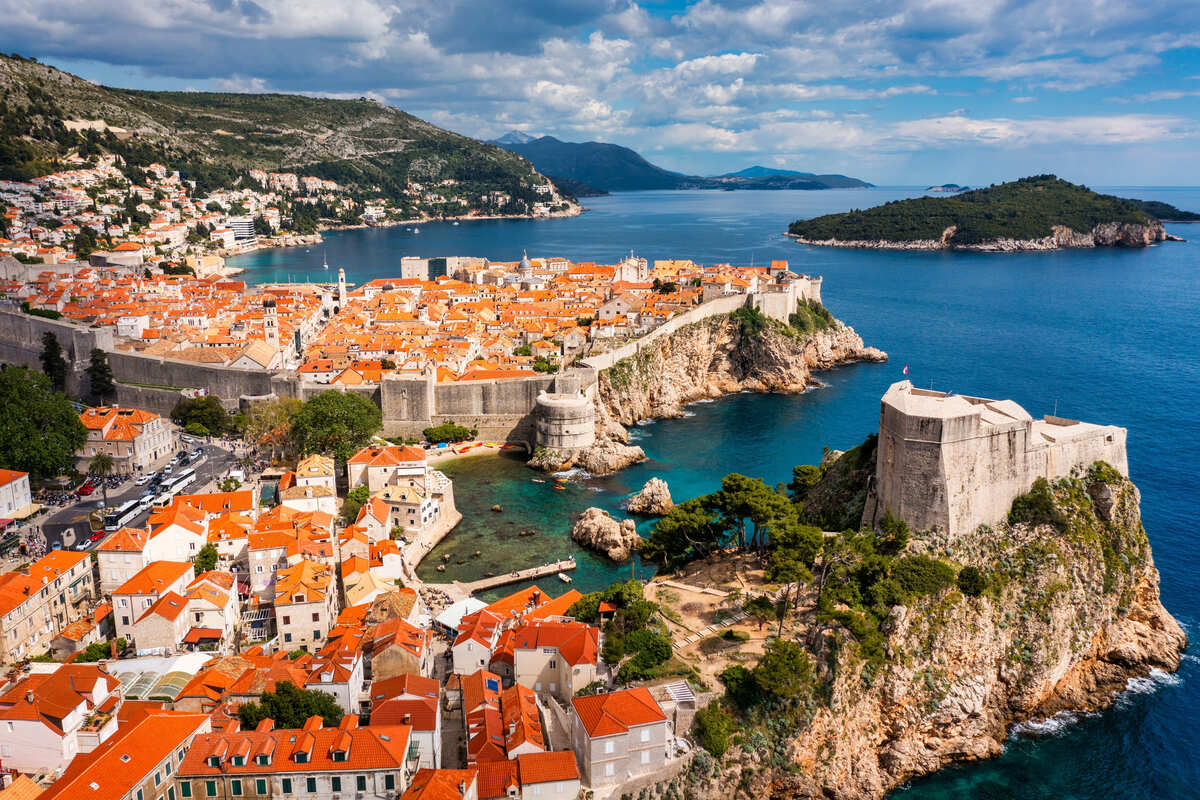
While cities like Barcelona are actively cracking down on visitors, to the point locals chase after them with water pistols and every 5 metres you’re met with a ‘Tourists Go Home’ sign, pretty little Dubrovnik, over in sun-drenched Croatia, still welcomes us with open arms.
Yes, it’s equally touristy, and no, it’s no longer the under-the-radar gem it once was in the early 2000s, maybe, but at least you won’t feel as if you have to tiptoe around simmering local resentment, nor constantly fear getting pickpocketed when you should be enjoying dinner:
Europe’s Prettiest Coastal Medieval Town
Tucked away on Croatia’s southern Dalmatian coast, Dubrovnik has risen to fame in recent decades as the real-life version of King’s Landing, the fictional Westerosi capital in the HBO hit series Game of Thrones.
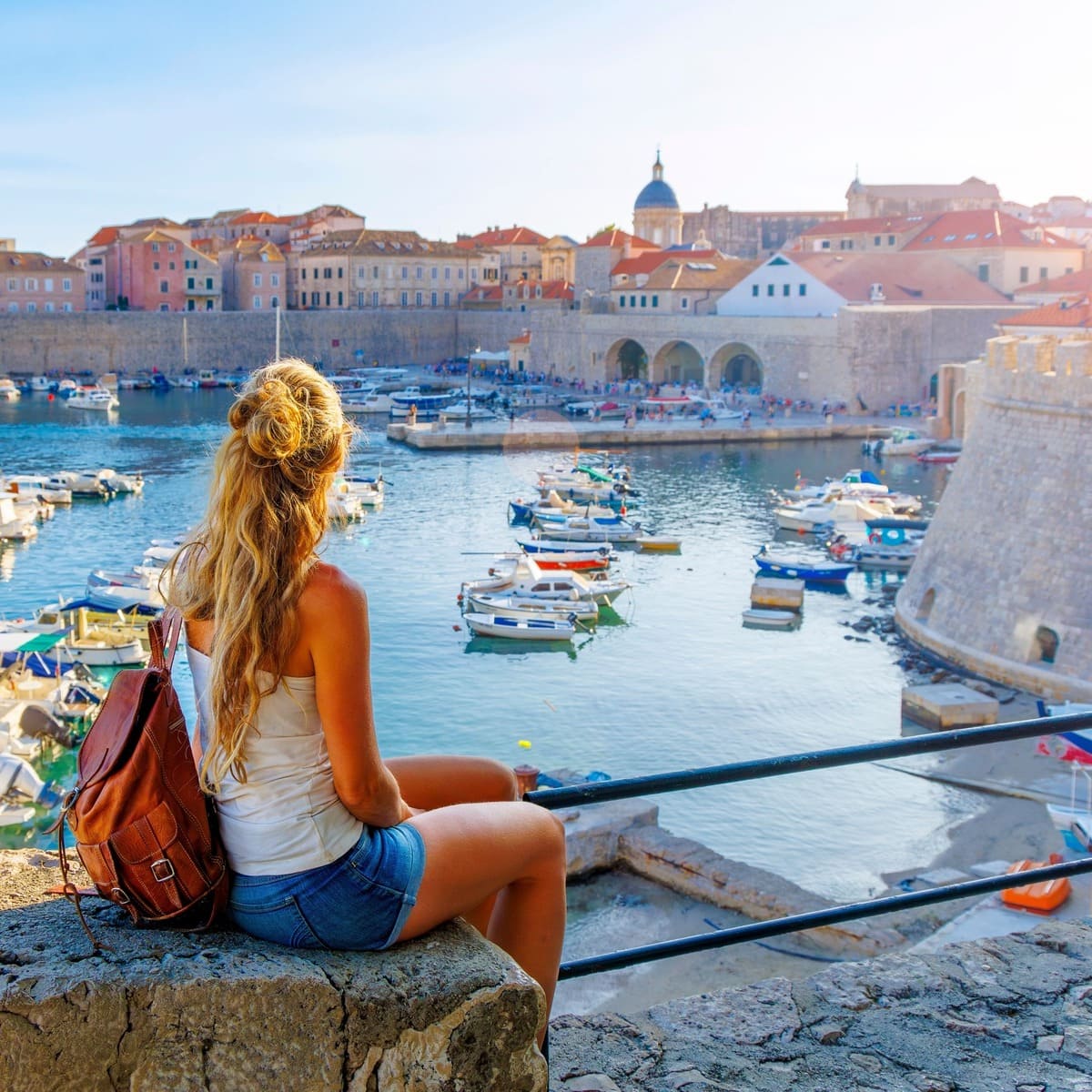
Beyond just the surface-level fanfare, retracing Cersei’s ‘Walk of Shame’, and all that dragon lore, however, this is a proud, cultural heavyweight of a port town with a rich history stretching back nearly 1,400 years.
Actual history, not a mere figment of George R. R. Martin’s imagination.
Since summer 2021, Americans have been able to fly nonstop from Newark (EWR) to Dubrovnik (DBV) with United throughout summer and well into fall.
This year, the final Newark departure is scheduled for October 23, with the last return from Dubrovnik on October 24, so you still have a good three weeks to make that Transatlantic hop.
Everything You Need To Know About United’s Newark–Dubrovnik Flights
- Flight numbers: UA385 outbound and UA386 returning
- Frequency: up to daily during peak summer, with around five weekly departures during much of October
- Aircraft: Boeing 767-400ER
- Cabins: Polaris Business, Premium Plus, Economy Plus, and standard Economy
- Flight time: around 9 hours eastbound and just over 10 hours returning
- Final 2026 departures: October 23 from Newark and October 24 from Dubrovnik
- Average nonstop return fares: roughly $980–$1,600 in Economy, depending on your dates
Before you board that Europe-bound this fall, make sure you check the entry and stay regulations that apply to U.S. passport holders.
As of this fall, Schengen countries, including Croatia, are formally fingerprinting and capturing facial images from American visitors when they first cross an external border, with subsequent entries and exits logged electronically.
Check whether your destination is affected on the Entry Requirement Checker.
This Is One Of The Most Crowded Places In Europe—Why Is Still Worth Visiting?
Dubrovnik is the modern-day heir to the ancient Republic of Ragusa, an independent maritime city-state that used to punch well above its weight on this side of the Adriatic.
Once a wealthy medieval trading power, it was battered and rebuilt countless times over the years. It’s survived earthquakes, fires, and even military sieges as recently as the 1990s.
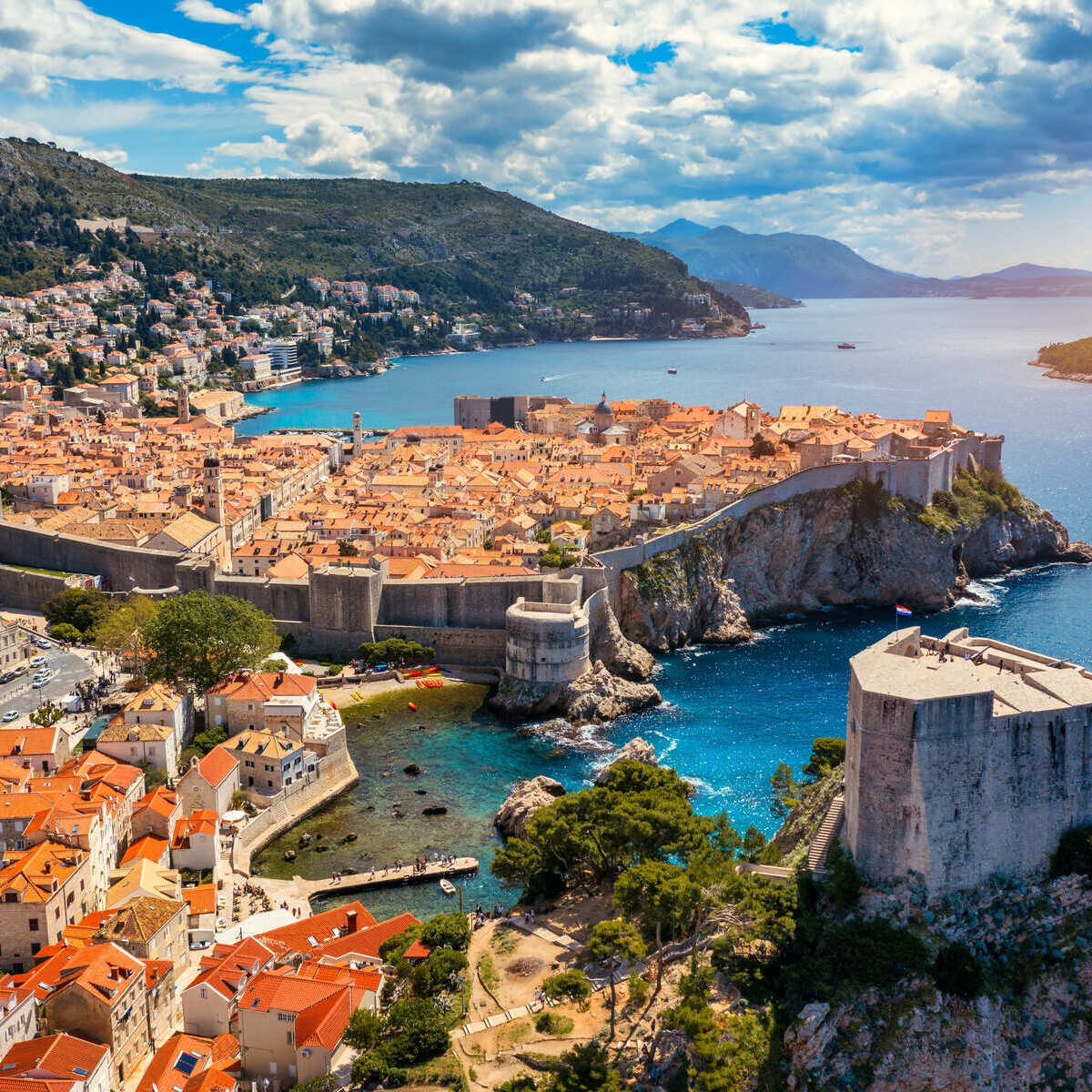
Remember the Yugoslav Wars? Yep. Dragons never flew over Dubrovnik and burned its terracotta roofs to the ground, but Yugoslav artillery did shell the Old Town during the 1991 Siege of Dubrovnik.
Yes, it’s crowded, and you barely have breathing room in August—luckily things get just about manageable in October—but you’ll never find a medieval coastal city this mythical.
A maze of ocher-coloured buildings, punctuated with Baroque palaces and Gothic churches hither and thither, it is one of a handful of European cities still entirely surrounded by sturdy stone walls.
Not some ruined bits of wall that somehow stood the test of time, but fully intact ramparts, towers, gates, and bastions encircling the entire Old Town. You can walk the full 1.2-mile extent of them as well, if you’re willing to pay the roughly $45 fee.
How To Make The Most Out Of Your Dubrovnik Trip This Fall
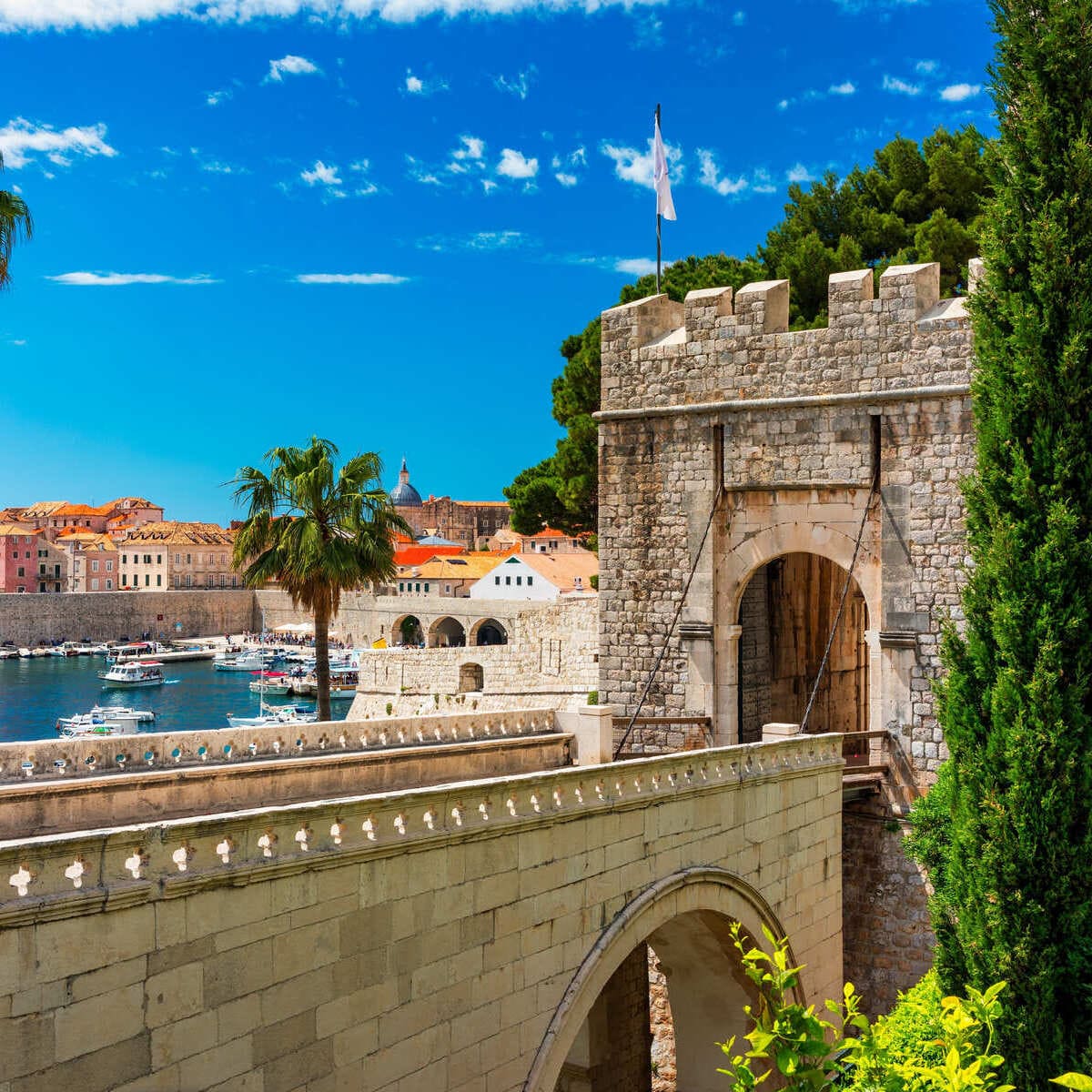
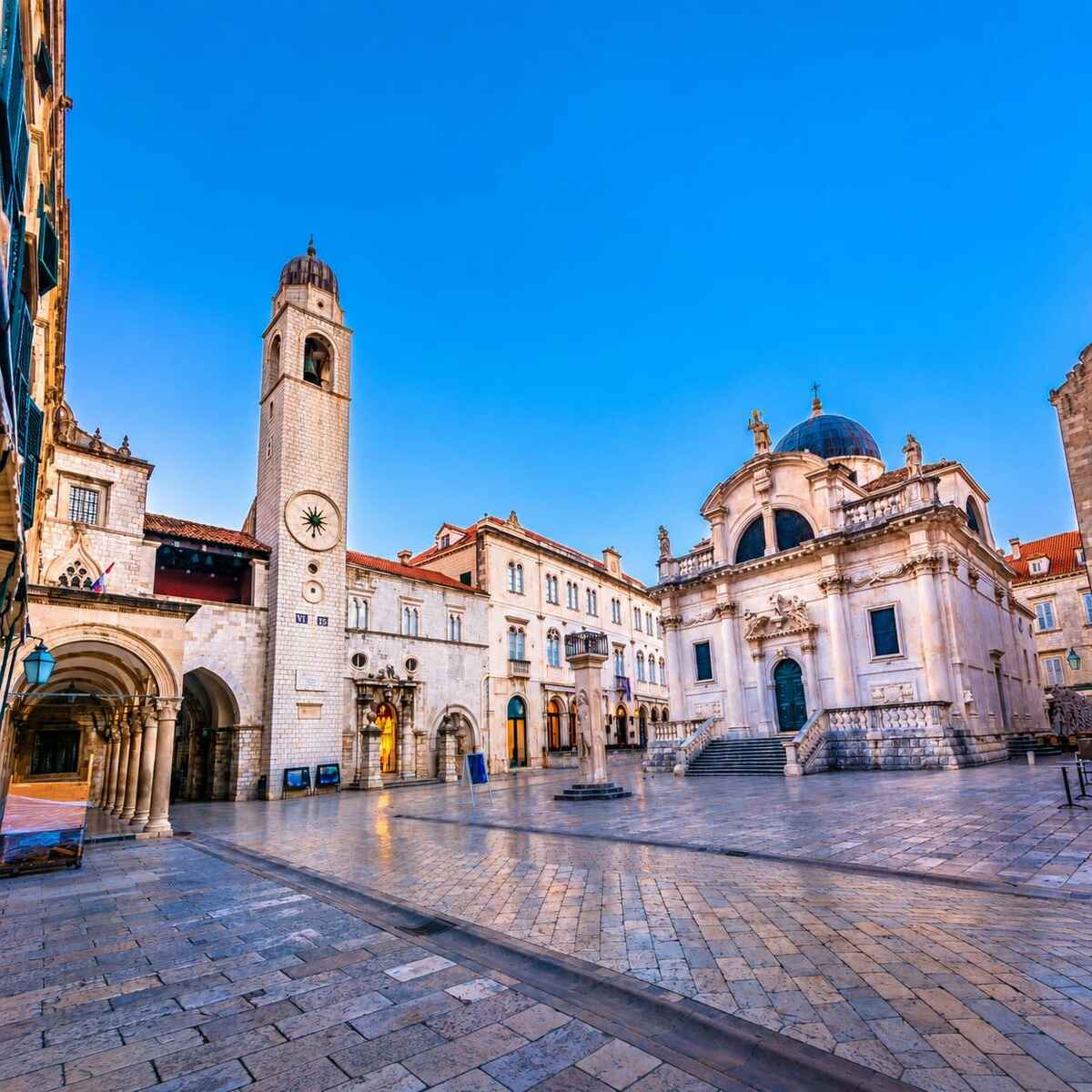
If you’re unsure where to start, the marble-paved Stradun is a good-enough starting point:
Its name derives from the Venetian stradone, literally ‘big street’, and it runs past souvenir shops and stately Baroque façades, linking Pile Gate in the west with Luža Square and Ploče Gate beyond on the eastern edge of town.
There are several steep alleys and stone staircases moving uphill from here, and no matter where you turn, whether it’s up the ‘Walk of Shame’, which is actually called the Jesuit Steps, or steep Boškovićeva Street towards Buža Gate, you’ll eventually hit a solid chunk of fortress wall.
This is that real Old World stuff you’ve been promised, and cities like Berlin, London, and Milan, with all their sleek, glass-clad high-rises, never fully delivered.
Top 10 Landmarks In Dubrovnik, Croatia

- City Walls: a complete 1.2-mile circuit overlooking terracotta roofs and the Adriatic
- Stradun: Dubrovnik’s polished, medieval-era main street
- Rector’s Palace: the Gothic-Renaissance former seat of the now-defunct Republic of Ragusa
- Sponza Palace: elegant Renaissance palace housing Dubrovnik’s historic archives
- Dubrovnik Cathedral: that one grand Baroque church in the scene
- Franciscan Monastery: a picturesque medieval cloister with a pharmacy dating back to 1317
- Church of St. Blaise: a quietly-charming Baroque shrine dedicated to Dubrovnik’s patron saint
- Jesuit Steps: the stunning staircase made famous by Cersei’s Walk of Shame
- Fort Lovrjenac: the mighty clifftop fortress that stood in for the Red Keep in Game of Thrones
- Mount Srđ: best panoramic viewpoint over Old Town Dubrovnik and its surrounding islands
Why Should You Visit In The Fall?
Not only is it far less crowded than summer, with the worst of the beach-season rush gone and cruise-ship pile-ups easier to dodge if you time it right, but locals are actually welcoming.
What can we say? Unlike Barcelona’s angry residents, they still love the influx of money here.

There isn’t a single anti-tourist slogan splattered across the Old Town walls, and in recent years of Dubrovnik surging as a major European getaway, it has not seen the visitor-targeted mass protests now associated with Spain.
I’m not gonna sit here and pretend that Dubrovnik is the most authentic, lived-in town you can visit in Croatia—if cheaper prices and relative anonymity are what you’re after, try Pula or Zadar—but it is still genuinely friendly towards guests.
Compared to Barcelona’s crackdown on short-term rentals and the hostile antics of some Catalan protesters, Venice’s new ticketing system targeting day-trippers, and Rome’s rapidly spreading paywalls—even getting close to Trevi Fountain now costs money—Dubrovnik’s caps on cruise arrivals and on-the-spot fines for visitors who get too raucous after dark seem mild.
What I’m trying to say is, Dubrovnik is by no means a less crowded alternative. It is perhaps as busy and jam-packed as the aforementioned hotspots.

That said, at least you’re not dealing with the the hostility and outright rudeness of frustrated locals, on top of the shoulder-to-shoulder chaos.
Then there’s the fact it’s an incredibly safe city for Americans to visit:
Note From The Editor
Just one sec! If you enjoy reading great human-written articles, the best way to see a few more is to follow us on Google so we become one of your preferred websites. Thank you so much for reading. Now back to the story!
Dubrovnik Is The Safest Mediterranean Destination
Croatia remains a Level 1 destination under the U.S. Department of State’s travel advisory system, meaning Americans are advised merely to exercise normal precautions.
As for Dubrovnik specifically, it was recently crowned Europe’s safest destination.
Violent crime involving tourists is uncommon, and Dubrovnik’s main risk is opportunistic pickpocketing around crowded spots such as Stradun. Keep your bag zipped and your phone out of your back pocket, but there’s no need to spend your trip anxiously looking over your shoulder.

The Old Town is busy and well-lit long after dark, and solo travelers generally report feeling comfortable walking around. The polished limestone gets dangerously slippery when it rains, though, so your footwear may pose a bigger threat than local criminals.
This is truly a small city that just happens to be serviced by an international airport, and it’s done a remarkable job at keeping those big-city headaches of street crime and rampant pickpocketing at bay.
On the Travel Off Path Traveler Safety Index, recent visitors have given Dubrovnik a score of 85 out of 100, a certified-safe result for such a busy, incredibly popular Mediterranean destination.
Beautiful Beaches Just Outside The Town Walls
Dubrovnik also sits on the southern coast of Croatia, where the country stretches itself so thin it’s barely a sliver of land wedged between the much-larger Bosnia and Herzegovina and the turquoise Adriatic.
You know what that means?
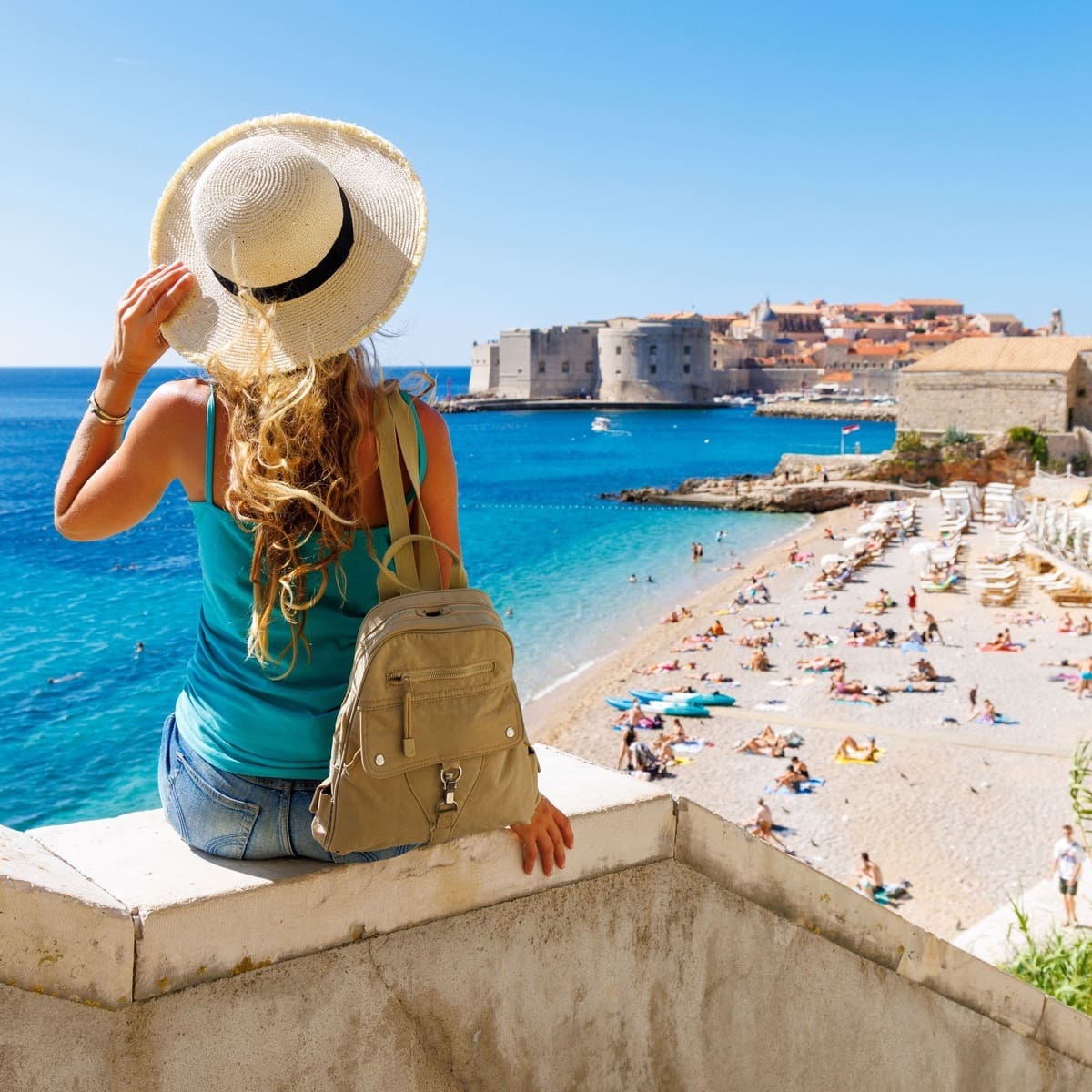
Whether you’re staying in the Old Town, or the smaller, cheaper resort town of Mlini nearby, you’re never farther than a short 20-minute drive from the most stunning pebbly beaches.
Dubrovnik itself is home to Banje Beach, arguably the most scenic municipal beach in Europe: a goldish strip of sand and fine pebbles pressed right up against the Old Town walls.
You can quite literally float in the turquoise sea while never losing sight of the stone ramparts, terracotta roofs, and church domes.
If you’re not opposed to day trips, a blink-and-you’ll-miss-it, 10-minute boat ride from Dubrovnik’s Old Port will take you to Lokrum, a lush, forested oasis lying roughly 0.4 miles offshore.
Back in the Middle Ages, this was home to Benedictine monks. These days, it’s mostly a car-free nature reserve and day-trip playground for Dubrovnik guests.

Wanna see a smaller, pocket-sized Dubrovnik in island form?
Korčula is a historic island lying roughly 75 miles northwest of Dubrovnik—the ferry there takes around 2 hours—and it, too, has a fortified medieval town straddling the Adriatic, on top of untamed beaches and cute seaside villages to explore.
Plus, local legend claims it as the birthplace of famous Venetian merchant-explorer Marco Polo, supposedly born on Korčula while the island was entangled in Venice’s Adriatic sphere. Historians still dispute that one, mind.
Explore Croatia—And The Balkans—Beyond Just Dubrovnik
How about turning it into a multi-country adventure?
Mostar, the world-famous Ottoman ‘bridge town’ in Bosnia-Herzegovina, is roughly a 2.5-hour drive from Croatia.

If you really don’t wanna venture that far into Bosnia, you can even just squeeze in a beach day in Neum, a little over an hour away.
It is the neighbouring country’s only tiny strip of Adriatic coastline, running for just 13 miles and wedged between two sections of Croatia’s Dubrovnik-Neretva County.
Can’t get enough of the Dubrovnik look-alikes yet?
A roughly 2-hour drive south will take you into Montenegro, which acts as an extension of the Dalmatian Coast, where you can visit the walled medieval town of Kotor, tucked deep inside a winding, mountain-framed Adriatic bay.

Tips For Visiting Dubrovnik
- Don’t stop at Dubrovnik: use it as a base for southern Croatia, Bosnia, and Montenegro (but carry your passport and confirm that your rental car is cleared for cross-border travel)
- Check the cruise schedules: DBV feels hauntingly empty without the day-trippers, so make sure you check cruise arrival times and time your Old Town visit before or after them
- Walk the city walls: a non-negotiable: go at opening time or late afternoon to avoid the crowds
- Arrive early at Buža Bar: this is a cliffside bar reached through a gap in the walls, and they don’t take reservations usually, so rock up some 90 minutses before sunset to get a good spot
- Stay outside the Old Town: comparable rooms in Lapad, Gruž, or Mlini can cost roughly 30–40% less during fall
- Don’t waste the Dubrovnik Pass: the one-day version costs about the same as the walls alone and includes museums and unlimited access to public transport
Enter your email address to subscribe to Travel Off Path’s latest travel news, straight to your inbox
