
Not Rome and its world-famous Colosseum, not Athens with the millennia-old Greek ruins bestriding Acropolis Hill, and certainly not Paris where basically everything pre-Revolution has been torn down or remade in Haussmann fashion:
Europe’s most ancient city, with over 8,000 years of continuous history, is actually located in Bulgaria:
Unless you’re a devoted Europhile, or faithful Travel Off Path reader, chances are you’ve never heard of Plovdiv, but it just happens to be one of the Old Continent’s top-ranked cultural behemoths… even though it’s barely cracked the niche Balkan travel bubble.
The European Gem You’ve Been Sleeping On For Far Too Long
Bulgaria as a whole is already a pretty offbeat destination for most people, especially Americans.
Those who do go will end up limiting their stay to Sofia, the national capital, which doesn’t really leave a lasting impression unless you’re into the whole post-commie, Brutalist schtick, or Nesebar, a postcard-perfect walled peninsula on the Black Sea.
Plovdiv is a little out of the way regardless of your Bulgaria point of entry. From Sofia, it can take 2h30 to get there with the painfully slow train, and if you’re approaching it from Varna, Bulgaria’s main coastal hub, you’re looking at a dreadfully long 7-hour ride with multiple stops, and likely a change or two.
This already filters out a majority of casual visitors, and most definitely the Black Sea’s daytime drinkers and stag-do weekenders.
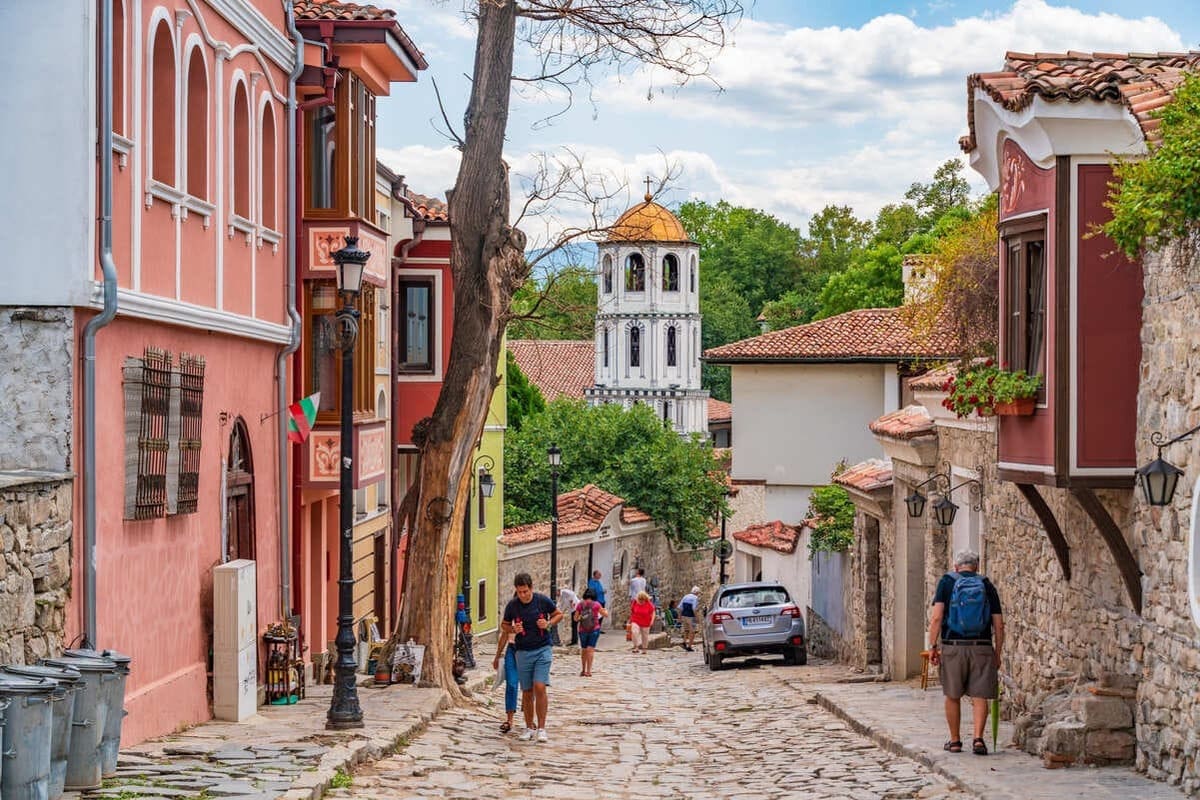
Those who do end up coming to Plovdiv are after one thing, and one thing only: soaking up all its ancient charm without as much as rubbing shoulders with the usual European crowds.
Bulgaria is part of the Schengen Area, and it requires Americans to get fingerprinted upon entering from outside Europe.
Before you fly to Europe this summer, make sure you check the travel rules that apply to Americans on the Entry Requirement Checker.
This Is Europe’s Oldest Continuously-Inhabited City
Plovdiv is distinguished for being Europe’s oldest continuously inhabited city, with a recorded history spanning 8 millennia. This means that, for the last 8,000 years, there’s been some sort of human settlement in this area, without breaks.
Just so you know, Athens, the city many people mistakenly believe to be Europe’s oldest, wouldn’t develop until 3,000 years following Plovdiv’s initial founding.
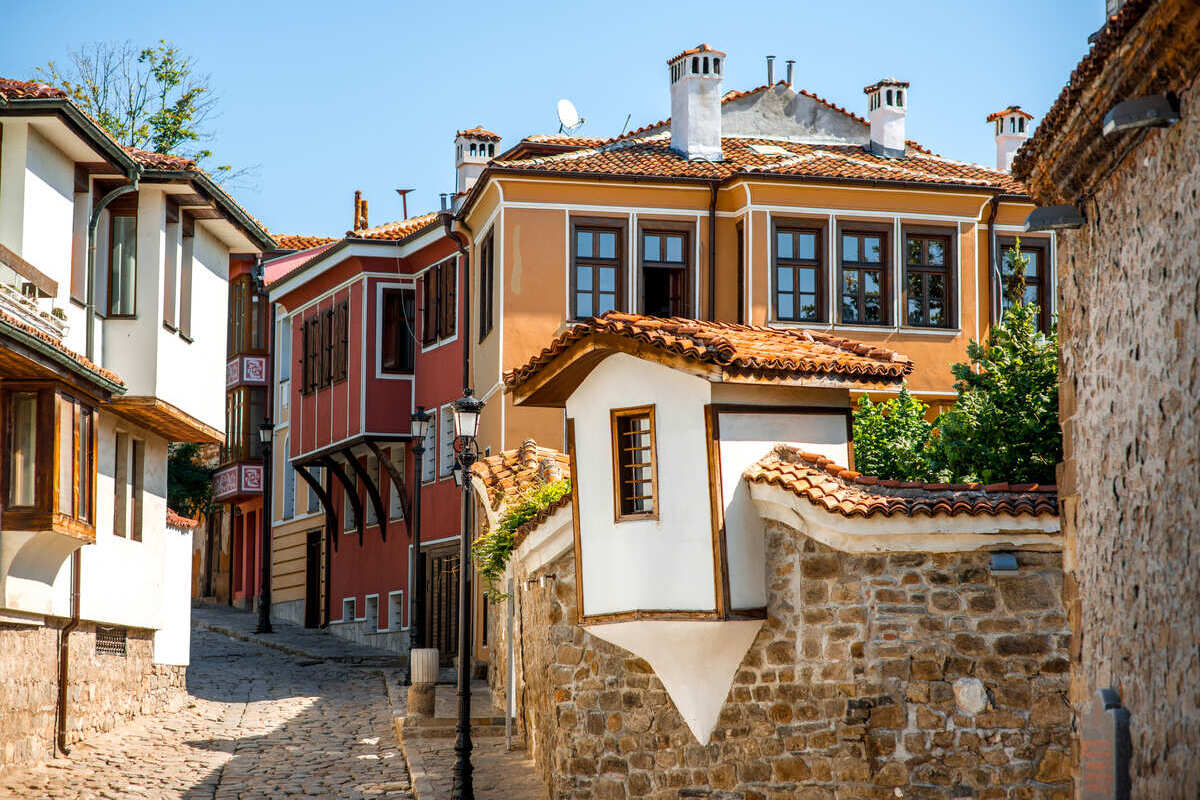
It doesn’t mean the city you see today dates back to that primeval period, mind you, but it does say something about all the multiple layers stacked together that make Plovdiv what it is.
Perhaps the most visible ‘Plovdiv era’, if you will, is the Greco-Roman:
The present town is built on top of a number of much-older Greek or Roman structures. The main thoroughfare itself, the buzzing Glavnata, lined with commercial centers and coffeeshops, stands atop a literal Roman stadium, and you can clearly see bits of it exposed hither and thither.
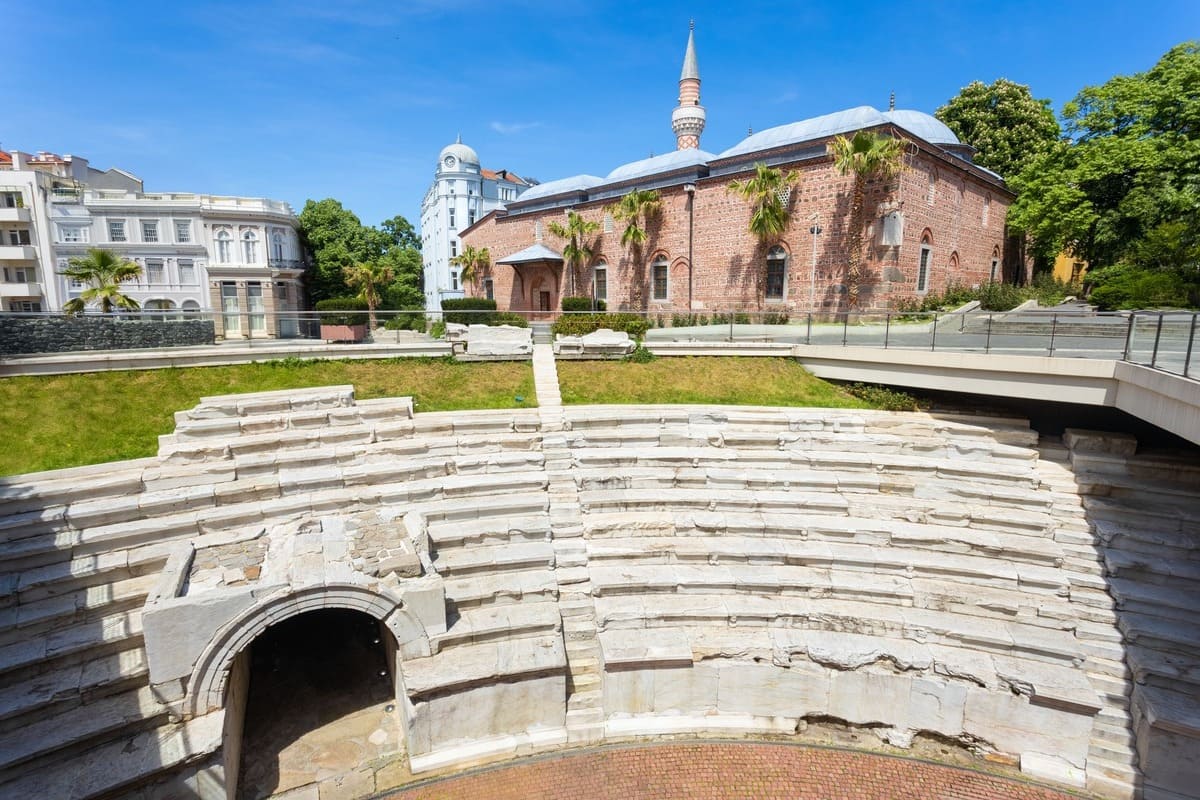
The ‘hole’ at Dzhumaya Square is actually an archaeological excavation. You’re standing at today’s street level, looking down several meters to the original Roman ground level, and at the exposed stadium curve.
If you stop by the H&M store, you can even see actual marble seats if you go below ground level.
Not Italy. Not Greece. Bulgaria.
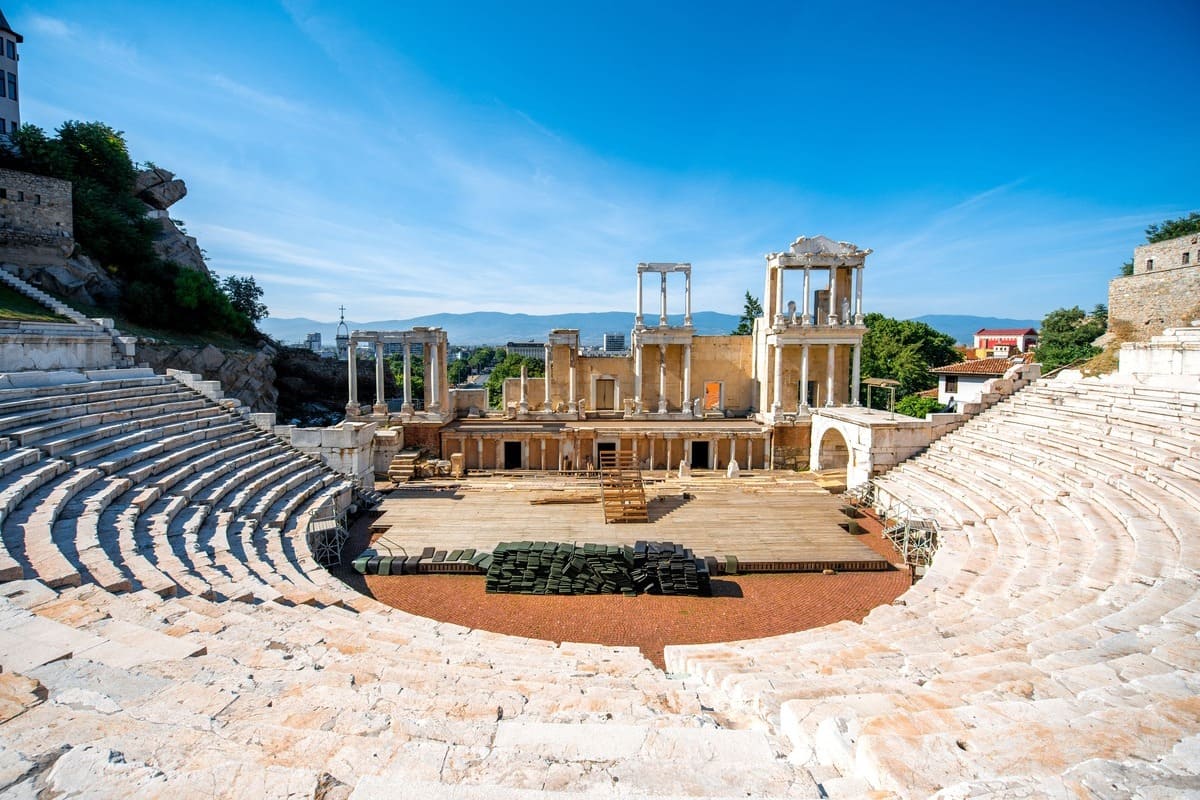
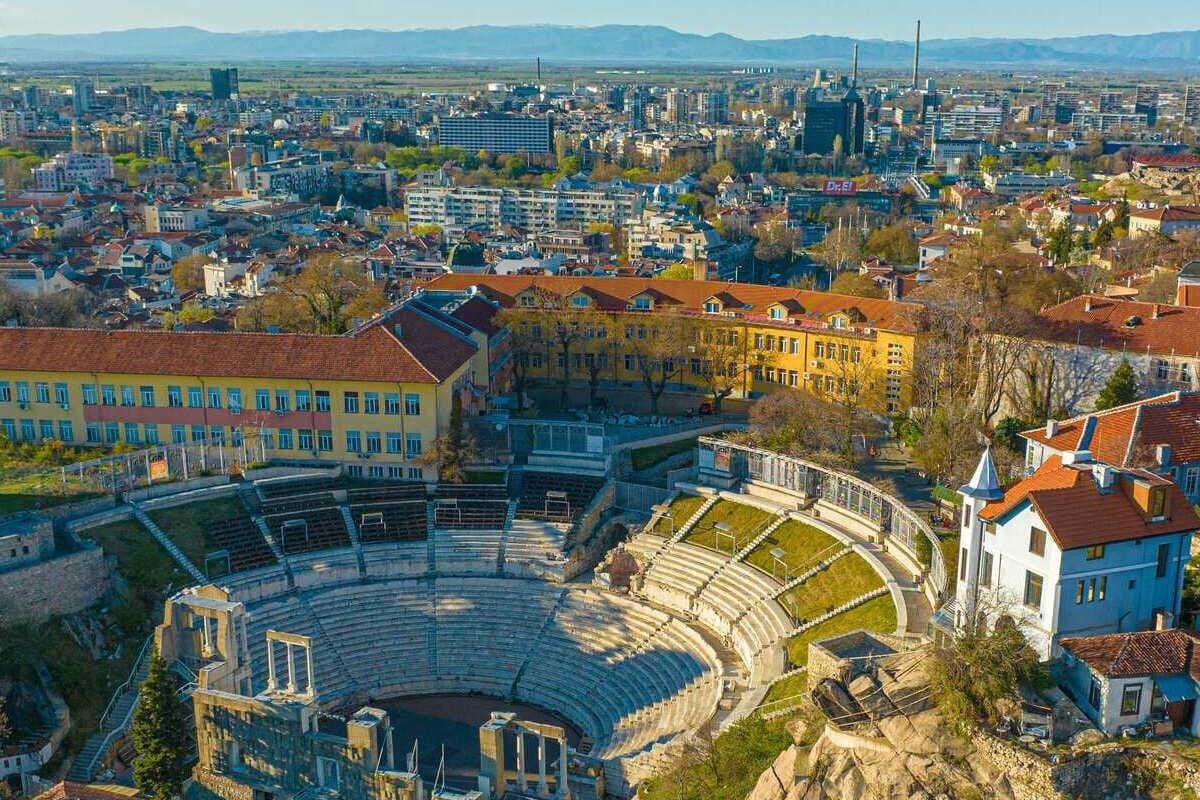
Plovdiv’s most famous ancient landmark, however, is the Ancient Theatre of Philippopolis. That’s the town’s name during Roman times, by the way.
It’s one of the world’s best-preserved Roman theaters, with much of its elliptical shape preserved, and a beautifully reassembled main stage, all dating back to the late 1st century AD. It seats around 7,000 spectators, and the cool part is that it hosts concerts and operas still to this day.
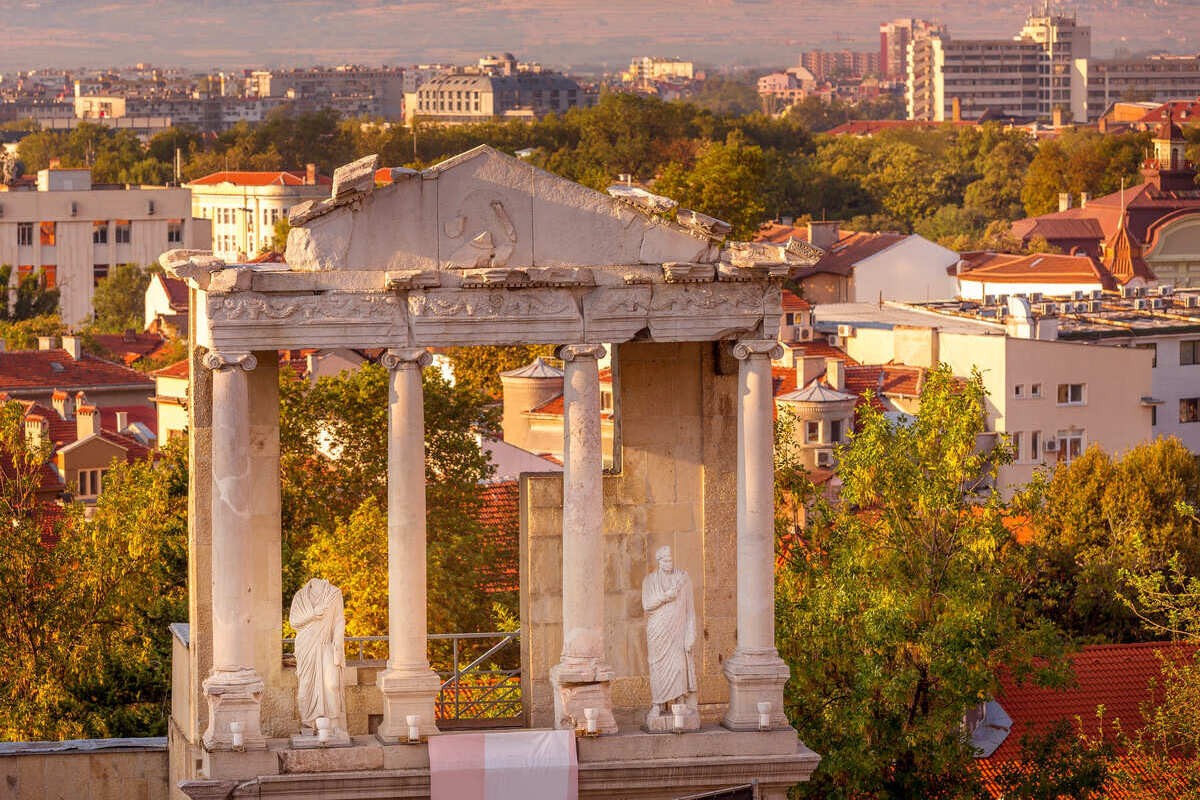
Over in the Roman Forum, you can walk through what used to be Philippopolis’ political and commercial heart. Think marble-paved squares, original Roman roads flanked by towering colonnades, and the faint outlines of 2,000-year-old shops.
Contrary to Rome, however, Plovdiv won’t leave a burning hole in your wallet after a short 3-day stint there.
It’s one of the cheapest city breaks across the pond. Crazy as it might sound, it can be up to 70% cheaper for restaurants, and 60% cheaper for accommodation compared to your average Western European hub:
Average Prices In Plovdiv, Bulgaria In 2026
- Budget accommodation: $35–60/night
- Mid-range accommodation: $70–120/night
- Luxury accommodation: $140–250+/night
- Budget traveler: $45–60/day
- Mid-range traveler: $90–160/day
- Luxury traveller: $250+/day
- Inexpensive restaurant meal: $8–12
- Three-course meal for two: $35–55
- Cappuccino: $2–3
- Local beer: $2–3
- Glass of local wine: $3–5
- Street food: $3–6
- Public transport: $0.60 per ride
- Taxi: $0.80–1.00 per mile
It sits among the cheapest major historic cities in the European Union to visit, largely thanks to Bulgaria’s lower cost of living. Just so you know, the minimum wage there is $714-a-month.
Plovdiv Is Among The Safest Cities In Europe
On top of being affordable, Plovdiv is extremely safe:
- Smaller city atmosphere: with around 300,000 residents, it is large enough to have a city feel but small enough that it lacks the anonymity and intense street crime found in European metropolises
- Low levels of violent crime: Bulgaria as a whole has very low rates of violence, ranking Level 1 for safety as per the U.S. Department of State guidelines. This means Americans may exercise ‘normal precautions’
- Strong social networks: Bulgarian cities at Plovdiv’s level tend ot have close family and community ties. People often know their neighbors well, which inevitably creates an informal social control
- Heavy police presence: the Old Town, the bar-packed Kapana district, and the entire pedestrian center are well monitored, and even the aggressive nightlife culture associated with the Balkans feels tamed
On the Traveler Safety Index, a tool based on recent traveler reports to measure safety levels across different destinations worldwide, Bulgaria scores an impressive 89/100:
The main issues here?
The occasional, inoffensive catcall if you’re a woman, perceived discrimination, especially among non-European travelers, and non-violent pickpocketing, though the latter is quite infrequent.
Plovdiv Beyond Roman Times
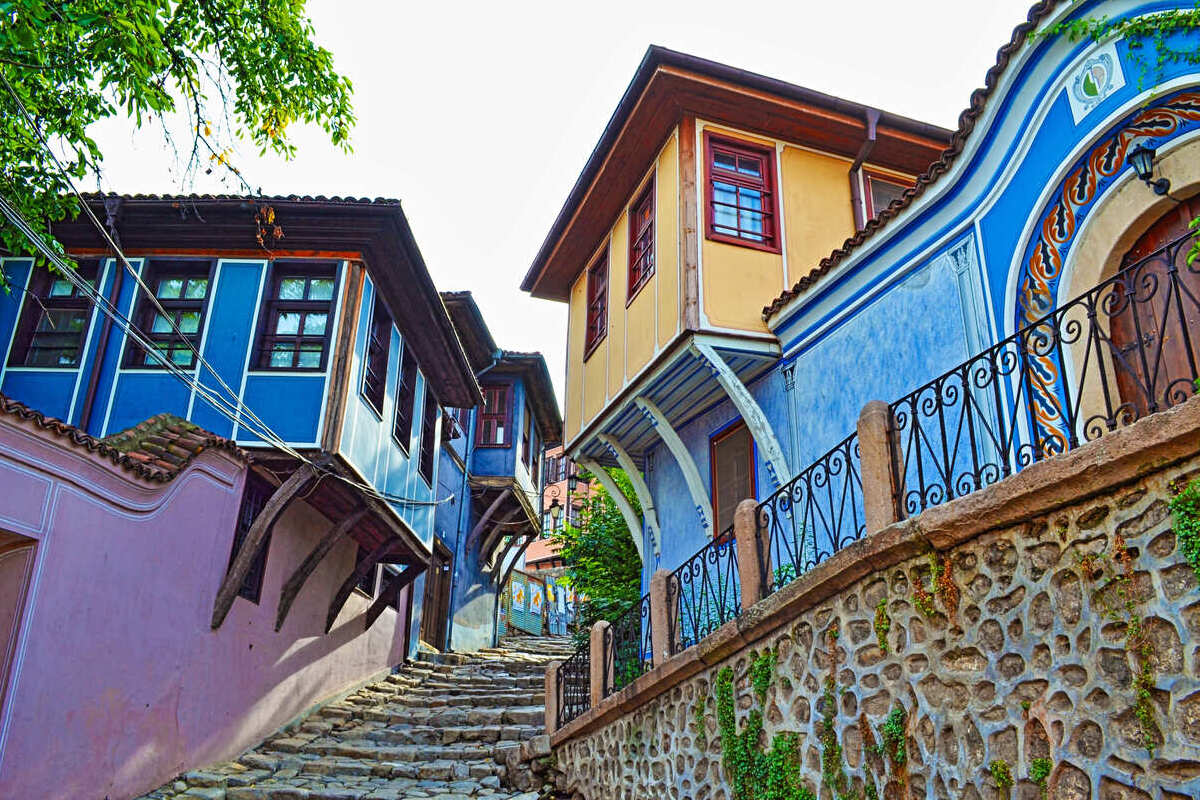
The Roman period is truly fascinating, but it’s far from being Plovdiv’s only manmade wonder on offer. Remember, prior to the Romans colonizing it, it was already a settlement for 6,000 years.
Up Nebet Tepe, a prominent hill overlooking Plovdiv Old Town, you’ll find prehistoric remains dating back to around 4,000 BC, and even evidence of habitation on the hillside from as early as the 6th millennium BC.
Think massive Cyclopean stone walls, built from enormous unmortared blocks, some of which still survived into our era.
At one point, Plovdiv was also… Turkish!
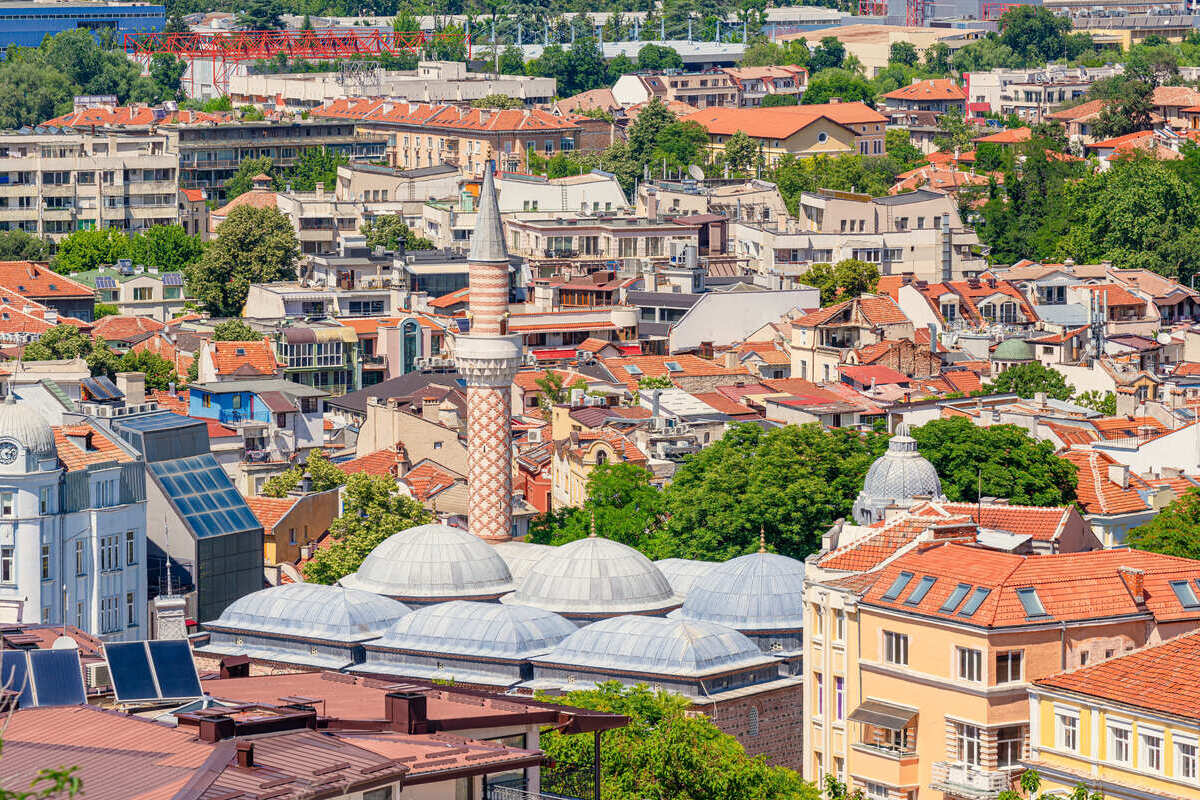
The Ottomans occupied Bulgaria, as well as the wider Balkan peninsula, for much of the Middle Ages, and in the very center of town, the 15th-century Dzhumaya Mosque is a clear reminder of Plovdiv’s once-Muslim inclinations.
Sahat Tepe, equally built by the Ottomans, is one of the oldest clock towers in the Balkans. The current structure dates mainly from the early 19th-century, when it was remodeled under Ottoman rule, and some of the older locals here still use it to regulate daily life.
Real Old World stuff.
