
Unless you’ve been living under a rock in recent months, chances are you’ve heard of Europe’s new, and frankly, pretty controversial Entry/Exit System (or EES).
Designed to track overstayers in the Schengen Area, it now requires Americans to provide fingerprints and other biometrics upon arrival in Europe, and people aren’t exactly thrilled about it for a whole range of reasons.
Some argue it’s overly intrusive and not really justified, especially when most overstayers aren’t Americans flying in for short vacations anyway. Others are just scratching their heads at the absolute mess that European airports have become.
More than usual, at least.
Now, instead of just walking up and showing a passport, Americans are being directed to first join a queue, register at an EES kiosk, enroll in the new system, and only then proceed to the actual passport control.
From snaking lines in Portugal, where travelers have missed connecting flights despite arriving hours early, to road bottlenecks between Bosnia and Croatia, the rollout of EES has been anything but smooth.
If you think it’s bad now, wait until you see how bonkers it will get come July.
What most travelers don’t realize, however, is that there are still two gorgeous beach destinations across the pond where these new restrictions don’t apply. In other words, you can still travel under the old rules:
Montenegro
A small country straddling the Adriatic Sea, just south of tourism powerhouse Croatia, Montenegro is bound to see its popularity surge in the next few months. For starters, it’s still considerably cheaper and less crowded than your average Southern European hub:
An overnight stay in the Montenegrin Riviera averages $50–$120 a night, and if you were ever left traumatized by the absolute gongshow that places like Dubrovnik and Amalfi have been reduced to, you’ll be glad to hear that small, fairytale towns like Perast or Budva still feel surprisingly peaceful.
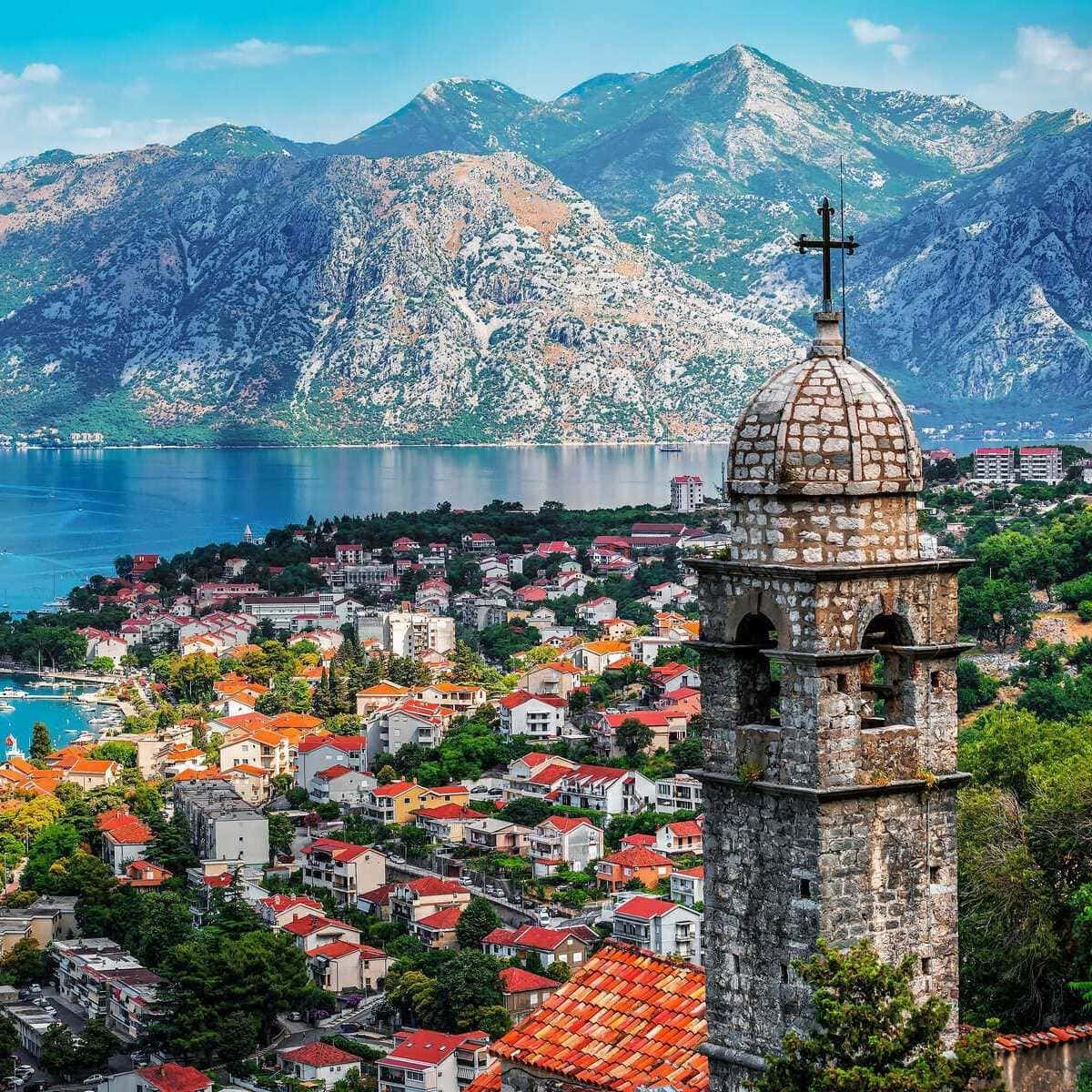
Even Kotor, the number one destination in Montenegro, oftentimes dubbed a ‘mini Dubrovnik’, sees fewer crowds despite the occasional cruise ship finding its way around to the neighboring bay.
Think cobbled lanes, stunning Romanesque belfries, and ancient stone houses like you usually see in period dramas, except it hasn’t been ruined by HBO yet.
The fact that the whole of Montenegro is served by only two small airports helps keep it pretty low-key. There’s one in Podgorica, the country’s inland capital, hosting flights from only about 20+ European cities, and an even smaller one at Tivat, near the coast, which is heavy on summer-only charters.
When it comes to safety, Montenegro is one of Europe’s most stable destinations right now.
According to the U.S. State Department, it is officially a Level 1 destination, meaning Americans aren’t discouraged from going and may exercise normal precautions, and based on the Traveler Safety Index, a majority of visitors has reported feeling safe while visiting in recent months:
If you’re flying to Europe in the near future, make sure you verify the safety advice that applies at your specific destination using the Travel Advisory Checker.
What Are The Rules For Visiting Montenegro This Summer?

Why are Americans exempt from fingerprinting and all the usual EU shambles entering Montenegro, you ask? Well, Montenegro isn’t yet an EU member, of course!
Though it’s on track to become one by 2028, the Adriatic jewel remains outside the Brussels-controlled sphere… for now. This means U.S. passport holders do not have to worry about EES, or giving their biometric data to a foreign government when landing in Montenegro.
All that is required is:
- A valid passport that won’t expire within 6 months beyond your intended travel dates
- Sometimes proof of outward or return journey (we usually recommend you have it handy)
- …and… that’s you sorted, pretty much.
Montenegro grants Americans visa-free stay, no mandatory online forms or sneaky hidden fees, and the coolest part? As it is not in the Schengen Area either, it doesn’t matter whether you’ve been to France, or Spain, or Italy, or Croatia before:
You can use up your full 90 days here regardless of time spent elsewhere in the continent.
Albania
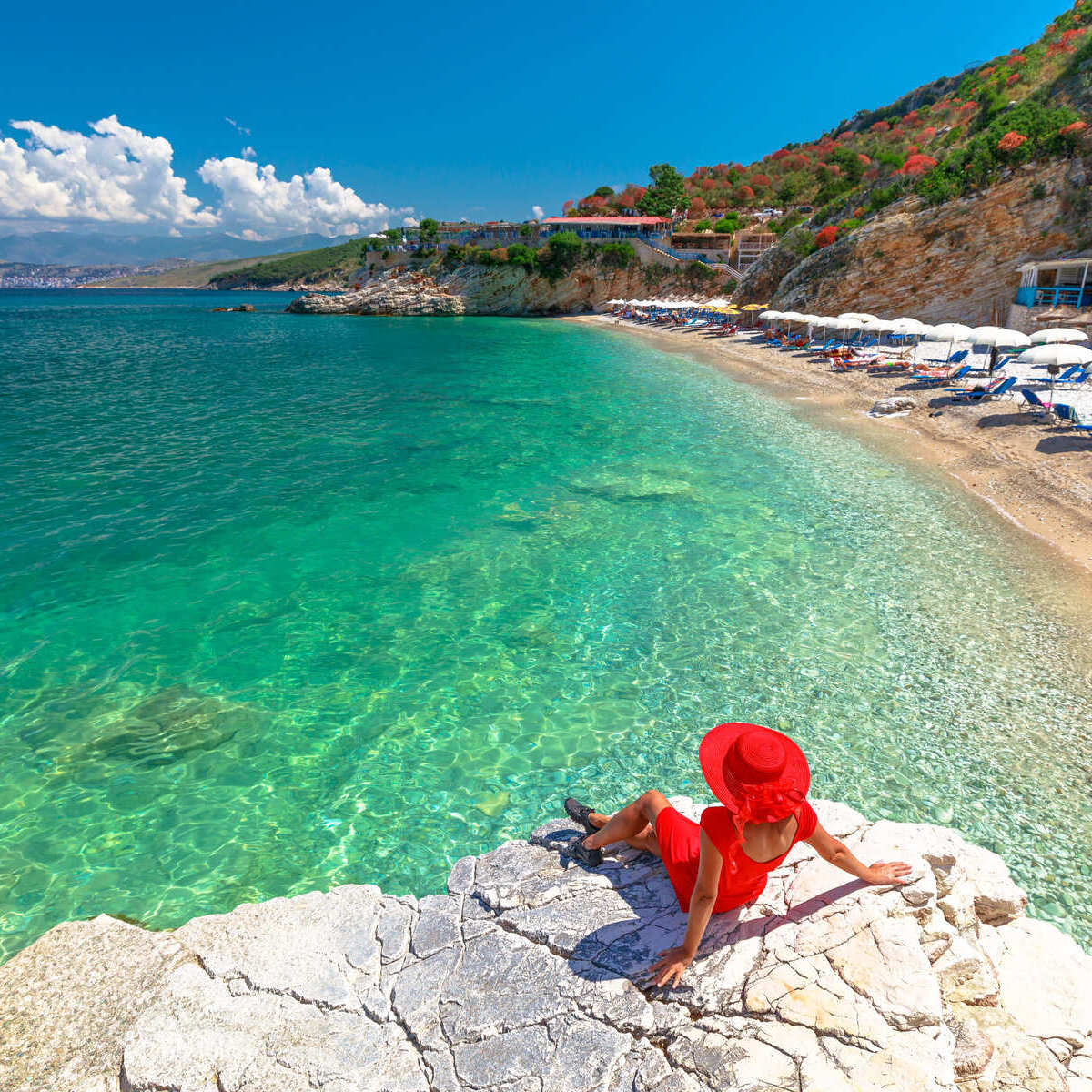
Montenegro’s southerly neighbor—are we seeing a pattern here?—Albania is known for its beautiful turquoise coastline, white-sand beaches that feel more like the Caribbean or the Maldives than Europe proper, ancient towns steeped in history, and… for being a little rough around the edges.
In a good way. Not the sketchy kind, more like “still finding its feet in Europe’. Maybe fix the potholes and tighten things up a bit and they’ll be off on their merry way towards EU integration.
Now, if you’re flying into Albania, chances are you’ll be landing in Tirana, their absolute fever dream of a capital, and probably unlike any European city you’ve been to before.
Think grandiose mosques that could belong in Turkey, vast urban parks dotted with manmade lakes, a sprawling sea of Brutalist buildings, and the odd communist-era concrete giants hither and thither. This may or may not include a soaring pyramid originally built as a monument to the former dictator.

Venture out of Tirana, though, and you’ll find a wildly different Albania. To the north, it’s all about ruined castles, hikes through the dramatic scenery of the Accursed Mountains, and hitting up remote alpine villages that barely ever get to see foreign visitors (hi, Theth).
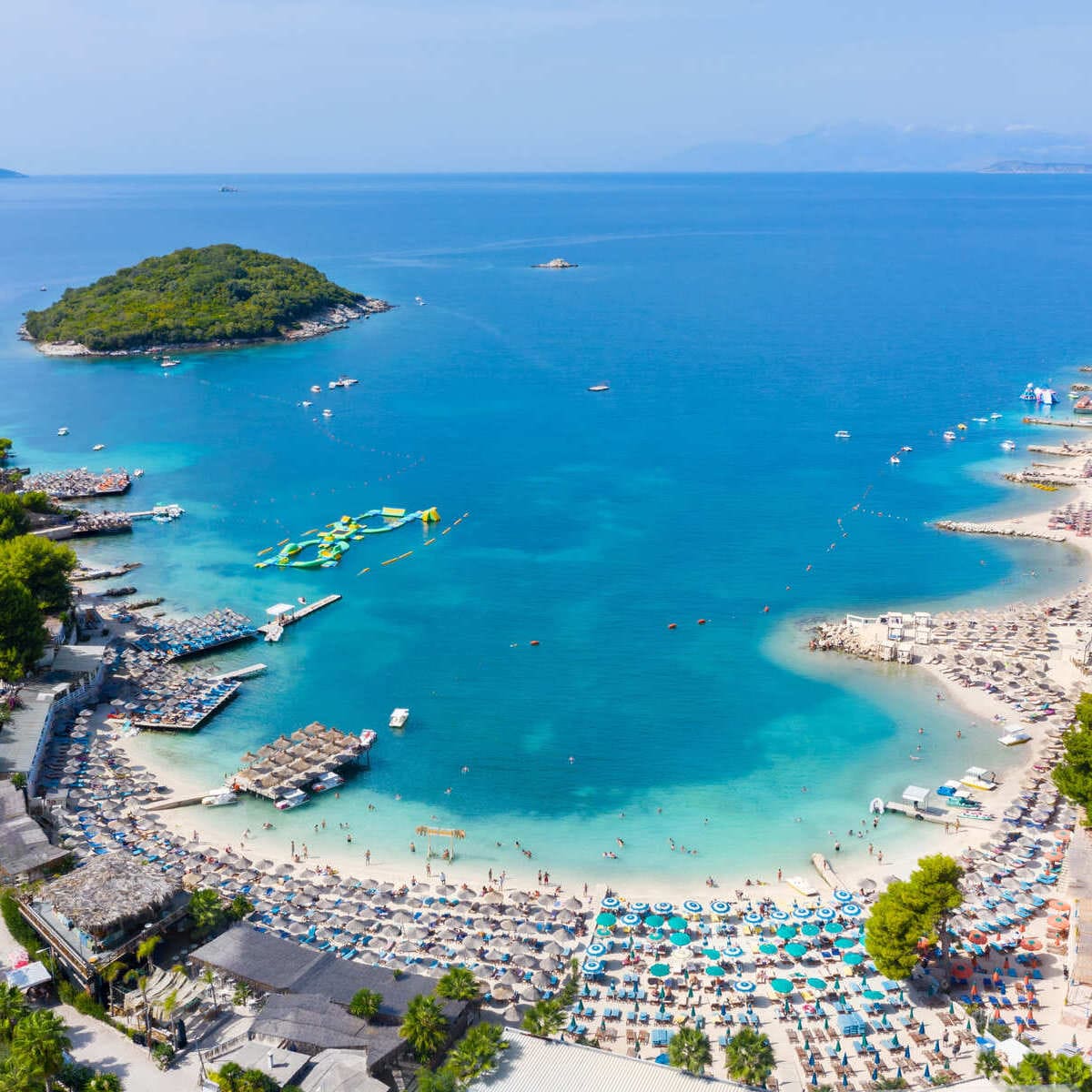
Travel south, towards places like Dhërmi and Ksamil, and it’s basically Greece minus the Instagrammer hordes, nor the hefty prices.
Skip the EES Chaos
Well, to be quite honest, Ksamil has been attracting quite the international crowd in recent years, especially since Albania went viral all over social media for its paradisiacal beaches and affordability—you just can’t beat beachfront stays from $30 knowwhatimsayin’—but it remains arguably less boujee and less flashy than Amalfi or Santorini.
If that’s your vibe, and you don’t mind sharing a tiny stretch of white sand with other budget vacationing Europeans, then by all means, go for it.
What Are The Rules For Visiting Albania This Summer?
And hey, much like Montenegro, Albania is neither in the European Union, nor the Schengen Area, and this obviously means… Americans don’t have to worry about crazy-strict travel rules when visiting! Yay.
But right, here’s the actually cool part:
You know how most countries only usually allow you to stay for 90 days tops, right? Or in the case of Schengen, 90 days across 29 countries.
It turns out Albania not only doesn’t care about what’s going on in neighboring European states in terms of tourist visa rules, they allow Americans to stay for a full, uninterupted, sweet 365 days without applying for a single permit.

You guys, why are you even bothering with eurosummer when you can practically pack your bags and relocate to Albania for a whole year? No biometric data collection, no fingerprinting upon arrival, and no Schengen day count nightmare.
Easy requirements don’t mean zero requirements, though: make sure you check off all the bulletpoints below.
- Having a passport valid for 6 months beyond intended travel dates, e.g. if you’re staying in Albania a whole year, obviously you cannot travel on a passport expiring within the next 7 or 8 months
- Having at least a full blank page
- Bringing proof of onward or return ticket (this is rarely asked for, but it’s better to have it in case the border officer’s having a bad day)
Before you travel to any country that’s not the U.S. of A, make sure you check the Entry Requirements that apply at your destination to avoid unpleasant surprises at the airport, like being denied boarding ’cause you didn’t get your documentation sorted.
