
One of the coolest things about Europe is how you can effortlessly zip across international borders as easily as crossing the state line from New York into Massachusetts.
After all, for the most part, there’s not even an actual physical barrier separating them.
I’m not gonna get into the nitty-gritty of the Schengen Area, and how great it feels to travel across 29 countries without routinely getting stopped for passport checks, however…
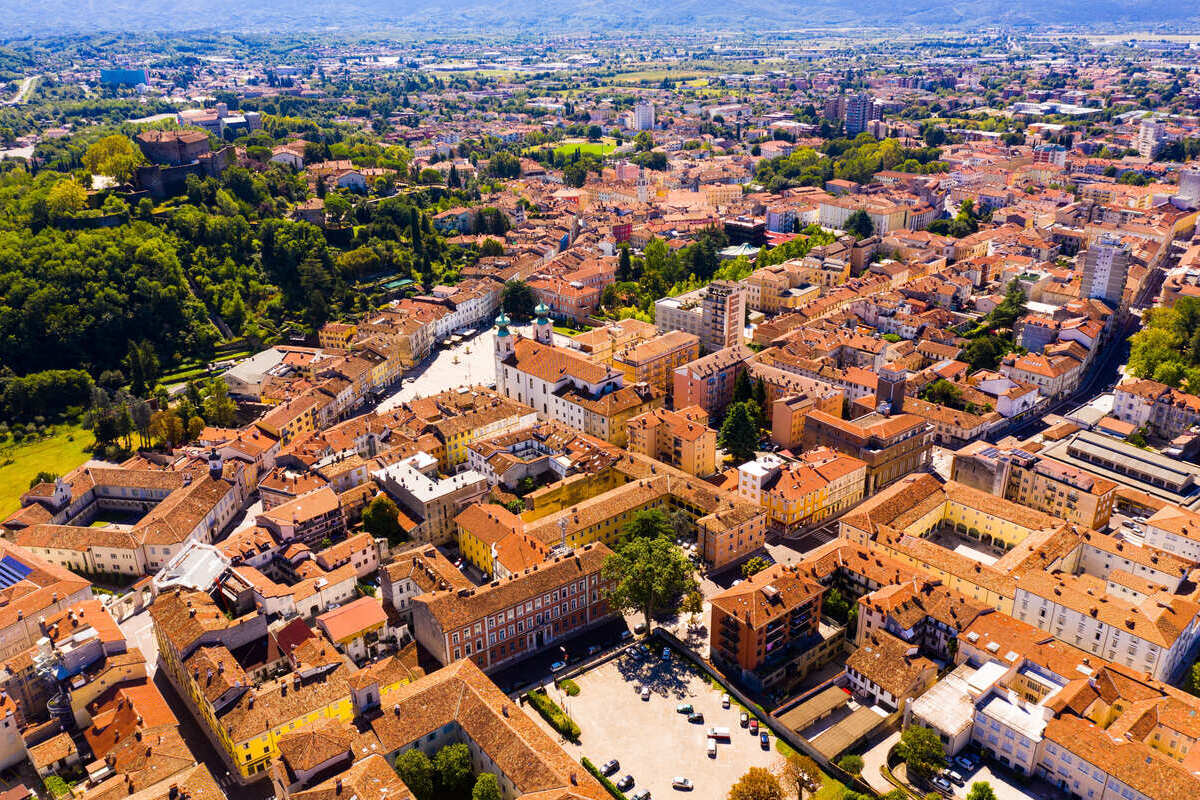
One thing cooler than a largely border-check-free zone is a city that straddles two countries, where you can barely tell where one ends and the other begins.
This forgotten European gem has a medieval-era Old Town fully in Italy, while its more modern, leafy counterpart sits just across the border in Slovenia, and you can literally walk from one side to the other:
Europe’s Only Official Cross-Border City
40+ European countries in, very few places still take my breath away like they used to when I was a goggle-eyed tourist wandering around my first-ever medieval castle. Gorizia (and its sister city Nova Gorica) is one of those rare exceptions.
Though they’re officially two municipalities, with Gorizia being administered by Italy and Nova Gorica falling under Slovenian jurisdiction, they form a single continuous urban area.
You can quite literally walk from historic, pastel-colored Italian streets into a planned, modern Slovenian town, without undergoing a single passport check… but trust me when I say you’ll definitely feel the difference.
Before you go country-hopping, use the Entry Requirement Checker to stay in the loop regarding Europe's changing travel regulations.
How Did Gorizia/Nova Gorica Even Came Into Being?
Gorizia was originally a single, unified city for centuries before it was sundered.
The real split came in 1947, when a war treaty defined the historic core would remain in Italy, while the eastern outskirts would become Slovenian.
The border was established in 1947, and the barrier remained until 2007, when Slovenia finally entered the Schengen Area.
Though they effectively function as one big city now that European integration has brought both countries closer together, if you visited Gorizia some 40 years ago, you would actually find a Cold War-era barbed-wire fence running along the border, physically separating it from New Gorizia.
Needless to say, they couldn’t feel more distinct if they tried.
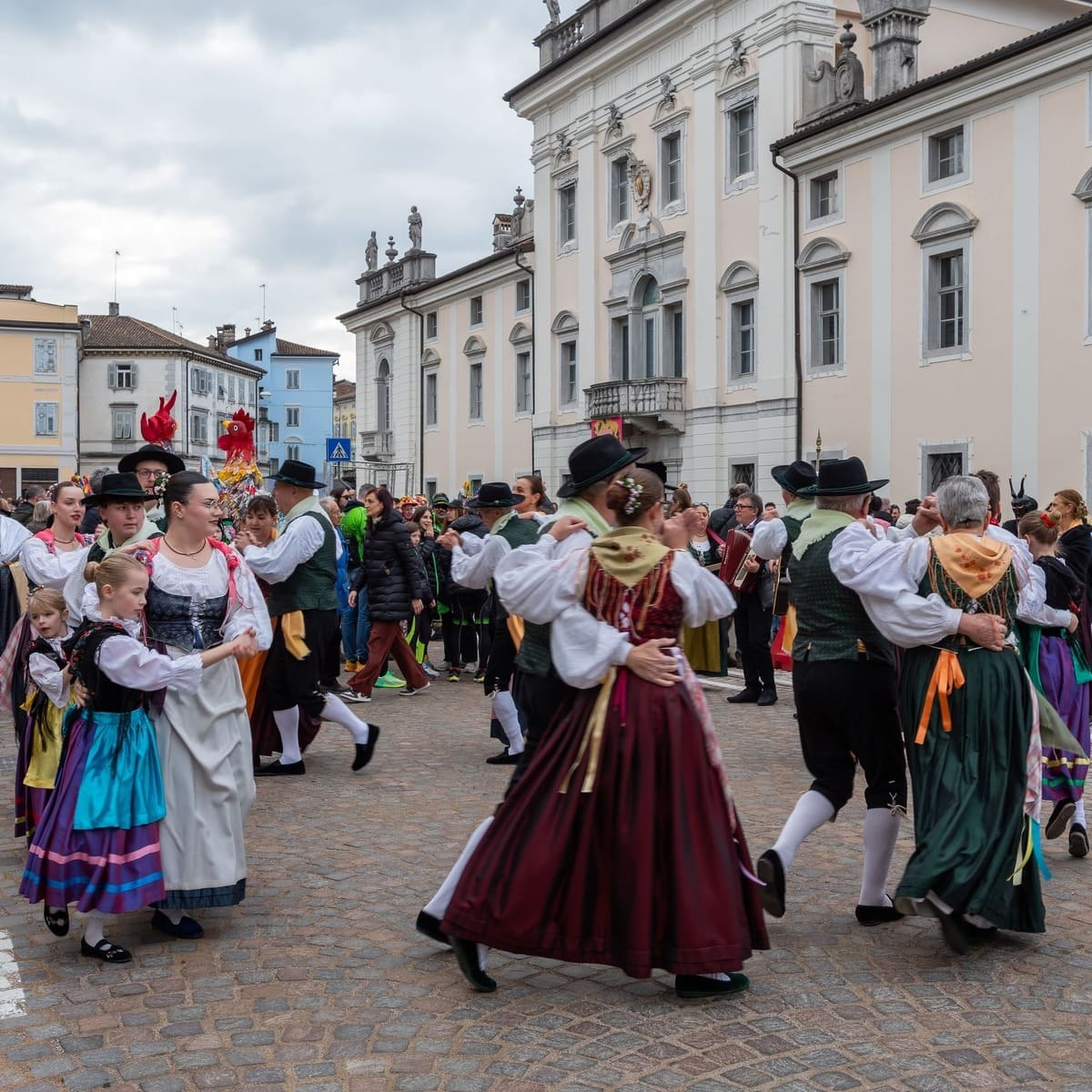
While Italian Gorizia has medieval lanes, ornate churches, and grand Habsburg-era palaces, Nova Gorica went on to develop wide avenues, green spaces, and typically-Yugoslav modernist architecture.
The decades of separation are now nothing but water under the Solkan Bridge.
In 2025, the two cities even made history by jointly hosting the first-ever cross-border European Capital of Culture, and now they’re practically joined at the hip:
Note From The Editor
Just one sec! If you enjoy reading great human-written articles, the best way to see a few more is to follow us on Google so we become one of your preferred websites. Thank you so much for reading. Now back to the story!
The Italian Side: Cobbled Lanes, Medieval Castles & Quaint Piazzas
The Italian side centers around Borgo Castello, your classic medieval core with stone gateways, cobbled lanes, and tiny piazzette flanked by family-owned trattorie.
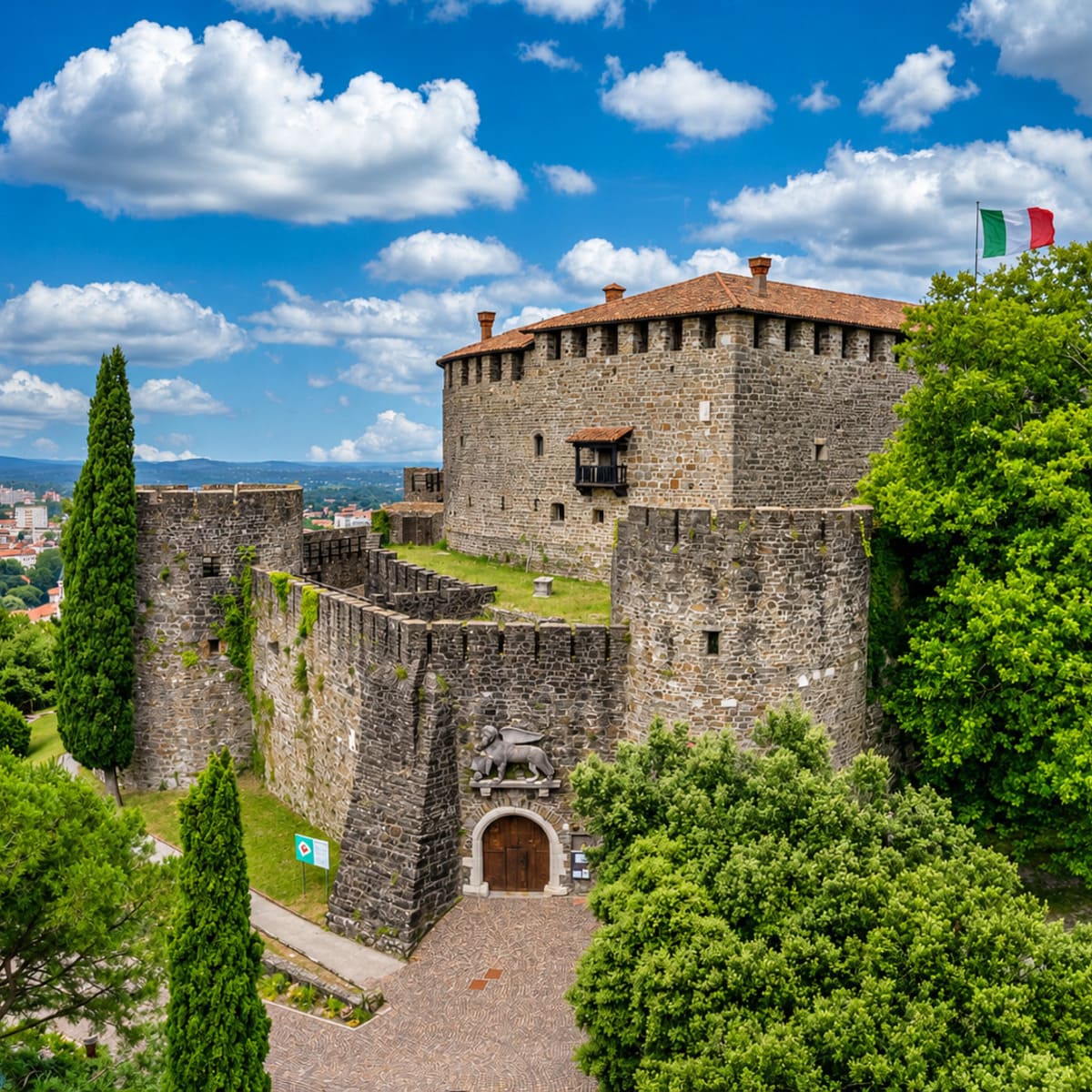
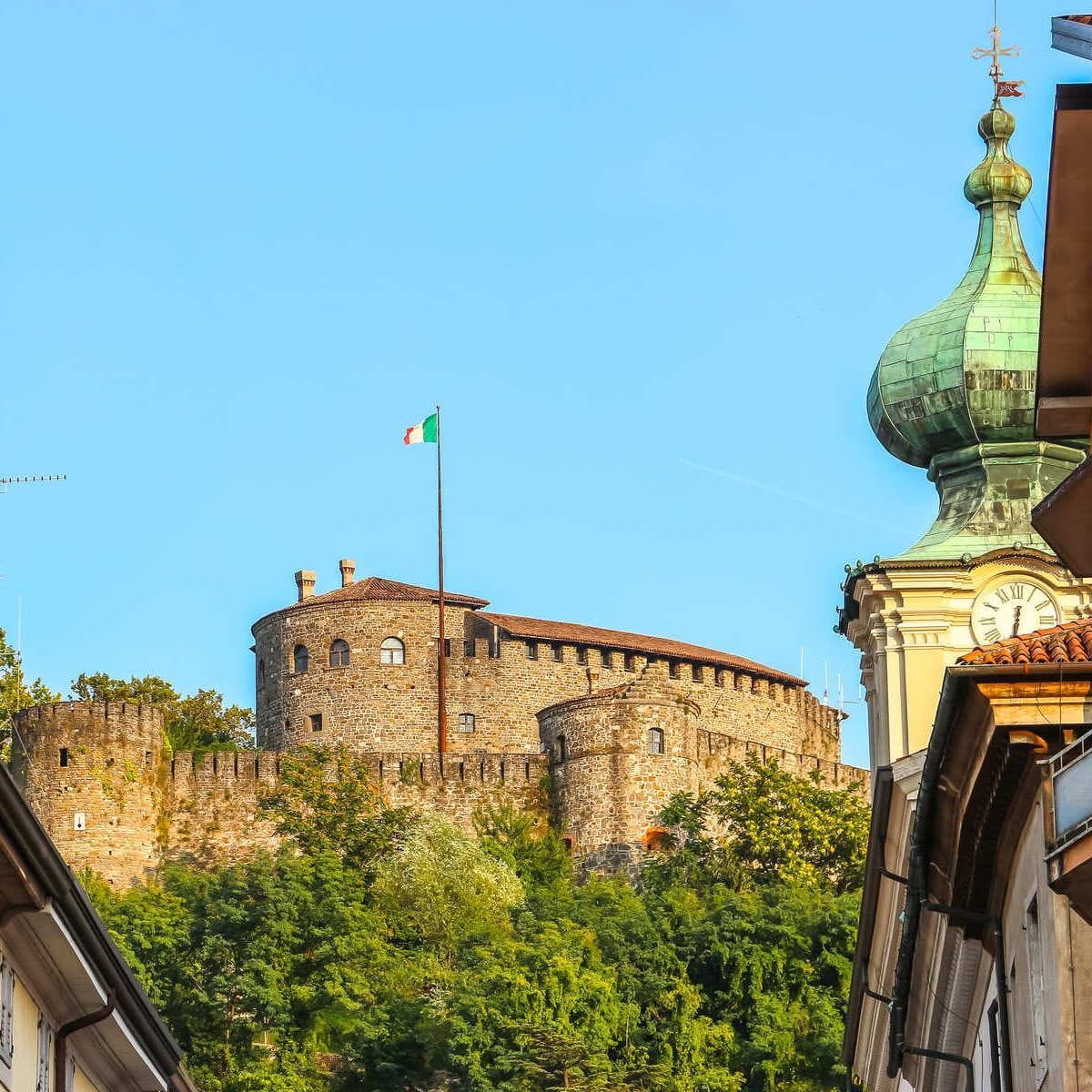
Uphill, Gorizia Castle is this monumental 11th-century fortress that overlooks the city, the surrounding Italian countryside, and further in the distance, Slovenia’s emerald Soča Valley and snow-capped Julian Alps.
It all seems so tantalizingly within reach, like you could reach out and touch the neighboring country, and that’s what makes it so fascinating.
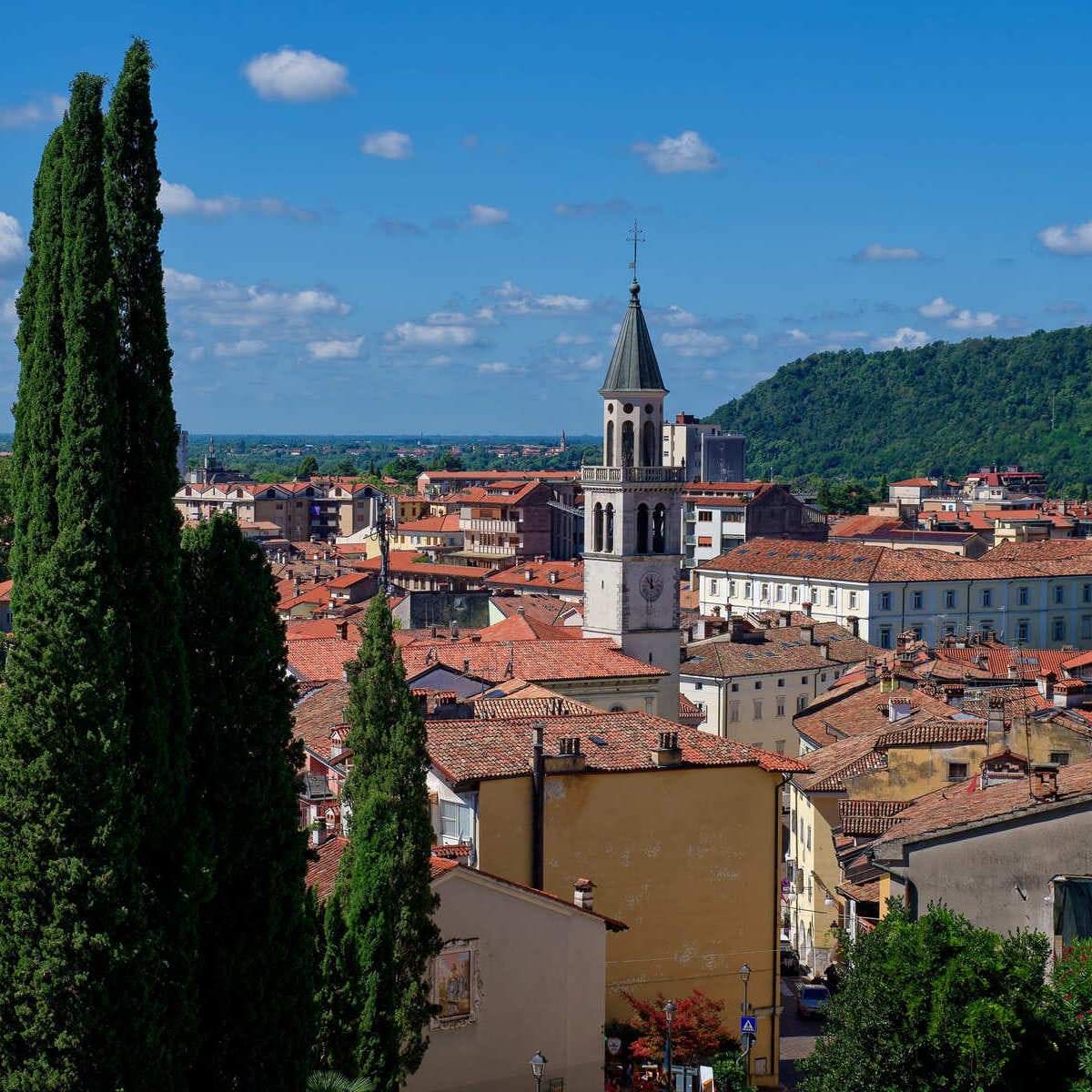
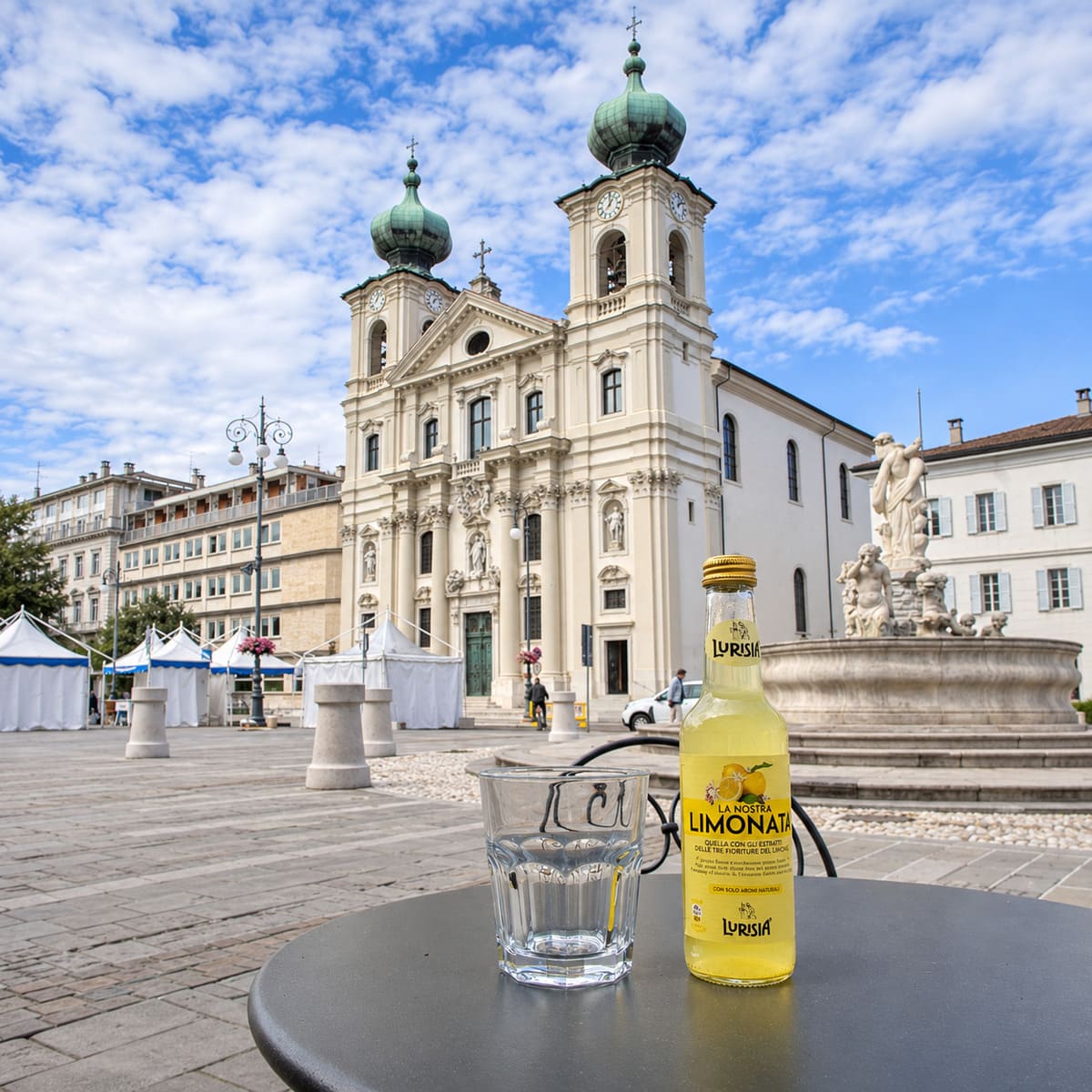
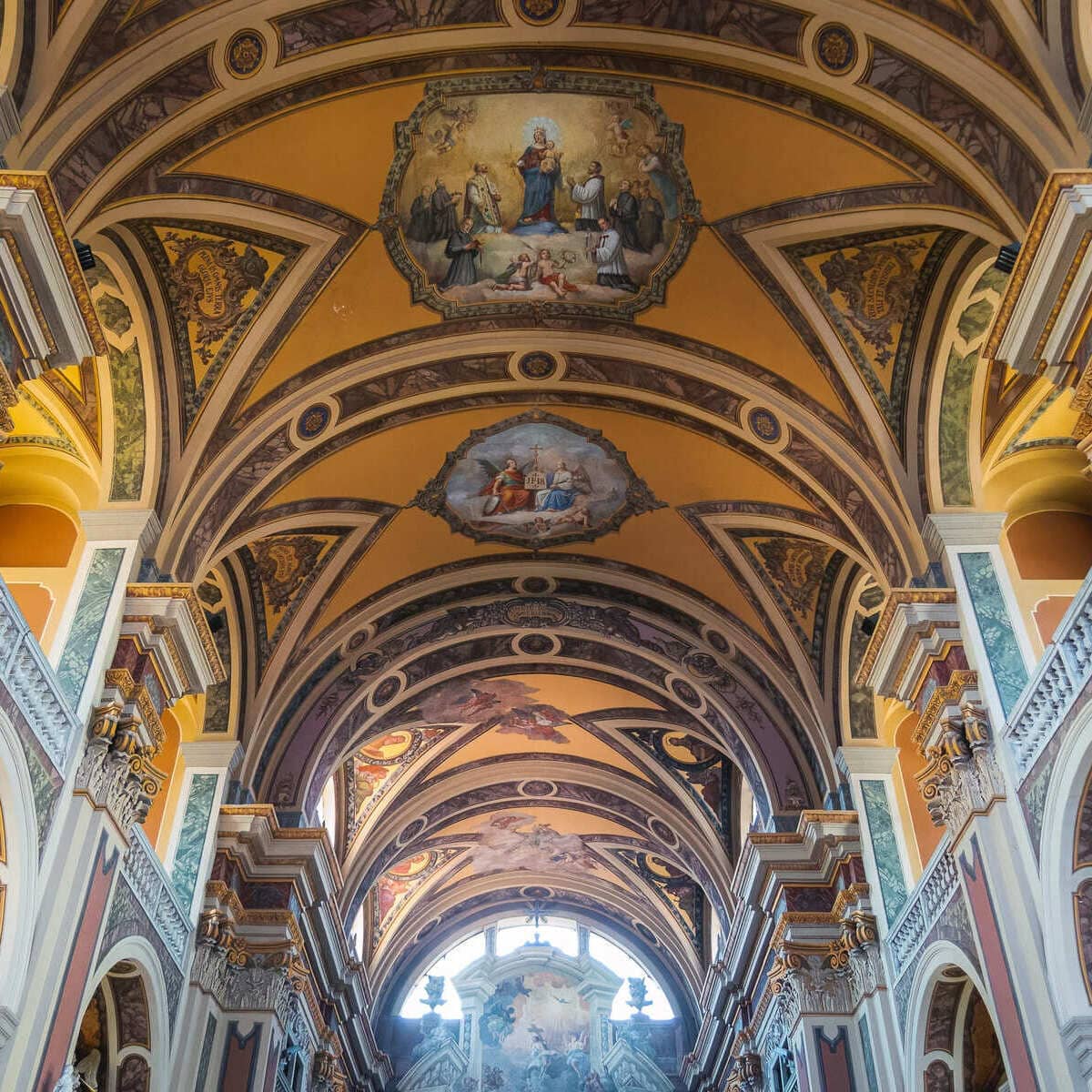
If you’re looking for a real architectural showstopper tourists are yet to get their hands on, the Baroque Church of St. Ignatius, a 17th-century marvel rising on Piazza della Vittoria, has lavishly-decorated interiors and a twin set of onion-domed bell towers—and regardless of the time of day, there’s little chance of significant crowding anywhere.
Speaking of onions, for a taste of the local cuisine, stop by Trattoria Alla Luna, a family-run restaurant a short walk from Piazza della Vittoria, where you can try Gorizian-style goulash with polenta. A hearty meal will set you back around $17–18 per person.
A short walk from Piazza della Vittoria, Palazzo Coronini Cronberg is probably the one aristocratic residence you can’t leave Gorizia without visiting:
For only $11, you can explore the opulent rooms of a 16th-century mansion, admire period artworks, and stroll around a sprawling English-style park. To my fellow history buffs out there, this is where Charles X, the last Bourbon king of France, died in 1836.
Is Gorizia Safe?
Absolutely!
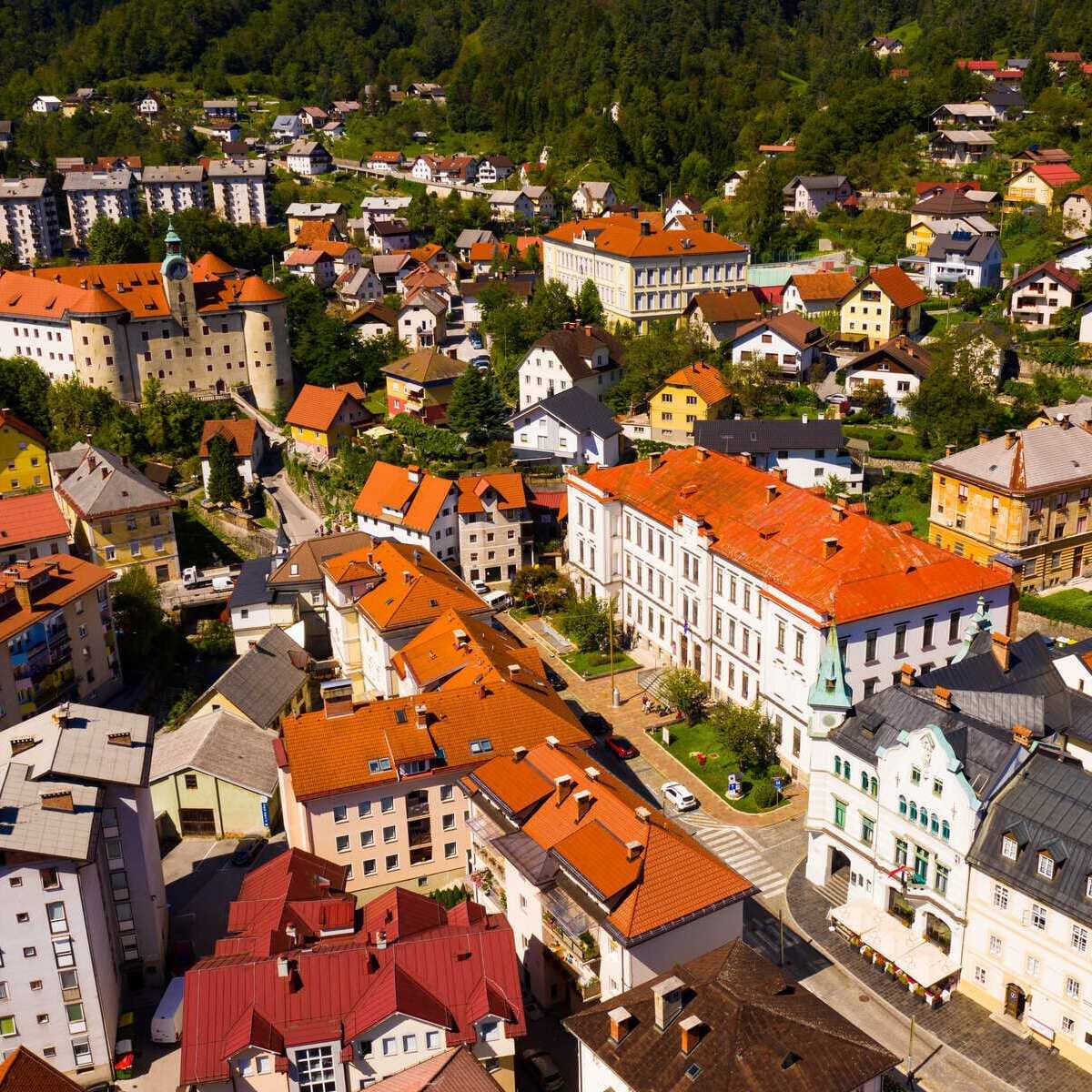
I understand if you’re concerned about safety levels in Italy, especially after the latest bout of violent demonstrations, but Gorizia is a quiet, lowkey Italian spot.
Crime and major political disruption affecting tourists is usually less of a concern here than in the country’s major tourism hotspots of Milan or Rome.
Italy is currently rated Level 2 by the U.S. Department of State, primarily due to the nationwide terrorism risk, while Slovenia is rated Level 1, the lowest advisory level.
On either side of the border, your biggest worry will likely be the usual petty theft risks, and keeping an eye on personal belongings in crowded areas.
On the Travel Off Path Traveler Safety Index, Italy scores 91 out of 100 based on live reports from recent visitors, indicating a high perception of safety:
The Slovenian Side: Grand Yugoslav Boulevards, Lush Parks & Epic River Crossings
Time to move over to the Slovenian side.
The most iconic ‘border’ crossing in Gorizia is a literal square in the heart of the shared urban area that the Italians call Piazza Transalpina, and the Slovenians baptized Trg Evrope (or Europe Square).
It lies directly on the Italy–Slovenia border, merely steps from Nova Gorica’s historic railway station, and it marks the exact spot where both countries meet.
Were it not for the sound of Italian chatter intermingled with Slovenian conversations—oh, and the bilingual signs—this would feel like any other European square.
Classic photo op? Stand on the circular mosaic marking the exact frontier, one foot in Italy, another in Slovenia.
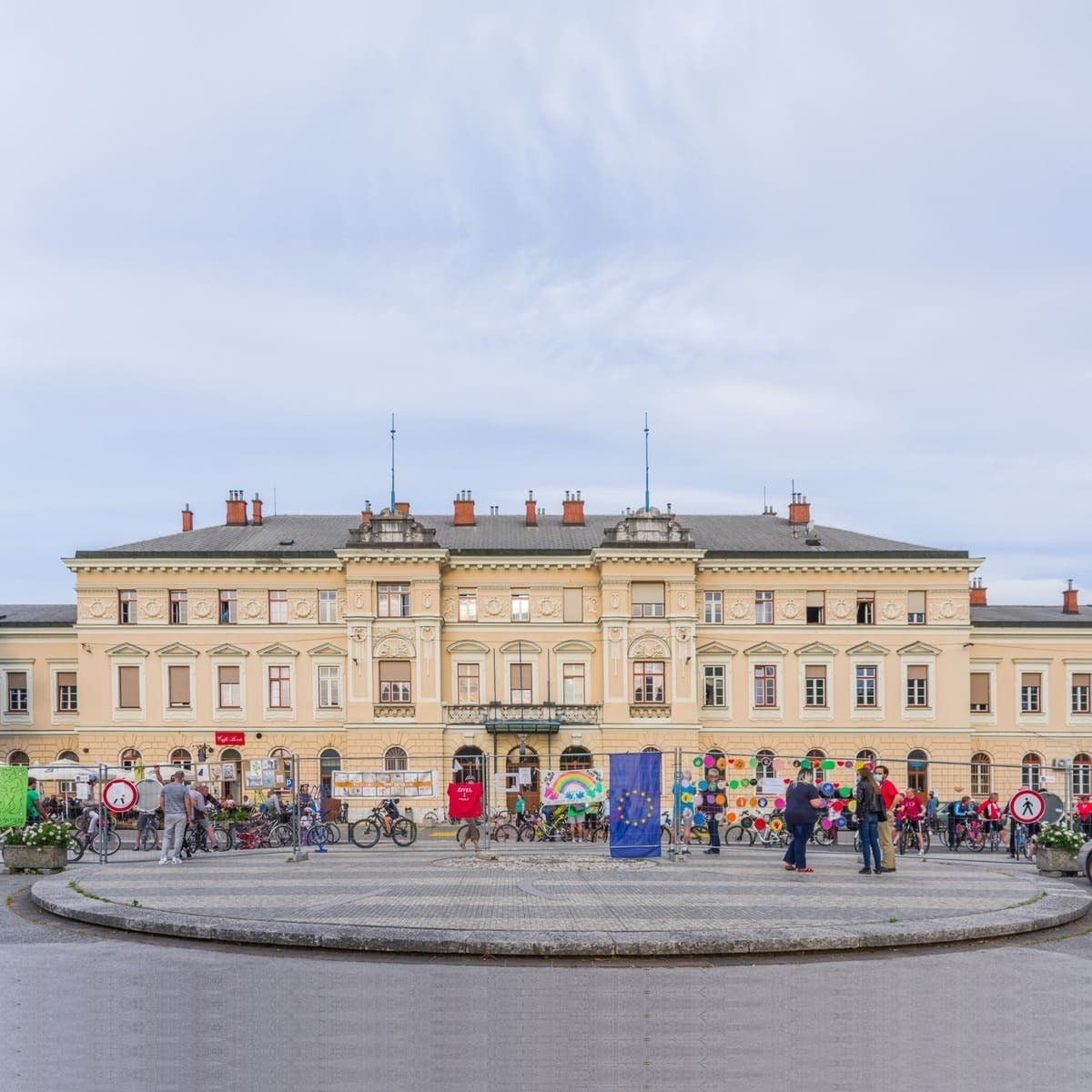
Tourists’ biggest mistake is to quickly dismiss Nova Gorica as the boring, modern part of town where restaurants serve struklji dumplings instead of pasta, with not much to offer on the culture front, but that’s where they go wrong:
Perched on a hill overlooking Nova Gorica, Kostanjevica is a centuries-old Franciscan monastery that houses the multinational city’s most prized historical treasure: the remains of Charles X of France, who lies in a crypt alongside several members of the Bourbon royal family.
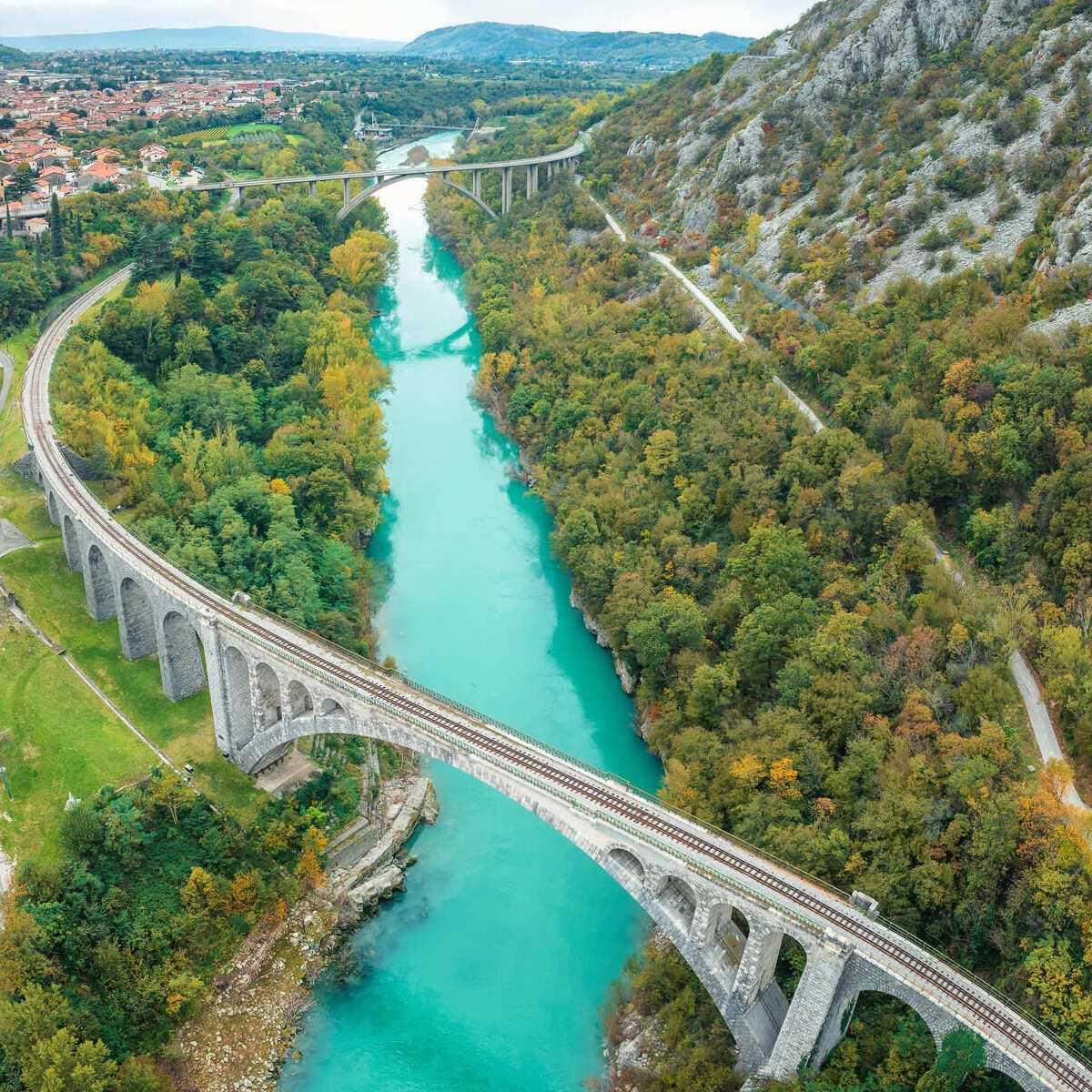
Skipping Nova Gorica will also mean missing out on Solkan Bridge, and that’s a short 35–40-minute walk from Piazza Transalpina.
This early 20th-century railway viaduct crosses the impossibly turquoise Soča, with a monumental stone arch spanning 85 meters. It’s officially considered the world’s longest stone-arch railway bridge, and the fact it has the Julian Alps for a backdrop makes the whole scene feel particularly surreal.
The modern center of Nova Gorica is also worth taking a quick look at.
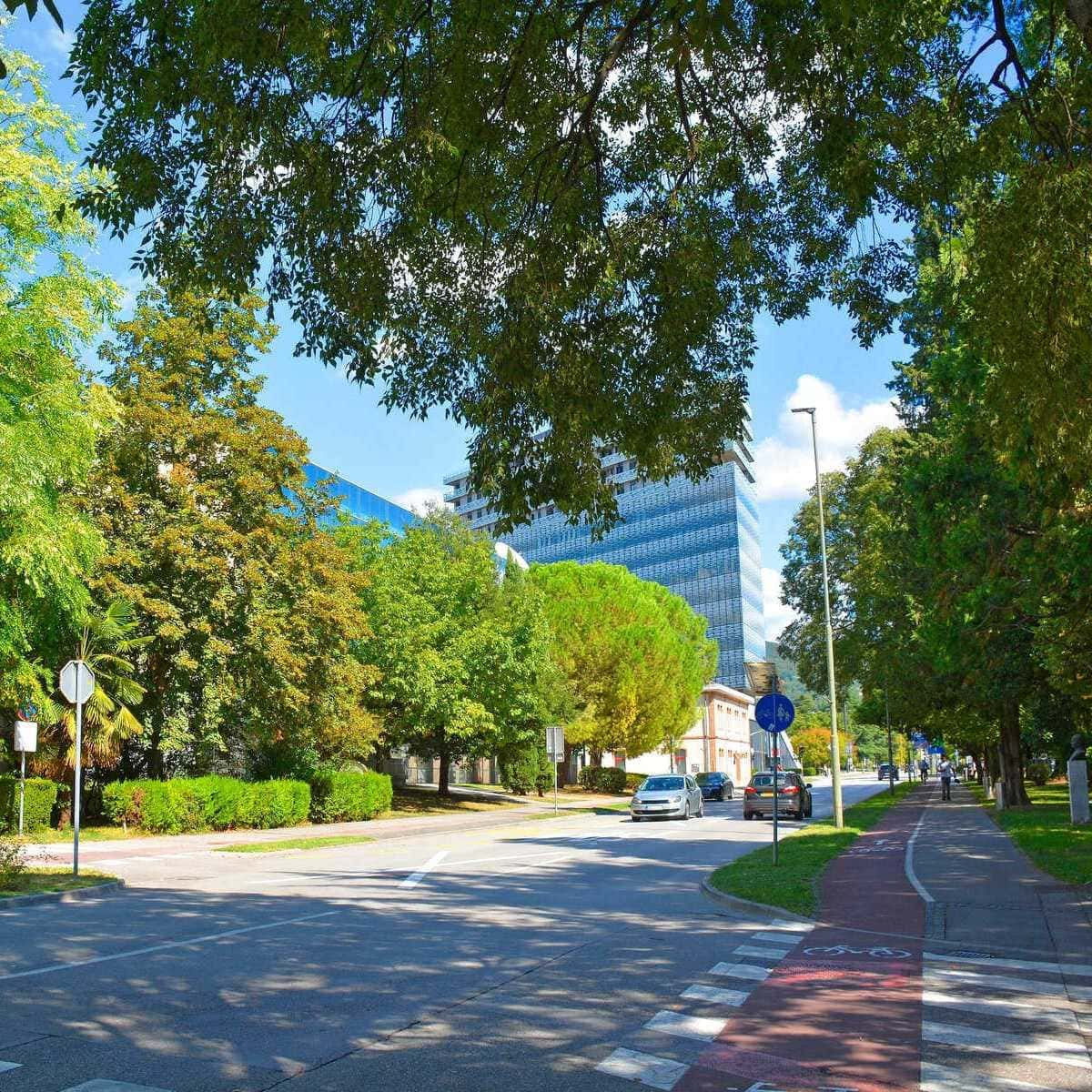
It’s the complete opposite of Gorizia’s tightly-packed medieval buildings and cobbled lanes, with an urban layout designed around broad boulevards, open pedestrianized squares, and green spaces bordered by modernist apartment blocks.
Bevkov trg is one of the main gathering spots here, with shops, cafés, and a starkly different architectural atmosphere from that of Piazza della Vittoria in Gorizia. The craziest part? They’re separated by a leisurely 25–30-minute walk.
If you’re feeling peckish, stop by Fabrika, right on Bevkov trg, where you can grab a hearty breaded veal cutlet for around $16, or a lighter rice salad for $9. It’s a casual, lively alternative to the more traditional dining rooms across the border.
Your Full Gorizia/Nova Gorica Mini Guide
- Best time to visit: spring through early fall for pleasant walks and beautiful Alpine scenery, though the two cities are worth exploring year-round.
- How to get there from within Italy: take a regional train from Trieste Centrale to Gorizia Centrale, roughly 50 minutes and $5–7 one-way, or from Venice, around 2–3 hours and $17–22.
- How to get there from within Slovenia: direct buses from Ljubljana to Nova Gorica take approximately 1 hour 45 minutes to 2 hours 10 minutes, depending on the service.
- How long to stay? A 2-night stint day is enough to see the main sights in both cities.
- Can you walk between the countries? Yes, and that’s literally half the fun! Piazza Transalpina is the easiest and most iconic crossing, but there are of course multiple streets and parks connecting the two cities.
- Do you need a passport crossing from one part of the city to the other? Not normally, but Italy has temporarily reinstated border controls with fellow Schengen members, so spot checks are possible. U.s. citizens should always carry their passports in case.
Piazza Transalpina
Stand on the circular mosaic in Piazza Transalpina (Trg Evrope) with one foot in Italy and the other in Slovenia.
Gorizia Castle & Piazzas
Explore the 11th-century Gorizia Castle overlooking the Julian Alps, Baroque churches, and 16th-century Palazzo Coronini Cronberg.
Solkan Bridge & Monastery
Marvel at the 85-meter stone arch spanning the turquoise Soca River and visit Kostanjevica Monastery’s royal French crypt.
Goulash & Struklji
Savor Gorizian-style goulash with polenta in cozy Italian trattorias, then walk across for Slovenian struklji dumplings in Nova Gorica.
Trains, Buses & Passports
Arrive easily via regional trains from Trieste or buses from Ljubljana, and always carry your passport for occasional Schengen spot checks.
Enter your email address to subscribe to Travel Off Path’s latest travel news, straight to your inbox
