
Dreaming of an escapade to Venice but the surging crowds and crazy prices keep putting you off?
Well, maybe you slept through it in school, but did you know Venice was, at one point in time, one of the most powerful countries in the Mediterranean? Including not only the city of Venice itself, located in Italy, but large swathes of modern-day Croatia.
If you’ve ever wondered why the Dalmatian and Istrian coasts often feel like an extension of Italy, with Romanesque bell towers, lungomare promenades lined with trattorie, and those unmistakably Italian green shutters framing stone façades, there’s your answer.
If it’s that Venice vibe you’re chasing, but you’re not exactly eager to get swallowed by the chaos of Piazza San Marco, shoulder-to-shoulder crowds, and selfie sticks in every direction, you can always opt for beautiful, slower-paced, much more intimate Rovinj instead.
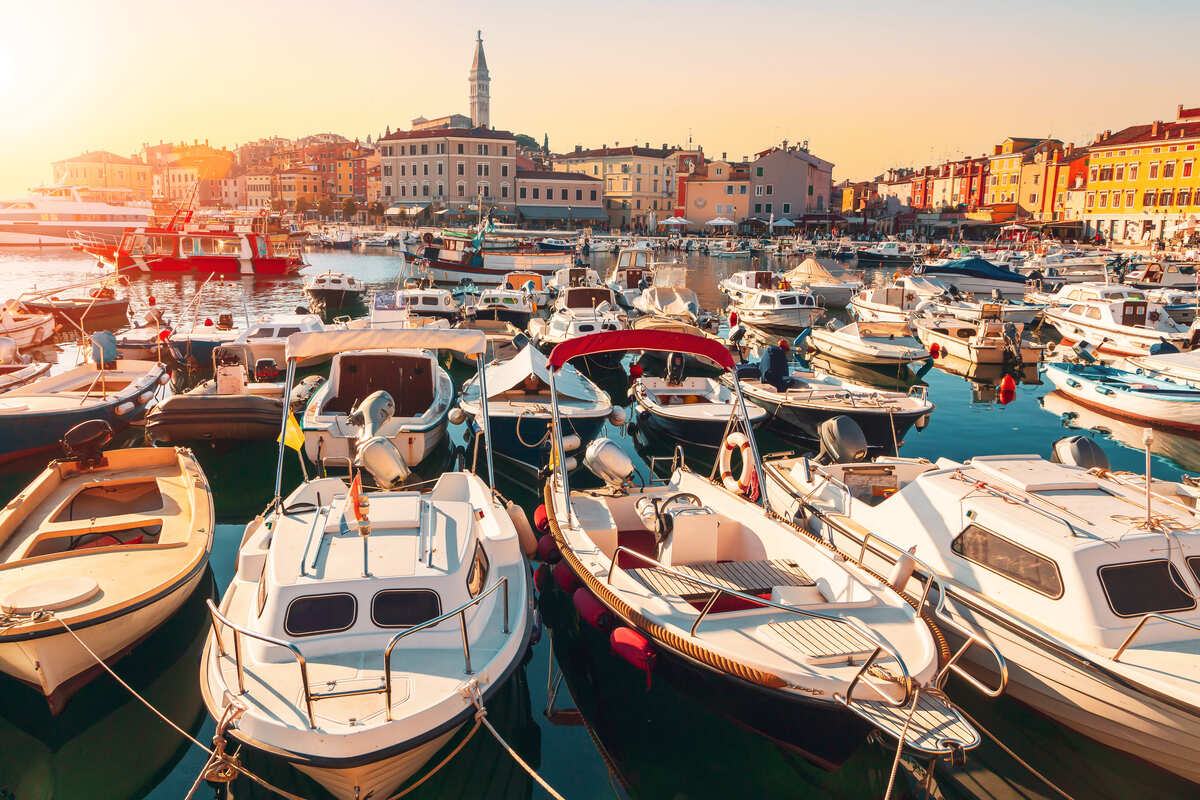
Venice’s Lost Croatian Daughter
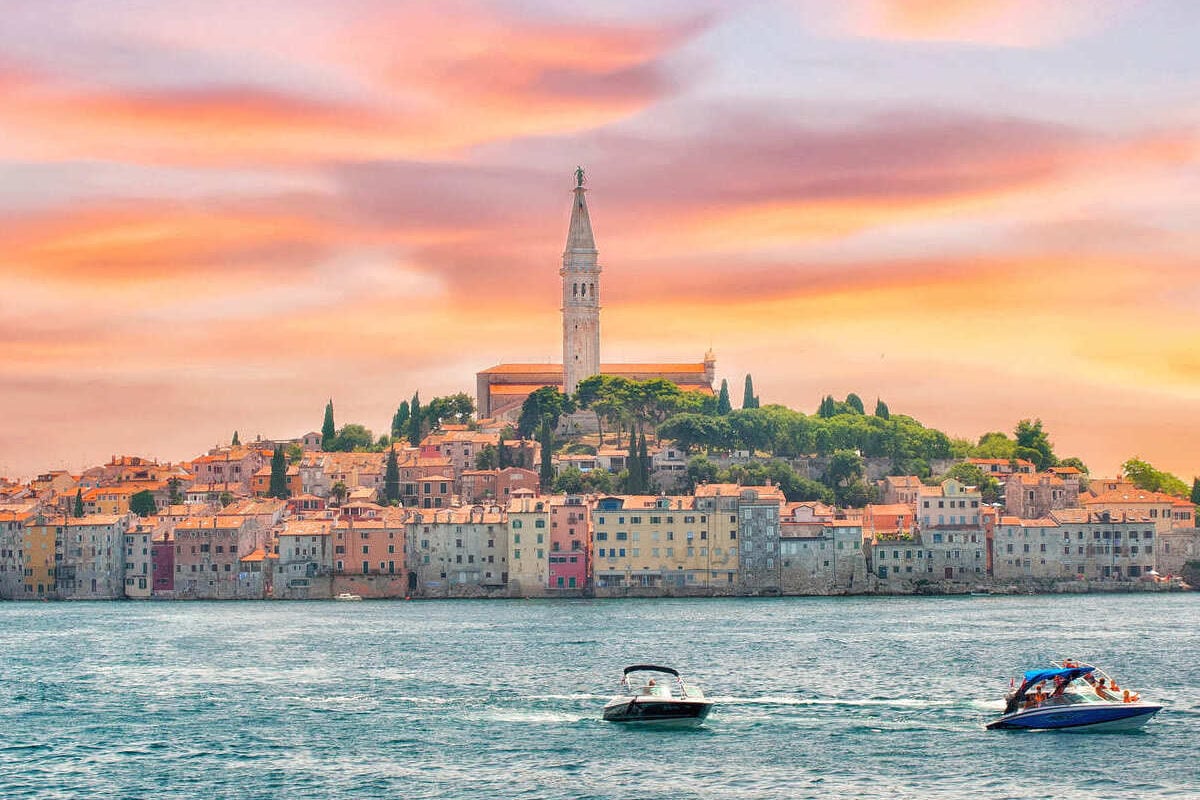
Dubbed the ‘Venice of Croatia‘, Rovinj shares many of the characteristics that make Venice so distinctive, except on a much smaller scale.
This is hardly surprising, given it was ruled directly by the now-extinct Republic of Venice for nearly 500 years, from 1283 to 1797, when that empire collapsed, and the Venetians left a lasting mark on local architecture and culture.
Venetians loved building on water, so it’s only natural Rovinj sits on what was originally an island, before being connected to the mainland in the 18th century, when local authorities filled the narrow channel with earth and stone.
It’s now a peninsula, similar perhaps to the equally-stunning Nesebar in Bulgaria, or Sveti Stefan in Montenegro.
If you’re asking us, however, they can’t hold a candle to Rovinj’s sheer romance.
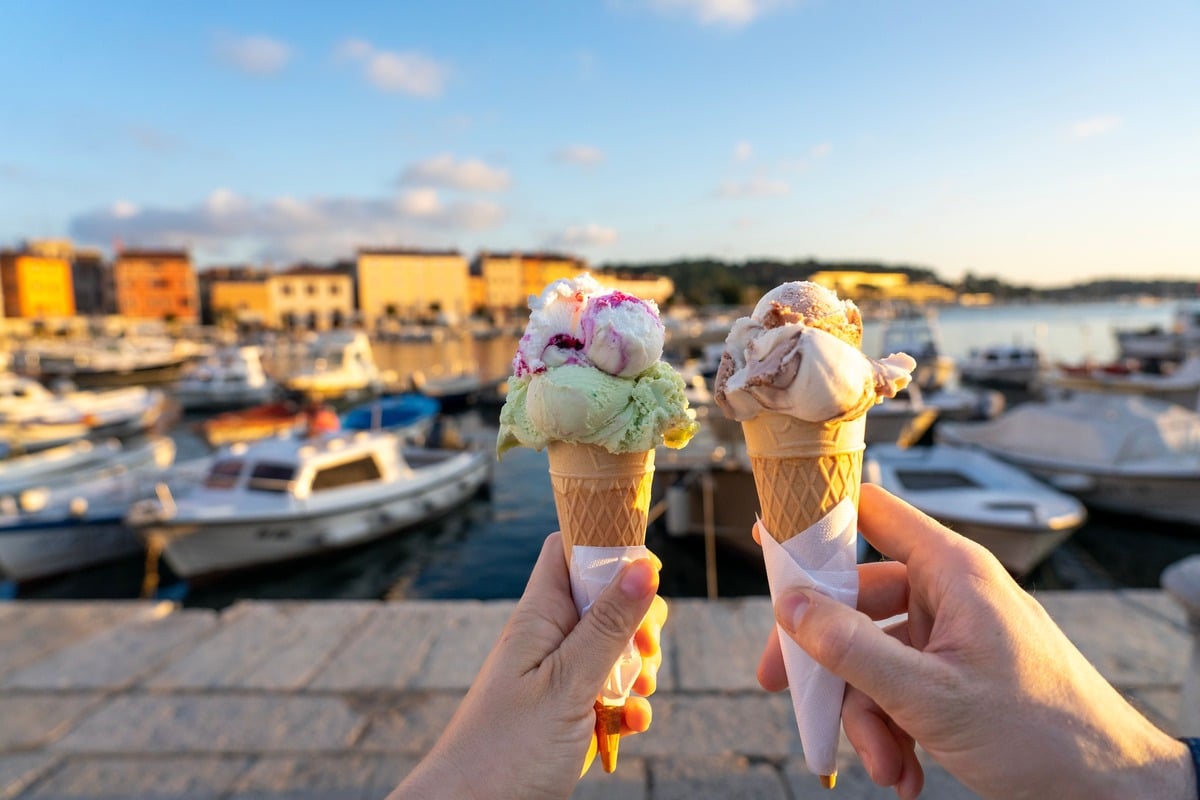
The Mini Venice You Didn’t Know You Desperately Needed Visiting
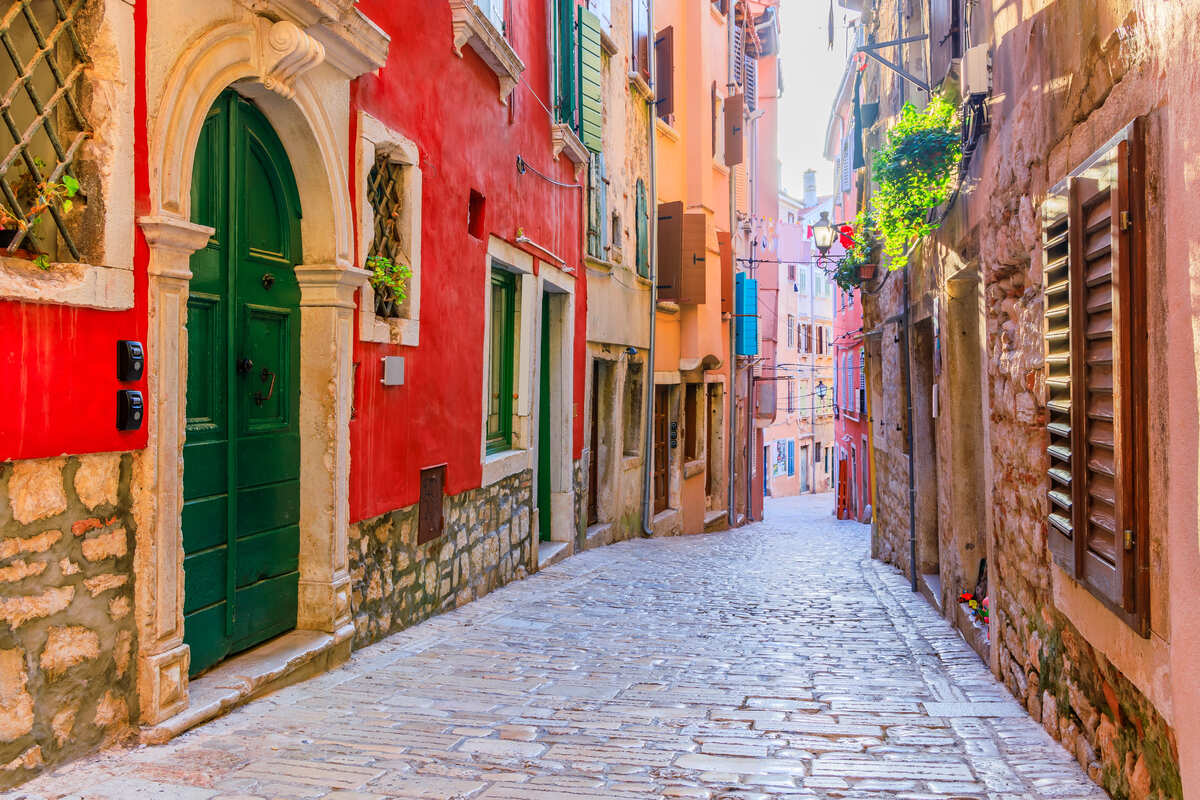
Picture narrow, winding alleyways that climb through densely packed pastel-colored houses, in a maze that’s strongly reminiscent of Venice’s quieter back alleys.
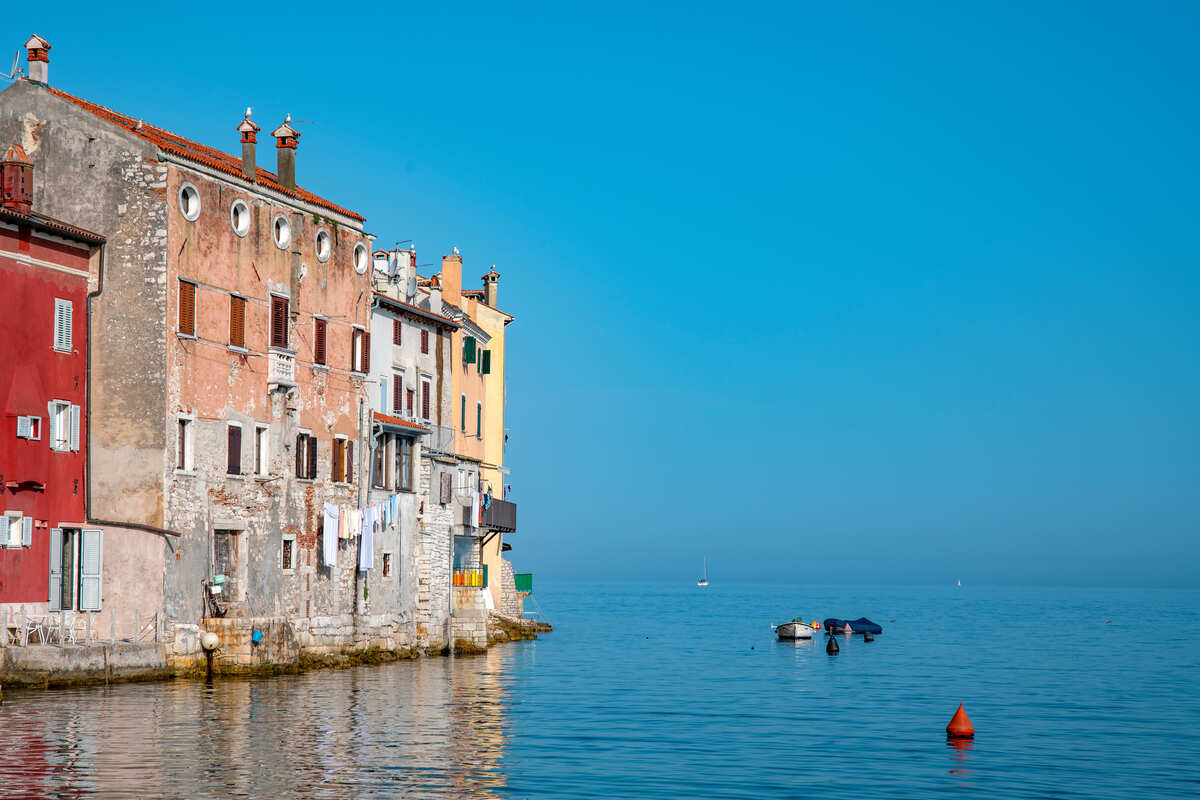
The waterfront is lined with elegant Veneitan-style edifices, with the exact same shutters, arches, and ornate balconies, and then of course, the peninsula’s skyline is dominated by the Church of St. Euphemia:
This gorgeous Baroque masterpiece has a bell tower modeled after Venice’s own St. Mark’s Campanile, with one key difference: you don’t need to book weeks in advance if you plan on climbing it to avoid endless queues, nor are you looking at a faithful, early-20th-century reconstruction.
For those of you who didn’t know, Venice’s iconic bell tower actually collapsed back in 1902 following structural failure after years of deterioration, and what you see today is an almost identical reconstruction completed a decade later.
Rovinj’s, on the other hand, is the real deal: the original, beautifully preserved miniature that’s been standing proudly above the Adriatic for centuries.
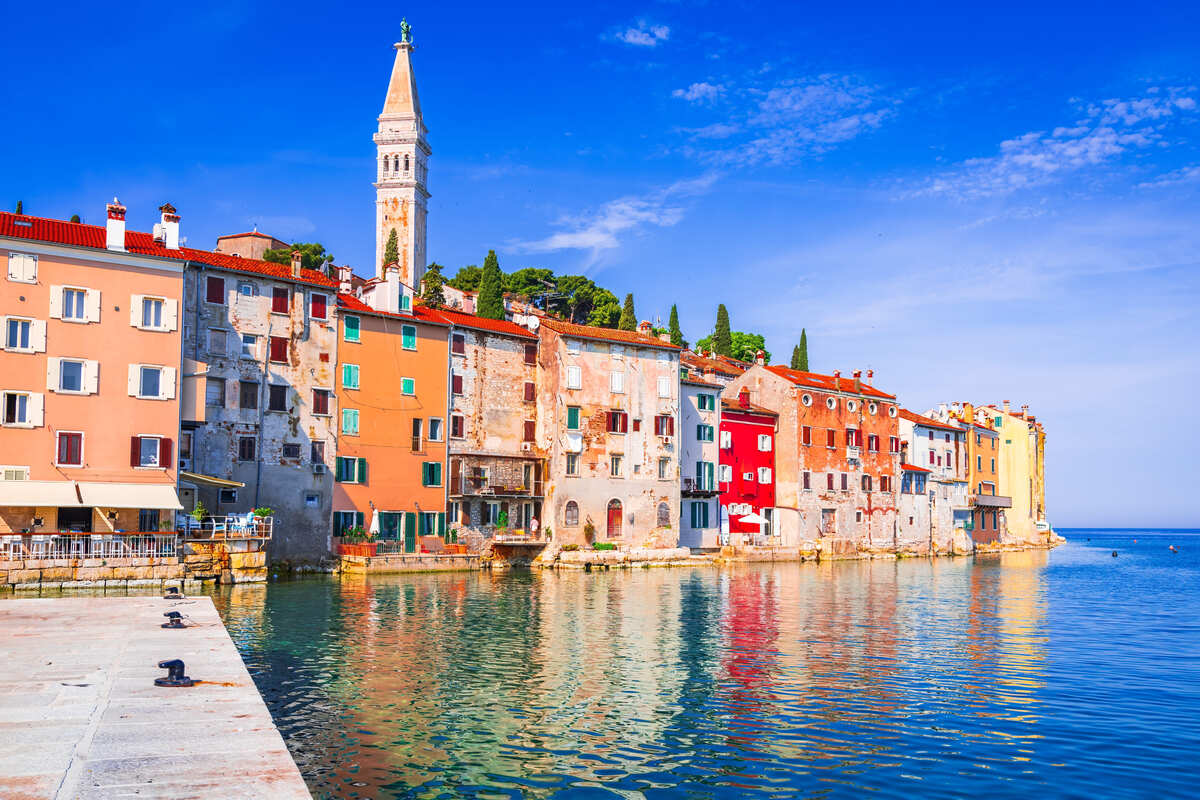
The Croatian Venice Except… No Canals?
There’s just one downside: if it’s gondoliers wearing blue-and-red-striped shirts and waterside cafés overlooking the canals you’re after, you won’t get that here.
Rovinj’s harbor may look like one of Venice’s quieter corners along the Grand Canal, but the city isn’t built on a labyrinth of islands like its famous Italian cousin.
In other words, there are no canals. Everything about it feels unmistakably Venetian, from the pastel façades and narrow stone alleys to the graceful campaniles and weathered piazzas, but don’t expect to find emerald-green waterways weaving between those centuries-old buildings.
If it’s a Venetian dupe with canals you’re aiming for, we suggest you take a look at this accompanying article featuring 4 other European gems traversed by waterways that would give Venice a run for its money.
Rovinj Is A Lot Safer Than Venice
The good news is, unlike La serenissima, Rovinj doesn’t exactly have a widespread issue with pickpockets.
If you’ve been anywhere near social media these past few years, chances are you’ve come across that now-viral video of a Venetian woman chasing after bag-snatchers while shouting ‘Attenzione, Borseggiatrice! Attrenzione, pickpocket!‘
Yeah, none of that mess over on this side of the Adriatic.
In fact, Croatia as a whole scores 84 out of 100 on the Traveler Safety Index, based on reports from recent visitors:
Rovinj Has Better Beaches
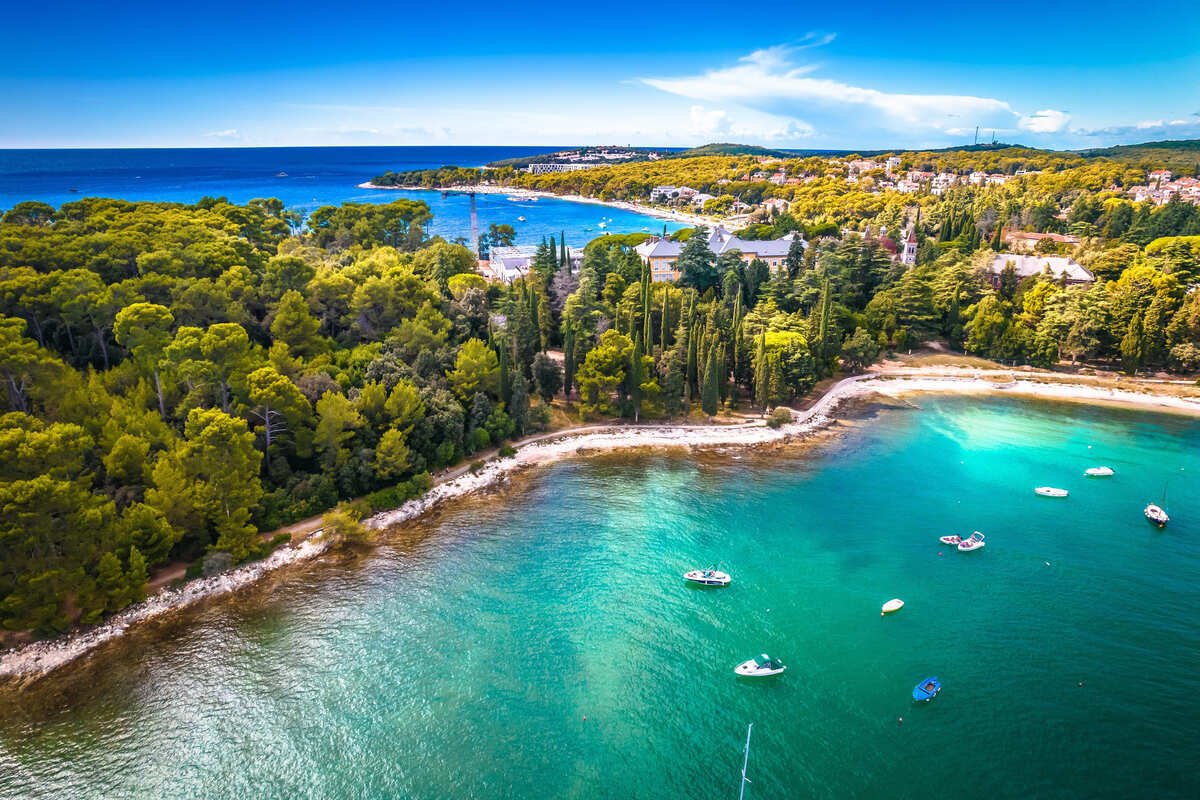
On the other hand, if European summers are synonymous with beach time for you, Rovinj is better by a mile.
Unlike Venice, it’s not tucked away inside a sheltered lagoon crisscrossed by ferries, water buses, and cargo traffic. Instead, Rovinj spills straight into the crystal-clear Adriatic, with dozens of swimming spots within easy walking or cycling distance.
If you want to swim in Venice, you’ll most likely have to hop on a vaporetto to the long sandy barrier island of Lido, guarding the entrance to the lagoon, or venture farther into the quieter reaches of the Venetian Lagoon.
Even then, the water is hardly that postcard-worthy shade of turquoise, and the beach vibes are… let’s just say, not exactly Mediterranean dream material.
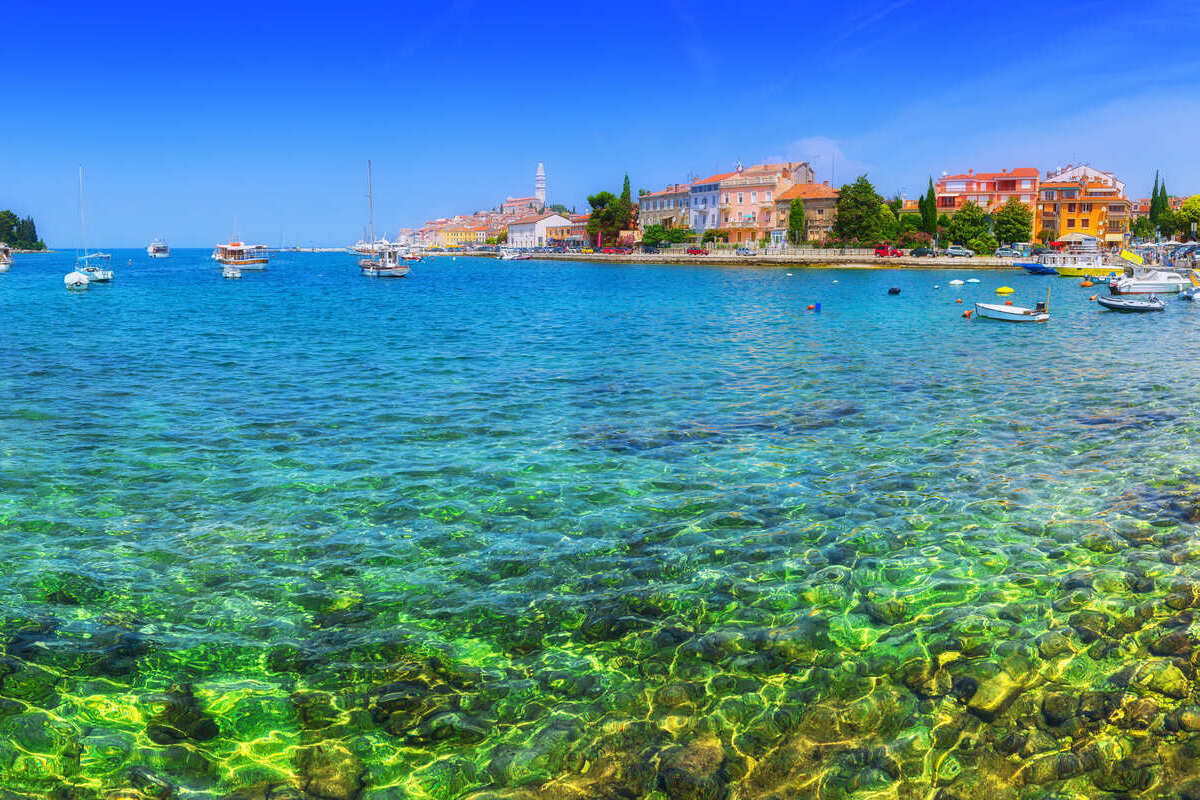
Rovinj, on the other hand, has Mulini Beach, a stylish pebbly stretch lapped by impossibly clear water, backed by luxury hotels, pine trees, and chic beach bars.
Then there’s Lone Bay, a peaceful cove just a 20-minute walk from the Old Town where you’ll genuinely feel like you’ve escaped to a secluded island, surrounded by fragrant pine forests.
My personal favorite, though, is Zlatni Rt, or Golden Cape, a sprawling forest park hiding countless little coves bathed by crystal-clear Adriatic waters.
Rovinj Is Actually One Of Croatia’s Trendiest Spots This Summer
Venice is all about history, canals, museums, and architecture. Rovinj gives you all of that (minus the canals), but throws in beautiful beaches and some of the cleanest swimming water you’ll find anywhere in the Mediterranean.

It’s no wonder Rovinj is currently, believe it or not, one of the most visited destinations in Croatia after Dubrovnik this year.
The reason for that? It’s part of Istria, the northernmost stretch of the Croatian coast, an easier drive for Italians, Slovenes, Austrians, and German families heading south for their summer holidays, so it has strength in numbers.
It may not be as well-known with Americans, but for the average European traveler, Rovinj is one of Croatia’s crown jewels.
Additionally, it’s not just a mere sightseeing stop: people stay one to two weeks because of the beaches, nearby islands like the Brijuni archipelago, cycling routes, and the lush Mediterranean nature surrounding it.
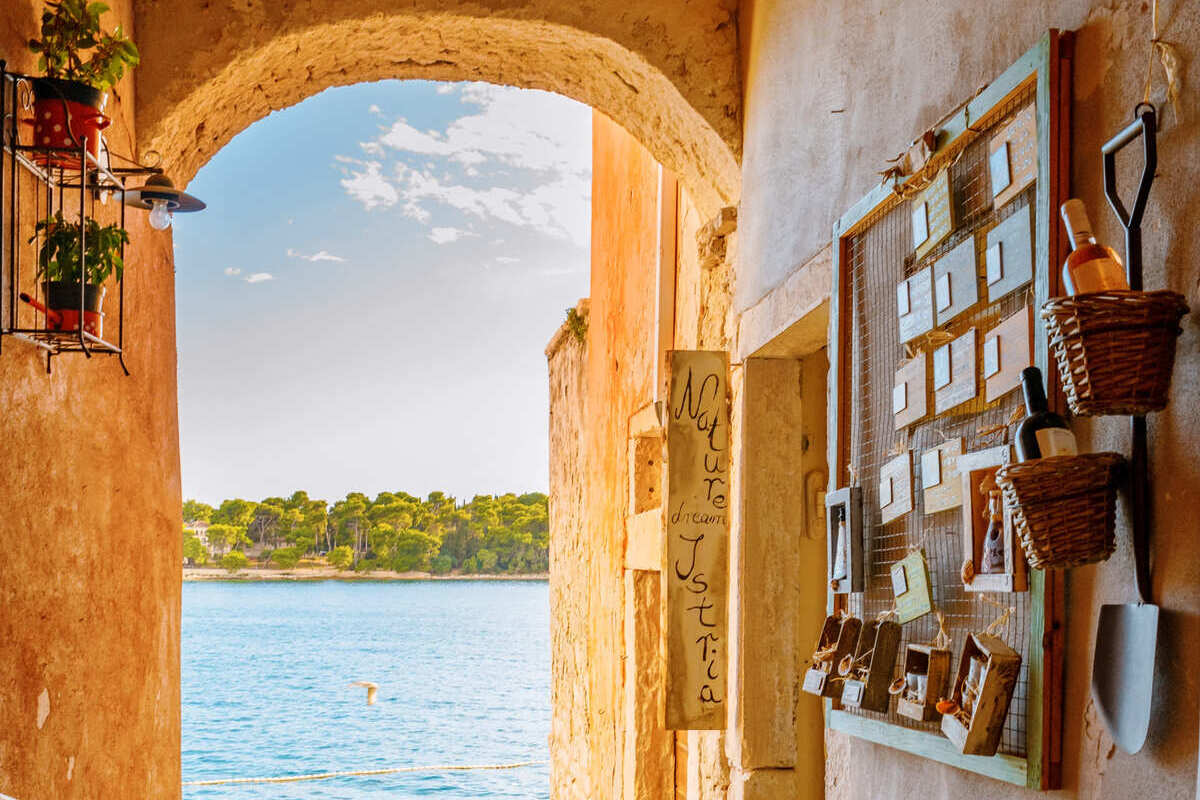
Don’t even get us started on Istria’s world-class gastronomy: this is Croatia’s most developed culinary region, famous for its truffles, which is why you’ll see so much emphasis on truffle pasta, locally produced olive oil, and award-winning wines.
By the way, if you’re flying across the pond this summer, make sure you run a quick destination check on the Entry Requirement Checker in advance.
Entry rules for U.S. passport holders have changed this year, and you might not even realize you will soon need an additional travel authorization before departure.
Is Rovinj Cheaper & Less Crowded?
Compared to Venice, absolutely… but with a caveat:
- Hotels: generally 30–40% cheaper than Venice, especially outside peak periods
- Restaurants: noticeably cheaper, particularly in local taverns
- Crowds: still packed in peak summer, but Rovinj’s busiest days barely register when stacked up against central Venice.
You won’t find shoulder-to-shoulder crowds on every street, particularly away from the harbor, and overall, the atmosphere is a lot more relaxed.
Some excellent affordable restaurants include La Vela gostionica, where you can get homemade truffle pasta from as cheap as €15 (around $17), and Fish House Rovinj, known for its fried calamari ($11–$17).
Typical menu prices in Rovinj will look something like this:
- Espresso: $2–3
- Beer: $4–6
- Pizza: $12–18
- Seafood pasta: $18–25
- Grilled sea bass: $25–40
- Fresh mussels: $14–20
- Truffle pasta: $17–28
- Gelato: $3–5
- Three-course dinner for two with wine: $90–140 at a nice restaurant
When it comes to accommodation, this is how much you should budget based on your traveling style:
- Hostel: $35+
- Budget guesthouse: $70–110
- 3-star hotel: around $130-a-night
- 4-star hotel: around $200-a-night
- Luxury 5-star hotel: upwards of $300-a-night, usually in quieter coastal areas outside town
The verdict?
Rovinj feels far more intimate than Venice.
It’s not exactly crowd-free or Balkan-levels of affordable, if you know what we mean, but it can be substantially more relaxed, more authentic, and far less like a daylight robbery when it comes to accommodation, dining, and simply enjoying the city.
