
We all travel with the same “essential item” now: our phone. It’s our boarding pass, hotel key, camera, map, wallet, and group chat lifeline.
But here’s the part most people don’t realize until it’s happening at a counter under harsh airport lighting…
In many countries, your phone is also treated like luggage, and border officers can demand access as a condition of entry.
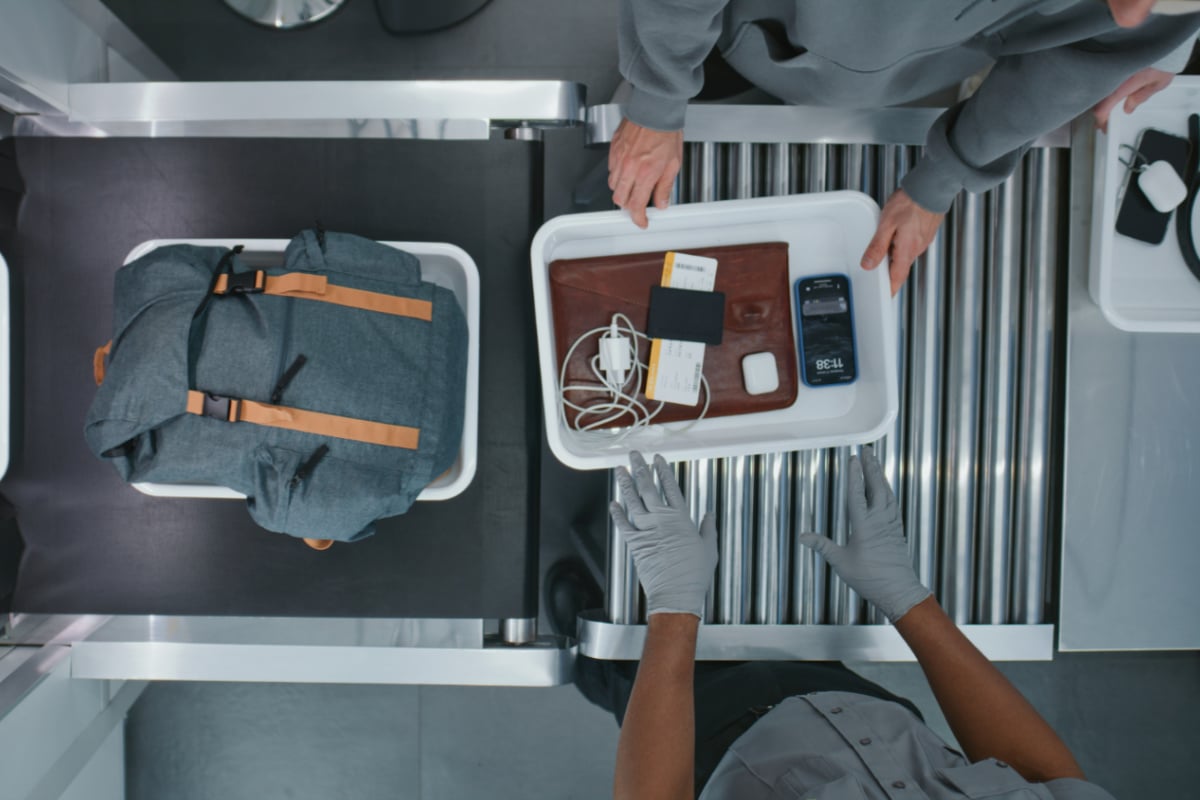
So if you’re the kind of traveler who keeps everything on your device (bank apps, work email, private photos, DMs, notes, dating apps… the whole digital diary), this is one of those “know before you go” topics that can save you a ton of stress.
Below are 6 countries where travelers can face phone checks on arrival, plus a super practical “border-proof your phone” checklist you can do in under an hour.
📱 Digital Border Risk Guide
Your phone is treated like luggage. Select a country code to see where authorities can demand your passcode.
United Kingdom
The Law: Schedule 7 (Terrorism Act 2000). Officers can detain you for up to 6 hours and demand device access without reasonable suspicion.
Takeaway: Friendly country, tough border powers. Refusal can become a legal issue quickly.
China
The Law: New counter-espionage rules (July 2024) grant broad discretion to inspect devices. High risk for journalists or researchers.
Takeaway: Treat entry as a full security screening, not just immigration.
Russia
The Law: A biometric “digital profile” pilot is active through 2026. U.S. guidance warns that device contents can lead to serious legal trouble.
Takeaway: Assume intense scrutiny. Plan your digital footprint carefully.
Israel
The Law: Known for deep questioning. The new ETA-IL requirement (Jan 2025) starts vetting early. Phone searches are not routine but can happen during security interviews.
Takeaway: Keep your devices “boring” and travel-ready.
New Zealand
The Law: Customs and Excise Act 2018. If you refuse to provide a passcode/access, you face a fine of up to NZ$5,000.
Takeaway: Refusal isn’t just a delay; it’s an expensive fine.
Canada
The Law: Officers can search devices if they have “indicators” of legal breaches. Recent court rulings have pushed for higher thresholds for searches.
Takeaway: Trending toward better privacy, but searches still happen with cause.
United States
The Law: CBP can conduct basic searches (manual review) without suspicion. Forensic searches require reasonable suspicion.
Takeaway: Coming home doesn’t guarantee digital privacy.
🛡️ “Border-Proof” Checklist
- Backup: Cloud + Local before you leave.
- Log Out: Remove work email and finance apps.
- Disable Biometrics: Turn off FaceID/TouchID; use a strong passcode.
- Minimal Data: Don’t travel with your entire digital diary.


1) United Kingdom (Yes, really)
A lot of Americans assume the UK works like the U.S. at the border. It doesn’t.
Under Schedule 7 of the Terrorism Act 2000, UK officers can stop, question, and detain travelers at ports and airports without needing reasonable suspicion, and these exams can last up to 6 hours.
What that can mean in real life: if you’re selected for secondary screening, you may be asked to unlock a device or share access info. Refusing can escalate the situation quickly, and in certain circumstances non-compliance can become its own legal problem.
Traveler takeaway: The UK is one of the clearest examples of “friendly country, tough border powers.”

2) China
China’s national security framework gives authorities very broad discretion—and the landscape tightened further with enforcement rules that took effect July 1, 2024, tied to the country’s counter-espionage posture.
In practice, the risk is highest for certain profiles (journalists, researchers, certain industries, politically sensitive travel history), but “random” secondary checks do happen.
Traveler takeaway: Think of entry as a security screening, not just an immigration formality—especially if you have sensitive work or communications.

3) Russia
Russia has been rolling out a biometric + “digital profile” entry approach in phases, with official communications describing a pilot/experiment starting December 1, 2024 and running through June 30, 2026.
Separately, U.S. government guidance has warned that travelers can face serious issues based on information found on devices—so this is not the destination to treat casually from a digital/privacy standpoint.
Traveler takeaway: If you’re traveling to Russia at all, assume scrutiny can be intense and plan your digital footprint accordingly.

4) Israel
Israel is known for security-focused screening, and travelers can be questioned in depth depending on their profile and travel history.
Also important: Israel’s ETA-IL entry requirement applies to visa-exempt travelers starting January 1, 2025 (so your “border interaction” can start before you even board).
While ETA-IL isn’t the same thing as a phone search, it reflects the broader reality: Israel takes border vetting seriously, and some travelers may face deeper screening on arrival.
Traveler takeaway: Expect more questions than you’re used to—and keep your devices “boring” and travel-ready.

5) New Zealand
New Zealand is famous for its nature. It’s also famous (in privacy circles) for putting real teeth into device-access demands.
Under the Customs and Excise Act 2018, travelers who refuse to provide access info (like passcodes) can face a fine of up to NZ$5,000.
Traveler takeaway: If you refuse access in New Zealand, you’re not just risking delays—you’re risking a significant fine.

6) Canada
Canada is the “it’s complicated” one—in a good way.
Canada’s border agency has an official page explaining that personal digital device exams are not routine and are conducted when officers have indicators/concerns that border laws may have been broken.
And in Ontario, the Court of Appeal ruled that warrantless searches of personal electronic devices under certain Customs Act powers were unconstitutional—helping push the conversation toward a higher threshold.
Traveler takeaway: Canada is trending toward stronger privacy protections than it had a few years ago—but officers can still examine devices in the right circumstances.

Quick reality check: the U.S. can do this too
Even coming home, U.S. CBP policy allows basic searches (manual review) without suspicion, while advanced (forensic) searches require reasonable suspicion or a national security concern.
Your “Border-Proof Phone” Checklist (do this before any international trip)
Not legal advice—just practical traveler hygiene:
- Back up everything (cloud + local if you can).
- Log out of apps you don’t need on the trip (work email, finance dashboards, private messaging archives).
- Turn off biometric unlock (Face ID / fingerprint) and use a strong passcode. (Many privacy experts recommend this because biometrics can be compelled more easily in some places.)
- Travel with less data, not more secrecy. A totally wiped device right before landing can look suspicious in certain countries—so aim for minimal, normal-looking travel content.
- Separate work/personal if possible. If your employer has sensitive info on your device, consider traveling with a dedicated “travel phone” or a work-approved travel device.
- Assume anything on-device could be viewed. If you’d be horrified to explain it to a border officer, don’t carry it across a border.
And if your trip is somewhere that’s already stepping up security in tourist zones, it’s a good reminder that “safety posture” is up everywhere right now. We’ve seen it even in places Americans love for low-stress vacations—like Los Cabos, which launched a major holiday safety operation and a fresh boost of additional police officers in peak season.
The Travel Off Path Advantage: Your Travel Toolkit
The 1-Minute Trip Check
Our flagship tool. Solves your entire pre-flight travel planning in a few easy steps. From entry rules to hidden fees and safety.
U.S. Travel Advisory Checker
An easy tool to check all the latest travel advisories from the U.S. State Department.
Entry Requirements Checker
An easy tool to check all the entry requirements for your destination.
The Upgrade Newsletter
Unlock travel tips, hot destination insights, and exclusive flight deals.
Join Our Community
With over 25,000 members on Facebook!
Subscribe To Our Latest Posts
Enter your email address to subscribe to Travel Off Path's latest breaking travel news, straight to your inbox.
Stephanie
Friday 26th of December 2025
You missed North Korea (the DPRK). I got my phone searched there, too.