
For most people, traveling between countries means airport chaos, security scrutiny, border queues, and stressful flights.
What if I told you the most beautiful border crossing in the world bypasses all of that, in fact, and doesn’t even require you to toggle on flight mode?
Recently, I traveled on the Bernina Express, a red-colored beauty of a locomotive cutting through Switzerland all the way to this gorgeous Italian town at the foot of the Alps, where hotels start from around $100 a night, mountain views are expansive, and that blazing fall foliage?
Fiery.
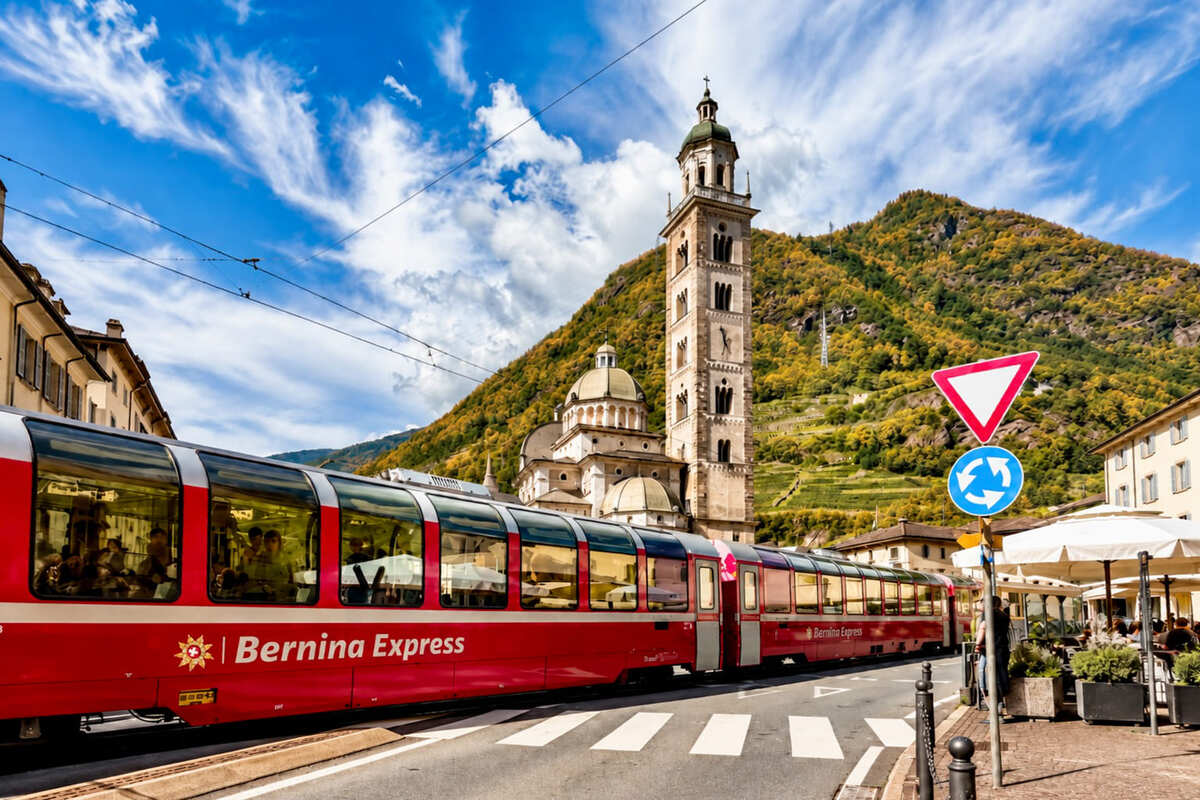
This is Tirano, or, as I like to call it, the pot of gold at the end of a roughly 90-mile-long rainbow, and a corner of Italy most Europe-bound visitors miss:
Europe’s Most Underrated Alpine Getaway Is A Medieval Italian Border Town Touching Switzerland
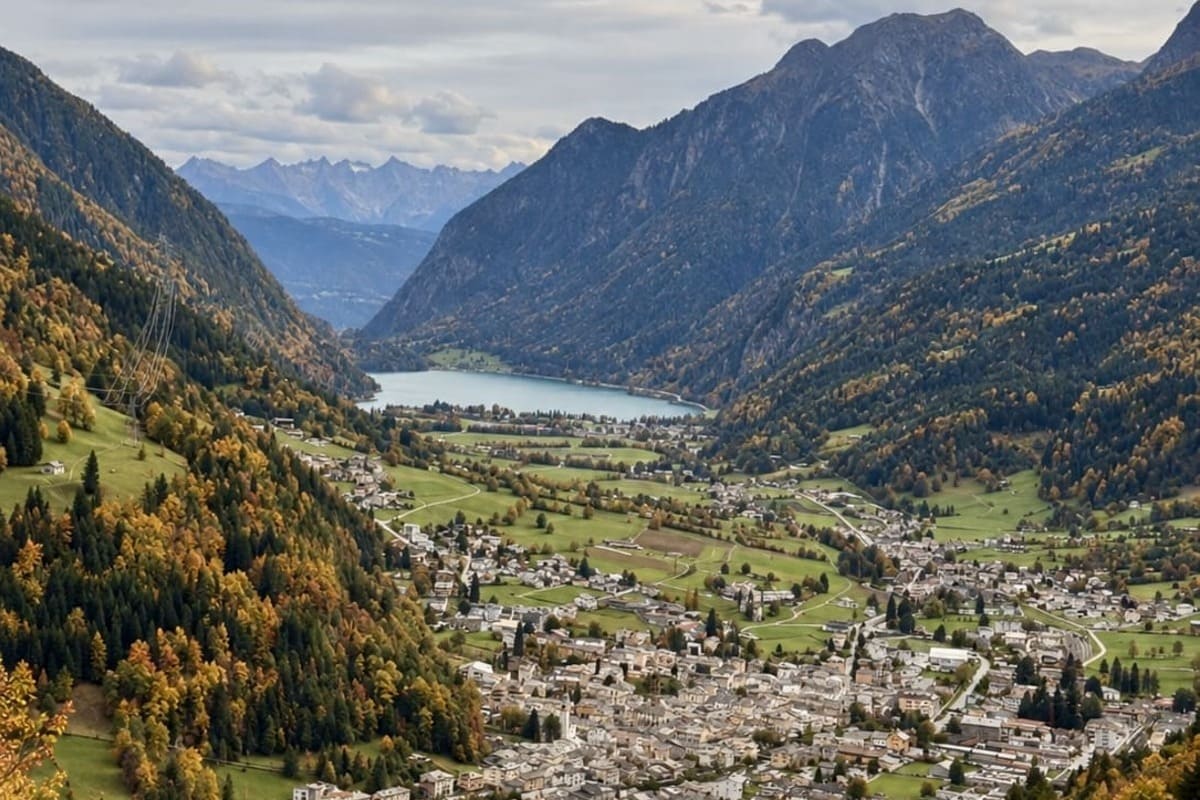
A small town in the heart of the Valtellina Valley, less than 2 miles from the exact point where the Italian region of Lombardy meets the Swiss canton of Grisons, Tirano is the be-all and end-all of low-key Alpine retreats.
With a population of around 8,850, which swells noticeably once the hotels and guesthouses fill up, it’s small enough to feel intimate, yet positioned on a major European rail crossing, so it feels international and not at all remote.
There are shops, supermarkets, cafés, restaurants, and even a cinema to keep locals entertained, so it’s not like you’re pulling into some seasonal resort town that empties out the second the last ski lift closes.
In other words, it feels lived-in and unmistakably local.
The first thing that caught my eye when I stepped out of the Bernina Express?
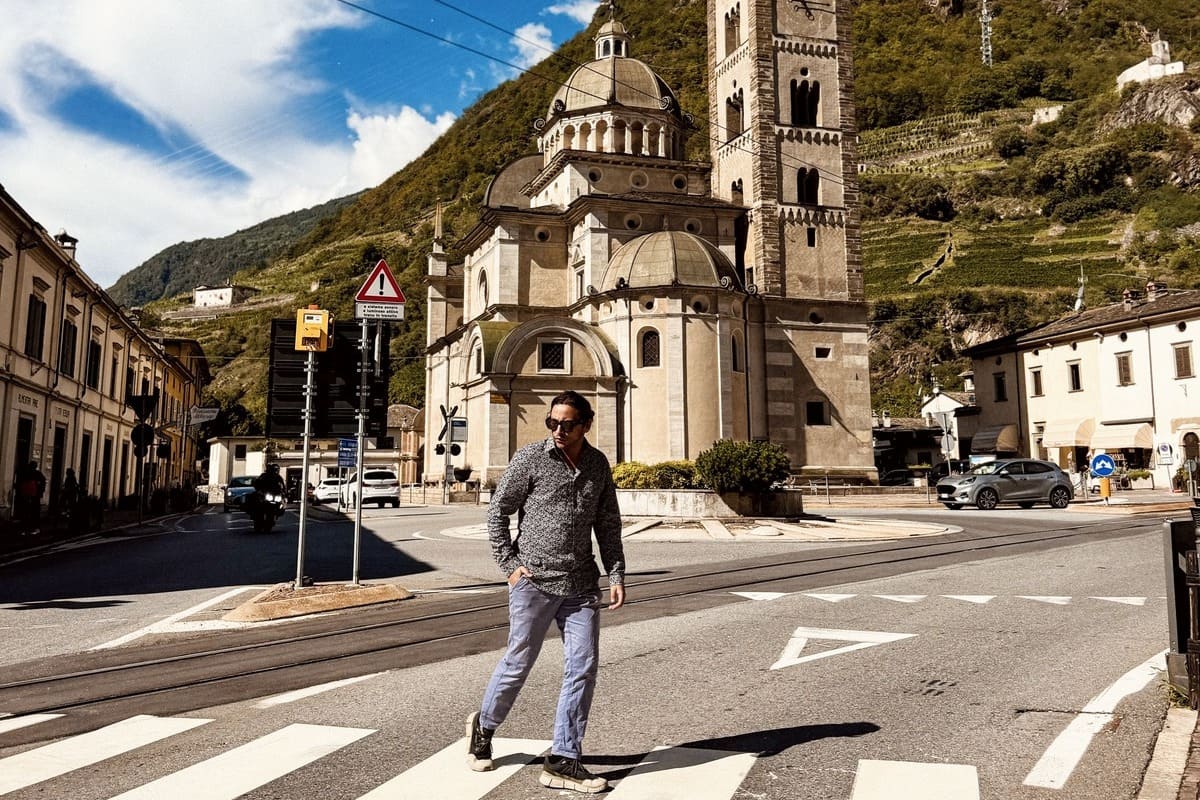
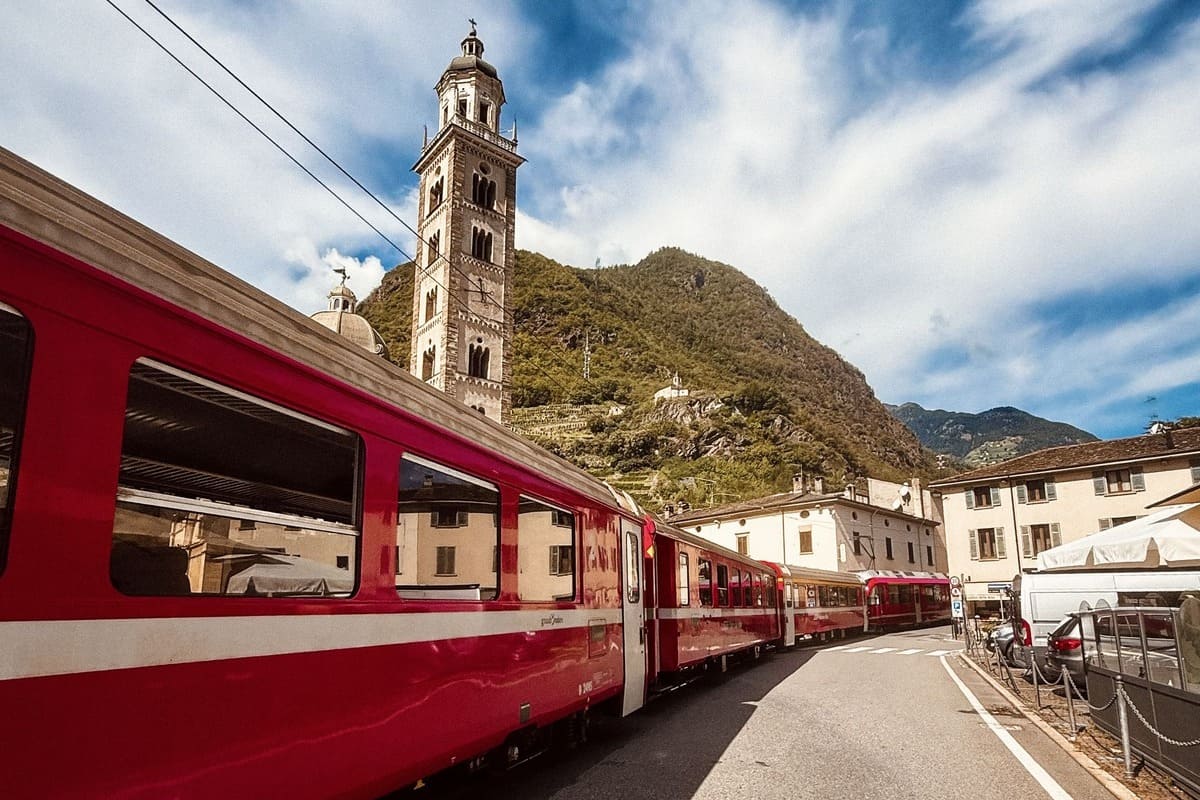
Well, how about still being on the Bernina Express and trundling through the middle of town, weaving past pastel-coloured buildings, leafy squares, and a grand domed basilica?
That’s the cool part about pulling up to Tirano from the dizzying heights of Switzerland: the train gives you a grand tour of Tirano itself as it rattles and snakes its way towards the station.
Winding Alleys, Picturesque Piazze, Fiery Autumn Colors All Around
The town itself is an absolute pocket-sized charmer.
Unlike your average Alpine resort that’s mostly centered around built-up holiday condos and winter sports, as I said, this one feels lived-in and authentically Italian.
Or should I say… Lombard?
Yes, there’s a difference, and one you won’t truly appreciate until you get a taste of the local food and way of life.
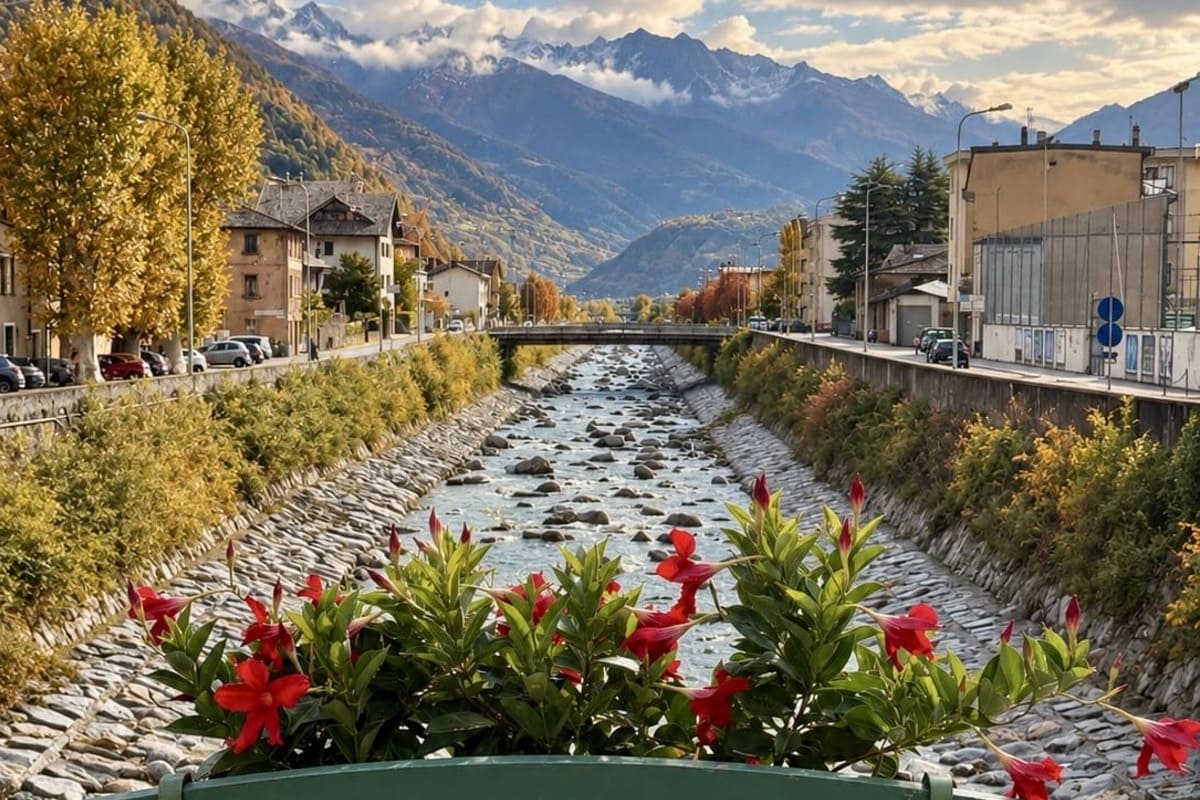
Maybe start with a stroll along the fast-flowing Adda River, a pearly-grey waterway fed by streams tumbling down from the surrounding mountains, running incessantly past pastel townhouses and wooded embankments.
There’s an Old Town here, too: Tirano may have built its reputation as the ‘first Italian town’ after Switzerland, but it’s a centuries-old settlement with a fascinating history. One I myself wasn’t familiar with.
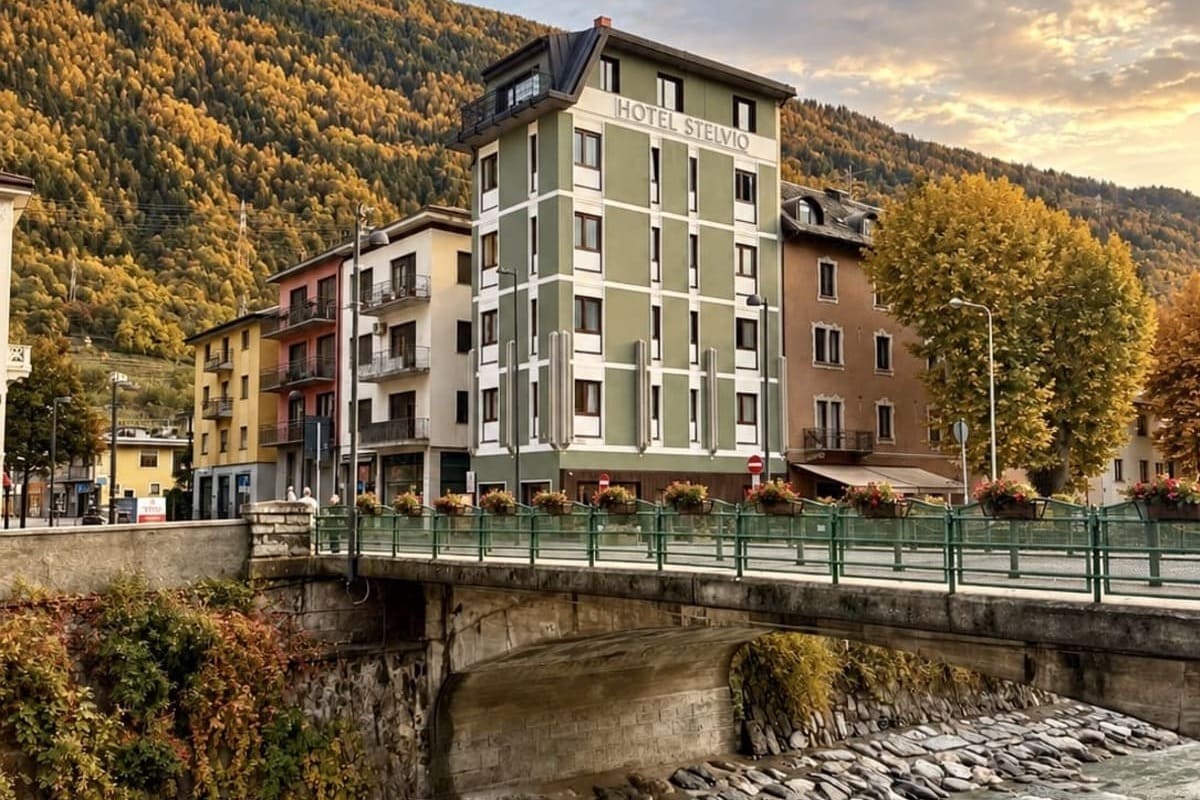
The best way to dive into it is not by opening a dusty history book, but rather by crossing the flower-lined iron bridge spanning the river and passing through the medieval Porta Poschiavina, the best-preserved of Tirano’s surviving gateways, into the very heart of the Centro Storico.
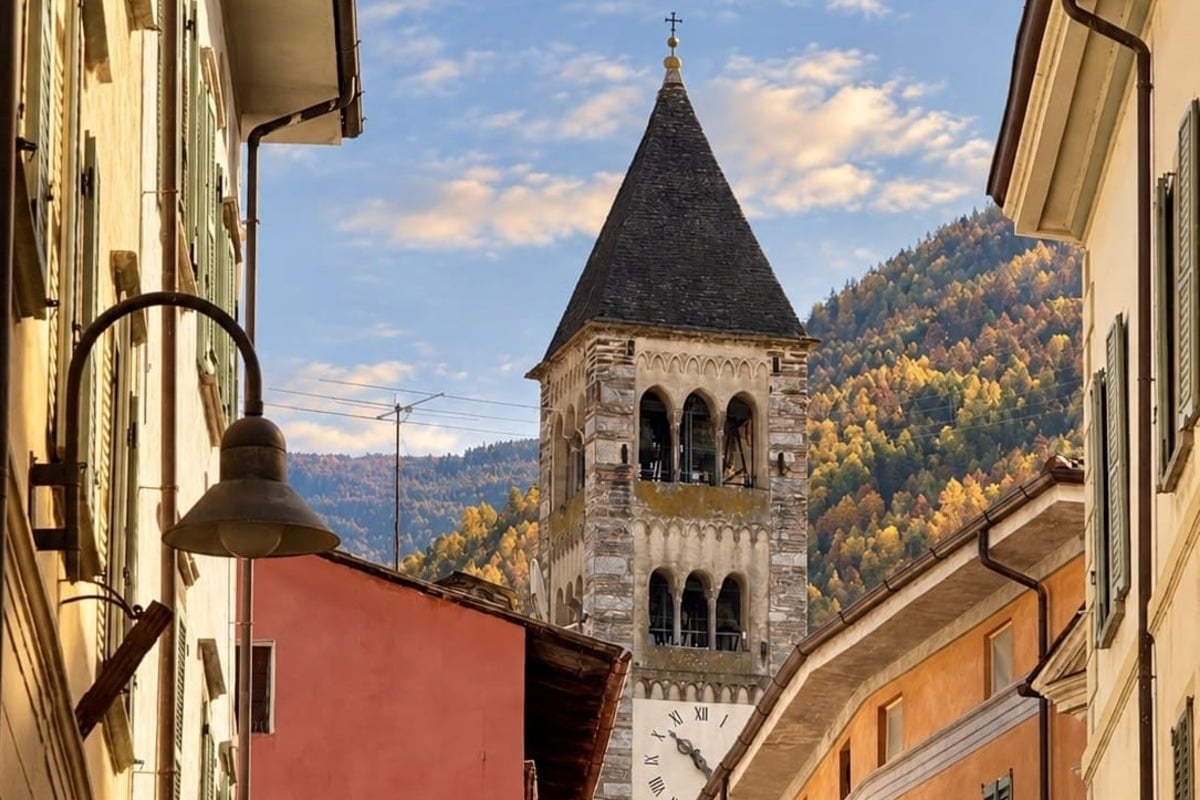
A compact maze of pedestrian-friendly lanes, flanked by centuries-old palazzi, tiny piazzette framed by coffee shops and your usual family-owned osterie, and a slender belfry backed by the Alps, it’s every history buff’s dream come true.
The town is right on the doorstep of the Alps, and if you’re coming this fall, you’ll be met with a sweeping, fiery cloak of amber-gold that starts at the bottom of the valley and climbs all the way up towards remote stone-built hamlets clinging to the mountainsides like eagle nests.
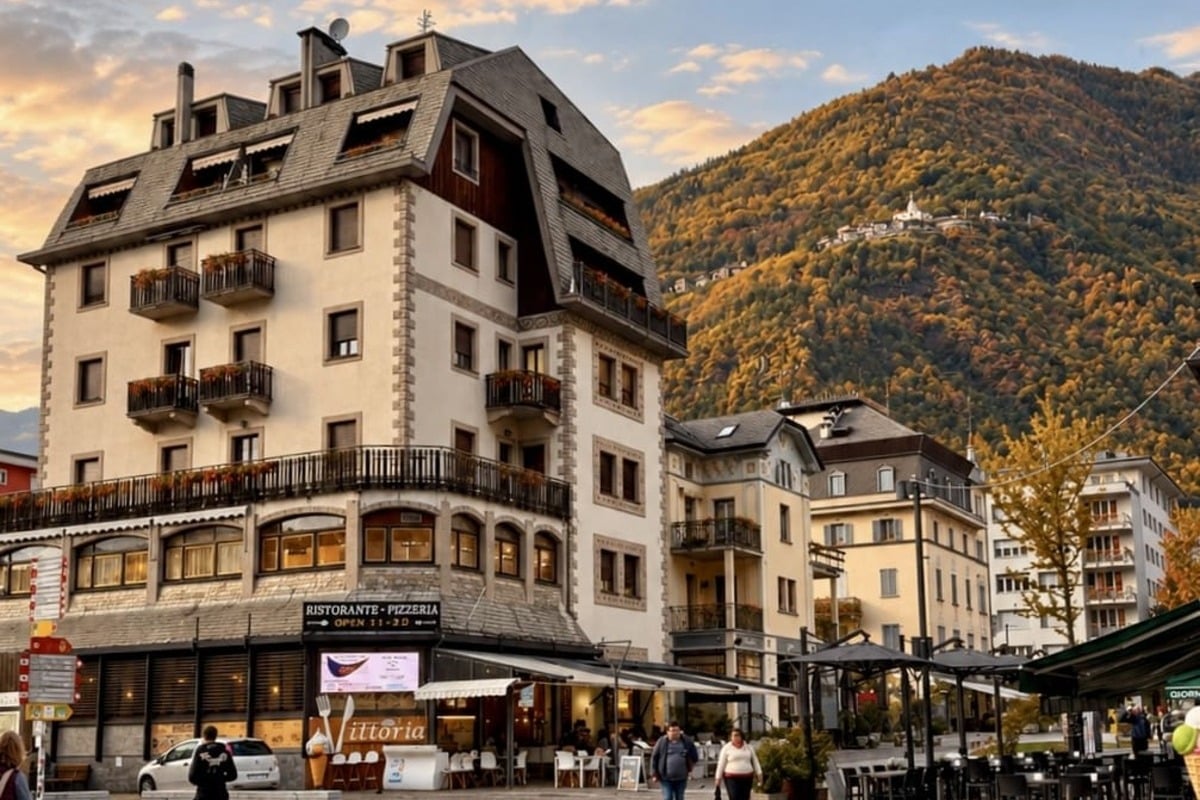
There are countless walking and biking trails to explore here, like the Via dei Terrazzamenti, a 43.5-mile route linking Tirano to Morbegno through terraced vineyards, old dry-stone walls, and sleepy villages overlooking the valley.
I’ve said it before, and I’ll say it again: the Italian Alps are criminally underrated for fall foliage.
If a crisp fall day sipping hot chockie in a cozy café, breathing in the clean mountain air, and chugging along on scenic trains through a sea of copper-coloured leaves is on the cards for you, Tirano is where you’ll get the most bang for your buck.
More on that soon.
Wondering how safe Tirano is to visit this fall, or whether there are any regional alerts in place not covered by the broader U.S. Department of State advisory?
Head over to the Travel Off Path Traveler Dashboard, type in Italy, and check the live readout.
According to recent visitors who’ve submitted their scores on the Traveler Safety Index, a key component of the Dashboard, Italy averages 92 out of 100 on the safety front.
That, coupled with the fact that it’s currently a Level 2 destination, as classified by U.S. authorities—Americans are advised to exercise increased caution due to the threat of terrorism—points to a broadly stable, low-risk trip.
Italian Alps Without Breaking The Bank: Where To Stay, Where To Eat, And How Much To Budget
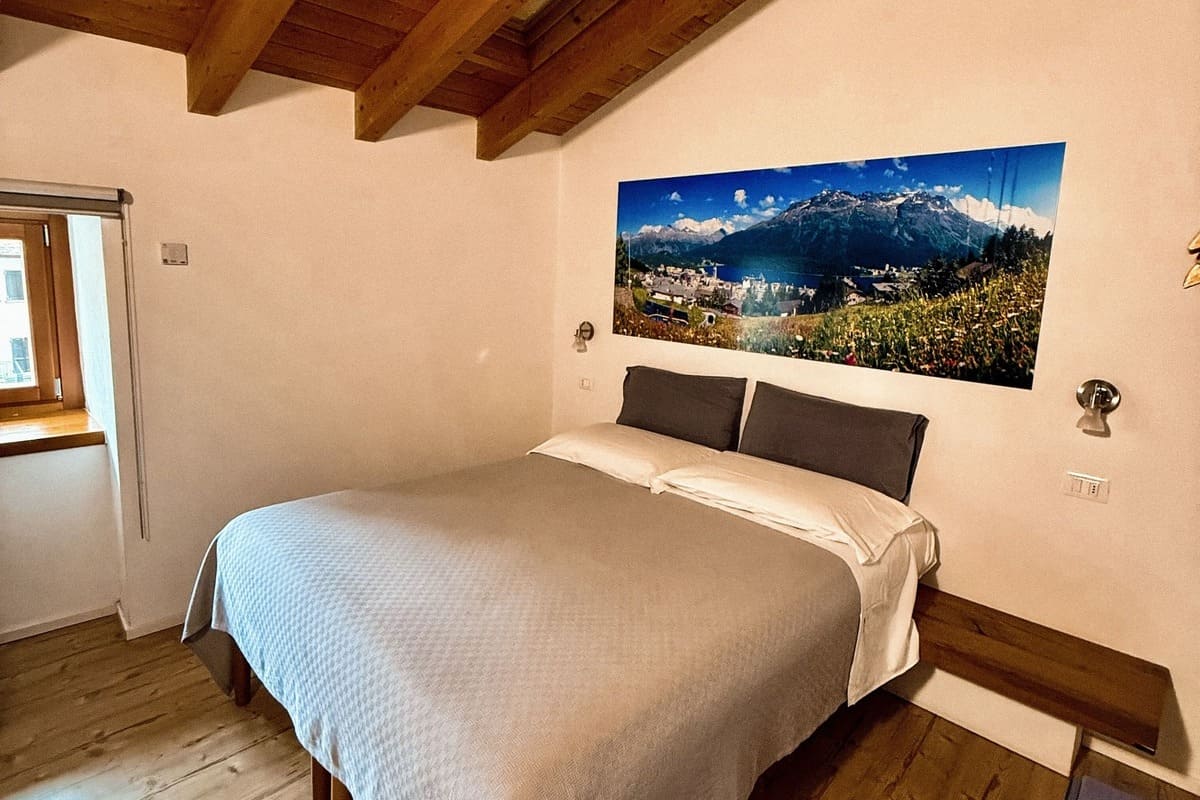
I stayed in the family-run, boutique Le Stanze del Trenino Rosso, a B&B occupying a restored 16th-century building in the Historic Center, literally sitting above Porta Poschiavina at the end of the iron bridge.
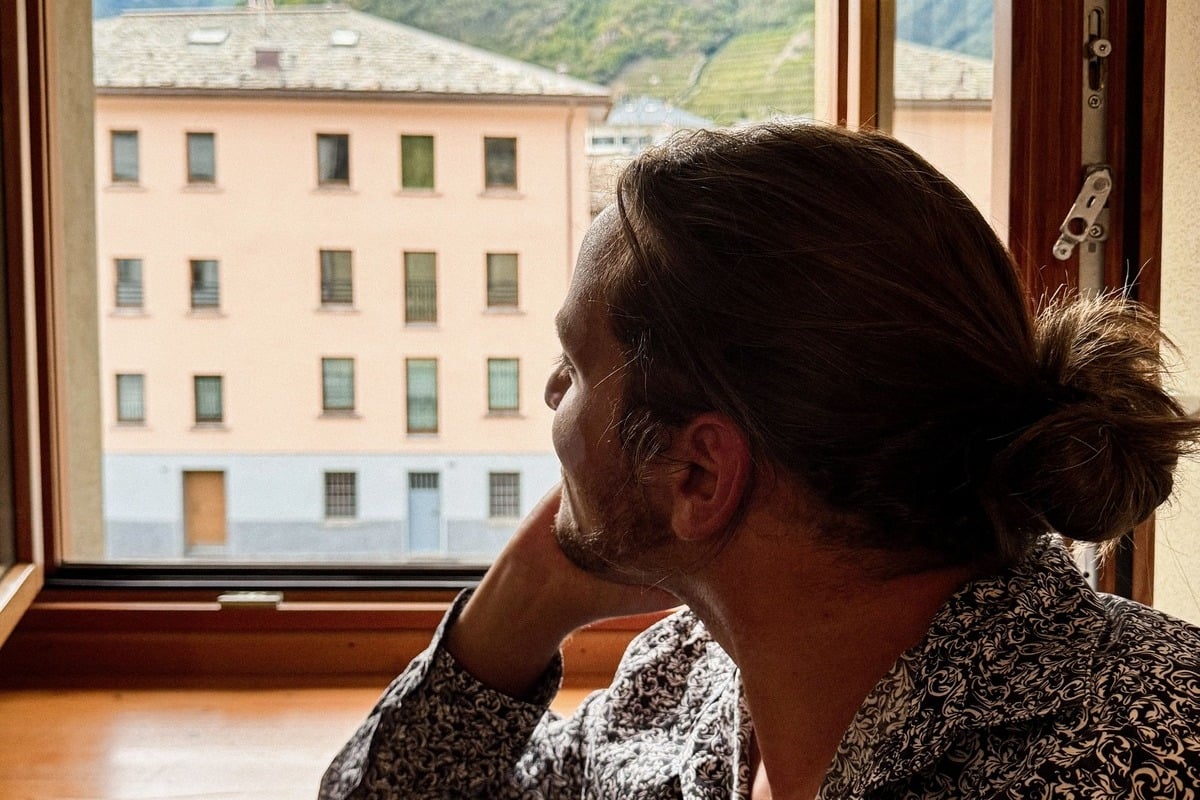
The fact that I had a hearty Valtellinese breakfast prepared on the spot by my lovely host—shout out to Michele and crew—a cozy room, and a charming tiny window opening up to views of the river, the town’s terracotta roofs, and the Alps made the roughly $120-a-night rate feel like a steal of a deal.
You’d be surprised by how much more affordable Tirano is than its Swiss neighbor.
On my first night in town, I stumbled upon this cute, low-key restaurant right beside the train station, called Caffè Merizzi, and feasted on a plate of pizzoccheri—buckwheat pasta layered with cabbage, potatoes, butter, and melted Valtellina cheese—washed down with the last glass from a bottle of crisp, sparkling summer white wine for around $30 total.
Tirano is definitely not the polished, rarefied confines of St. Moritz, where a fondue pot can easily top $45, and a hotel with a view will usually add at least another $300 to your daily bill.
Average Prices In Tirano, Lombardy
- Takeaway snack (go for a bresaola-filled panino): $6–10
- Pizzoccheri, sciatt, or another traditional Valtellinese dish: $14–23
- Three-course meal in a mid-range restaurant: $30–50 per person, excluding drinks
- Espresso or cappuccino: $2–4
- Local draught beer: $4–9
- Glass of Valtellina wine: $6–12
- Gelato: $3–5
- B&B or family-run guesthouse: $95–150 per night
- 3-star hotel: $80–155 per night
- 4-star hotel: $130–220 per night
Note From The Editor
Just one sec! If you enjoy reading great human-written articles, the best way to see a few more is to follow us on Google so we become one of your preferred websites. Thank you so much for reading. Now back to the story!
The Journey Is Really The Whole Destination
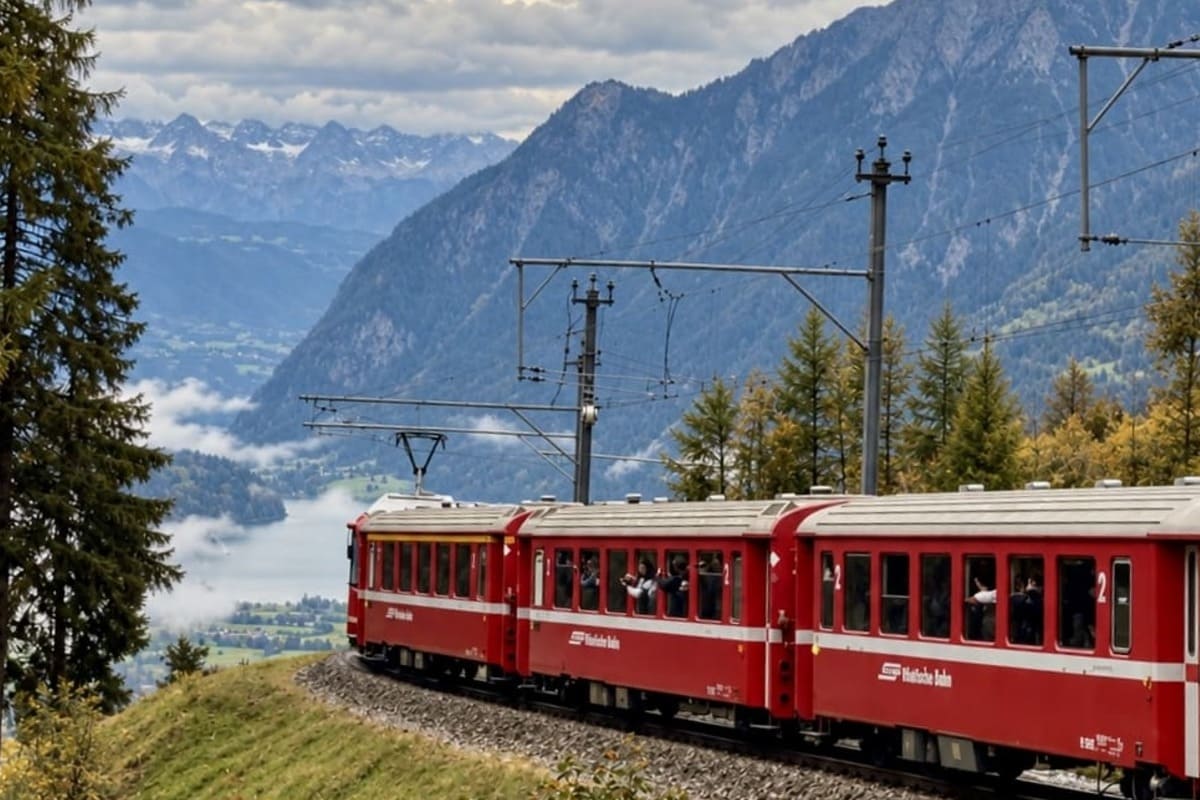
Of course, there’s no discussing Tirano without bringing up the railway that gets you there: the iconic, red-liveried Bernina Express, which runs roughly 90 miles from Chur to Tirano across mountainsides, plunging valleys, and glass-clear Alpine lakes along a UNESCO-listed rail route.
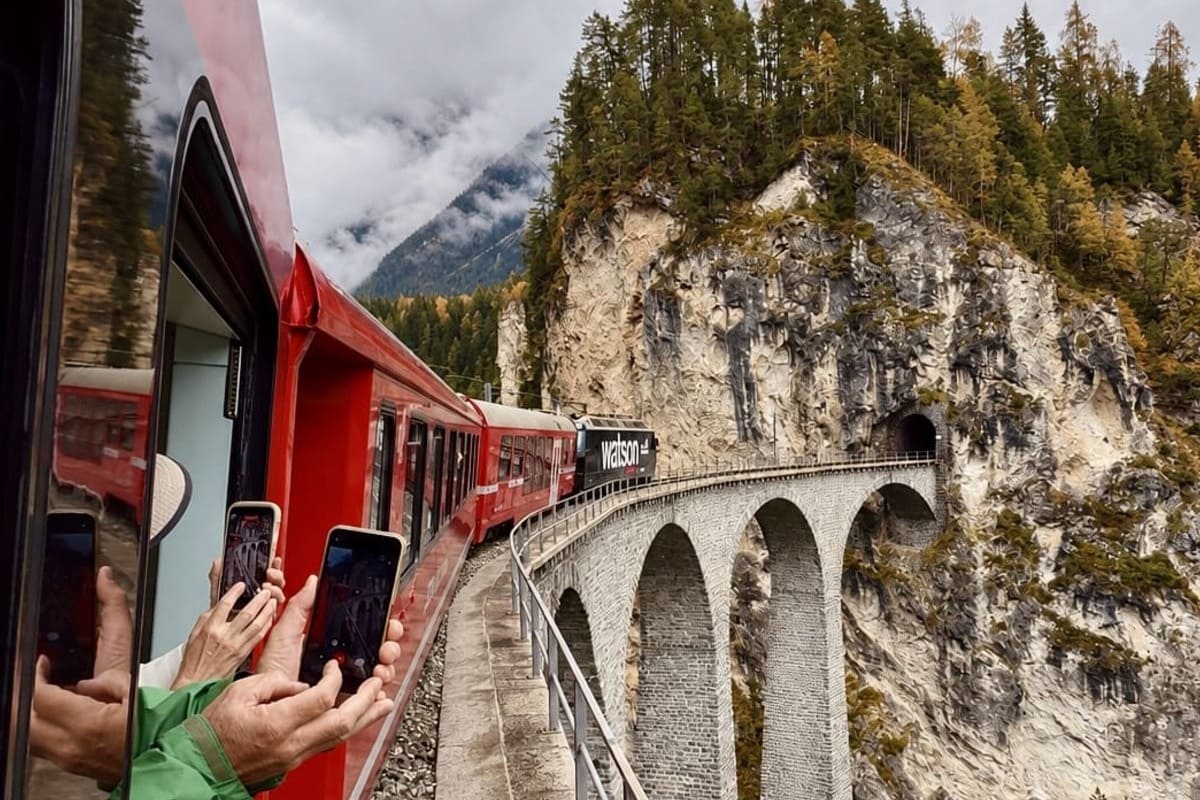
It passes a whopping 196 bridges on the full Chur–Tirano run, including the iconic Landwasser Viaduct, a six-arch, 213-foot crossing that spans the Landwasser River, before penetrating a tunnel carved straight into the hard-rock mountain.
Just bear in mind Landwasser lies north of St. Moritz, so you won’t see it if you’re boarding there for the shorter journey to Tirano.
I’d dare say the full train ride is the ultimate Swiss postcard.
How To Plan Your Bernina Express Journey
When it comes to planning a trip to Tirano on the Bernina, though, advance planning is key, as panorama-car reservations can sell out, and, as you might be aware at this point, nothing in Switzerland comes exactly cheap, regardless of how affordable the pizzas are at your final destination.
Here are the standard 2026 rates for a round-trip Bernina Express journey from Chur | St. Moritz to Tirano:
First Class
- Return rail fare: around $140
- Mandatory seat reservations: around $78 return
- Total: approximately $218
Second Class
- Return rail fare: around $81
- Mandatory seat reservations: around $78 return
- Total: approximately $159
Rail-Pass Holders
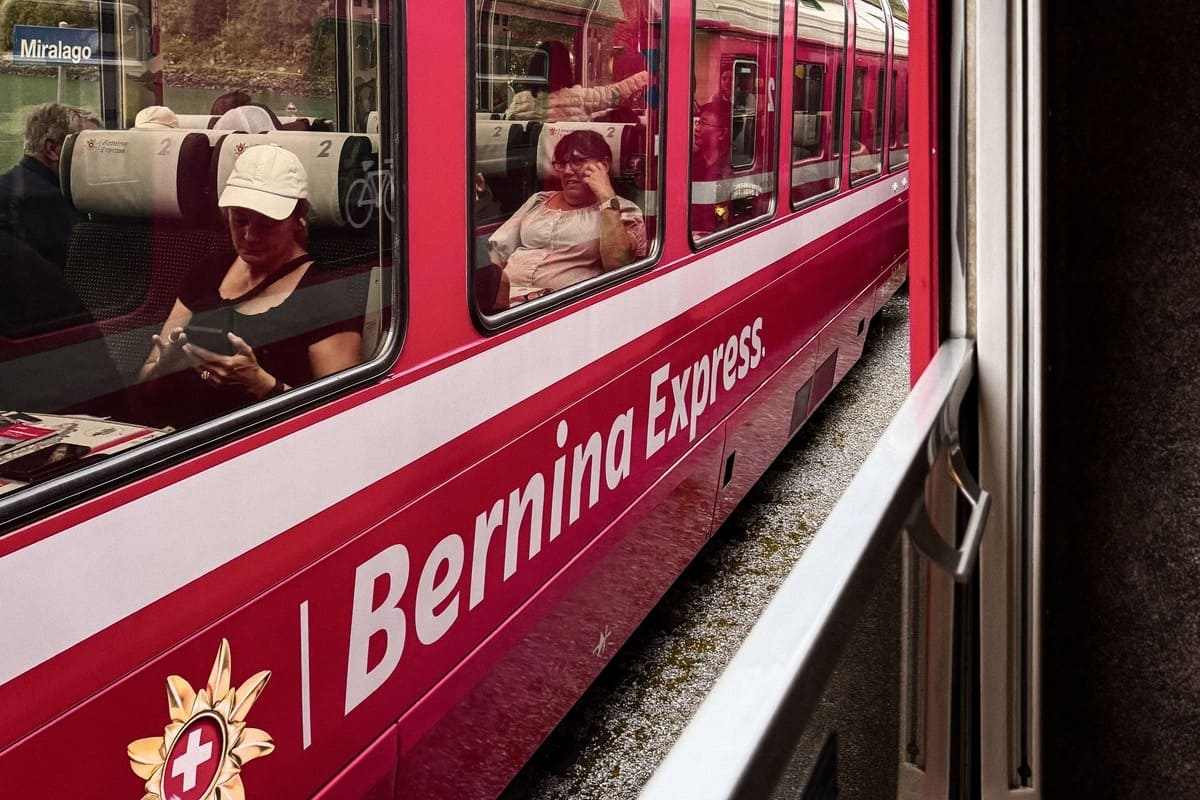
Swiss Travel Pass, Eurail, Interrail, and GA Travelcard holders normally have the baseline rail fare covered, but they must still pay the Bernina Express seat-reservation fee.
See how Interrail works here.
Crossing The Border Through The Schengen Area
Both Italy and Switzerland are part of Europe’s borderless Schengen Area, a passport-free travel zone encompassing 29 European countries.
This means that, although the train crosses an international frontier, there are no routine immigration checks or the usual border-control faff that accompanies international travel.
Switzerland isn’t part of the European Union’s customs union, however, so there might be an occasional Swiss customs or police spot check onboard as you pull out of Tirano towards Campocologno, the first station across the border.
Make sure you’re carrying your passport and any other necessary travel documentation, such as proof of outward travel outside the Schengen Area, even if you’re not staying in Italy overnight, as there’s a real chance you might get asked for it.
If you’re unsure what kinds of documents must always be on you in the event of a spot Schengen border check, please refer to the Entry Requirements Checker for the full rundown.
How To Pay Less While Traveling On The Exact Same Route: The Regional Train Hack
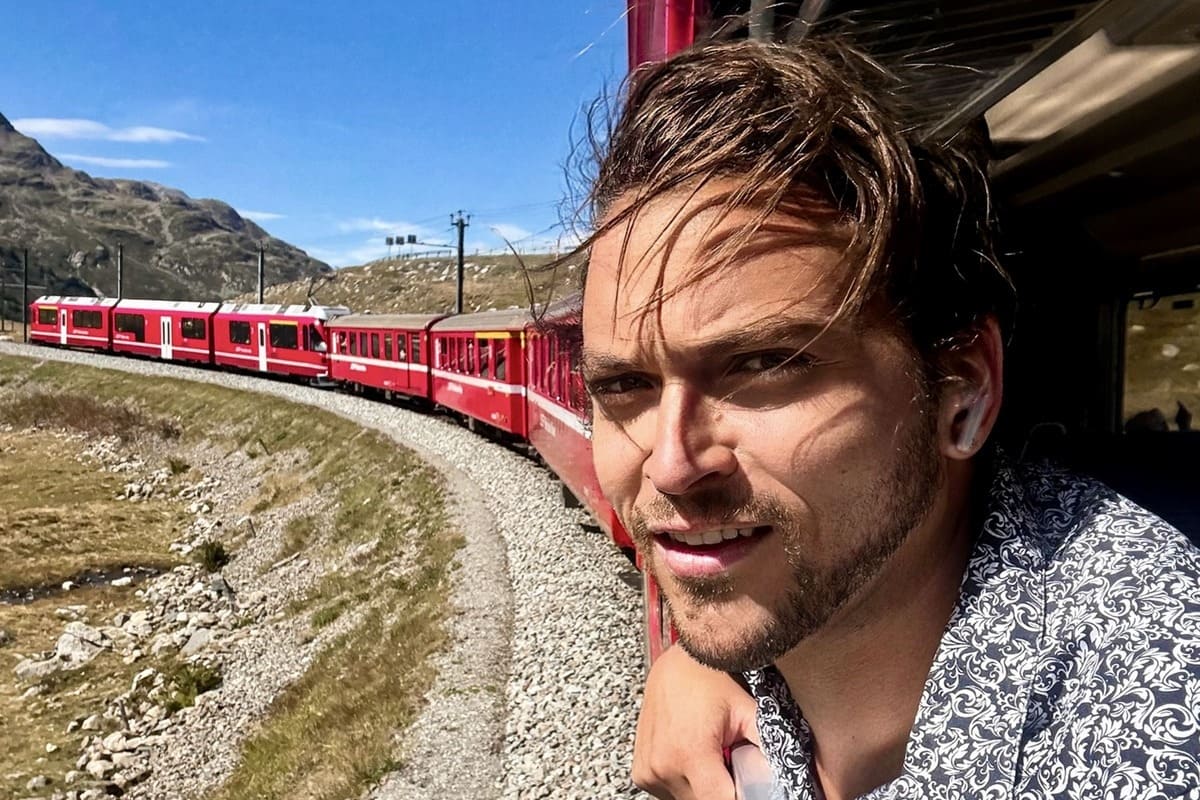
Now, here’s the money-saving hack most tourists aren’t telling you: you can travel on this exact same route for much cheaper if you opt for the regular regional train instead.
This is an active, year-round railway connecting Swiss towns to Italy, and locals commute on this line daily.
The stand-alone second-class ticket from St. Moritz to Tirano on the regional train costs only $40, or CHF33. No mandatory seat reservation required!
Granted, you won’t get the sweeping panoramic windows, at-seat service, or onboard extras like the souvenir train-shaped chocolate box, but some regional services use carriages with windows you can actually open, and open-air observation cars are occasionally added during the warmer months.
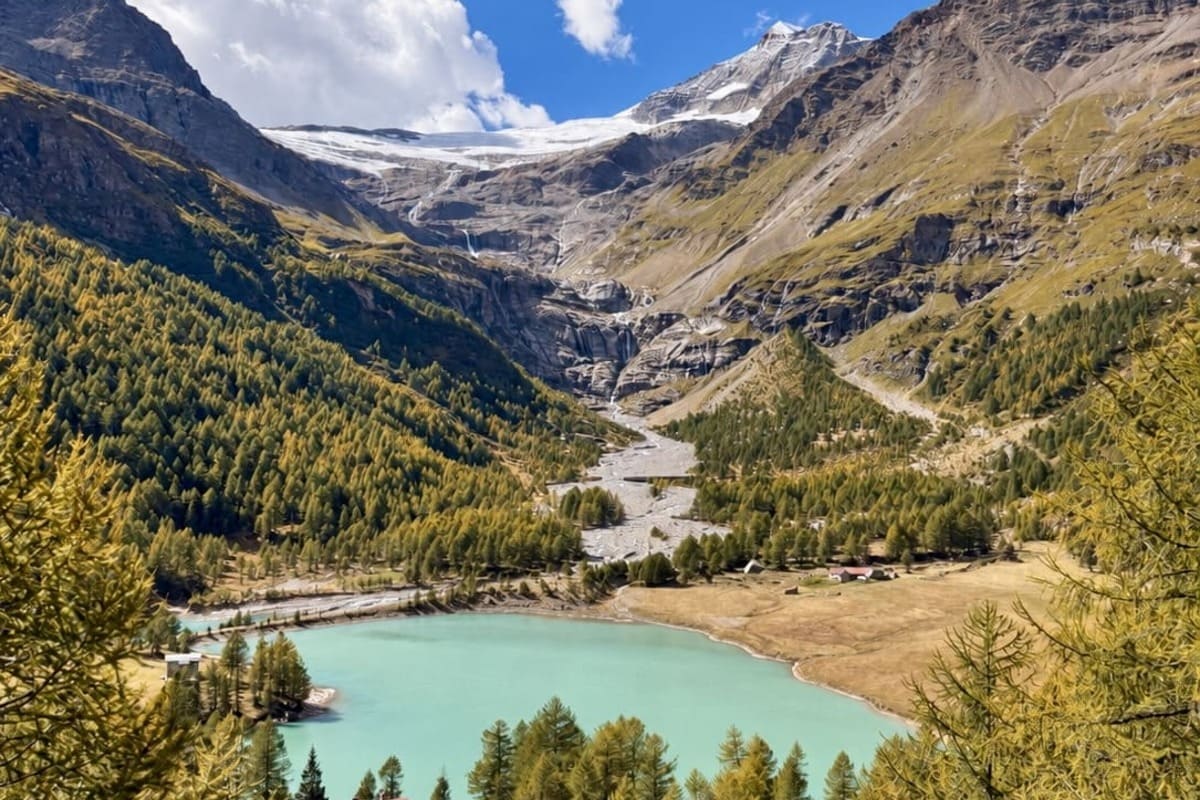
In other words, you actually stand a better chance of taking glare-free photos on the regional train than the much-pricier, VIP Bernina.
Just keep your phone—and your head—inside the carriage. Poles, tunnels, and trackside structures can appear without warning.
Speaking as someone who’s had a few dangerous near-misses myself.
The Ultimate Chur–Tirano Rail Hack
- Book the regional train outbound and return on the Bernina Express for the best of both worlds: flexibility and open-window photo opportunities on the way there, followed by the full panorama-car experience on the way back
- Where you sit is half the experience, so try getting a window seat on the left-hand side coming from St. Moritz for some of the best views over Val Poschiavo and the Brusio Circular Viaduct, though the scenery shifts from side to side throughout the journey
- If you’re mainly coming for photos, taking the regional train may actually be the better pick, as some carriages have opening windows and seasonal open-air wagons designed with sightseeing in mind
- For savings and more flexibility, get an SBB Saver Day Pass, starting at around $64, or CHF52, so you can hop on and off regional trains throughout the day without paying for additional tickets*
*The Saver Day Pass is only worth it if you’re making a return trip or planning multiple stops, seeing as a simple one-way ticket costs around $40
Other Bernina Express Destinations
If you’re buying an unlimited travel pass for the day, you can hop off at any of the stops below on your way to Tirano without paying an additional rail fare.
Just check the timetable carefully, as not every service stops everywhere, and you don’t want to be standing on a windswept platform for two hours wondering when the next little red train is coming.
If you’re starting in St. Moritz, here’s where I’d stop:
- Pontresina: a polished alpine village peppered with traditional sgraffito houses and Belle Époque hotels
- Ospizio Bernina: the highest railway station on the route, sitting at roughly 7,390 feet
- Alp Grüm: a roadless mountain stop with a panoramic terrace overlooking the Palü Glacier
- Poschiavo: a charming Italian-speaking Swiss town centred around a café-filled piazza
- Brusio: a quiet stone village surrounded by vineyards and best known for its circular viaduct
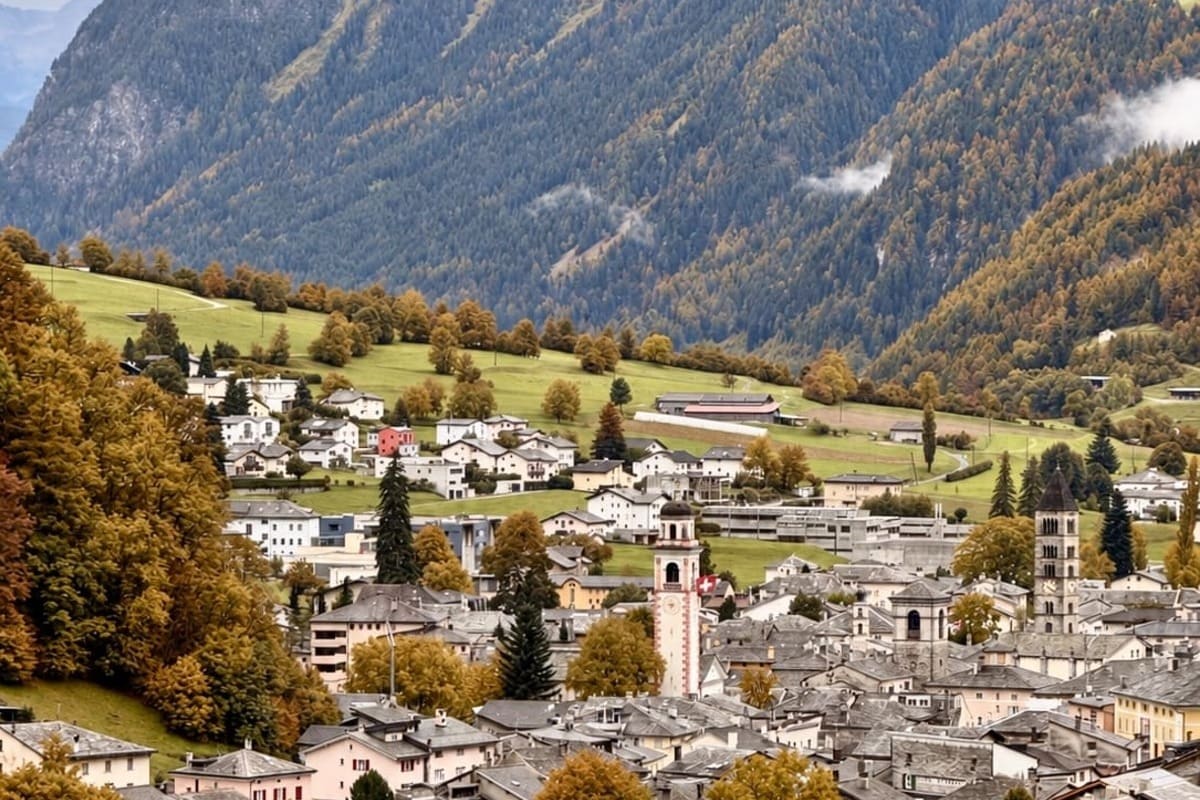
The Bernina Express service also starts from Chur, the capital of the canton of Grisons and the oldest city in Switzerland, with a history stretching back more than 5,000 years.
Chur is one of the prettiest Swiss cities I’ve ever visited myself, with its needle-like St. Martin’s bell tower rising right in the middle of a colorful, café-filled Old Town, and medieval walls backed by rolling vineyards.
Grisons is also the only Swiss canton where Romansh, an old Romance language descended from spoken Latin, is a co-official language alongside German and Italian.
Keep your ears peeled for something that sounds like Ancient Latin went on an Alpine sabbatical, roomed with Italian, picked up a little French on the way, and came back speaking in cursive.
Enter your email address to subscribe to Travel Off Path’s latest travel news, straight to your inbox
