
Got Germany on your upcoming travel plans but you’re looking to switch things up a little?
Chances are the never-ending beer fest that is Munich, and the cathedral-dominated Cologne are already featured on your itinerary, but if you’ve got room for one more, this secret cultural gem packed with medieval sights and traditional taverns might just be the missing puzzle piece.
Chemnitz is a largely unheard-of gem in the already-underrated state of Saxony—does Dresden ring a bell? Yep, same state—and it’s probably one of the last few German cities where a weekend break won’t have you anxiously checking your bank app to see how low your budget has already sunk.
A European Capital of Culture Overlooked By Most
A mid-size German hub with around 247,000 residents—the sweet spot if you don’t want a big, sprawling city, but neither a sleepy dorf—Chemnitz is currently enjoying a major tourism resurgence.
In 2025, it recorded approximately 743,000 overnight stays, which amounts to a 24% year-on-year increase. That’s an all-time tourism record for a somewhat-ignored destination most Americans blissfully skip altogether.
Well, here’s why you shouldn’t.
In 2025, it was designated one of that year’s 2 European Capitals of Culture, alongside Gorizia in Italy, a coveted title that puts the spotlight on the continent’s cultural hotspots. It’s also a unique cityscape full of contrasts:
Prior to the fall of the Berlin Wall, it used to lie east of the East-West divide, so if you’ve had it with the cookie-cutter, fairytale European towns jam-packed with influencers, it’s unlikely they’ll be drawn to Chemnitz’s grittier, off-the-beaten-path character.
Or should we say… Karl-Marx-Stadt:
A Communist Dump Risen Out Of The Ashes
Under the GDR, Germany’s East-aligned communist half, Chemnitz was temporarily renamed Karl-Marx-Stadt.
No, he wasn’t born here—though you can visit his actual birthplace over in Trier, the oldest city in Germany—nor was he connected to the area, but Chemnitz was, at one point, a major industrial powerhouse for the regime.

Unlike your average Eastern European hub where it’s all grayed-out apartment blocks and crumbling architecture, however, many of the old factories, railway installations, and former industrial buildings here have been repurposed as cultural venues.
‘Cause of course, it’s not a real German city break until you’ve found your share of artsy spots enveloped in a brutalist sarcophagus, and one of the coolest finds here is Wirkbau:
Formerly one of Germany’s largest textile machinery factories, it now houses creative studios, regular businesses, concept cafés, and cultural spaces.
NOMAD restaurant serves one of the most delicious eggs Benedict and breakfast bowls I’ve had on this side of the pond, and the coffee roasted at Bohnenmeister, just beneath the imposing clock tower, is sure to get you fired up for what comes next.
The Prettiest Little Medieval Center
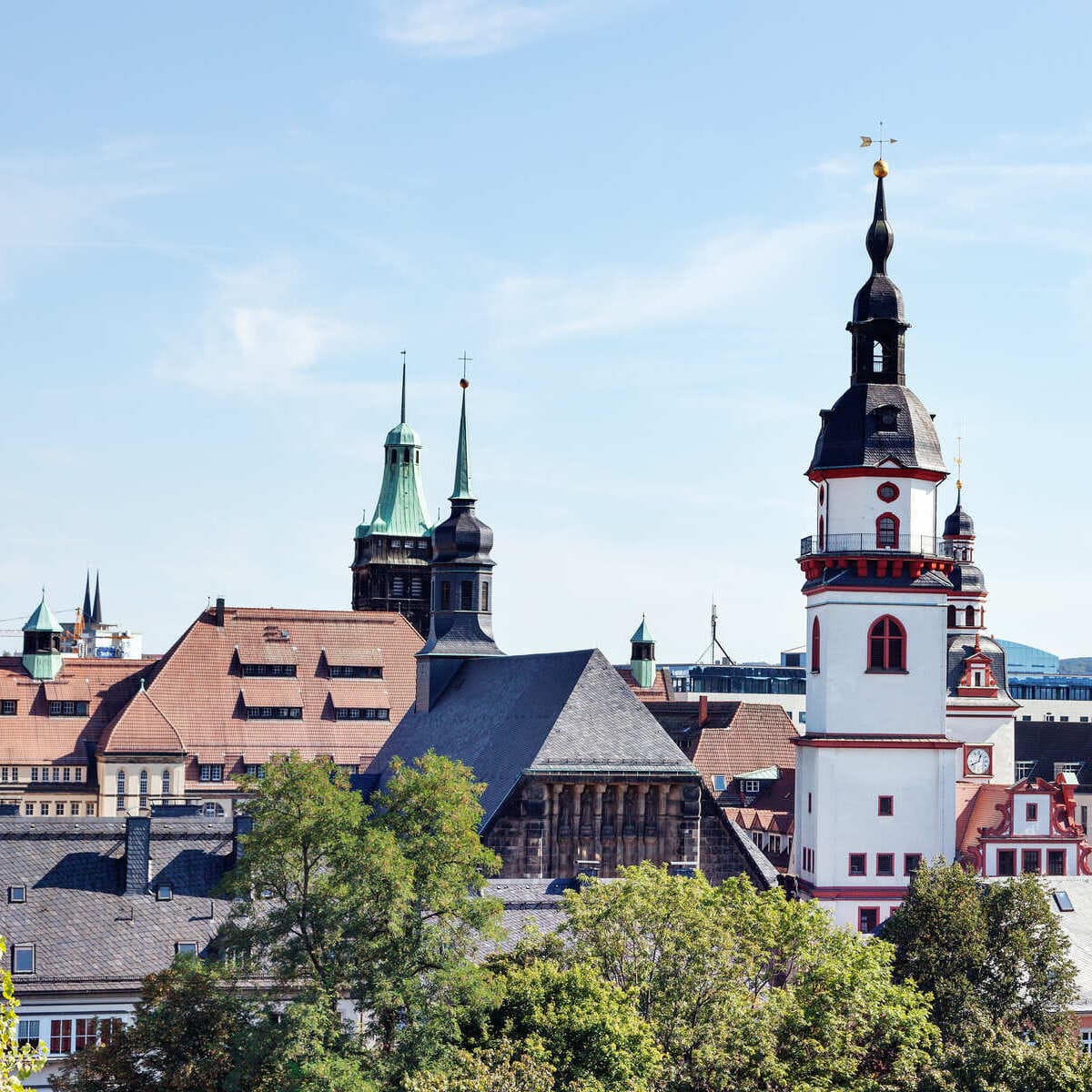
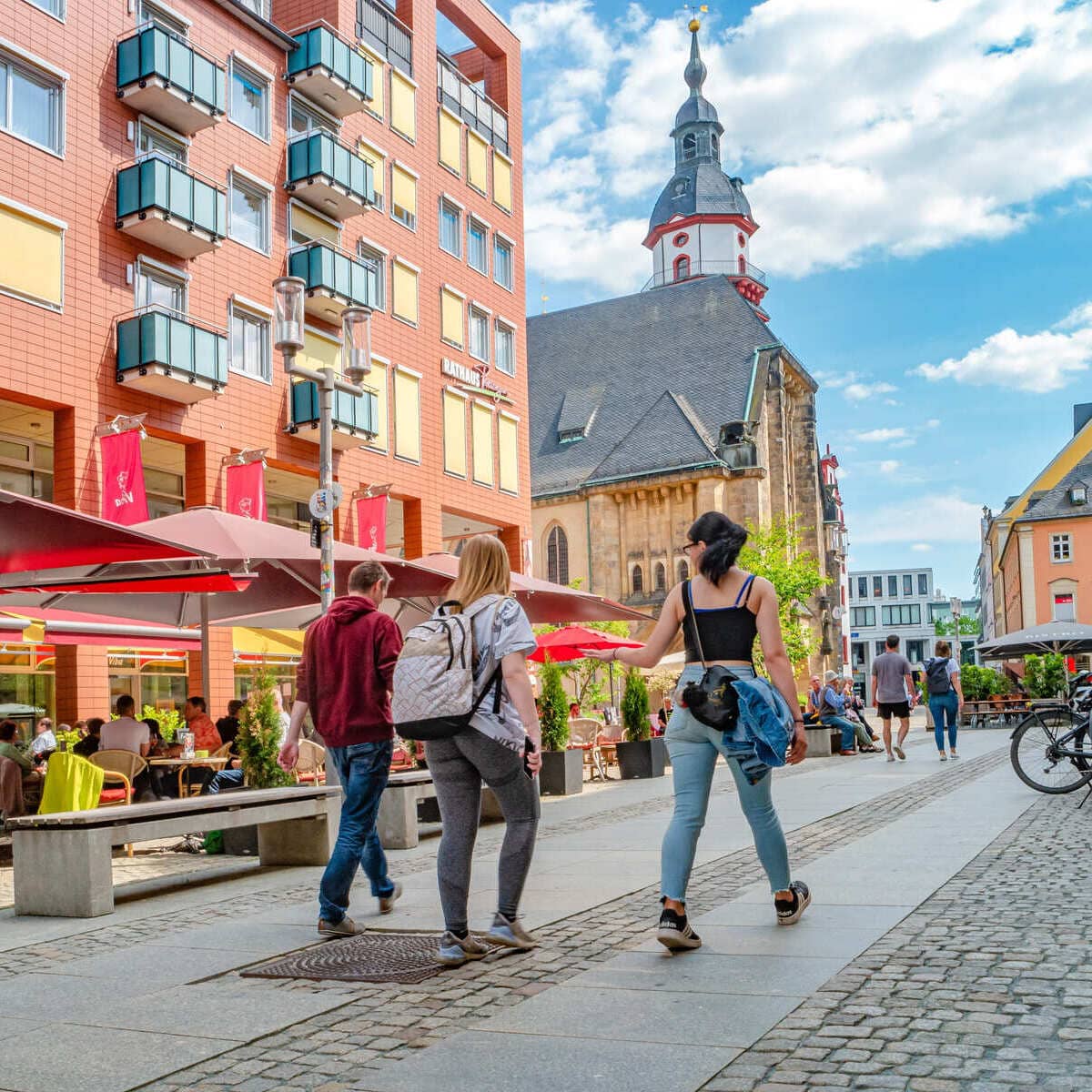
Innenstadt is the prettiest, most European-looking district in town: think medieval monuments, pedestrianized lanes flanked by timbered buildings, some of which had to be rebuilt following the war, of course, and grand squares flanked by coffeeshop terraces.
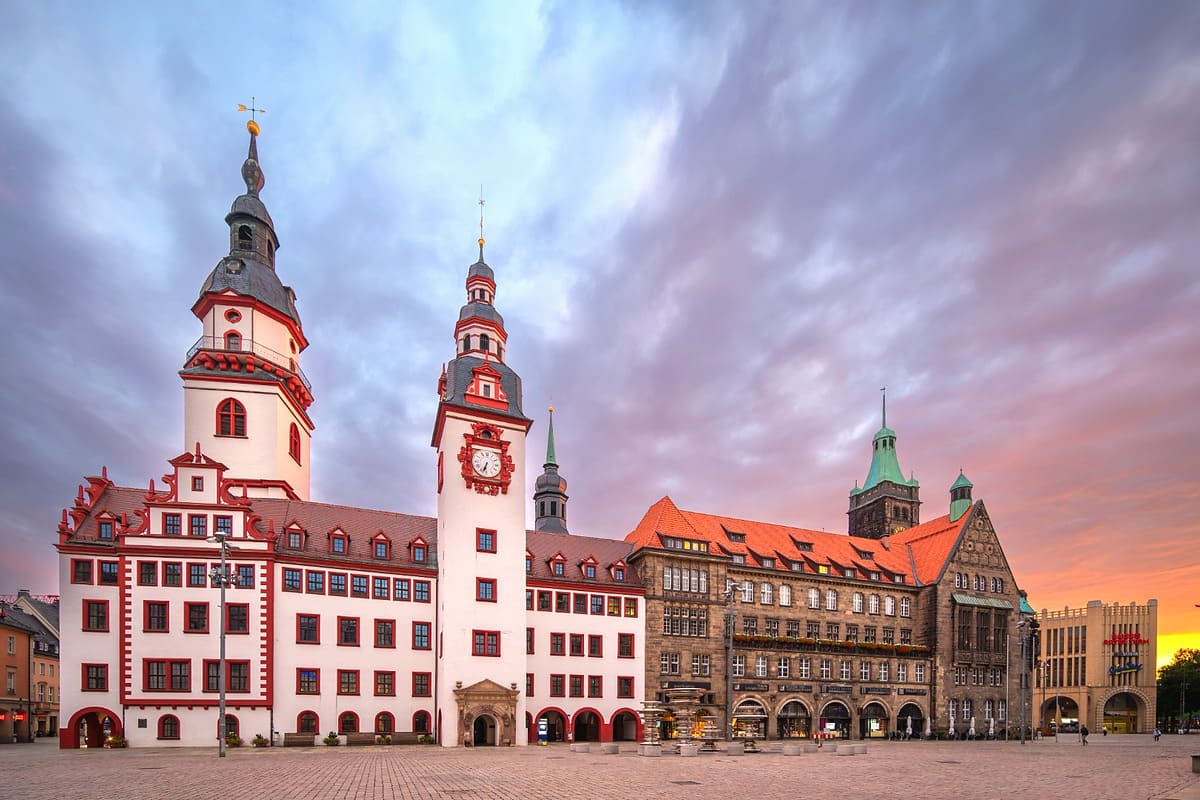
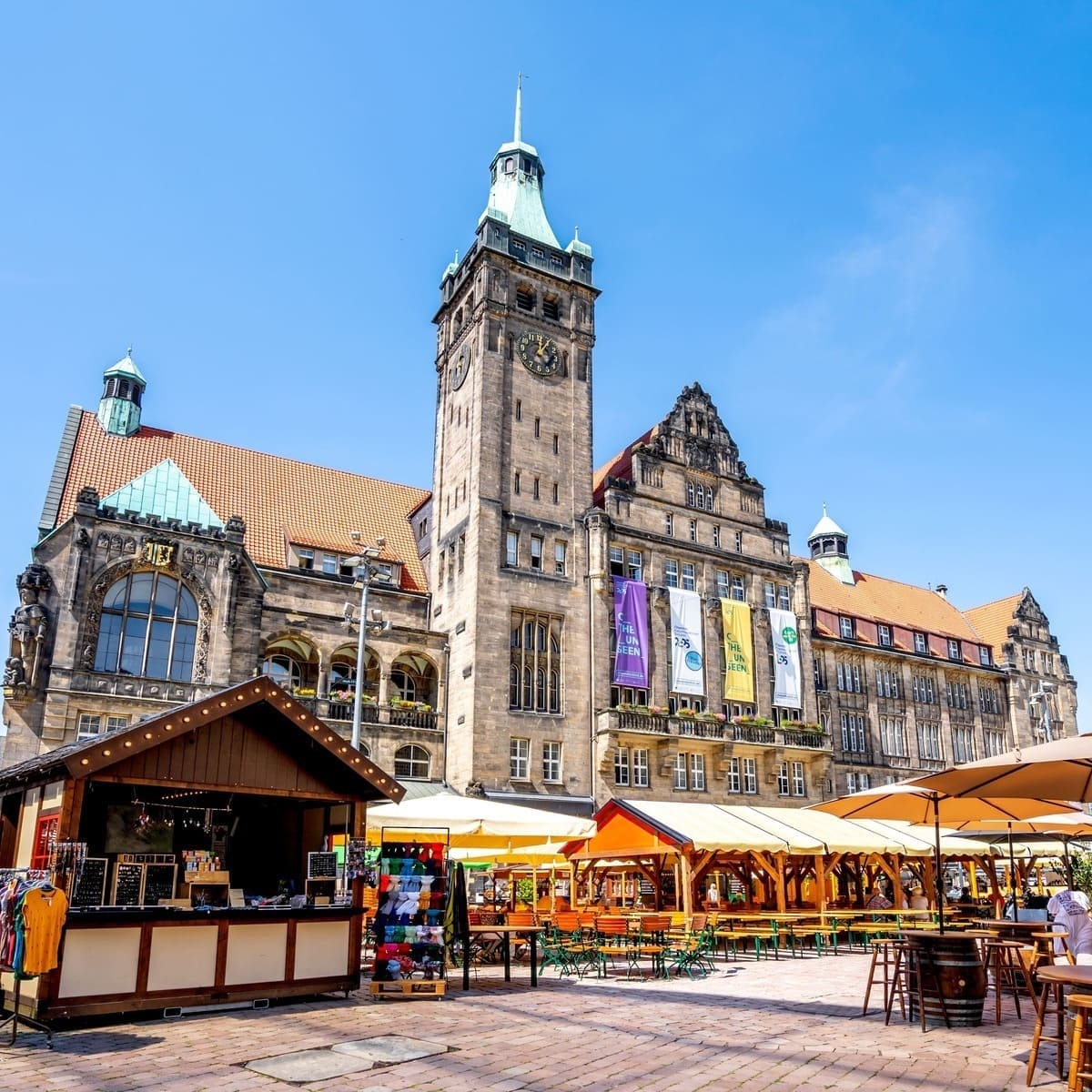
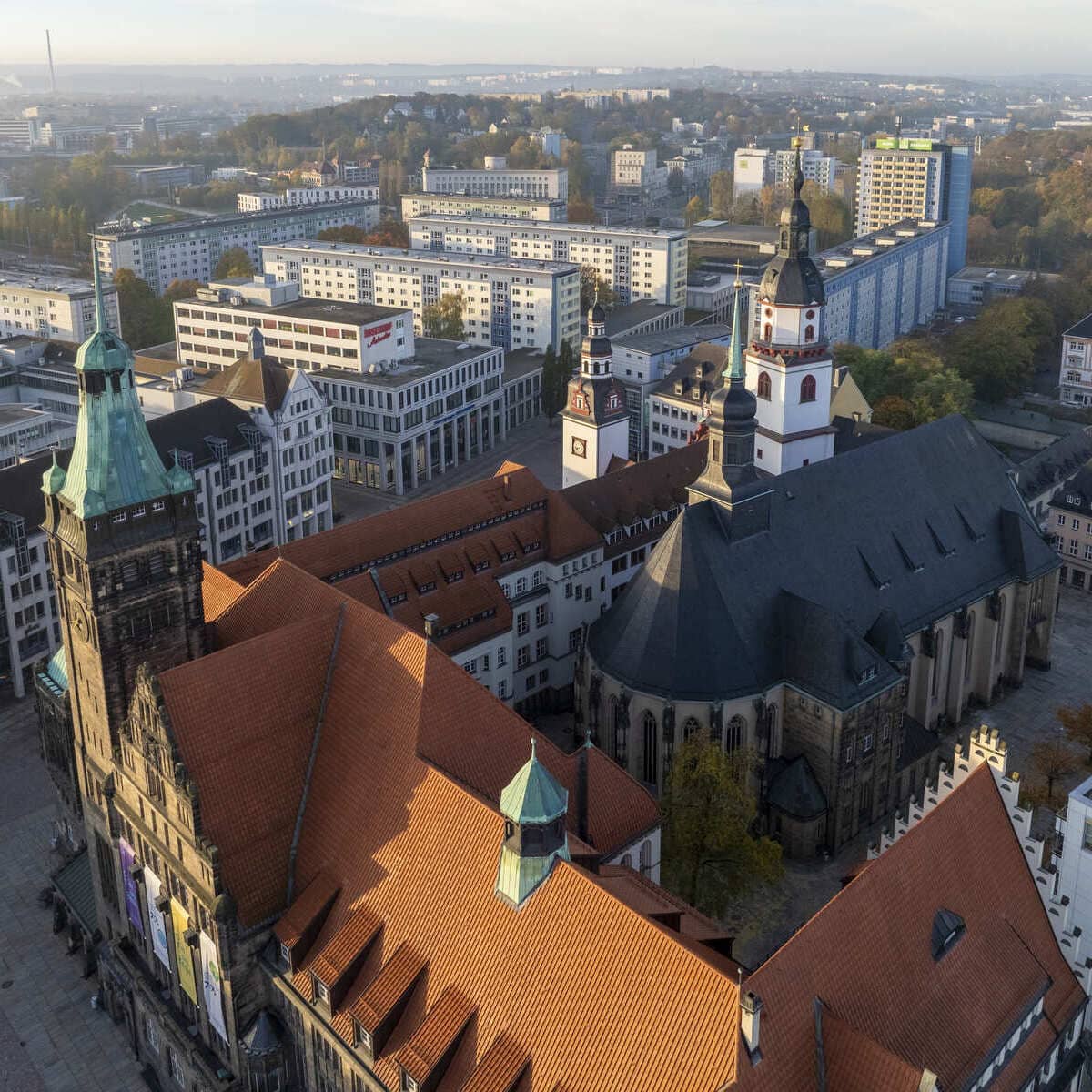
Market Square is the one thing not to miss here, as the historic heart of Chemnitz:
It features the Old and New Town Halls, which, let’s face it, by American standards are both pretty old, and the beautiful pink Baroque gem that is Siegert House. Nearby, Jakobikirche is a 14th-century Gothic hall church.
Walk along Straße der Nationen, down the pedestrianized shopping area, and you’ll eventually hit the Red Tower.
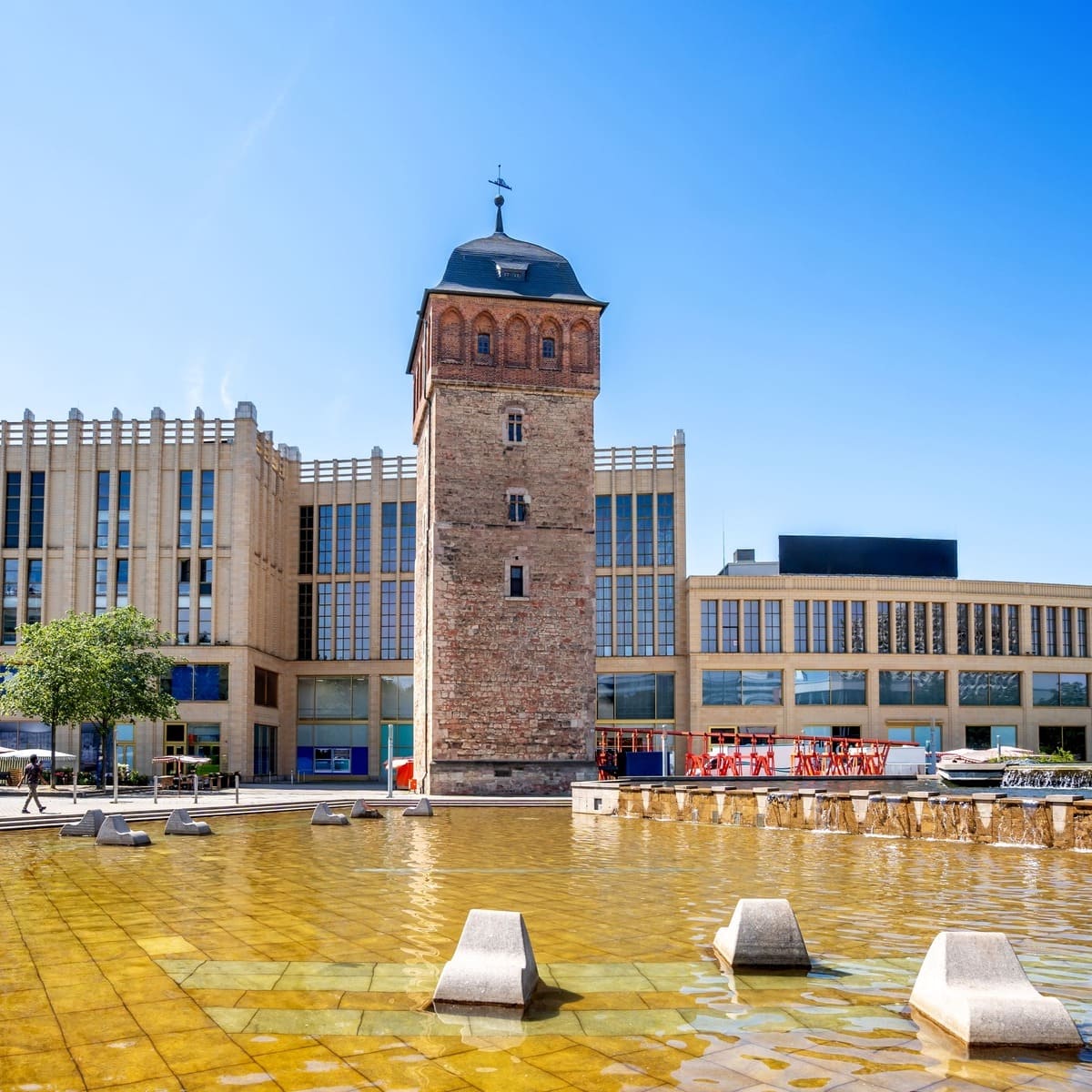
This 35-meter-high medieval watchtower is among Chemnitz’s oldest surviving structures, dating back to the 12th century. It was damaged during the 1945 bombing and subsequently rebuilt, somehow surviving the heavy-handed urban planning of the communist years.
Stop for a selfie at the Karl Marx Monument, if you don’t have any reservations about the legacy of an deadly ideology, that is, then continue towards Theaterplatz, the prettiest square in the Old Town:
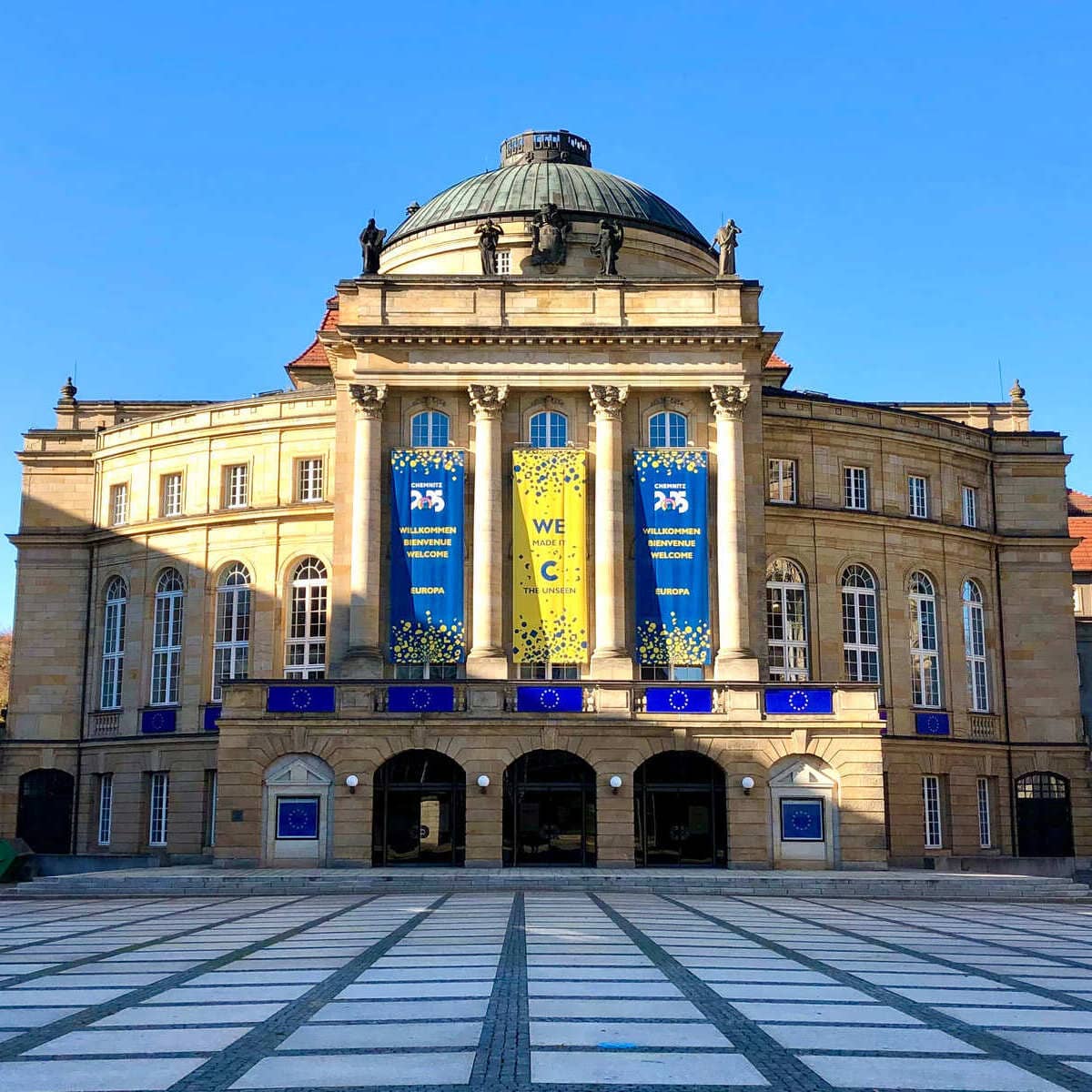
Here you’ll find the Opera House, the impressive Kunstsammlungen art museum. I’m not one for art museums myself, but this one is definitely worth the $11 admission fee, and the historic Chemnitzer Hof Hotel, open since 1930.
Europe Has New Entry Rules In Place
Check The Rules That Apply To You Before Flying
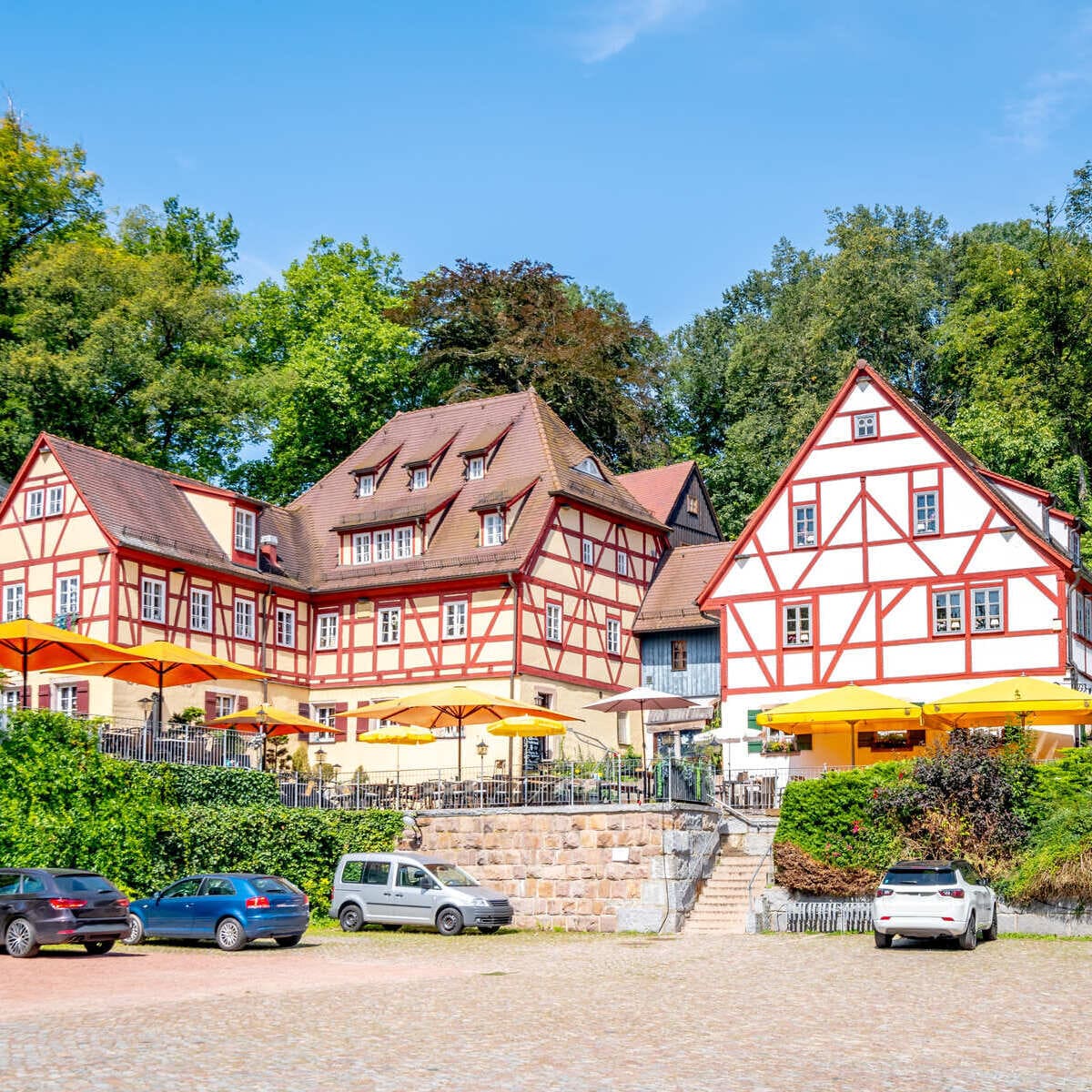
As a member of the Schengen Area, Germany allows U.S. passport holders to visit visa-free for up to 90 days within any 180-day period, though Europe’s new biometric Entry/Exit System means there are additional procedures to keep in mind when entering from outside Schengen.
With the upcoming ETIAS authorization in 2027 also expected to change entry requirements, it’s worth double-checking the latest rules before you go.
Use our Entry Requirement Checker to find out which documents and authorizations you may need as an American traveler, based on your destination.
The coolest thing about Chemnitz is that it doesn’t have one single compact medieval Old Town in the midst of a largely postwar, modern city.
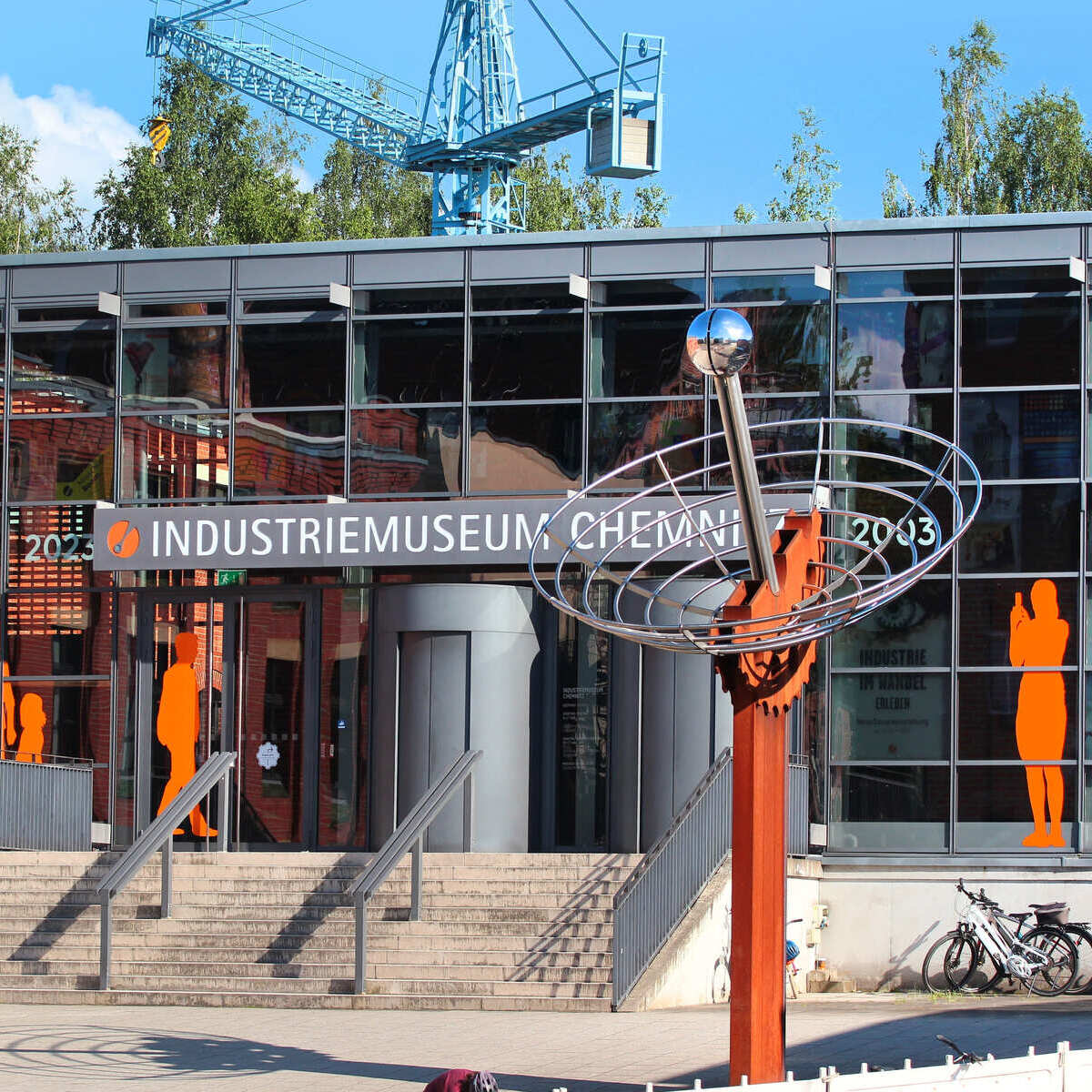
The city’s quite modern, don’t get me wrong, but there are more pockets of historic charm beyond Innenstadt.
Chemnitz’s True Appeal Lies Beyond Innestadt
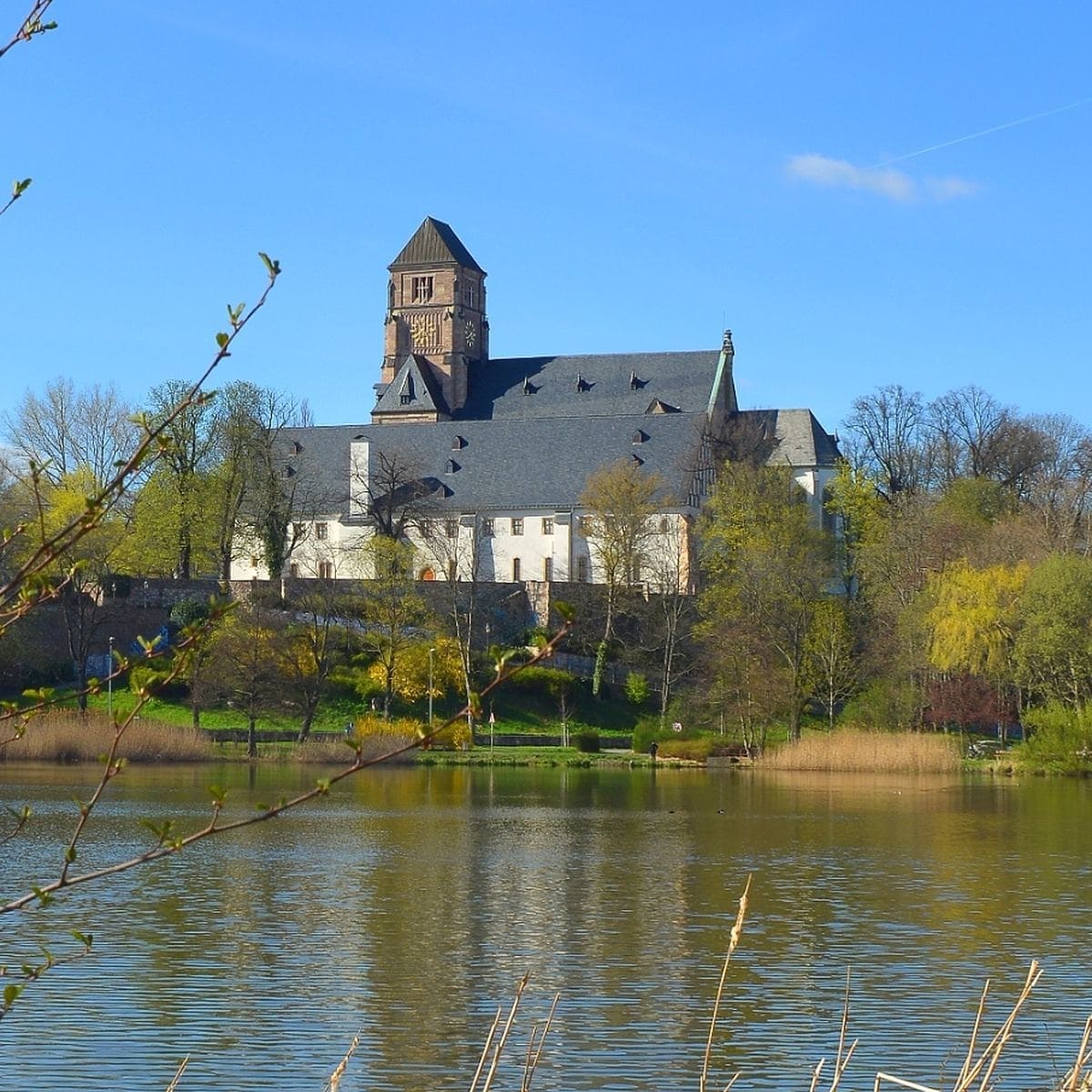
Perhaps the most overlooked historic quarter of all is Schlossberg, a beautiful monastic setting known for its atmospheric cobbled streets, half-timbered houses, and centuries-old Castle Church.
That’s not just a local nickname for an ordinary church, either. This is the former Benedictine monastery church, part of a complex established in 1136.
Don’t miss the Kellerhaus, one of Chemnitz’s oldest pubs, just below the church, where you can enjoy a half-liter of beer for around $5. Keep an eye out for local brews from Einsiedler, a Chemnitz brewery established in 1885.
There’s a third historic quarter of sorts Chemnitz has hidden up its sleeve: Kaßberg, arguably the best neighborhood for wandering and café-hopping.
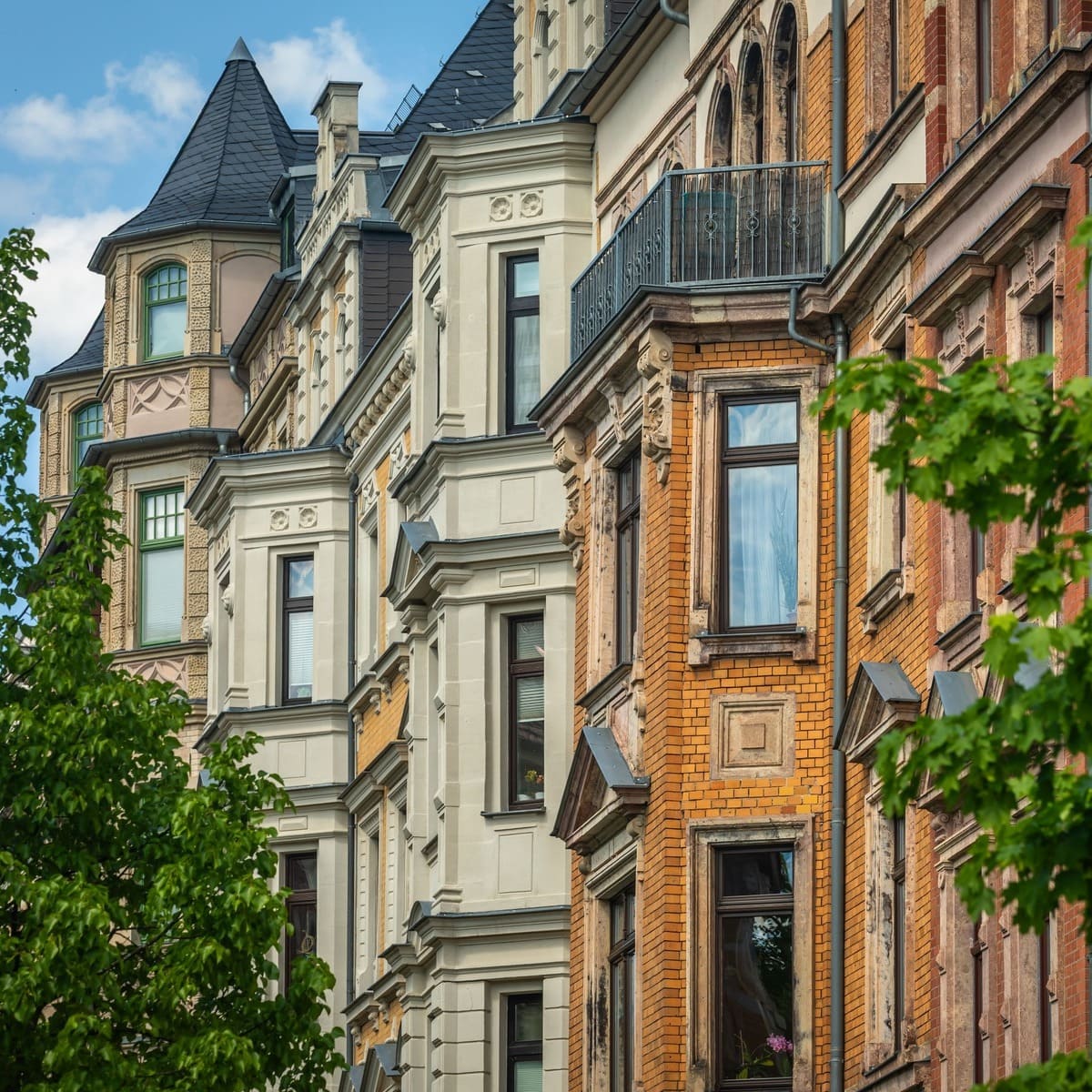
Located just west of the city center, it boasts one of the largest contiguous collections of Art Nouveau and Gründerzeit architecture in Europe, with colorful tiled buildings, ornate wrought-iron balconies, beautiful doorways, and tree-lined streets leading to small garden squares.
Beneath Kaßberg, there’s a whole network of underground vaulted passages and cellars to discover, originally used to store beer, wine, and food.
You might want to book a guided tour for that one, usually starting from around $5.60.
Note From The Editor
Just one sec! If you enjoy reading great human-written articles, the best way to see a few more is to follow us on Google so we become one of your preferred websites. Thank you so much for reading. Now back to the story!
We’re not done yet.
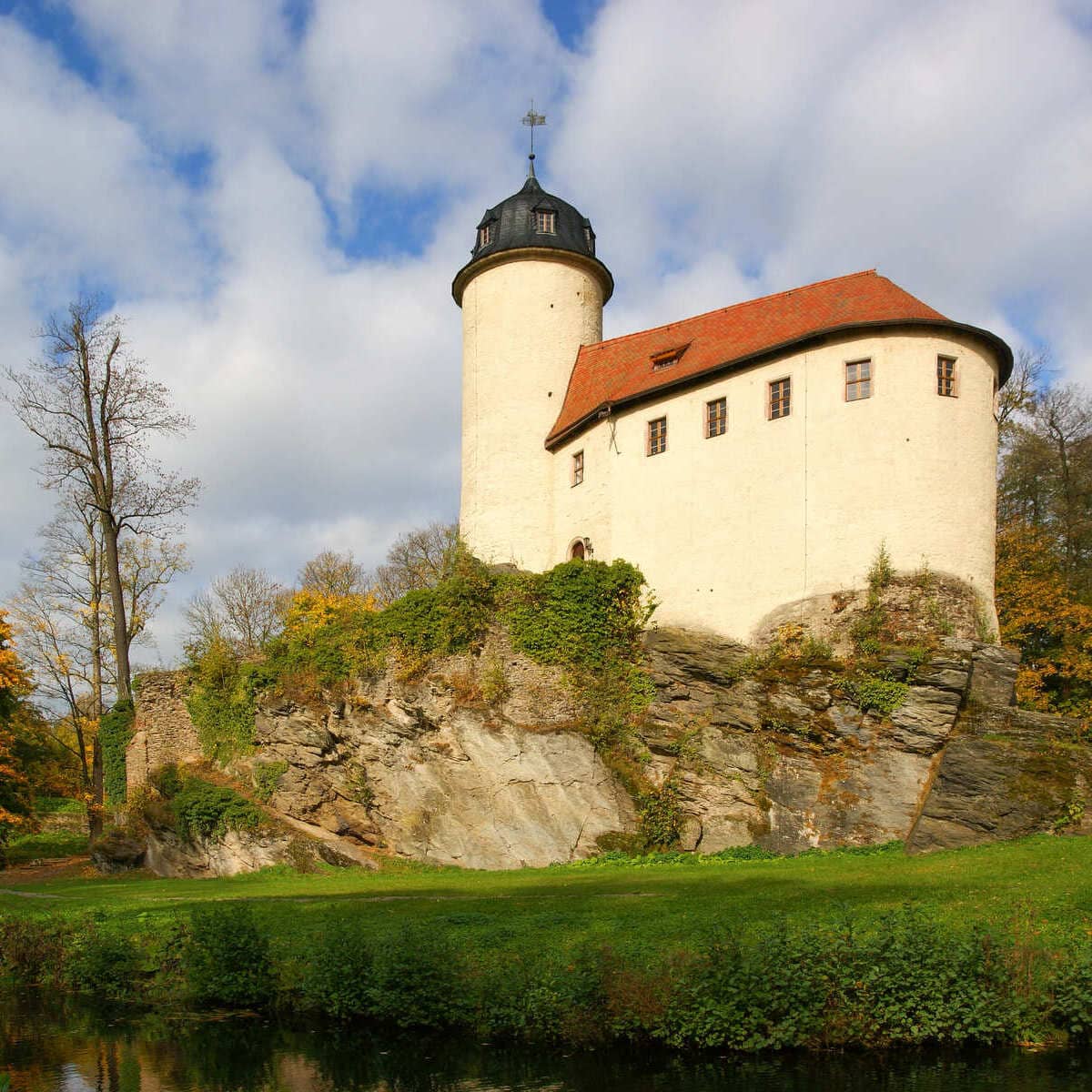
Take tram 1 and then bus 42 to the western outskirts of Chemnitz, and you’ll find Burg Rabenstein, often nicknamed the smallest castle in Saxony.
This little medieval fortress is a compact slice of pure fairytale Germany. Your $9 admission will be well spent exploring its historic tower, furnished rooms, and weapons displays.
How Affordable Is Chemnitz?
As you might be suspecting, Chemnitz is a lot more affordable to visit than your average German city:
Attractions generally cost around $8, and if you’re keen on visiting the five main paid attractions, this would set you back by an acceptable $42 or so.
If you think that’s already a good-enough deal, wait until you see the prices for food, accommodation, and getting around.
Average Prices In Chemnitz, Germany In 2026
- Meal at an inexpensive restaurant: $17
- Three-course meal for two at a mid-range restaurant: $67
- Half-liter of domestic draft beer: $4.48
- Cappuccino: $4
- Budget hotel: $90 per night
- Single public transport ticket: $3.70
- Public transport day pass: $7.40
- Museum admission: $9–11
- Burg Rabenstein admission: around $9–10
Is Chemnitz Safe?
Having been to over 30 cities across Germany, yes, I would absolutely consider Chemnitz a safe destination. As with any city, there are a couple of things worth knowing, though:
- Chemnitz is not immune to petty crime, theft, or occasional street violence, so keep a reasonable level of situational awareness.
- The central railway station and certain less attractive urban areas deserve the same caution you’d exercise in other German cities, particularly late at night.
- Saxony has experienced politically-charged demonstrations in the past. These are not something most tourists will encounter during an ordinary sightseeing visit, but it’s best to avoid any protests you come across.
Personal advice? Stay around the center, Kaßberg, or the Schlossberg area, use normal city precautions, and avoid engaging in political demonstrations.
On the Travel Off Path Traveler Safety Index, Germany scores 81 out of 100 based on live reports from recent visitors.
A Taste Of The Grungier Chemnitz
Beyond the appeal of medieval churches and historic squares, Chemnitz’s true charm lies in its quirky industrial heritage, grugy cultural scene, and under-the-radar nightlife.
My favorite thing I’ve done here was not going up castle walls, nor photographing beautiful Art Nouveau portals, but rather visiting the cultural venue known as Weltecho:
Formerly used by the GDR as the Chamber of Technology, this former East German institution now houses an art gallery, a cozy café, an independent cinema with arthouse screenings, and even a club usually open at weekends.
Tucked away in the heart of Innenstadt, Turm-Brauhaus is yet another old-school venue worth checking out:
It has brewery-style surroundings, traditional Saxon mains such as Sauerbraten from around $18, and locally brewed beer.
Oh, and sure, I knew you’d ask.
Chemnitz has a plethora of underground, cultish electronic music clubs to pick from, and Transit Club might just be the most unusual of the batch:
It occupies the old Chemnitz Süd railway station, sandwiched between two railway lines, and you can literally dance and sip drinks surrounded by railway infrastructure, concrete, and industrial remnants.
German nightlife in a nutshell.
Market Square & Innenstadt
Explore the historic heart of Chemnitz featuring the Old and New Town Halls, Siegert House, and the 12th-century Red Tower.
Schlossberg Monastery
Wander through quiet cobbled lanes, half-timbered houses, the centuries-old Castle Church, and enjoy five-dollar beers at Kellerhaus.
Kassberg District
Discover one of Europe’s largest contiguous collections of Art Nouveau and Grunderzeit buildings, complete with underground cellars.
Burg Rabenstein
Take a short tram and bus ride to explore a compact medieval fortress with historic towers, furnished rooms, and weapons displays.
Repurposed Venues
Experience unique cultural hubs like Wirkbau, Weltecho, and Transit Club, an underground club built inside an old railway station.
Enter your email address to subscribe to Travel Off Path’s latest travel news, straight to your inbox
