
When you think of Portugal, chances are it’s the steep hills of Lisbon or the picturesque riverside in Porto that come to mind. They’re the country’s top two destinations, and the most obvious pick for first-time visitors craving a taste of Lusophone culture.
However, they may not be the best pick if you’re averse to crowds and overtourism-fueled gentrification.
There’s an entire side of the country to discover beyond Portugal’s urban powerhouse duo, and tucked away on a remote island in the middle of the Atlantic, a whole 900 miles from the European mainland, this underrated city is actually your best shot at experiencing authentic Portugal without the usual tourist hordes.

And guess what: you can actually fly there nonstop from America!
A Portuguese Colonial Gem In The Heart Of The North Atlantic
The capital and largest city of São Miguel Island, a volcanic landmass at the heart of the Azores archipelago, Ponta Delgada has officially been named this year’s Portuguese Capital of Culture, designated by the Portuguese Ministry of Culture.
You may be wondering why that is, especially if you only know the Azores for their remoteness, Hawaiian-like landscapes, and rural character… if that.
As it turns out, the city offers a fascinating glimpse into the early days of Portuguese expansion across the Atlantic. Ponta Delgada was one of the earliest settlements in the Azores, developing rapidly in the late 15th century as Portugal established its Atlantic outposts.
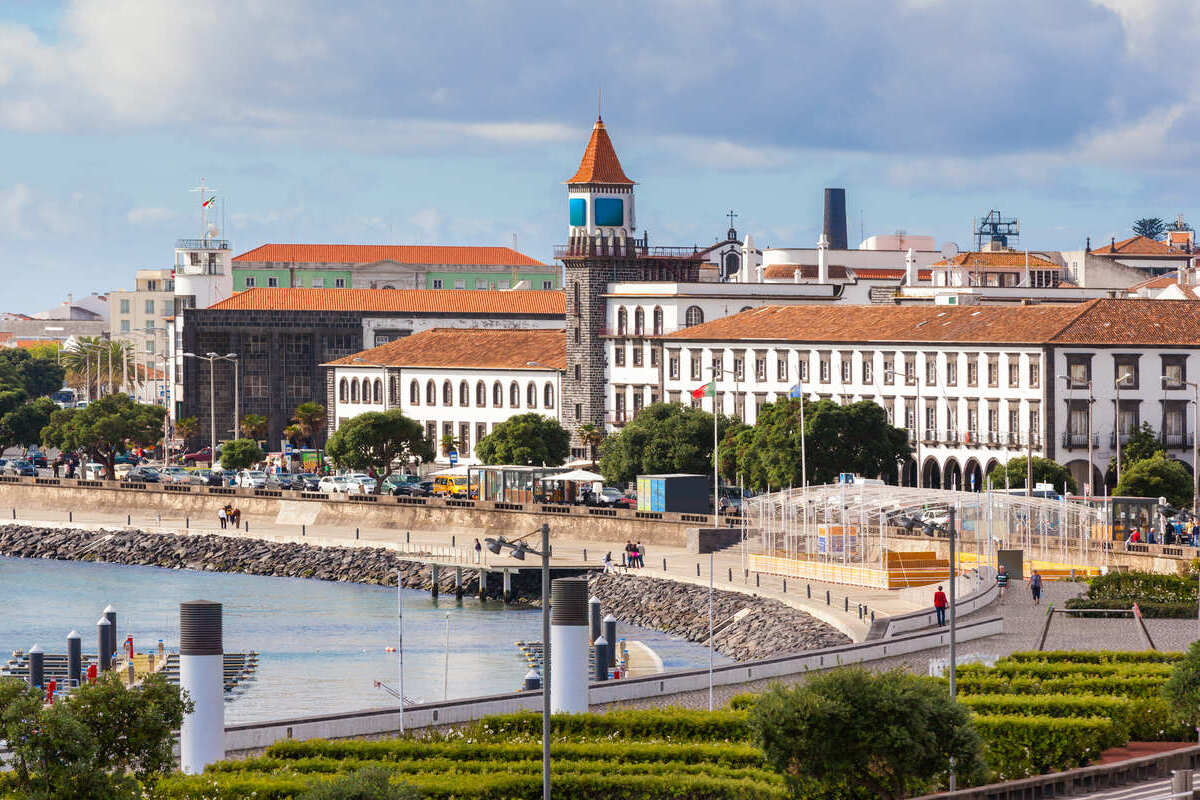
It feels less like your usual mainland Portuguese city, with its layers of Roman and medieval history, and more like a remote Atlantic outpost shaped by Portugal’s Age of Discovery, a kind of halfway house between Europe and the Americas.
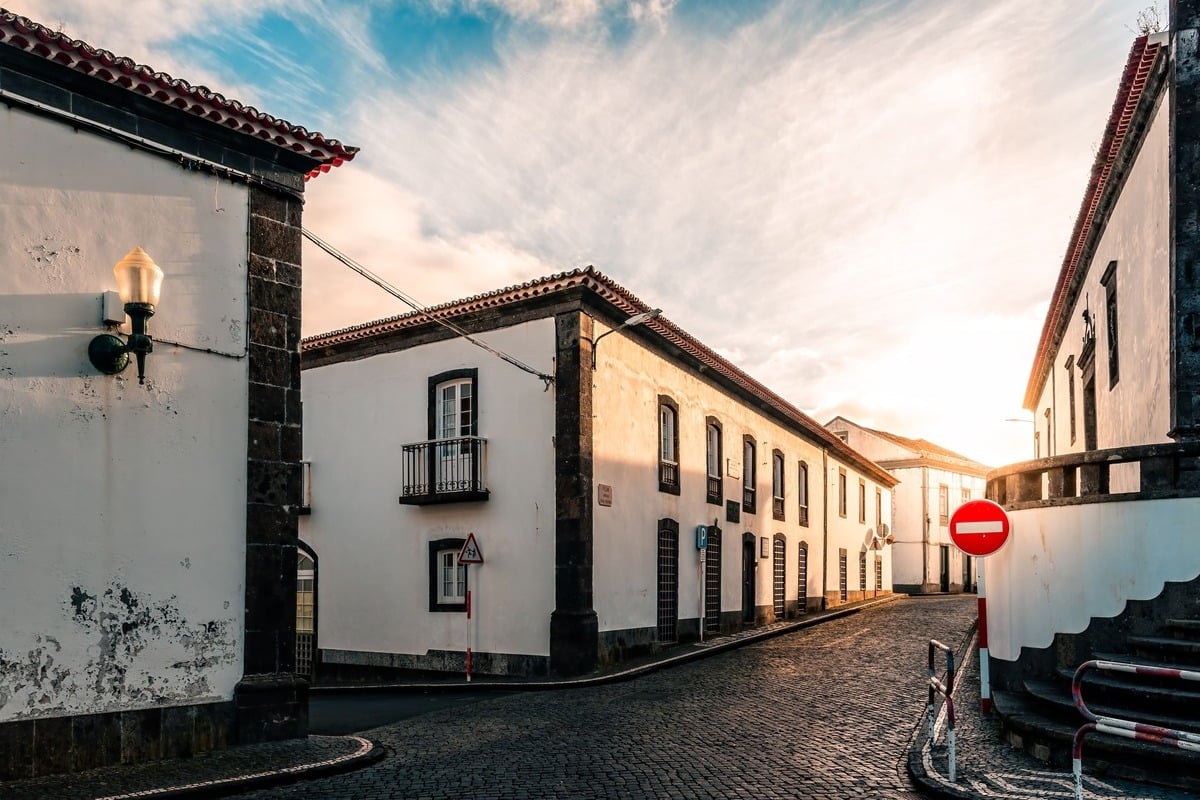
Think whitewashed buildings, coastal forts built from locally quarried dark volcanic stone, and ornate Baroque churches that wouldn’t look out of place in colonial Brazil.
Fly Nonstop To Ponta Delgada From The U.S.
Americans can actually fly nonstop to Ponta Delgada, the gateway to both São Miguel Island and the wider Azores, from three major U.S. hubs.
Nonstop flights from the U.S. to Ponta Delgada (PDL):

- Boston (BOS)—Azores Airlines, with 1–2 flights a day, every day except Monday
- Newark (EWR)—United, once a day, every day of the week
- New York (JFK)—Azores Airlines, once a day on Sundays, Mondays, Wednesdays and Fridays
The fact that you can fly nonstop to this relatively unknown Portuguese city on an island in the middle of the Atlantic is surprising enough. But wait until you hear how much it can cost.
A roundtrip to Ponta Delgada isn’t necessarily much more expensive than flying to Lisbon or Porto. From New York, $650–$700 is a pretty typical return fare, while current fares can dip as low as $532 if you catch the right dates.
And the flight itself? It’s only about 5 hours and 15 minutes from the U.S. East Coast eastbound, or around 5 hours and 45 minutes on the way back. In other words, the Azores are a whole lot closer than they look on the map.
Before you get packing, though, make sure you check the current entry regulations that apply at your destination, be it Portugal or elsewhere, on the Entry Requirement Checker.
A Postcard-Ready Historic Center
As for postcard sights, you won’t run out of those anytime soon:
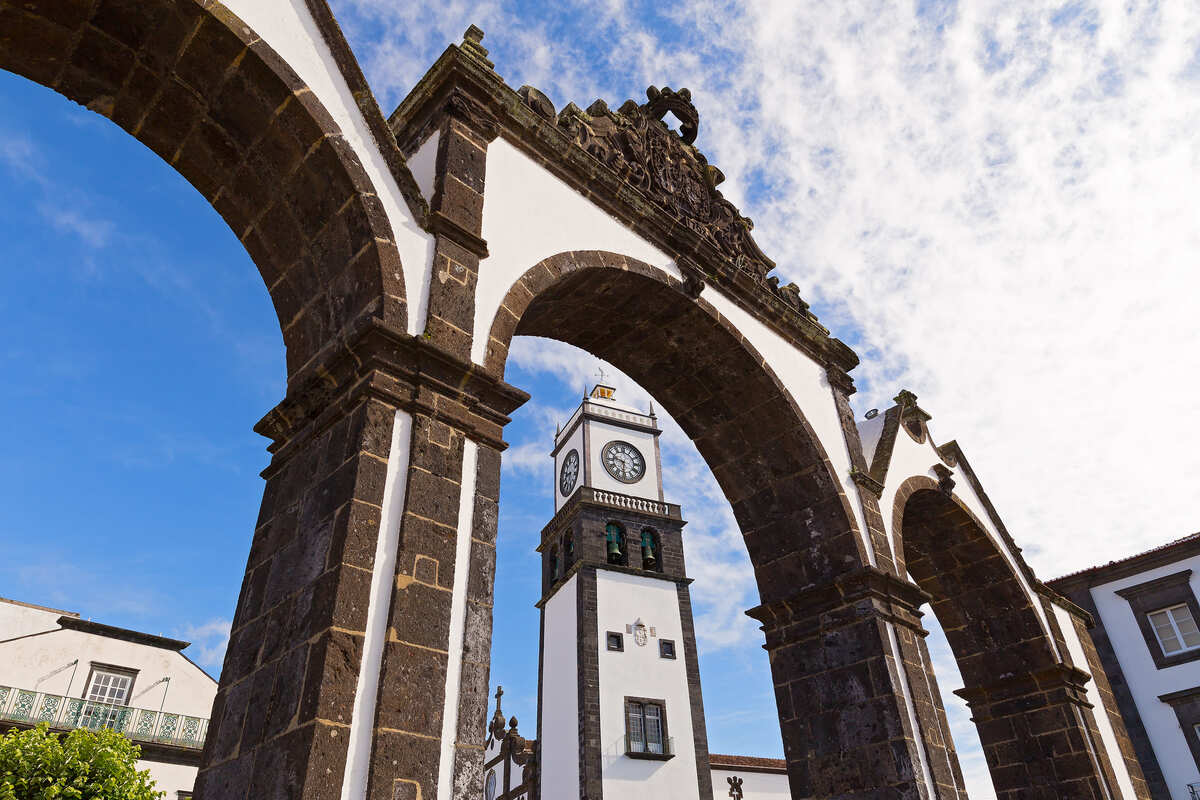
Right at the entrance of town, Portas da Cidade are a three-arched, 18th-century gateway that marks the transition between the fort-protected waterfront and the historic center. Atop the arches, you’ll find the Portuguese royal and city coats of arms.
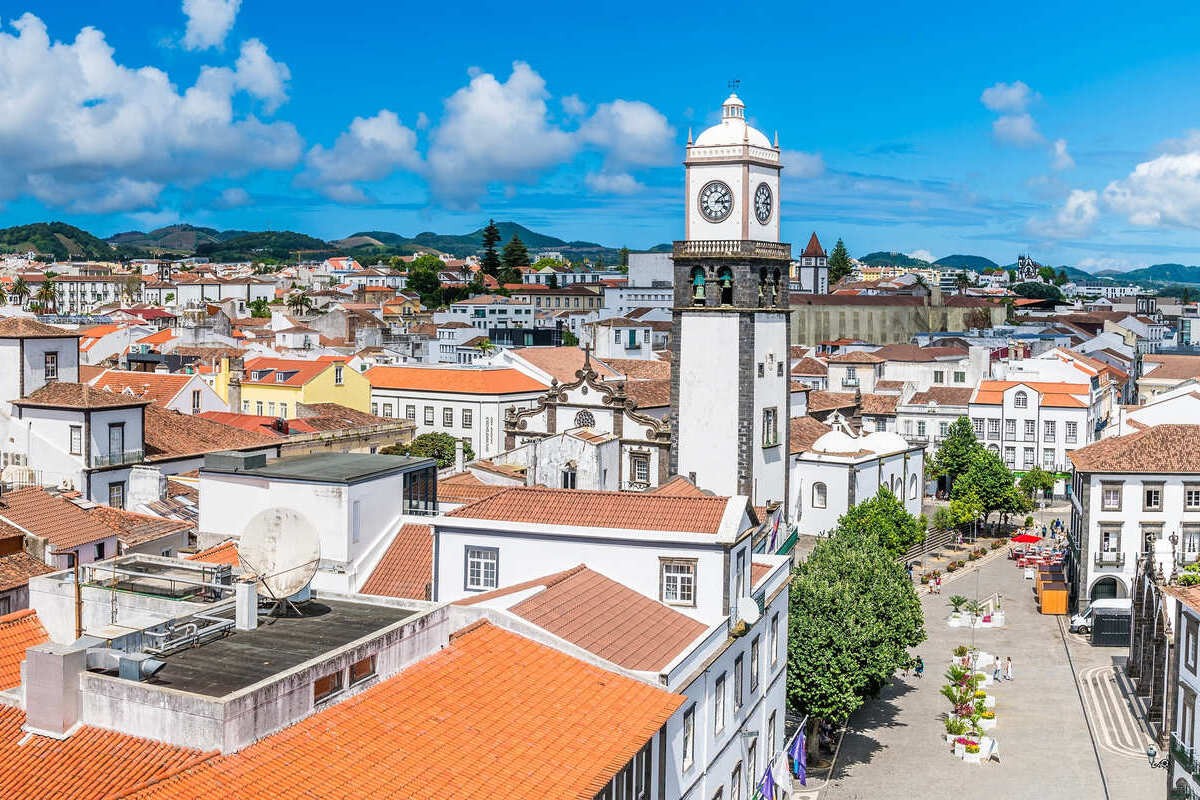
That’s probably the most striking visual symbol of Ponta Delgada, but it doesn’t stop there: a short walk from the gate, Igreja Matriz de São Sebastião is the city’s main church, with an elaborate façade mixing late-Gothic and Portugal’s traditional Manueline and Baroque styles.
The white stone portal and the dark volcanic stone that frames it make for a striking sight, and the interior, richly decorated in gilded woodwork and religious art, is nothing short of lavish.
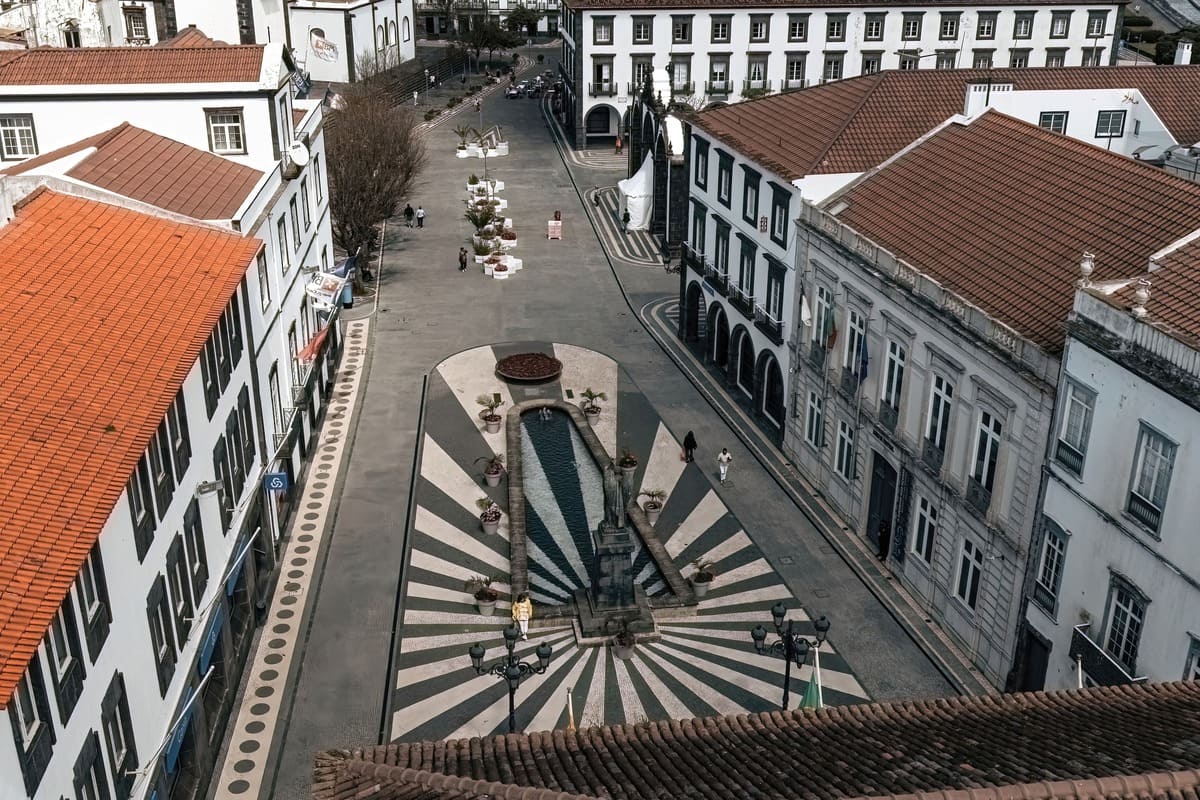
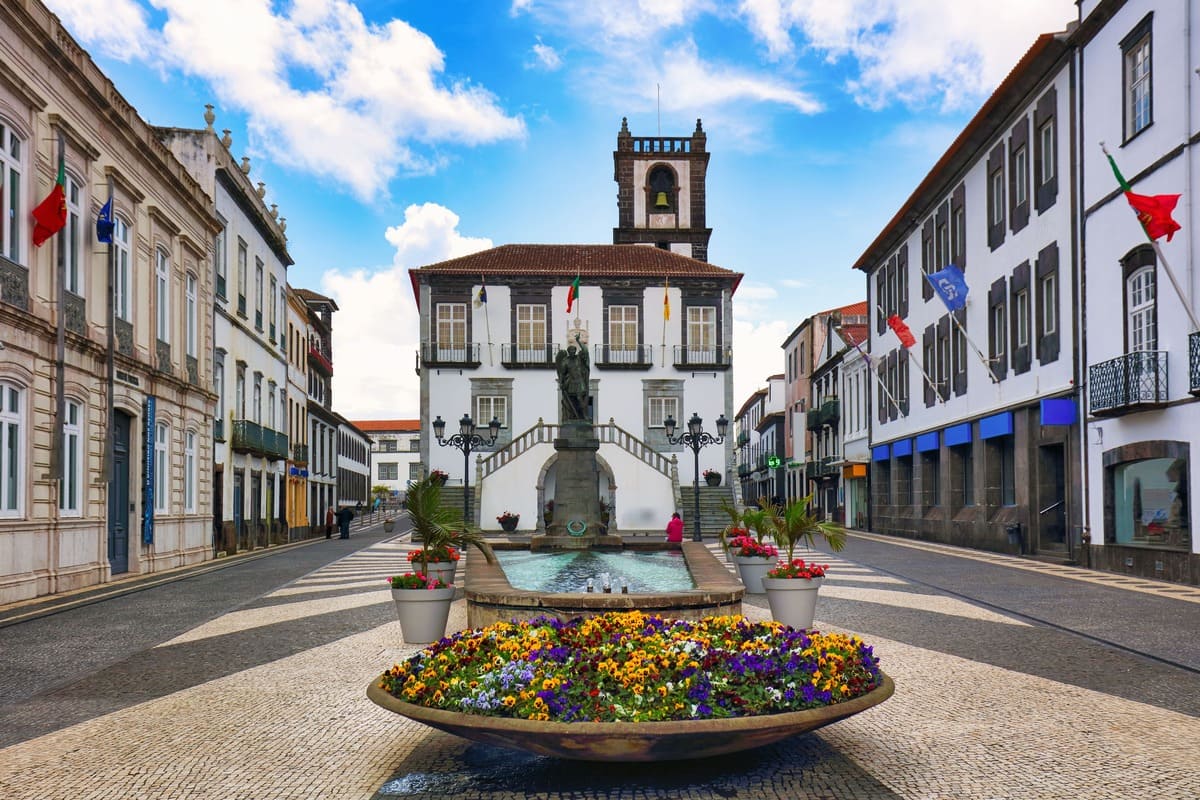
The Historic Center is a postcard in itself, with winding cobblestone alleys lined with whitewashed buildings, churches, and aristocratic mansions, and perched above the cluster of rooftops below, Torre Sineira is a handsome bell tower that stands out against the city’s low-rise character.
It’s not a trip to Portugal until you’ve eaten your way through it, and if you’re after local flavors and fresh seafood, Mercado da Graça is ground zero for everyday Azorean produce. Don’t leave without sampling São Miguel cheese, the local semi-hard cheese made from the island’s grass-fed cow’s milk.
How Safe Is Portugal Right Now?
Wondering how safe Portugal is right now for tourists?
The country currently enjoys a Level 1 status, as awarded by the U.S. Department of State, meaning Americans can exercise ‘normal precautions‘ when visiting due to the lower levels of crime and extremism compared to other European countries.
It also scores 84 out of 100 on the Traveler Safety Index, a tool that measures safety levels across different destinations based on on-the-ground reports by travelers who have been recently.
Have you been to Portugal yourself in the past few months? Contribute to the Traveler Safety Index by sharing your experience below:
Ponta Delgada Is Only The Starting Point
São Miguel, the island Ponta Delgada sits on, is one of Europe’s wildest, most otherworldly landscapes.
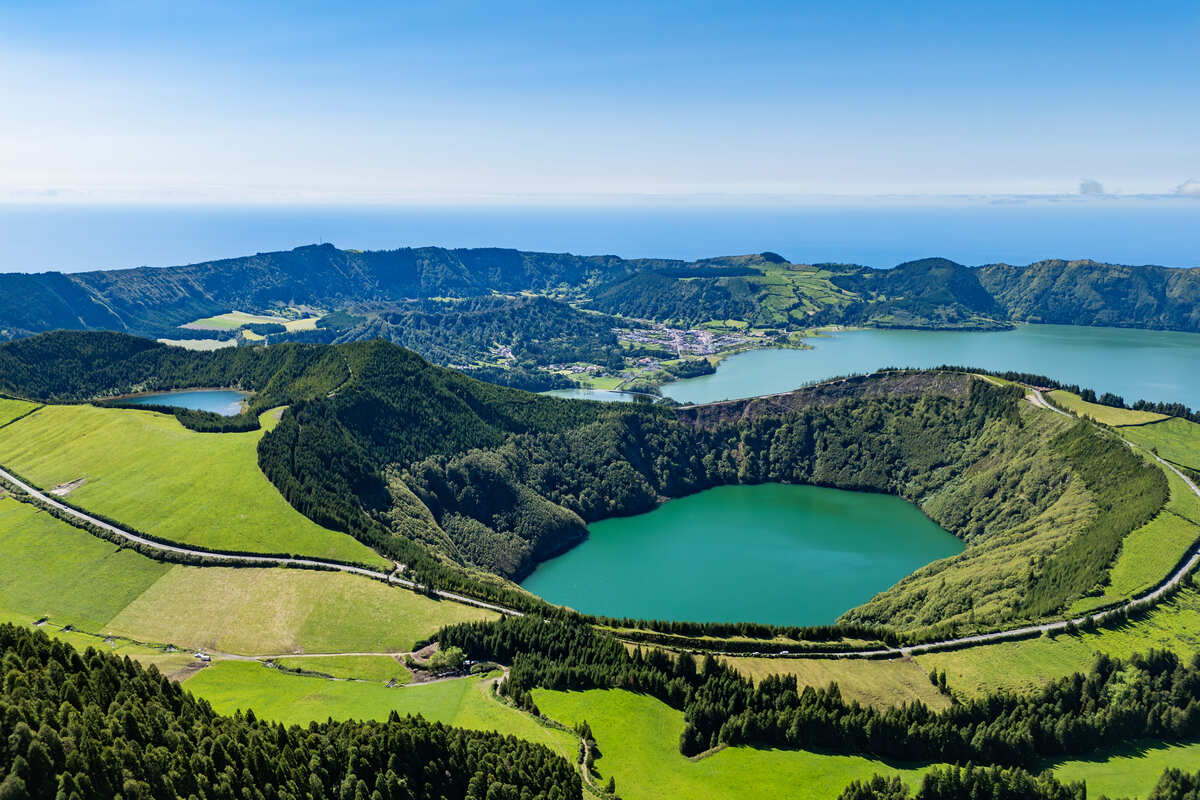
A scenic drive out of town, past lush hills and vineyards, will take you to Sete Cidades, this massive volcanic caldera encircled by two twin lakes, the Blue and the Green Lagoons.
The Vista do Rei viewpoint atop the caldera is a classic Azorean postcard, particularly in the early hours, when the sunrise spills over the lakes and seems to paint the entire horizon gold.
For a truly dramatic, quintessentially Azorean crater lake, Lagoa do Fogo is the wilder, more rugged alternative to Sete Cidades:
This blue-green lake surrounded by steep, practically untouched mountains is located a short hike down from the viewpoints, and it’s volcanic drama in a nutshell.
Take the road heading northeast, and you’ll discover the island’s lushest, least-developed side.
It’s all winding roads here, often flanked by hydrangeas, and dramatic cliffs plunging straight into the azure sea. On the eastern side of the island, Miradouro da Ponta do Sossego is yet another spectacular sunset spot.
I love Ponta Delgada for its laid-back atmosphere and striking architecture, but if I’m being quite honest, the wow factor for me peaks in Vila Franca do Campo:
A tiny town that once served as the island’s capital, it’s one of the prettiest coastal towns you can visit across the pond (well, across-ish), with its white houses clustered around tiny squares and a colorful waterfront.
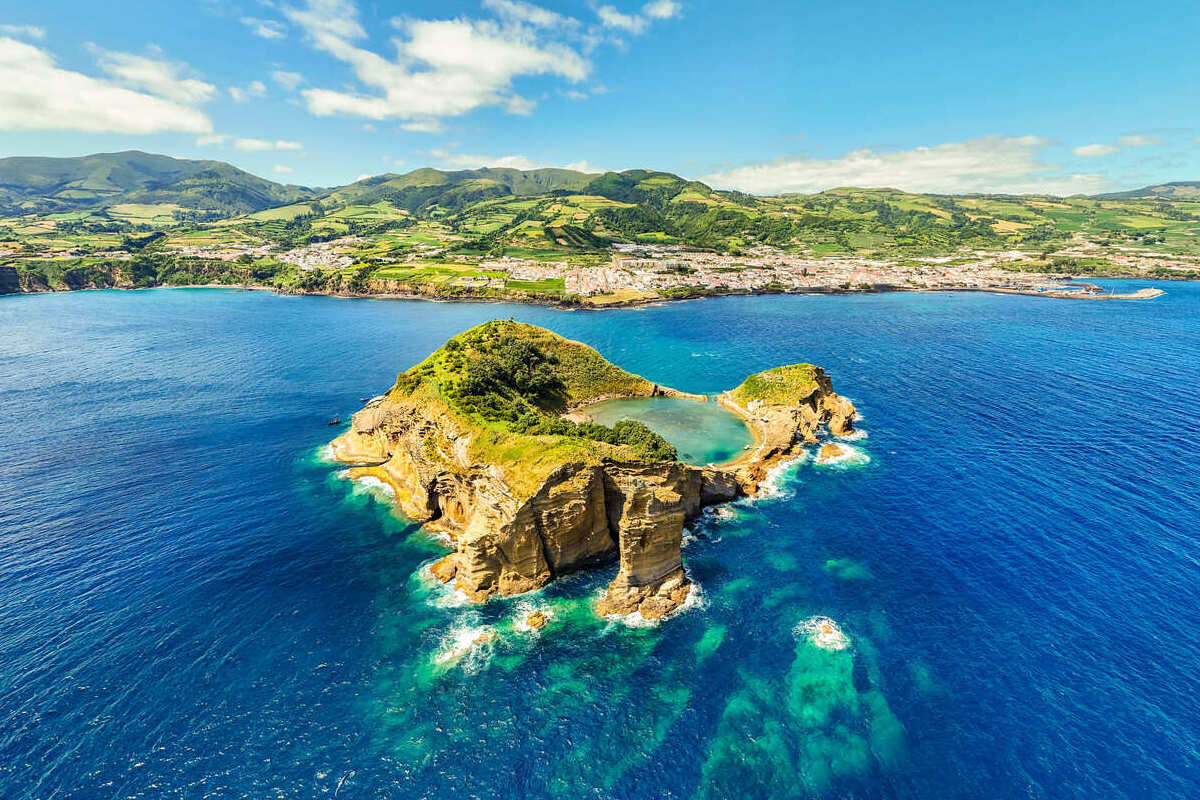
Just offshore, there’s that spectacular Ilhéu de Vila Franca, a circular volcanic islet encircling a natural swimming lagoon you’ve probably seen in the Google pictures.
I won’t lie to you, it’s best seen with a drone—once you’re down in the lagoon, it doesn’t look any different than a swimming hole surrounded by towering volcanic walls—but the fact it exists is bloody cool enough.
A Warning If You Think This Is Just Another Southern Europe Beach Spot
Now, I must warn those of you who haven’t ‘summered’ in Portugal just yet:
This is not the Mediterranean, and in the Azores in particular, the water can be downright, teeth-chattering gelid. Think Ireland, but sunnier.
Gorgeous as they may be, with stretches of volcanic sand unfolding along crystal-clear seas, I wouldn’t touch any of São Miguel’s beaches unless it’s an Azorean heatwave, but I did find my very own personal slice of heaven in Furnas:
The island’s geothermal heart, this is where you’ll find steaming fumaroles, bubbling mud pools, and hot springs surrounded by lush green vegetation.
If you happen to be in the area, swing by Tony’s Restaurant, a local institution famous for Cozido das Furnas, a traditional Azorean stew slow-cooked underground using the island’s volcanic heat.
Ponta Delgada—and the Azores in general—isn’t simply a less crowded, more remote Portugal. It’s Portugal, but on another planet, and I don’t know about you, but that sounds like a far better travel story than just ‘oh, yeah, I’ve had pastéis de nata in Lisbon.’
Enter your email address to subscribe to Travel Off Path’s latest travel news, straight to your inbox
