
Forget Barcelona and that jam-packed Gothic Quarter, Madrid with the grand Belle Époque boulevards, and even pretty little Palma, with its soaring cathedral built as stout as a fortress:
After visiting 11 out of the country’s 17 autonomous communities, and something like 23 different major cities, from the northwesternmost edge of Galicia all the way south across the Strait of Gibraltar to Ceuta—yes, that Ceuta— I know my way around Spain at this point.
I’d gladly move on to a new Mediterranean obsession, but there’s one medieval port that keeps creeping invading my thoughts day after day.
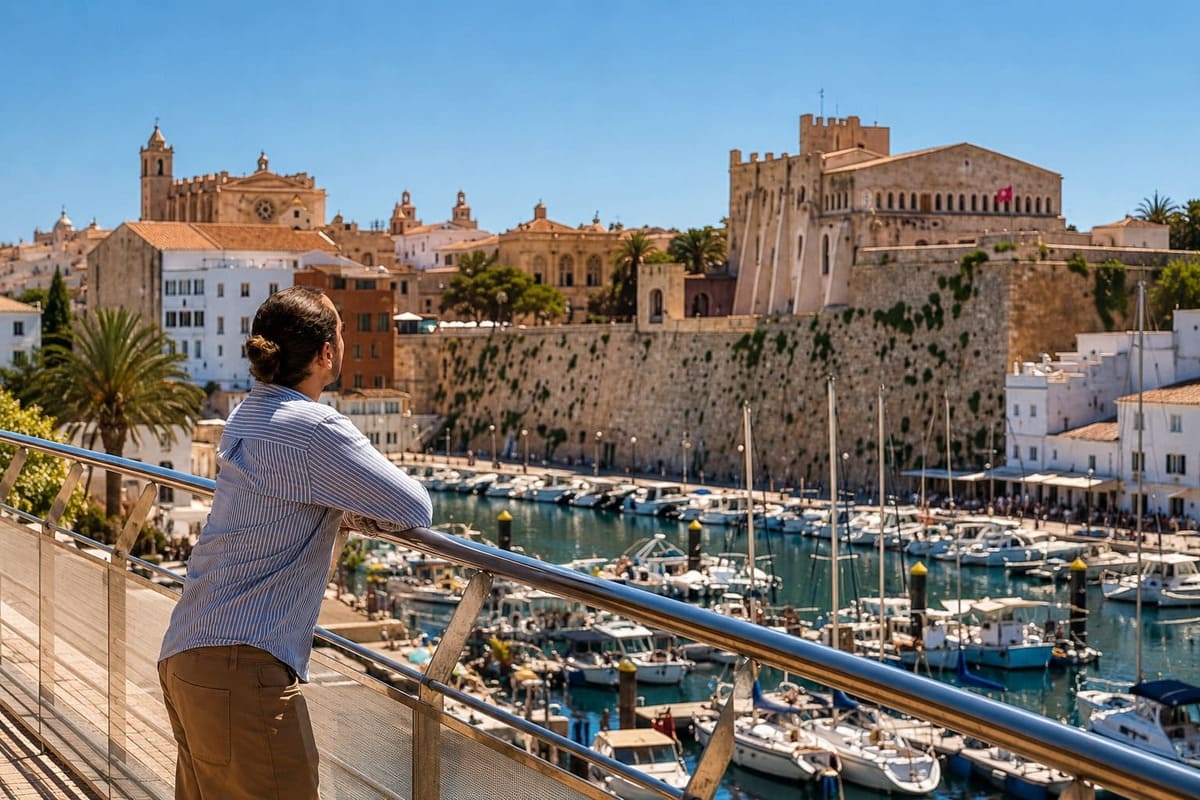
It features ocher-tinged streets, a plethora of family-owned tabernas slinging ice-cold beer and hearty $18 meals. Better yet, balmy fall weather into the mid-70s, and it’s probably my favorite coastal destination in Spain, punto final.
Welcome to…
Ciutadella de Menorca, Spain’s Picture-Perfect Fortified Harbor Town
Tucked away on the western coast of the island, at the innermost point of a long, winding bay, Ciutadella de Menorca is its parent island’s postcard-ready medieval treasure and, if I’m being honest, one of the most beautiful cities in the Mediterranean basin.
I went there for the beaches myself, but ended up finding something far more worth writing home about.
Up until that point, I had only seen the five-star resort, convertible-road-tripping, glitzy side of Menorca: I was based in Binibeca Vell, a whitewashed Santorini look-alike developed in the 1960s as a purpose-built holiday village some 32 miles southeast.
I genuinely thought Menorca would be your usual beach-hopping and sunbathing combo, with not much in the way of cultural sightseeing on the side.
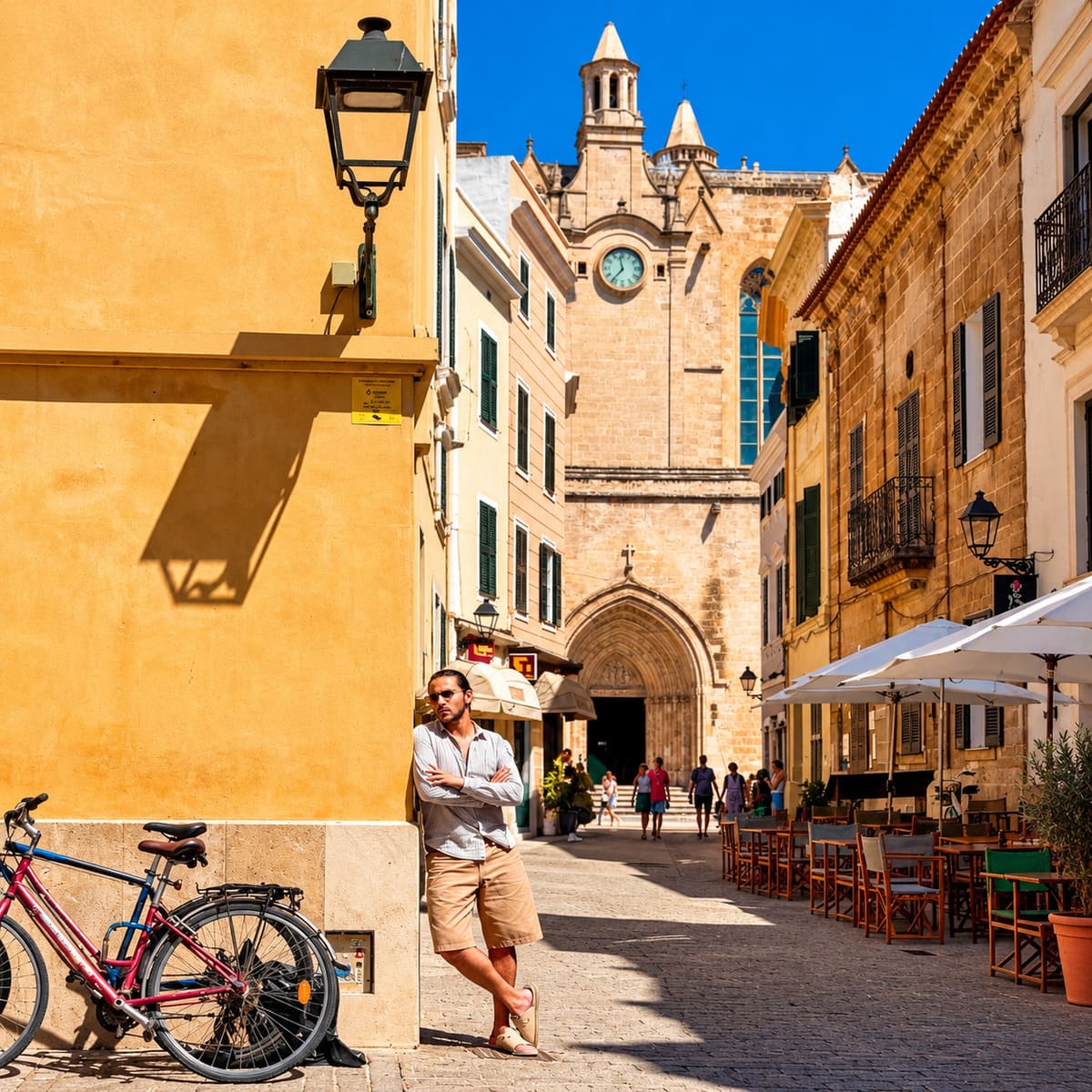
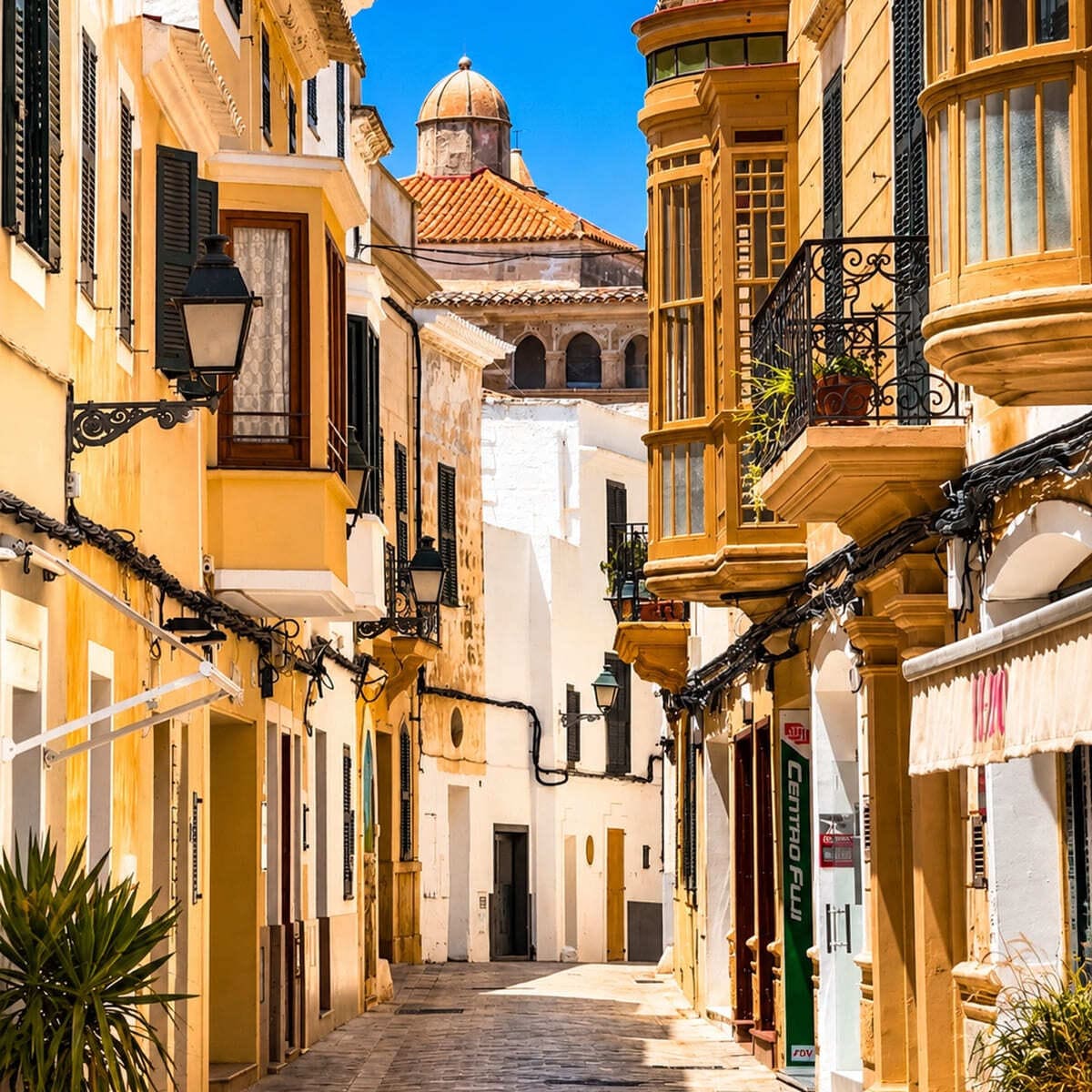
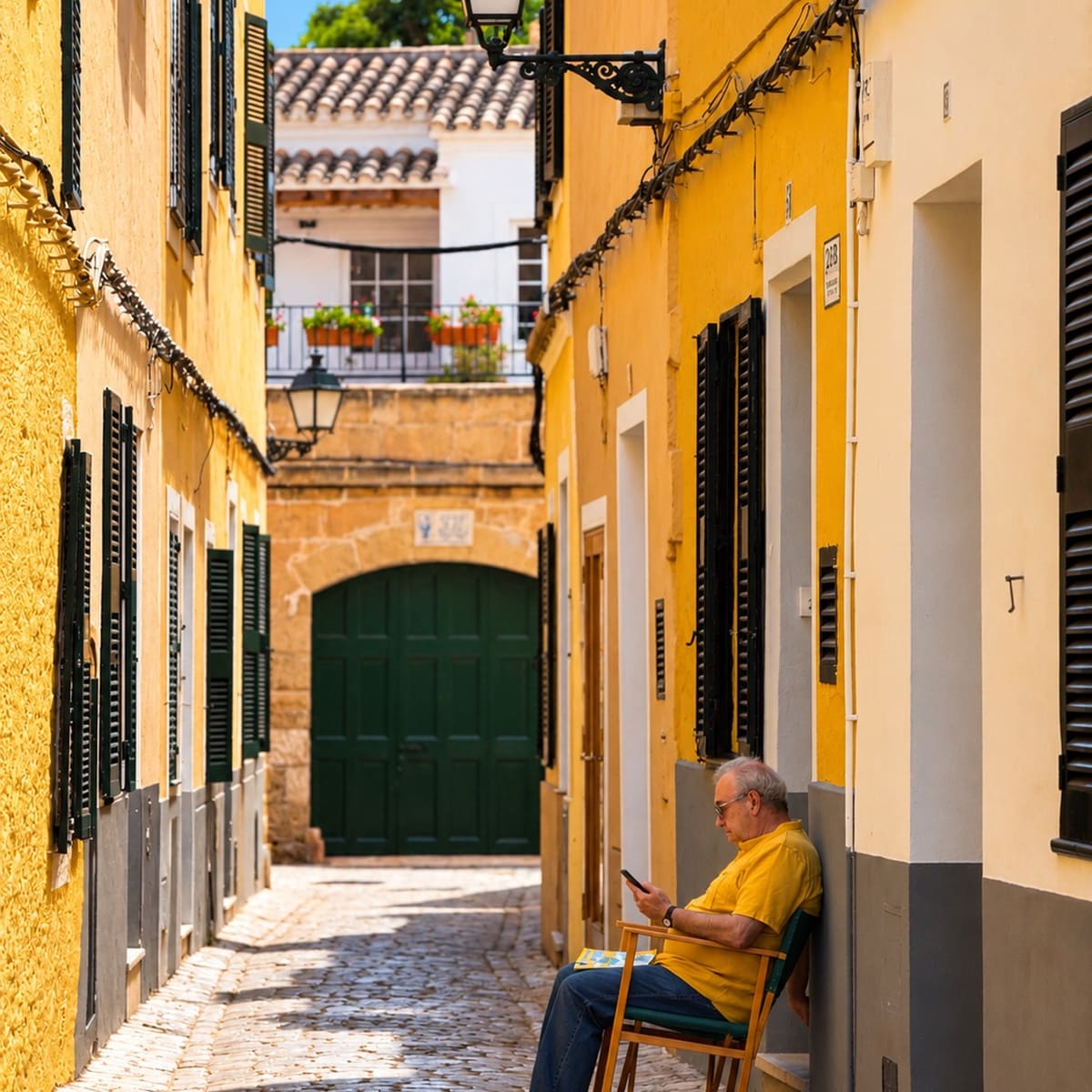
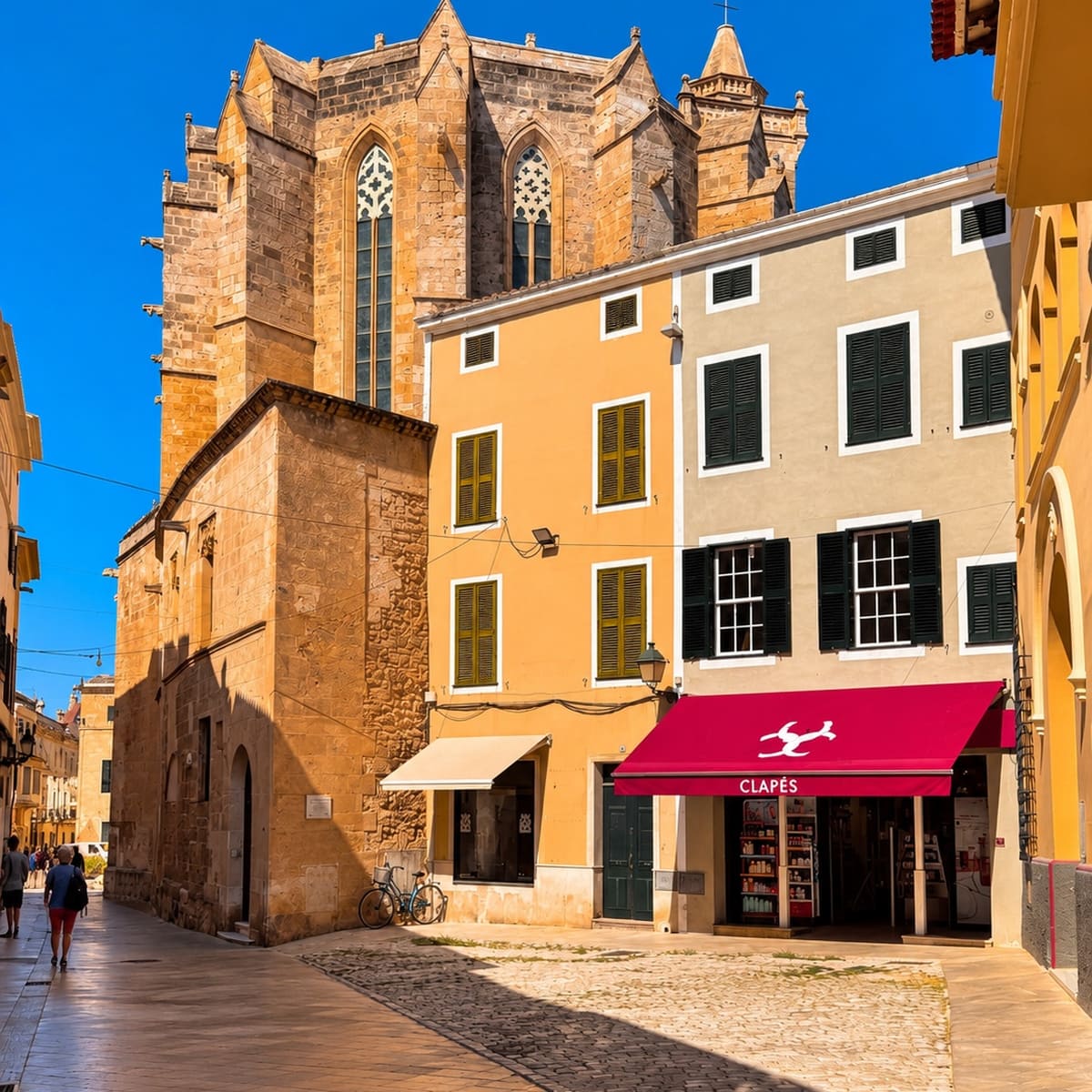
Imagine my utter shock when I pull up to a timeless Ciutadella, seemingly frozen somewhere in the Middle Ages, and happen upon an ocher-colored maze of cobbled lanes.
Have You Ever Seen A Cathedral That Looks Like A Fortress Before?
Mallorca’s smaller sister, at only 268 square miles, Menorca is one of the most popular beach getaways in Europe largely thanks to its scenic coastline, with powdery-white sands hugged by teal waters, and year-round temperate climate.
Even as late as early November, daytime temps typically hover in the low-to-mid 60s, and the sea itself averages around 69°F throughout the month.
We’re in the sun-drenched, southerly Mediterranean island of Menorca, after all.
What I didn’t anticipate is I would end up obsessing over Menorca for an entirely-different reason than 99.9% of visitors do.
The Old Town is something I could describe as a lovechild between Greece’s walled Rhodes and and the Dubrovnik’s Baroque splendor.
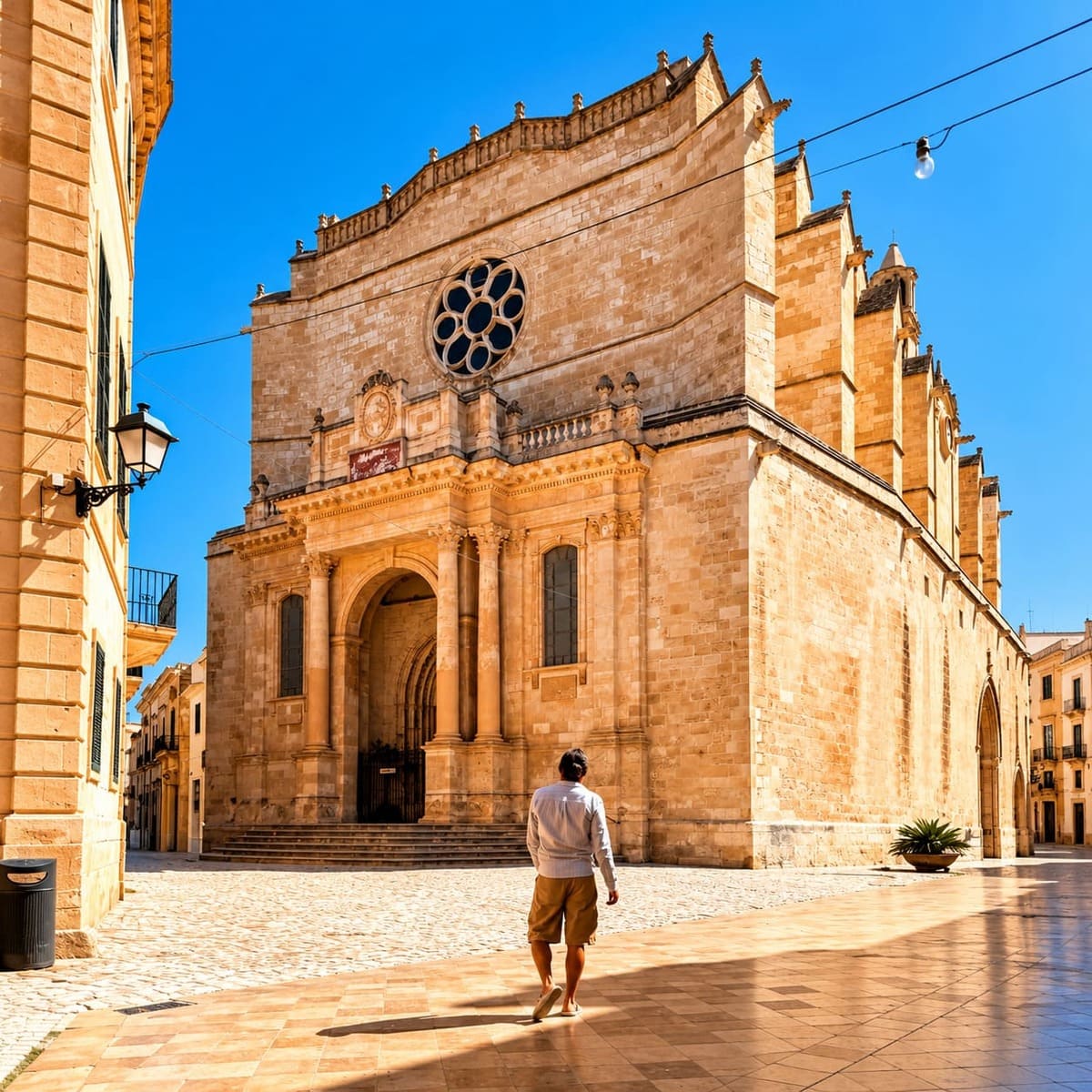
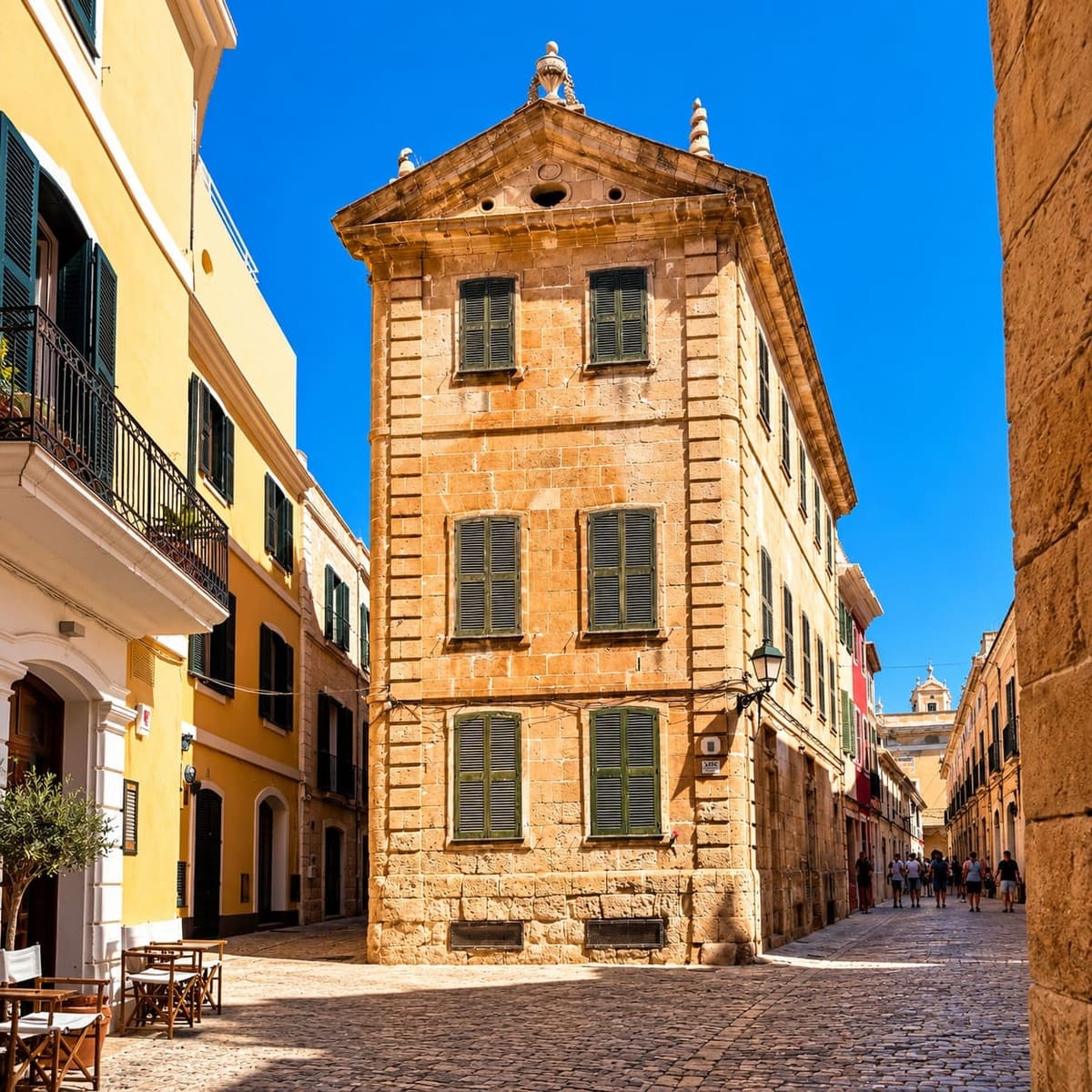
Nearly every building here seems carved from the same stone, a warm, buttery jaune that glows golden in the fading early-evening sun, and at the center of the impossibly labyrinthine core, there stands that beautiful, soaring cathedral, which similarly to the one in Palma, looks almost fortress-like.
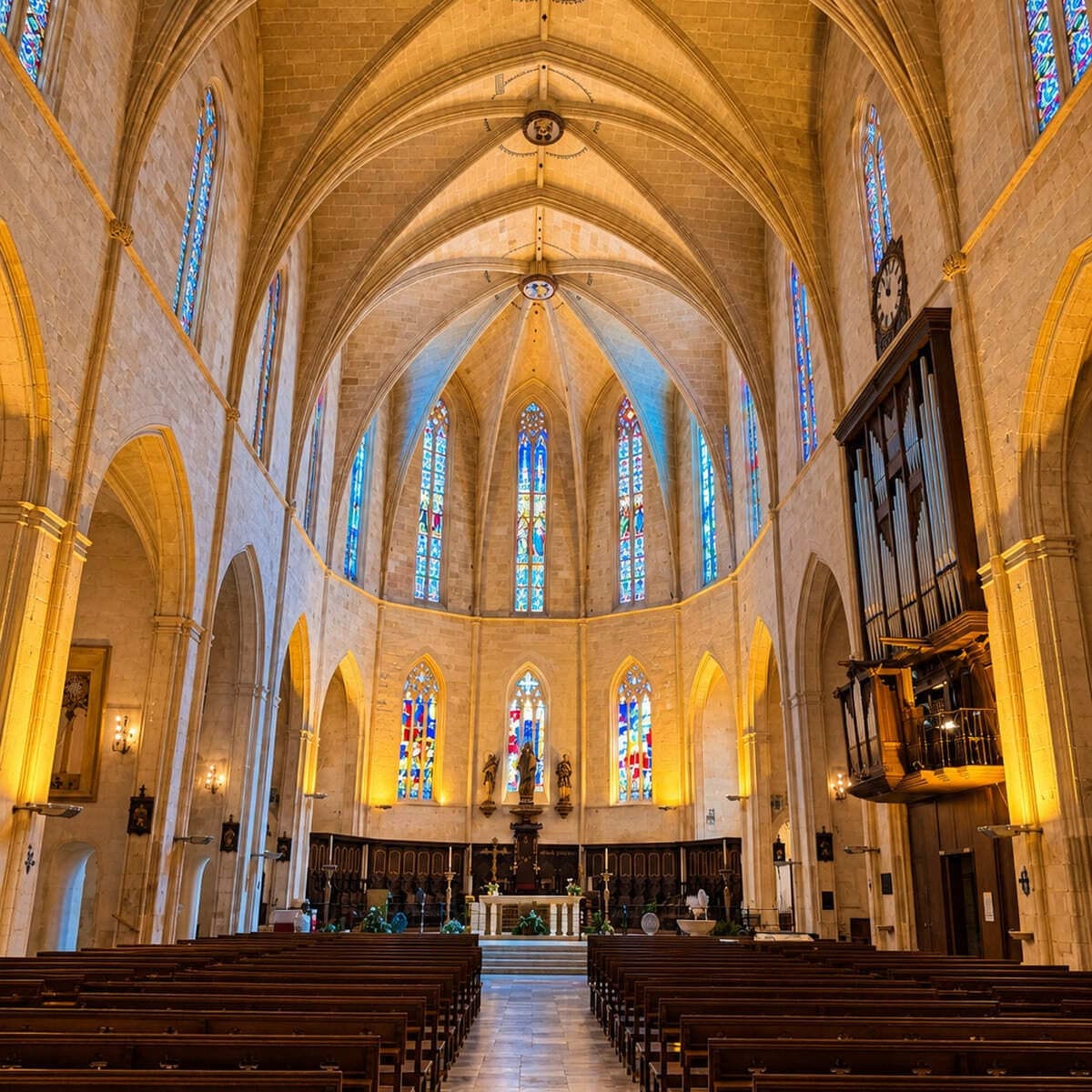
The cathedral is truly the major architectural centerpiece here, with its honey-colored façade extending into a cavernous Catalan-Gothic interior, only dimly lit by ethereal shafts of light filtering through its rose window and stained glasswork… yet it’s not the only Old World wonder on offer.
Old World Wonders At Every Turn
Swing by the cathedral and get yourself the combined heritage ticket, and you can visit not only the 14th-century cathedral, but also the quietly stunning Convent of Sant Agustí, a major religious complex home to a beautiful Baroque cloister, and the Diocesan Museum.
The combined Cathedral and Convent ticket currently costs $8.11.
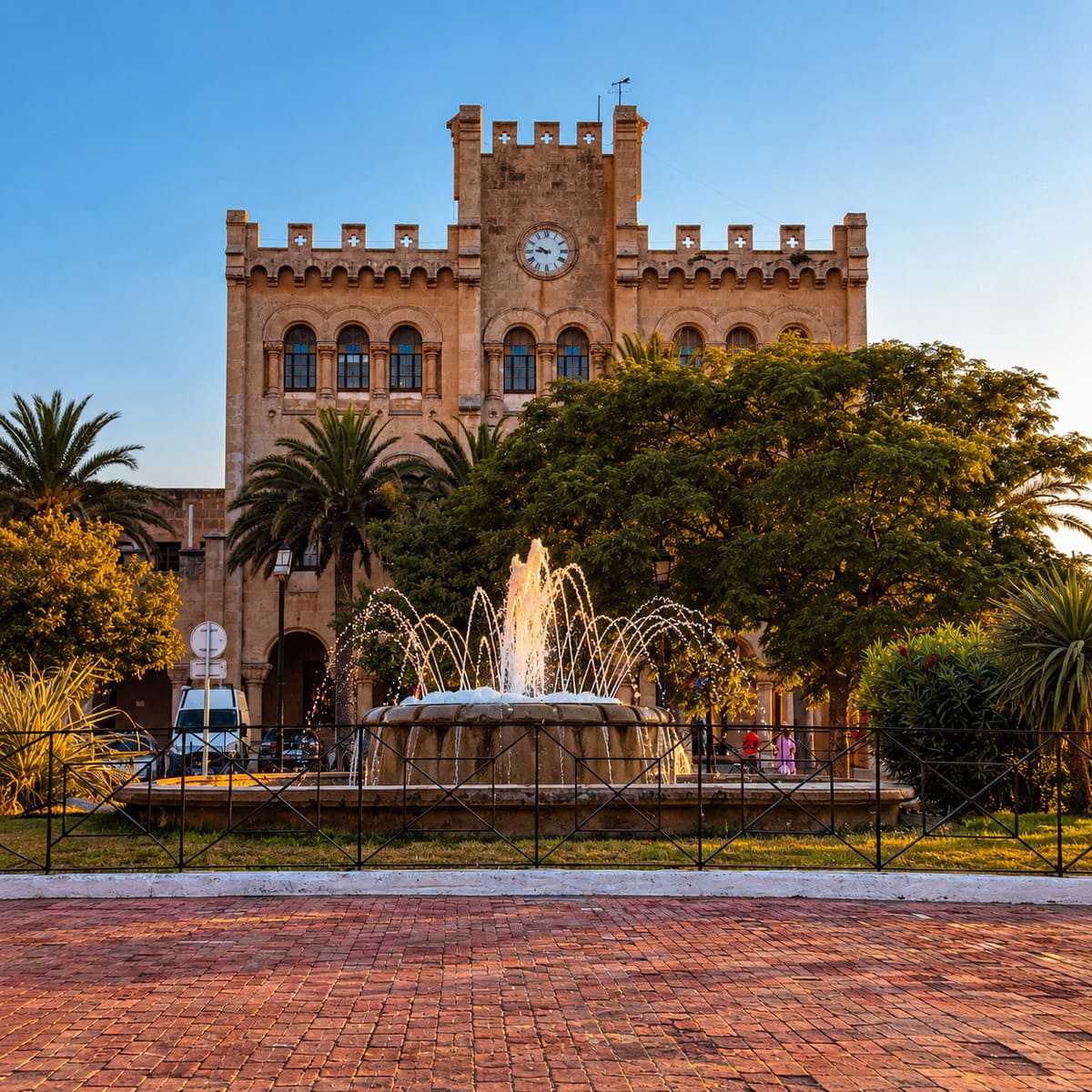
The Town Hall is another absolute beaut nearby, a former palatial residence overlooking Plaça des Born.
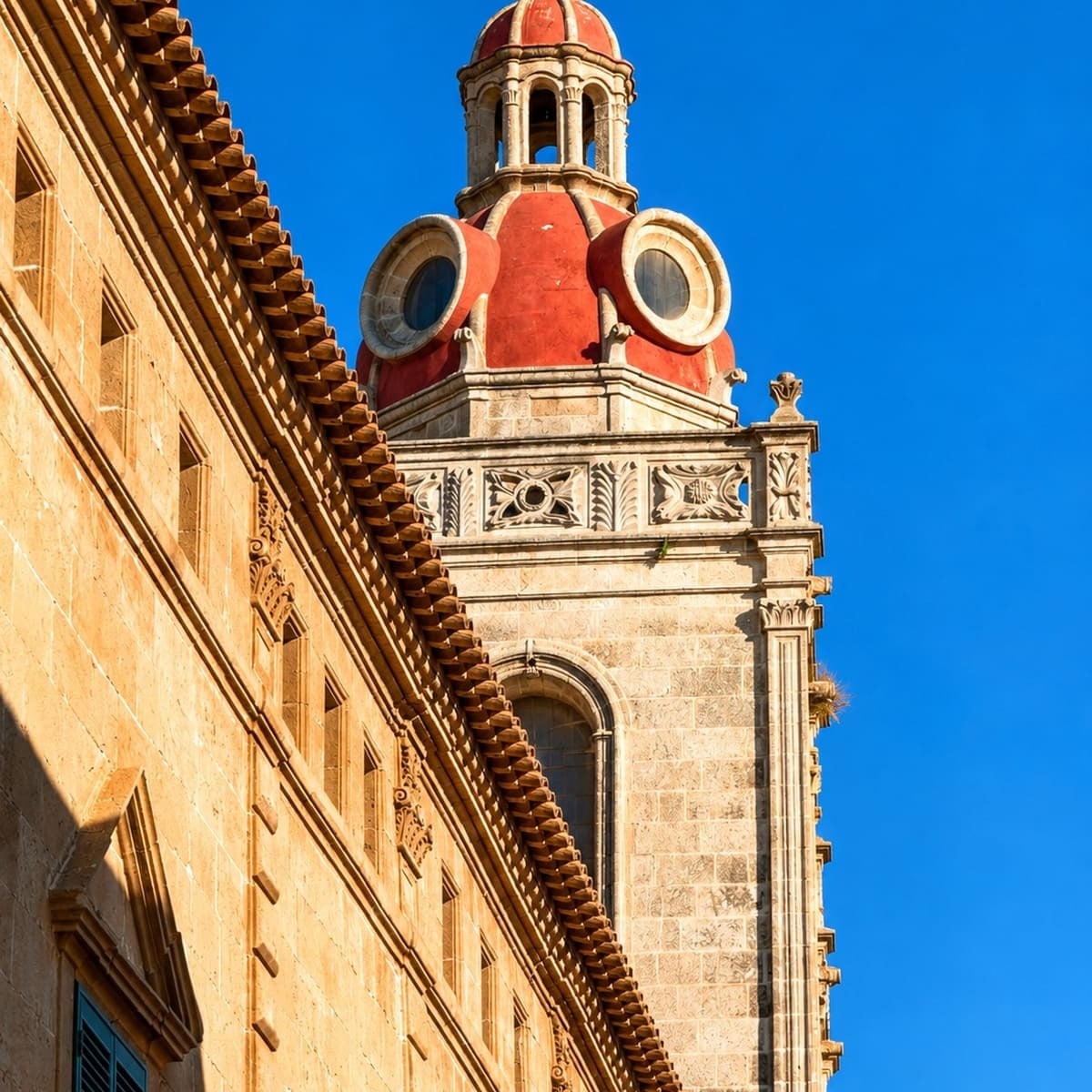
The equally-historical Plaça is Ciutadella’s ceremonial meeting point, flanked by former noble residences and dominated by a commemorative obelisk.
One of the coolest things you can do in town, and I had no clue myself until I just wandered down into the steep lanes leading toward the port, is descend into the café-lined Port Antic.
Packed full of beautiful yachts, waterside eateries, and late-night terraces, this is Ciutadella’s go-to spot for evening drinks, and you get some of the most stunning views looking back toward the old fortifications from further down the harbor.
Pro tip? Take the steep steps towards Dalt sa Quintana and the parking area above the harbor, which doubles as one of those completely unassuming miradores you’d never think to seek out.
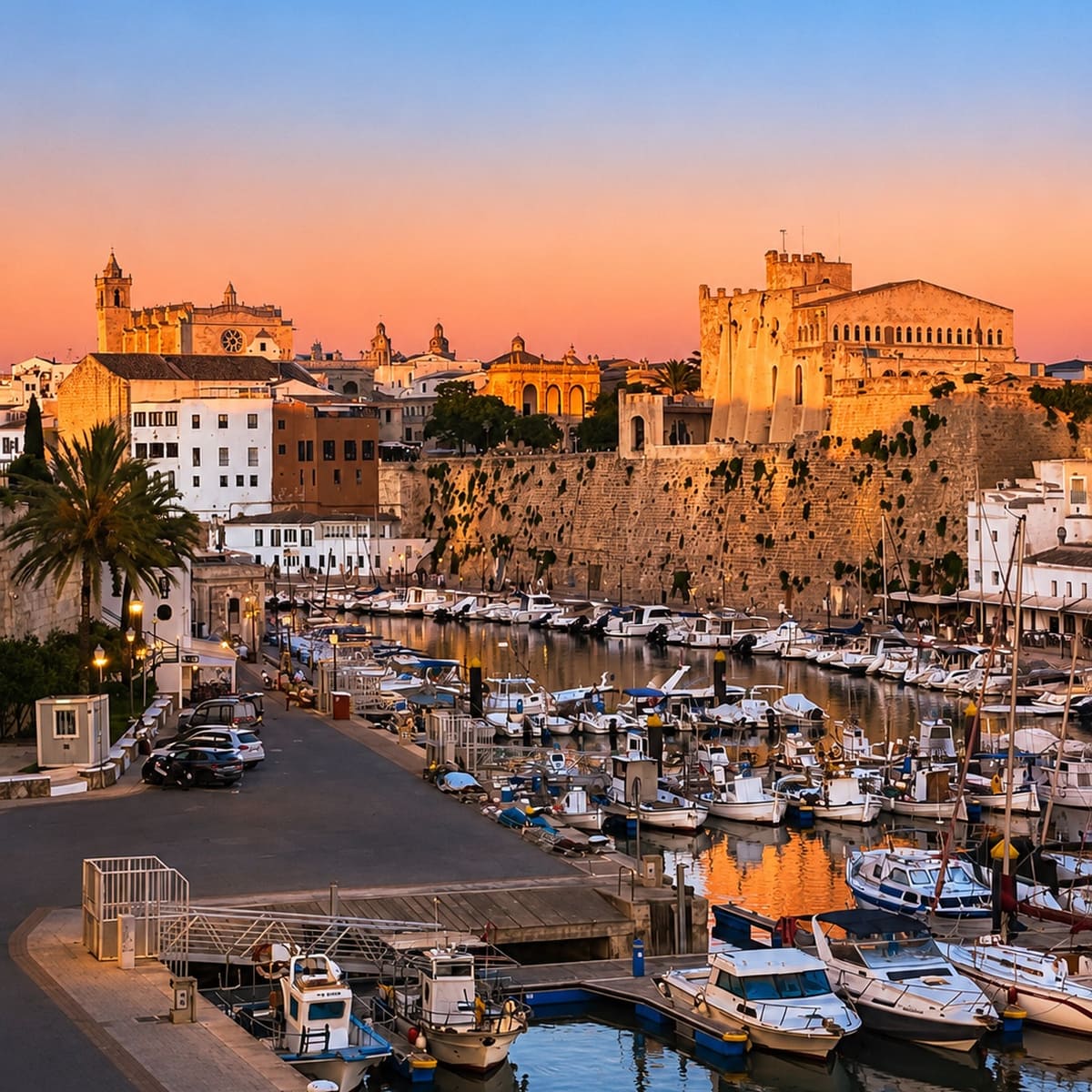
From up here, you can take in Ciutadella’s entire townscape, from the old bastions and honeyed rooftops, to the cathedral towering behind them.
How Much Does Dinner Cost In Ciutadella de Menorca, Spain?
The best part about visiting Ciutadella this fall?
While this is no lesser-known gem awaiting discovery—the city definitely sees its fair share of day-trippers from southern Menorca, and even neighbouring Mallorca itself—it does feel more relaxed, intimate, and authentically Menorcan than Maó.
The summer crowds are largely gone now, and the visitor footfall has definitely dwindled.
I wouldn’t expect the tourist buzz to die down completely until at least December, but if you’re going within the next few weeks, you still get lovely 73-degree, short-shorts weather, more affordable hotel rates, and no shoulder-to-shoulder chaos.
Average Prices In Ciutadella de Menorca In The Fall
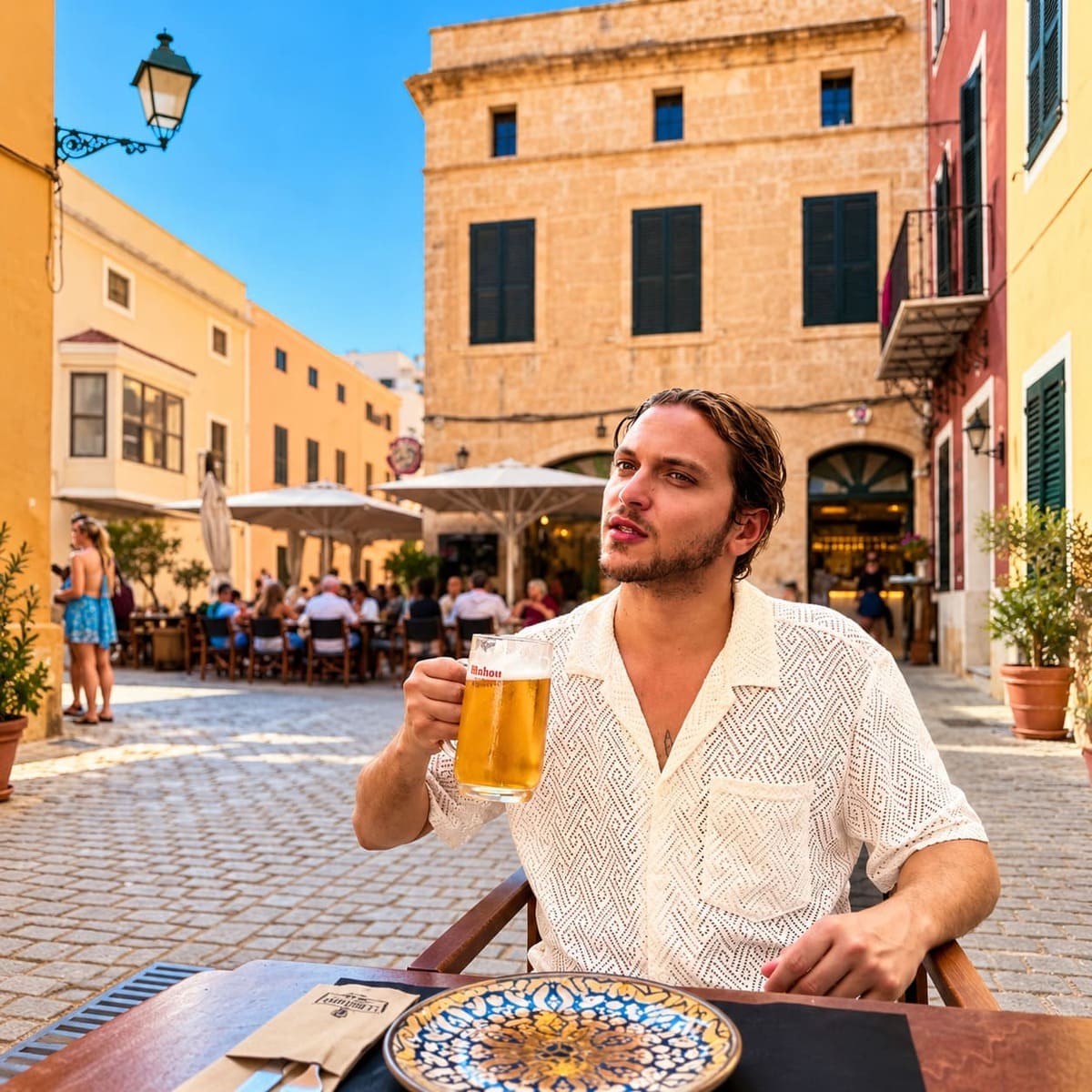
- Bakery snack, such as an ensaïmada: $4–6
- Tapas: $5–13
- Pizza in a casual restaurant: $14–21
- Main dish in a local restaurant: $17–30
- Three-course meal in a mid-range restaurant: $34–55 per person (usually excluding drinks)
- Cappuccino: $2.50–4
- Local draught beer: $3.50–6
- Simple guesthouse or hotel: $70–110
- 4-star hotel: $180–260
Absolute Best No-Frills Eatery In Town!
Looking for a cozy, local-favourite restaurant in the Old Town that won’t cost a fortune and dishes out delicious seafood?
I loved this tiny, no-frills spot tucked down a side alley La Guitarra so much, I came back to Ciutadella two nights in a row just to eat here.
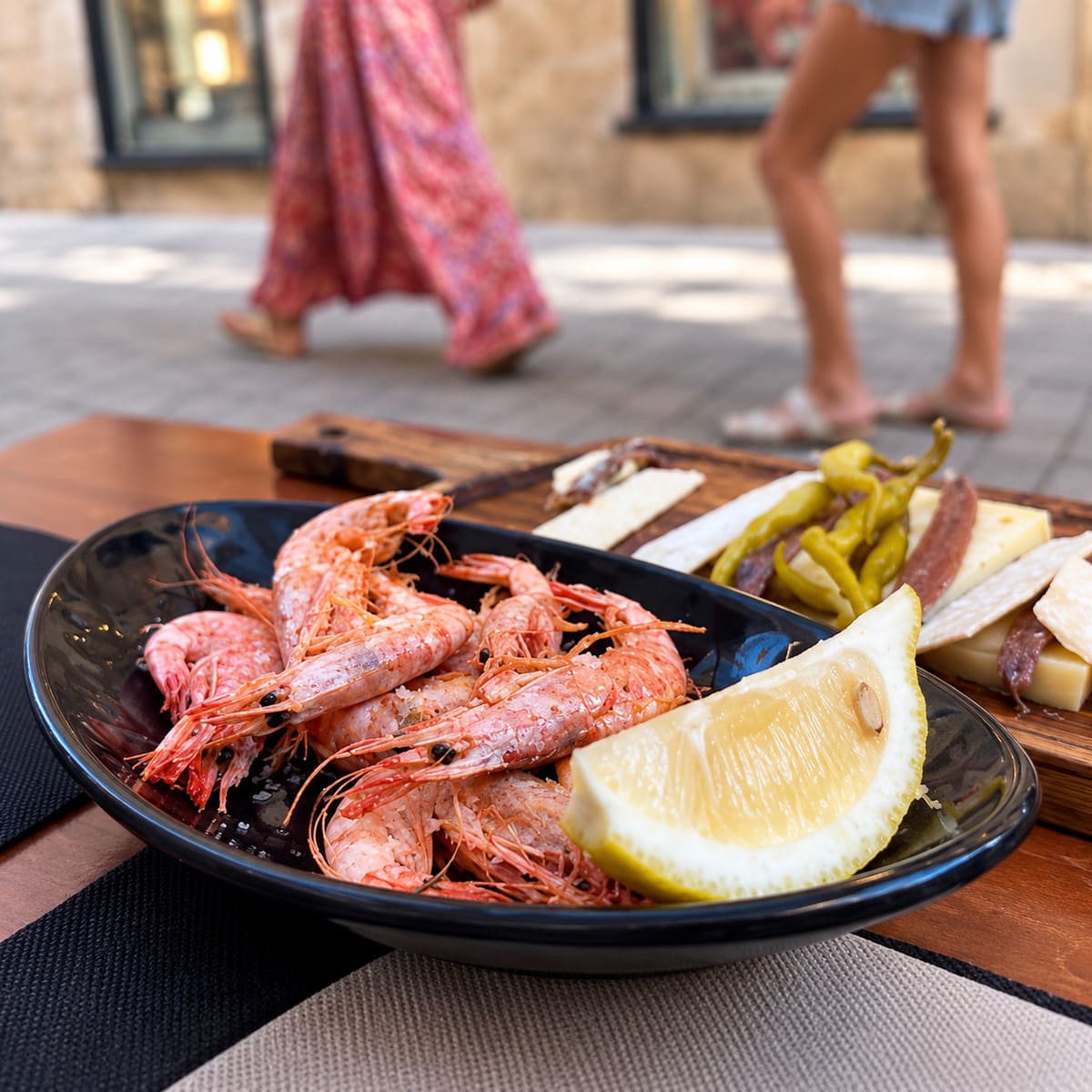
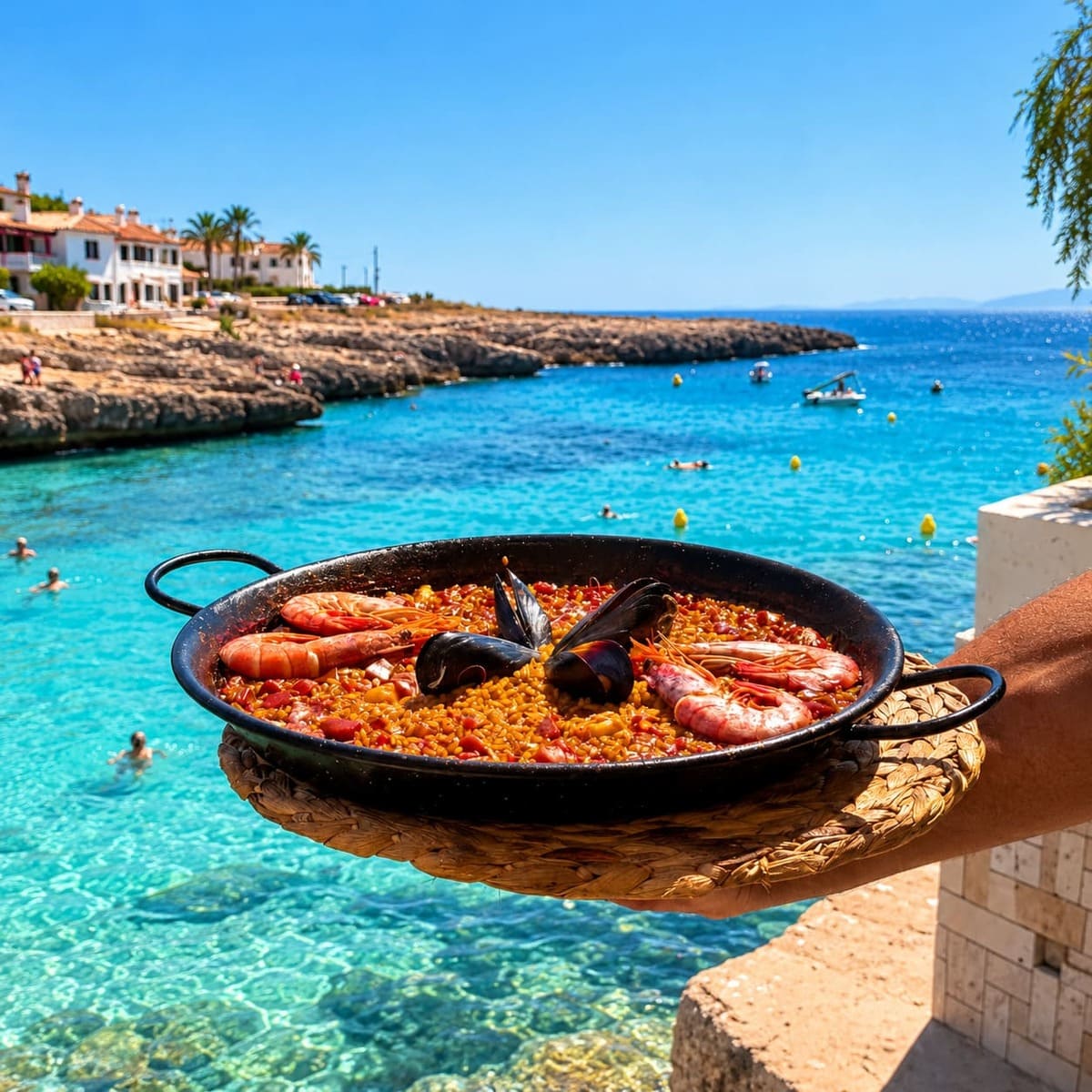
They serve anchovy-flavoured olives for only $3.50, patatas bravas or potatoes with allioli for $9.50, and a tray of salted, freshly-caught Menorca red shrimps at a fairly-priced $17-ish.
You can even get the much-cheaper mejillones al vapor for only $15.50. There’s a whole range of fresh fish and seafood to be had here.
Are There Pickpockets In Ciutadella de Menorca, Spain?
Wondering how safe Ciutadella is?
Spain is a Level 2 destination officially according to the U.S. Department of State, indicating Americans should exercise ‘increased caution’ when visiting, mainly due to the ongoing threat of terrorism and civil unrest.
The advisory does not zoom in on Menorca specifically, choosing instead to bundle the entire country into a broader nationwide classification, but speaking from experience, Menorca feels way calmer and less hectic than mainland Spain.
This is a largely-rural island, with only around 103,000 permanent residents scattered across small towns and coastal settlements, so we’re not talking sprawling urban metropolises with enormous transport networks and tourist crowds that automatically create more opportunities for pickpockets and scammers.
Ciutadella, for instance, is truly a small port city with a walkable center and quiet residential streets by any reasonable definition.
That doesn’t mean crime is nonexistent, but it’s important to look at the wider context:
Menorca recorded 3,967 offenses in 2025, compared with 66,712 in Mallorca and 13,502 in Ibiza. It was the only Balearic island to record an overall decline in crime, down 1.3% year-on-year.
Naturally, I wouldn’t leave my phone lying unattended on a tabletop while I’m distracted plunging my fork into a steaming dish of black-rice paella, nor my bag unattended on a beach while I disappear into the sea for half an hour.
That said, the atmosphere is considerably more relaxed than what you’ll encounter in Spain’s largest tourism hubs, even neighboring Mallorca.
Spain as a whole scores a squeaky-clean 90 out of 100 on the Travel Off Path Traveler Safety Index, a tool used by travelers to measure perceived safety across different destinations:
By the way, if you’re heading to Europe this fall, you’ll want to make sure you’re up to speed with the continent’s new border and travel rules.
The European Union’s Entry/Exit System is now fully operational, and Americans traveling to the Schengen Area for a short stay are among the non-EU visitors whose entries and exits are recorded digitally.
That includes passport information and biometric data—normally a facial image and fingerprints—upon arrival.
Head over to the Entry Requirement Checker, and pull up the exact entry and travel rules that apply to you as a U.S. citizen.
Note From The Editor
Just one sec! If you enjoy reading great human-written articles, the best way to see a few more is to follow us on Google so we become one of your preferred websites. Thank you so much for reading. Now back to the story!
Did Someone Say Caribbean-Like Beaches?
Now, let’s not sit here and pretend I’m some holier-than-thou, museum-dweller.
Well, I am a culture aficionado, but I also love my fair share of roasting in the sun.
If you’re taking the roughly 45-minute drive from Maó—or Binibeca—to Ciutadella, you might as well hit up some of the southwest-coast beaches, which just happen to be some of Menorca’s most spectacular.
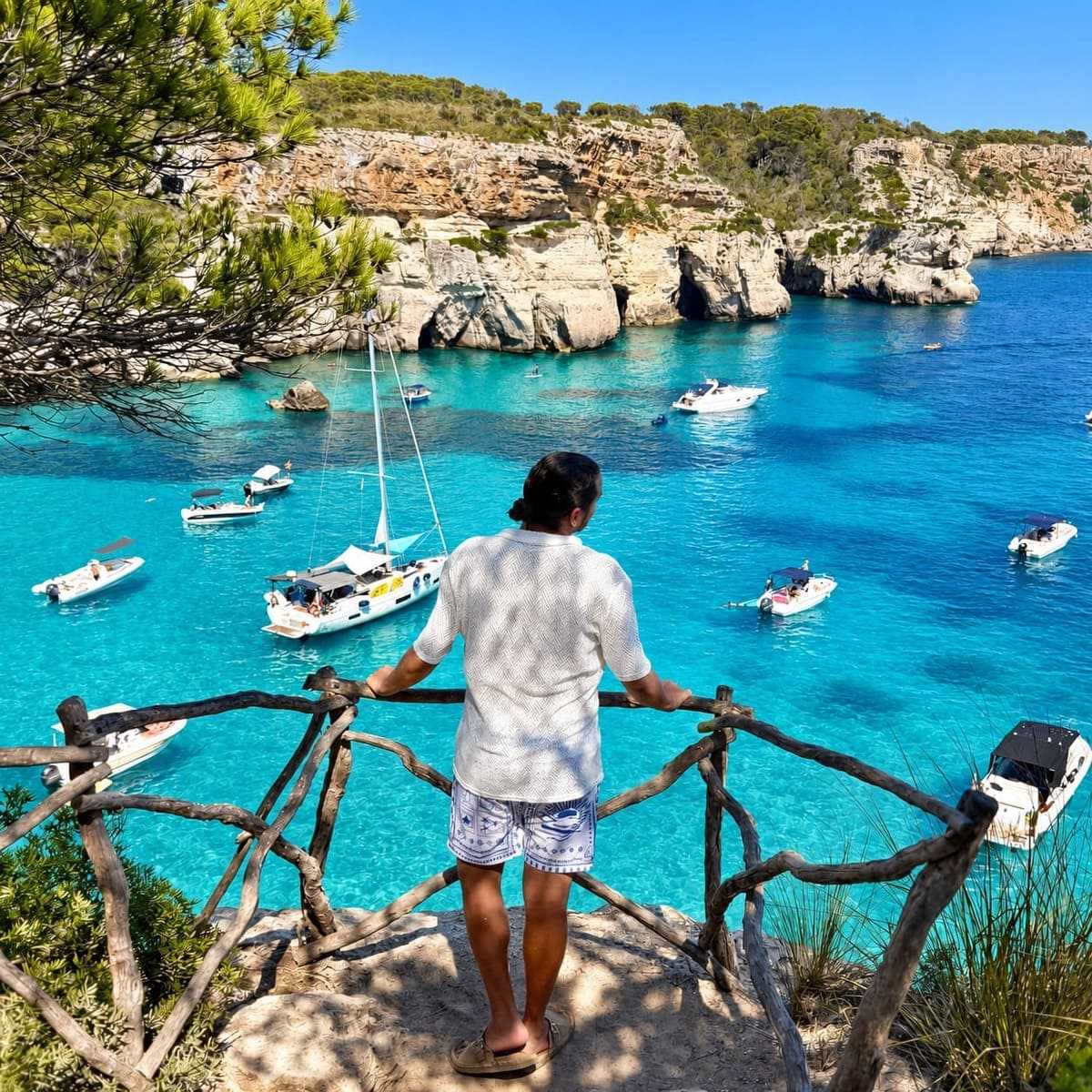
And let me tell you, they look almost like Caribbean postcards.
The Top 3 Beaches Near Ciutadella
Cala Macarella
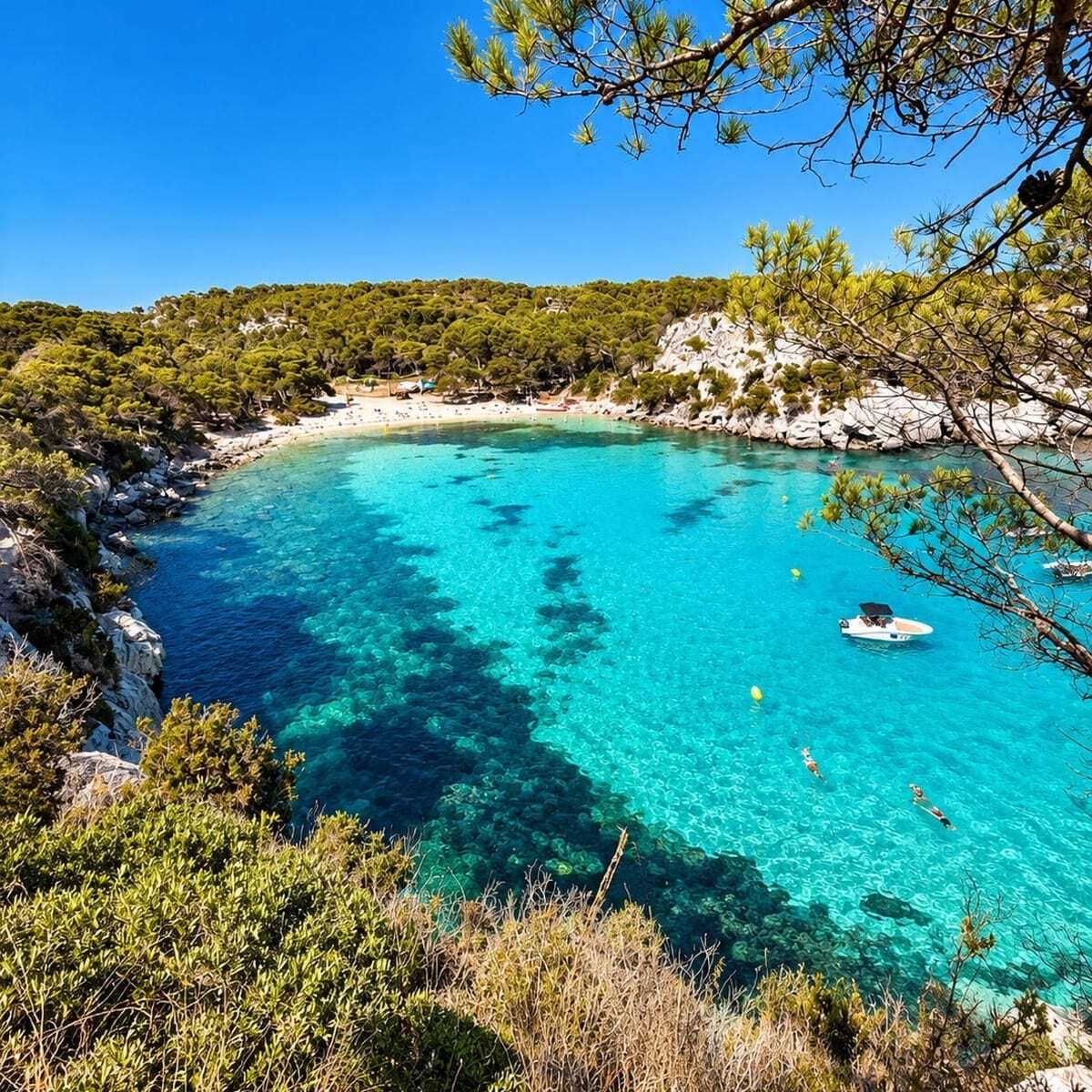
Cala Macarella is that classic Menorcan cove: pale sand, clear turquoise waters, and pine-backed cliffs.
During the regulated tourist season, it’s best accessed via the dedicated shuttle that leaves from Ciutadella, as private-car access is restricted during the busiest part of the year. This usually extends into early fall.
This is one of those things you absolutely want to check before setting off rather than just rocking up and hoping for the best.
Cala Macarelleta
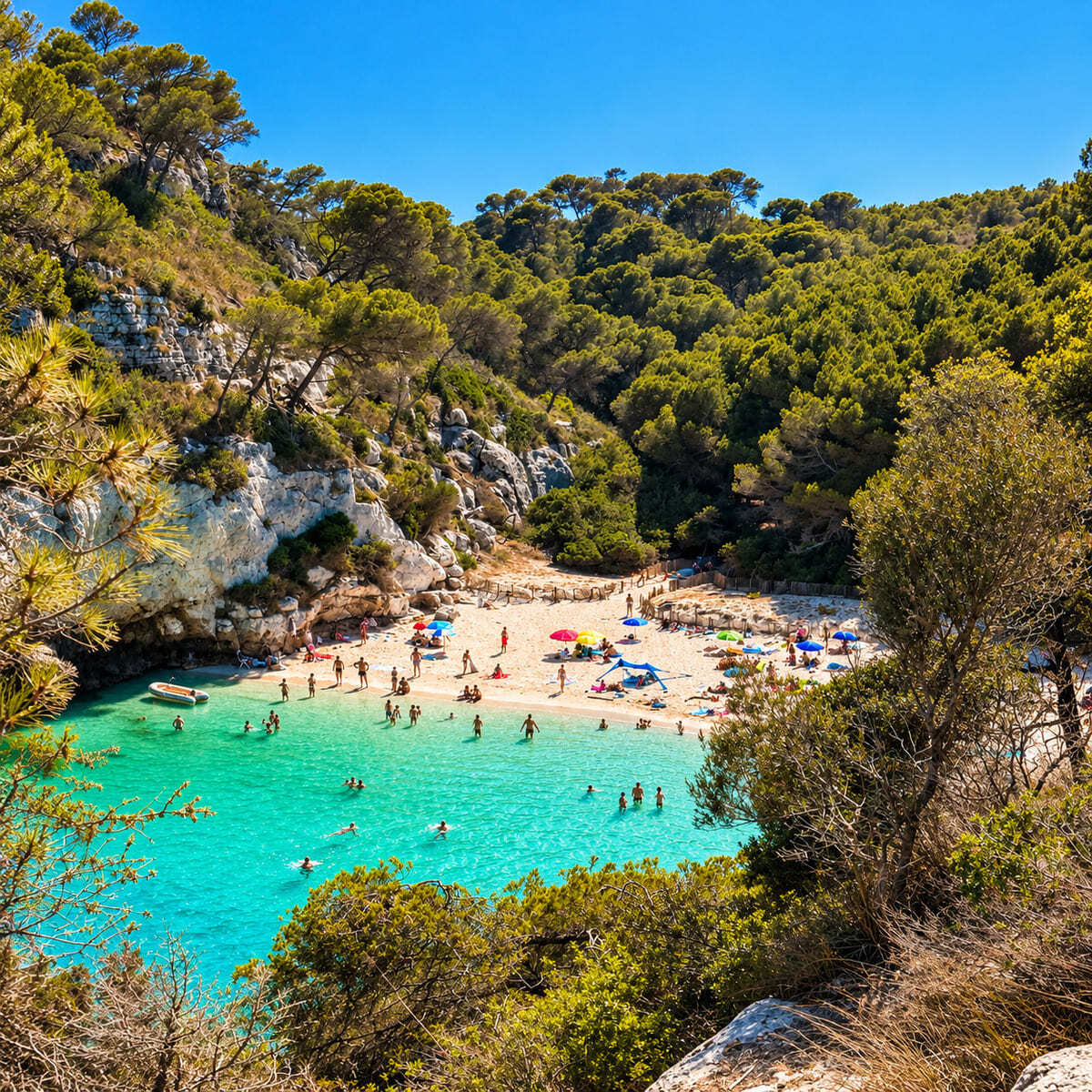
From Macarella, you’re a mere 10–15-minute uphill trek to Cala Macarelleta, the more exclusive, occasionally nudist-friendly, tinier sister cove.
The waters here are an insane electric aqua, and thanks to the island’s mild autumnal climate, the sea averages around 73°F in October, so swimming is still perfectly realistic on a sunny day.
And, you won’t be sharing that tiny strip of sand with the hundreds upon hundreds of visitors you’d encounter in August.
You might also notice a narrow footpath leading from Macarelleta into the thick, pine-covered woods behind it, leading to…
Cala En Turqueta
That’s part of the Camí de Cavalls, Menorca’s historic coastal trail.
I only went in for a leak myself, and kept going, and going, and going, drawn to the silence and beautiful, sun-dappled woodland, until I was too far gone to trace my way back, and had no option but to soldier on the remaining stretch to Cala En Turqueta.
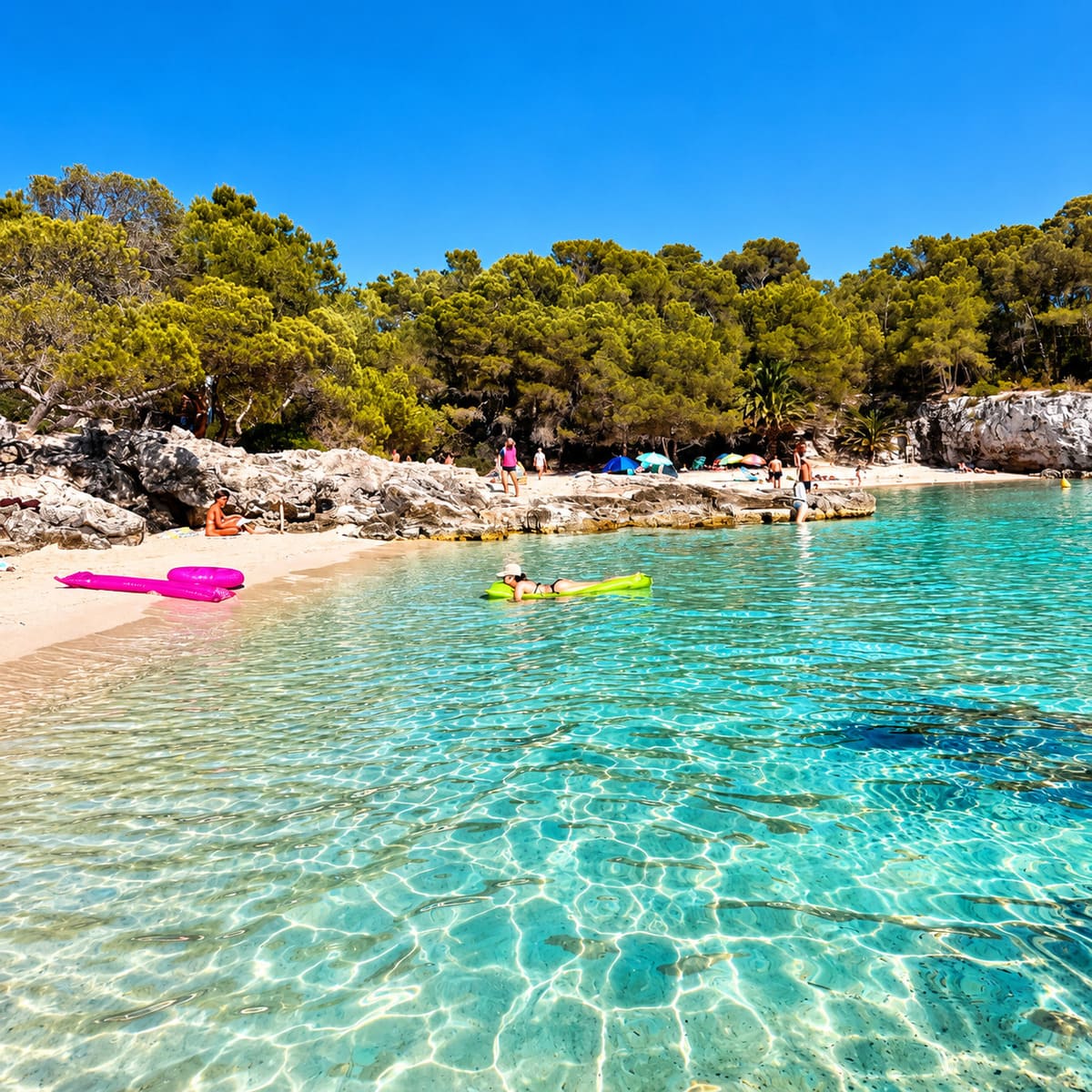
Located a roughly 40 minute walk from the previous beach, this is my favorite beach in the Ciutadella area, if not Menorca as a whole:
It’s a beautiful twin-bay cove with translucent water, and due to its relative inaccessibility—that is, if you’re coming on foot from the Macarella sisters—it has a more secluded feel.
Mind The Bus Routes
A savvy piece of advice?
If you’re coming during the regulated beach-bus season, leave your car in Ciutadella and check the Line 69 shuttle into Macarella.
Line 68 connects Cala En Turqueta back to Ciutadella when it’s operating, which means that on dates when both seasonal services line up, you can turn the whole thing into a ridiculously scenic one-way beach hike instead of an exhausting there-and-back trekking nightmare.
Just make sure you don’t ‘wing it’.
Check the actual Line 68 and Line 69 timetables for your date and reserve your seats in advance, because these are seasonal services and frequencies change considerably outside peak summer.
I had booked my return trip both arriving to, and leaving from Macarella, and by the time I had trekked all the way to Cala En Turqueta, I was too sweaty and drained to drag myself all the way back up, except… surprise, surprise… the last remaining shuttle leaving from that beach was already full.
I have to thank this lovely Irish family who picked me up on the roadside and kindly drove me back into town, otherwise you might have been reading a whole different story on how I survived a last-minute overnight camping stint in the most scenic turquoise bay in the world.
But hey, this is Menorca, after all.
I’d gladly take up the challenge again just for the plot.
A Tale Of Two Capitals
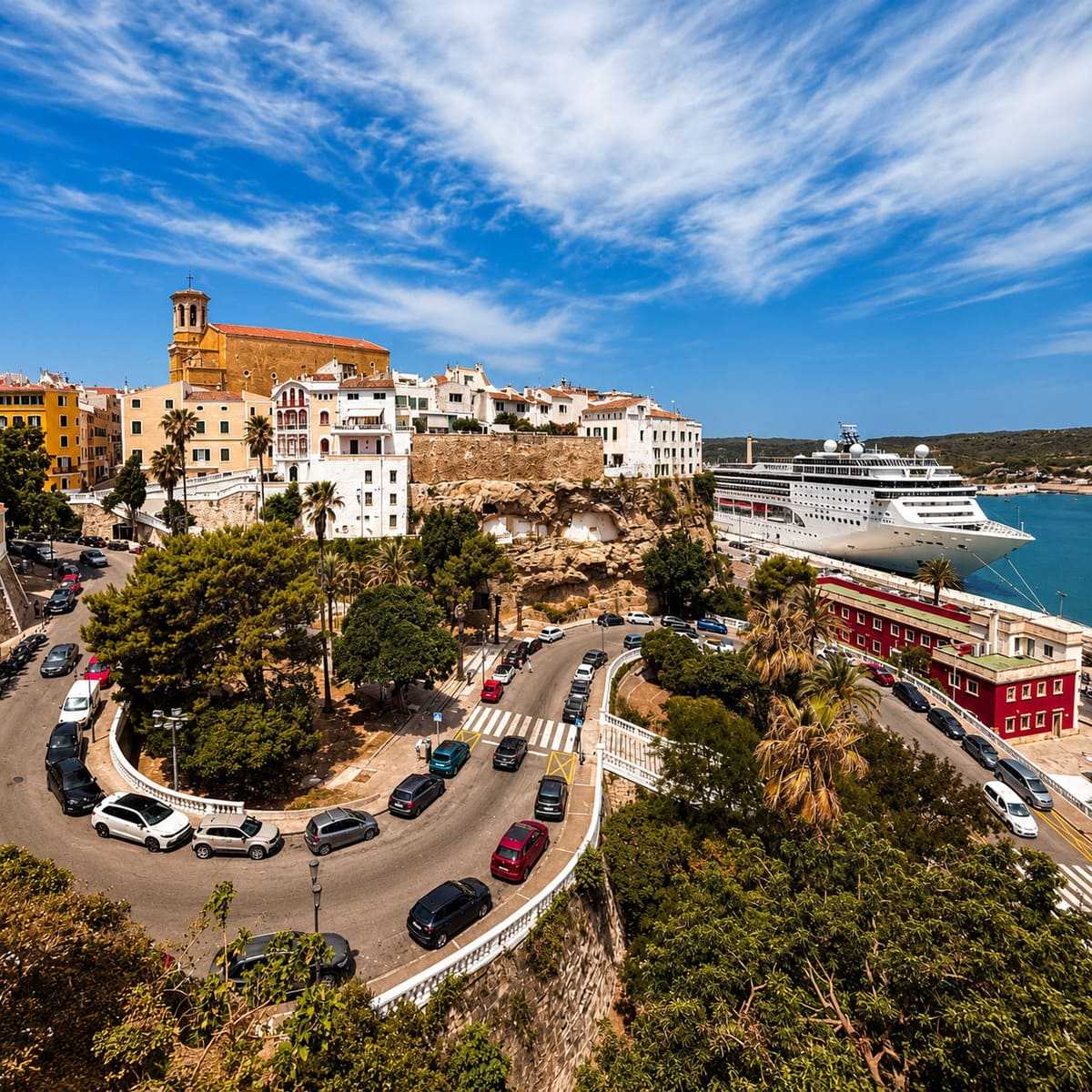
Menorca is perhaps the only island in the Mediterranean that feels like it has two capitals, at least unofficially.
The island’s official capital is Port Mahón, or Maó, which straddles the eastern coast, not far from my former base of Binibeca Vell.
It’s one of the two largest settlements, home to roughly 30,700 out of the island’s 103,000-or-so permanent residents, and it’s both a busy administrative hub and a major cruise port of call.
If you’re visiting Menorca on one of those enormous cruise liners, it’s Maó you’re far more likely to see.
Ciutadella, on the other hand, sits on the west coast, a whole 28 miles from Maó, and it used to be Menorca’s main city back in the Middle Ages.
Ciutadella has since become Menorca’s second seat of power, though ironically, at around 32,400 residents, the municipality is actually slightly more populous than Maó. More importantly for us culture buffs, it remains the island’s historic and ecclesiastical heart.
It preserves much of its medieval street plan, and it boasts a layered, pan-Mediterranean heritage:
It was Roman, then Islamic, re-Christianized during the Reconquista, brutally sacked by the Ottomans, and later shaped by periods of British and French rule before Menorca finally settled into modern-day Spain.
Think of it as the CliffsNotes, pocket-size version of Mediterranean history, compressed into an ensemble of tightly-packed stone buildings, except no textbook will ever feel as enthralling as this.
Enter your email address to subscribe to Travel Off Path’s latest travel news, straight to your inbox

Sammi
Sunday 11th of October 2026
Omggg... so beautiful!! I love the clear aqua lagoons!! And that shrimp looks sooo good!!