
I have been to Cancun and the Riviera Maya more times than I can even count.
As a digital publisher who lives in Mexico and covers travel for a living, it is basically my second home. I have seen the Mexican Caribbean when the water is so pristine and clear that it looks like glass, and I have unfortunately been there during the heaviest sargassum blooms of the year.
I need to be honest: the seaweed absolutely affects a vacation.
One of my absolute favorite parts about the Mexican Caribbean is wading out into that iconic, electric-blue water. When thick, brown sargassum is wrapping around my body and piling up on the sand, it instantly strips away that paradise feeling.
For over a decade, American travelers heading south have had to play a highly frustrating guessing game with this seaweed, constantly worrying if their expensive beachfront resort will actually have a usable beach.
But when I saw the news break this week about what Mexico is doing to combat this, I genuinely have new hope that they may finally get ahead of this problem.

The Record-Breaking 2026 Season
This year, the sargassum bloom has been breaking historical records, causing massive headaches for both travelers and the local tourism industry.
According to Mexico’s Environment and Natural Resources Minister, Alicia Bárcena, up to 9,000 tons of sargassum are currently arriving every single day on the shores of Quintana Roo. To put that into perspective, that figure is four times the amount that washed ashore daily last year, and a staggering 27 times the historical daily average.
The situation escalated from a temporary nuisance into a continuous, year-round presence.

However, the Mexican government just announced a massive new $115 million initiative aimed at getting the problem under control.
At the center of this historic effort is a massive naval deployment designed to catch the seaweed miles out at sea before it ever has the chance to ruin your beach day.
Creating a 30-Mile Coastal Shield
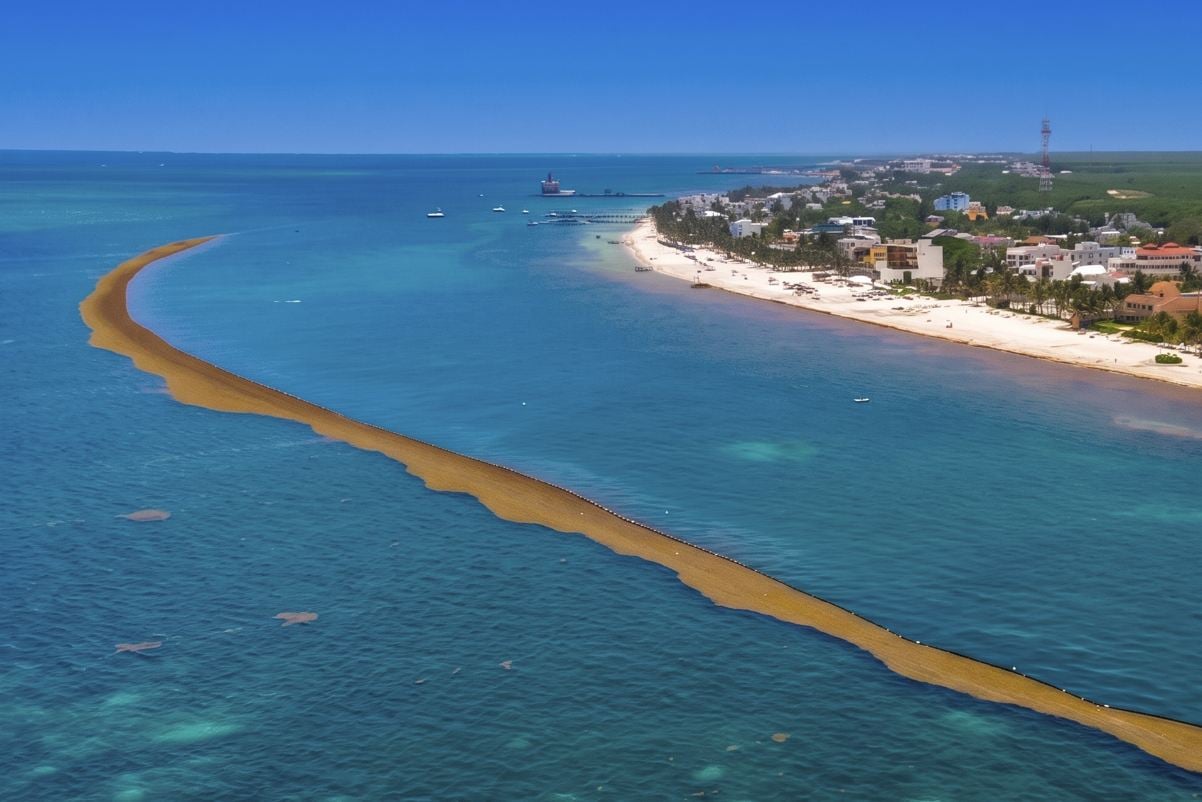
The most critical part of the strategy involves physically blocking the seaweed from reaching the shore. The Mexican Navy is deploying over 30 miles of specialized coastal containment barriers along the most popular tourist corridors.

These floating nets will be strategically deployed across Cancun, Playa del Carmen, Tulum, Puerto Morelos, and Mahahual. As ocean currents push the sargassum toward the resort zones, the barriers act as a primary line of defense to trap the floating masses.
The goal of this new strategy is to invert the current cleanup process. Instead of waiting for the seaweed to hit the sand and trying to clean it up with manual labor and tractors, the Navy wants to intercept the vast majority of it in the open water.

The Open-Water Fleet
To support these massive barrier lines, the Navy is bringing in serious heavy machinery.
The initial $44 million phase of the plan includes the deployment of two tugboats, six specialized coastal sargassum harvesters, and dynamic barriers. This initial fleet is designed to increase the daily at-sea collection from roughly 627 tons to 1,870 tons.
Eventually, the Navy plans to deploy even larger open-water vessels with the goal of scaling their daily collection capacity to 4,000 tons.
What This Means For Your Vacation
If you have a trip booked for the Riviera Maya, this sweeping naval strategy is the best news you could ask for.
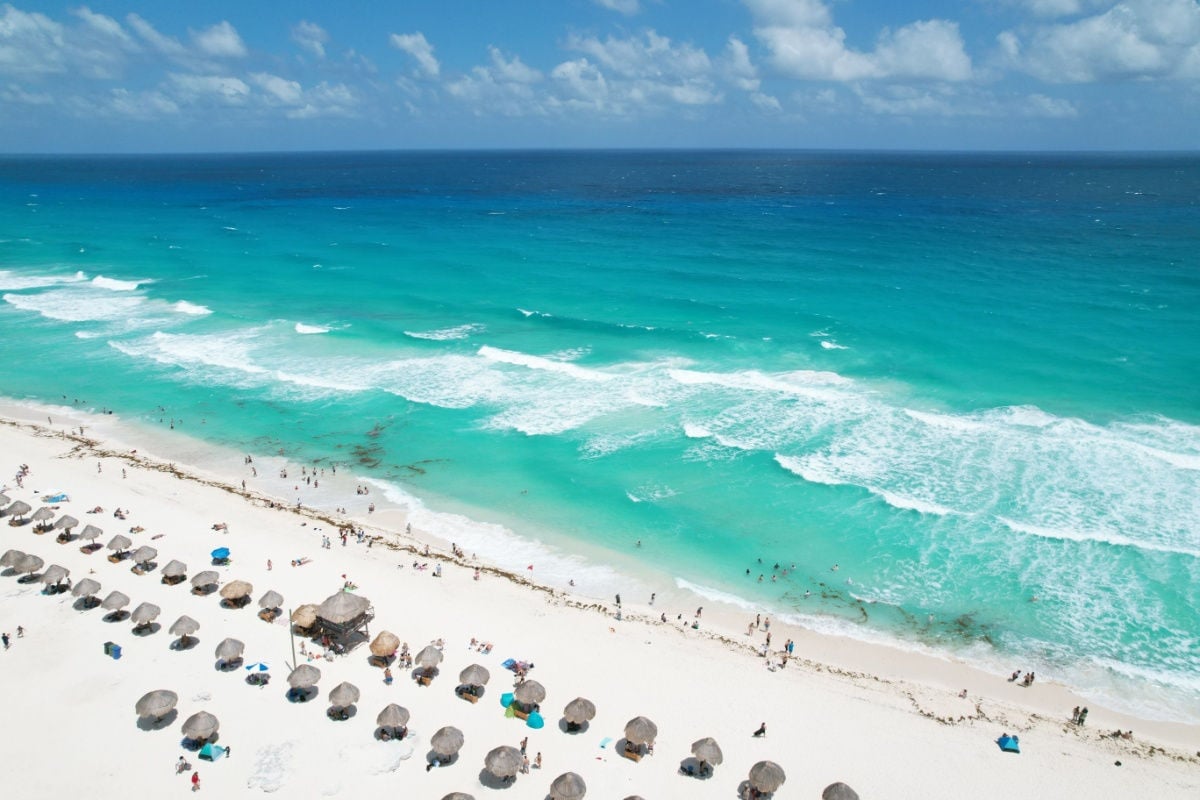
By shifting the battle out into the deep ocean, the government is drastically reducing the amount of seaweed that actually makes landfall. Less seaweed on the sand means less of that decomposing, sulfur-like smell, and fewer days where the water turns into a cloudy “brown tide.”
While the plan does not guarantee that every beach will be 100 percent clear every single morning, the beaches of Cancun and the Riviera Maya could look a lot more like the postcards you expect.
How To Pivot On A Heavy Sargassum Day
Even with the Navy’s best efforts, nature can sometimes overwhelm the barriers. If you wake up and find that a wave of sargassum has temporarily covered your resort’s beachfront, do not let it ruin your day. The Mexican Caribbean offers incredible alternatives to keep your vacation on track.
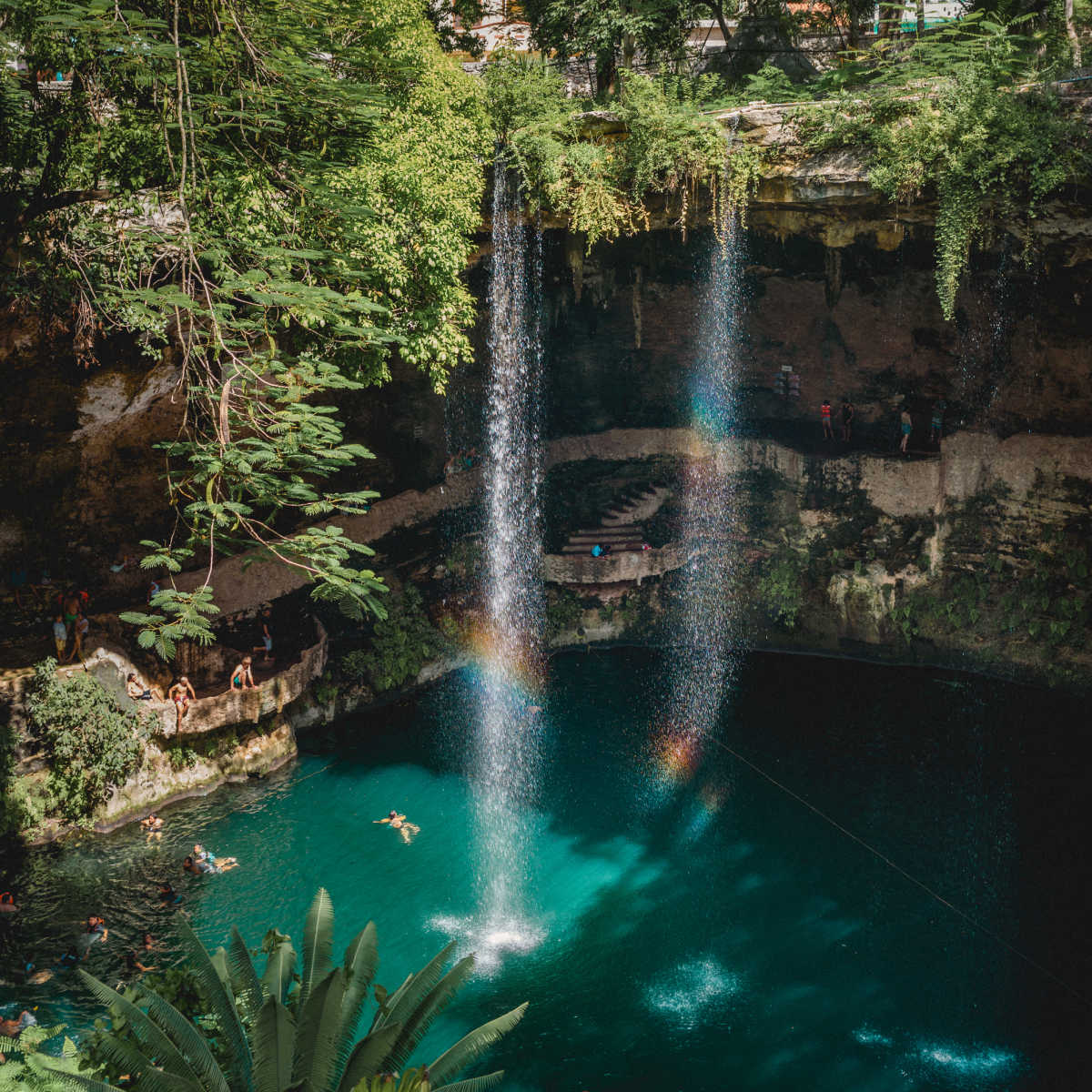
- Visit A Freshwater Cenote: If you want to swim in crystal-clear natural water, leave the coast and head into the jungle. The Yucatan Peninsula is famous for its cenotes—stunning natural limestone sinkholes filled with cool, fresh groundwater. Because they are located inland, cenotes are completely immune to sargassum.
- Take A Day Trip To The Islands: Sargassum is driven by ocean currents that primarily strike the east-facing coasts. If the mainland beaches in Cancun or Playa del Carmen are overwhelmed, take a quick ferry ride over to Isla Mujeres or Cozumel. The west-facing beaches on these islands are naturally shielded from the incoming seaweed and almost always boast perfectly clear, turquoise water.
- Enjoy The Pools: Over the last few years, major resorts have invested heavily in multi-tiered, amazing pool areas to combat the seaweed issue. Grab a drink at the swim-up bar and enjoy the spectacular ocean views without having to step foot in the seaweed.
Mexico’s Sargassum Shield
Enter your email address to subscribe to Travel Off Path’s latest travel news, straight to your inbox