
If you’ve never been to Rome yourself, and a trip to Europe is in the cards for 2026, chances are you’re eyeing a visit to the Eternal City, and we’re definitely not here to discourage you, or downplay Rome’s importance:
We could write at length about its world-class museums, ancient wonders, and unrivaled food scene. In fact, we have on multiple occasions. Rome is truly all that, and we’re definitely not part of the antithetical crowd that calls it ‘overrated’.
However, what you should know if Rome’s on your radar this year, is that it will probably be busier than any other year that preceded it.
Why You Should Avoid Rome… For Now
Italy is expecting a record-breaking rise in visitor numbers in 2026, even though it’s already crumbling under the weight of mass tourism, and as the national capital and main tourist destination, Rome is at the helm of the worrying trend.
Rome will always be Rome, but between a cordoned-off Trevi Fountain—tossing a coin in will now cost you more than the coin itself—to new fees awating tourists at the entrance of the Pantheon, and the long lines blocking the Colosseum, it’s not exactly the equivalent of dolce vita kind of summer.
What if we told you that you don’t need to go to Rome specifically to experience all that Roman allure?
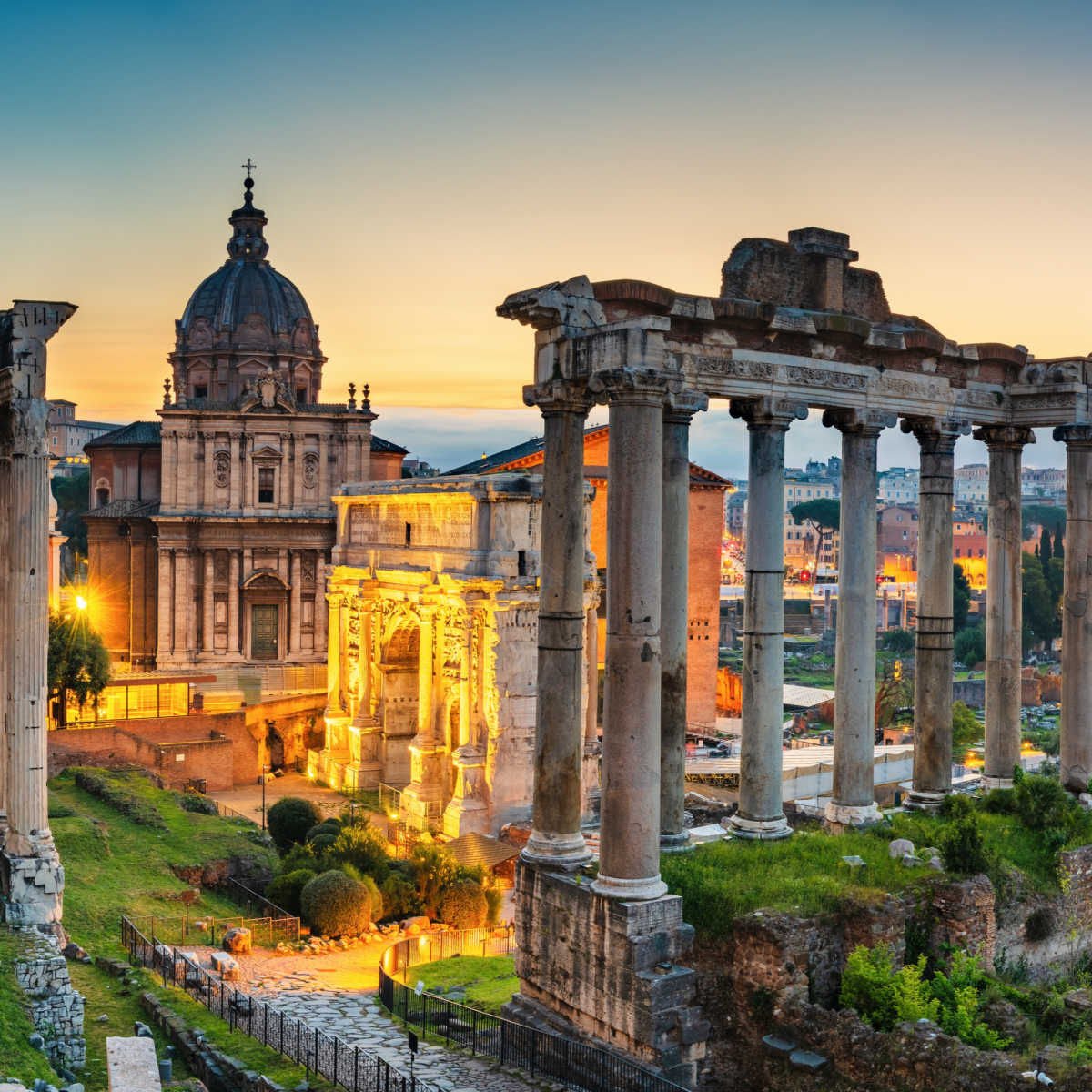
The legendary empire stretched far and wide across Mediterranean Europe and beyond, and iconic as it may be, the Italian capital is not all that’s left behind.
In fact, these 4 other historic cities pack their own Colosseum-style arenas and killer ancient vibes, and get this: no traffic-jamming crowds anywhere in sight!
4 Rome Look-Alikes Without The Crazy Crowds
Nîmes, France

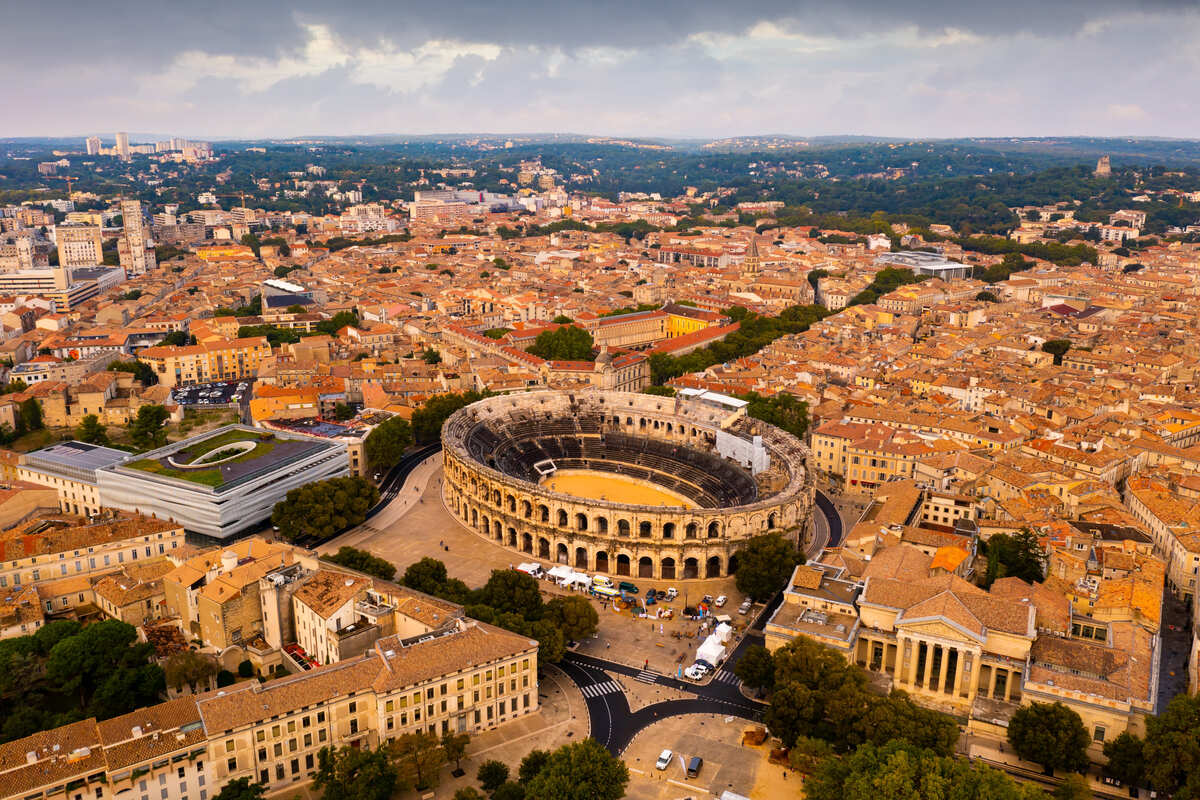
Considered by many the most Roman city outside of Italy, Nîmes revolves around a near-intact Roman amphitheater, built circa 70 A.D., a picture-perfect Old Town dotted with Italian-style skinny townhouses (they even have the same green shutters!), and lush urban parks.
The Arènes de Nîmes, their local ‘Colosseum’—we know, we know, there’s only one Colosseum, but you get the gist—is both an open-air museum and a still-functioning entertainment venue:
Back in summer 2024, none less than Dua Lipa performed live in the 2,000-year-old arena to about 24,000 spectators, so unlike the Roman Colosseum, this one still embodies the spirit of panem et circus.

In the heart of Nîmes, La Maison Carrée stands as one of the best-preserved Roman temples kicking around into modern times, barely a scratch on it. This limestone stunner dates back to the 1st century, and it’s only rivaled in its pristine state by the Pantheon in Rome.
A short walk from the temple, the Jardins de la Fontaine are yet another must-see: a vast expanse of green filled with ornate fountains, and home to a partially-ruined Temple of Diana.
For something truly mind-blowing, a short half-hour drive from downtown Nîmes you’ll find Pont du Gard, a tri-level Roman aqueduct, and UNESCO World Heritage monument spanning a crystal-clear river. It’s built without mortar, using precisely-cut stone, and it’s nothing short of an engineering rockstar.
Pula, Croatia

You read it here first: Pula is Rome by the Sea, and perhaps Croatia’s most Italian-esque port city.
Forget Dubrovnik and its crowded city walls, or Split with the drunken British lads: Pula is the much calmer, laid-back alternative where you can actually breathe in all some ancient history without accidentally inhaling some puff on the side.
Of course, there’s a monumental arena right by the port, and unlike Rome’s, its elliptical shape has not seen significant damage over the centuries.
The interior of the arena didn’t share the same fate, with most of the seats and structure now gone, but the cool part is that, similarly to Nîmes’, Pula’s arena also hosts live events in the summer months.

This includes the Pula Music Week, a multi-day electronic music festival that draws in youngsters from all over the Balkans. We’re not ones to toot our own horn, but you haven’t truly lived until you’ve experienced a European rave in an ancient Roman arena.
Besides the marvelous amphitheater, Pula lays claim to the 1st century Arch of the Sergii, the Temple of Augustus, the largest and best-preserved temple in a levelled Roman Forum, and a richly decorated Hercules Gate.
Did we mention all the beautiful beaches a stone’s throw away from Pula’s Roman core? For a chill Croatian beach day, away from the urban masses, head out to Gortan Cove: pine-shaded, pebbly, and bathed by turquoise seas.
Verona, Italy

You don’t need to leave Italy altogether to score a peaceful Roman-style holiday, either: a 3h20 train from the capital, up in the northeast of the Italian peninsula, Verona feels like a miniature Rome with half the usual buzz.
Like every other city on the list, the star of the show is the Verona Arena, built as early as 30 AD. It originally provided the backdrop for gladiator fights and other blood-letting spectacles, yet today, the most exciting happenings are Vivaldi concerts and operatic Andrea Bocelli renditions.
Yep, this one remains in use as well, and it can accommodate up to 30,000 visitors.
Verona itself is littered with traces of its ancient past, including a string of different city gates, most notably Porta Borsari and Porta Leoni, and original Roman bridges crossing the Adige River.

That being said, the city’s biggest claim to fame ain’t some dusty tie to a long-gone empire, but its Shakespeare hookup: it’s the setting of Romeo and Juliet, the Bard’s blockbuster play.
Those aren’t real characters, of course, but that doesn’t change the fact that Verona’s top tourist trap is Casa di Giulietta: a medieval townhouse with a cute-enough balcony and courtyard that local bigwigs randomly picked to turn into a Juliet-themed museum.
It does thousands of visitors a day, so maybe steer clear if you’re keen on avoiding Rome-like crowds.
Arles, France

Yet another underrated gem of Provence with an unsung Roman history, Arles straddles the banks of the Rhône that, at one point, inspired strokes of genius by Van Gogh himself.
The famous Dutch painter was not the only remarkable resident of Arles at any given time: the riverside town flourished as a Roman settlement in Antiquity, and given the scale of its monuments and the existence of an arena, we can bet it wasn’t any minor outpost, either.
The Arles Amphitheater is one of the most impressive monuments of its kind still standing, having been built around the same time as its sister edifice in neighboring Nîmes.
The elliptical arena is, without question, the locals’ pride and joy, but the smaller Roman Theater in its vicinity is equally fascinating: with imposing columns and marble seats, it once hosted epic plays and spectacles that drew crowds from across Provence, and it very much continues to do so.

A short 4-min walk from the arena, the Cryptoportiques d’Arles are a series of underground galleries built by the Romans, formerly used for storage and trade.
To the casual onlooker, it’s nothing but a bunch of underground chambers, sure, but get yourself a knowledgeable guide and it’s suddenly a rare window into Roman urban life.
All of this to say Arles’ Roman layer is but an appetizer. The town’s real knockout appeal lies in its Van Gogh legacy:
He painted all over Arles, including the famous Café Terrace at Night, the riverside promenade in Starry Night Over the Rhône, and the flower-filled garden of Hôpital Saint-Jean. If you’ve ever wondered what it must be to be inside a Post-Impressionist painting, Arles is probably the closest you’ll get.

The Travel Off Path Advantage: Your Travel Toolkit
The 1-Minute Trip Check
Our flagship tool. Solves your entire pre-flight travel planning in a few easy steps. From entry rules to hidden fees and safety.
U.S. Travel Advisory Checker
An easy tool to check all the latest travel advisories from the U.S. State Department.
Entry Requirements Checker
An easy tool to check all the entry requirements for your destination.
The Upgrade Newsletter
Unlock travel tips, hot destination insights, and exclusive flight deals.
Join Our Community
With over 25,000 members on Facebook!
Subscribe To Our Latest Posts
Enter your email address to subscribe to Travel Off Path’s latest breaking travel news, straight to your inbox.
Kalou
Wednesday 4th of February 2026
What a beautiful Roman journey in several stages you offer us there in your article! It is certain that Rome is eternally beautiful to see and revisit, but so are the satellite cities of the empire. Thanks to you I discover that Tula in Croatia is worth visiting with beautiful Roman traces. This winter I was able to discover the beauty of the monuments of Verona by avoiding the balcony in its courtyard which anyway was grafted and closed! Nimes and Arles in France complete the suite of the Roman visit with their incredibly well preserved remains often well lit by the great sun of the south of France. I too have always admired Van Gogh’s paintings painted in Arles and the color of night and day that he also admired there before us. Thank you for this enriching, beautiful and cultural article.