
Standing at Kilometer 82, staring down the churning brown water of the Urubamba River, the numbers on the topographical map finally became a reality. Ahead of my dad and me lay 26 miles of jagged Andean trail, three high-altitude mountain passes, and thousands of uneven stone steps laid down by the Inca Empire more than five centuries ago.
When we decided to finally tackle this legendary route this past April, I knew it wasn’t going to be a casual walk in the park. I spend my weekends back home in Louisville trail running and rock climbing, but the Andes demand an entirely different level of respect. Leaving my wife Liz and our golden retriever behind for a couple of weeks, my dad and I flew south to Peru.
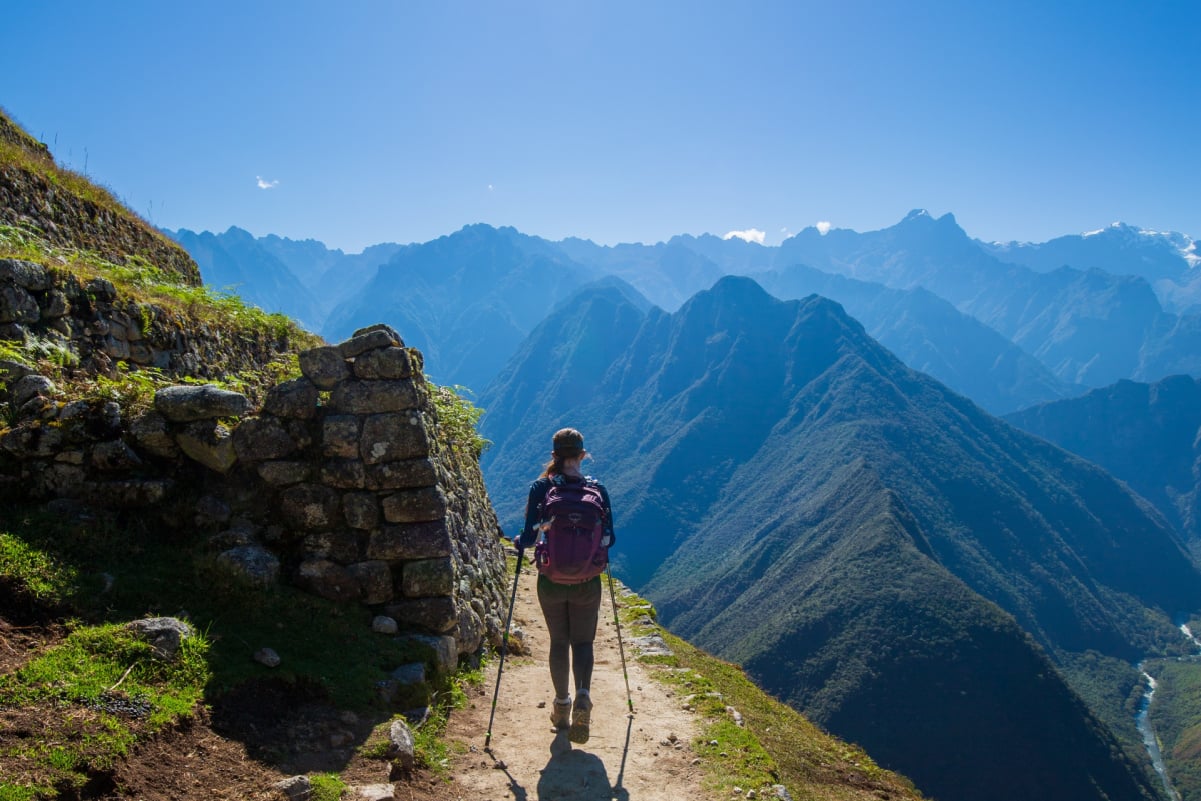
We intentionally handed the complex web of trail permits and camp logistics over to the team at Inca Expert Travel so we could focus strictly on the physical grind ahead of us.
Over four days, the Classic Inca Trail strips away the noise of the modern world, trading it for thin air, burning lungs, and some of the most staggering archaeological sites on the planet.
If you are debating whether to take the comfortable tourist train or lace up your hiking boots, here is the unfiltered reality of what it actually takes to hike the Inca Trail.
The Prep: Adjusting to the Altitude
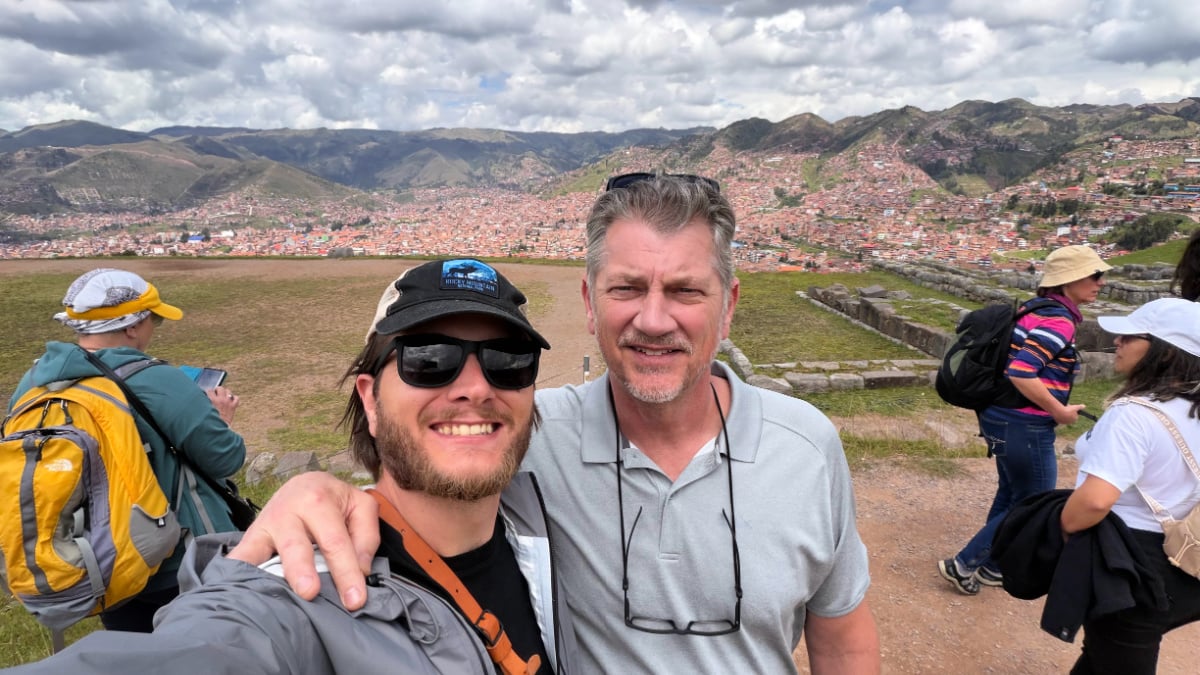
You cannot step off a plane and immediately start hiking the Andes. Before we even reached the trailhead, we had to get our bodies ready for the lack of oxygen.
- The Flight Logistics: We flew from Louisville down through Atlanta, landing in Lima before taking a quick jumper flight up to Cusco.
- The Acclimatization: Cusco sits at a staggering 11,150 feet above sea level. We spent three full days wandering the steep cobblestone streets, drinking local coca tea, and letting our red blood cell counts adjust. Skipping this step is the fastest way to guarantee severe altitude sickness on the trail.
Note From The Editor
Just one sec! If you enjoy reading great human-written articles, the best way to see a few more is to follow us on Google so we become one of your preferred websites. Thank you so much for reading. Now back to the story!
Day 1: The Deceptive Warm-Up (KM 82)
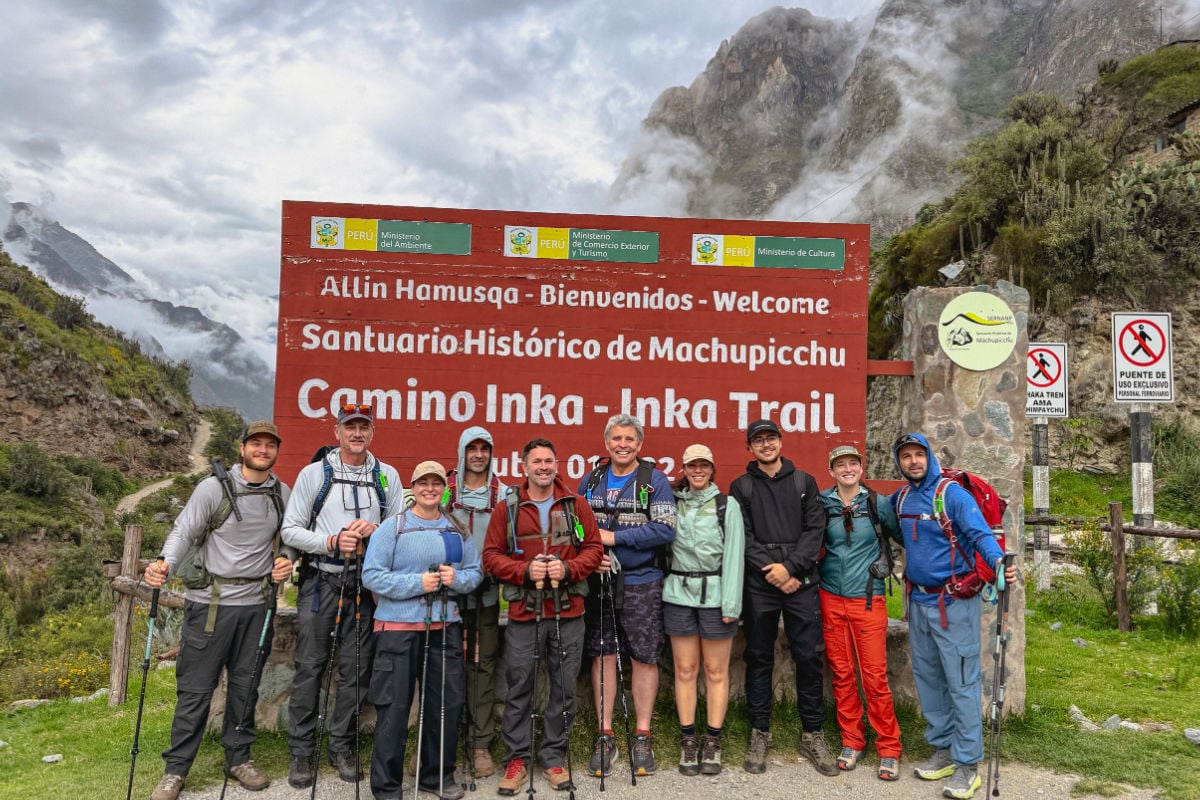
The first day of the trek is designed to ease you into the rhythm of the trail, but you are still logging roughly six to seven hours of solid hiking.
Crossing the suspension bridge over the Urubamba River, we entered a dry, dusty valley lined with massive cacti and towering eucalyptus trees. The trail is mostly rolling hills, giving you time to adjust to your daypack. The highlight comes a few hours in when the trail opens up to reveal Patallacta—a massive archaeological site featuring sweeping, curved stone terraces carved directly into the hillside. It is your first real taste of the engineering genius you will be walking across for the next three days.
As the sun dipped behind the jagged peaks, the temperature plummeted instantly, and we settled into our first campsite, resting up for the crucible of day two.
Day 2: Surviving Dead Woman’s Pass
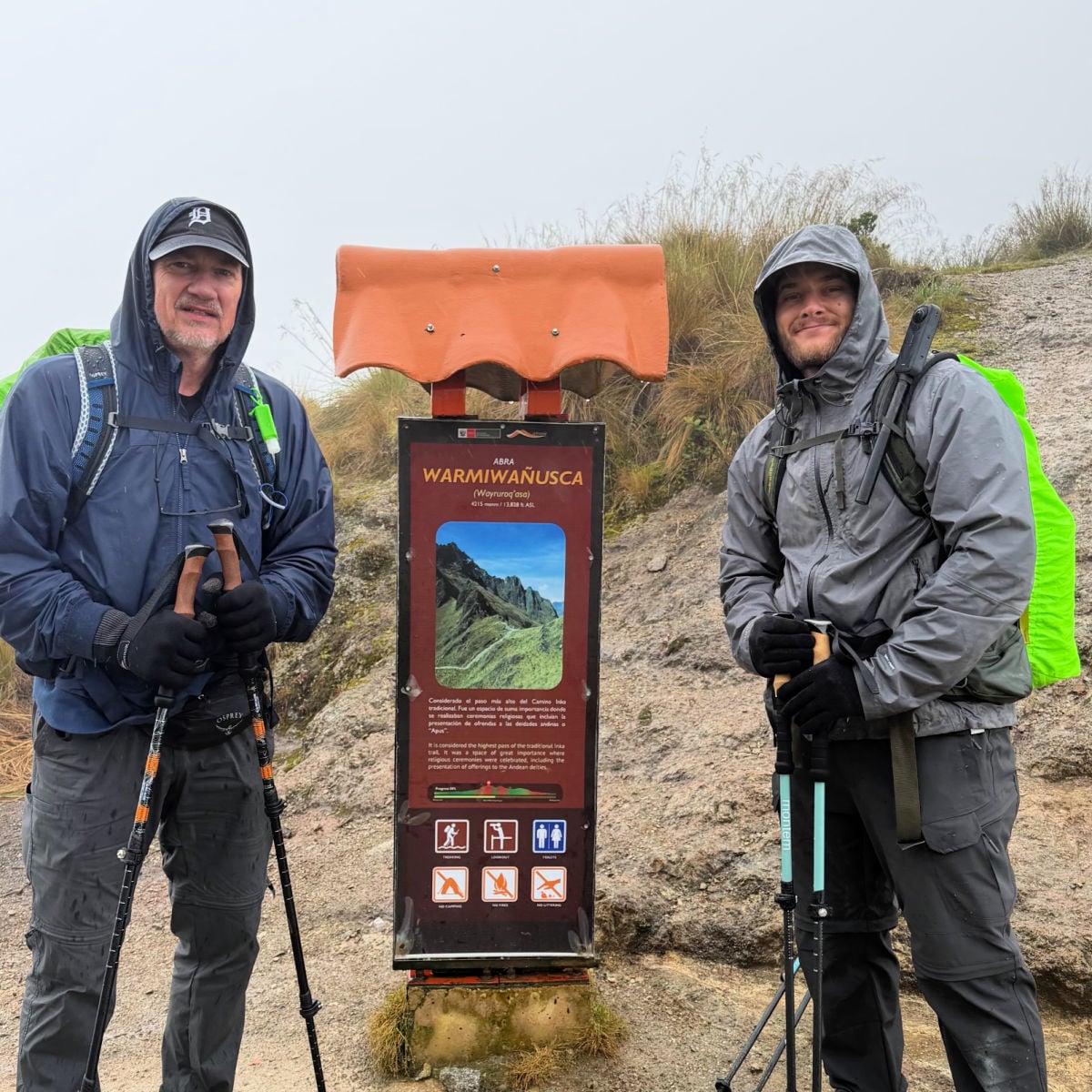
In every Inca Trail itinerary, day two is universally circled in red marker. It is a relentless, vertical ascent that tests your lungs, your quads, and your sheer willpower.
- The Climb: You spend the entire morning ascending toward Warmiwañusqa, infamously known as Dead Woman’s Pass. It is a grueling, endless staircase of rough-hewn granite.
- The Physical Toll: The pass peaks at 13,828 feet (4,215 meters). At this elevation, the oxygen levels are drastically lower. Every step feels like you are hiking with a heavy weight strapped to your chest.
- The Strategy: I watched my dad methodically work his way up the switchbacks, utilizing the “Inca Pace”—a slow, rhythmic, unbroken shuffle. We didn’t stop for long breaks; we just kept moving at a snail’s pace to keep our heart rates steady.
When we finally crested the summit, standing in the freezing, swirling gray mists, the sense of shared accomplishment was massive. But the day wasn’t over. We immediately had to endure a steep, two-hour descent down thousands of jagged stone steps into the Pacaymayo valley, which is an absolute assault on the knees.
Day 3: The Cloud Forest and Knee-Crushing Descents
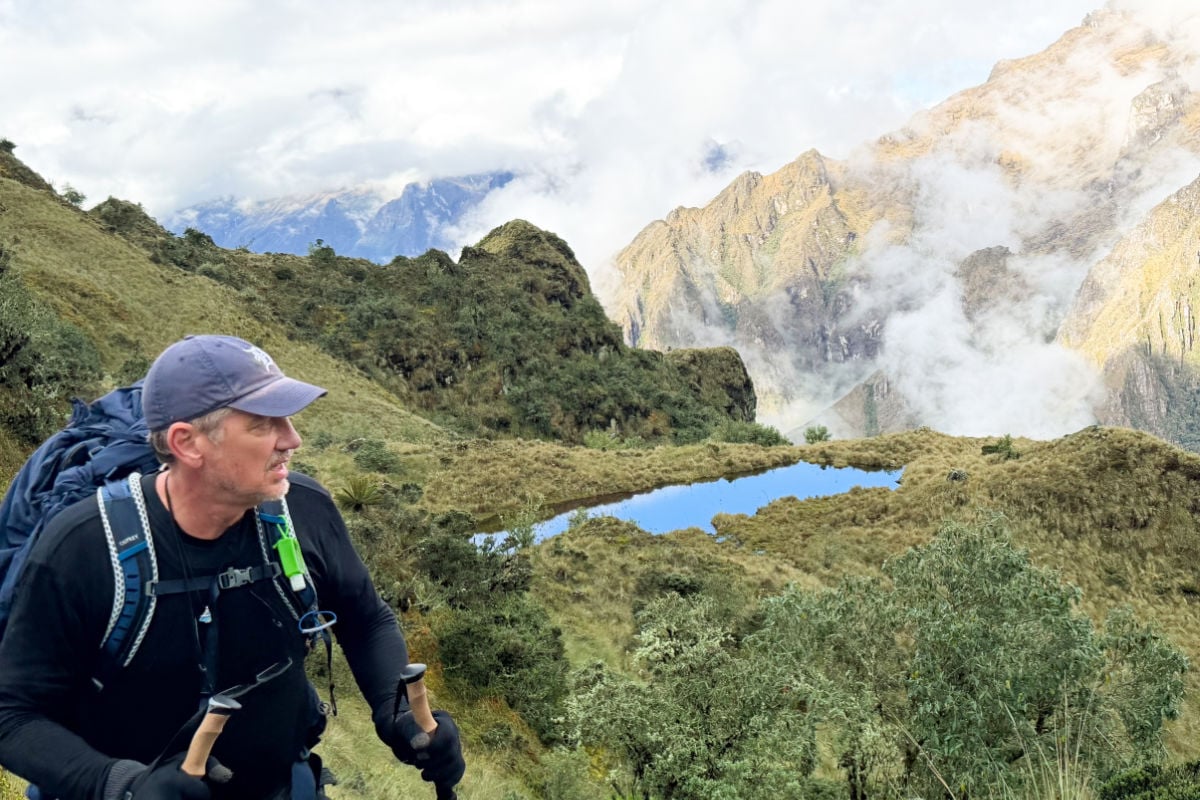
If day two is the physical peak, day three is the visual masterpiece of the trek. You leave the barren, high-alpine scrub behind and descend directly into the dense, green Amazonian cloud forest.
The environment transforms completely. The air gets thicker, moss drapes over the ancient walls, and wild orchids poke through the cracks in the stone. You cross two more mountain passes—Runkurakay and Phuyupatamarca—before navigating a series of incredibly steep descents. This is where trekking poles are absolutely mandatory to save your joints from absorbing the impact of the stone stairs.
We spent our last night camped near Wiñay Wayna, a breathtaking complex of agricultural terraces plunging steeply down a mountainside. Staring out over the mist-choked valley, the modern world felt impossibly far away.
Day 4: The Sun Gate Finale
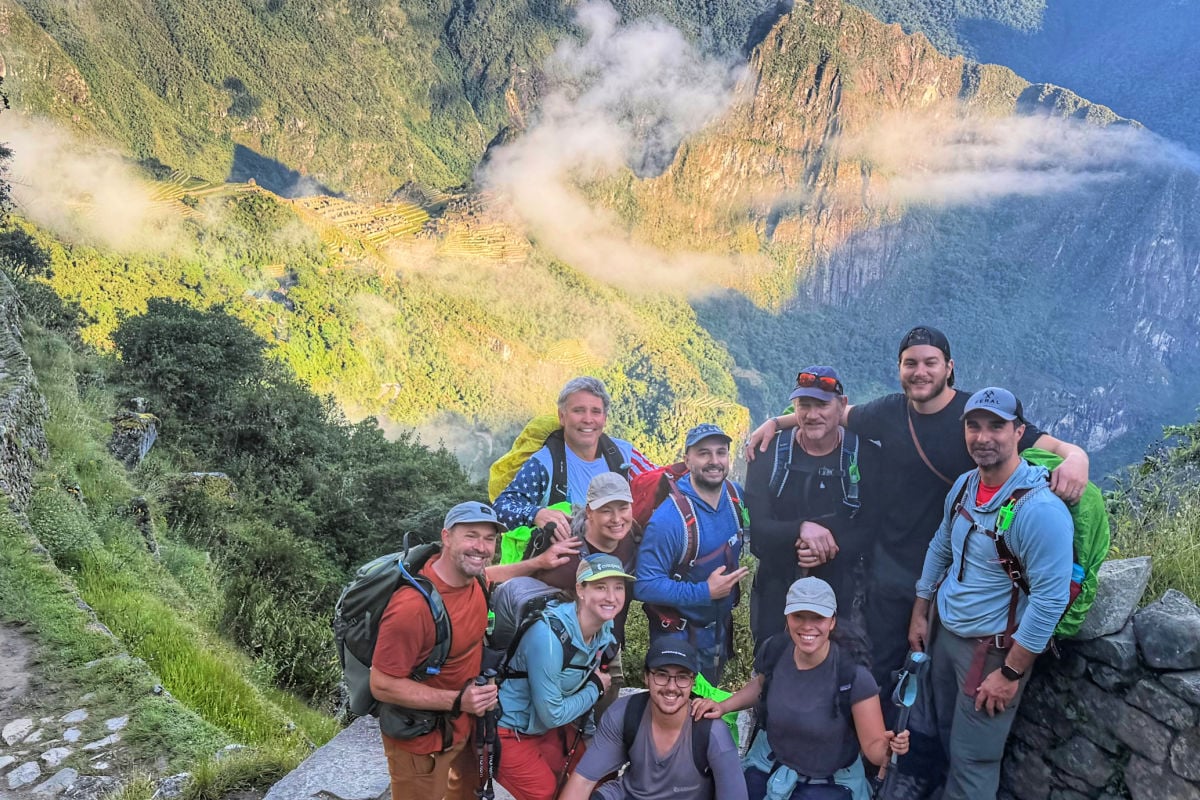
This is the day you have been grinding for, and it starts brutally early.
- The Alpine Start: Our guides woke us up at 3:30 AM. We packed up our gear by headlamp, ate a quick breakfast, and waited in the pitch black for the final checkpoint to open.
- The Monkey Steps: The final push is a fast, narrow hike through the jungle edge that culminates in a near-vertical wall of stone known as the “monkey steps,” which you literally have to scramble up using your hands and feet.
- The Reveal: At the top of those steps sits Inti Punku—the Sun Gate.
We arrived just as the morning fog began to part, revealing the lost citadel of Machu Picchu glowing in the valley below. We sat down together on the ancient stones, letting the morning sun warm our faces. Below us, we could see the first buses of day-trippers arriving from the valley town of Aguas Calientes. They stepped off the bus looking fresh and clean, but their arrival was fundamentally different from ours.
We hadn’t just taken a train to a viewpoint; we had lived the route that gave the city its meaning. Every lung-burning step up Dead Woman’s Pass and every mile of stone underfoot had earned us that view. Sitting beside my dad in the silence of the mountains, watching the ruins reveal themselves, I knew the blisters and the exhaustion were a cheap price to pay for the memory we just built.
Essential Logistics for Your Own Trek
If you are ready to trade a comfortable train seat for a real physical challenge, you need to plan ahead. You cannot just show up in Peru and start walking.
- Strict Permits: The Peruvian government issues exactly 500 permits per day, which includes all the guides, cooks, and porters. This leaves only about 200 daily spots for tourists. You must book with a licensed operator roughly six months in advance.
- Trekking Gear: You need well-broken-in waterproof hiking boots, layers for massive temperature swings, and trekking poles. Note: Poles must have rubber tips to prevent scarring the original Inca stones, and they are strictly prohibited once you step foot inside the actual Machu Picchu ruins.
- The Operator: Do your research and pick a reputable company that treats their porters ethically. We used Inca Expert Travel, and their logistical execution—from our airport pickups to the camp meals—was flawless, letting us focus entirely on the trail.
Enter your email address to subscribe to Travel Off Path’s latest travel news, straight to your inbox
