
It’s definitely been a minute since we’ve last covered one of these—the golden age of Digital Nomadism is way past us, after all—but lucky for the last few globe-trotters still standing among us, there’s always a lesser-known country hopping on a fading-but-not-quite-yet-dead trend.
Tucked away on the far-eastern fringes of Europe—or mostly in Western Asia, if we’re being geographically pedantic—Azerbaijan is gearing up to launch a Digital Nomad Visa, while several of its counterparts are either completely axing their DNV programs or severely restricting them.
Before we delve deeper into the topic, let’s preface this by saying there’s still no Azerbaijani Digital Nomad Visa you can actually apply for today, but we’re getting there:
Everything We Know About The Azerbaijan Digital Nomad Visa So Far
It’s early days, and if visa rollouts in the Caucasus are anything to go by, we’ll probably be finding out the finer details as we go, but there’s actually a lot more on paper already than the original announcement would have you believe.
We now have an official government roadmap:
A 2027–2028 window for the DNV, and, more interestingly, a separate package of draft legislative amendments already approved by Azerbaijan’s Parliament, indicating who may qualify as a ‘digital traveler’, what they would need to earn, and how temporary residence could work.
More on that bureaucratic rabbit hole in a minute. First, let me get through my elevator pitch:
- They have a killer, criminally-underrated capital with a surprisingly decent nomad infrastructure.
- The day-to-day reality in Baku is a lot more orderly and low-crime than the geopolitical headlines may have led you to believe.
- It’s ridiculously affordable by Western standards.

All The Confirmed Details Of The Visa
First, on the visa itself.
No, they haven’t offered a definitive launch date yet, and the application portal isn’t live, but this is no longer one of those vague government statements that fade into the ether six months later.
Here’s where things stand:
Minimum monthly income requirement?
Not formally announced, but we finally have a very strong indication, which we’ll get to in a bit.
Who would qualify?
This is where it gets more restrictive than your average laptop-worker visa. The legislative wording we’ve accessed defines a ‘digital traveler’ as a foreigner working remotely in ‘digital technologies’ (these may include A.I., cybersecurity, or innovation).
Eligible nationalities?
No DNV-specific list has been published. Americans are already eligible for Azerbaijan’s ASAN tourist e-Visa, though, so I’d be very surprised if they’re excluded once the nomad program goes live.
Permitted length of stay?
The final visa itself hasn’t been assigned a confirmed stay period yet. However, the July legislative package does envisage temporary residence for up to 3 years at a time, renewable in further periods of up to 3 years, provided they continue satisfying the conditions.
Health insurance?
Very likely to feature somewhere in the eventual process, as it does in a majority of long-stay visas.
Criminal record check?
Same story. Common for residence applications, so we expect it to apply to DNV applications.
What’s the application fee?
Still waiting to hear from them on that.
Tax exemptions?
This one’s actually far more interesting than I initially expected:
The parliamentary package actually proposes exempting qualifying foreign-source income earned by a digital traveler for as long as their DNV remains valid.
And before any American freelancer reading this starts mentally planning their escape to Azerbaijan, an Azerbaijani tax exemption doesn’t magically cancel your U.S. tax-filing obligations back home, so make sure you speak to an accountant and immigration lawyer before you see this one through.
Ok, cool. Here’s another piece of info putting into perspective.
Azerbaijan Is Surprisingly Affordable By Eurasian Standards
Azerbaijan is classified by the World Bank as an upper-middle-income economy, with the minimum wage set at 400 AZN | $235, though Baku wages typically average 1,176.7 AZN, or $692.
The parliamentary framework proposes a stable average monthly income from foreign sources equivalent to at least 13 times Azerbaijan’s minimum monthly wage, measured across the preceding 6 months.
With the country’s minimum wage currently set at 400 AZN, the proposed DNV threshold would therefore sit at 5,200 AZN per month, or roughly $3,060.
It’s not exactly a low-income visa by local standards. On the other hand, if you’re a U.S.-based professional already working remotely, it may be a pretty manageable hurdle.
The real question is: why consider Azerbaijan?
Is This The Most Underrated Country In All Of Eurasia?
Azerbaijan is one of the least-understood, more mysterious countries in Eurasia, and one that often gets mentally thrown in with the neighboring ‘Stans further east, like Kazakhstan and Uzbekistan, without casual travelers ever giving it so much as a second thought.
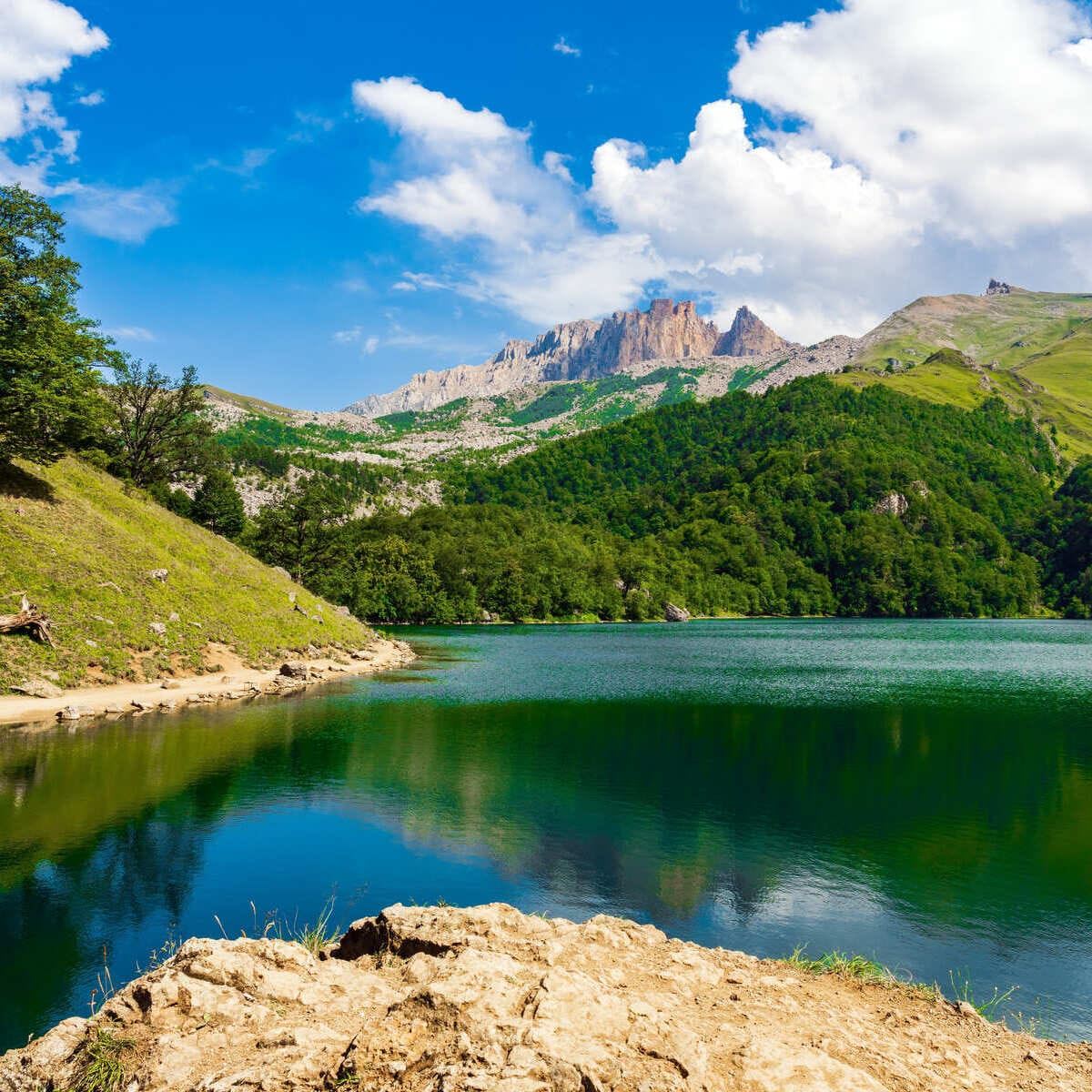
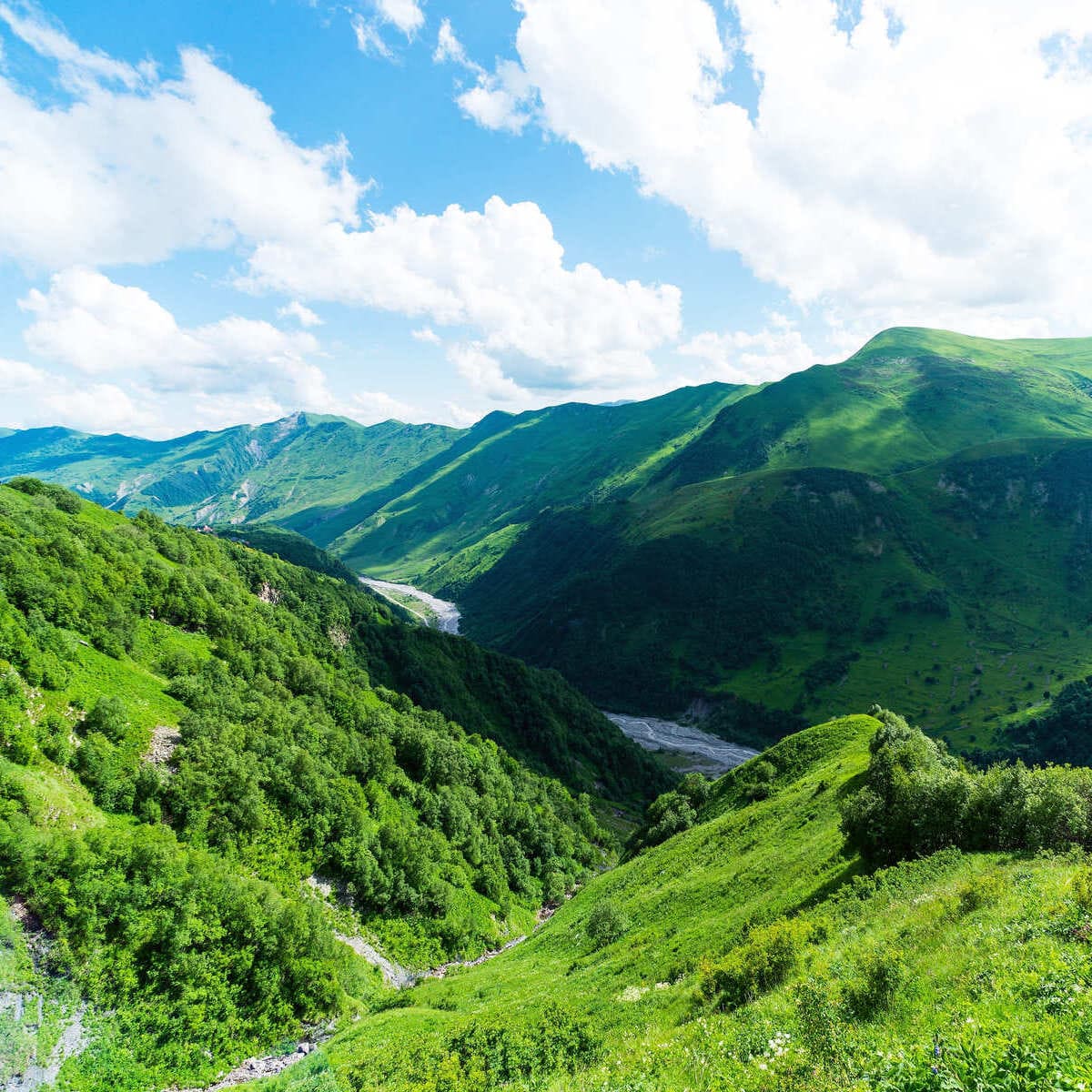
Dubbed the Land of Fire, it’s a rugged, mountainous patchwork wedged between the Greater Caucasus, Georgia, Armenia, Iran, Russia, and the sapphire shoreline of the Caspian Sea.
Yeah, there’s a sea involved.
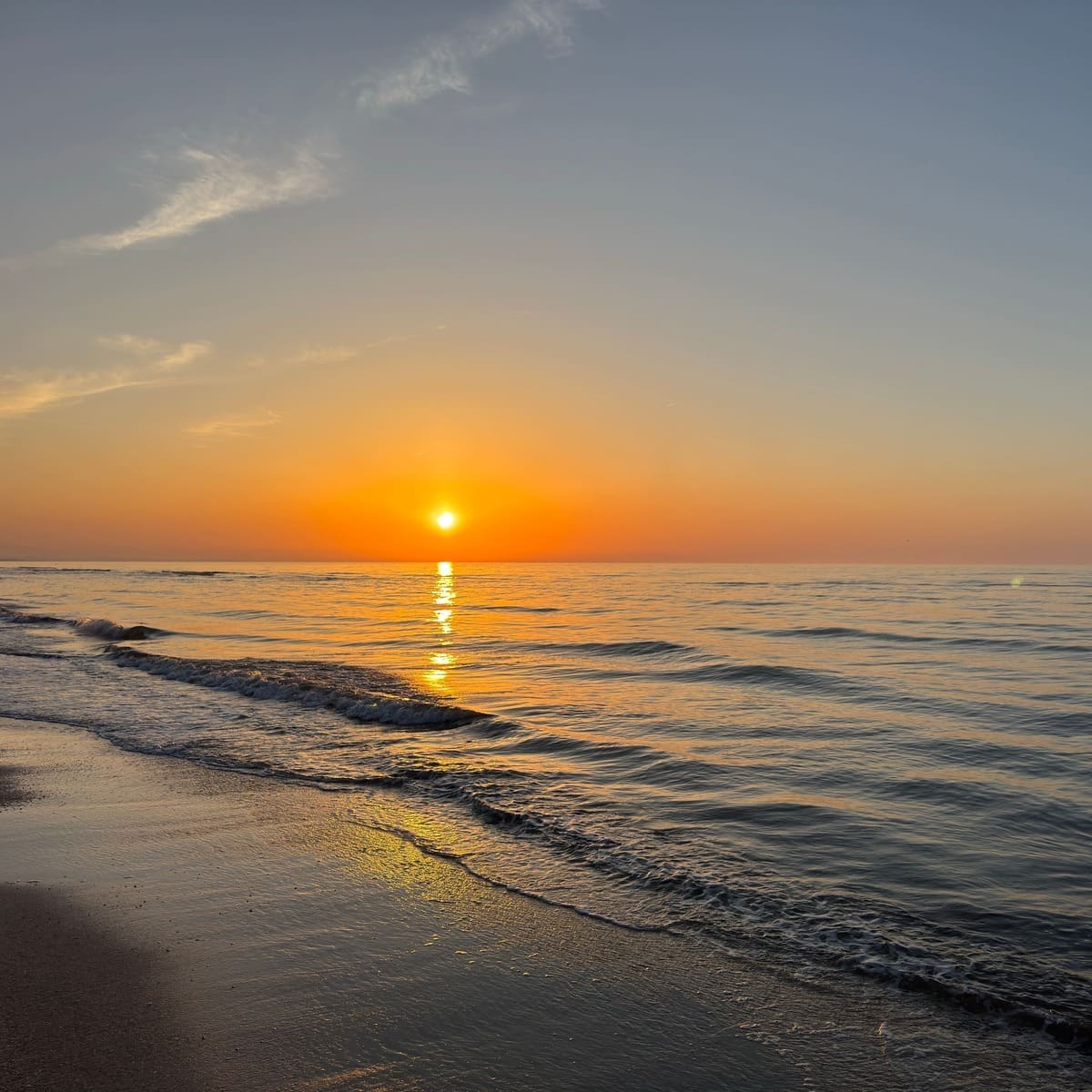
And not to put the cart before the horse, but Azerbaijan actually has a proper summer beach scene, particularly on the Absheron Peninsula around Baku, but then again, Azerbaijan’s location has always been its whole appeal.
For centuries, the Silk Road passed through this corner of the Caucasus, linking Asia to Europe.
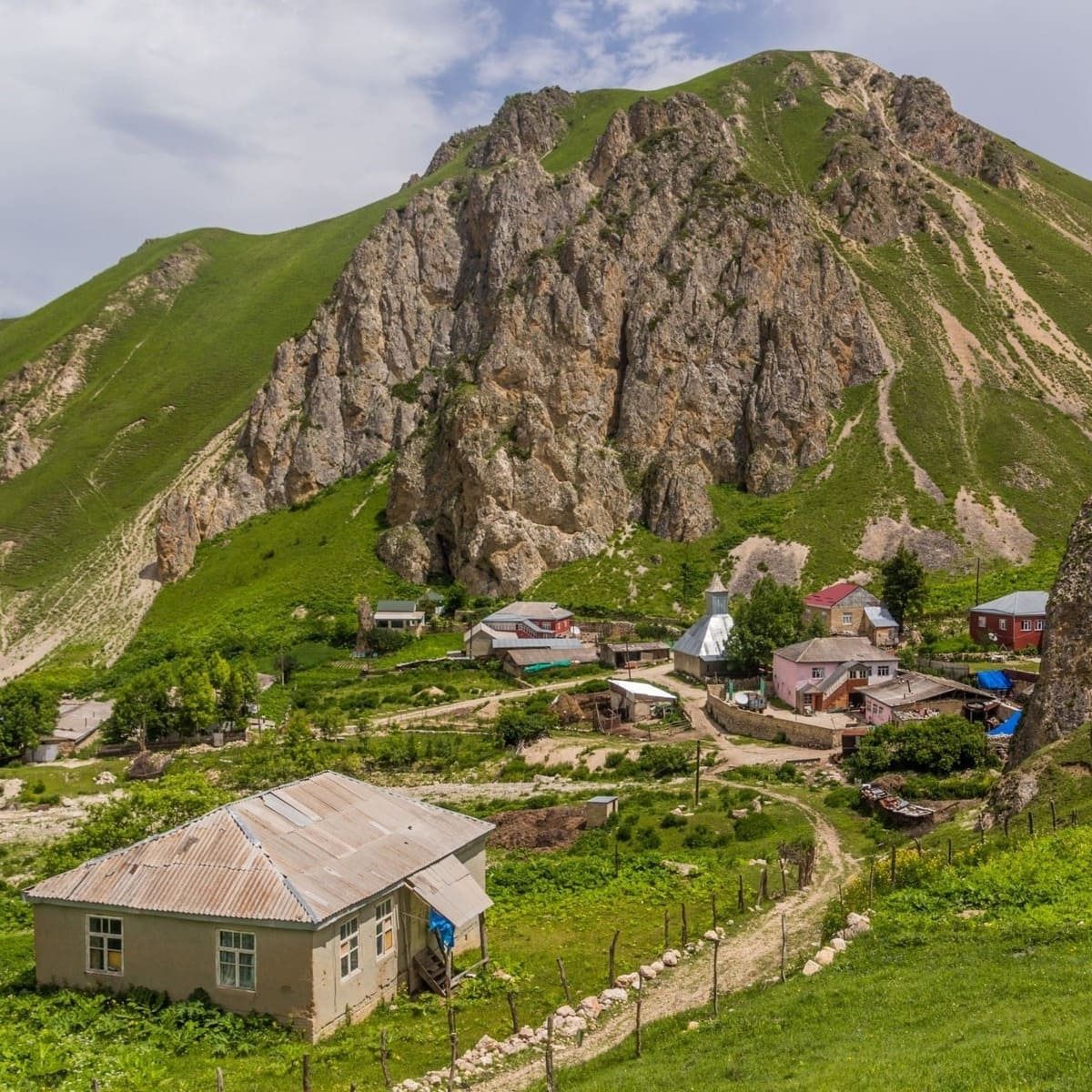
The country’s riches take a very different form these days, especially after oil and gas transformed Baku into one of the Caspian’s main economic hubs, but in case you’re wondering what’s in it for you, Azerbaijan’s main appeal is the combination of comparatively affordable living, a fascinating capital that combines modern swagger and Old World charm, and ridiculously diverse nature:
- Your money can stretch considerably further. A central one-bedroom in Baku currently averages roughly $540–550 a month.
- Baku is possibly one of the coolest digital nomad hubs yet to be discovered. We’re talking a UNESCO-listed walled city, a long Caspian waterfront, and rapidly-growing coworking scene.
- There’s plenty to do after work. From heading into the Greater Caucasus for mountain hikes, to visiting Silk Road towns like Sheki, it’s definitely packed with exciting weekend trips.
- The time zone suits European clients surprisingly well. Azerbaijan runs on UTC+4 year-round, putting it exactly 2 hours ahead of Paris during summer, and 3 hours ahead in winter.
- Easy access to Europe from here. Baku is around a 3-hour direct flight to Istanbul, 1h10 minutes to Tbilisi, 5h50 to Paris, and around 6 hours to London.
Baku: Azerbaijan’s One True Nomad Hotspot
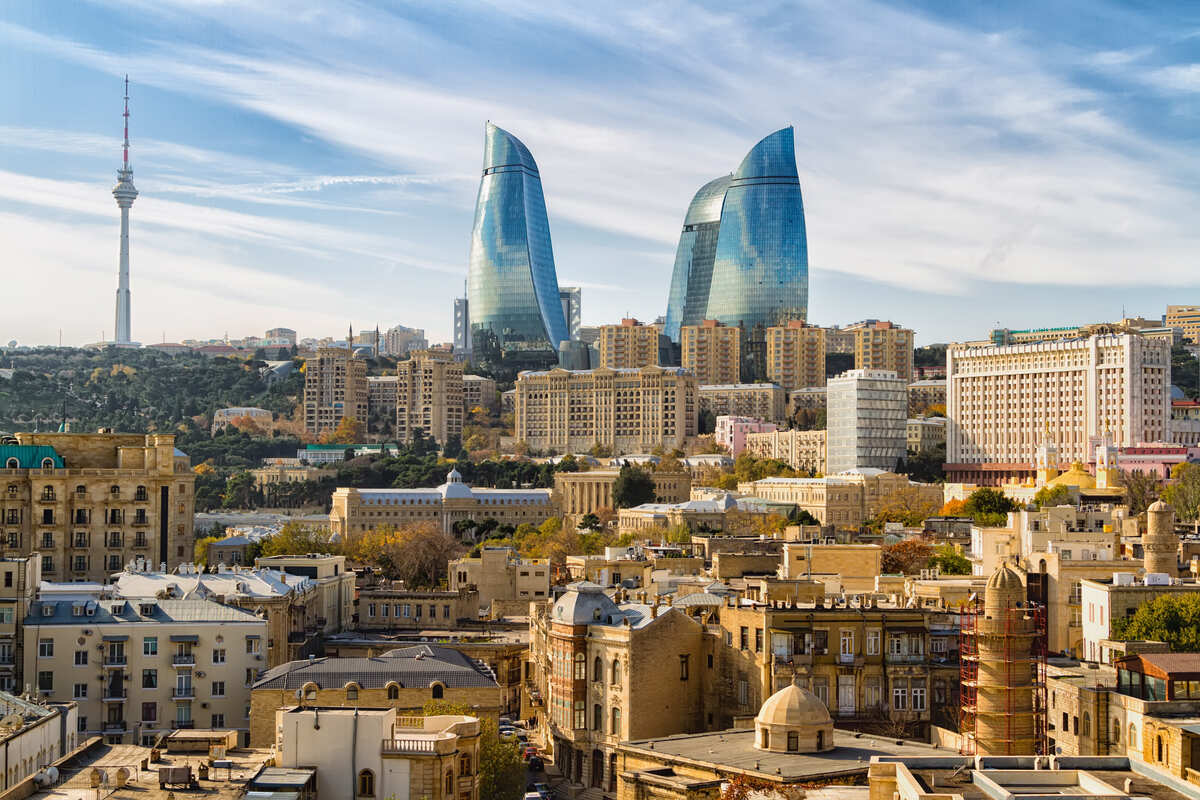
As with every aspiring nomad destination, Azerbaijan’s most promising digital nomad base is obviously the national capital, Baku:
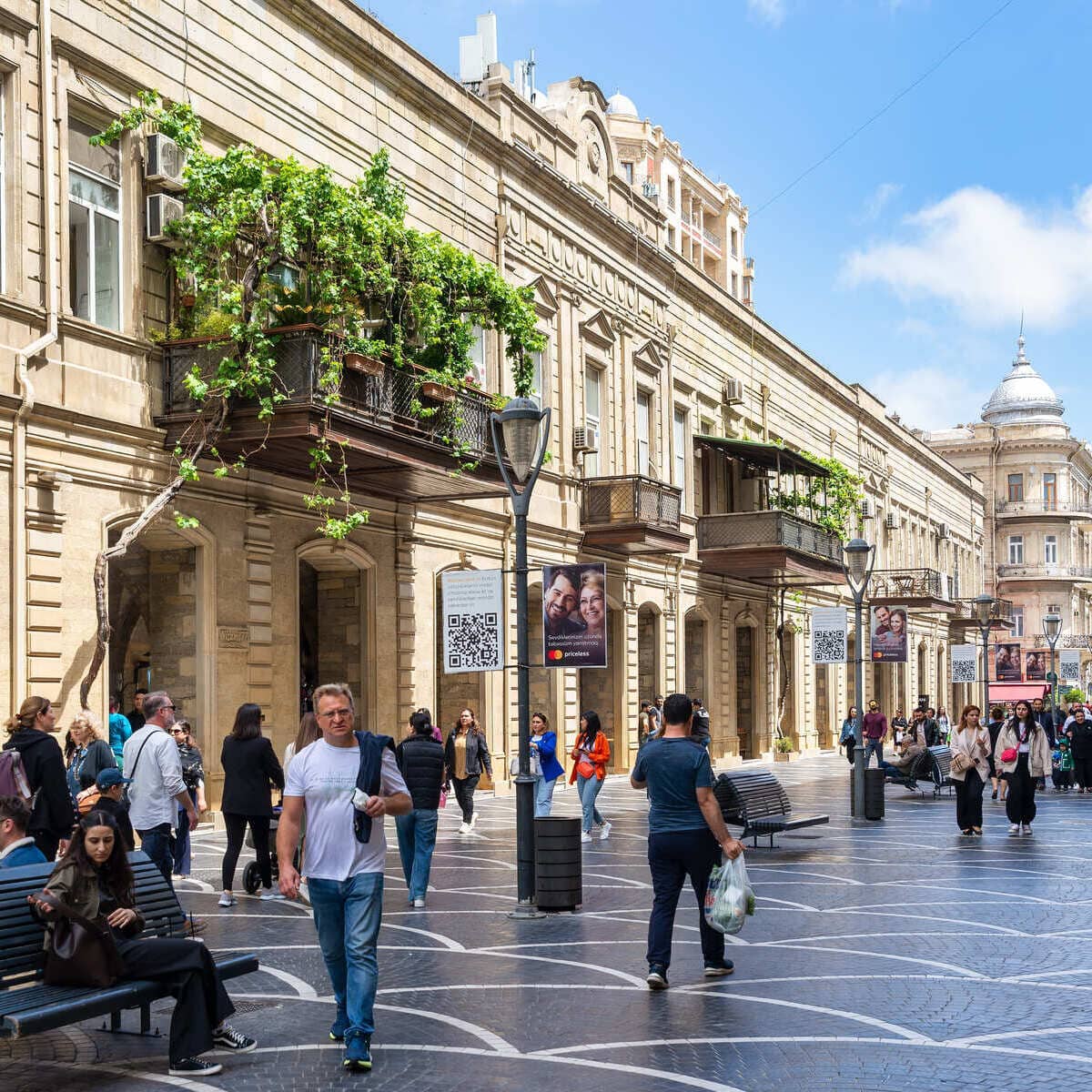
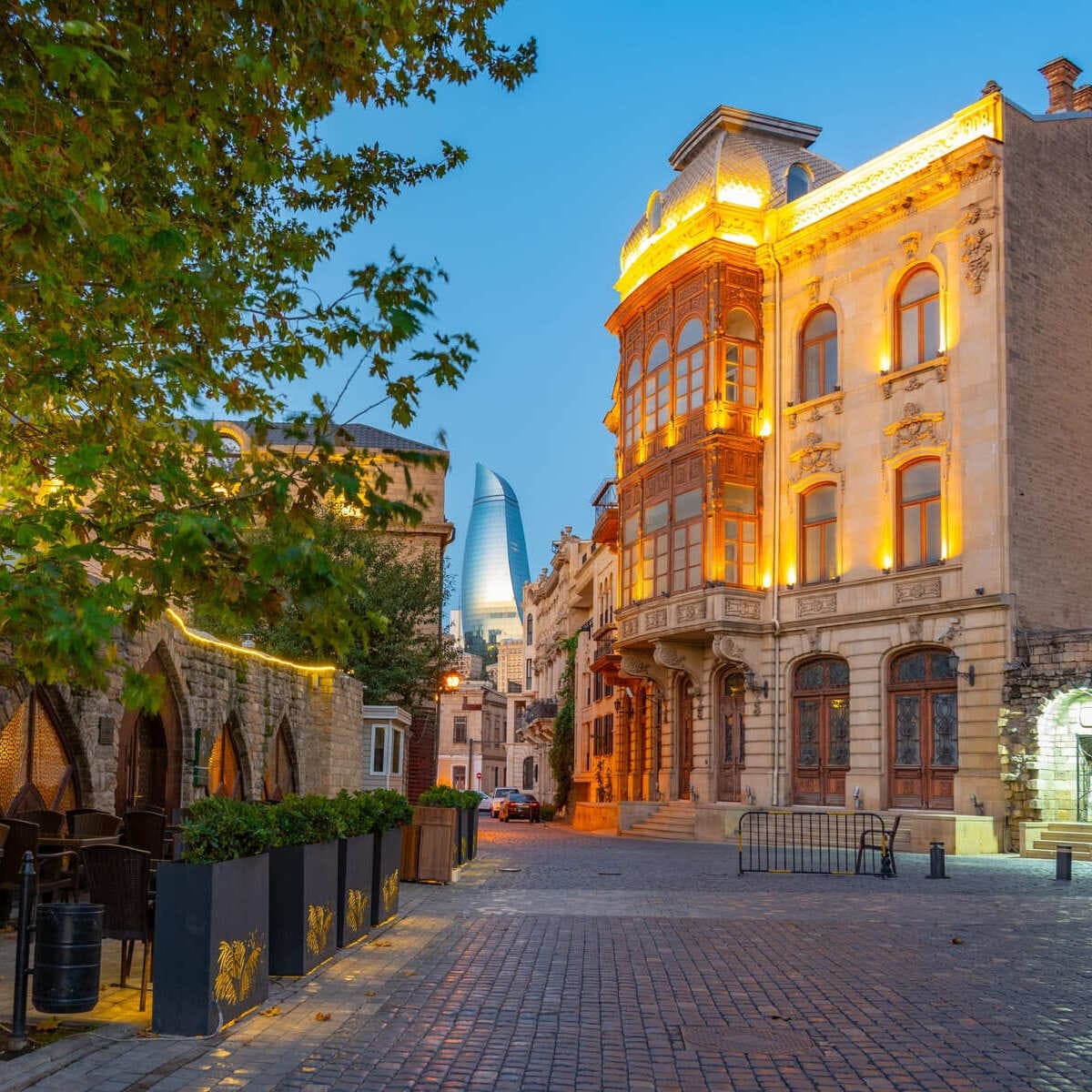
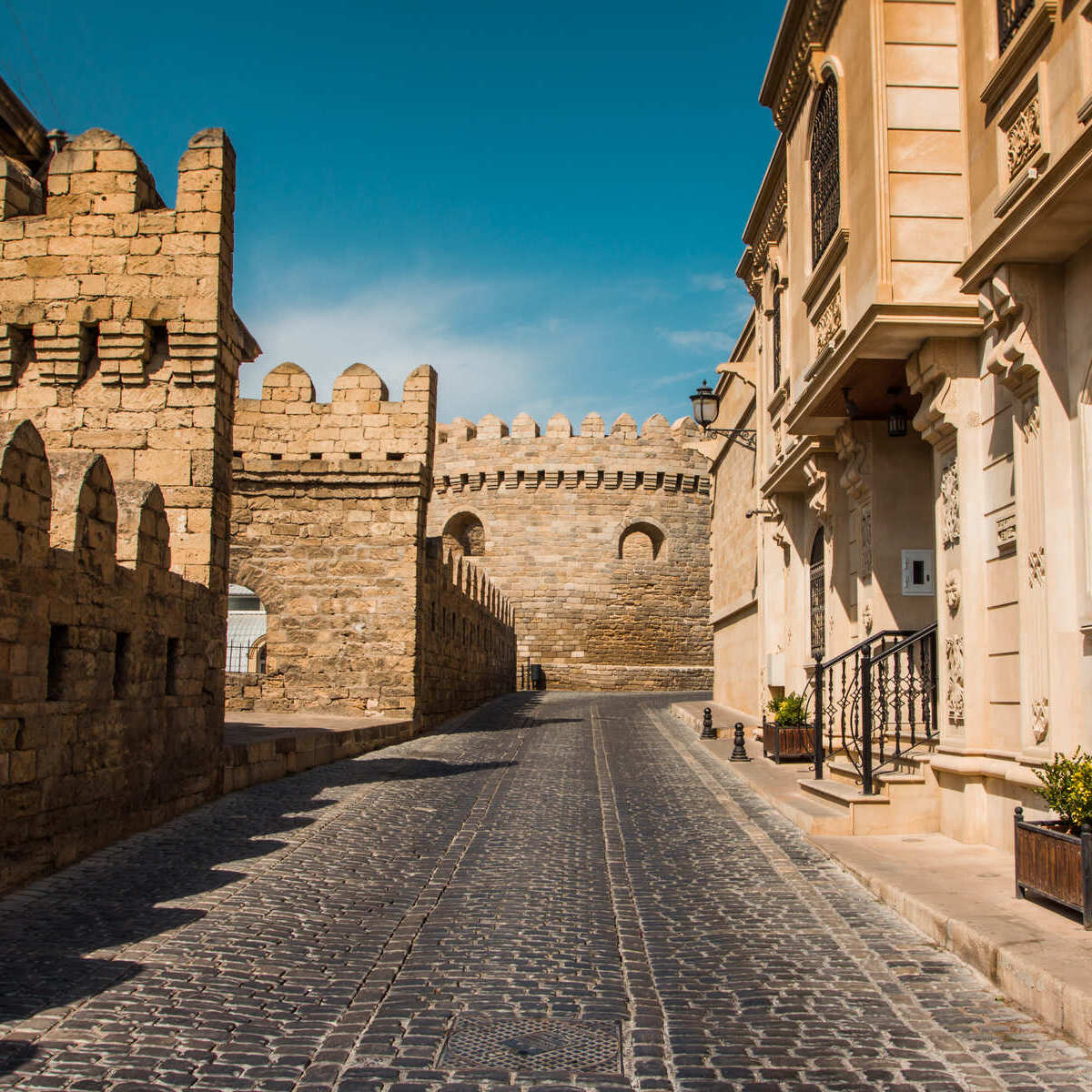
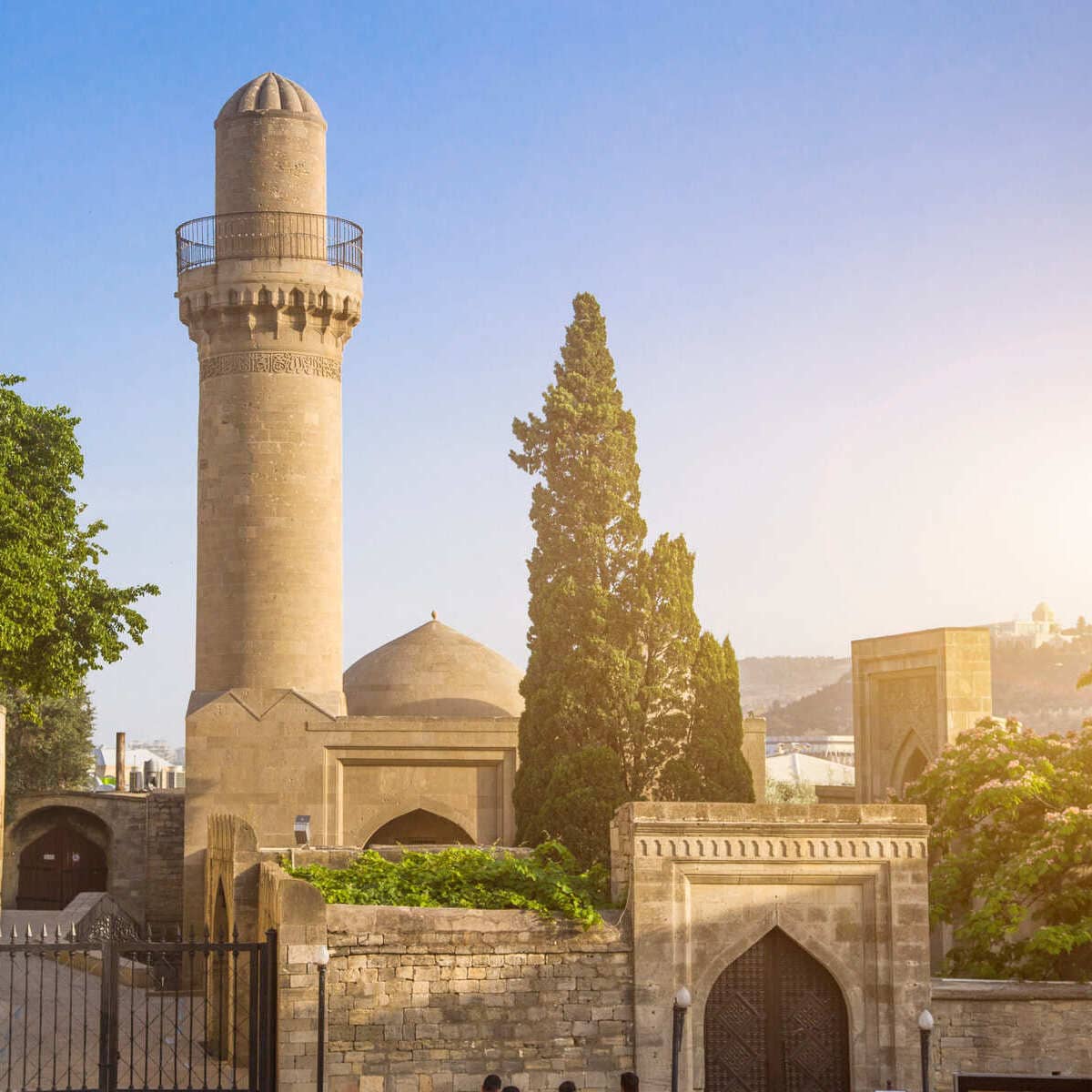
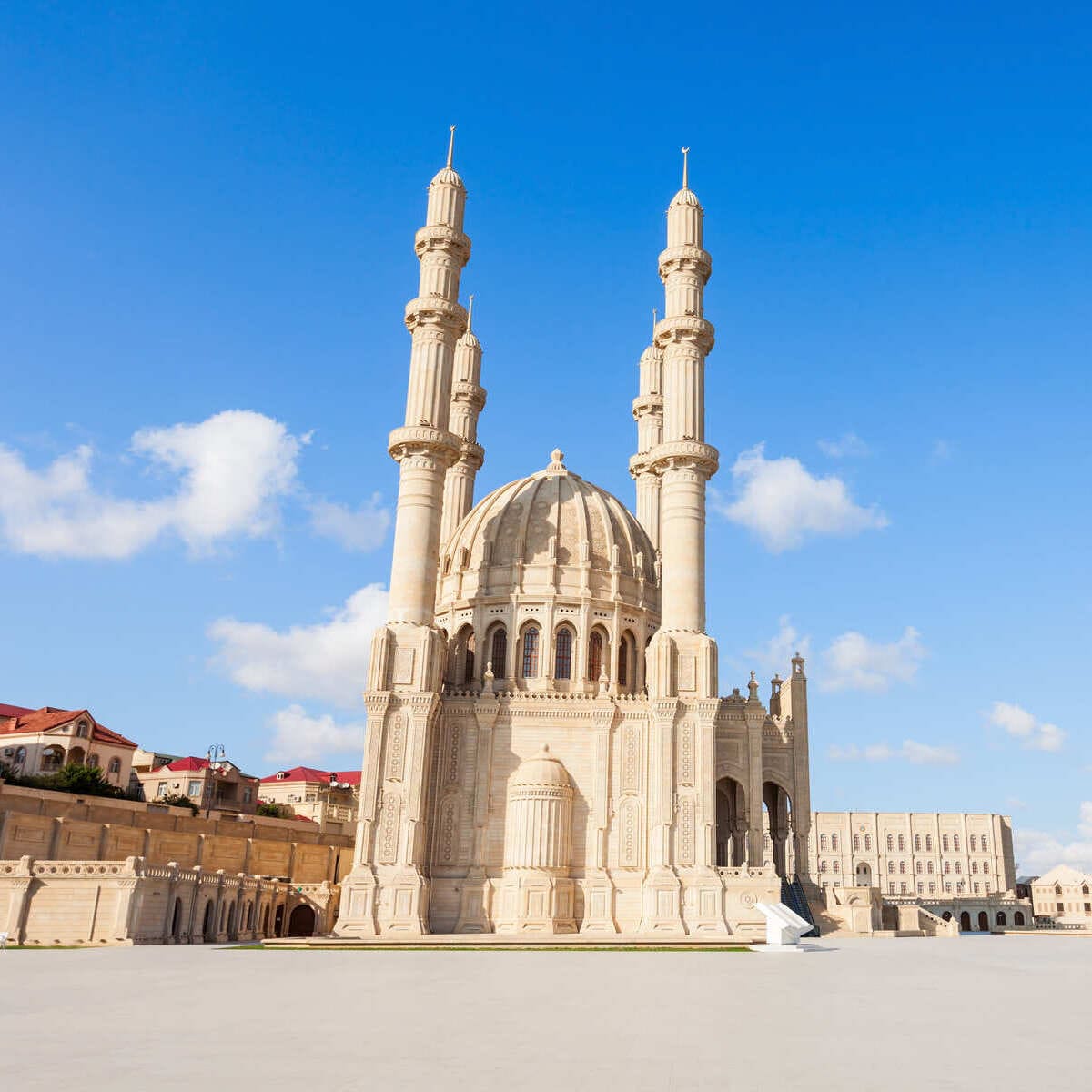
Straddling the shores of the Caspian Sea, it’s a sprawling urban jungle that radiates out from an ocher-colored, fortified Old City, dotted with mosques, caravanserais, hidden courtyards, and ancient stone buildings.
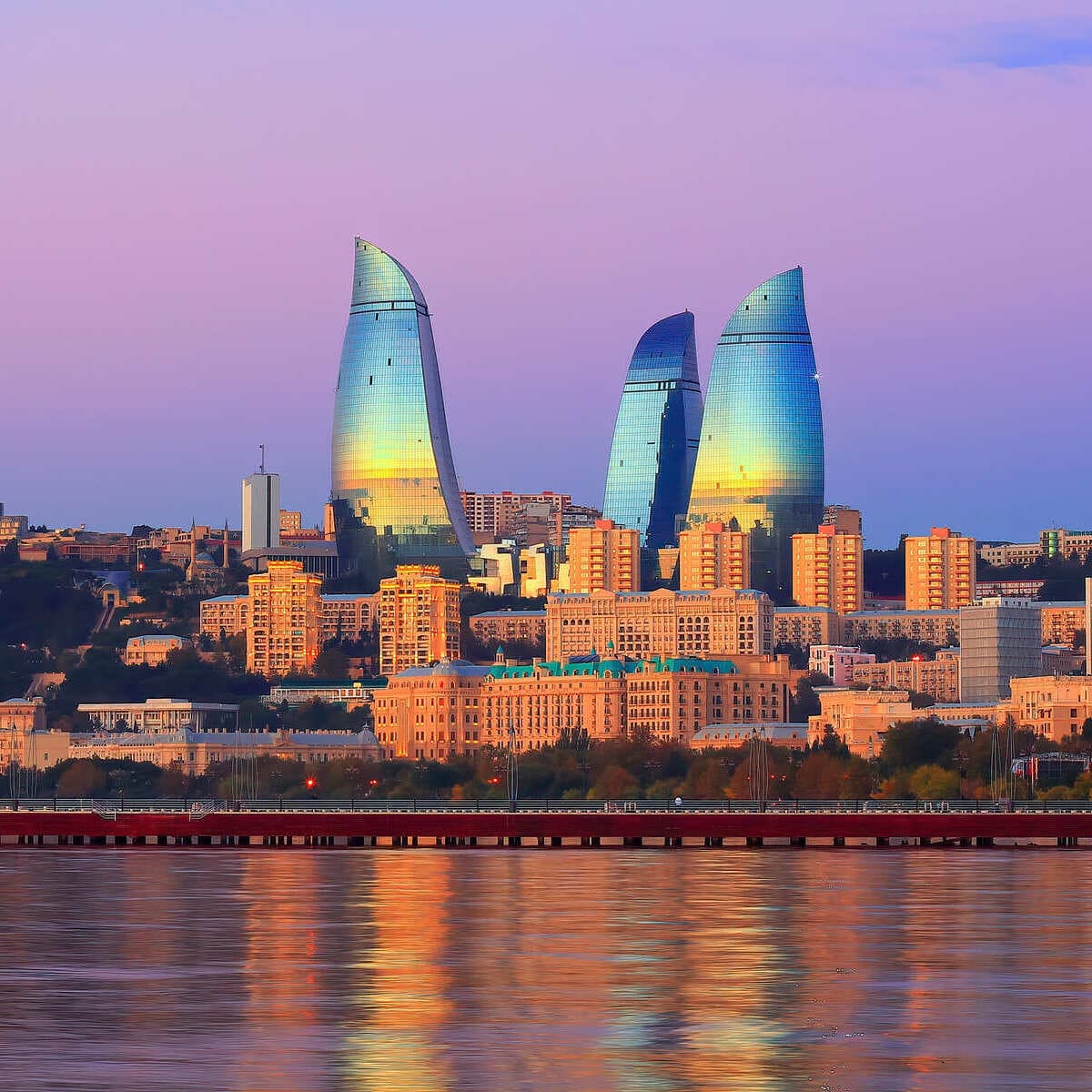
Uphill from the Old City, the iconic Flame Towers are a trio of glass-clad skyscrapers shaped like dancing flames, serving as a very unsubtle ode to Azerbaijan’s whole Land of Fire shtick. And you know what? It works.
Azerbaijan’s not really where you go for the full-on Bali starter pack of wall-to-wall coworking cafés, street-corner Starbucks, SoHo House clones, and avocado toast served by beach-bleached Bruce from Melbourne.
Think more independent coffee shops, family-owned bakeries, and old-school teahouses that won’t bat an eyelid if you pull your laptop out, so long as you keep the orders coming.
There are cool coworking spaces, too: New Zeon, for example, currently charges 160 AZN, around $94, a month for a hot desk, or 210 AZN for a fixed one.
All of this to say this is no post-Soviet, digital-nomad desert, but you should know the international scene is still in the early stages of diversifying from its Russian-majority expat scene.
How Affordable Is Azerbaijan For Digital Nomads?
Note From The Editor
Just one sec! If you enjoy reading great human-written articles, the best way to see a few more is to follow us on Google so we become one of your preferred websites. Thank you so much for reading. Now back to the story!
Combining current figures from Numbeo and current Baku listings, $1,000s is a solid figure for a month’s worth of living costs in the Azerbaijani capital.
That overall sum should comfortably account for something like:
- A one-bedroom apartment in central Baku: around $540–550 per month on average
- Utilities and unlimited home internet: around $80–90 combined
- Monthly groceries at a mainstream supermarket like Bravo: roughly $180–250 (if you’re emotionally-attached to those american imports, just know they’ll push these averages a lot higher)
- Public transportation: roughly $21 for a regular monthly pass
- Gym membership: around $35–50 a month for a normal local gym
- Mobile data: around $10–15 monthly
- Optional coworking: around $94 a month for a New Zeon hot desk, though obviously you can slash that to zero if you’re working from home or cafés
Other Nomad Bases In Azerbaijan
Baku is the economic and cultural heart of Azerbaijan, but it’s not the only option on offer.
If you’re staying longer and want to diversify things a little, maybe slow it down a notch from the hustle and bustle of the capital, I’d look at these first:
- Ganja: Azerbaijan’s other major city, with leafy boulevards, red-brick historic architecture, and easy access to Lake Göygöl. This is probably the most realistic alternative to Baku if you still need proper city infrastructure.
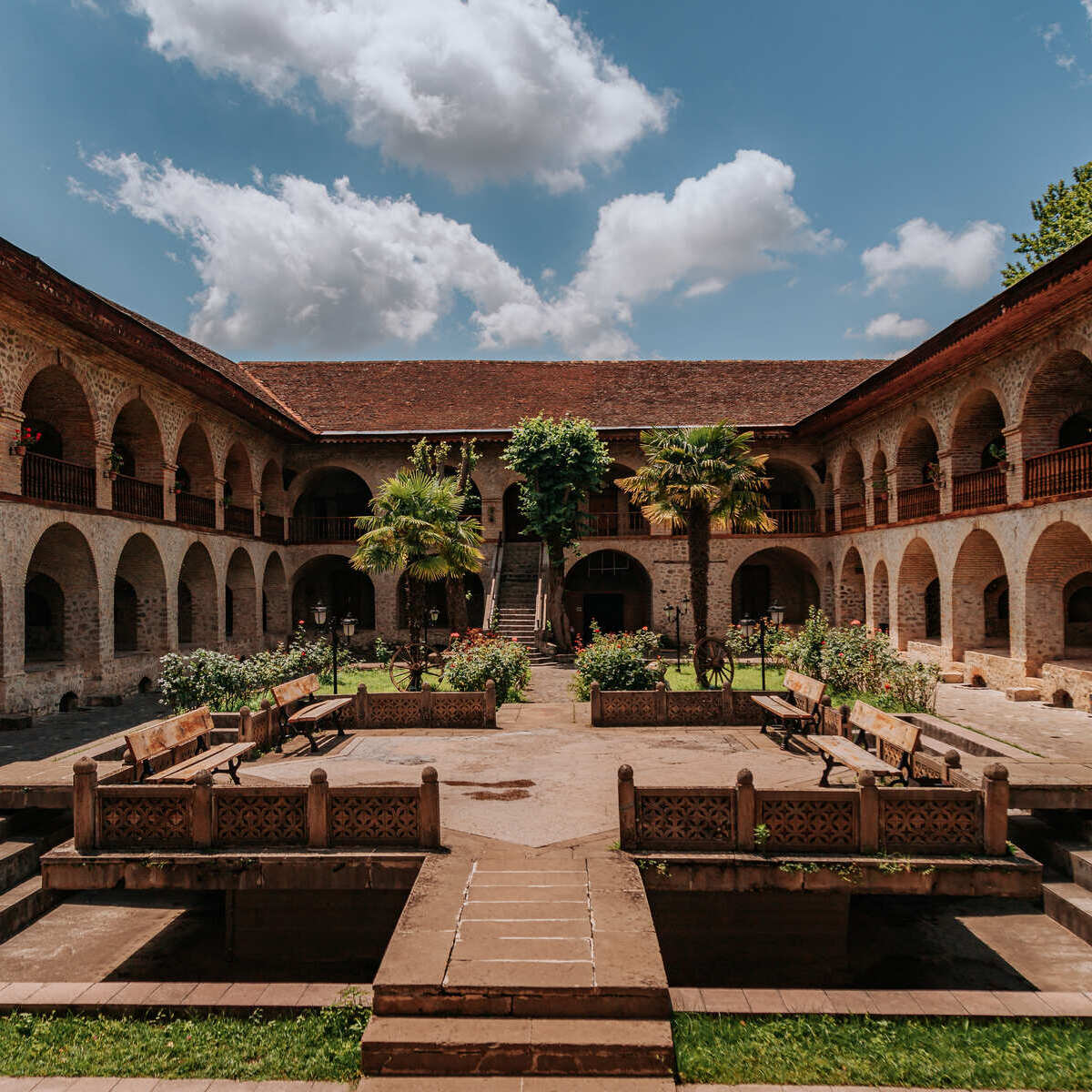
- Sheki: smaller, more quaint, more atmospheric. That’s that UNESCO-listed Silk Road Base, with an ornate Khan’s Palace, old caravanserai, and mountain views directly from your wrought-iron balcony.
- Mingachevir: an underrated riverfront city along the Kura, best known for its cycling paths, watersports, and abundance of green. Considerably cheaper housing too.
- Sumqayit: roughly 20 miles up the Caspian from Baku. Not really postcard-pretty, actually quite industrial, but practical if you’re prioritizing cheaper rent and seamless travel to the capital.
On Safety
Here’s where we must draw an important distinction.
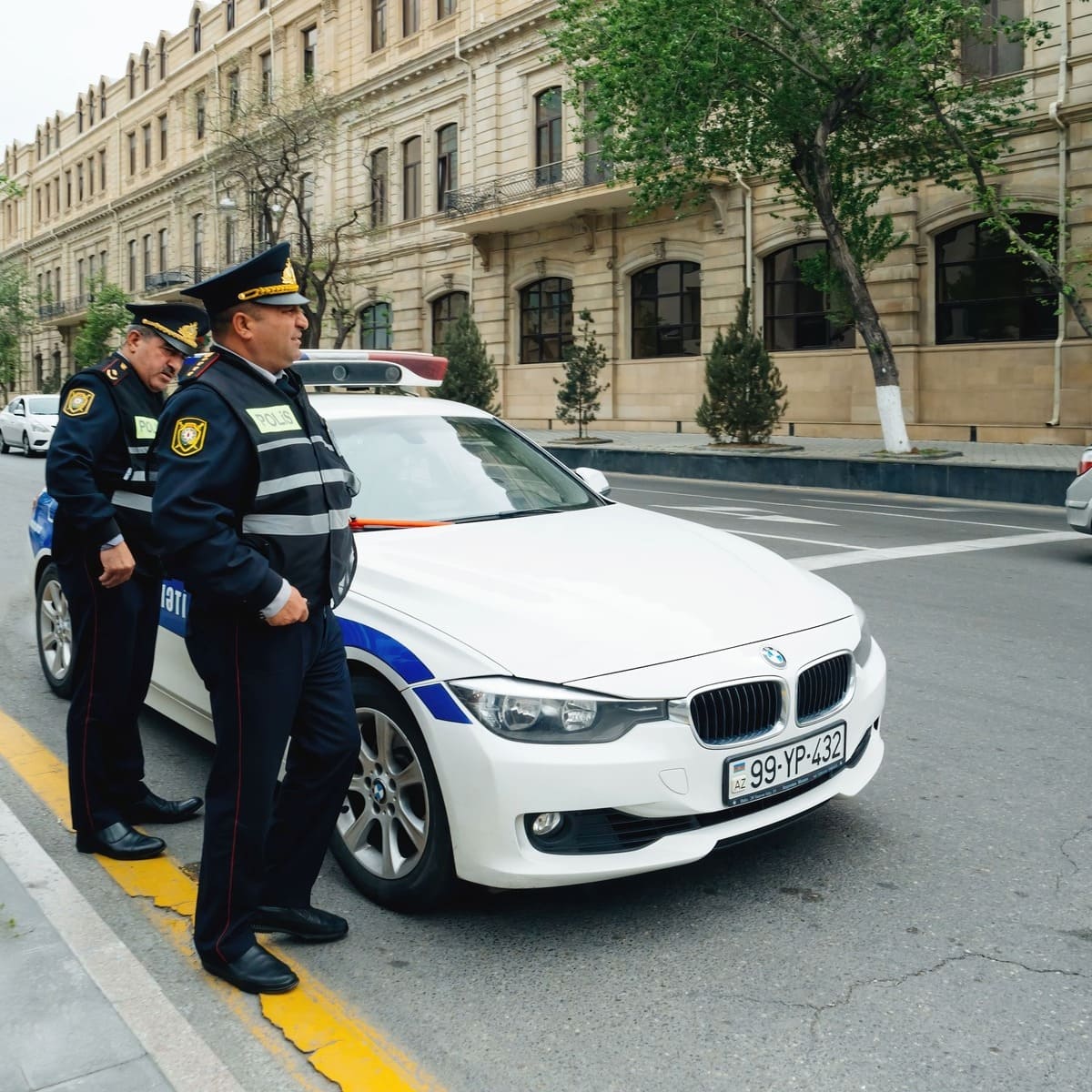
Azerbaijan can feel like a remarkably orderly, low-crime country on the ground, particularly in central Baku. That does not mean it’s currently a carefree Level 1 destination from a geopolitical standpoint.
Street crime and regional security are two completely different conversations.
The Ongoing War With Armenia
A couple of years ago, decades-long conflict with Armenia culminated in Azerbaijan regaining control of Nagorno-Karabakh in 2023, an Armenian-majority breakaway region that was internationally recognized as Azerbaijani territory.
Tensions have calmed considerably since then, and the risk of renewed fighting has decreased, but I wouldn’t go bouncing along the Armenian border.
The land border remains closed, and significant areas affected by the former conflict are still littere with contain landmines.
U.S. authorities currently advise Americans not to travel to the Armenia border, nor the southern border region (the one with Iran).
Azerbaijani Culture
Something else you should know about Azerbaijan is that it is a culturally Turkic, Muslim-majority country, and while it’s nowhere near as religiously strict as destinations where Islamic law governs everyday life, you’d be wise to familiarize yourself with local social norms as a Western visitor.
The country is officially secular, but you should take that with a grain of salt.
There is no mandatory Islamic dress code, alcohol is widely available, and nobody is expecting foreign women to cover their hair. Baku in particular is modern, cosmopolitan, and fairly relaxed within reason.
A normal bikini at somewhere like Bilgah isn’t exactly going to bring Azerbaijani society crashing down, but if you’re traveling beyond those polished Caspian Sea resorts and into more conservative communities, maybe save the microscopic G-string and topless tanning routine for Mykonos.
And to all my fellow gay nomads: consensual same-sex activity is legal in Azerbaijan, but don’t confuse ‘legal’ with ‘LGBT-friendly’.
My advice?
Be discreet in public, use your usual common sense meeting guys from apps, and understand that the social environment is considerably more conservative than Madrid, Paris, or Berlin.
Now for the elephant in the room.
Is Azerbaijan Safe In 2026?
The U.S. Department of State currently classes Azerbaijan as a Level 3 destination, meaning Americans are formally advised to ‘reconsider travel’.
The September 10, 2026 advisory specifically cites terrorism, armed conflict, and the risk of landmines.
Again, this does not mean Baku itself is some war-torn wasteland.
Crime levels are generally described as low by foreign governments, and even Canada’s current travel advice similarly says crime across Azerbaijan is relatively low, with petty theft being the more routine concern.
The Level 3 designation is overwhelmingly about the wider regional-security picture and sensitive geographic zones rather than violent crime or street robberies. In practical nomad terms?
Don’t cancel Baku because of that Level 3 badge. Equally, don’t rent a car and drive up unannounced to border posts with Armenia, or worse, Iran, because you want to look cool on TikTok.
Lastly, check what travelers have been saying about the country on Travel Off Path’s Traveler Safety Index:
Can You Visit Azerbaijan While Waiting For The DNV To Drop?
Yep.
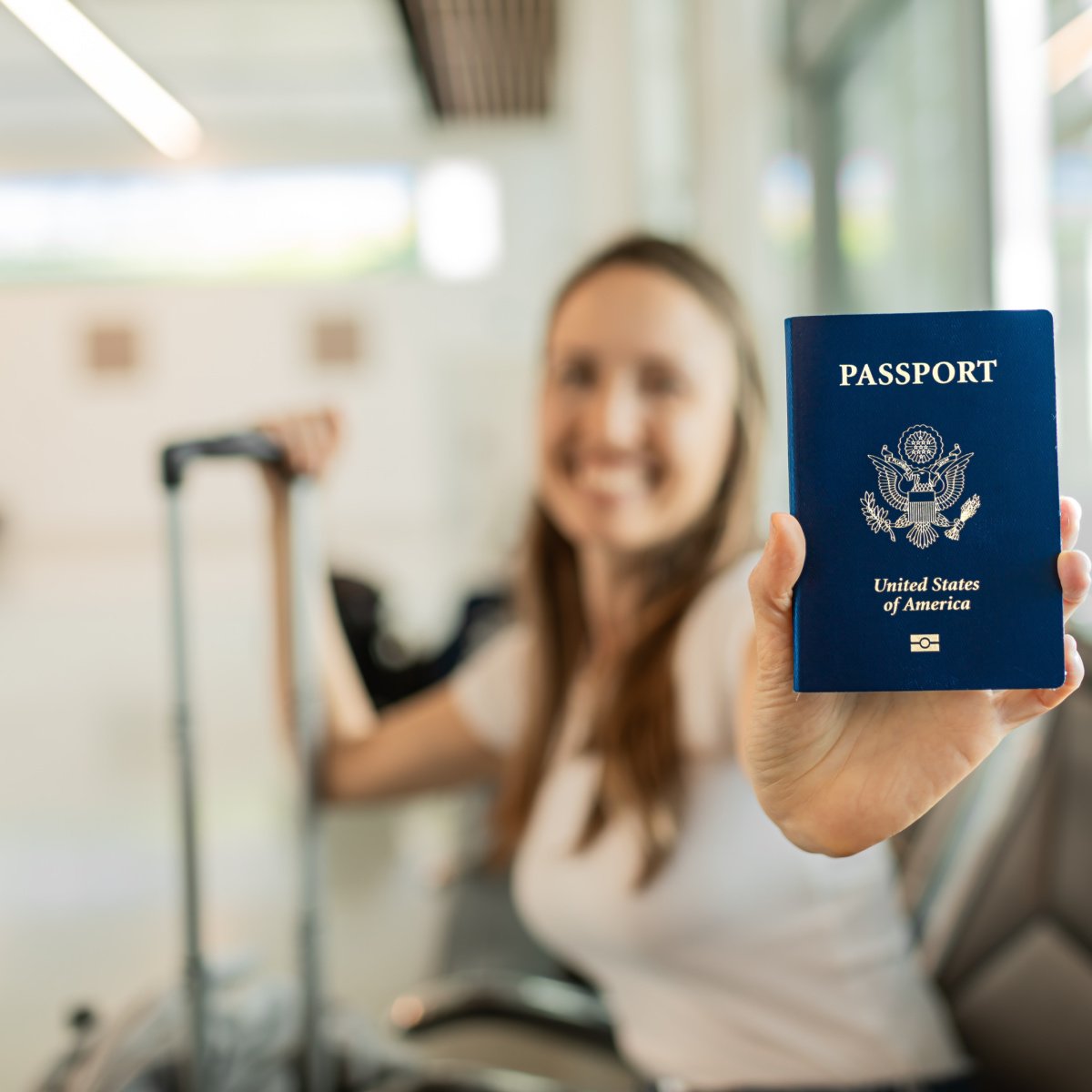
While the full Digital Nomad Visa isn’t available for applications, U.S. passport holders can already obtain Azerbaijan’s short-term ASAN electronic visa online:
- It’s a single-entry electronic visa
- It allows you to remain in Azerbaijan for up to 30 days
- Standard processing takes 3 working days
- Urgent processing is available in as little as 3 hours
- The standard government charge is $20, plus a $9 service fee, bringing the regular total to $29
- Your passport must remain valid for at least 3 months beyond the e-Visa’s expiry date
- Americans are currently on the official list of nationalities eligible to apply
Country-Hopping Around The Caucasus
For digital nomads country-hopping around the Caucasus, the difference in current tourist allowances is pretty wild.

Georgia grants U.S. citizens one full year visa-free.
Armenia grants Americans up to 180 days per year without a visa.
Azerbaijan? 30 days on an e-Visa, and if you’ve been to Armenia before, you better not show up to this border as chances are you’ll get turned away, possibly with a little scolding. So right now, it’s the shorter, more bureaucratic stop on a three-country Caucasus run.
If you’re flying across the pond in the near future, don’t leave everything to guesswork only to get denied boarding because you didn’t check you needed a visa on time: see the entry rules that apply at your destination on the Entry Requirement Checker.
Last Considerations
- The Azerbaijani Digital Nomad Visa has officially been greenlit, but applications are not open (sometime in 2027)
- Don’t assume every freelancer will qualify: based on the wording currently available, a software developer fits the definition far more clearly than a travel writer, graphic designer, or online teacher.
- Azerbaijan remains fairly affordable as a base, with $1,100–1,300 per month sufficing for a pretty-comfortable downtown Baku lifestyle.
- The proposed temporary-residence framework is unusually generous for a country like Azerbaijan: it will potentially allow qualifying digital travelers to receive residence
Enter your email address to subscribe to Travel Off Path’s latest travel news, straight to your inbox
