
I can’t tell you the number of times I’ve visibly rolled my eyes at people who looked at me flabbergasted after I mentioned I’d been to some obscure, unpronounceable country in Eastern Europe.
‘But is it safe?’
‘What about Russia being a stone’s throw away?‘ (Or so they believe)
‘Can you even actually visit?‘
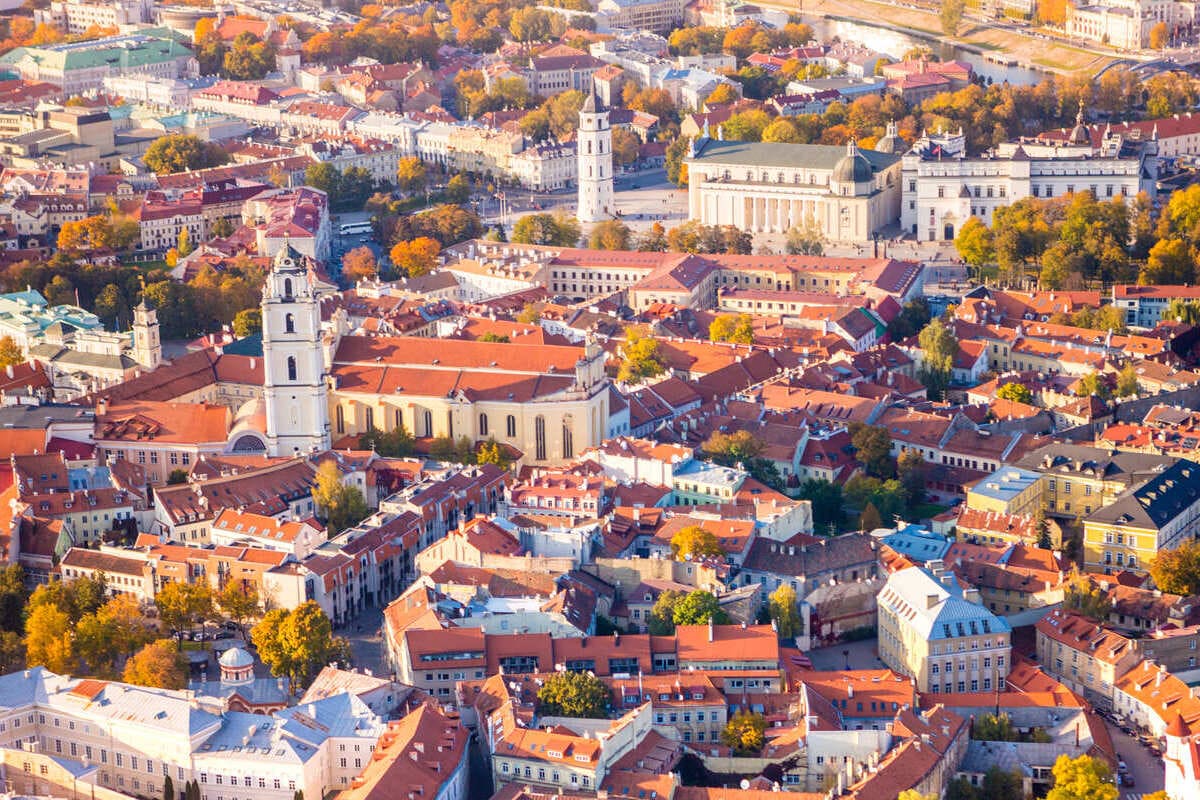
Stereotypes and lazy characterizations aside, 10+ years of solo traveling around Europe, and something like 40 European countries later, I’ve come to the conclusion that, maybe, just maybe, East isn’t Least, and West isn’t Best.
The most criminally overlooked and lesser-explored region of the Old World, Eastern Europe has a myriad of historical treasures on a par with your Eiffel Towers and Colosseums of the world, yet it rarely ever gets the actual praise it deserves.
If you’re tired of the same old tourist circuit, anxiously looking over your shoulder out of fear of being pickpocketed, and ordering pasta dishes that cost a whopping $40, these 5 Eastern European cities offer the same beautiful Old World charm, dinners for around $15, and most importantly…
They’re safer at street level than your average European hotspot farther West.
Wrocław, Poland
Pronounced ‘Vrots-waf’
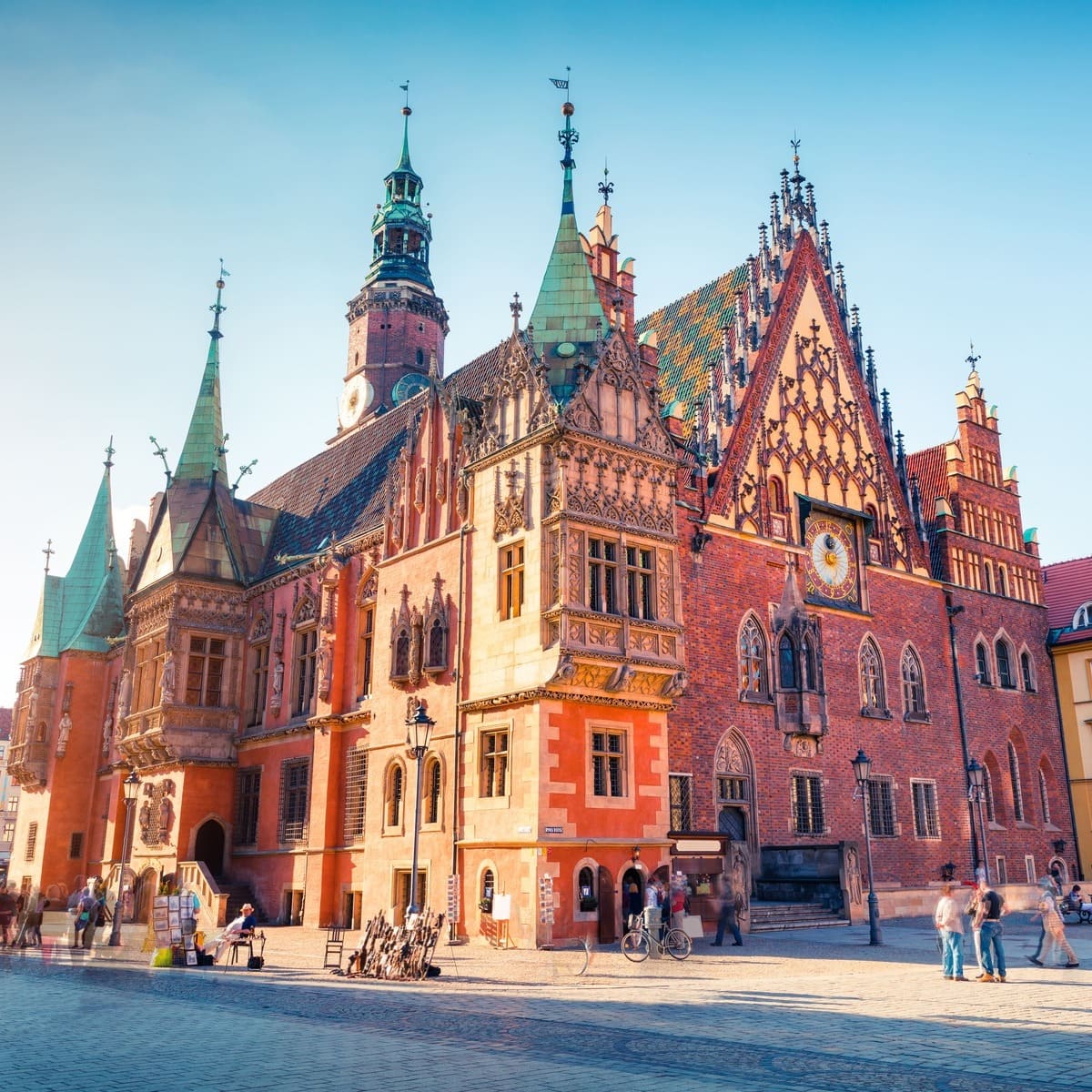
The third-largest city in Poland, home to over 672,000 residents, this stunning sprawl of cobbled lanes, grand boulevards cut through with tram lines, and navigable canals is one of my favourite city breaks in Europe, full stop.
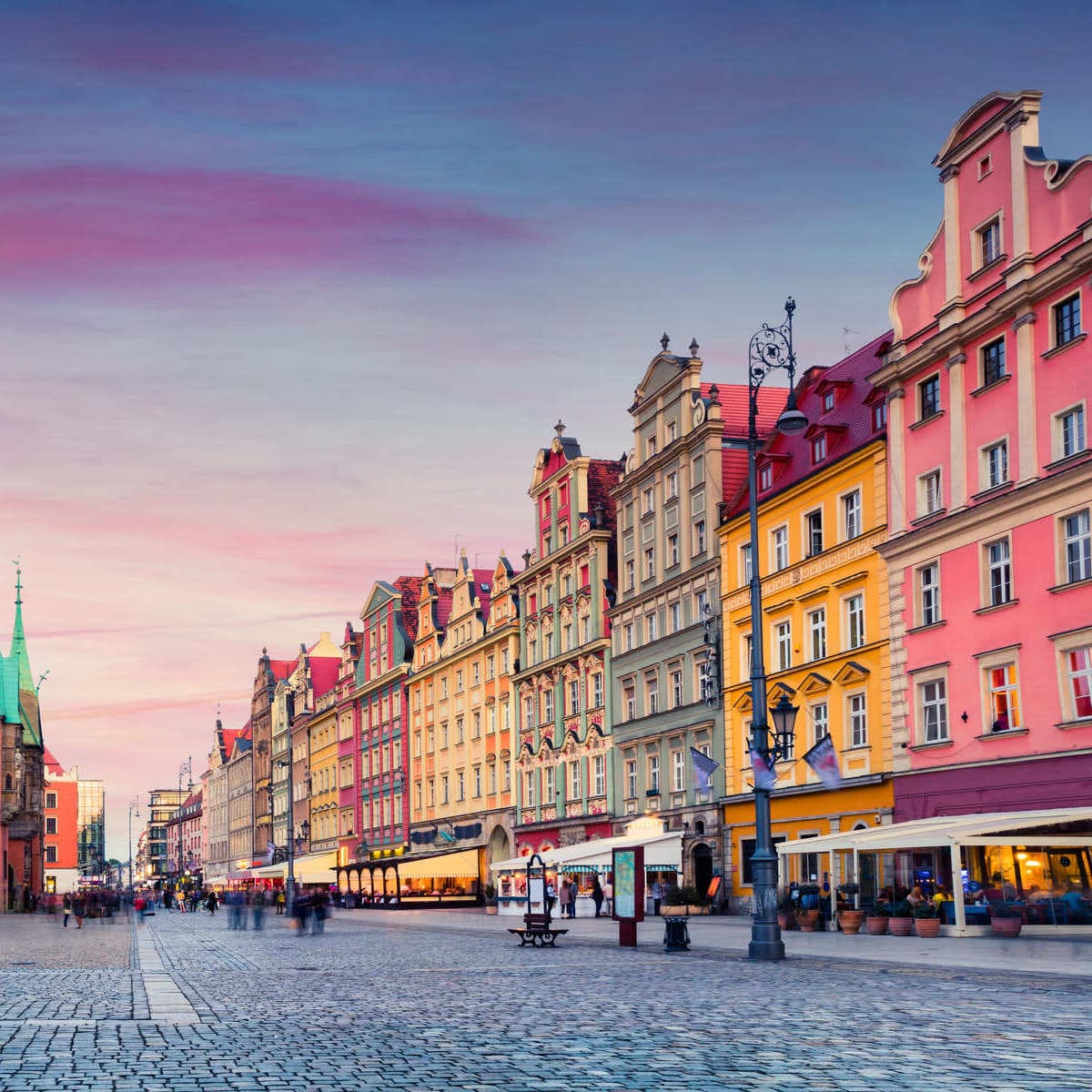
Rynek, the Old Town Square, is one of those places you step into and instantly go, ‘well, yes, I’m in Europe’:
It’s dominated by a stepped, Gothic red-brick Old Town Hall, whose elaborate façade bears an ornate Astronomical Clock, and ringed on all four sides by picture-perfect rows of slender, elegant buildings garbed in Germanic flourishes.
A short seven-minute walk away, St Mary Magdalene’s Church is a soaring Gothic landmark, with monumental twin towers connected by a vertigo-inducing ‘Bridge of Penitents’.
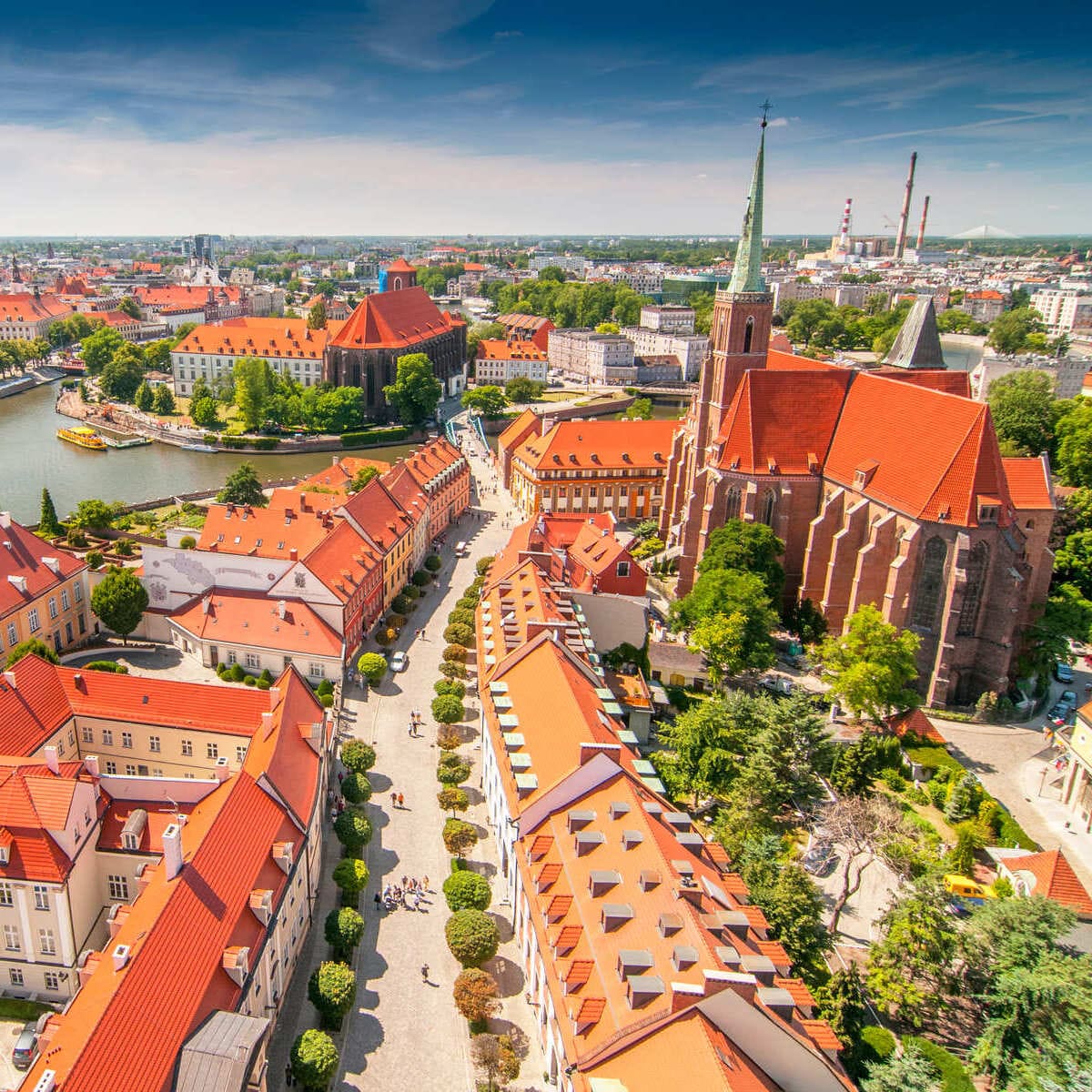
Already cathedral material, but Wrocław’s actual main church is a further 15-minute walk out, on the historic Cathedral Island of Ostrów Tumski.
It’s even taller, with needle-like spires rising as high as 318 feet, and a solemn interior illuminated by colourful stained glasswork.
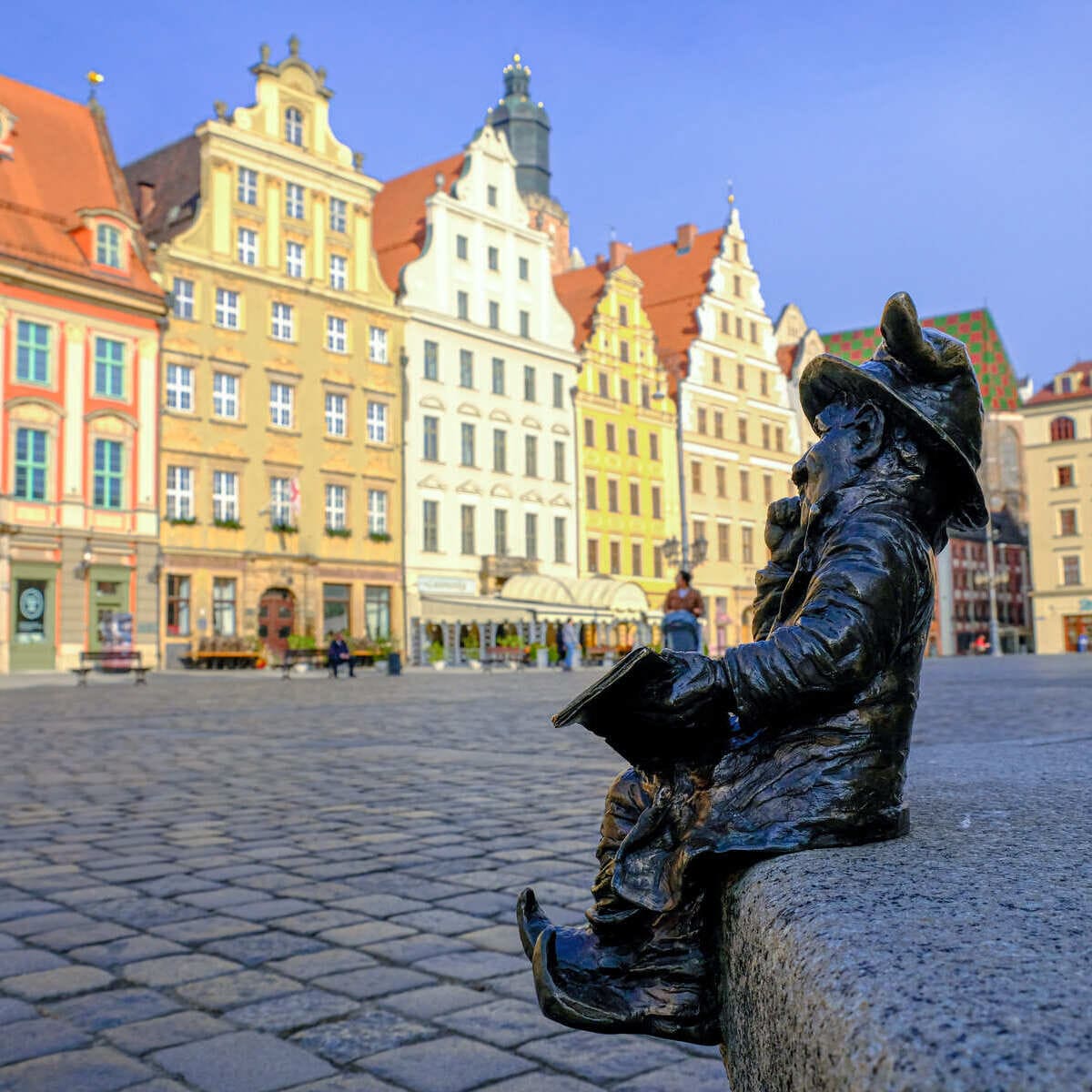
Just make sure you watch your step as you wander around Wrocław Old Town, as you might stumble upon one of the city’s 1,000-plus miniature-sized residents: the quirky little Wrocław Gnomes.
Top 5 Must-See Attractions In Wrocław, Poland
- Rynek: colourful market square anchored by a late-Gothic Town Hall
- St Mary Magdalene’s Church: twin towers linked by a147-foot-high bridge
- The Wrocław Gnomes: over 1,000 tiny bronze residents hidden across the city
- Ostrów Tumski: the oldest quarter, dotted with old-school gas lamps and quiet riverside lanes
- Centennial Hall: a UNESCO-listed, century-old concrete landmark (one of the first of its kind)
How Safe Is Wrocław, Poland?
Poland is one of the safest countries in Europe, enjoying a low rate of street-level crime and a very low terrorism risk. Cities like Wrocław, which lie outside the classic Western European tourist crush, feel even safer:
Street-level violence is unusual, even for a city of Wrocław’s size.
It has a population comparable to Seville or Frankfurt, yet it rarely comes with the same pickpocketing anxiety as the continent’s busiest tourist hubs. Poland just doesn’t play about when it comes to maintaining order and keeping violent offenders at bay.
The country is officially listed as a Level 1 destination by U.S. authorities, meaning Americans can exercise normal precautions when visiting, and it scores a squeaky-clean 88 out of 100 on the Travel Off Path Traveler Safety Index, based on reports from recent visitors.
Average Prices In Wrocław, Poland
- Takeaway snack, such as a pączek: $2–5
- Plate of pierogi: $8–12
- Local main, such as schabowy: $10–18
- Three-course meal in a mid-range restaurant: $25–42 per person
- Cappuccino: $3.50–5
- Local draught beer: $3.50–5.50
- One-way public transport ticket: around $1.20
- Simple guesthouse or budget hotel: $40–75 per night for two
- 4-star hotel: $85–150 per night
How long to stay: 3 nights
Pro tip: have lunch at SETKA, a retro, communist-themed restaurant dishing out classics like schabowy and pierogi.
How to get there from the U.S.: fly into Warsaw or Kraków, then take a direct Intercity train to Wrocław. Kraków is the quicker rail hop at around 3 hours, while Warsaw takes roughly 3.5–4.5 hours.
If you’re flying to Europe this summer and you hold a U.S. passport, travel rules for Americans have changed drastically since 2025. You are now required to be fingerprinted upon arrival to Europe, and soon enough, you’ll need a travel permit to even fly there in the first place.
Don’t get turned away at the border: use the Entry Requirement Checker to stay up to date with the fast-changing regulations.
Jajce, Bosnia and Herzegovina
Pronounced ‘Yai-tseh‘
For a country packed with the kind of picture-perfect, bordering-on-fairytalish medieval towns that make you rub your eyes just to be sure what’s before you is the real deal, Bosnia and Herzegovina remains vastly underexplored by any reasonable metric.
The UNESCO-protected ‘bridge town’ of Mostar already gets most of the laurels, but if I’m being honest to my history-obsessed core, it’s the quieter, former royal capital of Jajce that genuinely deserved the spotlight here.
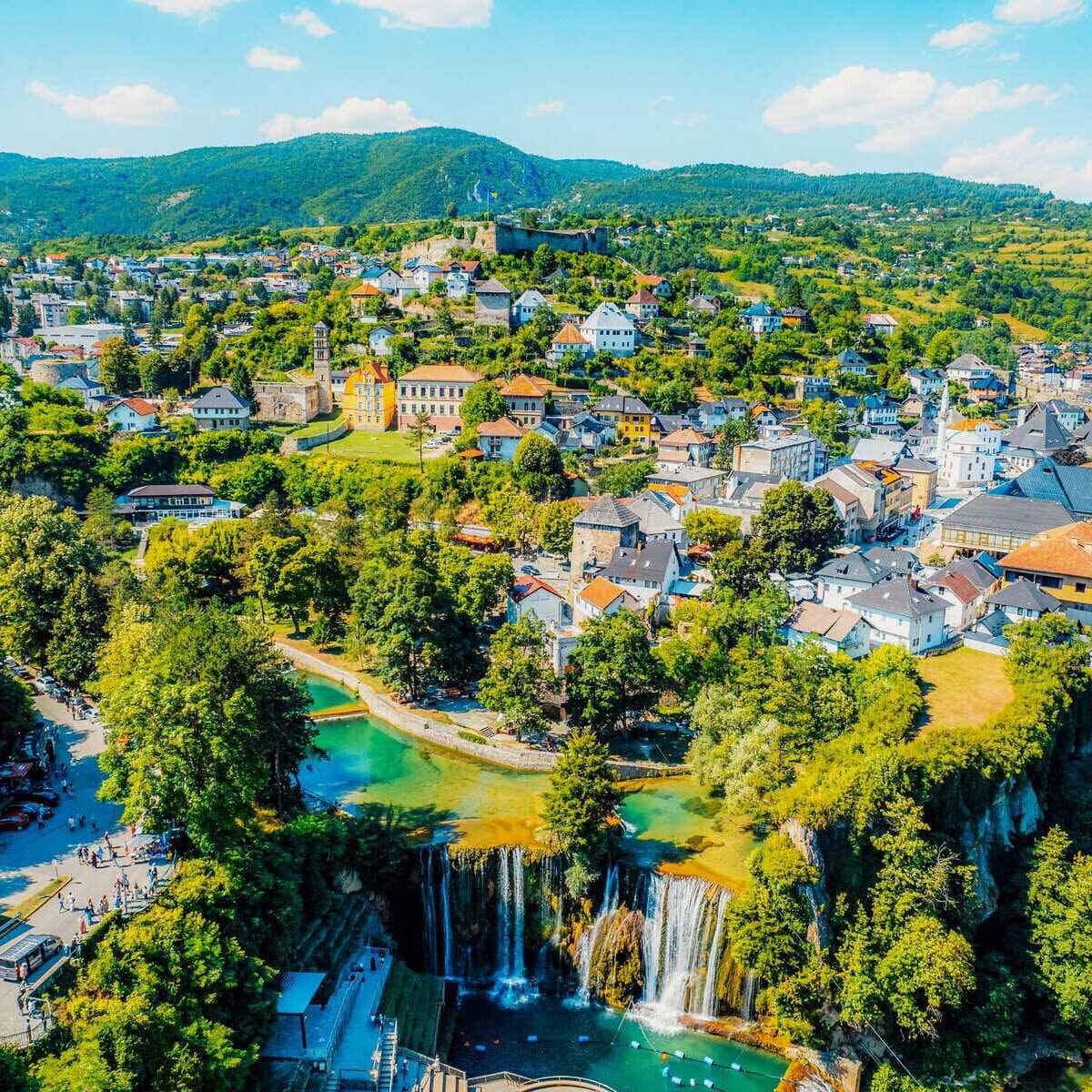
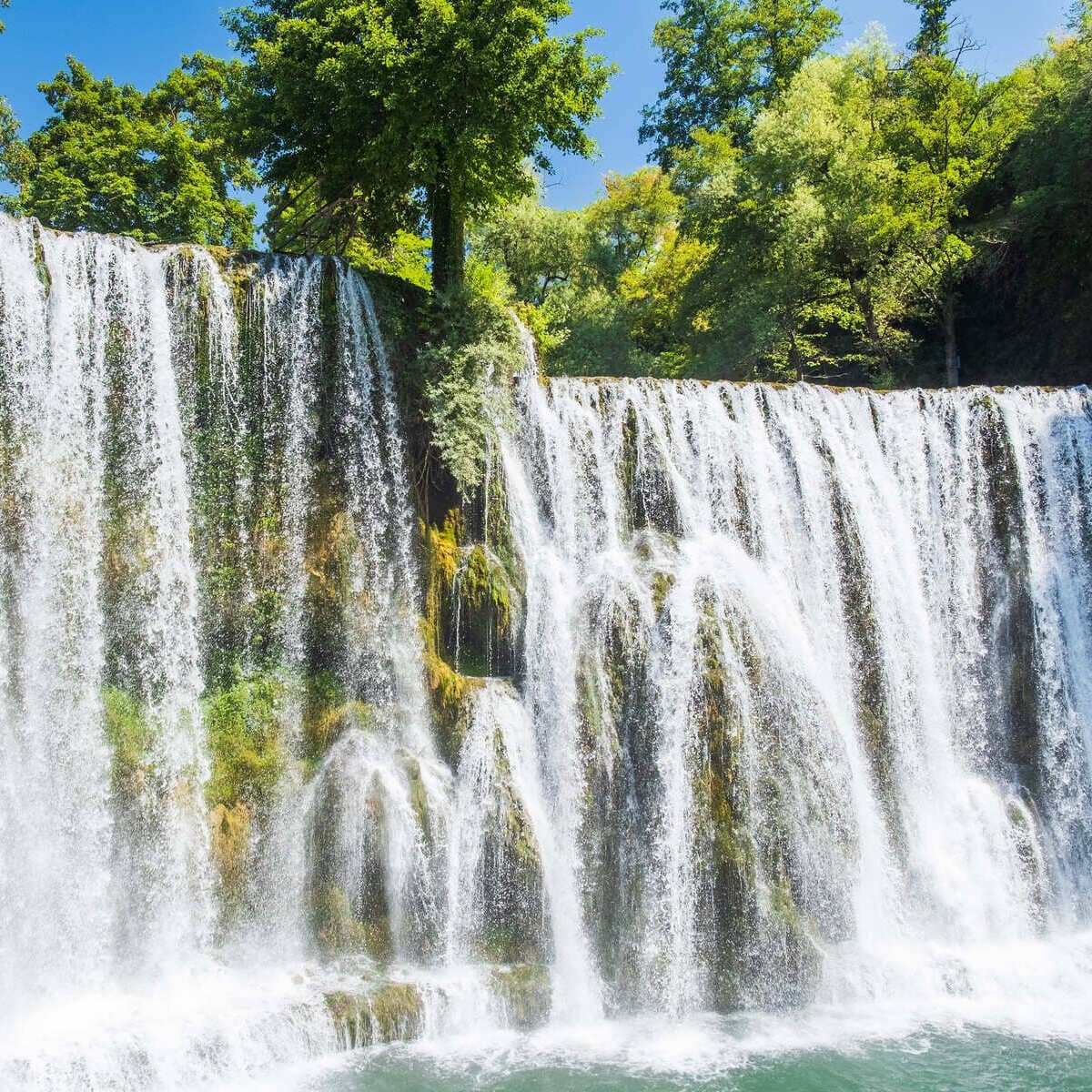
This town is built around a string of foaming cascades, with a literal waterfall crashing right through the center.
This means you could be strolling down an Ottoman-era cobbled lane lined with stone houses and teahouses one minute, and digging into a generous dish of ćevapi with waterfall views the next.
Oh, and that huge platter of Bosnian sausages and grilled meats can still come in at around $12. Proper class.
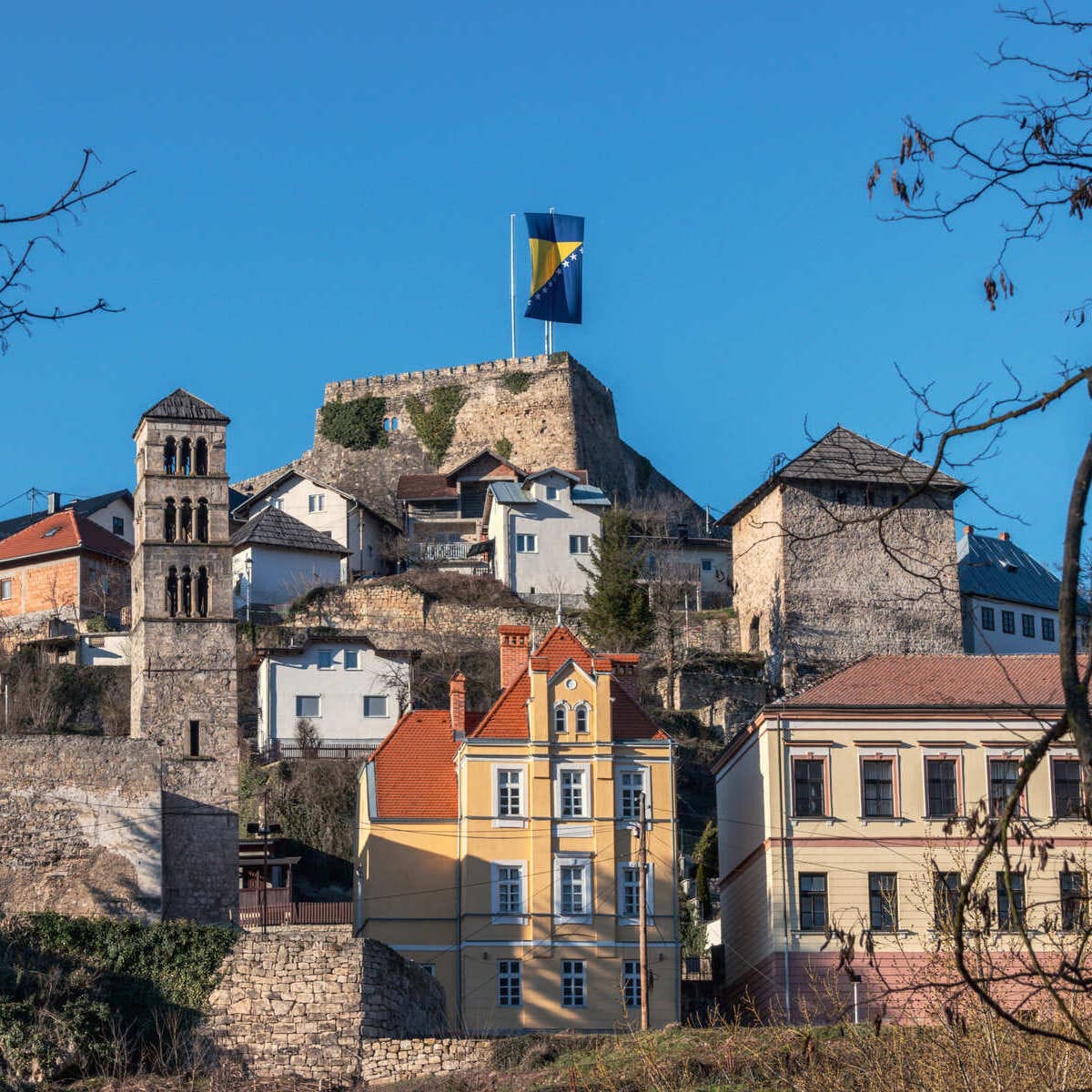
Jajce served as the final royal capital of the medieval Bosnian Kingdom, so all around the Old Town, you’ll still find relics of Bosnia of Olde, like Jajce Fortress, an imposing castle looming above the red-tiled roofs and minarets, and the ruins of St Mary’s Church, where Bosnia’s last king was crowned in 1461.
Top 5 Must-See Attractions In Jajce, Bosnia and Herzegovina
- Pliva Waterfall: a roaring cascade crashing into the Vrbas River right below the Old Town
- Jajce Fortress: the former royal stronghold harking back to the medieval Bosnian Kingdom
- St Mary’s Church: the coronation site of Bosnia’s last king before the country fell into Ottoman control
- The Catacombs: an eerie, yet fascinating rock-hewn noble burial site beneath the Old Town
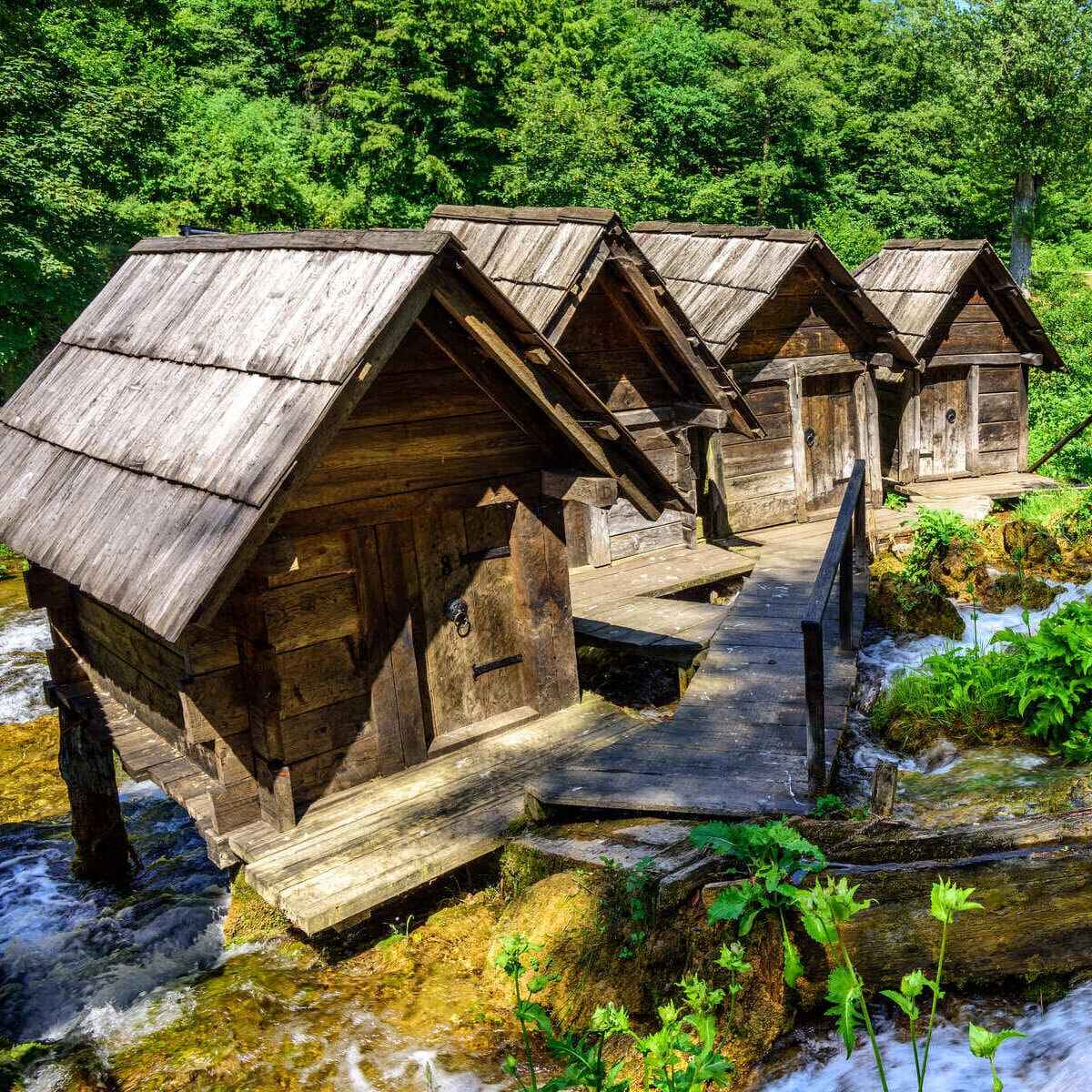
- Pliva Lakes and Mlinčići Watermills: turquoise water streams and tiny wooden mills just outside town
How Safe Is Jajce, Bosnia and Herzegovina?
I know you probably quiver a little when you hear the words ‘Bosnian War’.
The bloodiest, most destructive conflict in recent European history, if we’re not taking into account the ongoing Russo-Ukrainian War, it brought Bosnia, and much of the Balkans, to their knees.
Millions of people were displaced, borders redrawn, and sectarian conflicts sprang up left, right, and centre.
The fighting is (mostly) in the past, fortunately.
While Bosnia has never fully moved on from its religious and political divides—this is a country largely split between Muslims and Christians, and within the Christian half, Orthodox Serbs and Catholics—it’s in a much better place than it was in the 90s.
Far calmer, more open, and perfectly visitable, for lack of a better word.
Although you can never fully rule out political flare-ups in Republika Srpska, the country’s Serb-majority proto-state, Jajce sits in the heart of the very-stable Federation, and is one of the calmer, more laid-back towns, with low street crime by regional standards.
Bosnia itself carries a Level 2 classification from U.S. authorities due to crime, landmines, and terrorism, whereas its current Traveler Safety Index score is 81 out of 100.
Note From The Editor
Just one sec! If you enjoy reading great human-written articles, the best way to see a few more is to follow us on Google so we become one of your preferred websites. Thank you so much for reading. Now back to the story!
Average Prices In Jajce, Bosnia and Herzegovina
- Takeaway snack, such as burek: $1.50–3.50
- Plate of ćevapi: $4–7
- Local main, such as grilled trout or bosanski lonac: $7–14
- Three-course meal in a mid-range restaurant: $18–30 per person
- Bosnian coffee: $1.50–2.50
- Local draught beer: $1.50–3
- Simple guesthouse or B&B: $30–60 per night for two
- 4-star hotel: $75–125 per night
- Jajce Pass: around $18 (it covers all the main paid sights)
How long to stay: 2 nights
Pro tip: take a taxi or rent a bike to reach the Pliva Lakes and Mlinčići watermills just outside town.
How to get there from the U.S.: fly into Sarajevo with a connection in a hub such as Vienna, Frankfurt, or Istanbul, then take a direct bus from Sarajevo’s main station to Jajce. The road journey takes around 3–4 hours.
Košice, Slovakia
Pronounced ‘Koshitse’
Most people hop on that hour-long train from Vienna to Bratislava, the capital of Slovakia, wander its cobbled Old Town for the day, and check the country off their bucket list.
That’s just flat-out cheating.
Bratislava sits right on the border with Austria, feels distinctly Austria-adjacent, and it’s hardly the real, beating heart of Slovakia. For that, you’ll want to carry on east for another 5 hours by train, until you’ve reached Košice, on the far eastern side of the country.
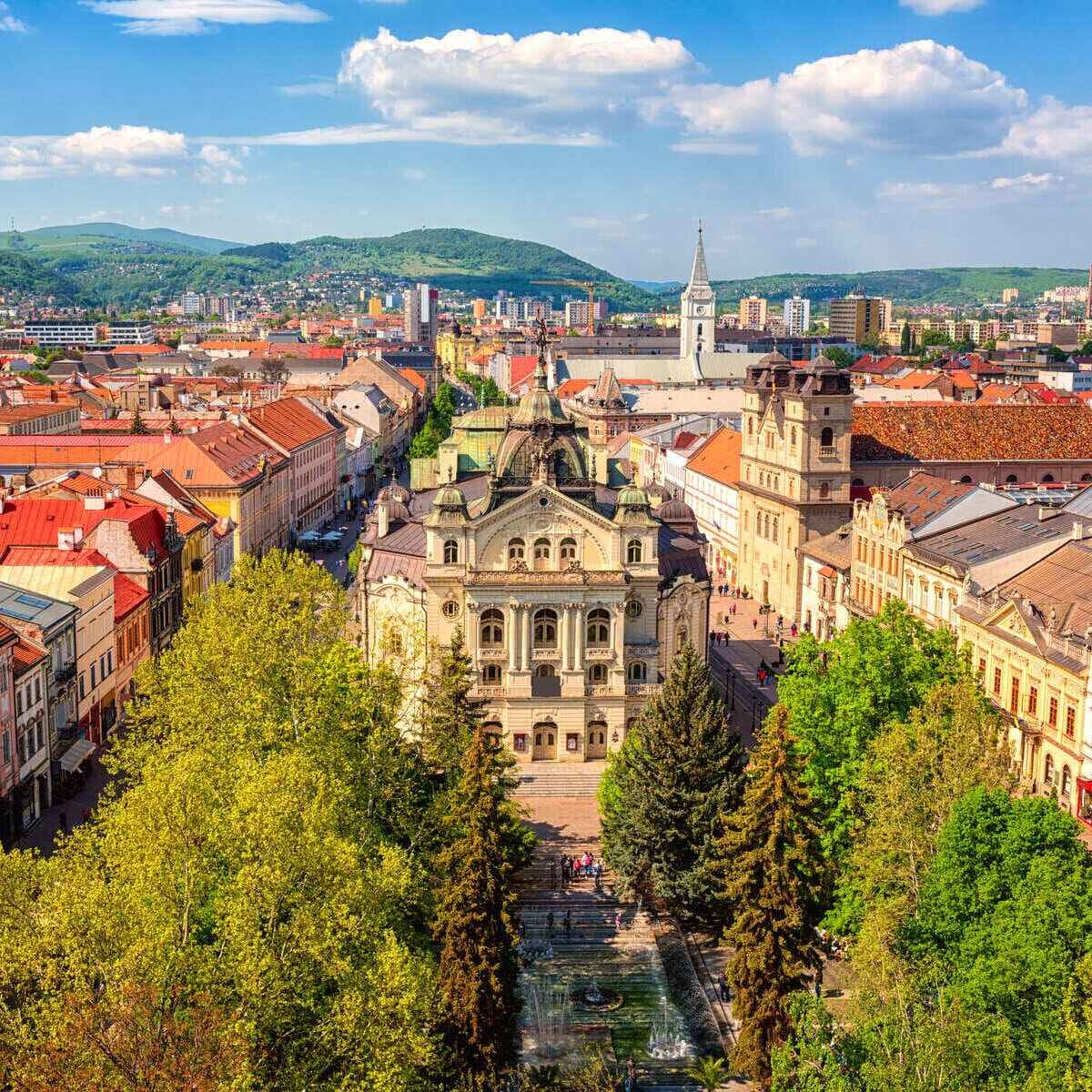
The second-largest city, it offers that same depth of medieval history without being as tourist-heavy as the Prague–Vienna–Budapest combo, with stately Baroque and Secessionist buildings, and cozy café terraces galore.

The Old Town is dominated by the striking St Elisabeth Cathedral, which, by the way, just happens to be Slovakia’s largest church, and the food scene is unrivalled:
From bryndzové halušky to pirohy, washed down with cold Šariš beer, you’ll be eating your fair share of sheep’s cheese here for pocket change.
A few other reasons to go? The Old Town is pocket-sized and entirely walkable, crowds aren’t at all a thing, and Košice itself is the perfect base for exploring eastern Slovakia, a wildly underrated region carpeted with beech forests and crowned by castle ruins that look particularly scenic this fall.
Top 5 Must-See Attractions In Košice, Slovakia
- St. Elisabeth Cathedral: Slovakia’s largest cathedral and its Gothic centerpiece
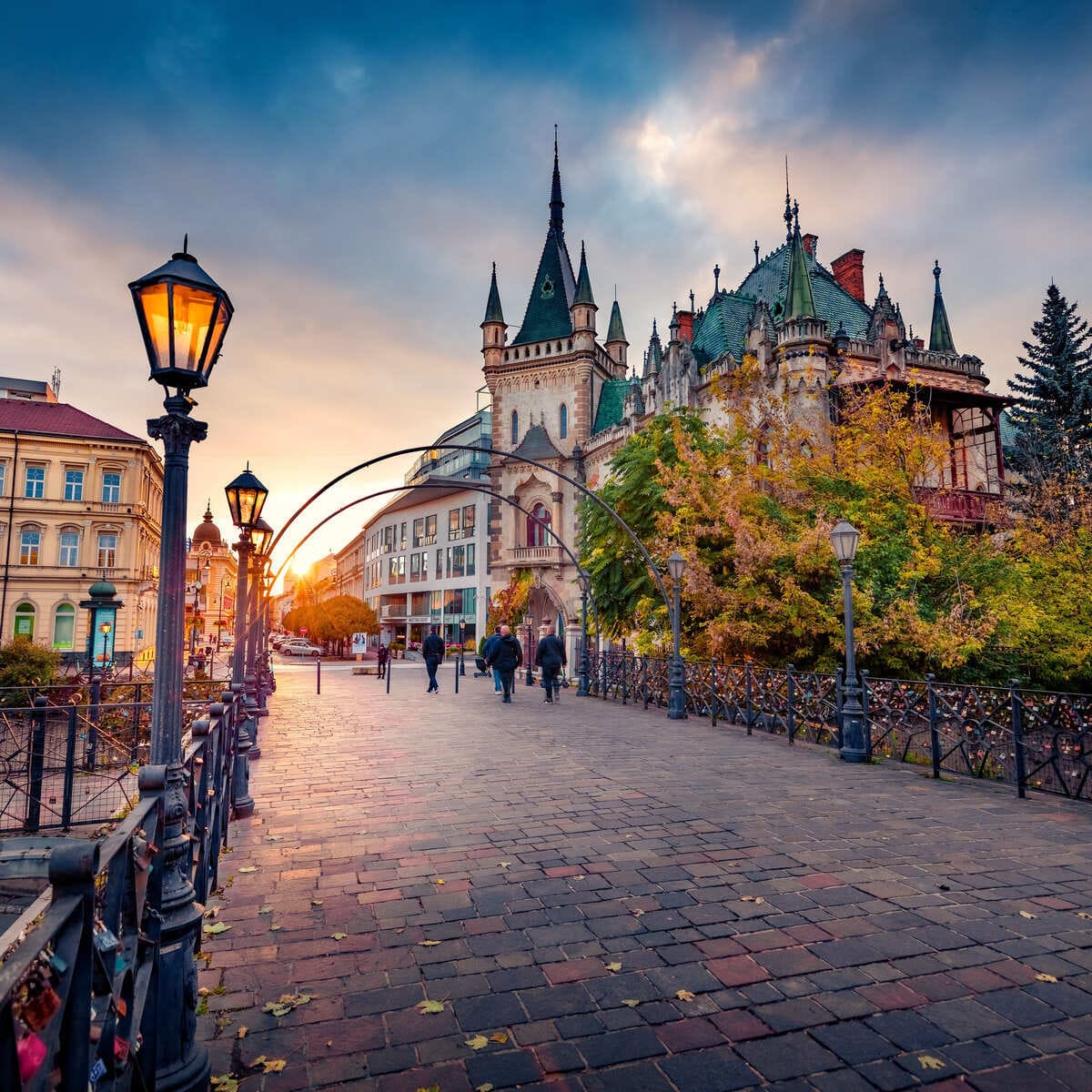
- Hlavná Street: the postcard lane, lined with historic buildings and charming coffeeshops
- Singing Fountain: a centrally-placed, ornate musical fountain
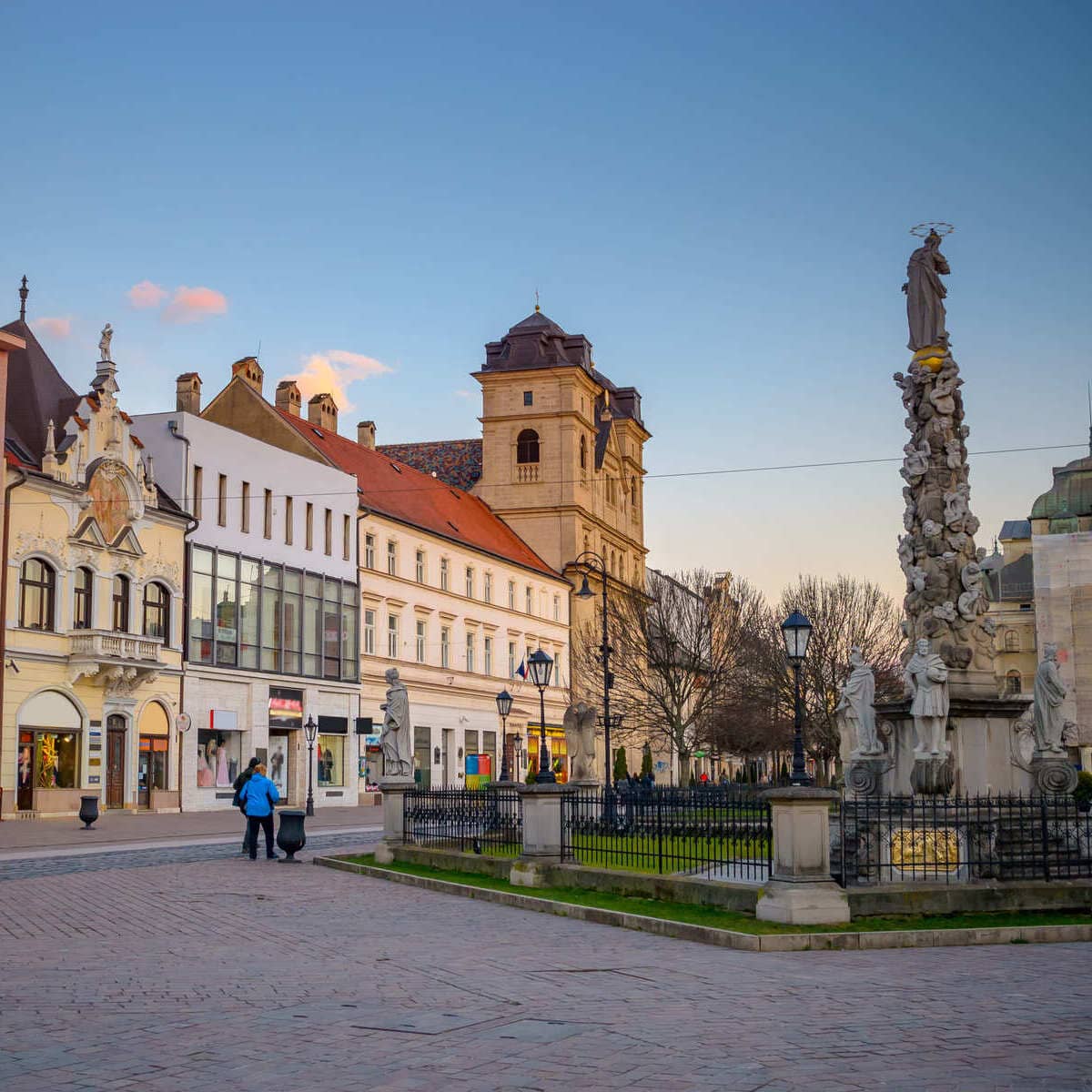
- Immaculata: the city’s landmark plague column
- East Slovak Museum: the one must-visit museum here, chronicling the region’s unsung history
How Safe Is Košice, Slovakia?
Much like its fellow Central-Eastern European comrades, Slovakia has a low tolerance for petty criminals and our commonly-identifiable troublemakers.
Police-recorded crime has been trending down over the longer term, and violent crime involving visitors is uncommon. More mundane nuisances, like phone theft and opportunistic scams, can happen, but not at anything like the frequency seen in Europe’s busiest Westerly hubs.
In terms of attractiveness for scammers and pickpockets, Bratislava is truly Slovakia’s major, if not its only properly established international city break.
If they’re looking for heavy tourist flows, that’s where they’re likelier to stick, rather than trekking all the way east to Košice, if you know what I mean.
The rest of the country, albeit beautiful, remains virtually unexplored.
Slovakia earns a Level 1 classification from the U.S. Department of State, meaning Americans can exercise normal precautions, and a score of 86 out of 100 on the Traveler Safety Index.
Average Prices In Košice, Slovakia
- Takeaway snack, such as a pagáč or filled roll: $2–4.50
- Bryndzové halušky or pirohy: $12–15
- Three-course meal in a mid-range restaurant: $22–37 per person
- Cappuccino: $2.50–5
- Local draught beer: $2–3.50
- One-way public transport ticket: $1.50–2
- Simple guesthouse or budget hotel: $55–95 per night for two
- 4-star hotel: $110–180 per night
How long to stay: 2 nights
Pro tip: climb St Elisabeth Cathedral’s huge Sigismund Tower if the skies are clear for stunning cityscape views over the Old Town’s red roofs.
How to get there from the U.S.: connect through Vienna or Warsaw and fly straight into Košice Airport, or failing that, take the train from Vienna into Bratislava, and then onward to Košice (7 hours overall).
Vilnius, Lithuania
No major discrepancy between how you read it in English, and how it’s actually pronounced
—for once, ha!
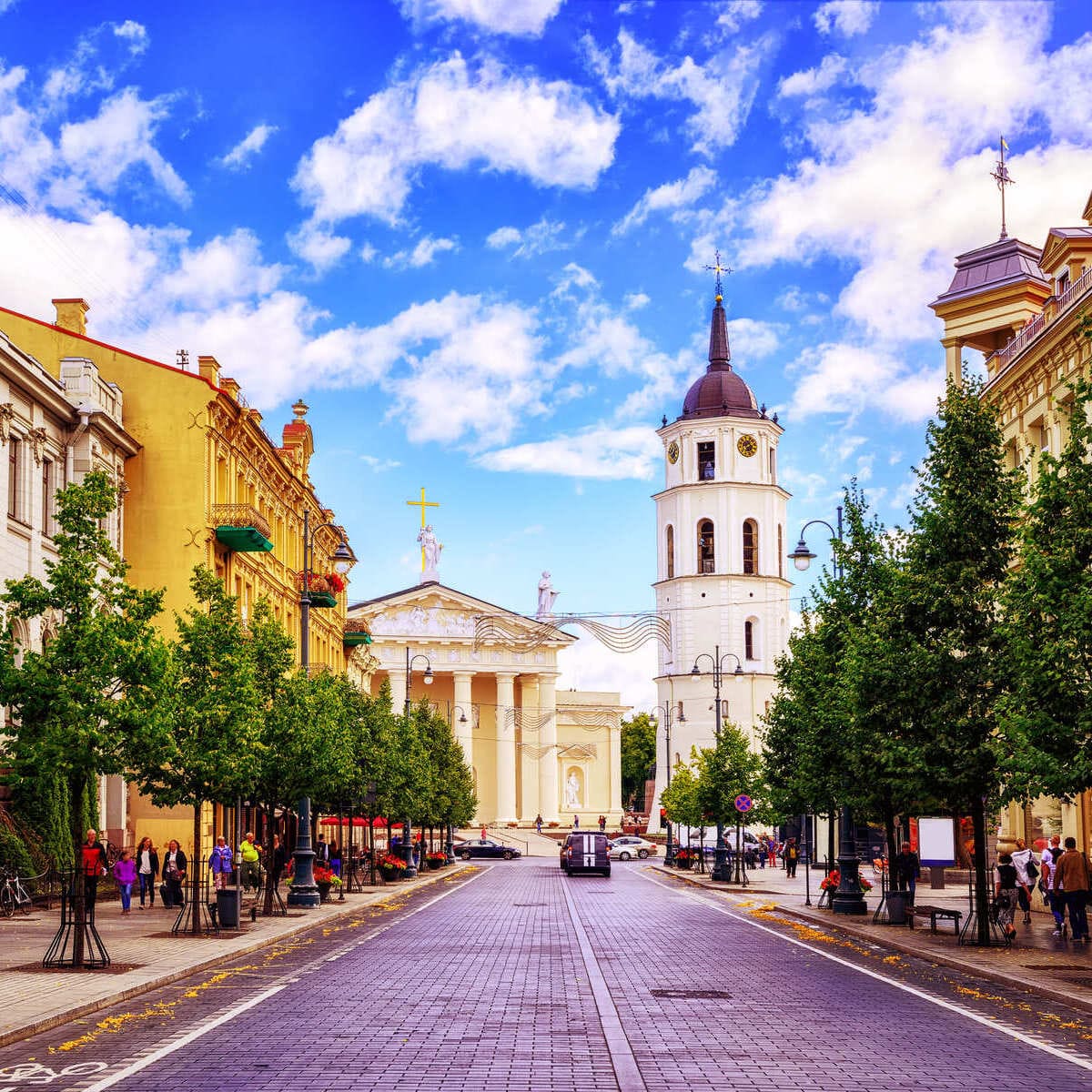
A national capital that really feels like a fairly sizeable small town, Vilnius is the city I always tell friends who are setting out on an inaugural visit to the Baltic States to hit up first.
It may not be the prettiest of the three capitals—that’s a kneck-to-kneck affair between Estonia’s Tallinn and Latvia’s Riga—but it’s undoubtedly the most excitingly weird, rebellious one.
Yes, it has your usual UNESCO-listed Old Town, a maze of narrow, cobble-paved lanes flanked by Baroque churches and pastel townhouses, lying at the foot of a central hill.
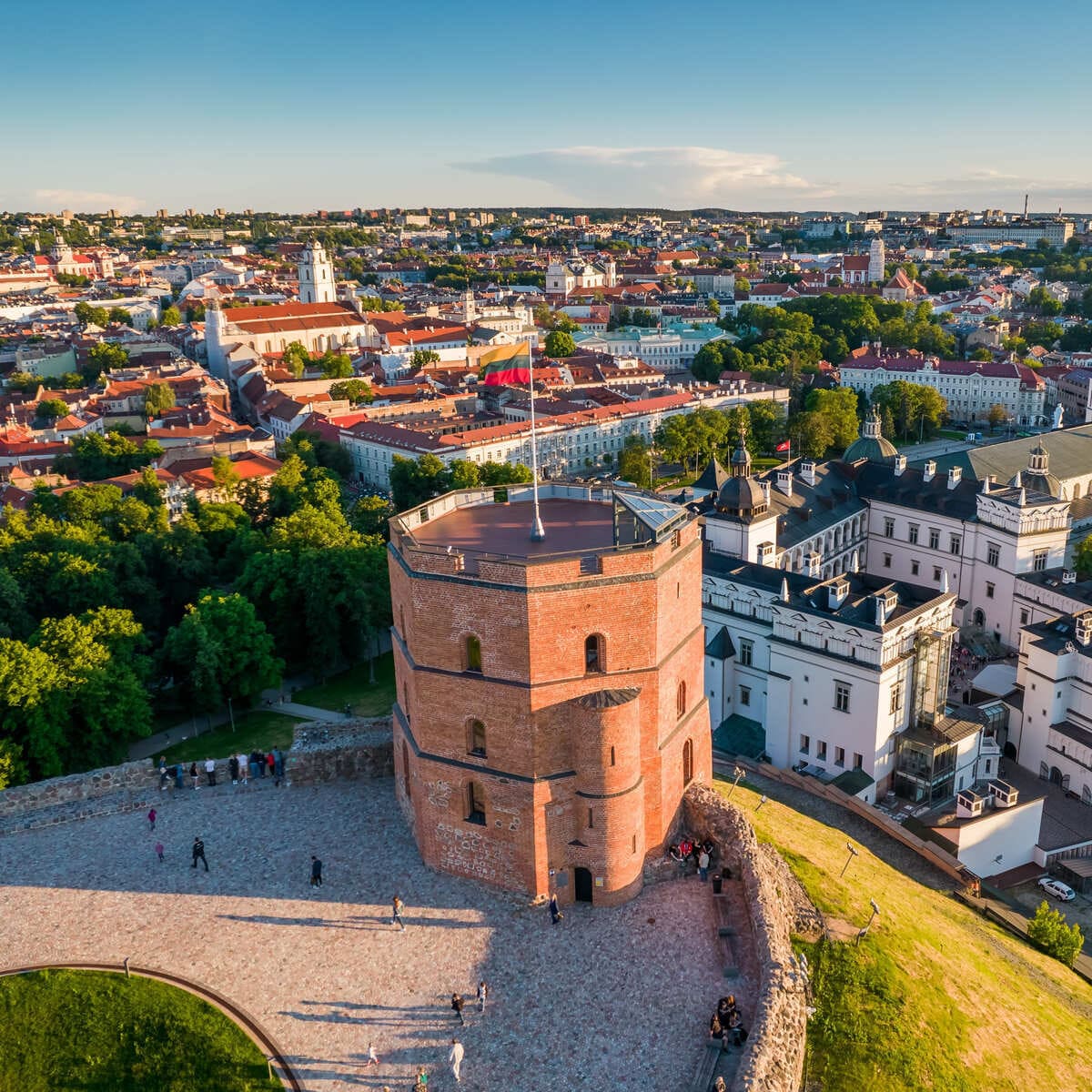
Of course, a sturdy red-colored castle tower tops that very same hill, and oh, there’s a meandering river too, snaking between the historic centre and the more modern, USSR-era districts.
Classic Eastern European combo.
What sets Vilnius apart is its bohemian and gritty character: right on the edge of the Old Town, Užupis is a free-spirited, unofficially-independent ‘Artist’s Republic’ that asserted its autonomy apart from Lithuania in 1997.
We still don’t know whether it was a joke, or whether they’re deadly serious.
Either way, they do—in theory, at least—uphold their own constitution, including nonsensical stuff like ‘everyone has the right to be happy’, or how a cat ‘does not have to love its owner, but must help in a difficult moment’.
Quirkiness aside, you can always just come for the vibrant murals, the scruffy hole-in-the-wall bars slinging $4 beer, and the scenic riverside strolls.
Top 5 Must-See Attractions In Vilnius, Lithuania
- Cathedral Square: a pedestrianized square dominated by a Neoclassical cathedral and its adjacent, free-standing bell tower
- Gediminas’ Tower: the red-brick tower perched above the Old Town. Just look up, you can’t miss it
- Gate of Dawn: a baby-blue city gate topped with a shrine, arching above the most beautiful cobbled lane
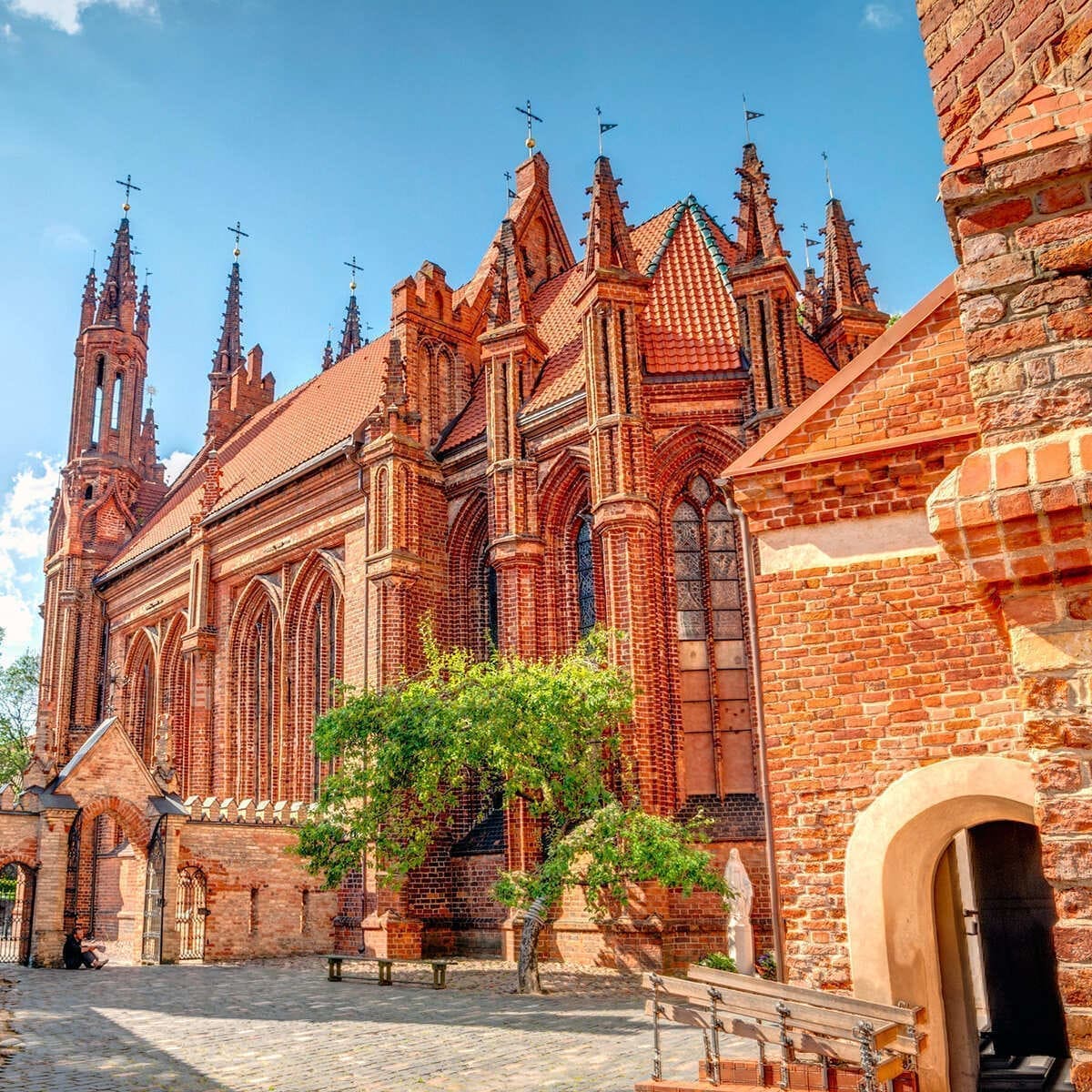
- St. Anne’s Church: a stunning late-Gothic church with a red-brick finish
- Užupis: the quirky, artistic district packed with street art, coffeeshops, and cool riverside bars
How Safe Is Vilnius, Lithuania?
Despite sitting on Europe’s northeastern edge, bordering the Russian exclave of Kaliningrad, and the Russia-friendly Belarus, Lithuania is a stable EU and NATO member, with low levels of violent crime and no direct involvement in ongoing wars.
Despite the geographical disavantadge, Vilnius feels a lot calmer than most larger capitals farther West.
Petty theft can still happen around stations, markets, and busy nightlife spots, and you’ll want to watch your drink after dark, but those are standard capital-city precautions, rather than reasons to obsessively worry about visiting.
Its proximity to Belarus and Russia does mean this is a front-line expedition, either.
The U.S. Department of State currently lists Lithuania at Level 1, advising Americans to exercise normal precautions, while recent visitors have given it a solid 84 out of 100 on the Traveler Safety Index.
Average Prices In Vilnius, Lithuania
- Takeaway snack, such as a kibinas or savoury pastry: $3–6
- Local main, such as cepelinai: $15–17
- Three-course meal in a mid-range restaurant: $25–45 per person
- Cappuccino: $3–4
- Local draught beer: $4–6
- One-hour public transport ticket: around $1.50
- Simple guesthouse or budget hotel: $55–90 per night for two
- 4-star hotel: $115–185 per night
How long to stay: 3 nights
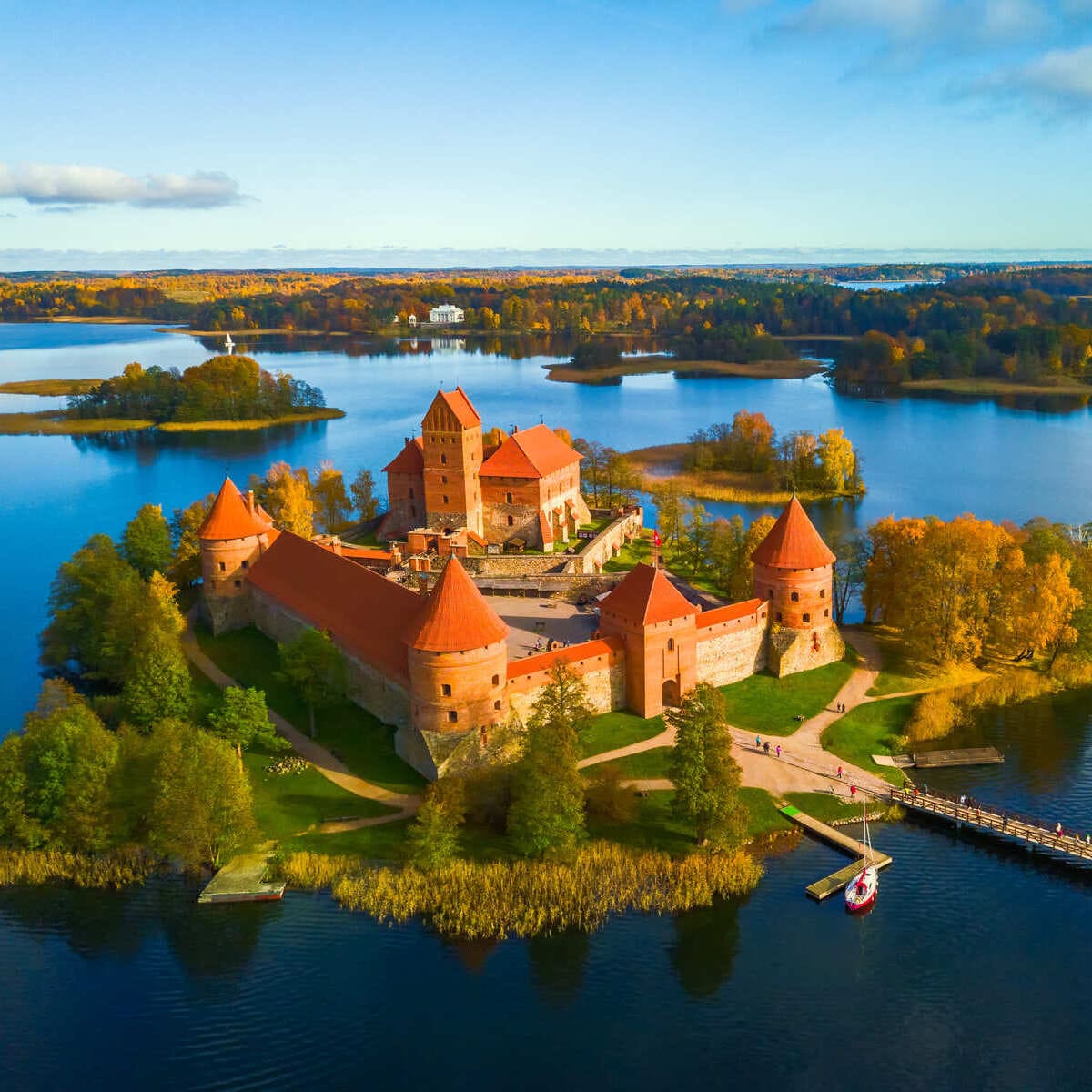
Pro tip: take a 34-minute train out of town to visit Trakai, a beautiful island castle that’s possibly Lithuania’s most famous postcard (even more so than Vilnius itself).
How to get there from the U.S.: fly into a major European hub such as Frankfurt, Copenhagen, Helsinki, or Warsaw, then connect onto a short intra-European flight to Vilnius.
Wroclaw
Explore a stunning sprawl of cobbled lanes and navigable canals while hunting for the city’s 1000 plus miniature bronze gnomes.
Jajce
Wander an Ottoman era cobbled lane in Bosnia before watching a spectacular waterfall crash directly through the center of this medieval town.
Kosice
Head to eastern Slovakia to explore a quiet Old Town dominated by the striking St Elisabeth Cathedral without massive tourist crowds.
Vilnius
Visit Lithuania’s quirky capital to discover the free spirited Artists Republic of Uzupis and stunning late Gothic red brick churches.
Enter your email address to subscribe to Travel Off Path’s latest travel news, straight to your inbox
