
If you found yourself staring at a “Delayed” sign more often than usual this past year, you weren’t alone. A new comprehensive report from the flight tracking app Flighty has crunched the numbers on millions of flights to determine exactly which carriers were the most likely to keep passengers waiting.

The results for 2025 highlight a challenging year for U.S. aviation, with three major domestic carriers landing in the global top 10 for delays. According to Flighty’s data, these airlines struggled the most with on-time performance, frustrating millions of travelers with schedule disruptions.
Here is a deep dive into the rankings, the specific reasons behind the delays, and what this means for your travel plans in 2025.
The “Get Me Off This Plane” Problem

Flighty’s annual “Global Passport Report” is not just a small sample survey; it is a massive data analysis of the 22 million flights tracked by its users over the past year.
The report introduced a new, frustration-inducing metric this year: “Get Me Off This Plane.” This tracks the time passengers spend taxiing on the runway or waiting for a gate after landing—time that isn’t always counted in standard delay statistics.

The findings were staggering:
- 30% of flights experienced these ground delays.
- Passengers lost a collective 3.9 million hours sitting on the tarmac.
- “On-time” arrival stats often mask the reality of sitting on a parked plane for 45 minutes waiting for a gate crew.
While European budget carrier Ryanair took the dubious title of the #1 most delayed airline globally, U.S. carriers were not far behind.
1. The Budget Breaker (28% Delay Rate)
Topping the list for the United States is the ultra-low-cost carrier Frontier Airlines, which saw 28% of its flights delayed this year.
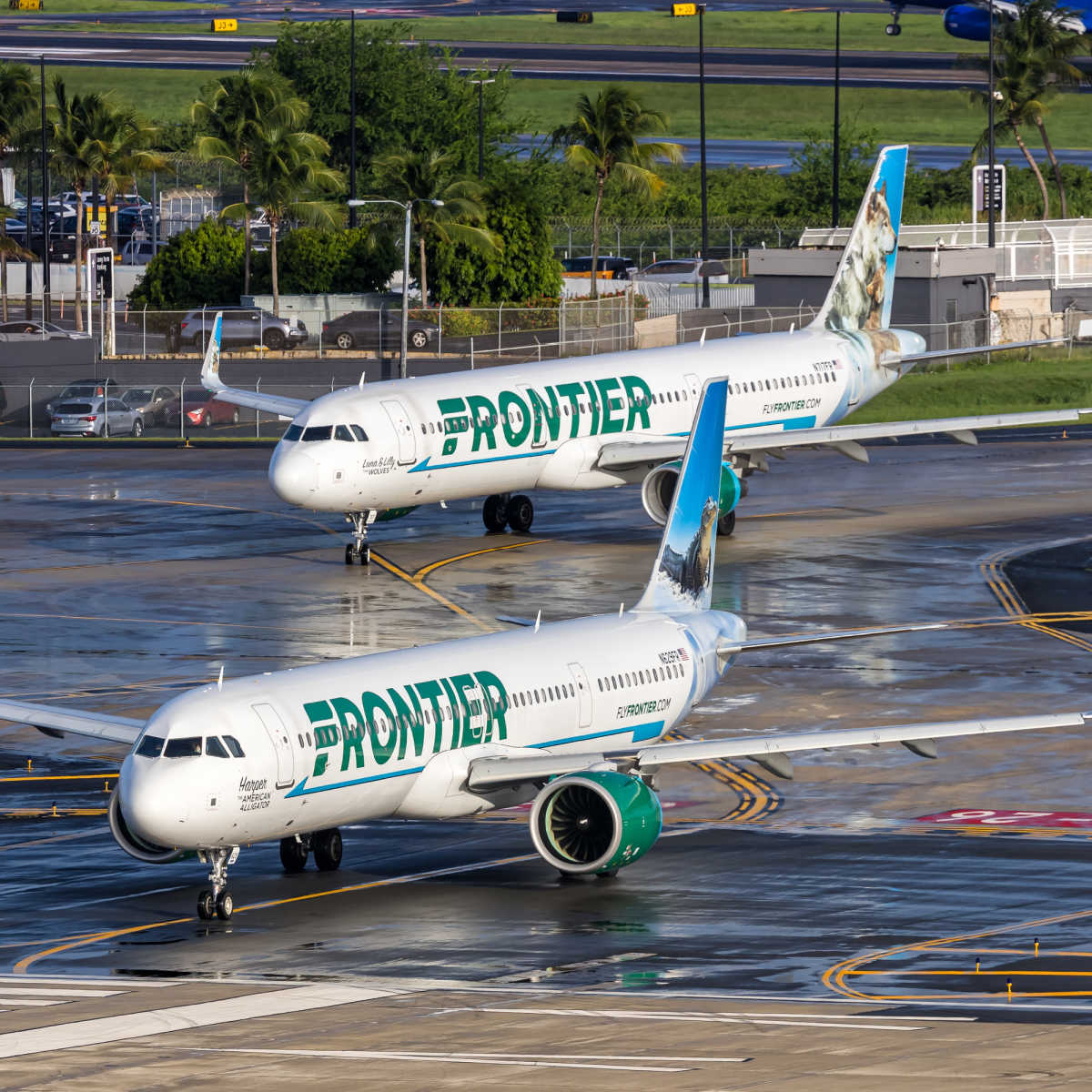
Why are they delayed? Frontier’s business model is built on extreme efficiency and high aircraft utilization. Their planes spend as little time as possible on the ground between flights to maximize revenue. While this keeps ticket prices low, it leaves almost no “buffer time” in the schedule.
Data suggests a significant portion of Frontier’s delays are categorized as “aircraft arriving late”. This creates a domino effect: if a plane is delayed by 20 minutes on its first flight of the day in Orlando, it will likely be late for its next leg to Philadelphia, and even later for the subsequent flight to Denver. Unlike legacy carriers that might have spare aircraft, Frontier Airlines runs such a tight schedule that one hiccup can ruin the entire day’s operation.
2. The Northeast Gridlock (25% Delay Rate)
Tied for second place among U.S. carriers is JetBlue Airways, with a delay rate of 25%.
Why are they delayed? JetBlue’s delay issues are largely geographical. A massive portion of their operations is concentrated in the Northeast corridor, specifically at New York (JFK), Newark (EWR), and Boston (BOS). This is the most congested and complex airspace in the United States.

JetBlue is heavily impacted by National Aviation System (NAS) delays, which include air traffic control volume delays and heavy weather traffic management programs. Unlike a carrier with a hub in Charlotte or Dallas, JetBlue Airways often has to contend with restricted airspace regardless of its own operational efficiency. When ATC issues hit New York, JetBlue takes a disproportionate hit compared to its competitors.
3. The Network Identity Crisis (25% Delay Rate)
Tied with JetBlue at 25%, Southwest Airlines rounds out the top three.
Why are they delayed? Southwest is currently undergoing a massive operational identity crisis. Historically famous for its simple “point-to-point” network, the airline has begun transitioning to a more complex hybrid model that includes more connecting flights and “banks” of flights similar to legacy hubs.
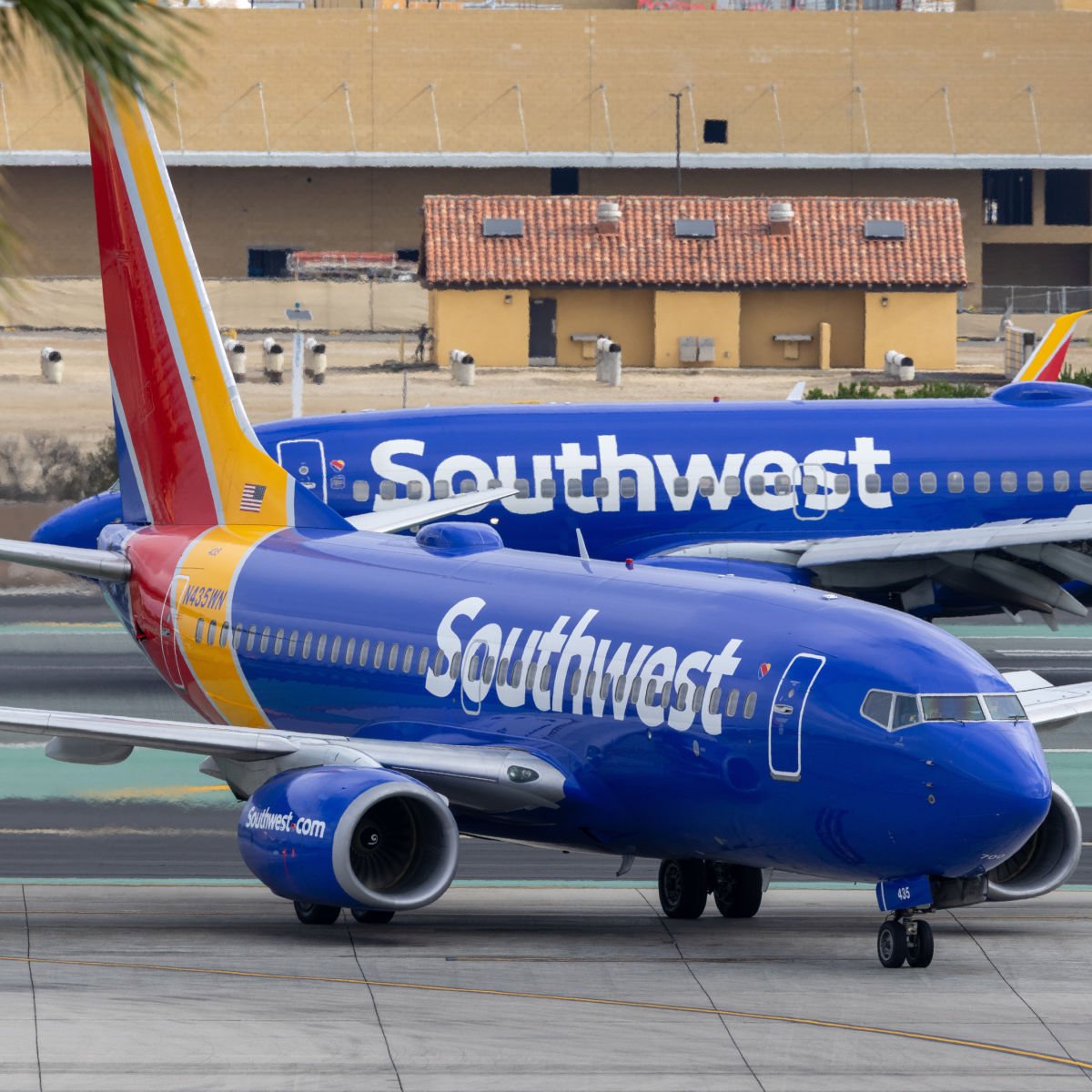
This complexity has introduced new vulnerabilities. As the airline retrofits its schedule to allow for more connectivity, it faces the same cascading delay issues that hub-and-spoke carriers face, but without the decades of infrastructure built to support it. Additionally, Southwest Airlines has faced significant scrutiny over its outdated scheduling technology, which famously melted down in previous winters and continues to be a point of friction during severe weather events.
Summary: How to Avoid the Delays
While these statistics are grim, you aren’t helpless. The data consistently shows that early morning flights (before 8:00 AM) are significantly less likely to be delayed, as the “domino effect” hasn’t started yet.

If you are flying Frontier, booking the first flight of the day is critical. For JetBlue, avoiding late afternoon departures from New York can save you hours of headache. And for Southwest, try to book non-stop routes to avoid getting caught in their evolving connecting network.
The Travel Off Path Advantage: Your Travel Toolkit
The 1-Minute Trip Check
Our flagship tool. Solves your entire pre-flight travel planning in a few easy steps. From entry rules to hidden fees and safety.
U.S. Travel Advisory Checker
An easy tool to check all the latest travel advisories from the U.S. State Department.
Entry Requirements Checker
An easy tool to check all the entry requirements for your destination.
The Upgrade Newsletter
Unlock travel tips, hot destination insights, and exclusive flight deals.
Join Our Community
With over 25,000 members on Facebook!
Subscribe To Our Latest Posts
Enter your email address to subscribe to Travel Off Path’s latest breaking travel news, straight to your inbox.